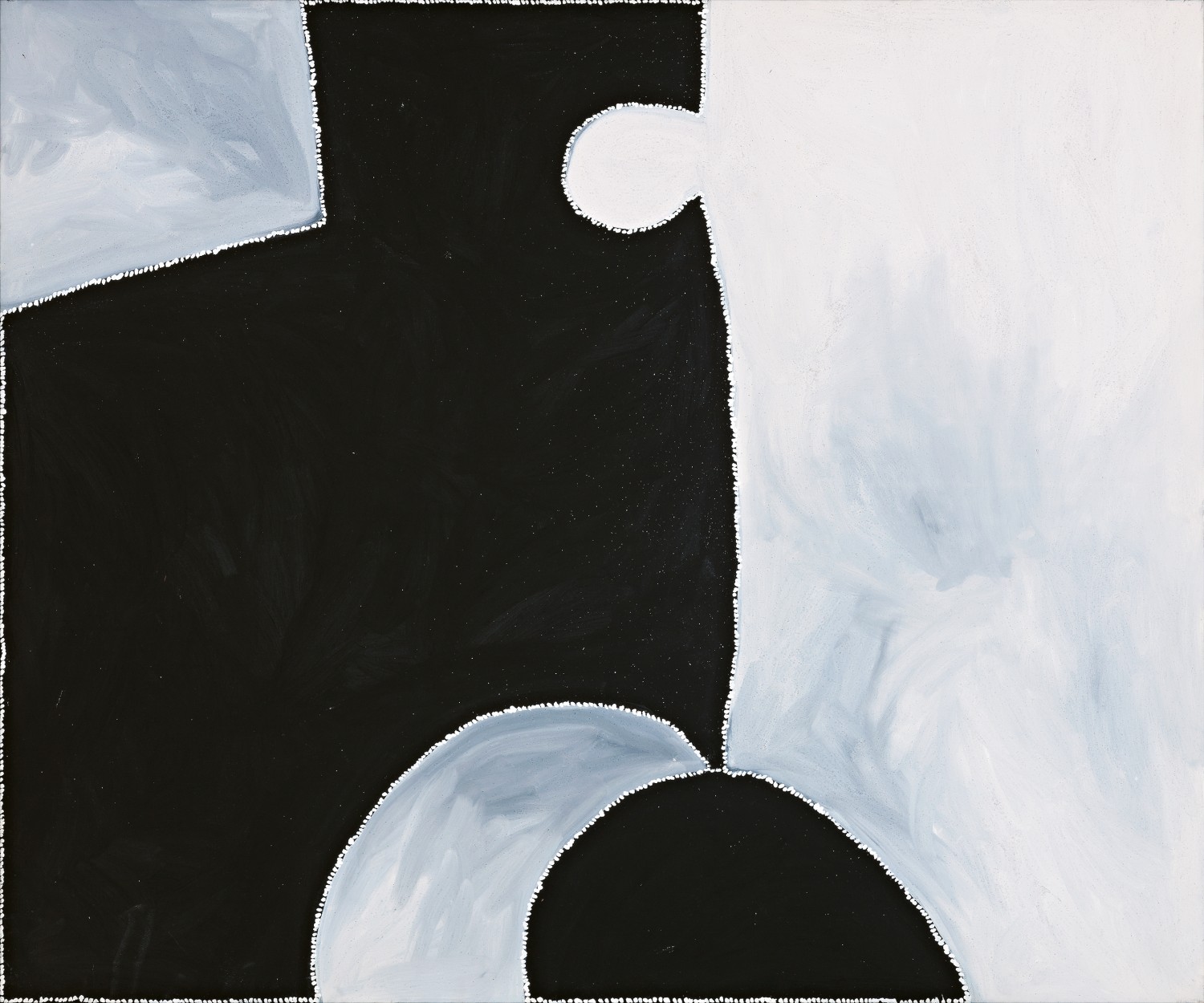
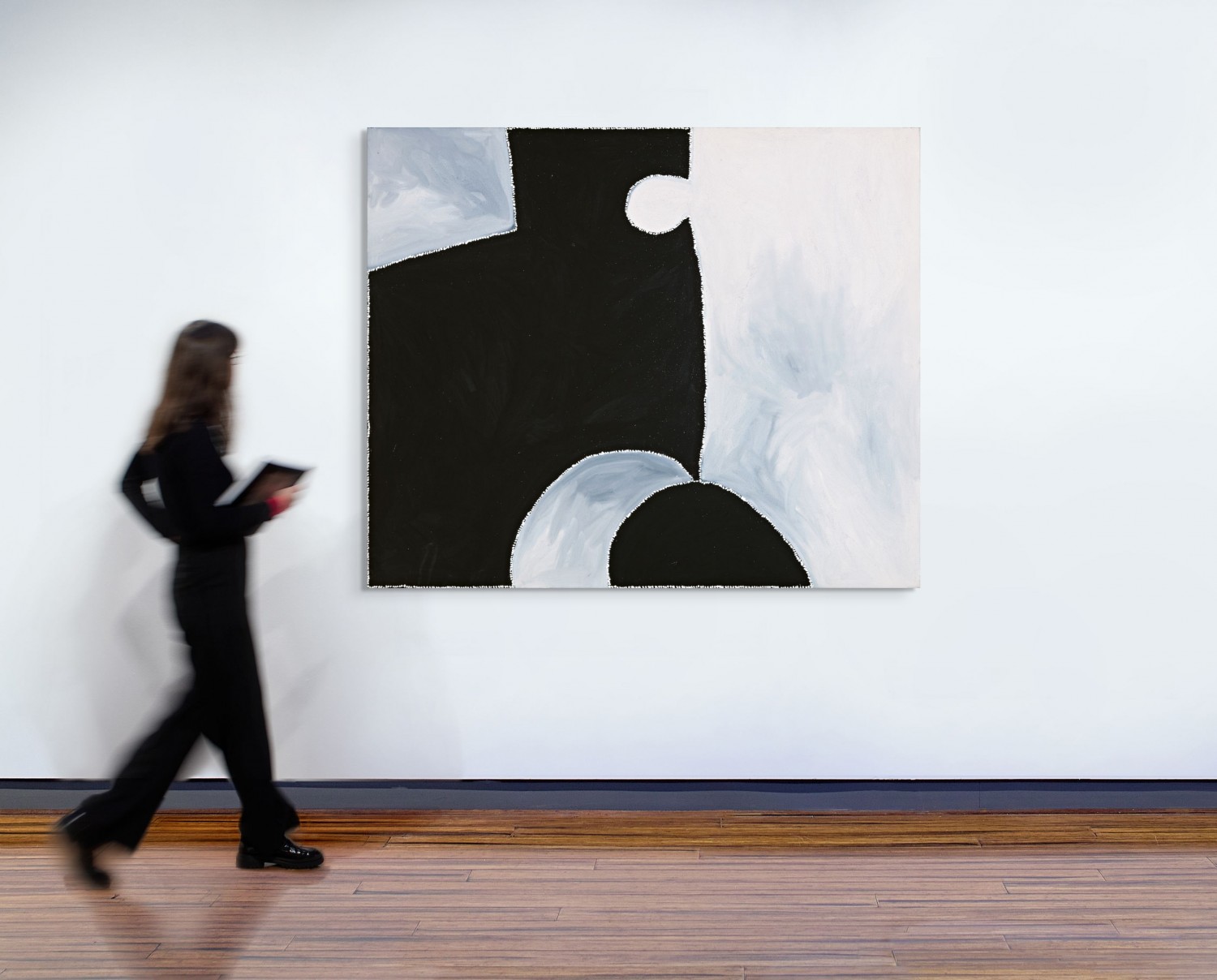
Fig tree hole, 2005
Paddy Nyunkuny Bedford
ochres and pigments with synthetic binder on linen
150.0 x 180.0 cm
signed with initials verso: PB
bears inscription verso: date and Jirrawun Arts cat. PB 8 2005.235
Jirrawun Arts, Wyndham, Western Australia
Gene and Brian Sherman collection, Sydney
Deutscher and Hackett, Melbourne, 25 May 2016, lot 21
Private collection, Indonesia
Storer, R., Paddy Bedford, Museum of Contemporary Art,Sydney, 2006, p. 158 (illus.)
Paddy Bedford played a pivotal role in what can rightly be described as an aesthetic revolution in contemporary Indigenous art. A leading figure among a group of artists from Warmun in the Kimberley region of Western Australia, Bedford was often referred to as the ‘new’ Rover Thomas, and significantly, only began painting on canvas after fellow artist Freddie Timms established the Jirrawun Aboriginal Art group at Rugun (Crocodile Hole) in north-east Western Australia in 1997.
Catalogued as PB 8–2005.235 in Bedford’s chronological index, this painting on linen was executed in 2005 and depicts the country of Jamelayigoon (Fig Tree Hole). An archetypal example of Bedford’s practice, the work features dramatic monochromatic contrasts with subtle suggestions of figuration. His pared-back, minimalist approach – combined with wet-on-wet techniques and expressive gestural mark-making – propelled his work into a distinctly contemporary arena. At the same time, as a senior lawman, Bedford recorded the history of his country and the narratives of three major sites for which he was custodian: Emu Dreaming, Bush Turkey Dreaming and Cockatoo Dreaming.
Jamelayigoon (Fig Tree Hole) lies north-east of Bedford Downs and further north of Lerdijwaneman (Lightning Creek). The site is characterised by a river running between high cliffs, with a large cave set into the rock face. It is the Dreaming place of Woonyjoorroony (the Rock Wallaby), and the river’s waterholes are associated with Birlinji (the red river gum). The area is closely connected to Bedford’s father, who was born nearby at Wirndoowoon. Bedford’s personal Dreaming of Minjiwarrany (black plum), inherited from his father, is also linked to this place.
Stylistically, this painting marks Bedford’s departure from the more familiar conventions of earlier East Kimberley painters, as he forged a highly personal vision of country. The introduction of a stark black-and-white ground signals his evolution from a purely ochre palette. Solid forms assert themselves within the composition, while washes of soft pink and blue-grey temper the surface through a wet-on-wet process first seen in his canvases in 2003. By suspending white and coloured pigments in an acrylic medium, Bedford achieved a distinctive luminosity and depth across the painted surface.
During his lifetime, Bedford received numerous honours. His work was exhibited widely in major museums in Australia and internationally, including a retrospective at the Museum of Contemporary Art Australia, Sydney, in 2006. That same year, he was notably also included among a select group of artists commissioned to produce a major work for the collection of the Musée du Quai Branly in Paris.