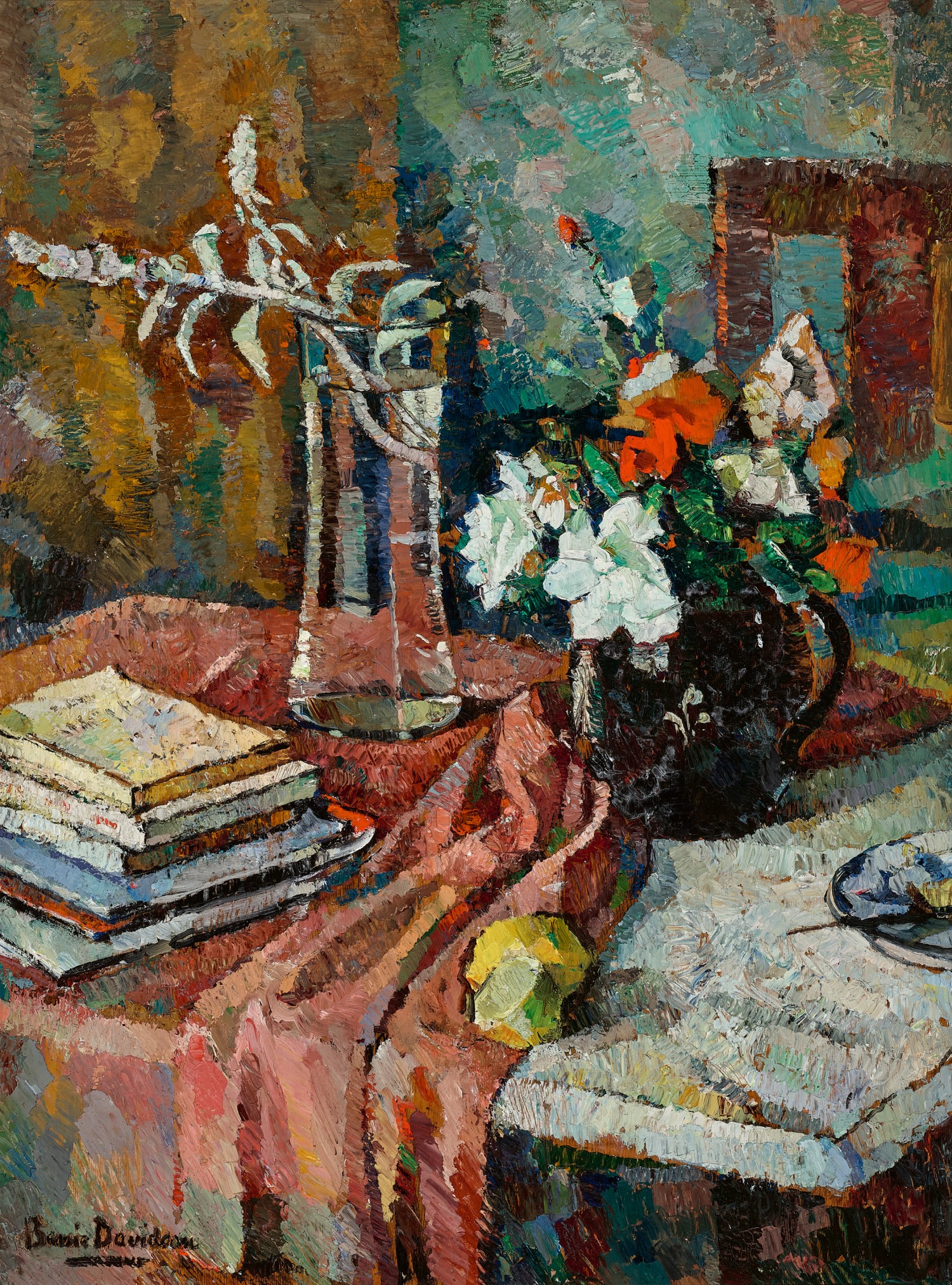
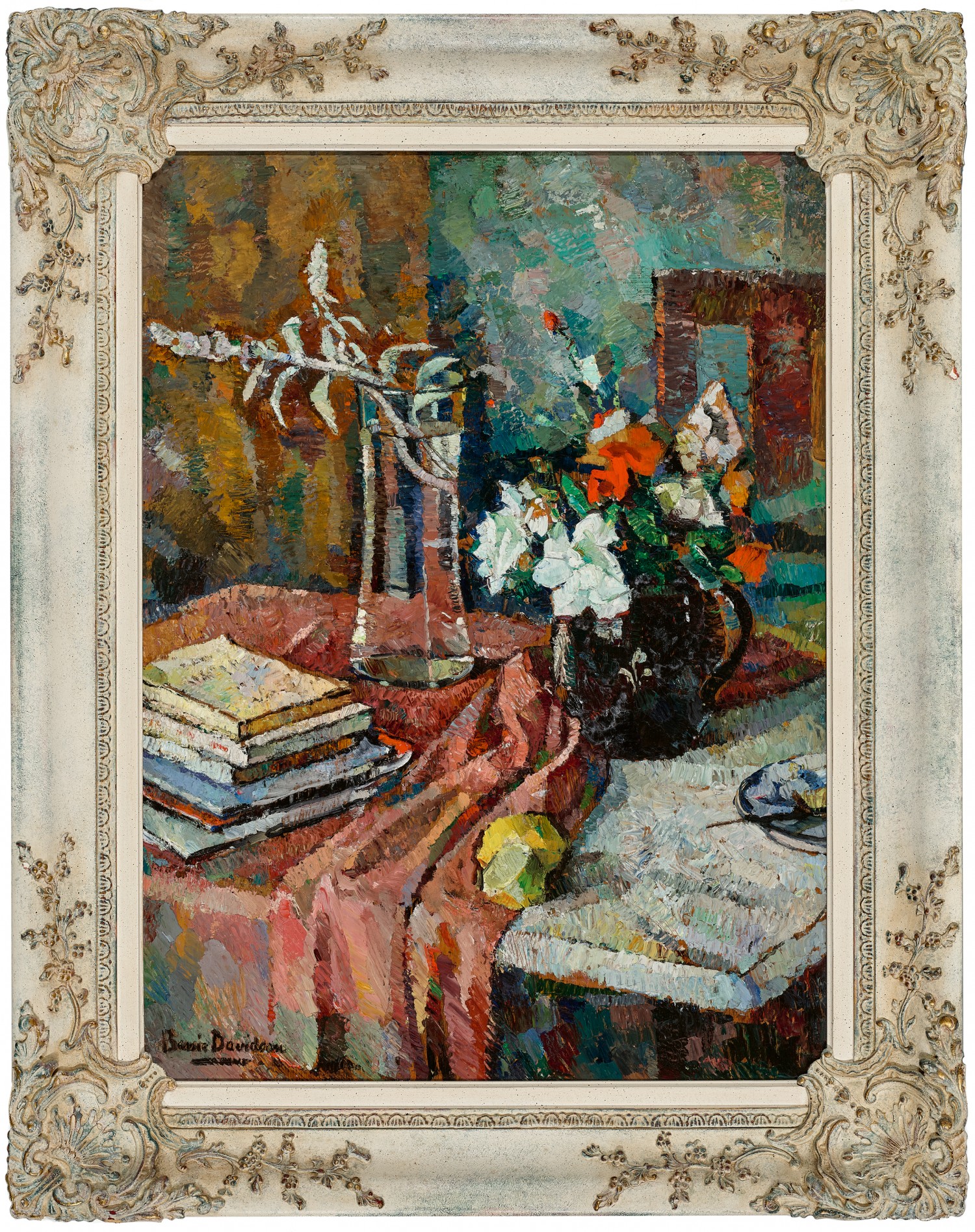
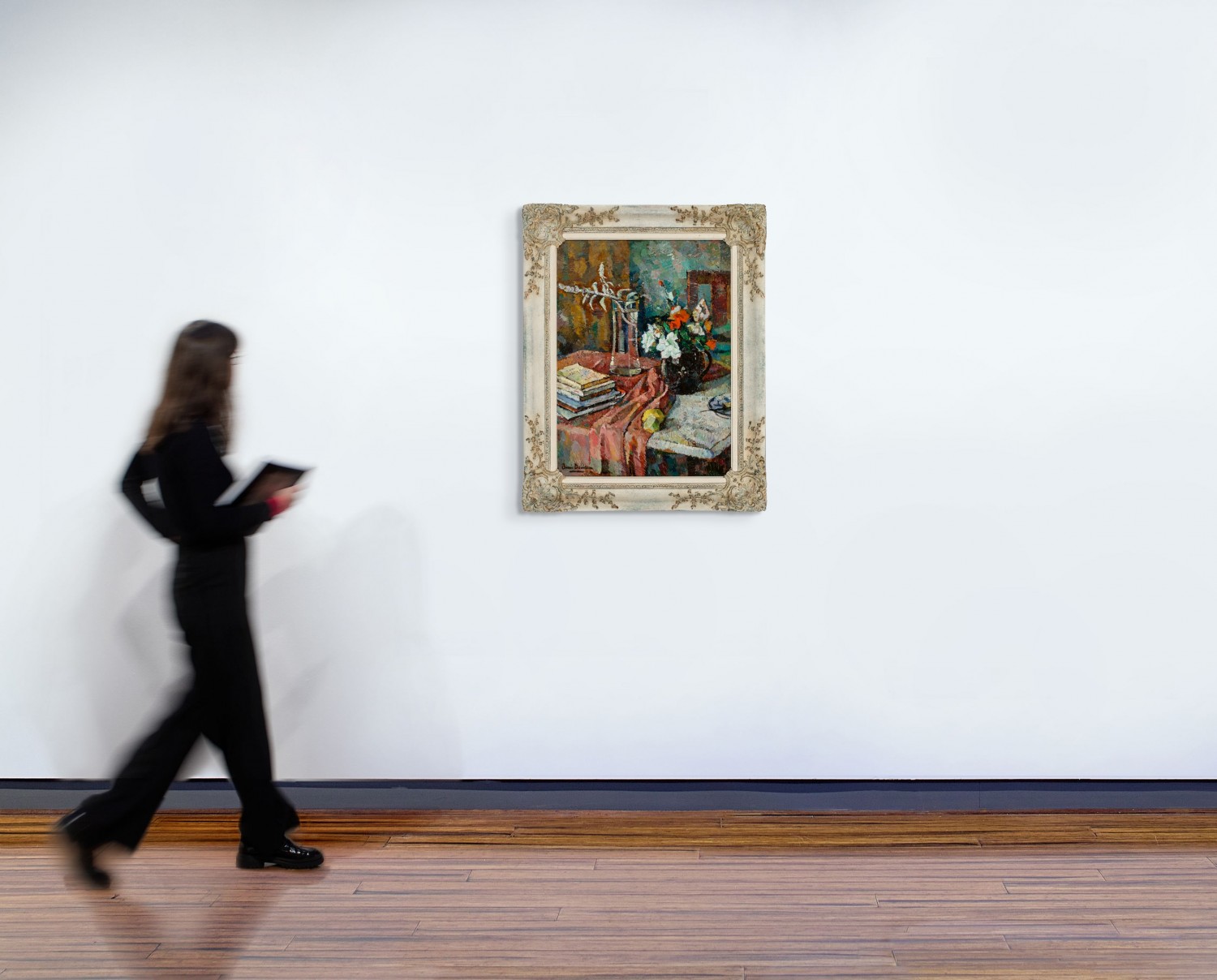
Flowers and books, c.1935
Bessie Davidson
oil on plywood
81.0 x 60.0 cm
signed lower left: Bessie Davidson
signed verso: Bessie Davidson
bears inscription verso: 14
Osborne Art Gallery, Adelaide
Private collection, Sydney, acquired from the above in 1967
4e Exposition du Salon des Tuileries, Néo-Parnasse, Paris, 21 May – 5 July 1936, cat. 416 (as ‘Nature morte’, partial label attached verso)
Exhibition of Paintings by Bessie Davidson, Osborne Art Gallery, Adelaide, 31 May – 13 June 1967, cat. 14
Sup image 2265_001.jpg
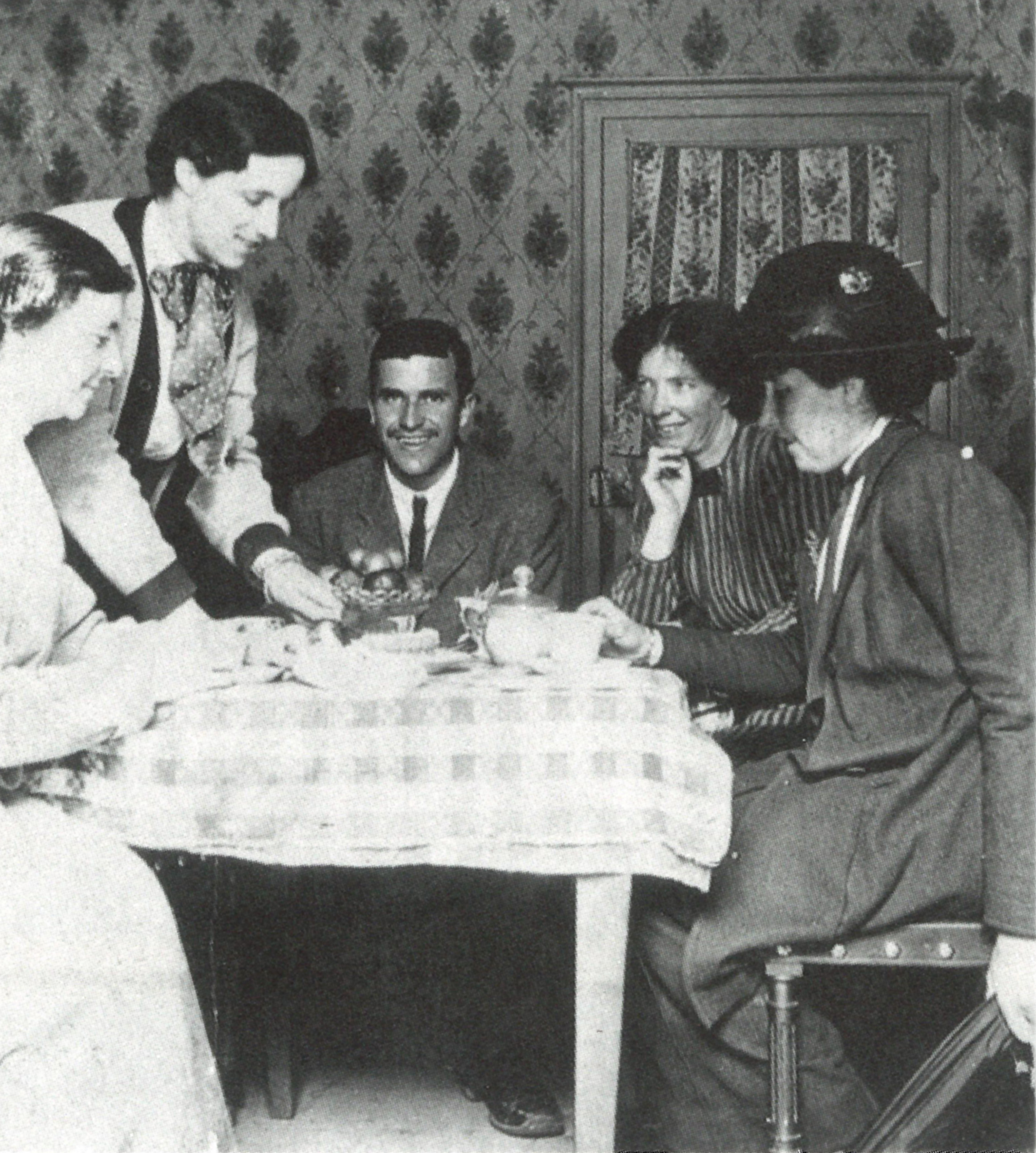
from left: Bessie Davidson, Gladys Reynell,
her first cousin Donald Hankey, Margaret
Preston and H. Hankey in Faucogney-et-le-Mer
in France, 1912
photographer unknown
Courtesy of H. Hopton
Bessie Davidson was part of a group of trailblazing Australian women artists who travelled and studied in Europe during the early twentieth-century. Paris, in particular, was a favoured destination, ‘the only truly cosmopolitan city of the world for artists, whose work stands a better chance there than in any other art centre of being judged on its merits.’1 Offering a pluralist and progressive approach to art with private academies that provided tuition to women, the City of Light provided opportunities for them to exhibit alongside their male counterparts. Being away from home also had the added advantage of freeing these artists from family expectations and gendered social conventions of marriage and motherhood. When Davidson and her friend, Margaret Preston, arrived in Paris following several months in Munich in late 1904, they joined the ranks of other antipodean expatriates including Kathleen O’Connor, Hilda Rix Nicholas and Iso Rae. While many returned home after their study and travels, sharing what they had learned of international modernism, Davidson and a small number of others – including Agnes Goodsir, Anne Dangar and Stella Bowen – remained, establishing successful careers and living overseas for the rest of their lives, part of a transnational group of artists whose experiences and work radically extend traditional narratives of Australian art.2
Davidson returned to Adelaide in late 1906 but within four years she was again back in Paris. She reconnected with friends including the artist René-Xavier Prinet, who had taught her at la Grande Chaumière – probably also taking classes with him – and in 1912 moved to Montparnasse, where there was a large community of expatriate artists, into a studio apartment on Rue Boissonade. Located on the second floor of a late nineteenth-century building, the apartment had high ceilings and large windows that looked out over a central courtyard. Its interior and those of Davidson’s friends’ country houses often provided the settings for her paintings, revealing ‘… an ambience of bourgeois refinement, not grand but testifying to lives full of interest and occupation. Furniture is elegant but comfortable, shelves are filled with books and ornaments and walls hung generously with paintings. The many different interiors… reveal something of the lives and personalities of their owners.’3
260123.jpg
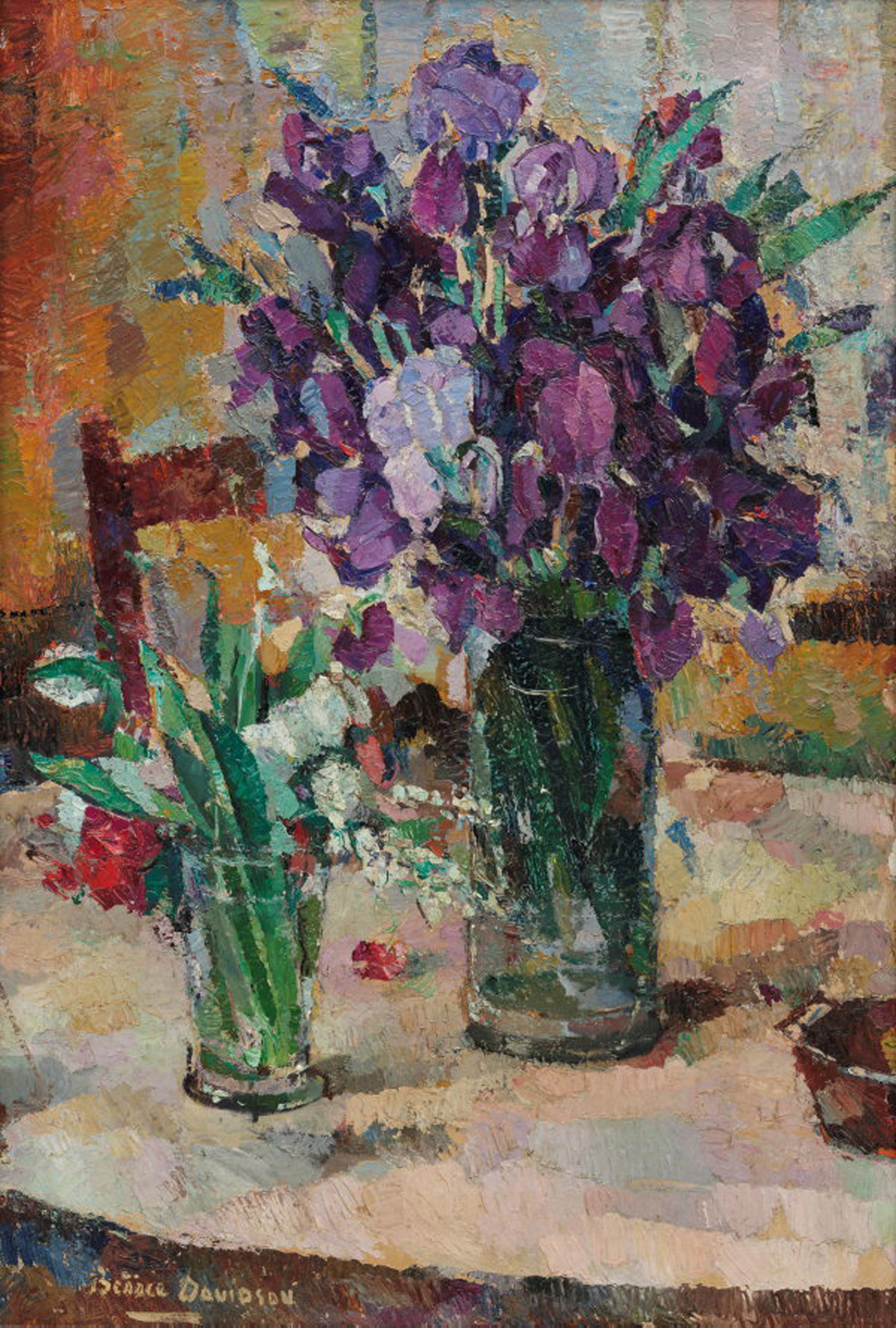
Bessie Davidson
Still life with irises, c.1920
oil on composition board
71.0 x 48.5 cm
Art Gallery of New South Wales, Sydney
First exhibited at the Salon des Tuileries, Paris in 1936, Flowers and books, c.1935, depicts an intimate corner of one such interior. It is an ambitious painting, significant in scale and complex in terms of its painterly approach. An informal arrangement of familiar objects sits atop a small table in a scene that is alive with movement, energised by short parallel brushstrokes that jostle and vibrate against each other. Contrasting white and red flowers in the centre of the image and the lemons in the foreground provide touches of vibrancy and bright colour within what, at first glance, seems like an overall subdued palette but which, on closer inspection, reveals a rich chromatic range. From the crumpled tablecloth that has casually been pushed aside to the reflections that are carefully recorded in the glass specimen vase, Davidson’s painterly prowess is on full display, as is the intense pleasure she found in her craft. ‘I can’t help this life that is in me – and I must paint or I feel ill…’4
Apart from visits to Australia in 1914 and again in 1950, Davidson remained in France, a resident of Rue Boissonade, for the rest of her life. As well as speaking fluent French, she developed a wide network of friends, was well-connected within the artistic community and established a successful career, exhibiting regularly at the Salons and having her work acquired by the French State and represented in important collections including the Centre Georges Pompidou, Paris. In 1920 she was elected as an associate member of the Société Nationale des Beaux-Arts, only the fourth Australian to receive this acknowledgement – following George Lambert, Rupert Bunny and George Coates – and the first Australian woman ever to do so. Two years later, she was the first Australian artist to receive full membership. Davidson was a founding member of the Salon des Tuileries (1923) and the Société des Femmes Artistes Modernes (1930), serving as vice-president for its first decade of operation. Arguably the greatest accolade, however, came in 1931 when Davidson was made a Chevalier de la Légion d’Honneur for services to the arts, the only Australian woman to have received this honour at the time.5
260123 (2).jpg
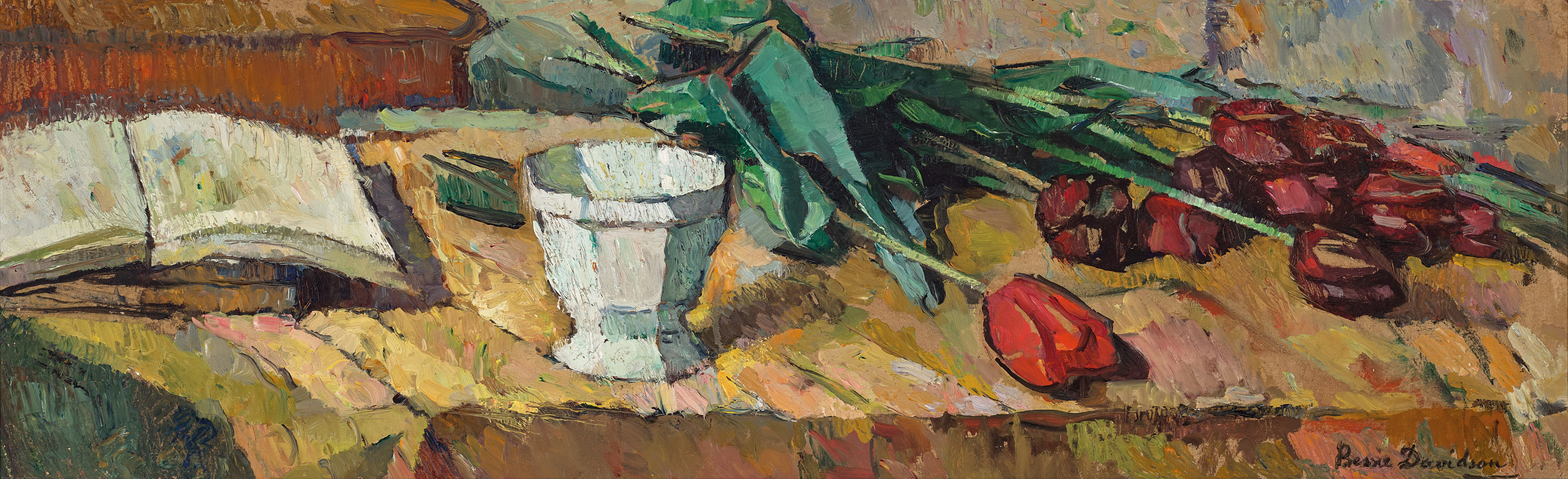
Bessie Davidson
Tulips with white pot, c.1935
oil on board
34.5 x 98.5 cm
National Gallery of Australia, Canberra
1. Edith Fry, cited in Speck, C., ‘Paris Calls’ in Bessie Davidson: An Australian Impressionist in Paris, Bendigo Art Gallery, Bendigo, 2020, p. 17
2. See Rex Butler and A. D. S. Donaldson, ‘French, Floral and Female: A History of UnAustralian Art 1900 – 1930 (part 1)', Emaj, issue 5, 2010, at: https://www.index-journal.org/media/pages/emaj/issue-5/french-floral-and... (accessed March 2026) and Freak, E., Lock, T., and Tunnicliffe, W., ‘Dangerously Modern’ in Dangerously Modern: Australian Women Artists in Europe 1890 – 1940, Art Gallery of New South Wales and Art Gallery of South Australia, Sydney and Adelaide, 2025, pp. 13 – 19
3. Little, P., A Studio in Montparnasse: Bessie Davidson: An Australian Artist in Paris, Craftsman House, Melbourne, 2003, pp. 64 – 65
4. Bessie Davidson, cited in Little, ibid., p. 10
5. All biographical information is drawn from Little, op. cit.
KIRSTY GRANT