Ngalyod, Rainbow Serpent, 1979
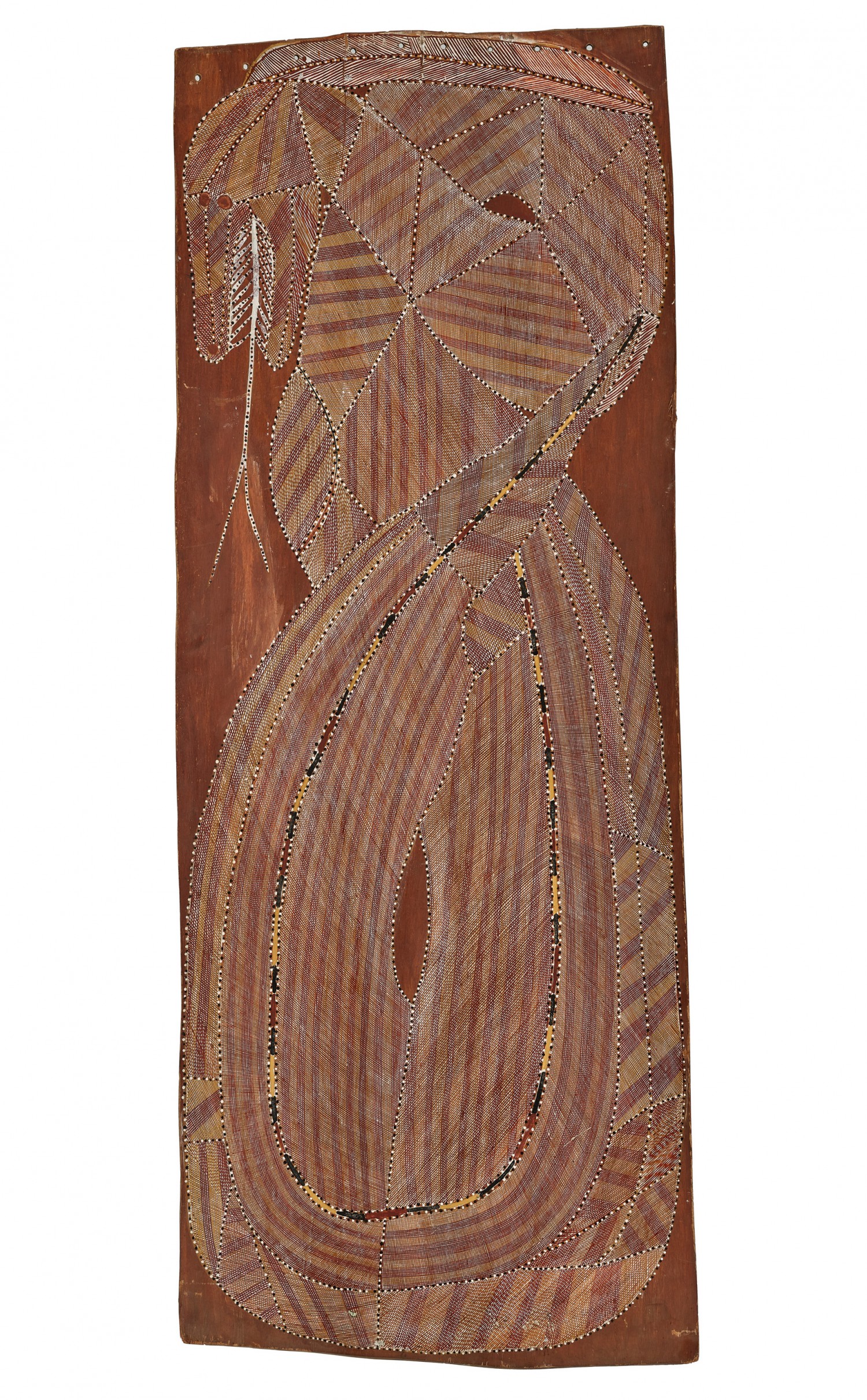
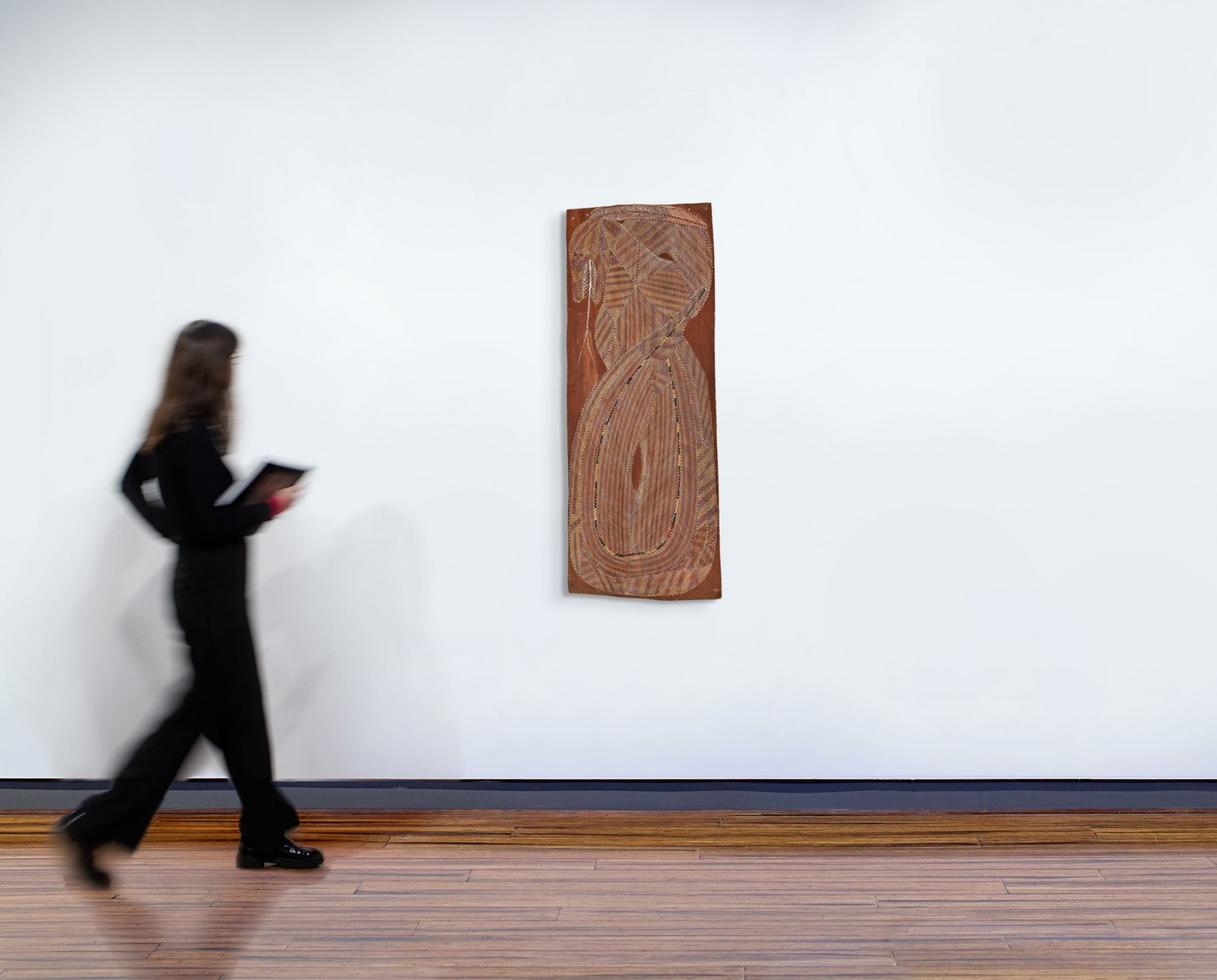
Balang Nakurulk (Mr Mawurndjul)
natural earth pigments on eucalyptus bark
128.0 x 48.0 cm (irregular)
bears inscription verso: artist's name, Maningrida Arts and Culture cat. M444 and cat. C767/USR 12.79
Maningrida Arts and Culture, Maningrida, Northern Territory
Company collection, Sydney
Private collection, Sydney, acquired from the above in 2025
260005.jpg
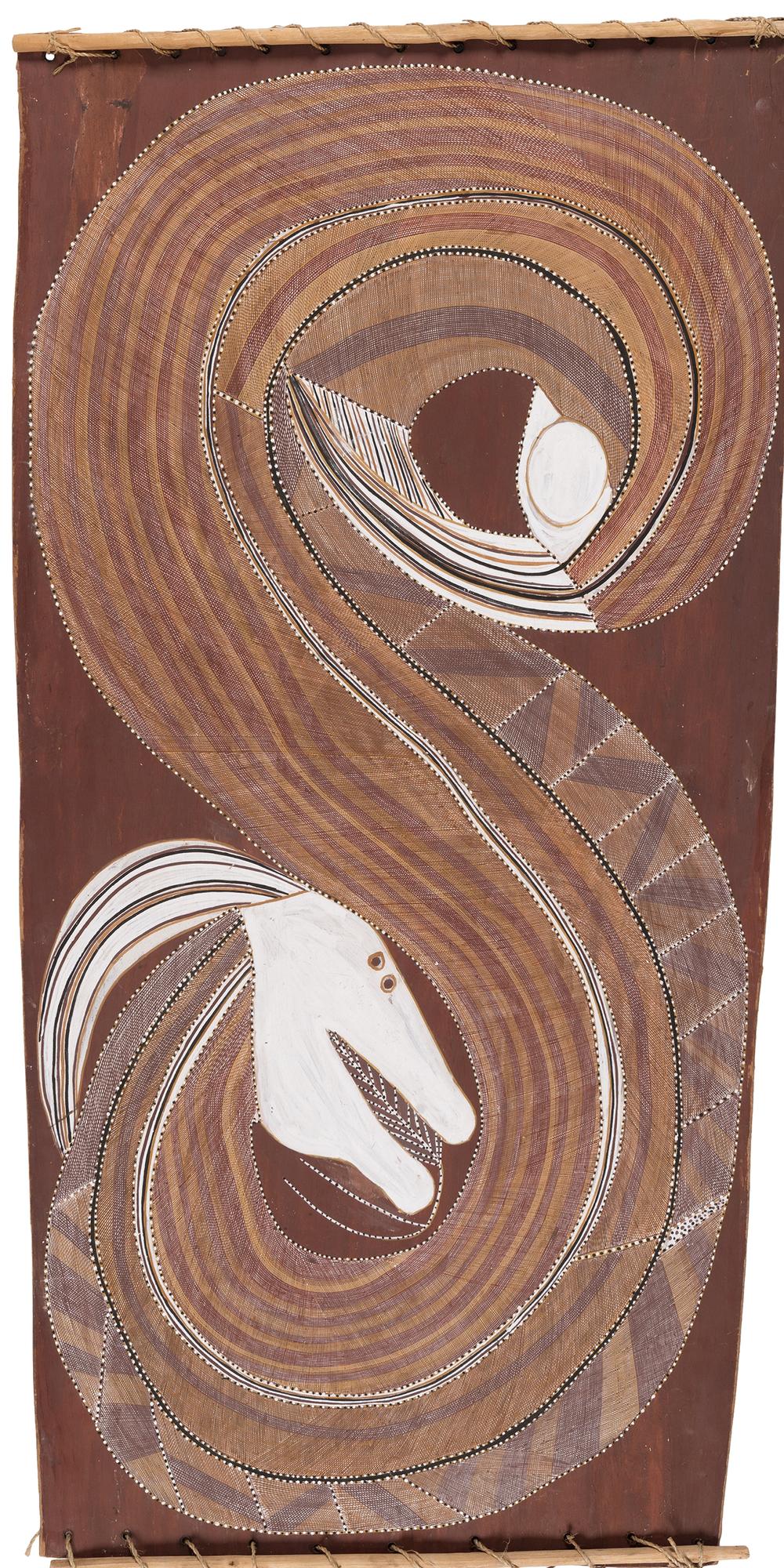
John Mawurndjul
Ngalyod, c.1981
natural pigments on
eucalyptus bark
120.0 x 61.5 cm
Berndt Museum Collection,
The University of Western
Australia, Perth
© Balang Nakurulk
(Mr Mawurndjul)/Copyright Agency
Original and uniquely Australian, the art of John Mawurndjul represents the culmination of decades of learning and the careful refinement of his craft. Over time, he developed a distinctive visual language – an enduring record of Country and an individual mode of storytelling – subtly embedded within his intricate and luminous bark paintings.
Since he began painting in the late 1970s, Mawurndjul has quietly transformed the tradition of Kuninjku bark painting. His early depictions of figures and creatures from Kuninjku mythology gradually evolved into more metaphysical representations of specific sites, events and landscapes, articulating the vital connection between the spiritual and human worlds. This evolution is most tangibly evidenced in his portrayals of Ngalyod, the Rainbow Serpent. An omnipotent and central being in Kuninjku cosmology, Ngalyod is associated with the creation of sacred sites, or djang, across Kuninjku clan lands.
Ngalyod appears in Mawurndjul’s earliest works; however, as his cultural knowledge deepened – guided by his late elder brother Jimmy Njiminjuma and through his participation in ritual ceremonies – his representations of the serpent became increasingly complex and powerful. His paintings began to convey not only Ngalyod’s creative force but also its destructive potential. As one commentator has observed, ‘many of his works, particularly the Ngalyod paintings, act as definitive warnings to family, friends and visitors alike, illustrating the vengeful capacity of beings to punish transgressors or those who do not have ritual authority.’1
‘Rainbow Serpents are found in many places in both dua and yirridjdja moiety. They live in the earth under the ground or in bodies of water at places such as Dilebang or Benedjangngarlwend. The white clay in the ground at Kudjarnngal is the faeces of the serpent. Waterlilies at certain places tell us that the Rainbow Serpent lives there. When the wet season storms come, we can see her in the sky as a rainbow. She makes the rain. When the floodwaters of the wet season rise, we say the Rainbow Serpent is creating the electrical storms of the monsoon. Rainbow Serpents are dangerous, like crocodiles; they can kill people and other animals.’2
The potency of Ngalyod is powerfully expressed in Ngalyod, Rainbow Serpent, 1979. The serpent’s head, shown in profile at the upper left of the bark, is bordered by fields of ochre rarrk; its teeth are reduced to a rhythmic series of chevrons, while its body twists and coils toward the edges of the bark surface. Energy radiates throughout the composition, signalling a presence imbued with immense power - life-giving in the regenerative rains of the annual monsoon, yet equally threatening in the destructive force of storm and flood.
Mawurndjul’s paintings have pioneered a renewed interpretation of Kuningku clan sites and djang, inspiring subsequent generations of bark painters. Constantly seeking new ways to articulate his relationship to Country, he has expanded both the conceptual and aesthetic possibilities of the tradition. As curator Hetti Perkins writes, ‘His works, lovingly crafted and sculpted depictions of flora and fauna, ancestral events, supernatural beings, significant sites and encrypted ceremonial designs, are at once Country and mnemonic of Country.’3
1. Perkins H., ‘Mardayin Maestro’ in John Mawurndjul, I am the Old and the New, Art Gallery of South Australia, Adelaide, 2018, p. 26
2. John Mawurndjul, cited in John Mawurndjul, ibid., p. 200
3. Perkins, op. cit., p. 21
CRISPIN GUTTERIDGE