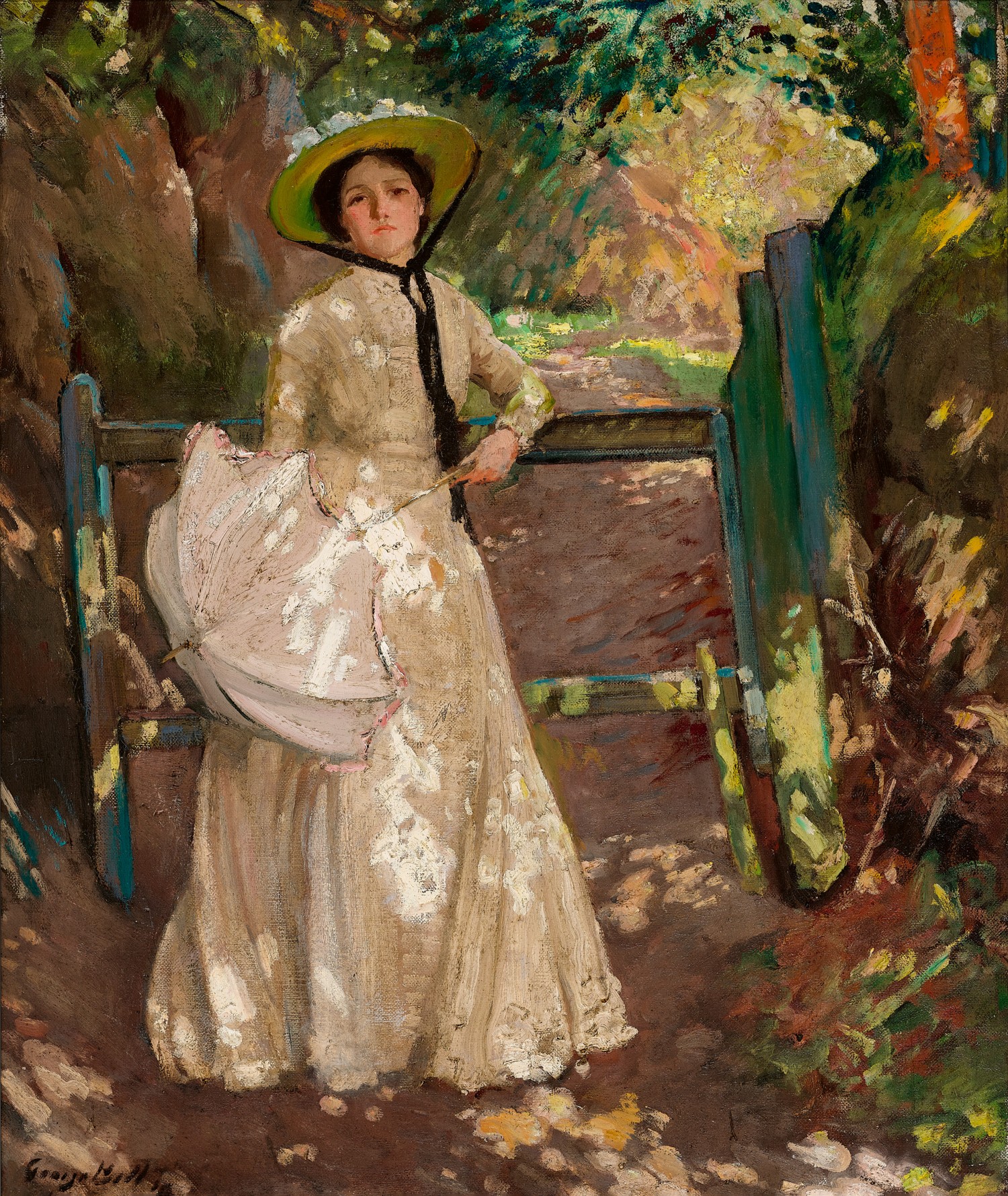
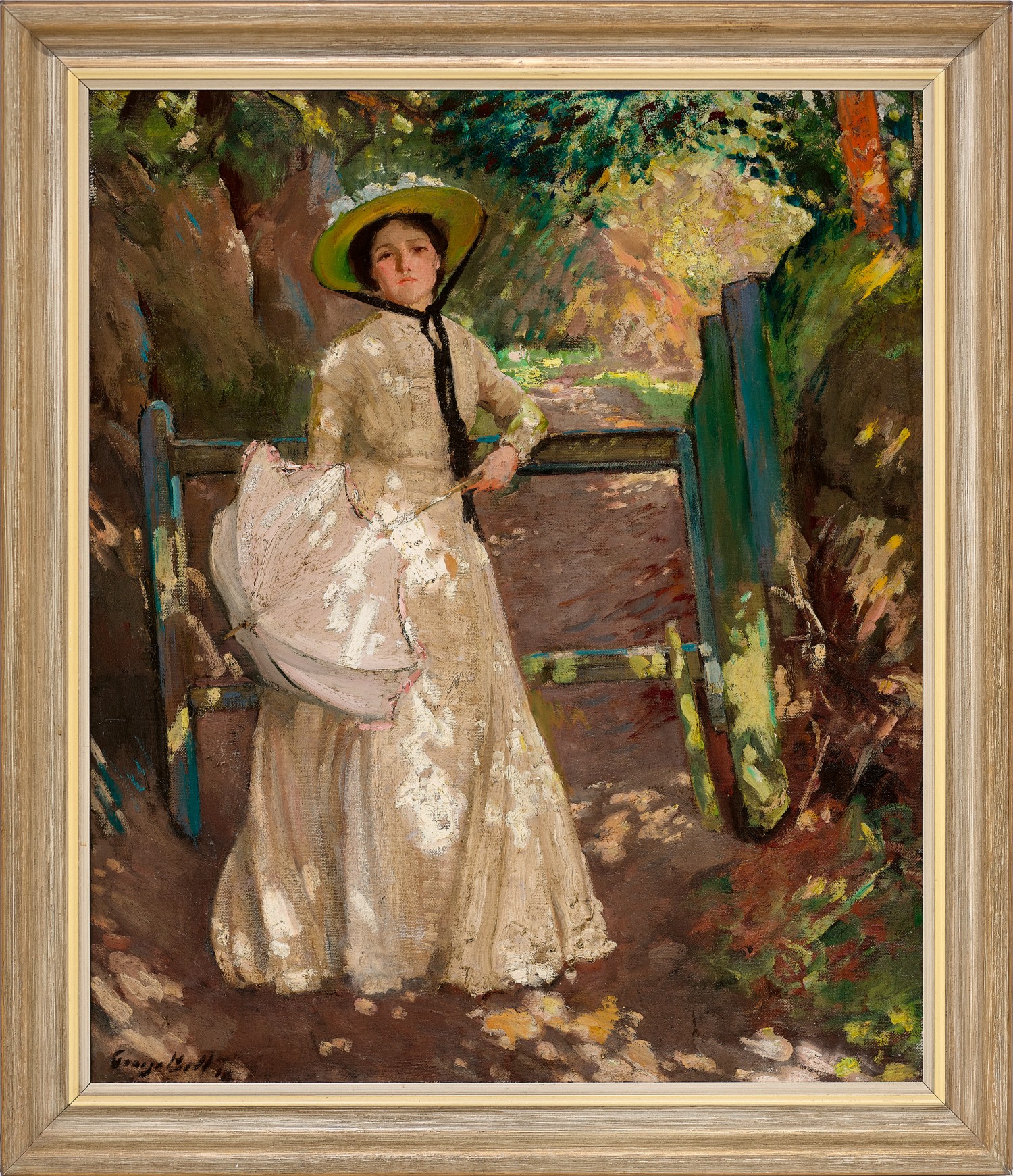
In the shade, 1910
George Bell
oil on canvas
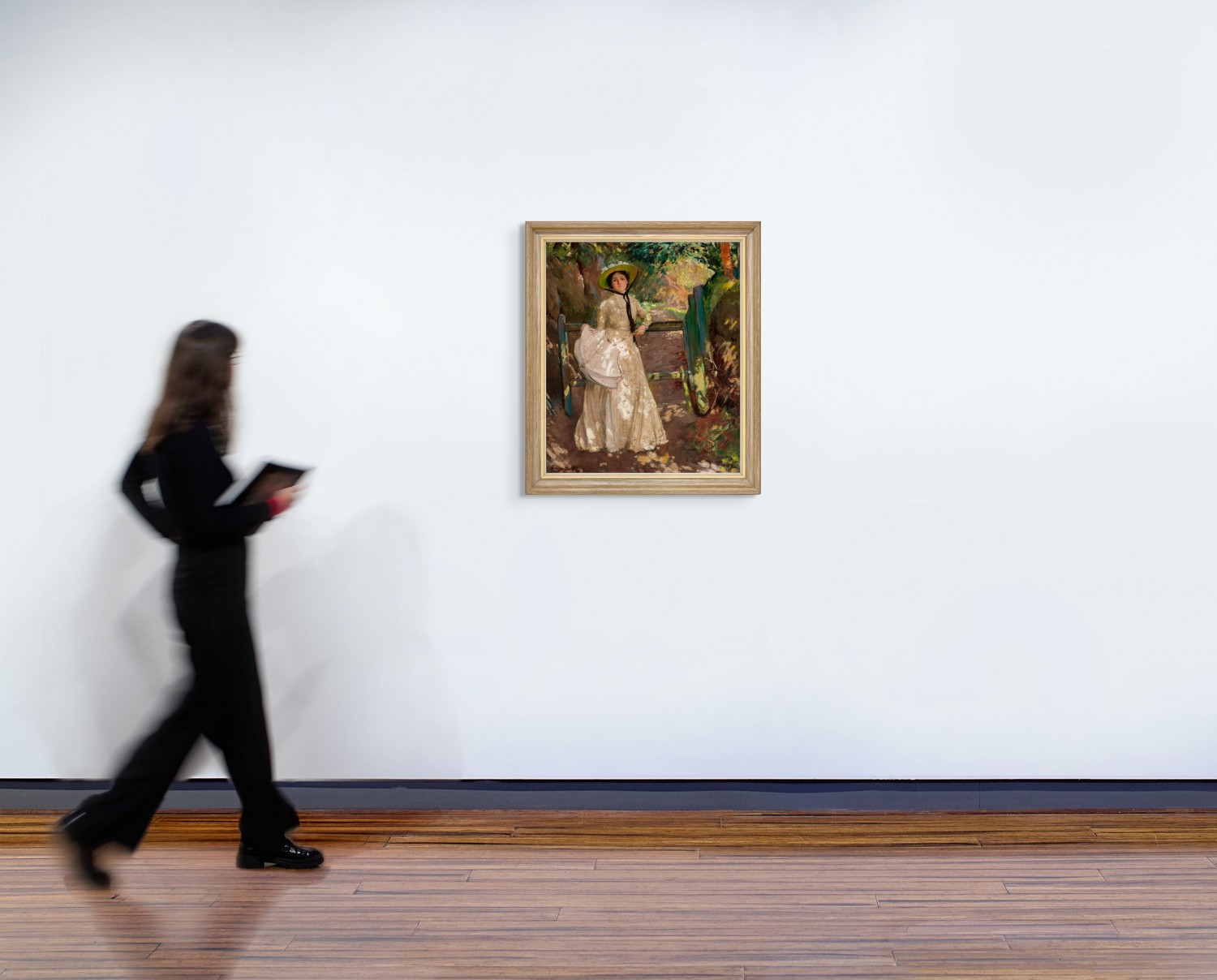
76.0 x 64.0 cm
signed and dated lower left: George Bell 10
Elizabeth Glenn (née Balderstone) (pupil of George Bell), purchased direct from artist, Melbourne
Thence by descent
Private collection, Melbourne
First solo exhibition, Athenaeum Gallery, Melbourne, 14 - 25 September 1920, cat. 36
Exhibition of Painting works by George Bell', The Argus, Melbourne, 14 September 1920, p. 8
We are grateful to Peter Perry for his assistance with this catalogue entry.
No history of Australian art would be complete without acknowledging the pioneering classical modernist painter George Bell, famously described as ‘the revolutionary in a bowler hat.’ As James Mollison, then Director of the National Gallery of Victoria, wrote in his foreword to the landmark exhibition Classical modernism: the George Bell circle, ‘Bell occupies a unique position in the development of Australian art. After spending a significant portion of his career working in a traditional manner, he was converted to modern art and spent the remainder of his life instilling its principles into two generations of Australian painters… He was convinced that the language of form was universal and that this language, based on drawing, composition, craftsmanship and a study of the old and modern masters, could be taught.’1
Much of Bell’s earlier Edwardian work remains elusive, however paintings such as the present In the shade, 1910 demonstrate a high level of accomplishment. This work was exhibited following Bell’s fifteen-year sojourn in the major art centres of Europe and appeared in his first solo exhibition in Melbourne in 1920. Reviewing the exhibition, The Argus art critic observed: ‘A series of pictures of figures in landscape is hung, and ‘John Nicholson, Gypsy’, ‘A Summer Day’, ‘Gypsy Camp’, and ‘In the Shade’ are proof of skill in draughtsmanship and instinct for selection that have led to pleasing results.’2
A significant influence on Bell during the period 1908 – 1915 was the British painter Philip Connard (1875 – 1958). As June Helmer has noted, ‘Connard and Bell had a similar academic training; both had studied with Jean-Paul Laurens at the Académie Julian in Paris, both belonged to the Chelsea Arts Club and exhibited at the same societies. They became close friends, went on painting trips together, painted the same scenes and shared many ideas on how to paint a picture.’3 Writing in March 1938 for The Melbourne Sun, Bell himself noted that ‘Connard’s work showed a keen appreciation of paint quality—an understanding and love of the material used.’4
Bell painted a portrait of Connard’s youngest daughter Jane in 1914, titled Little lady, which was included in his 1920 exhibition. The National Gallery of Victoria acquired a major portrait by Connard of his two daughters, Helen and Jane, c.1913, through the Felton Bequest in 1933 – although this work is now rarely displayed.
Reviewing Classical Modernism: The George Bell Circle, Robert Rooney observed that ‘the characteristics of the New Classicism—its figural basis, formal order and serene mood—were ideally suited to Bell’s training and temperament.’5
1. Mollison, J., ‘Director’s Foreword’ in St John Moore, F., Classical Modernism: The George Bell Circle, National Gallery of Victoria, Melbourne, 1992, n. p.
2. ‘Exhibition of Paintings: Works by Mr George Bell’, The Argus, 14 September 1920, p. 8
3. Helmer, J., George Bell: The Art of Influence, Greenhouse Publications, Richmond, 1985, p. 37
4. Bell, G., The Melbourne Sun, March 1938
5. Rooney, R., ‘Long overdue but Bell strikes the right note,’ The Australian Weekend Review, 13 – 14 June 1992