Story of two brothers, 1983
Clifford Possum Tjapaltjarri
synthetic polymer paint on linen
182.0 x 120.0 cm
bears inscription verso: cat. RG2483
Commissioned by Hinton Lowe and painted at Mbunghara (50 kilometres east of Papunya) in 1983
The Holmes à Court Collection, Perth
Sotheby's, Melbourne, 30 June 1997, lot 56
Private collection, Sydney
Sotheby's, Sydney, 25 November 2007, lot 54
Private collection, Melbourne
Johnson, V., The Art of Clifford Possum Tjapaltjarri, Gordon and Breach International, Craftsman House, Sydney, 1994, p. 94, pl. 35 (illus.)
Born at Napperby Station, north-west of Alice Springs, Clifford Possum Tjapaltjarri did not attend school and worked as a stockman from late boyhood. He began carving in his late teens and had already established a reputation as a highly skilled craftsman when the Papunya painting movement emerged in 1971. One of the last artists to join Geoffrey Bardon’s group of painters, he enrolled in February 1972 under the encouragement of Tim Leura Tjapaltjarri.
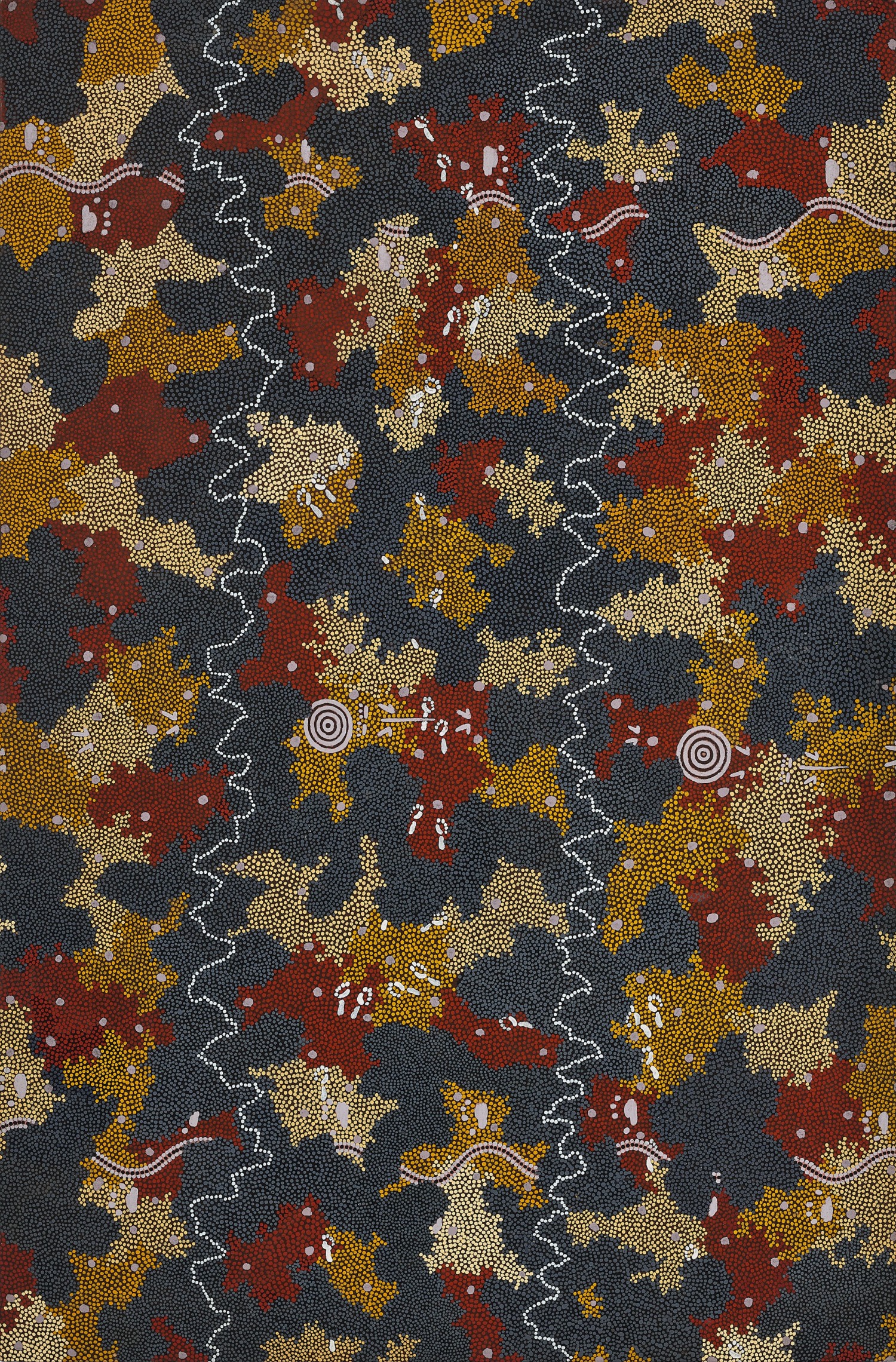
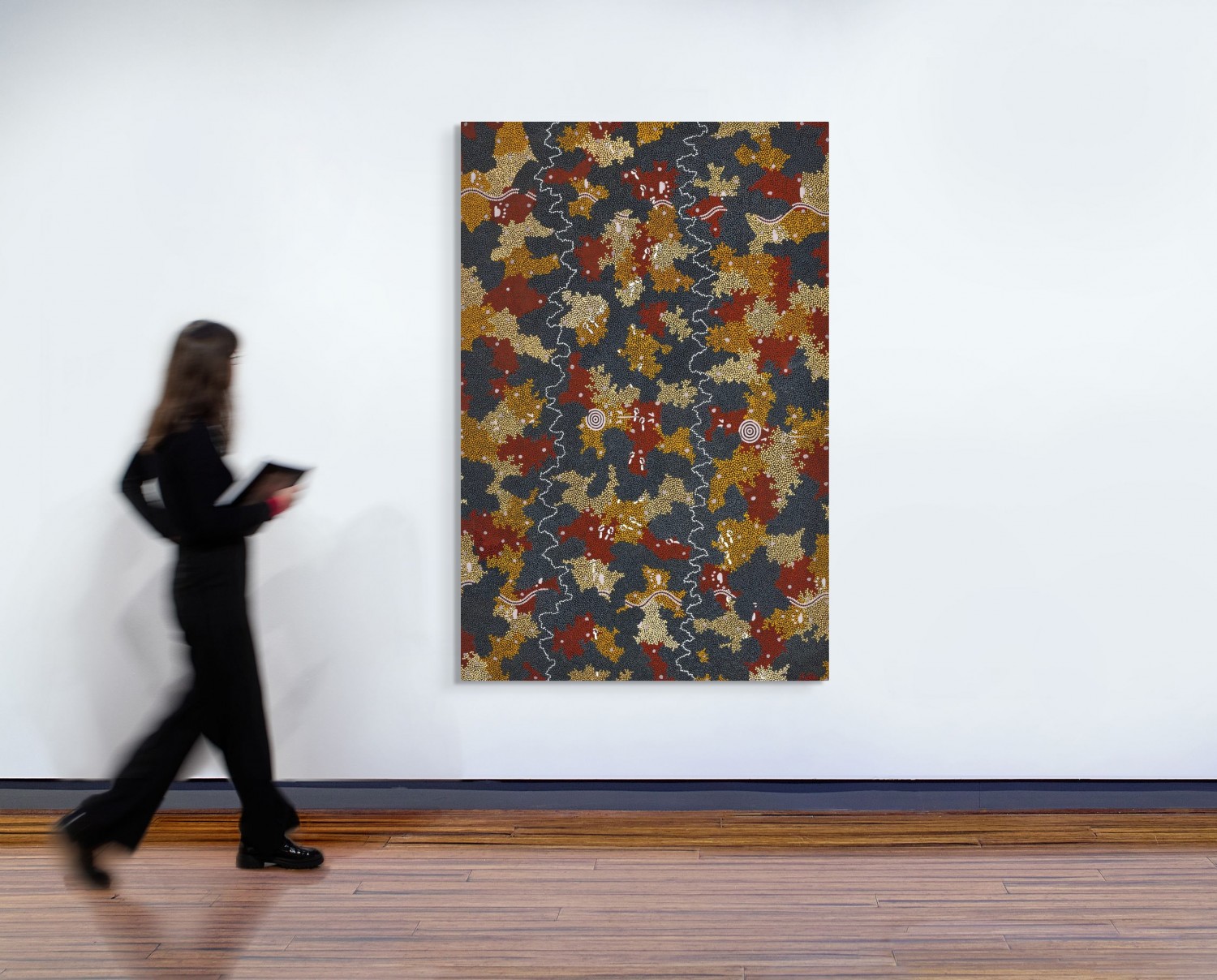
An innovative artist, Clifford Possum experimented with combining traditional iconography and Western European pictorial perspectives, as demonstrated in this deceptively literal painting. Story of Two Brothers, 1983 depicts part of the first episode of the great Fire Dreaming, which he represented in its entirety in Warlugulong, 1977, now held in the collection of the National Gallery of Australia. The story recounts how two brothers of the Tjampitjinpa skin group are punished by their father, Lungkata – the Blue-Tongue Lizard – for failing to share their kangaroo catch. In anger, Lungkata sets fire to the land, and the flames pursue the young men to Kerrinyarra (Mt Wedge), where they are ultimately overcome.
This work traces the brothers’ footprints as they flee the advancing fire, alongside the tracks of the Wallaby and Possum ancestors whose Dreaming paths they cross. The landscape is rendered as a patchwork of red and yellow cluster – symbolising fire and spinifex – encircled by black and grey areas that evoke scorched earth and smoke. This patchwork composition became a defining feature of Clifford Possum’s later practice and influenced many of his contemporaries.
CRISPIN GUTTERIDGE