Important works formerly from the Estate of Dorrit Black, Adelaide
__01041_Adobe RGB 4000px (web).jpg
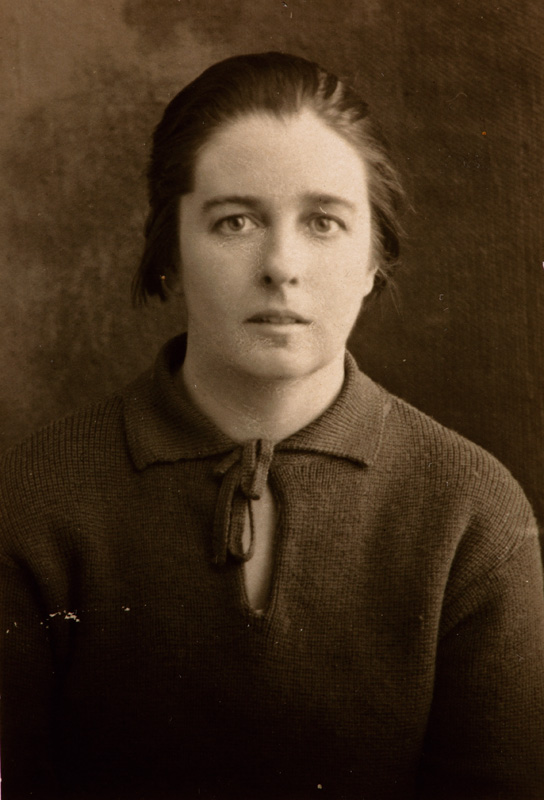
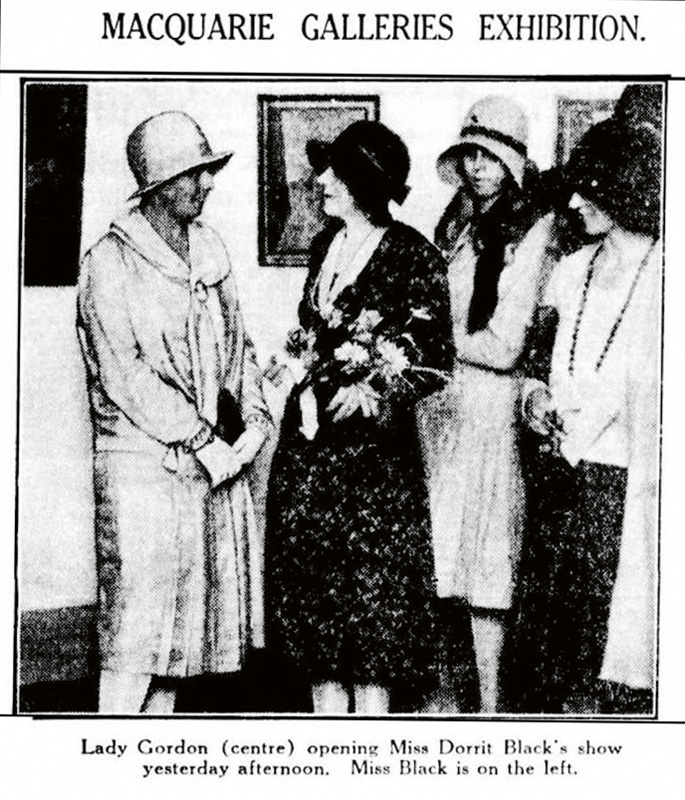
‘Miss Black… is a modern of moderns and is all for the new school of painting [which] does not aim at realism, [but] is founded on design, harmony, and rhythm in forms.’1
When Dorrit Black returned to Australia in 1929 after two years in Europe, her commitment to modern art was clear. Studying in London and Paris, she had come into direct contact with influential artists and teachers, learning about developments in modern art at their source. Her approach to art was transformed and at home, she joined the ranks of a small group of trailblazing women who, through the exhibition of their art, teaching and – in Black’s case – enthusiastic proselytising, played a pioneering role in the evolution of modernism in Australia.
EARLY YEARS
Black was born in Adelaide in 1891, the first of four children to Alfred Barham Black, a civil engineer and architect, and Jessie Howard Clark.2 Well-to-do and well-connected, the family lived at Bell Yett, a bluestone house on a ten acre estate near the base of the Adelaide Hills where maids and a gardener helped to oversee the ‘paddocks and trees, fruit of all sorts, and lawn and gardens with horses and cows.’3 All of the Black children began their education at Knightsbridge School in nearby Leabrook, which was later known as Mrs Hübbe’s school in acknowledgement of one of its founders. Edith Hübbe was the first woman to matriculate from the University of Adelaide and the wide-ranging curriculum at her school encouraged a broad education that included ‘art tuition, as a right, not as an extra’ and provided lessons for women through to matriculation.4 Black was awarded the school’s prize for drawing in 1904 and in around 1910, with the enthusiastic support of her family, she attended the South Australian School of Arts and Crafts, also taking private lessons in watercolour painting.
In September 1911, Black sailed for London in the company of her parents and a cousin, travelling through England, France, Italy, Switzerland, Scotland and Ireland for twelve months. They visited relatives overseas, but the itinerary also included major cultural and historical sights, as well as great art museums. In addition to important historical art, Black saw contemporary work, describing the Musée du Luxembourg in Paris – which included works by Paul Cézanne, Paul Gauguin and Odilon Redon – as having ‘a splendid collection of modern paintings.’5
SYDNEY
In 1915, Black moved to Sydney to continue her art studies at Julian Ashton’s Sydney Art School. Teaching followed a traditional approach which focussed on draughtsmanship, with students drawing from plaster casts of classical statuary before progressing to the life studio, and then to painting. Ashton and Elioth Gruner were Black’s teachers, and the influence of the latter’s work can be seen in the painterly impressions of landscape subjects that she made en plein air during these years. Fellow student, Nancy Hall, recalled, ‘we would put our efforts on easels… and Julian Ashton would… appoint three critics and we would go and criticise [the easel works] and then he would get up and criticise the critics, and I remember how Dorrit’s work always stood up… it was always good.’6
__01038_Adobe RGB 4000px (web).jpg
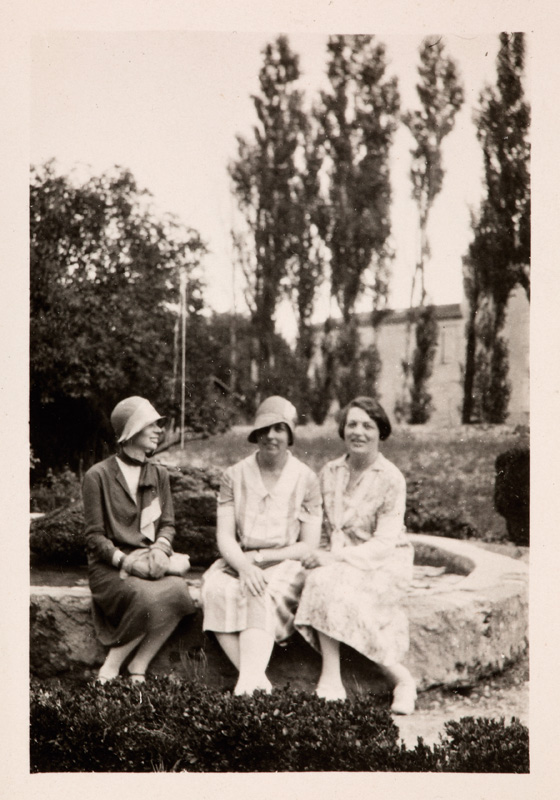
Black regularly exhibited with the Sydney Society of Artists between 1916 – 20 and after completing her studies around 1920, showed larger groups of works. Committed to a career as a professional artist however, the lure of study overseas was strong and encouraged by the example of her friends and fellow Ashton-school alumni, Grace Crowley and Anne Dangar, she left Sydney and arrived in London in September 1927.
LONDON AND THE GROSVENOR SCHOOL
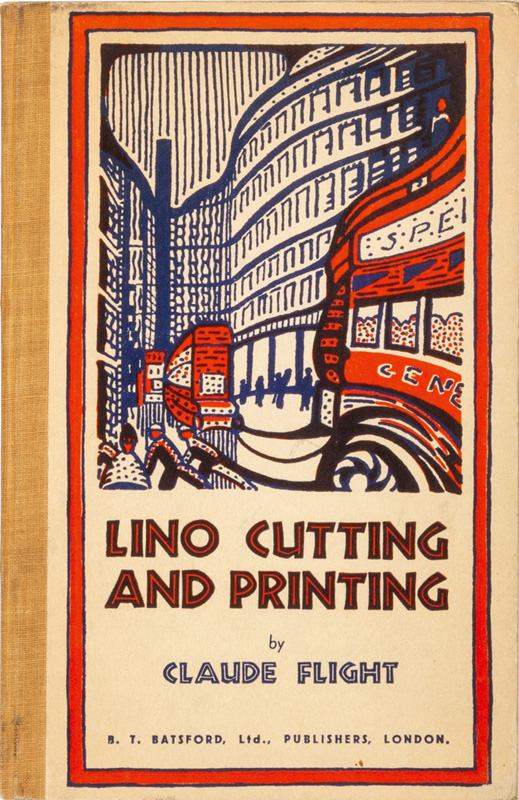
Her first stop was the Grosvenor School of Modern Art in Pimlico which had been founded only two years earlier by Scottish artist, Iain Macnab. It had a decidedly modern outlook, aiming to ‘encourage students to express their own individual ideas rather than be forced to accept worn-out academic theories’7 and to that end, Macnab established a small, hand-picked team of teachers whose forward-thinking ideas matched his own. Various classes were offered, including life drawing, painting, composition, lithography and etching, and from 1926 – 30 Claude Flight taught the art of colour linocutting. Revolutionising printmaking in the 1920s and 30s through his passionate advocacy of the colour linocut, he regarded it as the modern medium for the modern age. Although Black’s first introduction to the linocut technique was probably through Thea Proctor in Sydney during the early 1920s8, she absorbed Flight’s example and his was the most significant and ongoing influence on her work in this medium, characterised by the use of bold colour, the reduction of subject matter to simplified shapes, and patterns based on a dynamic system of opposing rhythmic lines and forms.
230468 Art + Linoleum (web).jpg
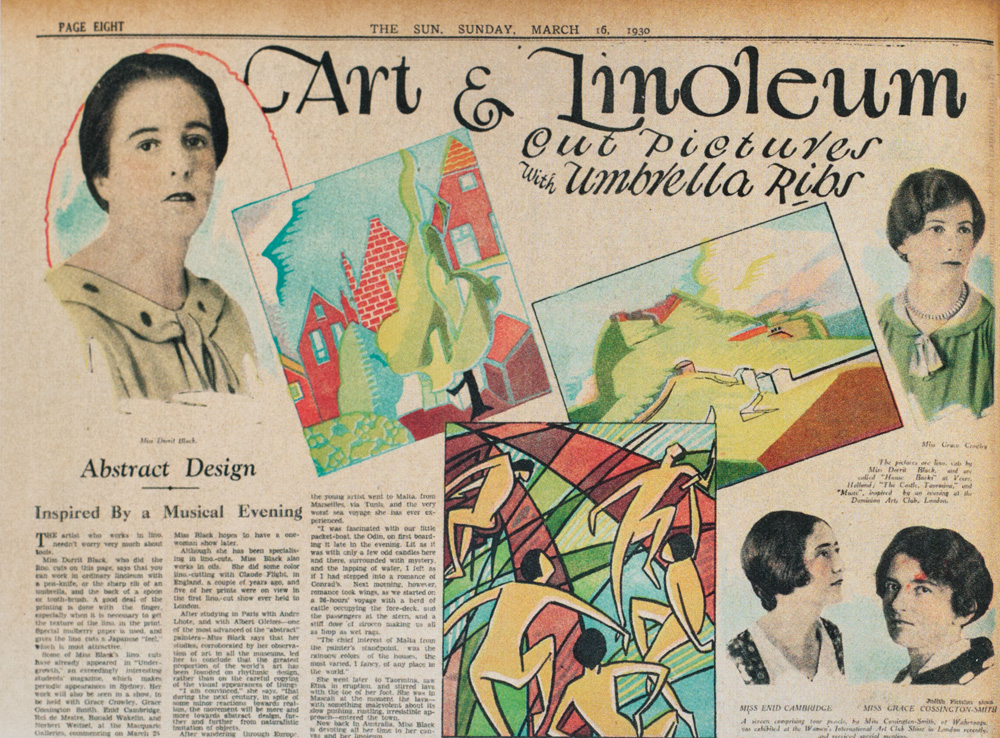
Two of the earliest linocuts Black made after her encounter with Flight, Music and Wings, both 1927 – 28, clearly reflect his influence in their strong design and lively sense of movement. The master evidently approved, writing to her after seeing a trial proof of Music, ‘I think it very good. I especially like the person at the piano… I think you have got away with the idea very well… I believe that rather abstract ideas work better in Lino-cuts than definite views.’9 Indeed, Flight’s admiration was such that he included both prints, along with two others (The castle, Taormina, c.1929 and Argentina, c.1929) in the first of the regular exhibitions of colour linocuts that he organised at the Redfern Gallery in London in 1929. Black continued to make colour linocuts throughout her life and following the annual British Lino-cuts exhibition in 1934, the Victoria and Albert Museum purchased The pot plant, 1933, for its permanent collection – the first of Black’s works to be acquired by a public museum.
PARIS, ACADÉMIE LHOTE AND ALBERT GLEIZES
Black’s account of her travel and work during the late 1920s records that she ‘crossed over to Paris at the end of December [1927] and settled down in Montparnasse to work at André Lhote’s Academy… [hoping] to acquire a definite understanding of the aims and methods of the modern movement and, in particular – of the Cubists.’10 This move was surely encouraged by Crowley and Dangar, who were already studying with Lhote, as well as his reputation as one of the original cubists who had exhibited in the 1911 Salon des Indépendents. In addition, Académie Lhote was one of only two schools in Paris which offered a modernist approach to painting.11 Black explained:
‘Lhote comes in one day a week to pose the model and one day to criticise or ‘correct’, the rest of the time one works by one-self. His teaching is from the standpoint of design, which is the basis of all modern work. He draws his knowledge from the masterpieces of all periods, Egyptian, Chinese, Persian, Greek, African, Primitives and Renaissance; he is extremely catholic in his tastes. He judges the work from standards of rhythm, balance, proportion and line, and applies these standards to its three properties – form, tone and colour.’12
230468 Book _cmyk (web).jpg
230468 nla news page_cmyk (web).jpg
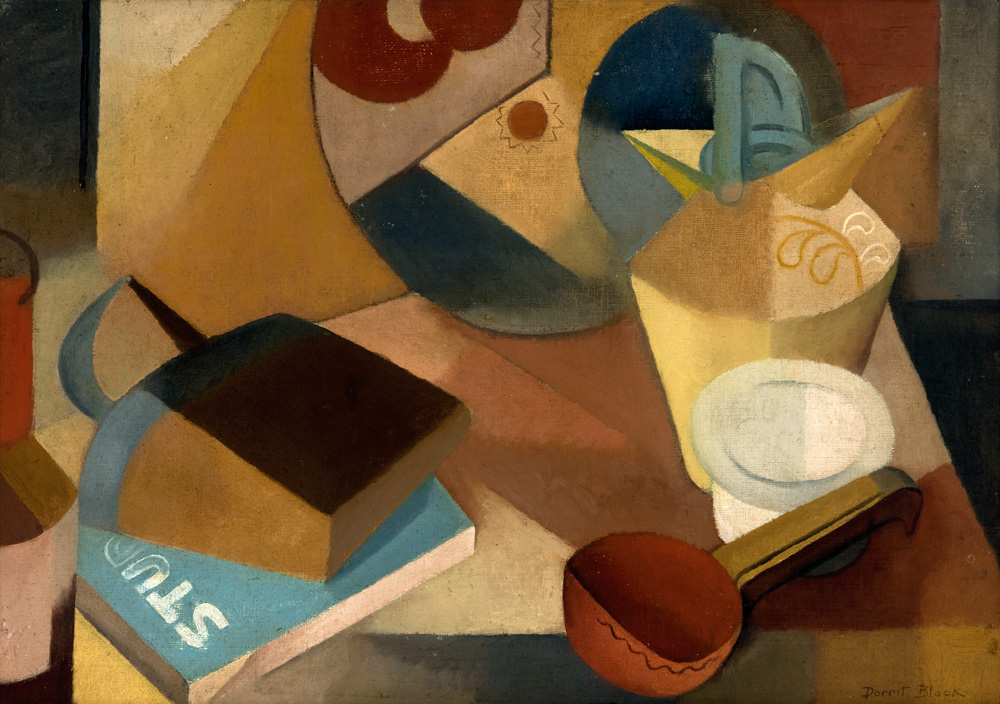
Paintings such as Still life, c.1928 (Art Gallery of South Australia), show how quickly Black responded to Lhote’s teaching, adopting the mathematical principles of the Golden Section and simplifying her subject according to geometric form – a radical transformation from the post-impressionist style of painting she had practiced in Sydney only a few years earlier. Following an extended period of travel through Europe, in 1928 Black spent two months at Lhote’s summer school at Mirmande in the south of France. Crowley and Dangar were also there and a remarkable trio of paintings depicting the distant view of the Medieval hilltop town – each painted by the Australian friends simultaneously – demonstrates their individual responses to Lhote’s approach and the confidence and ambition that now characterised their artmaking.13
Writing to John Young at Sydney’s Macquarie Galleries some months later, Black confirmed that ‘since the beginning of Lhote’s summer class at Mirmande I have been enjoying painting again tremendously, more, I think, than I have ever done before. And I have a pretty clear idea now of the direction in which I want to aim.’14 This sense of creative clarity received positive confirmation when, in response to the display of Mirmande, 1928 (Art Gallery of South Australia) and another work by Black in the inaugural exhibition of the Salon d’Art Français Indépendent at the Grand Palais in early 1929, the art critic for the Journal des Débuts pondered, ‘How graceful is the work of Dorothea Foster Black, how cleverly the essential details of a subject are found within a whole and meaningfully harmonised.’15
The final element of Black’s international education took place in mid-1929 when she and Crowley attended a series of classes with Albert Gleizes in Paris. An important theorist of cubism, his teaching combined flattening of the picture plane with pictorial movement and building on her experiences thus far, ‘offered… a bridge from cubism to pure abstraction: from the static to the dynamic.’16
RETURN TO AUSTRALIA AND LATER YEARS
HQ-928P29 (web).jpg
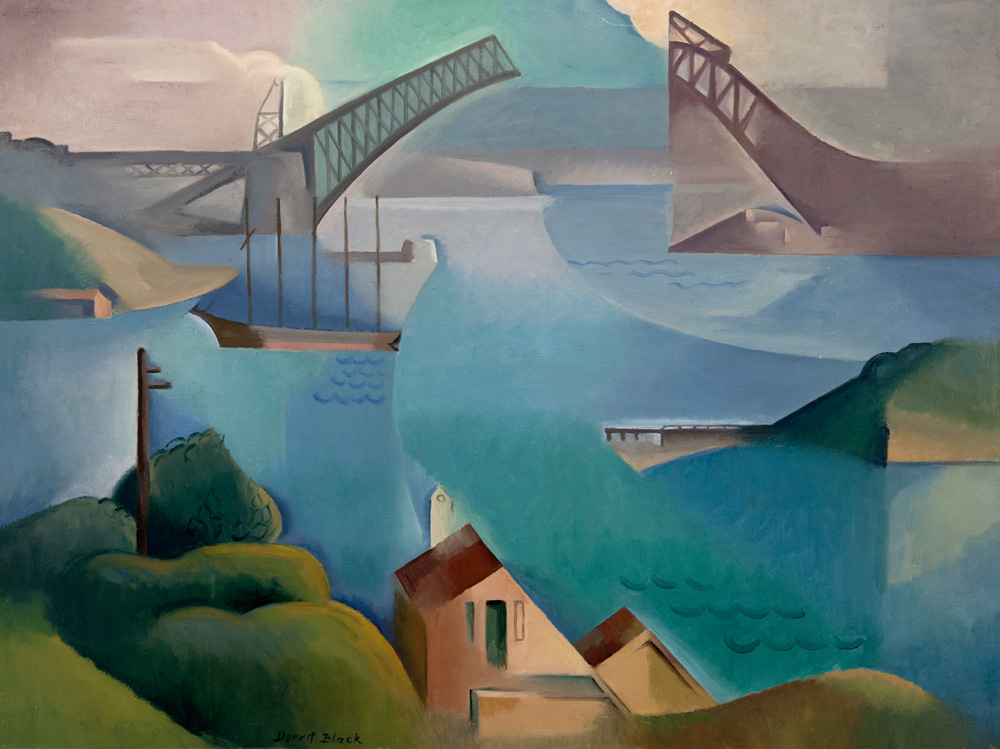
Black returned to Australia in August 1929 and hailed as ‘a modern of moderns’, energetically shared her knowledge and enthusiasm for the cubist-inspired brand of modernism she had learned overseas. Her first solo exhibition opened at the Macquarie Galleries, Sydney in late 1930, mostly showing paintings, prints and tempera studies made during her time in Europe. The Bridge, 1930 (Art Gallery of South Australia), however, was painted in Sydney and in a brilliant palette, combined her new approach to abstraction with the Sydney Harbour Bridge, a distinctively local subject and powerful symbol of modernity that at the time, was still under construction. Expanding her reach, in 1931 Black opened the Modern Art Centre which comprised an exhibition space and spacious studio, and offered classes in drawing, painting, design, linocutting and art appreciation. Confirming the focus of the Centre in her opening speech, Black noted that it was for ‘those who aimed for something beyond the photographic imitation of objects.’17
The death of Black’s father in 1933 prompted her return to Adelaide, where she took responsibility for the care of her mother. They travelled to Europe together on an extended trip between March 1934 – September 1935, staying at Mirmande before visiting Anne Dangar at Moly-Sabata and meeting with Albert Gleizes. In the summer of 1934 Black also holidayed with Claude Flight and his partner, artist Edith Lawrence, on a sketching holiday in Dorset, which she recalled as ‘one of the most enjoyable times of my life… such an awfully jolly & interesting lot of people. Claude got me painting rapid watercolour sketches most of the time, though I did do some of my usual careful constructed & deliberate oils.’18
HQ-0.1475 (web).jpg
Having lived overseas and interstate for twenty years, Black was little known in her hometown when she returned in the mid-1930s, but with characteristic energy and determination she continued to make and exhibit new work, balancing family commitments with her career. Her first solo exhibition in Adelaide took place in 1937, the same year that the Art Gallery of South Australia purchased her linocut, Black swans, 1937. This was followed three years later by the acquisition of the major 1928 painting of Mirmande. Black participated in the local art community, joining the Society of Arts (and serving on its council), and when a local branch of the Contemporary Art Society was formed in 1942, she was elected vice-chairman. She also supported the next generation of artists as a mentor and teacher. The best-known of her pupils, Jeffrey Smart, recalled:
‘Dorrit Black was one of the major influences on my painting, and today I am still influenced by her teaching. She came to Adelaide like a shot of adrenalin… she was the first artist I knew who lived and worked in a studio… The whole atmosphere was stimulating, even the way she praised South Australian wines in an oddly French way.’19
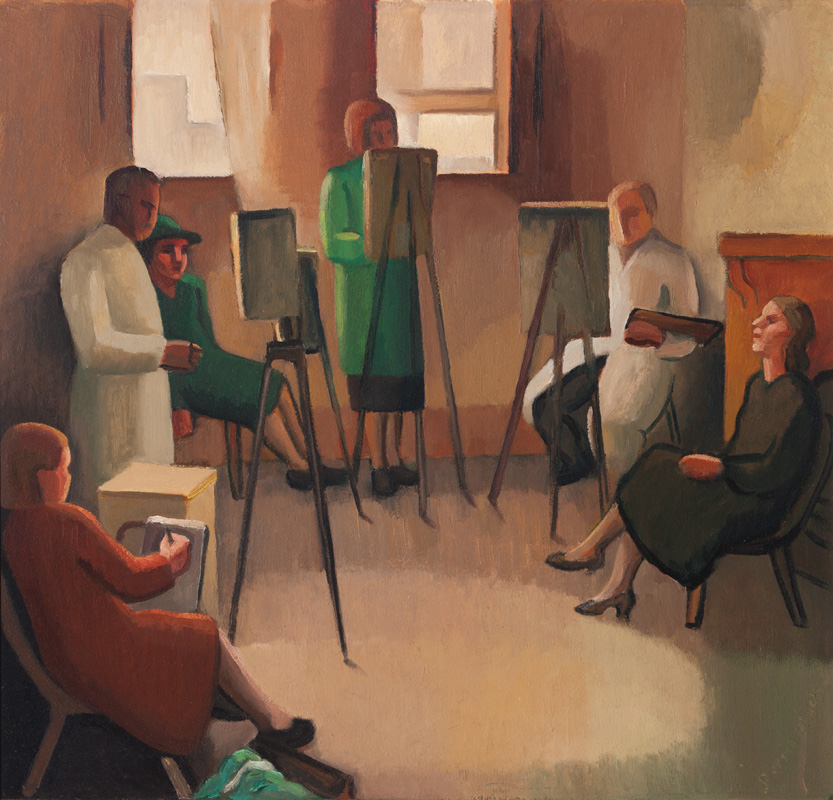
Writing in the catalogue of her 1945 retrospective exhibition, Black reflected: ‘my interest in realistic painting has been reviving; but it is a different kind of realism, based on all I have learned in the interval of constructive and rhythmical design.’20 Her subject matter during these years reflected aspects of her life – still life arrangements in her house and studio, local landscapes and figurative images at the ballet and sketch-club, among others – as well as the skilled hand and trained eye of an experienced artist who had found her creative metier.
HQ-768P38 (web).jpg
HQ-768P37 (web).jpg
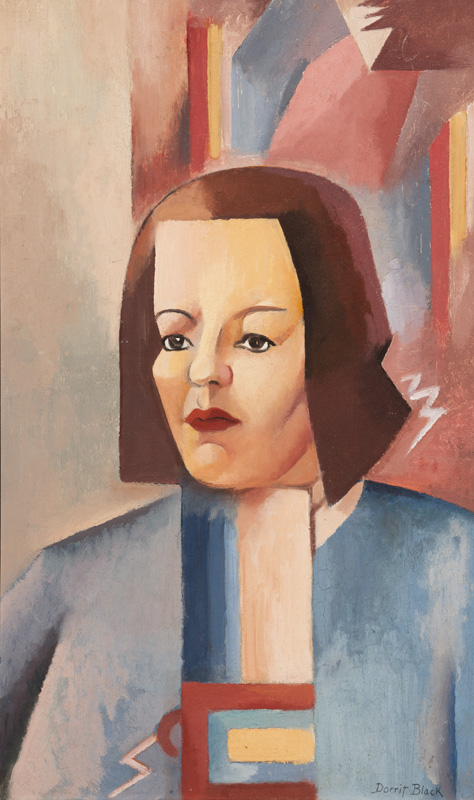
When Black’s life ended prematurely as the result of a car accident in 1951, the only Australian institution that represented her work was the Art Gallery of South Australia. Some seventy-five years on, however, after major retrospectives and monographs focussed on her work, as well as research into the broader history of modernism in Australia and the important role of women artists in its development, Black is recognised as a key figure in early twentieth century Australian art and her paintings and prints are highly sought after, collected by public galleries and private individuals alike.
1. Leigh, E., ‘Disciple of modern art’, Register News Pictorial, 5 September 1929, cited in Lock, T., Dorrit Black: unseen forces, Art Gallery of South Australia, Adelaide, 2014, p. 57
2. All biographical information is drawn from the chronology published in Lock, ibid.
3. H. F. B. Finlayson, ‘Notes about Dorrit Black’, c.1951 – 52, cited in North, I., The Art of Dorrit Black, Macmillan Australia & the Art Gallery of South Australia, South Melbourne, 1979, p. 8
4. Marjorie Hübbe, Edith’s daughter, cited in Lock, op. cit., p. 173
5. Dorrit Black, cited in Lock, ibid, p. 174
6. Ian North interview transcript with Nancy Hall, April 1974, p. 6, (Art Gallery of South Australia Research Library, Dorrit Black Papers, Ian North Files), cited in Lock, ibid., p. 24
7. Grosvenor School prospectus, cited in Coppel, S., Linocuts of the Machine Age: Claude Flight and the Grosvenor School, Scholar Press in association with the National Gallery of Australia, Aldershot, 1995, p. 12
8. See Freak, E., ‘The Modern Medium: Colour Linocuts’ in Lock, op. cit., pp. 144-145
9. Claude Flight, letter to Dorrit Black, 25 March 1928, quoted in Coppel, op. cit., p. 66
10. Black, D., ‘Account of Travel and Work 1927-29’ quoted in Lock, op. cit., p. 217
11. Taylor, E., ‘Together and apart: Anne Dangar, Grace Crowley and modern Paris’ in Edwards, R. (ed.), Anne Dangar, National Gallery of Australia, Canberra, 2024, p. 49. The other school was Académie moderne.
12. ibid
13. See Dorrit Black, Mirmande, 1928, oil on canvas, 60 x 73.8 cm, Art Gallery of South Australia; Grace Crowley, Mirmande, 1928, oil on canvas, 81 x 100.5 cm, Art Gallery of South Australia; and Anne Dangar, Mirmande La Drôme, 1928, oil on
canvas, 55.5 x 72.5 cm, private collection.
14. Black to John Young, 16 February 1929, cited in Lock, op. cit., p. 46
15. Fierens, M., Journal des Débuts, Paris, 8 February 1929, cited in North, op. cit., p. 43|
16. Lock, op. cit., p. 56
17. ibid., p. 66
18. Dorrit Black, postcard to her sister, 31 July 1934, cited in Lock, ibid., p. 79
19. Jeffrey Smart, cited in North, op. cit., pp. 89 – 90
20. Dorrit Black, 1945, RSASA Gallery, Adelaide, cited in Lock, op. cit., p. 134
KIRSTY GRANT