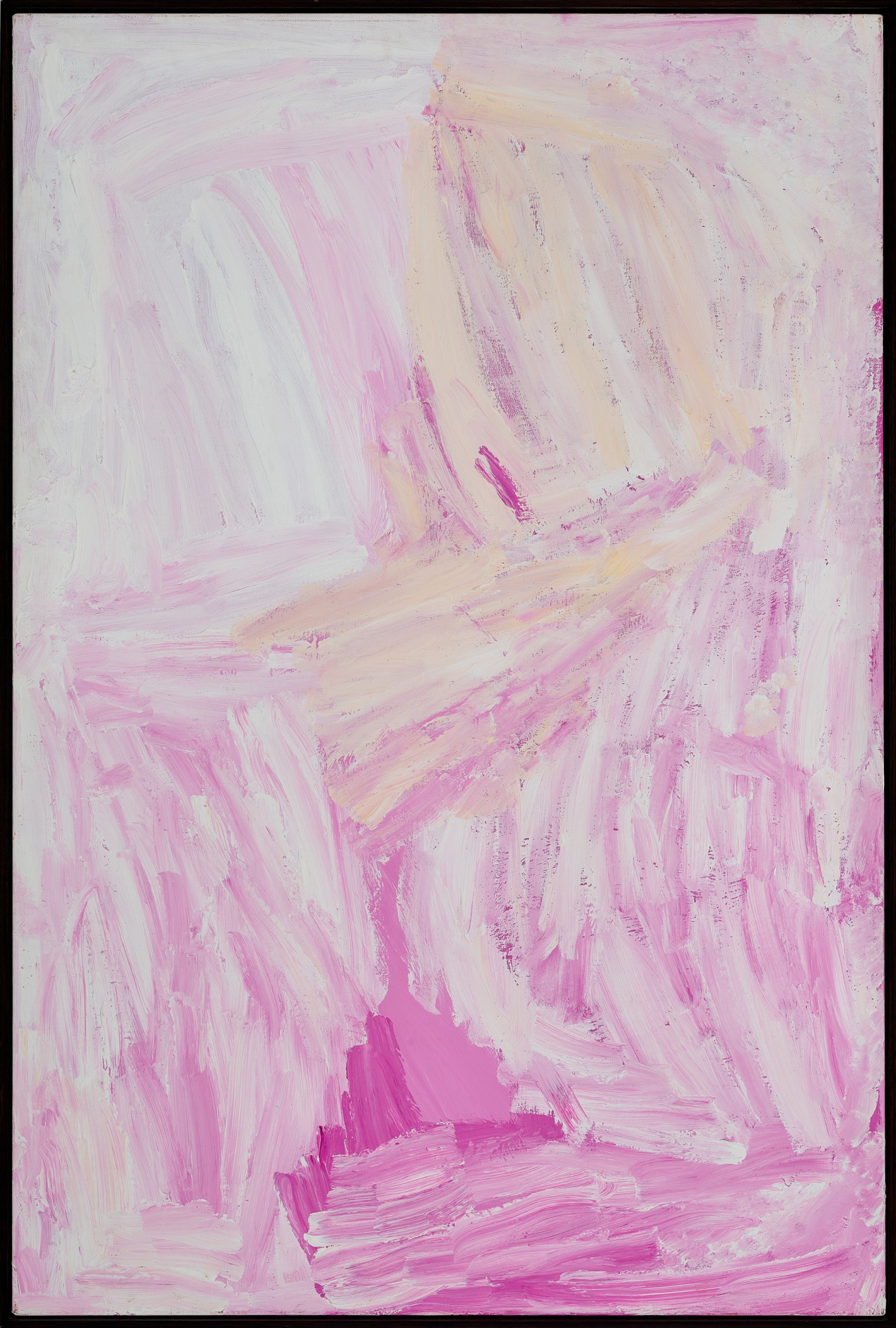
Thundi (Big river), 2007
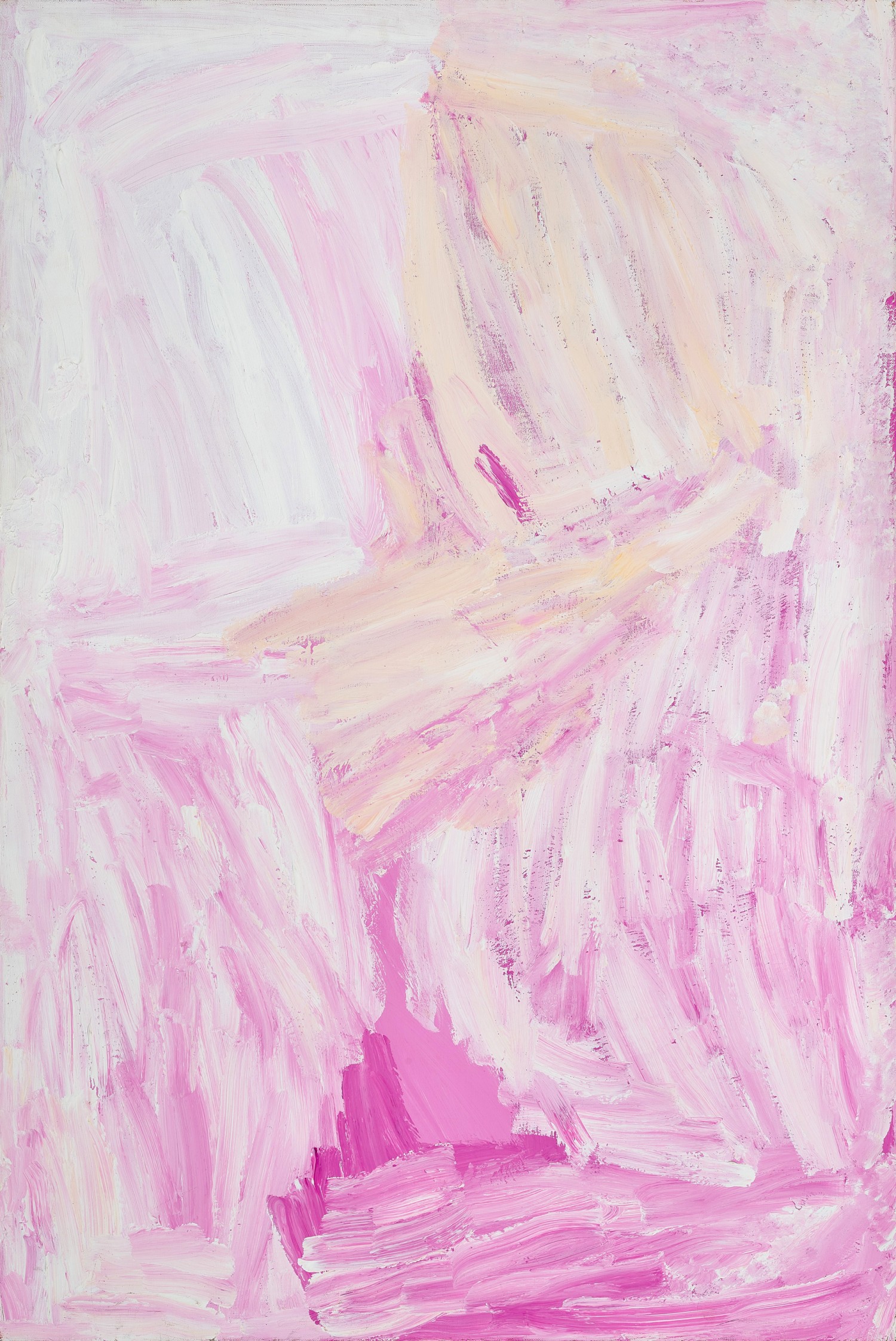
Mirdidingkingathi Juwarnda Sally Gabori
synthetic polymer paint on linen
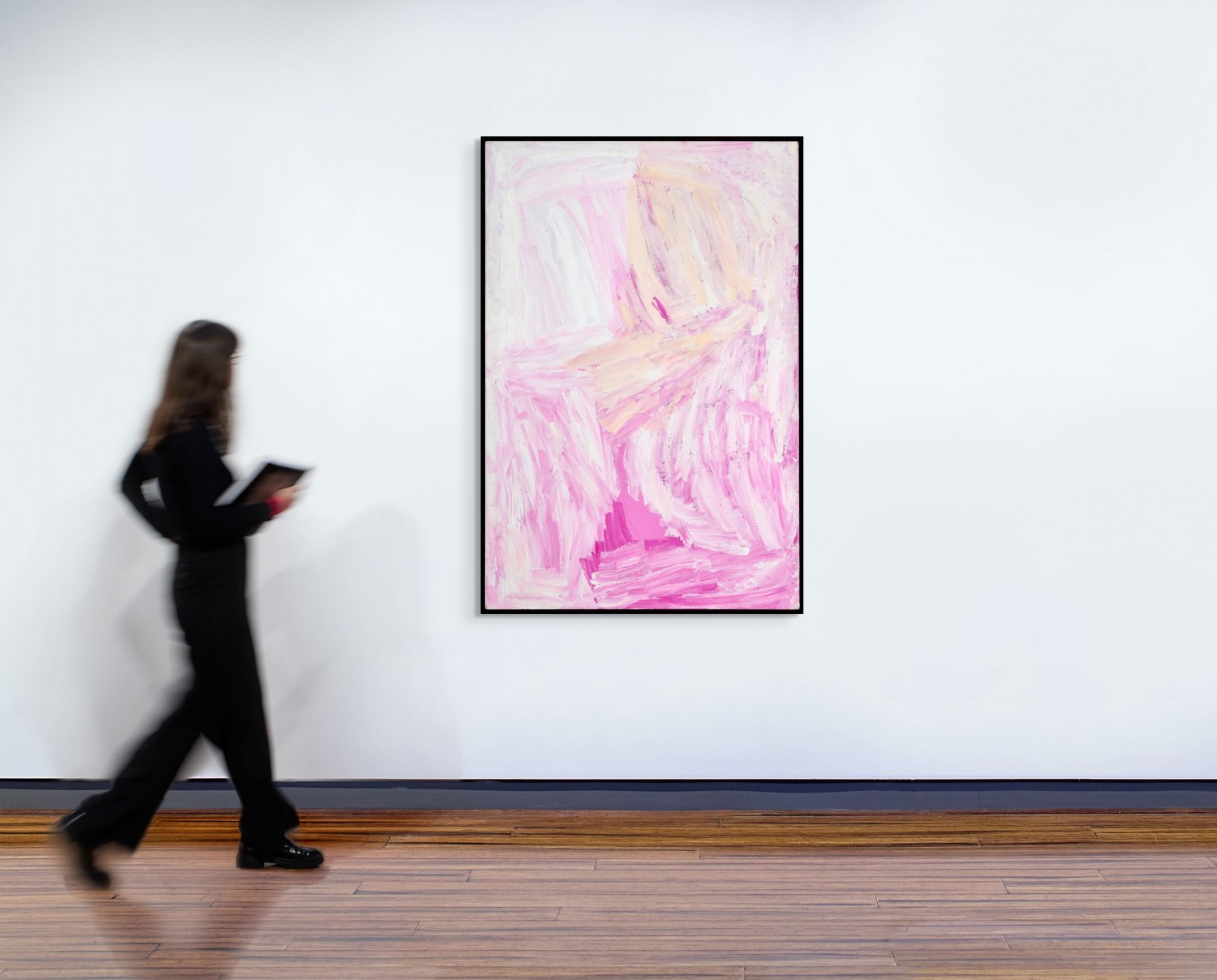
152.5 x 101.5 cm
bears inscription verso: artist's name, title, medium, Mornington Island Arts and Crafts cat. 2645-L-SG-1007 and Alcaston Gallery cat. AK14010
Mornington Island Arts and Crafts, Mornington Island, Queensland (stamped verso)
Alcaston Gallery, Melbourne
Private collection, Melbourne, acquired from the above
Mossgreen, Melbourne, 21 July 2015, lot 81
Private collection, Melbourne
This work is accompanied by a copy of the certificate of authenticity from Mornington Island Arts and Crafts which states:
'My painting shows the big river at Thundi on Bentinck Island. This is my Father's country.'
Almost sixty years after a series of natural disasters forced Sally Gabori, along with the other inhabitants of Bentinck Island, to relocate to Gununa on nearby Mornington Island, she was invited – then in her early eighties – to participate with other Kaiadilt people in an art workshop at the Mornington Island Art Centre. After only a few visits, it became clear that her early paintings – often bold, seemingly crude abstract depictions of the myriad fish found in the surrounding estuaries and sea – offered a unique and vibrant expression of her personal and family histories, drawn from memories of her early years on Bentinck Island.
Gabori’s expressive application of paint, laid down in thick brushstrokes and layered fields of colour, highlights both the immediacy of her process and the evident pleasure she took in mark-making. In Thundi (Big river), 2007, she eliminates superfluous detail – the geometric forms that dominated her early work dissolve, and subtle variations of colour and texture become the primary focus. The result is a luminous and expressive tribute to the landscape and history of her father’s Important Australian Indigenous Art Country, Thundi, on Bentinck Island. Like much of the island, this area – flanking its north-eastern tip – is characterised by low lying terrain, with a river that runs into a large salt pan that fills during the wet season and is bordered by mangroves. Nearby, a ridge of tall sandhills lines the island’s edge. Overpainted in white, the work evokes the ripple patterns of the sandflats, the frothing waters at the river mouth, the small waves lapping the shore, and the inundation of the area during extreme weather.
As Cara Pinchbeck observes, ‘Gabori’s works are a celebration of her homeland and illustrate a deep connection to country that has not diminished through separation. From her very earliest works, she has depicted aspects of her own beloved country as well as that of her brother, father and husband – including both geographical aspects of the landscape as well as the wildlife, specifically sea-life which is central to the landscape.’2
1. McLean, B., ‘Dulka Warngiid; The Whole World’ in Mirdidingkingathi Juwarnda Sally Gabori Dulka Warngiid; Land of All, Queensland Art Gallery I Gallery of Modern Art, Brisbane, 2016, p. 22
2. Pinchbeck, C., ‘Mirdidingkingathi Juwarnda Sally Gabori’ in unDisclosed, 2nd National Indigenous Art Triennial, National Gallery of Australia, Canberra, 2012, p. 64
CRISPIN GUTTERIDGE