Body marks, 2000
Prince Of Wales (Midpul)
synthetic polymer paint on linen
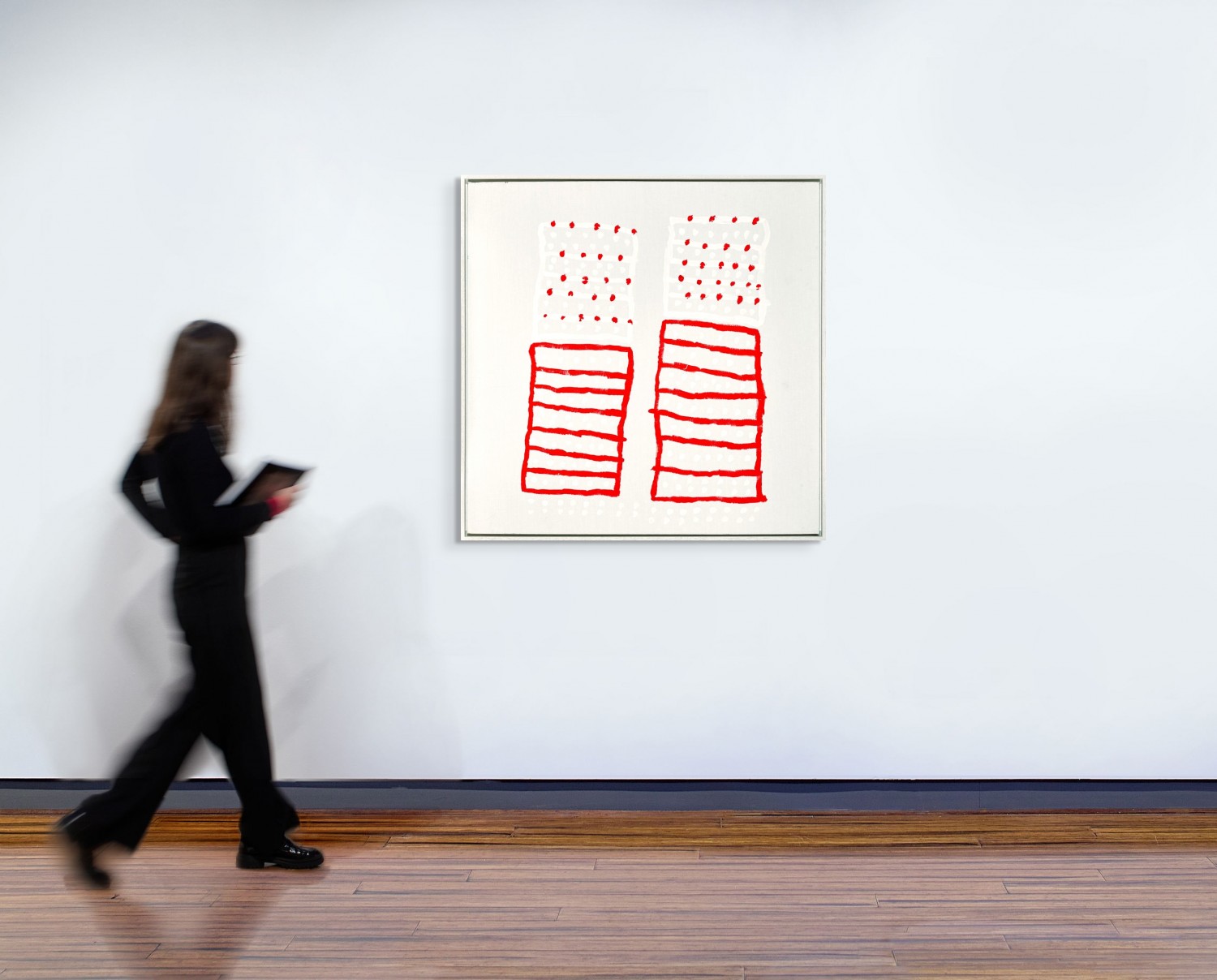
114.5 x 114.5 cm
bears inscription verso: artist's name, date, size and Karen Brown Gallery cat. POW 3
Commissioned by Karen Brown Gallery, Darwin
Private collection, Adelaide, acquired from the above in December 2004
‘I make the marks.’1
In Larrakia people culture, the traditional landowners and leaders of ceremonies and dances are referred to as ‘King’. Around 1935, Prince of Wales was born in Midpul to Larrakia leader Imabul (also known as King George) at Cullen, or Kahlin Beach – then a pristine bay along the Darwin coastline. After both of his parents passed away when he was very young, Midpul was raised by his mother’s family and trained to become a Law and Song Man.
His ceremonial skills became legendary, and he led many public corroborees for international visitors. As lead dancer for his people, he performed the ceremonial dance for Queen Elizabeth II during her Commonwealth visit to the Northern Territory in the 1970s. Following this occasion, he became widely known as Prince of Wales.
After suffering an untimely stroke, his ceremonial responsibilities were curtailed. He subsequently turned to painting on canvas to ensure that the ceremonial body decorations associated with his dance and song traditions would endure. In 2001, his stature as a Larrakia painter was formally recognised when he won the Telstra National Aboriginal and Torres Strait Islander Art Award in the Open Painting category.
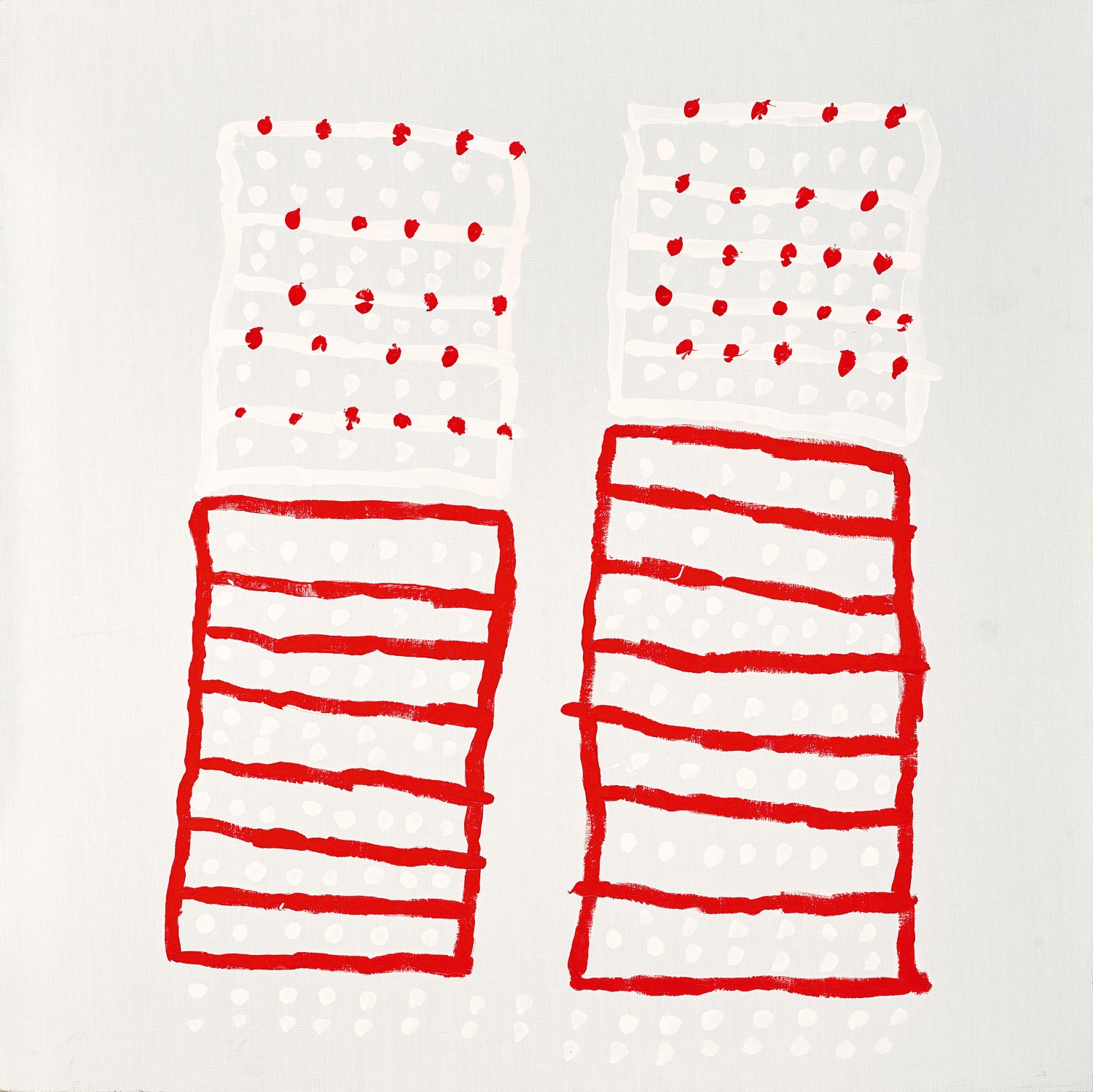
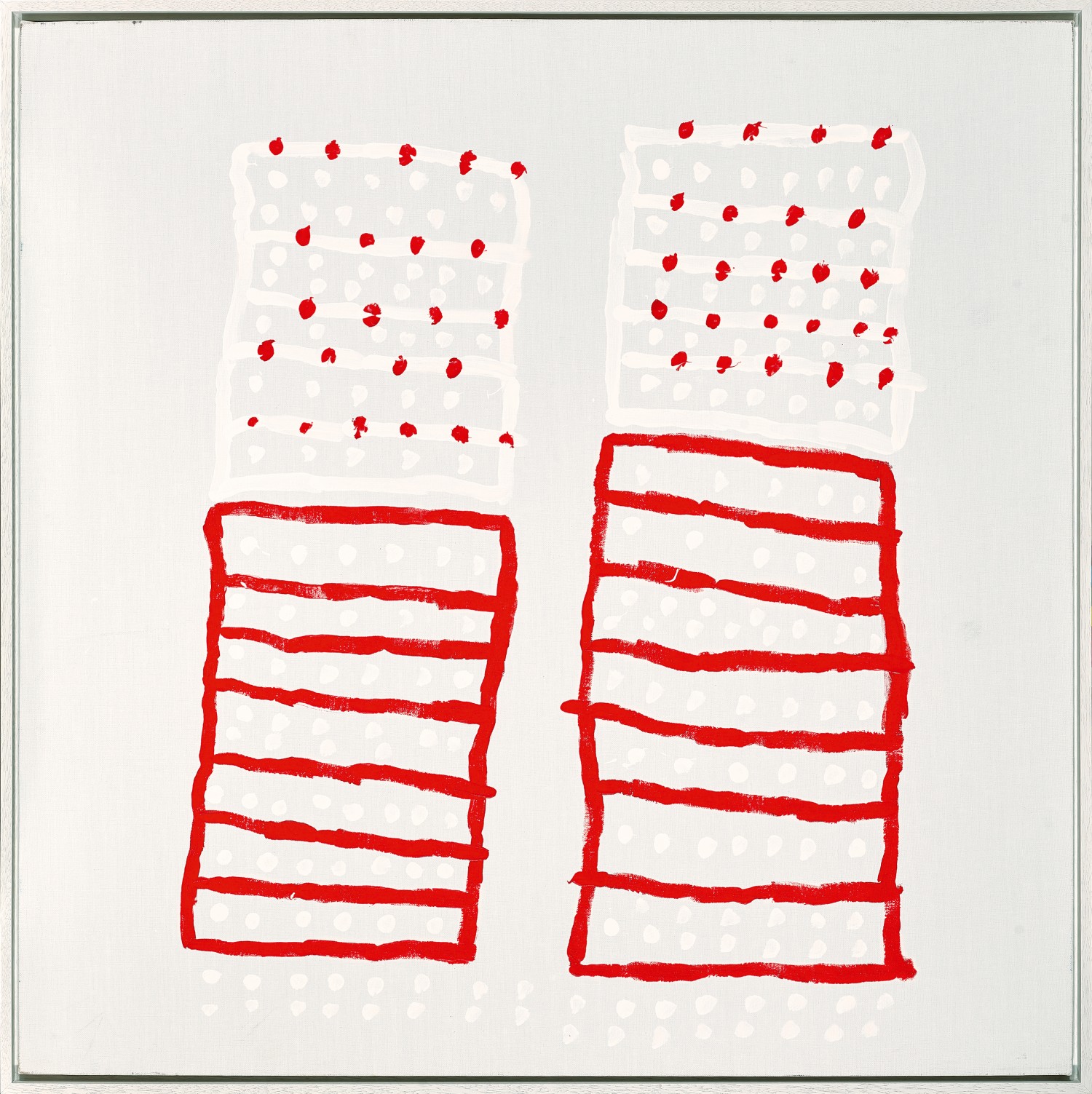
Painted on his preferred white ground, Body marks, 2000 celebrates the ceremonial body designs that Prince of Wales sought to preserve through painting. In this work, alternating coloured dots surround and overlay an ochre rectangular body motif, framing it with subtle tones of tomato red and arctic white. The result is an intense visual energy that animates the surface. These markings were originally painted onto the bodies of his clansmen prior to ceremonial dances; here, they are translated into a permanent record for posterity. As curator Hetti Perkins observed, ‘His paintings have a musicality imparted by the lively staccato effect of dots and intermittent bars, reading like the sheet music for an important symphony.’2
1. Prince of Wales, cited in Perkins, H. and Pinchbeck, C., Tradition today: Indigenous Art in Australia, Art Gallery of New South Wales, Sydney, 2004, p. 166
2. ibid.
CRISPIN GUTTERIDGE