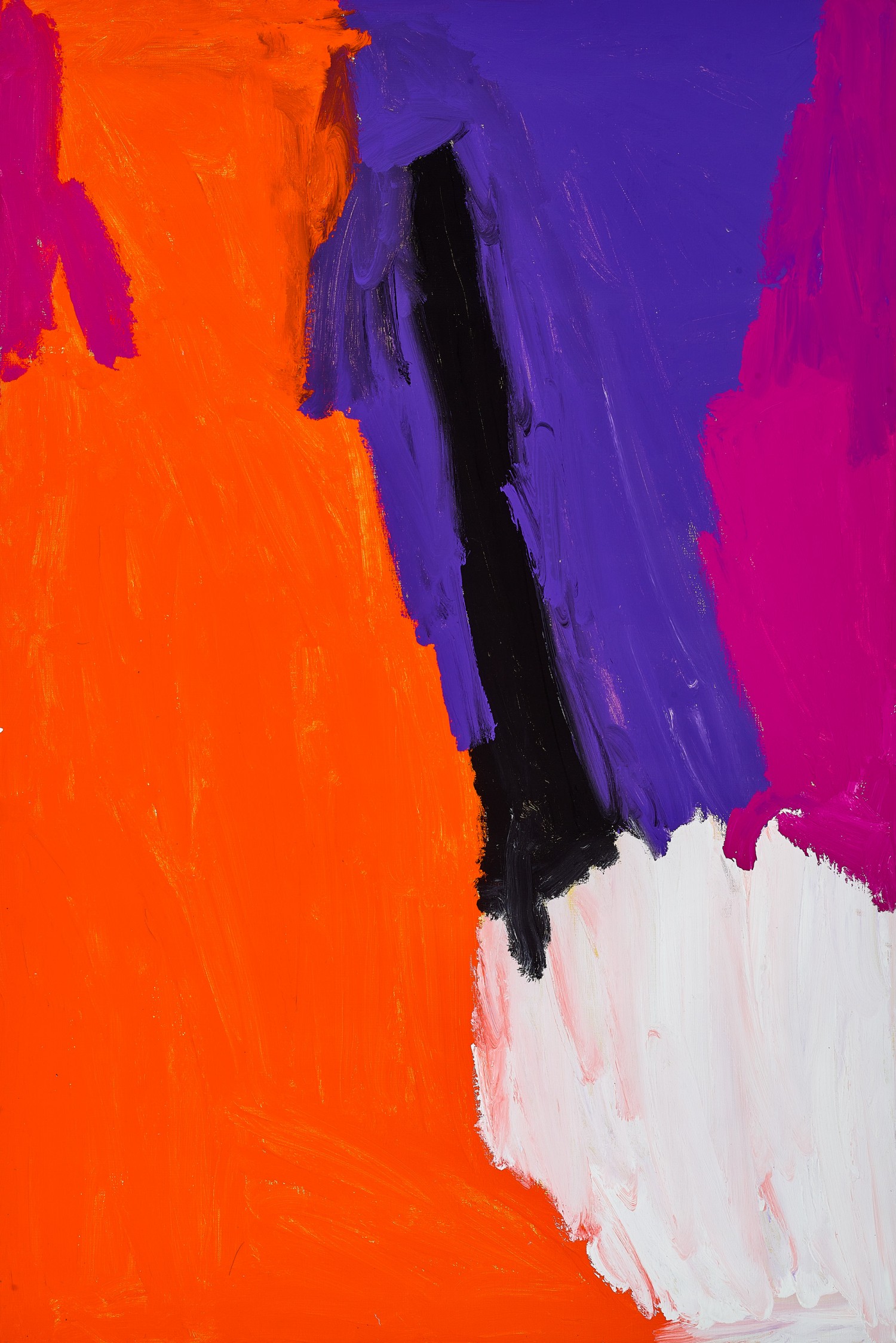
Dibirdibi Country, 2010
Mirdidingkingathi Juwarnda Sally Gabori
synthetic polymer paint on linen
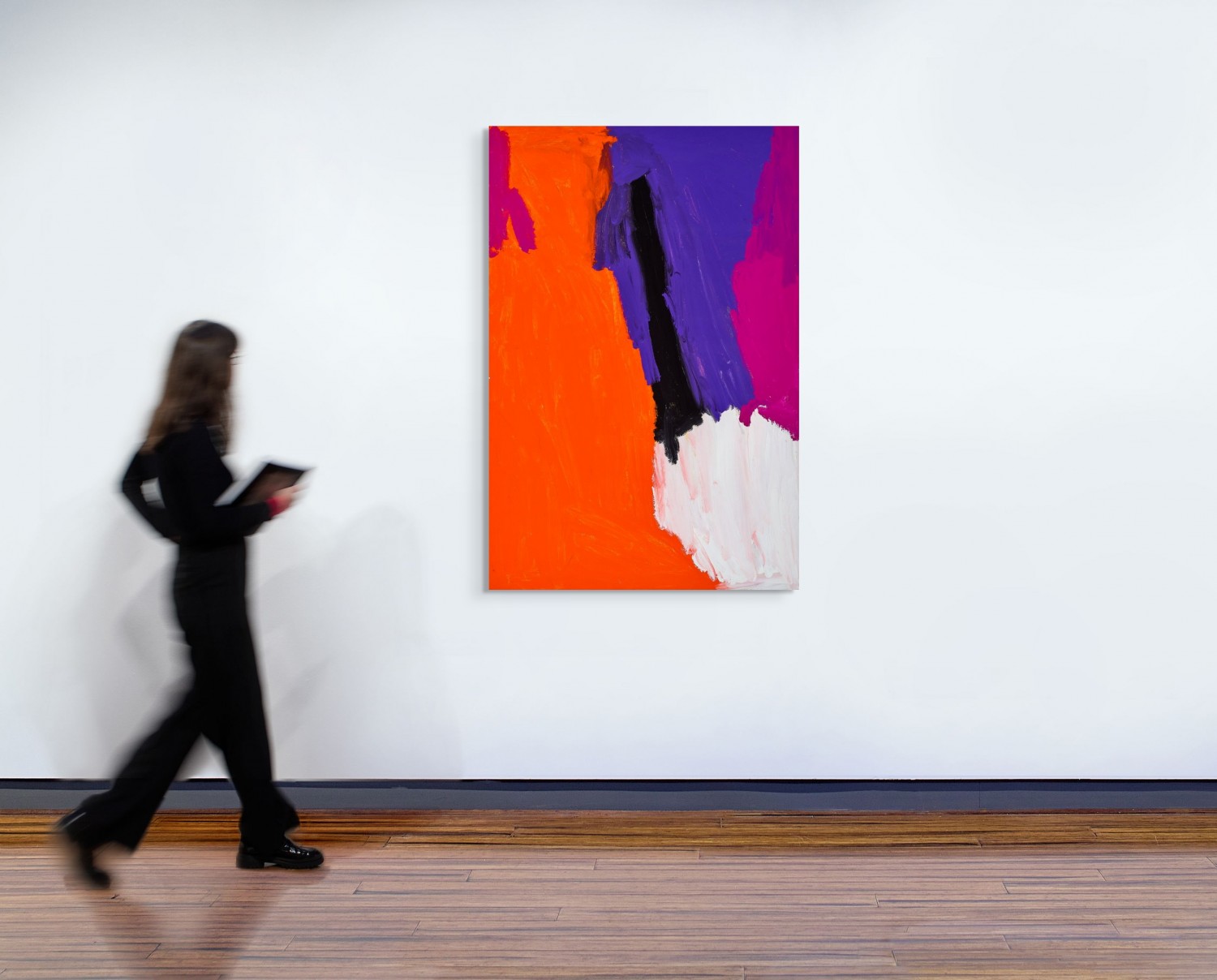
151.0 x 101.0 cm
bears inscription verso: artist’s name, title, medium and Mornington Island Arts and Crafts cat. 5745-L-SG-0410
Mornington Island Arts and Crafts, Mornington Island, Queensland (stamped verso)
Private collection, Queensland, acquired from the above in 2010
This painting is accompanied by a certificate of authenticity from Mornington Island Arts and Crafts which states:
'This is my husband's country on Bentinck Island. It's where the mangroves meet the saltpan. This is good hunting ground for crab and mudshell.'
In 1948, following a series of natural disasters, Sally Gabori along with the other inhabitants of Bentinck Island were forced to relocate to Gununa on nearby Mornington Island. Gabori had spent the first few decades of her long life on Bentinck Island, the island of her birth, living off the natural resources of the surrounding ocean and estuaries in the traditions of the Kaiadilt. Although Gabori resided on Mornington Island for the remainder of her long life, her connection to Bentinck Island life and culture was innate, and her success as an artist enabled her to return to country through her paintings.
Dibirdibi Country, 2010 evokes one of Sally Gabori’s favourite subjects, the country of her husband, Kabarrarjingathi Bulthuku Pat Gabori – a subject and location painted more often by the artist than any other. The country of her husband and the Rock Cod Ancestor, this painting shows a large saltpan that runs across her husband’s country close to the site where the liver of Dibirdibi, the Rock Cod Ancestor, was thrown at the sea’s edge, creating a permanent fresh-water spring. For Gabori, Dibirdibi is also personal, her husband Pat Gabori was also called Dibirdibi and was custodian of the story, songs and sites associated with Dibirdibi. Her canvases are an expression of both her love for her husband and the landscape of her country.