Bird, 2021
Bruce Armstrong
painted bronze with stained plywood base
165.0 cm (height, including base)
signed with initials: BA
stamped at base with Perin Sculpture foundry mark
Private collection, Melbourne
Birds reign supreme in Bruce Armstrong’s private sculptural bestiary, their aloofness and commanding presence echoing the ancient and mystical power they hold for many cultures across the world. ‘Birds are everyone’s allegory, a totem for all personalities. Every culture had bird stories… one can sift through the history of art and find images of birds in the earliest of humanity’s imagery’, the artist explained in 2003.1 Indeed it was the artist’s introduction in art school to ancient Egyptian sculpture and American Indian totemic carving that would stimulate a lifelong interest in the animistic power of these animals, and lead to a series of wooden carvings of birds created throughout his career. Many of these sculptures were later industrially fabricated into monumental and well-loved public sculptural installations – including Eagle (Bunjil), 2002 in Docklands, Melbourne and Owl, 2010 in Belconnen, Canberra.
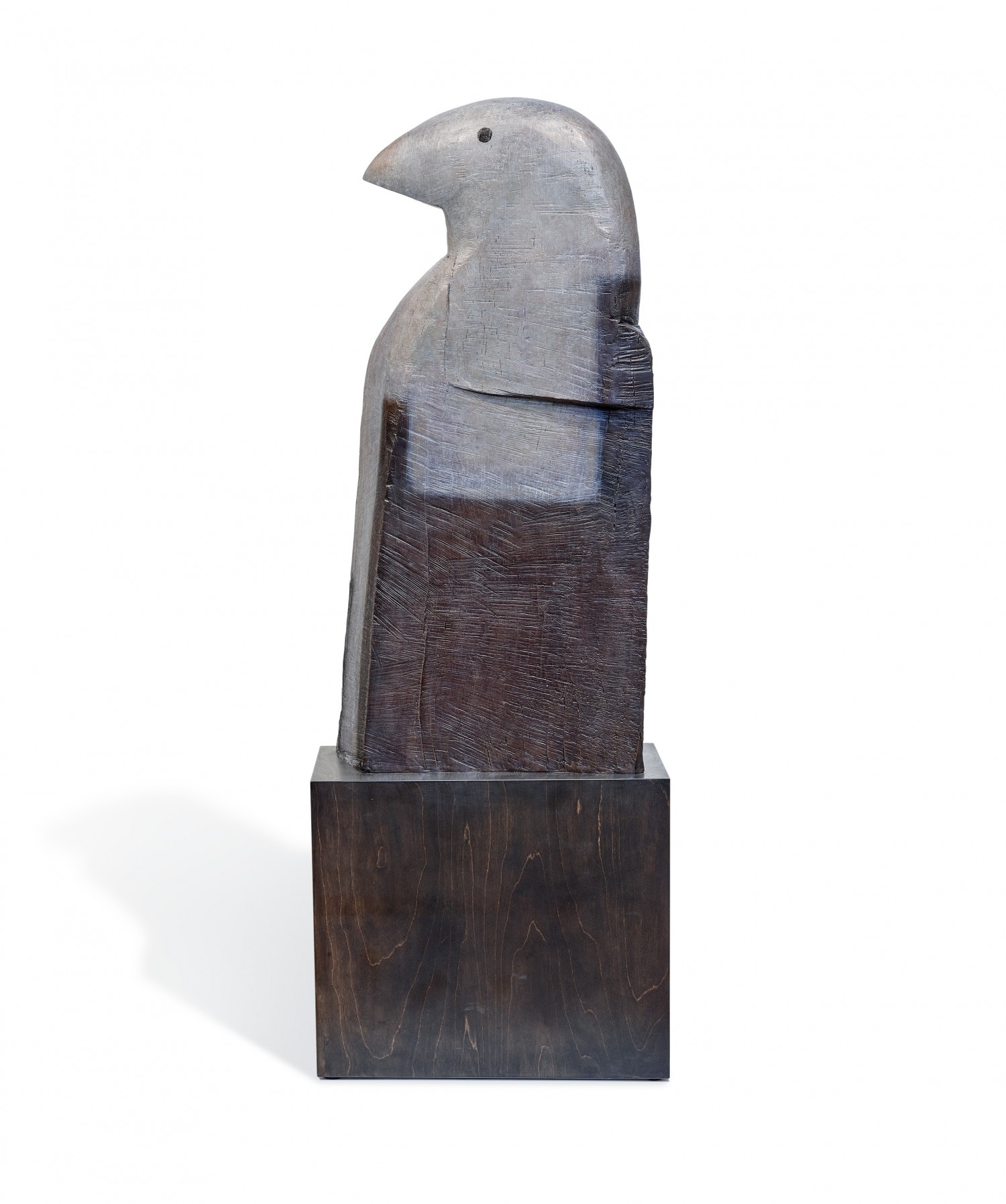
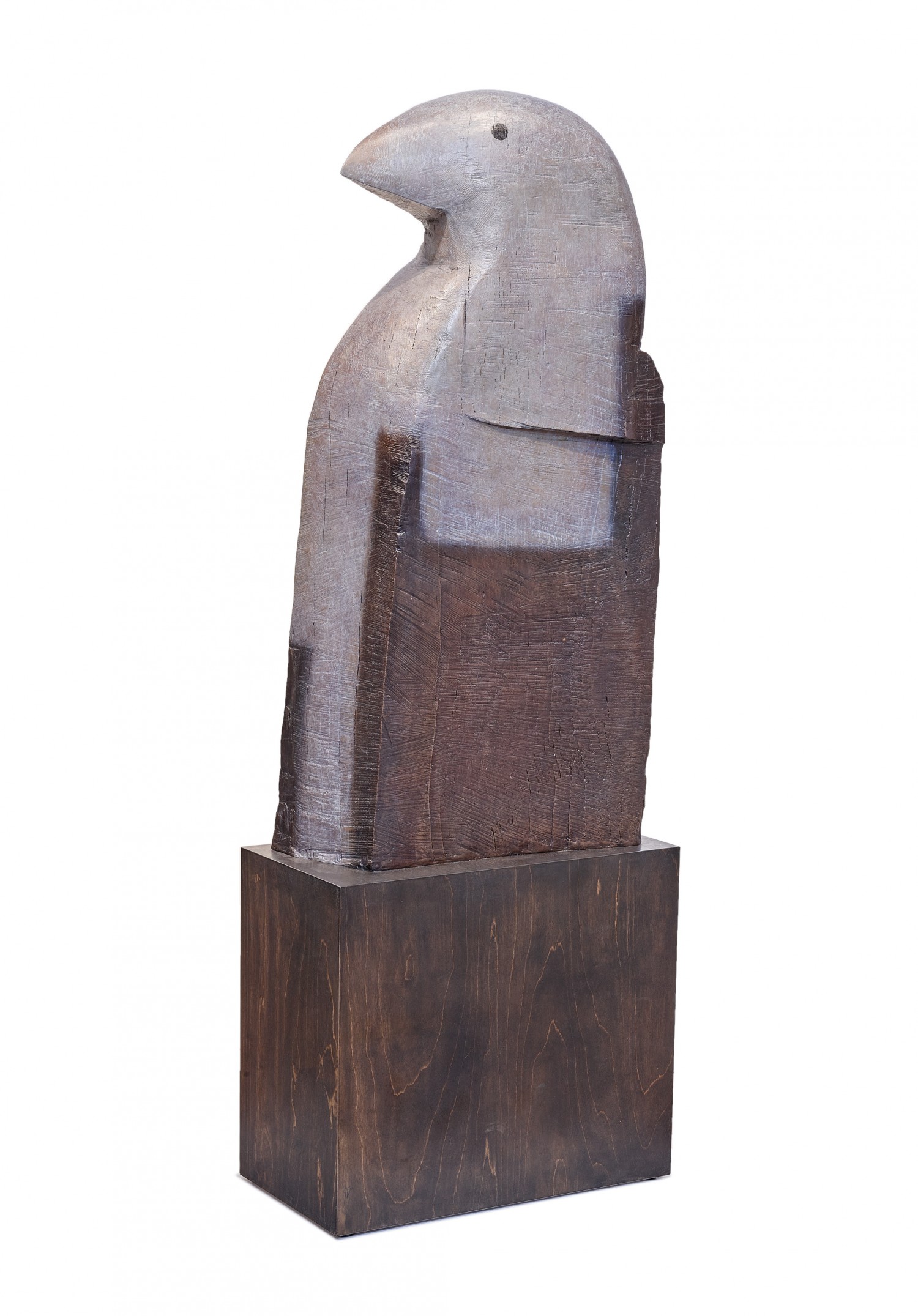
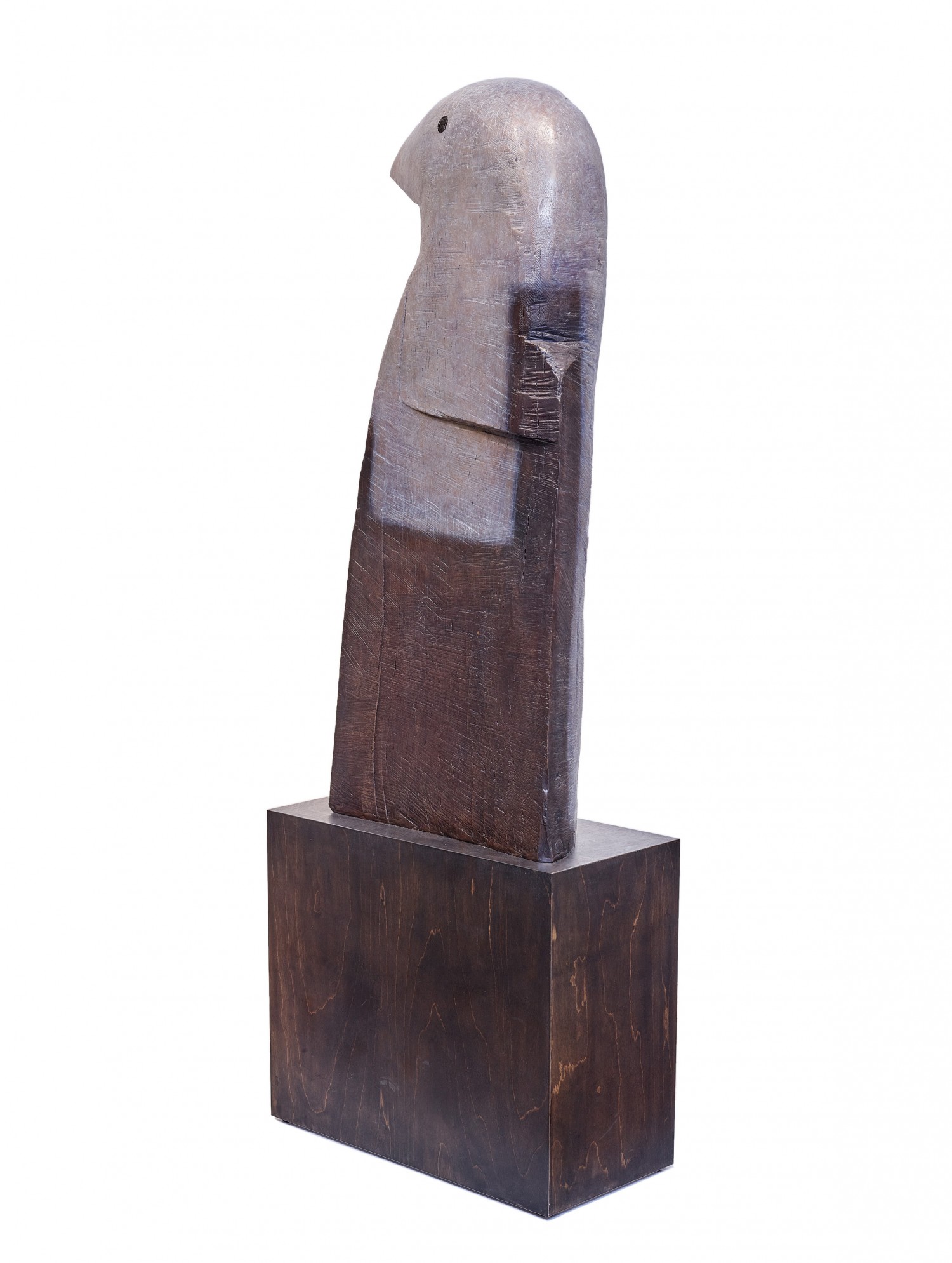
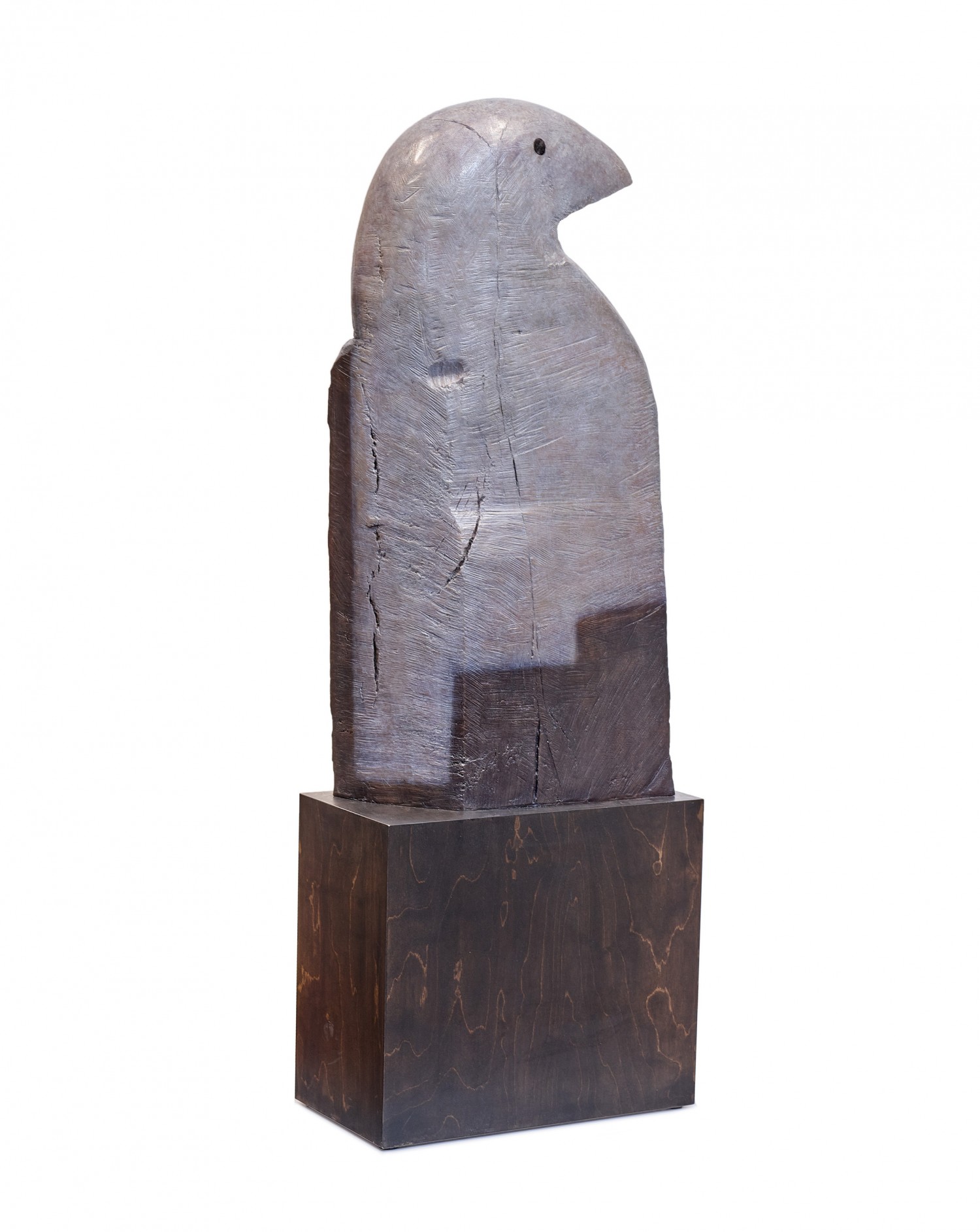
The symmetrical, columnar silhouette of Bird, 2021, presents an essential expression of the animal, reduced to its most identifying feature – a beaked jaw running in one smooth arc. While many of Bruce Armstrong’s bird sculptures include identifying physical features which link them to specific species – the talons of a sea eagle, or the long tail of the powerful owl – this Bird is the platonic ideal of the animal, smoothed to a simple graphic outline. The heraldic, two-dimensional quality of Bird also evokes the hieratic forms of Egyptian art, where the sky god Horus, protector of the pharaohs, took the form of a bird of prey. Surveying the viewer with a painted beady and rounded eye, this focal point of Armstrong’s bird references the importance of the eyes of Horus. The right one was said to be the sun, while the left was the moon, while the disembodied eye became the wedjat-eye imbued with protective magical powers. Armstrong’s birds are not only mediators between the physical and celestial planes, but also become watchful guardian sentinels, at times safely encircling the built world with their outstretched wings, as in Obelisk, 2008.
Sculpting from massive fallen trunks, often hundreds of years old, Armstrong has steadfastly persisted with a style of artmaking reliant on brawn and a high degree of technical craftsmanship. The carved muscularity of his burly and rustic forms creates a raw commanding physical presence. Originally conceived as a timber totem hewn from a Cypress trunk – Bird, 1993 (Art Gallery of Ballarat) – this bronze casting from 2021 simulates almost exactly the materiality, appearance and texture of the artist’s original timber maquette, its cold surface invitingly woven with directional chisel markings. The simplified colours and volumes of Armstrong’s fabricated sculptures serve to highlight the tactile surface texture of the bronze, the woodworker’s grooves and rough traces left unpolished throughout the casting process. Bird’s emphatic mass retains a trace of the cylindrical structure of the original tree trunk, evoking the verticality of carved totem poles from the Indigenous peoples of the Northwest coast of Canada. Softening the imposing volumetric weight of this form, Armstrong’s Bird is simple, raw and vernacular, providing a blank canvas for interpretation and engagement with each environment and viewer.
1. Bruce Armstrong, cited in ‘Why Birds?’, Webb, V., MCA Unpacked II: Six Artists Select from the MCA Collection, Museum of Contemporary Art, Sydney, 2003, p. 8
LUCIE REEVES-SMITH