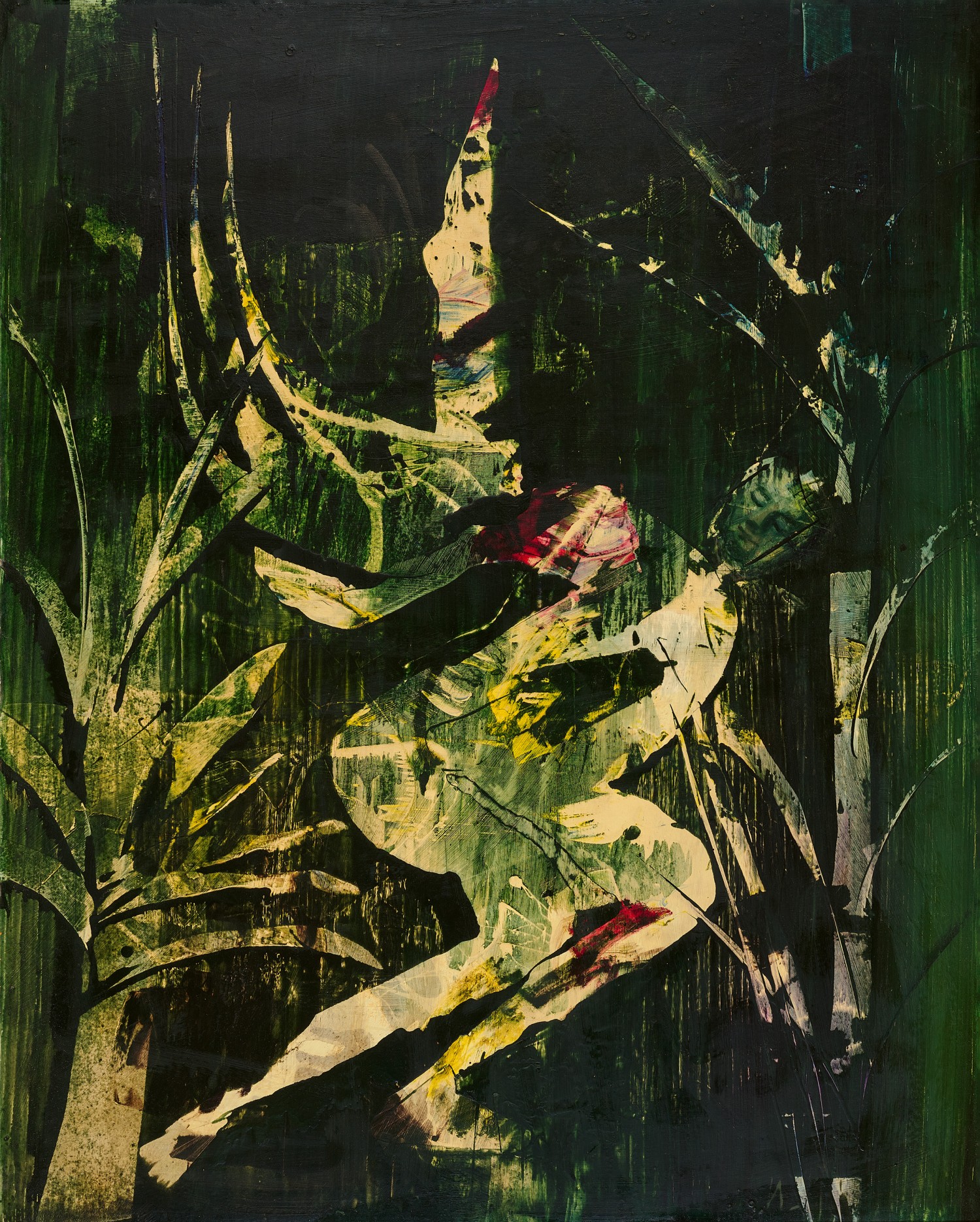
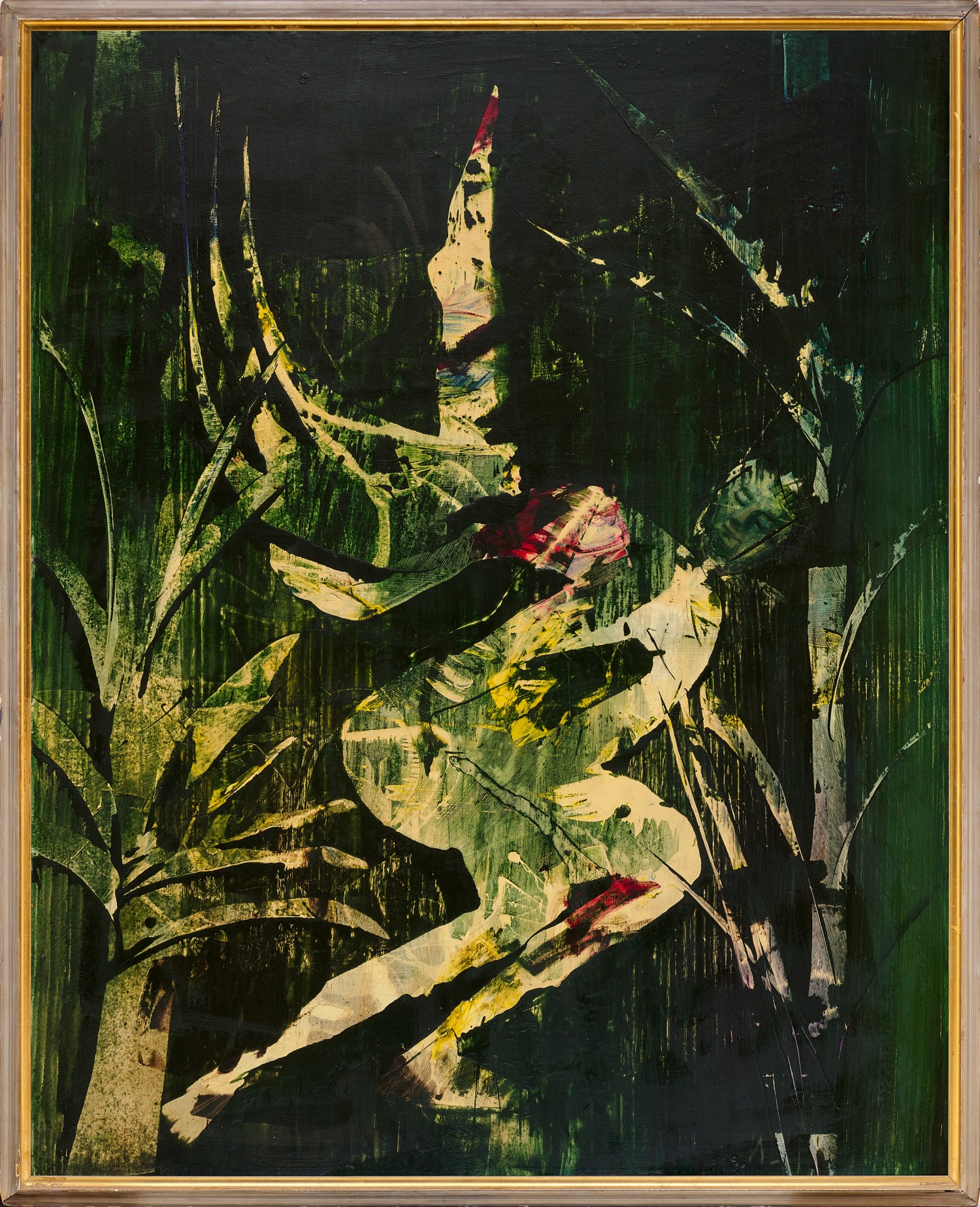
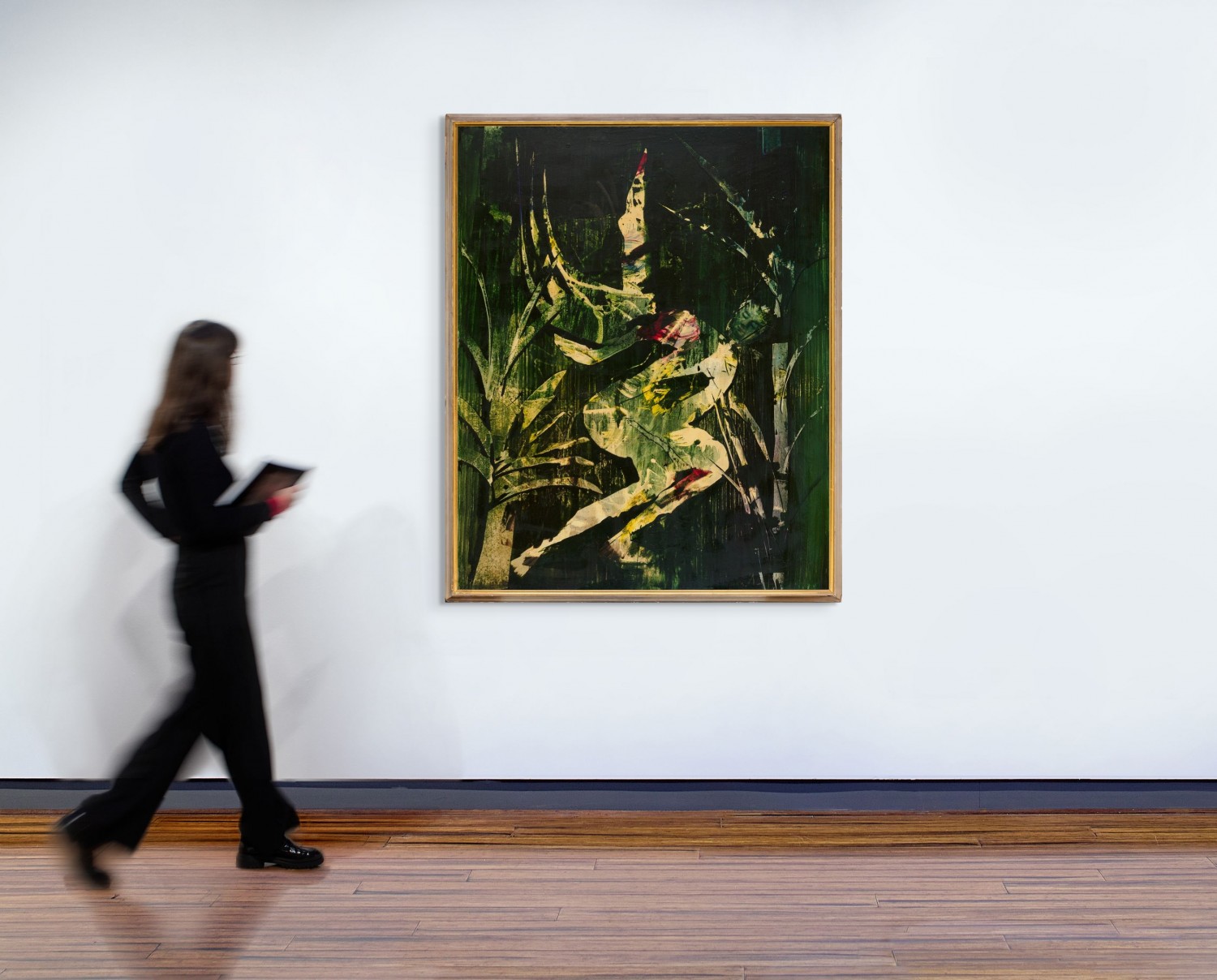
Leda and swan, 1960
Sidney Nolan
polyvinyl acetate on composition board
152.0 x 122.0 cm
signed lower right: N
bears inscription on stretcher bar verso: Private collection / Not to be sold / Australian Galleries / Collingwood LEDA AND SWAN. 1960 SIDNEY NOLAN
bears inscription verso: CASE 3 / J. METCALFE [sic] / No 3 / 6th JUNE 1960 / nolan / 276
The Matthiesen Gallery, London
John Metcalf, London, acquired from the above in 1960
Thence by descent
Private collection, London
Sidney Nolan: Leda and the Swan and other recent work, The Matthiesen Gallery, London, 16 June – 16 July 1960
Sidney Nolan at Australian Galleries, Australian Galleries, Melbourne, 31 October – 17 November 1961, cat. 3
Sidney Nolan: Retrospective Exhibition, Paintings from 1937 to 1967, Art Gallery of New South Wales, Sydney, 13 September – 29 October 1967; National Gallery of Victoria, Melbourne, 22 November – 17 December 1967; The Western Australian Art Gallery, Perth, 9 January – 4 February 1968, cat. 100 (label attached verso)
Lynn, E., Sidney Nolan: myth and imagery, Macmillan, London & Melbourne, 1967, pl. 35, pp. 53, 71 (illus.)
1960 was a vibrant year for Australian artists in Britain with acclaimed exhibitions by Arthur Boyd, Albert Tucker and Sidney Nolan. Such was their presence that one critic advised ‘when in London ‘do as Melbourne does’ looks like becoming the keynote of the British art world this summer.’1 With the London opening in June of his extensive series based on the Greek myth of Leda and the Swan at Matthiesen Gallery, Nolan can truly be said to have arrived on the international scene. What made this even more remarkable was that it was the first time he had presented works based on a universal story rather than a purely Australian one. Financially, the show was an outstanding success, and purchasers included Her Majesty Queen Elizabeth the Second, Sir Kenneth Clark (then Chairman of the Arts Council of Great Britain), the Earl of Drogheda (Chairman of both the Financial Times and the Royal Opera House, Covent Garden), Agatha Christie, and the Art Gallery of New South Wales.
To have experienced the original Sidney Nolan: Leda and The Swan exhibition (which most likely featured the present work) would no doubt have been akin to walking into a chapel filled with stained glass. Viewed as if through a watery veil, the chaste maiden Leda is in constant animation as she first rebuffs the swan’s advances (being the Greek god Zeus in disguise), then participates in a dangerous courtship dance before succumbing to his feathered charms. Sometimes the mood is calm, in others it is fierce, a battle of wills; and the Leda and swan, 1960 on offer here depicts the transformative conclusion in an image redolent with poetic synthesis.2 In a later interview, Nolan observed that ‘in a way, Leda (is) the idea of a nude figure being overcome by some force or other… of Leda being overwhelmed by God.’3 In this Leda and swan, Zeus is triumphant yet gentle, hovering behind a crouching Leda with his outstretched wing curving to embrace his expectant companion.
Nolan had been experimenting for the previous eighteen months with the recently developed polyvinyl acetate medium applied with squeegees, fingers, and brush. His fluid handling of this cutting-edge material in the Leda paintings enhanced the perception that his figures were swimming within the paint – sometimes above, often through, the viscid surface, flowing in and out of visibility. In a famed quote from one of her books, Cynthia Nolan recorded the process: ‘During the day he painted on the floor, first placing areas of colour on prepared board, next sweeping on polyvinyl acetate until the whole 4 x 5 feet area was thick with paint, then seizing a short-handled squeegee and slashing and wiping, cornering and circling like a skater, until another painting was completed… Now over and over again, he was painting Leda and the Swan.’4 In the present work, Nolan’s mastery of this painterly technique is on full display with drips seeping through the swan’s neck and scraped areas giving the wings a sensation of blurred flight. Even when separated from its companions, this Leda and swan remains an image of complete harmony and unification, and its own unique statement.
1. Stephen May cited in: Burke, J., Australian Gothic: a life of Albert Tucker, Knopf, Sydney, 2002, p. 361
2. All paintings in the series bear the same title.
3. Sidney Nolan cited in Souter, G., ‘An artist who stood in the acid’, Sydney Morning Herald, Sydney, 7 October 1967
4. Nolan, C., Open Negative: An American memoir, Macmillan, London, 1967, p. 224
ANDREW GAYNOR