TRIBUTE TO MICHAEL GLEESON-WHITE
0040_001 (web).jpg
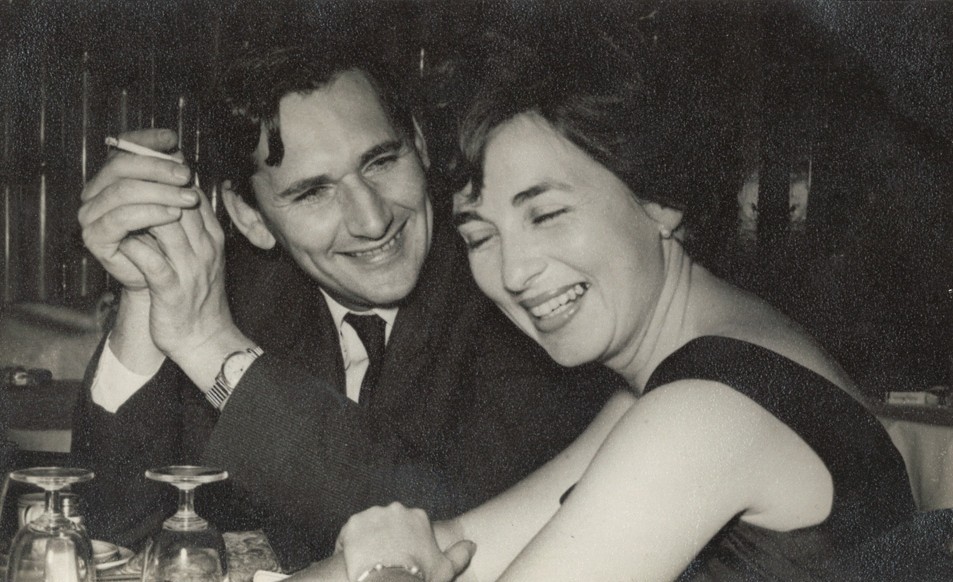
Michael and Judy Gleeson-White, 1968
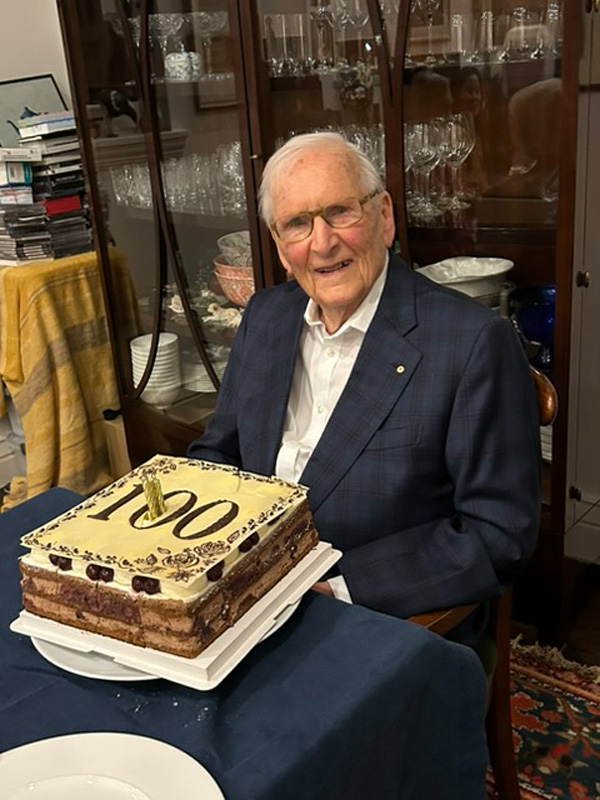
Michael Gleeson-White was quite simply one of the most remarkable people you might ever hope to meet. At the age of 100 he remained incredibly sharp and quick-witted. When I met him for our semi-regular lunches he would discourse knowledgeably on art, literature, politics, economics and music. Opera was his passion, and Russian soprano, Anna Netrebko, his not-so-secret crush. No matter what book I mentioned, it seemed Michael had already read it.
He retired from a career in finance in those days before bankers earned six-figure salaries – only slightly to his regret. He could have made excellent use of the money but felt no attraction for the amoral ‘greed is good’ mentality. Although a model of gentlemanly behaviour, he had little time for fools, boasters and ideologues. Michael respected people of genuine talent in the fields of art, music, literature or business. Even when he was the oldest person in the room, he was always eager to learn something new.
Born in London on 24 October 1925, Michael was the only boy in a family of five children. His father, Eric Gleeson-White, worked for the Bank of England, but as war loomed, he decided to retire and bring his family to Australia. They arrived in Sydney on 14 January 1939, with the temperature at 113 degrees F – or 45 degrees C. From the age of 13 Michael would attend Sydney Grammar, where he excelled academically and on the rugby field. Upon graduation in December 1943, he went straight into the Australian Navy. He would remain in service until 1946, studying part-time for a degree in economics at Sydney University.
IMG_2382 (web).jpg
MGW INTRO MGW (web).jpg
His subsequent career as a stockbroker and merchant banker with firms such as Ord Minnett, Lazard Brothers and Schroders, would find him working out of Sydney, London and Singapore, and travelling frequently. In 1960 he married Judith Lee Street and would raise three gifted daughters, Jane, Sarah and Angela. It was a long, happy marriage that ended with Judy’s death in 2015.
I met Michael when he was serving as Chair of Trustees at the Art Gallery of New South Wales, from 1982 – 88. He was a dynamic, proactive chair who would quiz the curators about potential purchases. One important part of his legacy was his work with then-director, Edmund Capon, to establish the AGNSW Foundation, which raised money for major paintings by artists such as Picasso, Guston, and Kirchner.
Although Edmund remained a close friend, Michael disagreed with his mockery of the 1987 Archibald Prize winner, William Robinson’s Equestrian Self-Portrait. To Michael’s practised eye, Robinson was obviously the most sophisticated artist in the show. He would back his judgment by becoming both a collector of the painter’s work and a friend. Another long-term association was with Jeffrey Smart, with whom Michael could share his love of opera, especially Wagner. They would conduct an extensive correspondence.
Many of Michael’s most important purchases were made in London, where he acquired works by figures such as Frank Auerbach, R. B. Kitaj, Ivon Hitchens and Avigdor Arikha. Of these artists, he got to know Arikha, a Paris-based polymath much admired by fellow artists, and by critics such as Robert Hughes. Being an avid reader of Samuel Beckett, Michael was delighted to find the writer was one of Arikha’s closest acquaintances.
It would take a full-scale biography to do justice to Michael’s character and accomplishments. For all his decades in Australia he never lost his English accent, or the habit of addressing you as ‘my dear old chap’. His stories, accumulated across the best part of a century, were spellbinding. When asked for the secret of his longevity, he once said: ‘Well, I’ve never been to that place they call ‘the gym’’. By preference, Michael would be at a concert, with friends and family, or at home with a book. We remember this great, much-loved man for his intelligence and charm, his boundless curiosity and lust for life.
JOHN McDONALD