Stillife "Tulips", 1996
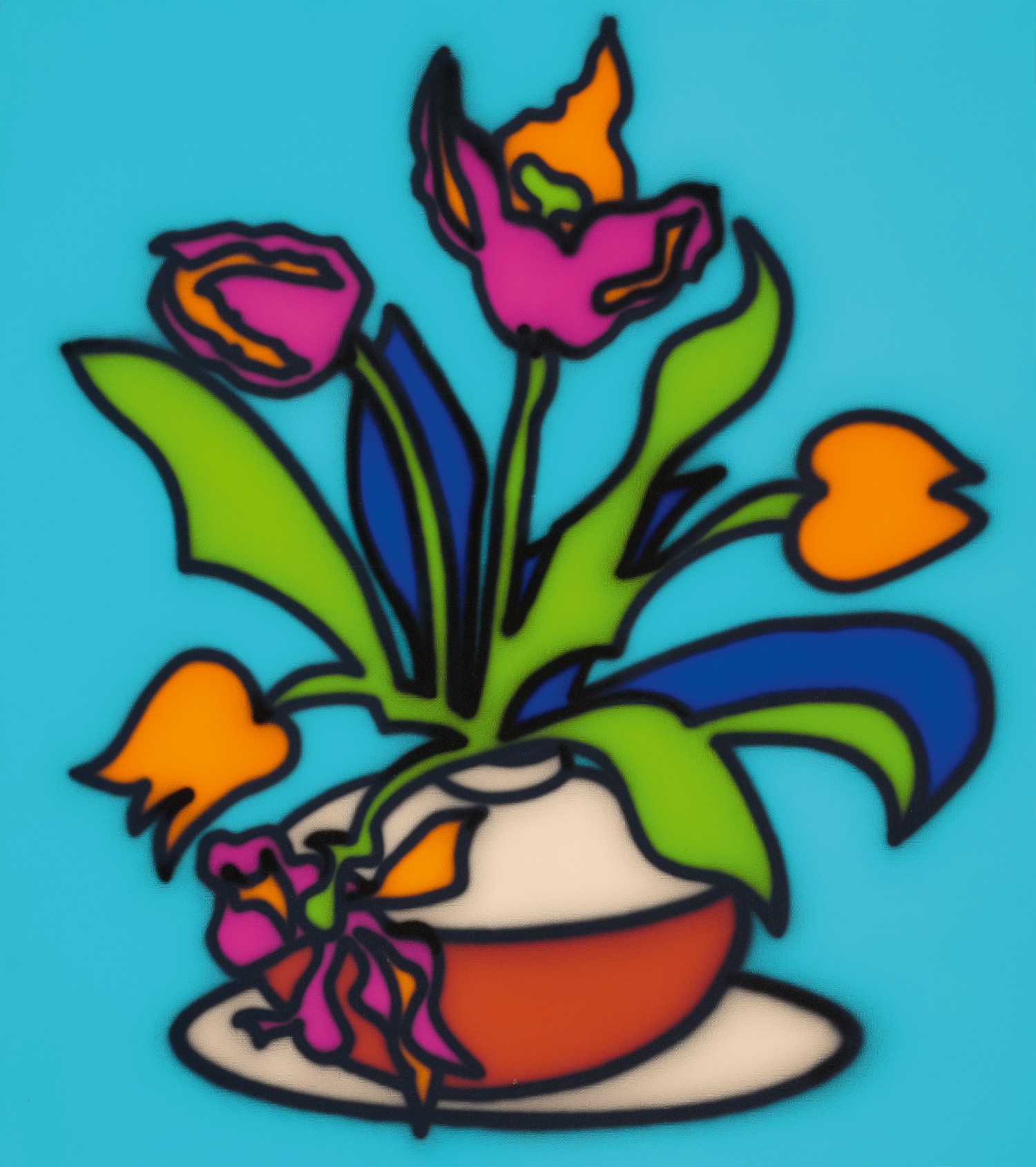
Howard Arkley
synthetic polymer paint on canvas
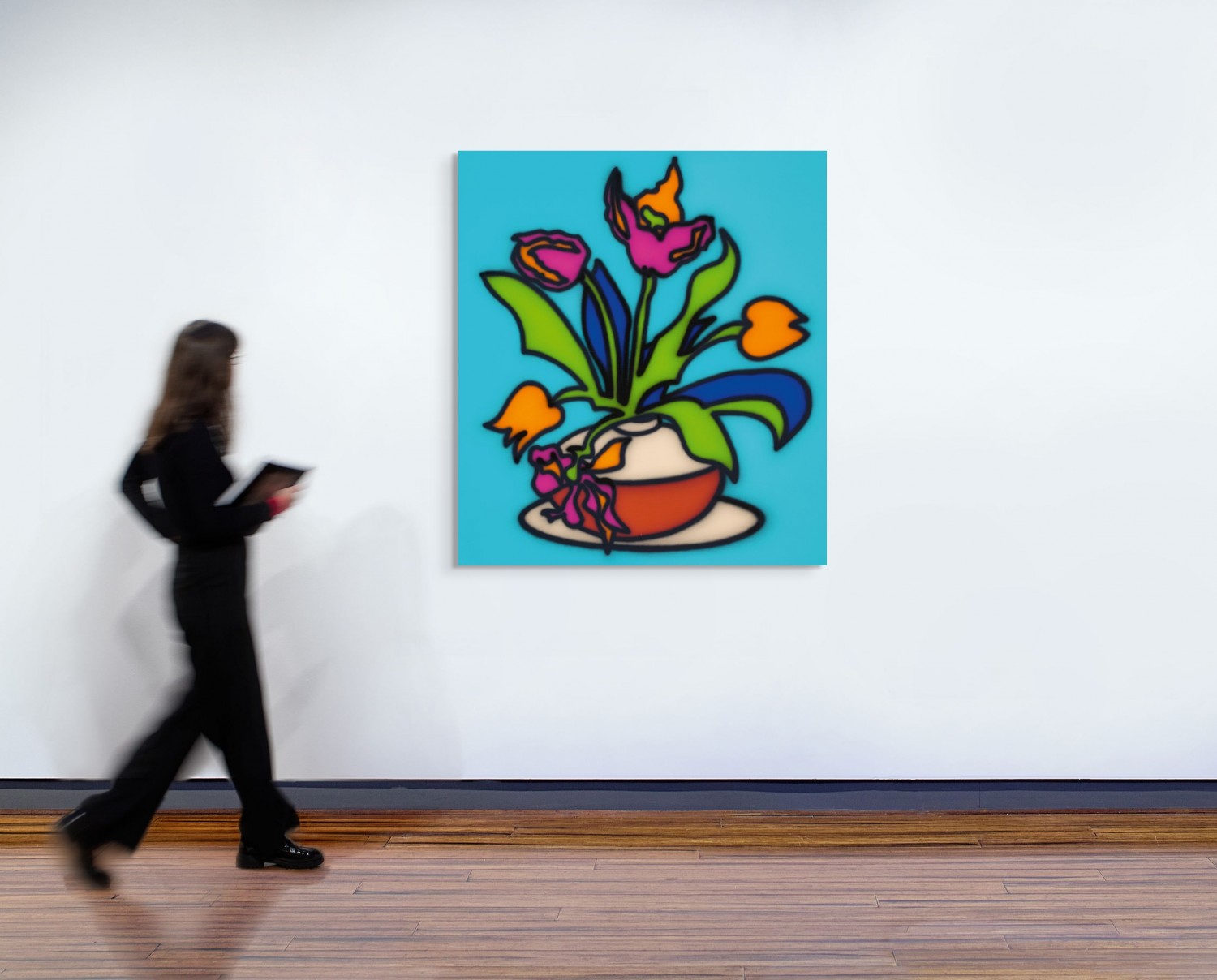
135.0 x 120.0 cm
signed, dated and inscribed with title verso: Howard Arkley / Stillife “Tulips” / 1996 / Acrylic on Canvas / Howard Arkley 96
Tolarno Galleries, Melbourne
Private collection, Germany, acquired from the above in November 1996
Tolarno Galleries at Art Cologne, Cologne, Germany, 10 – 17 November 1996
Ericsson Telecommunications company brochure, 1996 (illus.)
Howard Arkley Online Catalogue Raisonné: https://www.arkleyworks.com/blog/2026/02/05/stillife-tulips-1996/ (accessed February 2026)
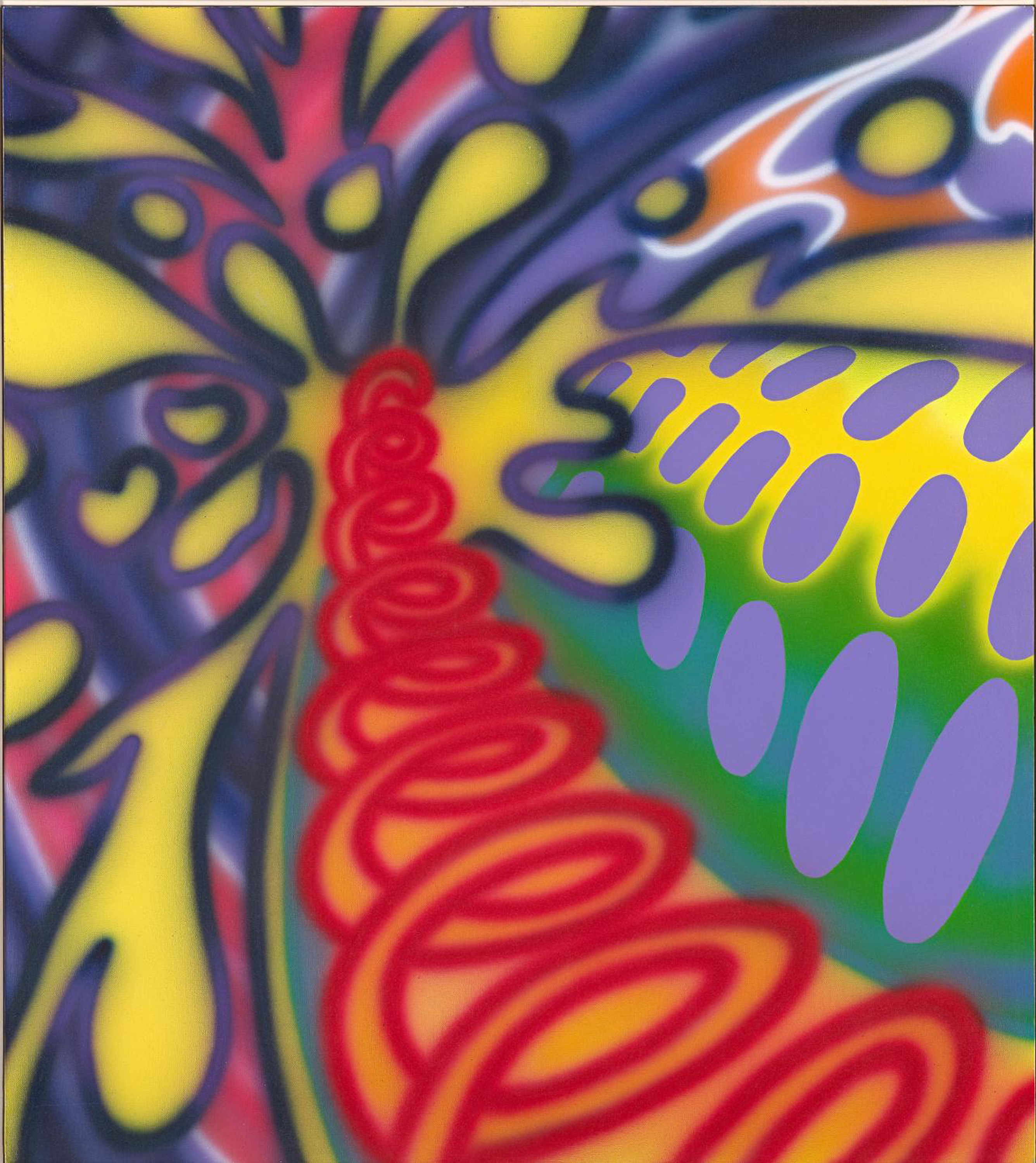
Arkley produced three variants of earlier works for a proposed collaboration with Ericsson: Explosion, Stillife "Tulips", and Zappo (all 1996), all three were amongst the five works exhibited at Art Cologne, Germany 1996.
260024, Howard Arkley, Explosion, 1996.jpg
Howard Arkley
Explosion, 1996
synthetic polymer paint on canvas
135.1 x 120.0 cm
National Gallery of Victoria, Melbourne
© The Estate of Howard Arkley.
Licensed by Kalli Rolfe Contemporary Art
A master of revisiting and resampling his own works, the theme of the still life appears intermittently across Howard Arkley’s oeuvre. First materialising in 1986 (see Tulips and spotted vase, Deutscher and Hackett, Important Australian + International Fine Art, Melbourne, 26 November 2024, lot 24), vases of petunias – and, more often, tulips – emerge from amongst his iconic suburban imagery right up until the artist’s death in 1999. Well-versed in art history, Arkley’s Stillife "Tulips", 1996 is a Day-Glo contemporary nod to the vanitas tradition, with the blousy open blooms of the tulips and their joyous pops of colour serving as a poignant reminder of the transience of both beauty and life. The open and wilting tulips seem to strain against the strength and containment of Arkley’s assured airbrushed outlines, creating a tension in the work between the exuberance of the artist’s imagery and deft handling of paint and the rich symbolism of the flower within momento mori (translating as ‘remember you must die’ in Latin). Given Arkley’s well-known love of decoration and ornamentation, Stillife "Tulips" is a relatively restrained painting; the product an artist at the height of his powers who can command our attention with a mesmerising combination of elegant, fluid linework and an innate understanding of complementary colour and its impact (seen here in the opposition between the bright blue and orange, and pink-violet and green). An admirer of Swiss-born German artist Paul Klee, who coined the notion of drawing as ‘taking a line for a walk’1, Arkley confessed early in his career: ‘I draw rather than paint.’2
Arkley’s work has often been compared to American and British Pop artists Roy Lichtenstein and Patrick Caulfield, whose practice shared a penchant for areas of bold flat colour and the depiction of everyday utilitarian objects such as vases, bowls and jugs. However, on this occasion the fascinating story behind Stillife "Tulips" is more akin to the crossover potential of the ultimate Pop artist, Andy Warhol, who late in his career balanced his own interview segment on MTV (Andy Warhol’s Fifteen Minutes, 1985 – 87), and appearances on a Japanese TV commercial (TDK video tapes, 1983) and the long-running American TV series The love boat (1985), with the making of art. In 1996, Arkley was commissioned to produce Stillife "Tulips", and two other works – Explosion, 1996 (National Gallery of Victoria) and 96 Zappo, 1996 for the Australian arm of the Swedish telecommunications company Ericsson.3 Inspired by the success of the European version of the company’s ‘The Art of Communication’ project, which saw three works by a star-studded range of artists (Karel Appel, Keith Haring, Pablo Picasso, László Moholy-Nagy, Antoni Tàpies, and Ulrica Hydman-Vallien) reproduced as interchangeable covers (or ‘flips’) for the Ericsson flip phone, Arkley’s paintings were intended to appear on a new limited edition series of the Ericsson GF388 mobile phone. Australian heavyweight John Olsen and Ricky Howell, ‘who was unknown and fearful of being kicked off the dole’ at the time of the project4, were the other artists represented. Characteristically, the paintings Arkley produced for this project were a sample of his practice rather than a series; a group of three distinct interchangeable images – ‘an explosion, a zappo thing, which was to do with amphetamine addiction, although I don’t know if they’ll want that said’5 – that could be used to personalise your mobile according to mood. As the press release declared:
250114 Howard Arkley.jpg
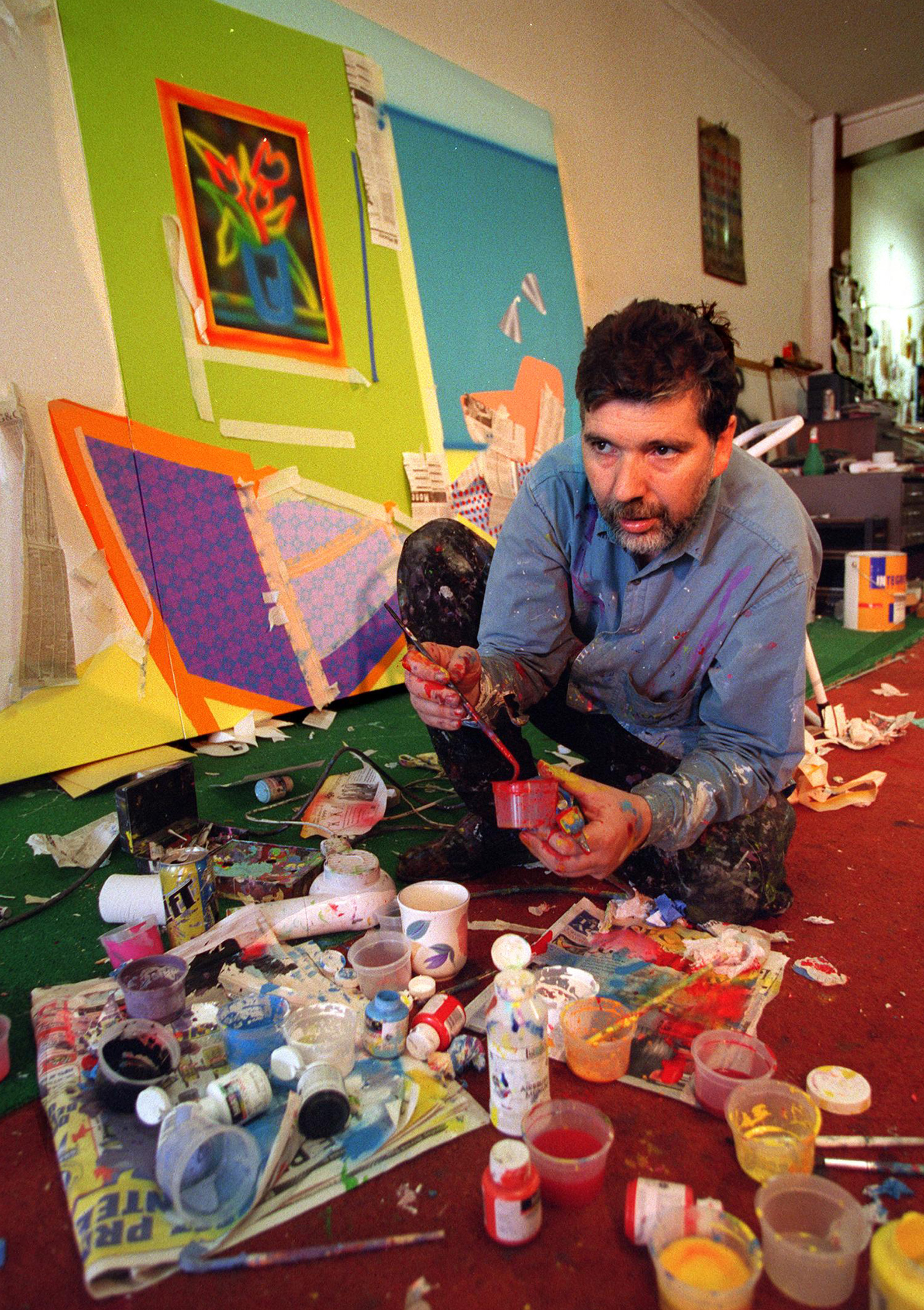
Howard Arkley in his studio, 11 March 1999
photographer: Andrew de la Rue
The Age, Melbourne
‘The GF 388 has a stylish flip which can protect your keypad when in your purse or pocket and provides extra privacy to the caller. This flip is removable, allowing you to purchase the Art of Communication series set of flips and make your Ericsson mobile phone stand out from the crowd.’6
While Arkley didn’t own a mobile phone at the time of the project, he embraced the notion of his art being used in this way, seeing this unique form of circulation of his artworks as part of the continuum of his practice: ‘It’s the idea of mass culture, not specifically phone users, just the fact that so much of my imagery comes from mass culture to art and back to mass culture.’7 However, despite having progressed as far as having brochures designed, receiving media coverage, and establishing launch dates8, the Ericsson ‘Australian Artists Limited Edition’ series was ultimately canned.9
But despite the time and effort involved, all was not lost. Arkley went on to successfully exhibit Stillife "Tulips", Explosion and Zappo Head 96 at Art Cologne, Germany in November – thus building upon a year of international exhibitions in Korea and Singapore that ultimately led to his representation of Australia in Venice at the 48th Venice Biennale in 1999.
1. Paul Klee cited in ‘Background and Early Influences’, NGV Howard Arkley Education Resource, at: https://www.ngv.vic.gov.au/school_resource/howard-arkley/ (accessed 5 March 2026)
2. Howard Arkley in Carmichael, R., ‘Erasing the Drawn Line’, The Sun, 2 November 1983, cited ibid.
3. The commission was organised by Arkley’s representative Tolarno Galleries, Melbourne. See Gregory, J., Arkley Works at https://www.arkleyworks.com/blog/2009/11/26/1996/ (accessed 5 March 2026)
4. Barclay, A., ‘Mobile Message’, Herald Sun, 16 August 1996
5. Arkley cited ibid.
6. ‘Ericsson Art of Communication Media Release’, 8 August 1996, Howard Arkley Archive, State Library Victoria (YMS 16096 John Gregory: Howard Arkley Research Collection 1996, Ericsson Box 3/8)
7. See Barclay, op. cit.
8. The series was to be launched at the Art Gallery of New South Wales, Sydney on Monday 12 August 1996 and at the National Gallery of Victoria, Melbourne on Tuesday 13 August, see ‘Ericsson Art of Communication Media Release’, op. cit.
9. According to John Gregory, this was ‘apparently on economic grounds’: see Arkley Works, op. cit.
KELLY GELLATLY