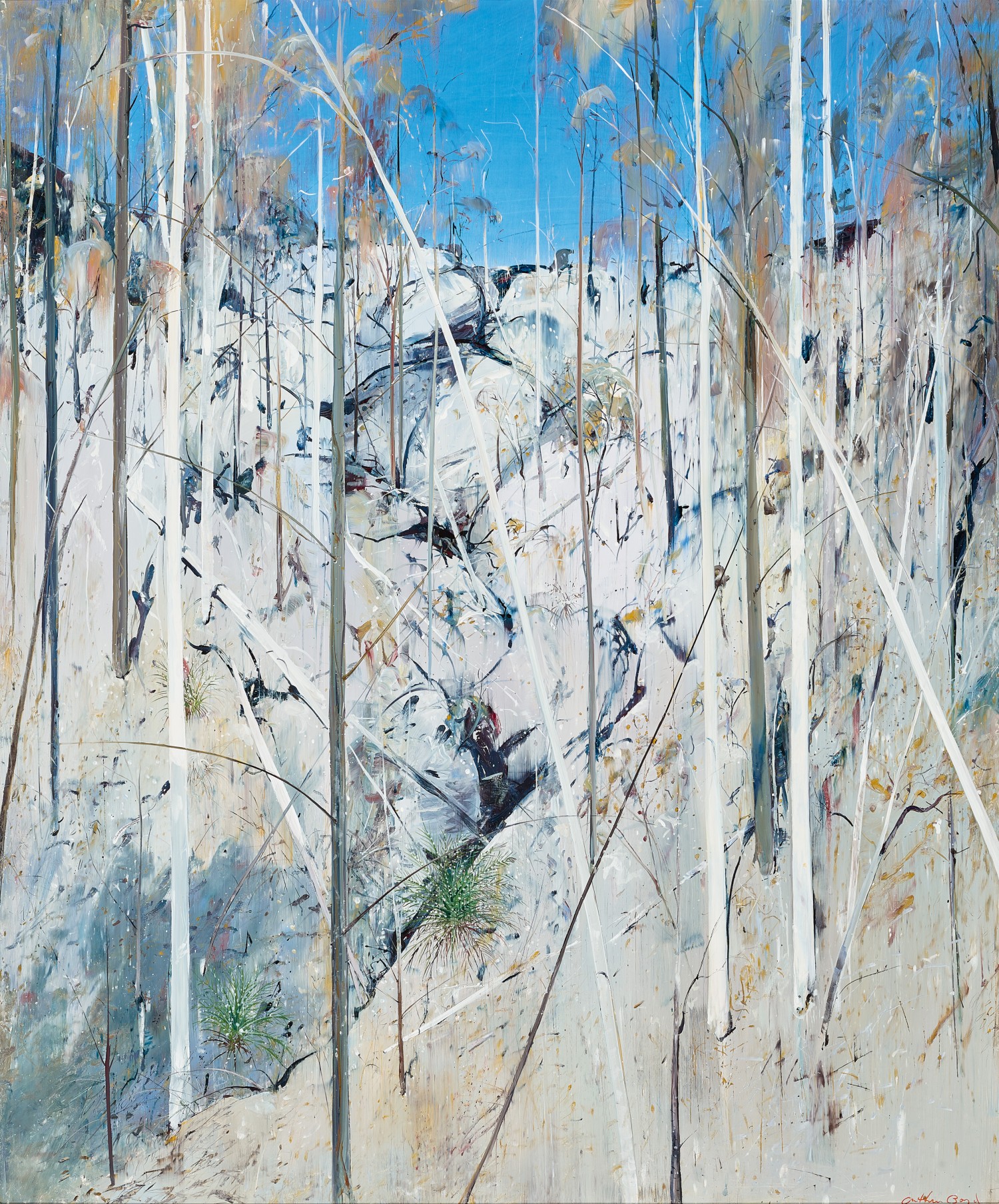
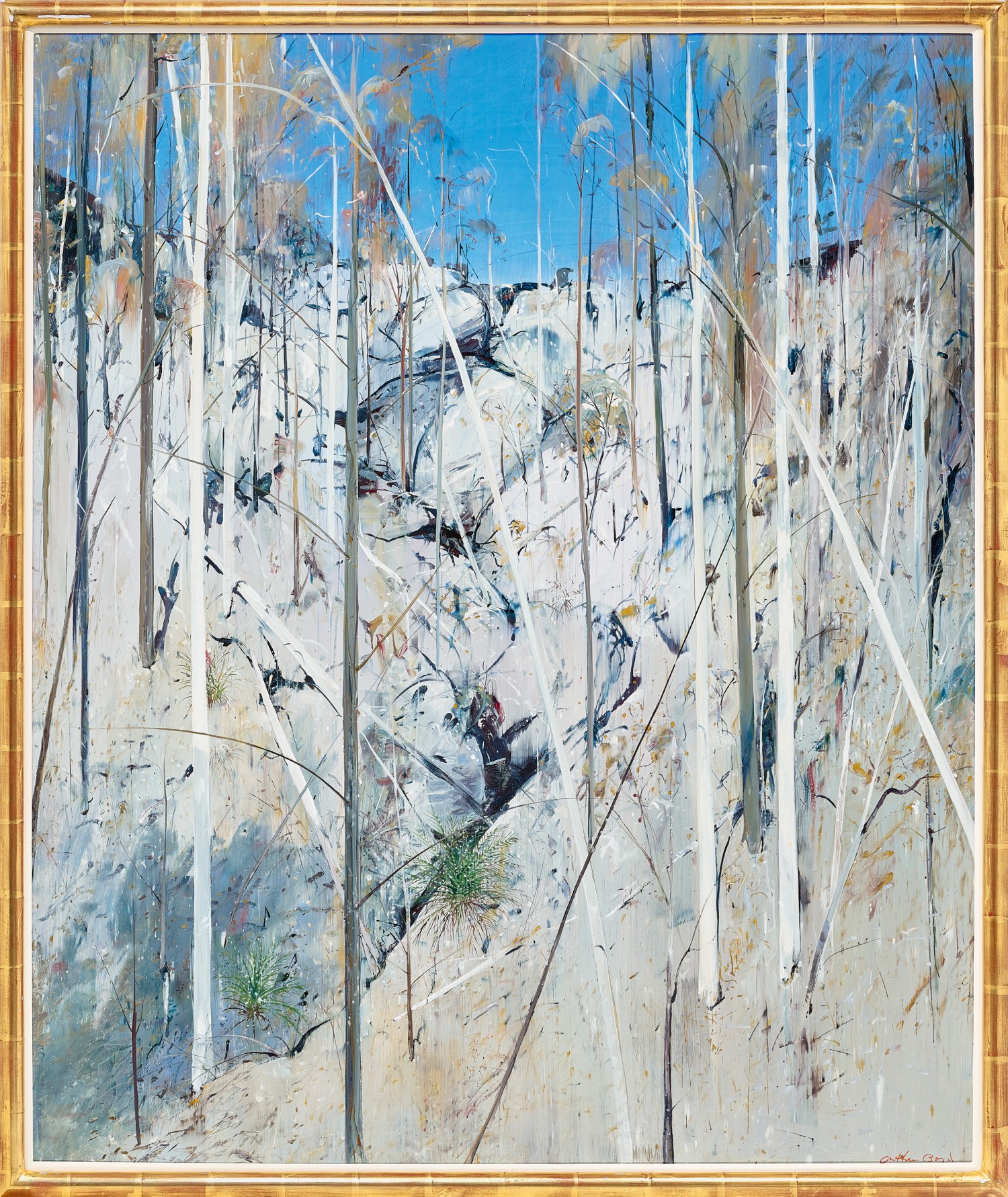
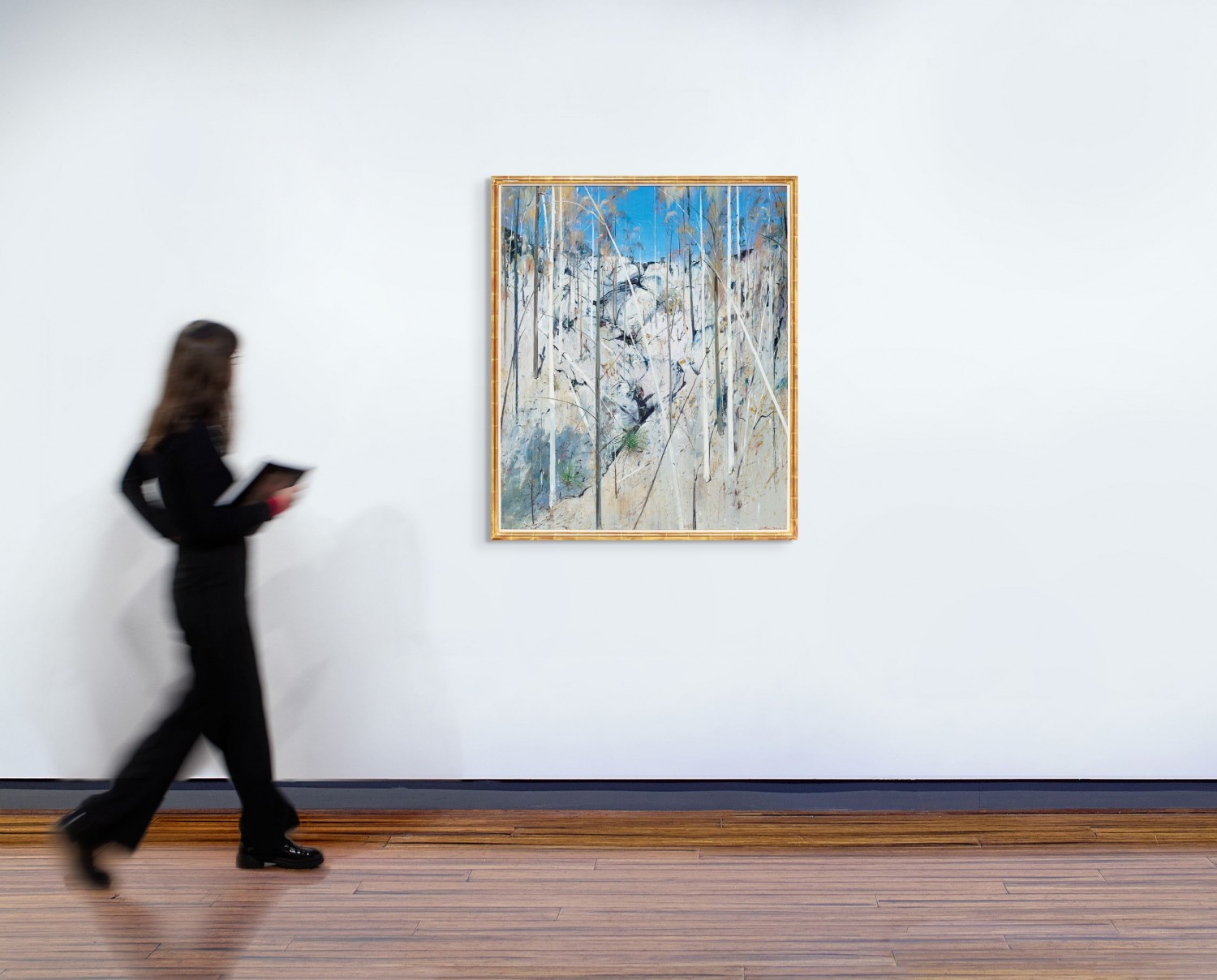
Hillside (Shoalhaven), c.1975
Arthur Boyd
oil on composition board
112.0 x 92.0 cm
signed lower right: Arthur Boyd
Joseph Brown Gallery, Melbourne
Ted Lustig, Melbourne
Savill Galleries, Sydney (label attached verso)
Private collection, USA, acquired from the above in 2007
Arthur Boyd, Savill Galleries, Sydney, 7 - 31 March 2007, cat. 8 (illus. on front cover of exhibition catalogue)
260075.jpg
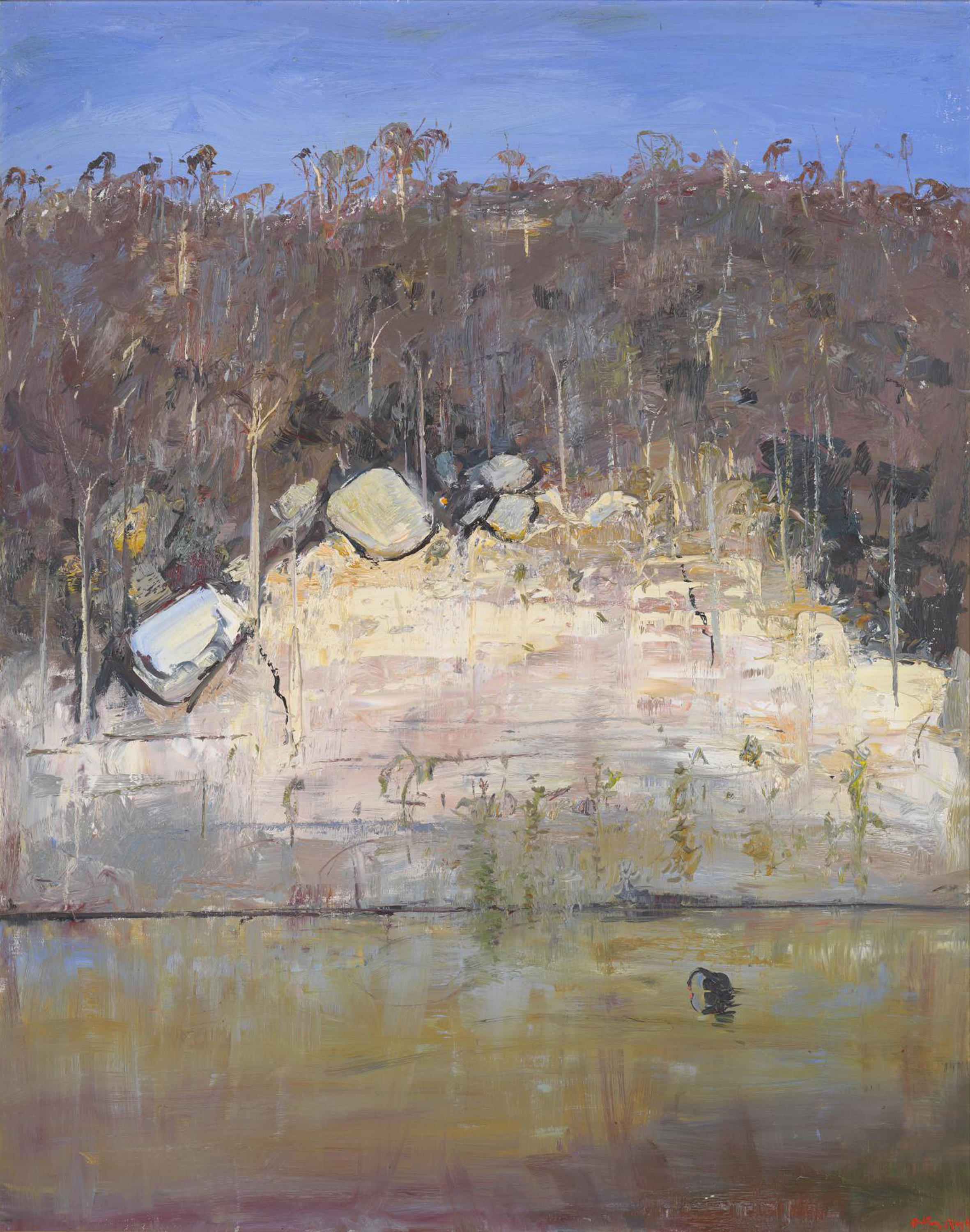
Arthur Boyd
On the banks of the Shoalhaven, 1980 – 85
oil on canvas
152.0 x 121.5 cm
National Gallery of Victoria, Melbourne
© Arthur Boyd / Copyright Agency
‘The natural beauty of the Shoalhaven area caused Boyd to marvel constantly. His paintings are a celebration of grandeur and wonder of Nature. It is to Boyd’s credit that a single landscape can inspire such diversity of work. He gives us the impression that there are infinite possibilities, as long as we train ourselves to see.’1
Eager to rediscover his roots, his ‘Australianism’, after more than a decade abroad, in 1971 Arthur Boyd returned to the country of his birth to take up a Creative Arts Fellowship at the Australian National University in Canberra. Over the blazing summer of 1971 – 72, Boyd and his wife Yvonne were invited by the Sydney art dealer Frank McDonald to visit Bundanon for the weekend, staying at a home he shared on the south coast of New South Wales with art historian Sandra McGrath and her husband Tony. Here the artist’s joyful rediscovery of the Australian bush with its stark contrasts and clarity of light was nothing short of an epiphany, and thus in 1974, Boyd purchased the nearby property Riversdale on the banks of the Shoalhaven River. Once again, the magic of the dour, untamed Australian landscape became the impetus for his art, and over the subsequent twenty-five years until his death in 1999, Boyd would dedicate himself almost exclusively to capturing the myriad moods of the Shoalhaven in images that are today imprinted upon the national psyche as some of our most beloved and iconic.
260075 (2).jpg
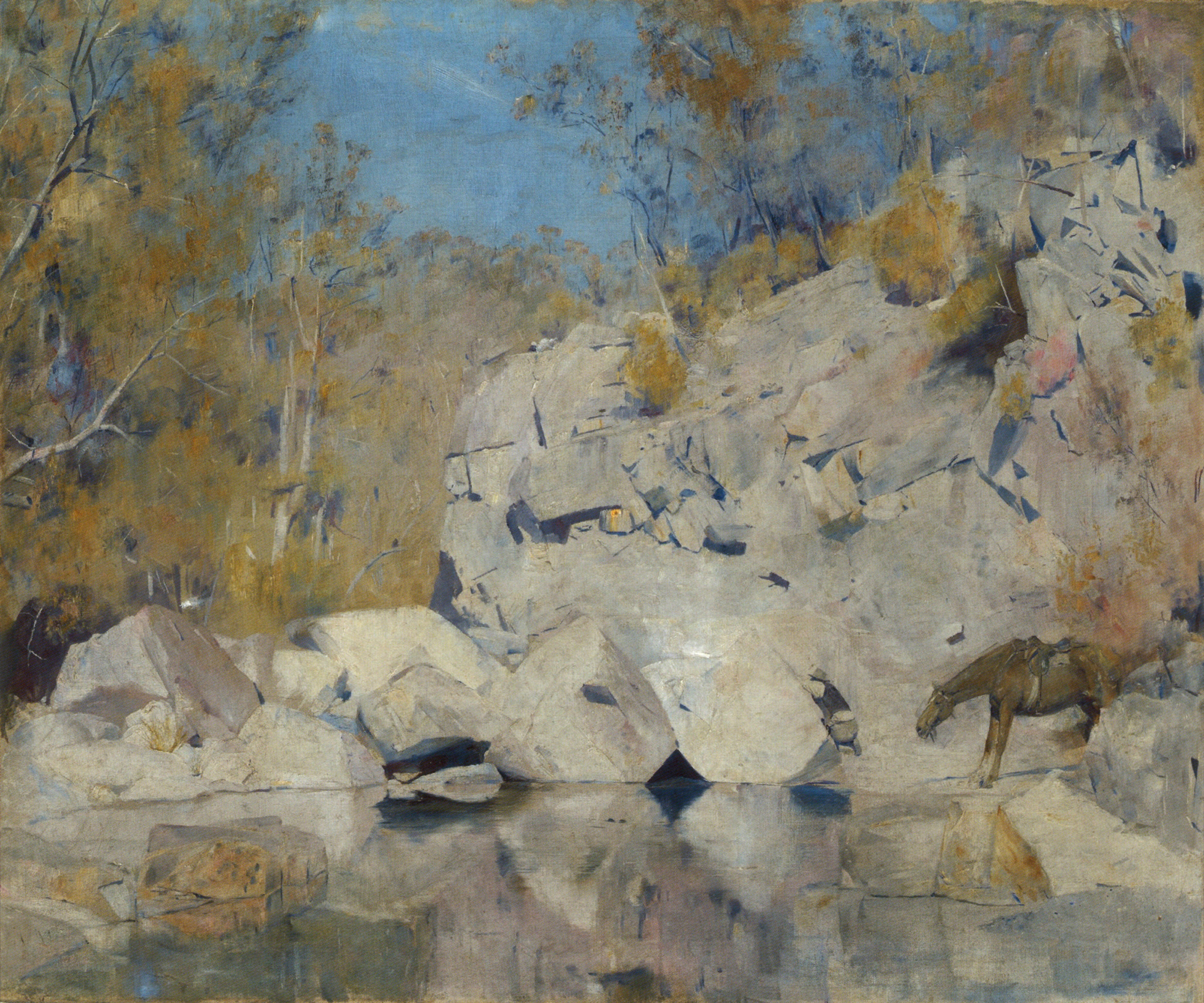
Tom Roberts
In a corner on the Macintyre (The bushranger), 1895
oil on canvas
71.1 x 86.4 cm
National Gallery of Australia, Canberra
Soul-piercing in its beauty, the Shoalhaven region offered both refreshing solace for the artist’s world-weary eyes, and endless potential as a subject – ‘the variation in the area with its great deep tones and high keys’ bearing strong affinities with music. As Boyd elaborated, ‘in the desert there is only one note, just one low singing note. In this landscape the tonal range – not tonal in the obvious sense of colour, but the actual fact of the horizon which can vary from very high to low, to infinite, depending on your line of vision – makes it a greater challenge. It has a knife-edged clarity. Impressionism could never have been born here, but Wagner could easily have composed here.’2
260075 BOYD-topaz-upscale-2x.jpg
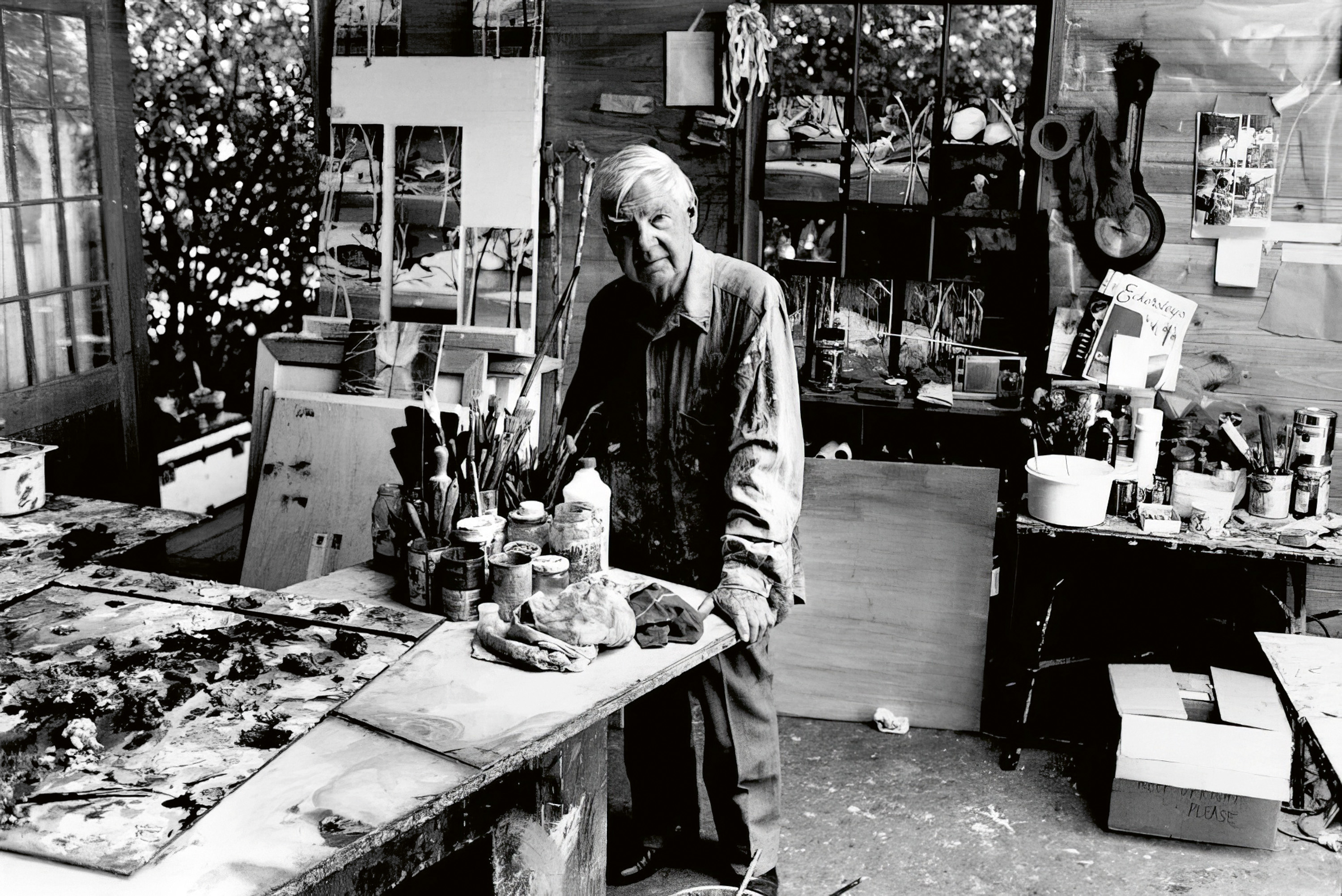
Arthur Boyd in his studio at his Bundanon property,
November 1993
photographer: Robert Pearce
Wild and primordial, the region differed completely from the ordered English countryside to which he had grown accustomed and thus, a new vision was required to unlock its tangled mysteries. If previously Breughel and Rembrandt had offered inspiration, now Von Guérard, Piguenit and Buvelot became Boyd’s spiritual mentors. Yet at times, as McGrath notes, he also could not ‘resist the temptation to paint the landscape in the manner of the early Box Hill painters’3 – as witnessed by the present Hillside (Shoalhaven), c.1975 which evokes strong affinities with masterpieces of Heidelberg Impressionism such as Tom Roberts’ In a corner on the Macintyre, 1895 (National Gallery of Australia), both works featuring the motif of majestic sandstone cliffs standing timelessly in the scorching sun to convey the unique stillness, light and poetry of the Australian bush.
Suffused with warmth and lyricism, Hillside (Shoalhaven) offers an exquisitely painted example of the early, ‘pure’ Shoalhaven landscapes which – devoid of the mythological creatures and symbolic narrative punctuating later versions – simply pay homage to the sheer beauty, grandeur and wonder of Nature. Capturing the region in the blistering heat of the midday sun, indeed the work is a poignant reminder of how Boyd, comfortable once more with the eternal diversity of the Australian landscape, ultimately did tame his wilderness: ‘...what was unfamiliar became familiar, what was menacing became friendly, what was awesome became intimate.’4
1. McKenzie, J., Arthur Boyd at Bundanon, Academy Editions, London, 1994, p. 42
2. Arthur Boyd, cited in Pearce, B., Arthur Boyd Retrospective, Art Gallery of New South Wales, Sydney, 1993, pp. 26 – 27
3. McGrath, S., The Artist and the Shoalhaven, Bay Books, Sydney, 1982, p. 63
4. ibid., p. 79
VERONICA ANGELATOS