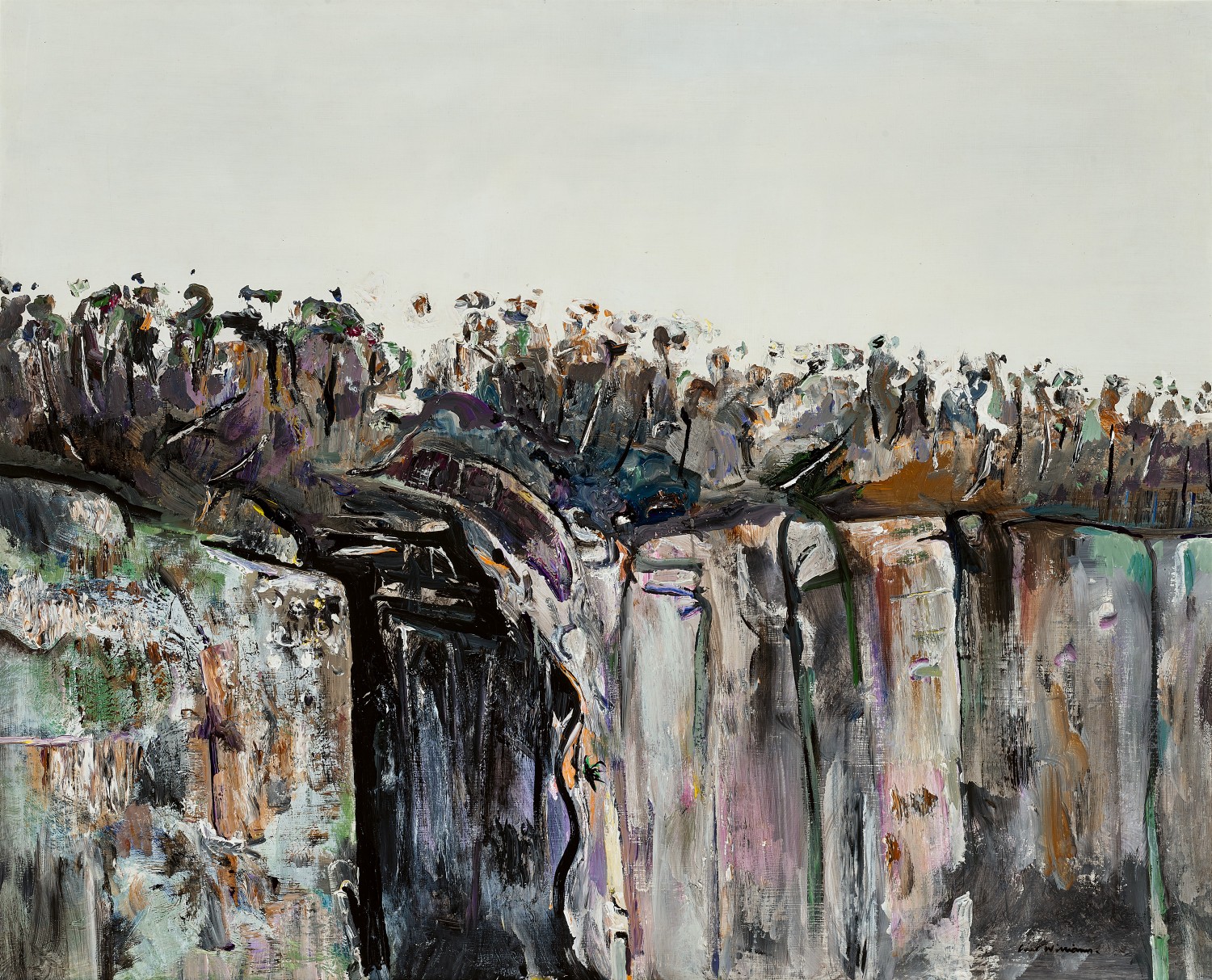
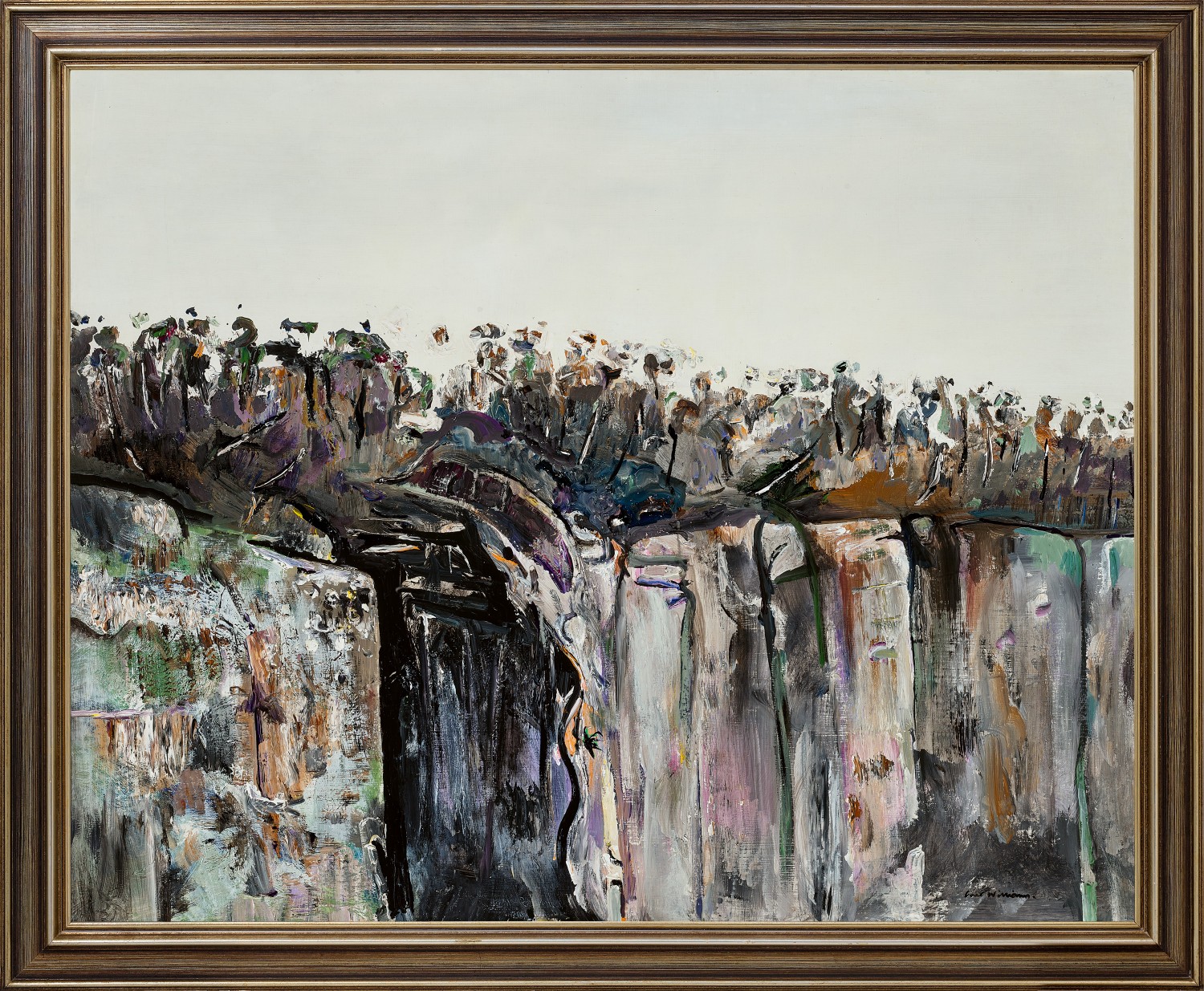
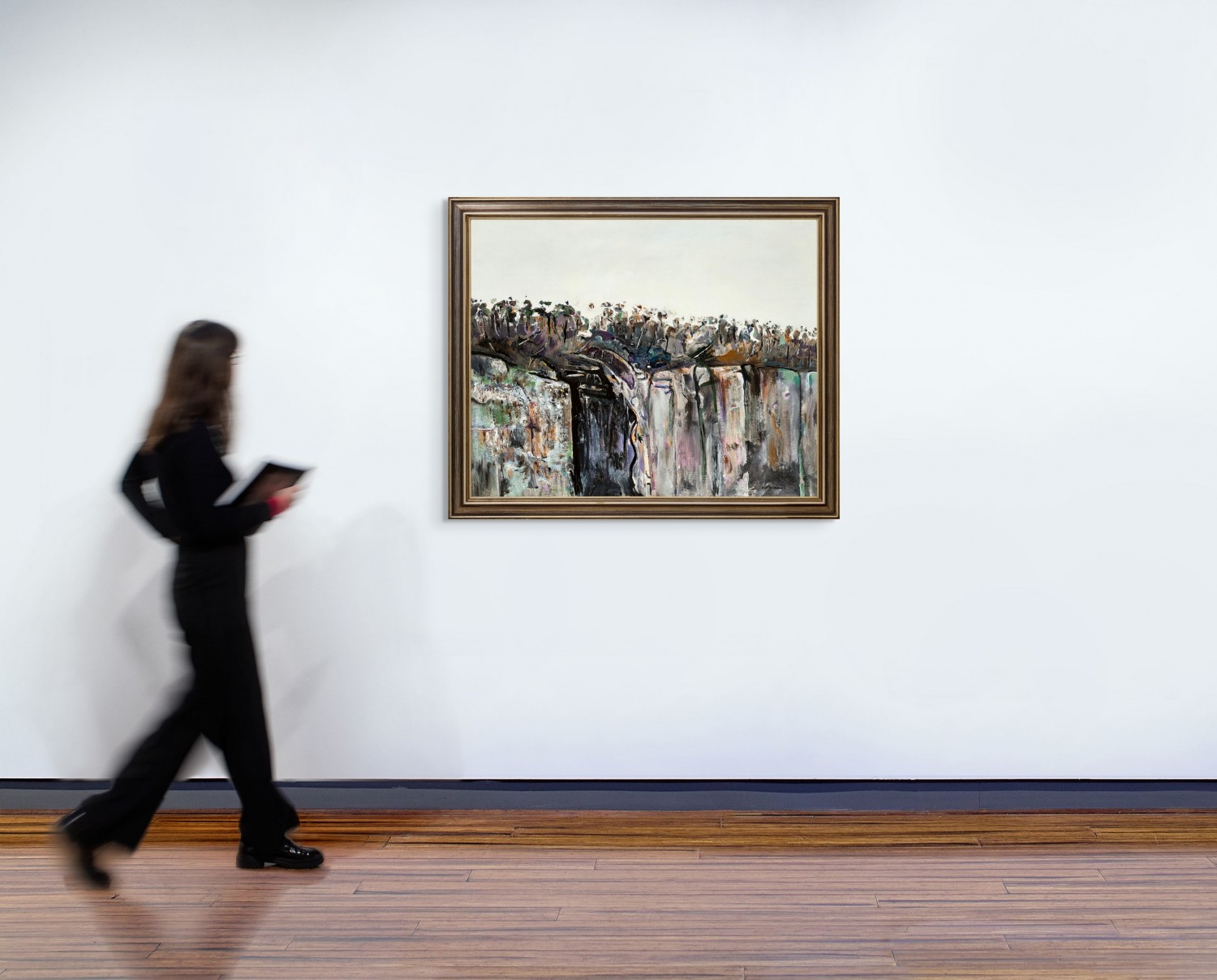
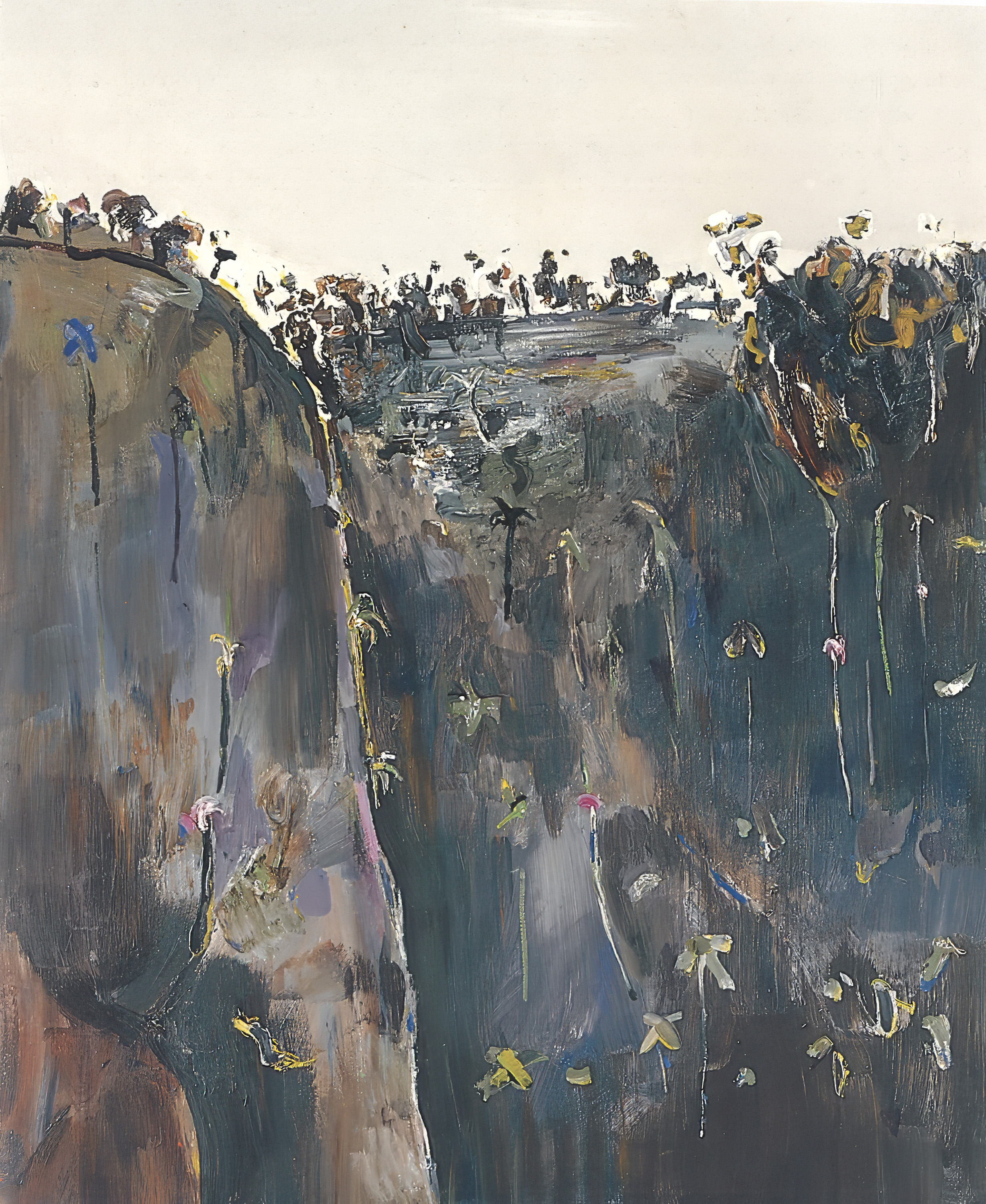
Goomoolahra Falls, Queensland, 1971
Fred Williams
synthetic polymer paint on composition board
91.0 x 113.0 cm
signed lower right: Fred Williams
inscribed with artist's name, title, date, medium and dimensions on artist's label verso
Rudy Komon Gallery, Sydney (label attached verso, stock no. 3048)
Private collection, Sydney
Thirteenth Anniversary Exhibition, Rudy Komon Gallery, Sydney, December 1972 – January 1973, cat. 17
Daramalan Invitation Art Prize, Daramalan College, Canberra, April – May 1973, cat. 65
260079 Fred Williams 2 FA.jpg
Fred Williams
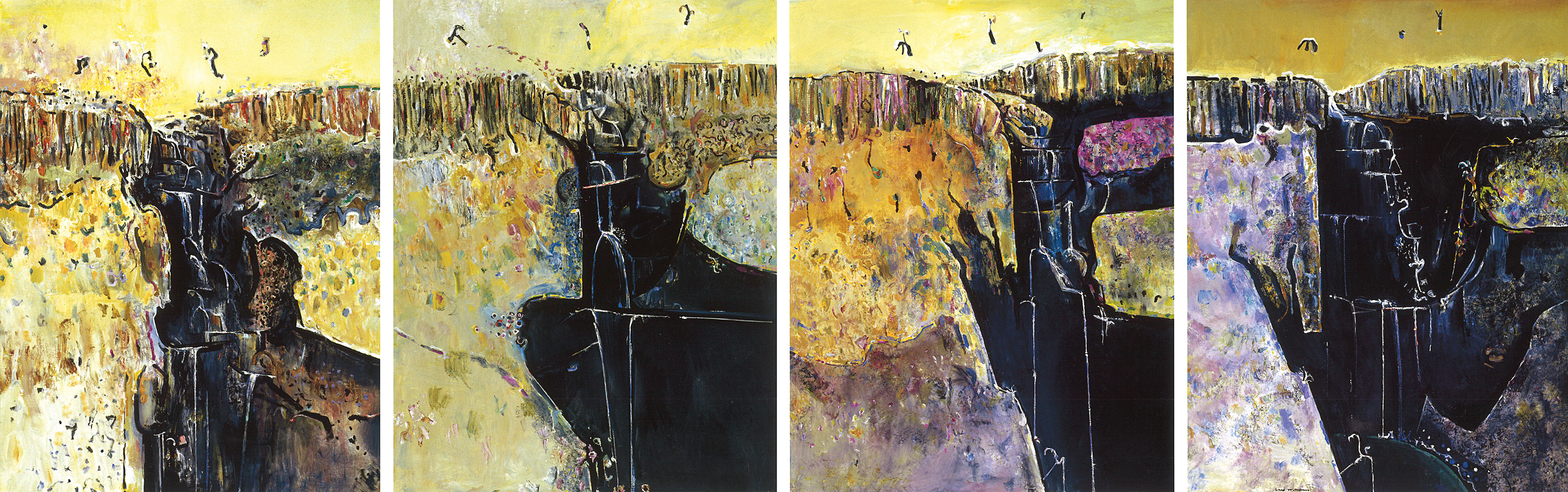
Waterfall polyptych, 1979
oil on canvas (four panels)
154.0 x 494.0 cm (overall)
Art Gallery of New South Wales, Sydney
© Estate of Fred Williams/Copyright Agency
‘I have a fierce desire to paint colour… I decide to completely alter my palette – the primary colors & the corresponding color[s] on either side of [them] [on the colour wheel] plus the secondary Orange, Green & Violet – I am ready to do this.’1 Fred Williams
Fred Williams’ diaries from the late 1960s and early 1970s offer revealing insights into the way that his use of colour changed during these years. Describing the transformation, Patrick McCaughey wrote that while colour had been implicit in Williams’ earlier work, at this time it became boldly explicit.2 While his palette had been based on a traditional range of muted colours – albeit, sometimes with the inclusion of strokes of vividly coloured paint, perfectly placed to finish and energise the composition – this period witnessed a marked expansion in his chromatic approach.
His friend and fellow artist, Albert Tucker (1914 – 99), contributed to these developments, encouraging Williams to use acrylic paint (also known as synthetic polymer paint) instead of gouache for his work outdoors. In the weeks leading up to a family trip to visit Tucker and his wife, Barbara, in Queensland in 1971, Williams took the leap and began using the new medium. Writing in his diary on 13 August he noted: ‘My idea to put a greater emphasis on color is having reasonable success so far – the sketches in Q[ueensland] should prove interesting.’3
Located in the Gold Coast hinterland, the Tuckers’ property at Springbrook was one of three adjacent eighteen-acre blocks that had been acquired in a collective effort to protect this area of lush rainforest. The others were owned by the artist Stephen May, who introduced the Tuckers to the region, and Arthur Boyd.4 As Lesley Harding has observed, Tucker’s paintings of this landscape are unlike anything else in his oeuvre, ‘Rolling hills and idyllic waterfalls and escarpments are rendered evocatively… and both the changeability of the sky and the shape and undulation of the land become new interests.’5 Williams also responded enthusiastically to the new landscape, writing at the end of his first day there, ‘one of Bert’s many blocks of land... [is] a very beautiful valley in a horse-shoe shape with [a] water-fall in the middle.’6
2855_001 cmyk-topaz-denoise.jpg
Goomoolahra Falls II, 1971
synthetic polymer paint on composition board
111.5 x 91.5 cm
Private collection
© Estate of Fred Williams/Copyright Agency
Williams painted Goomoolahra Falls on his second day at Springbrook. After working from the lookout all day making acrylic sketches on paper, he wrote, ‘I find the acrylics very hard to get used to – I almost give up but by tonight I’m glad I persevered, because they are obviously superior for outdoor work – and I can get a much fuller range of color-glazing & scumbling, which is my real forte.’7 The other advantage of the fast-drying acrylic paint was that he could work over previous layers, revising compositions on the spot. Upon returning to his studio in Melbourne, Williams reviewed the sketches from the trip, as well as making more from memory. We know that Goomoolahra Falls II, 1971 (private collection) was based on a studio sketch and given the close relationship between it and Goomoolahra Falls, Queensland, 1971, it is probable that they both followed the same process.
Despite Williams’ focus on colour, Goomoolahra Falls, Queensland is painted in a mostly subdued palette – although shades of purple and green hint at the transformation which was occurring as well as the distinctive vegetation and atmosphere of the sub-tropical location. Clearly engaged with the features of the landscape, Williams observed them carefully, from the smooth band of pale sky to the energetic and painterly depiction of trees and cascading water. Although Williams maintained a preference for painting his major canvases in oil, of those works painted in acrylic he must have regarded this one highly, as it was the only such painting to be exhibited publicly during his lifetime.8 The subject of the waterfall continued to interest Williams and in the late 1970s, he embarked on a major series of paintings of Victorian waterfalls.9
1. Fred Williams Diary, 4 April 1972, cited in Mollison, J., A Singular Vision: The Art of Fred Williams, Australian National Gallery, Canberra, 1989, p. 158
2. McCaughey, P., Fred Williams 1927 – 1982, Murdoch Books, North Sydney, 1996, p. 225
3. Fred Williams Diary, 13 August 1971, cited in Mollison, ibid., p. 152
4. The Tuckers later purchased May’s block which, with their own, was sold in 2007 to the Queensland Government and is now a national park. See Harding, L., Hinterlands: Albert Tucker’s Landscapes 1960 – 1975, Heide Museum of Modern Art, Bulleen, 2008, p. 38
5. Harding, ibid., p. 39
6. Fred Williams Diary, 22 August 1971, cited in Mollison, op. cit., p. 152
7. Fred Williams Diary, 23 August 1971, cited in Mollison, ibid.
8. I am grateful to Lyn Williams AM for her assistance with this essay.
9. This series includes Wild Dog Creek, 1977 (TarraWarra Museum of Art) and Waterfall polyptych, 1979 (Art Gallery of New South Wales)
KIRSTY GRANT