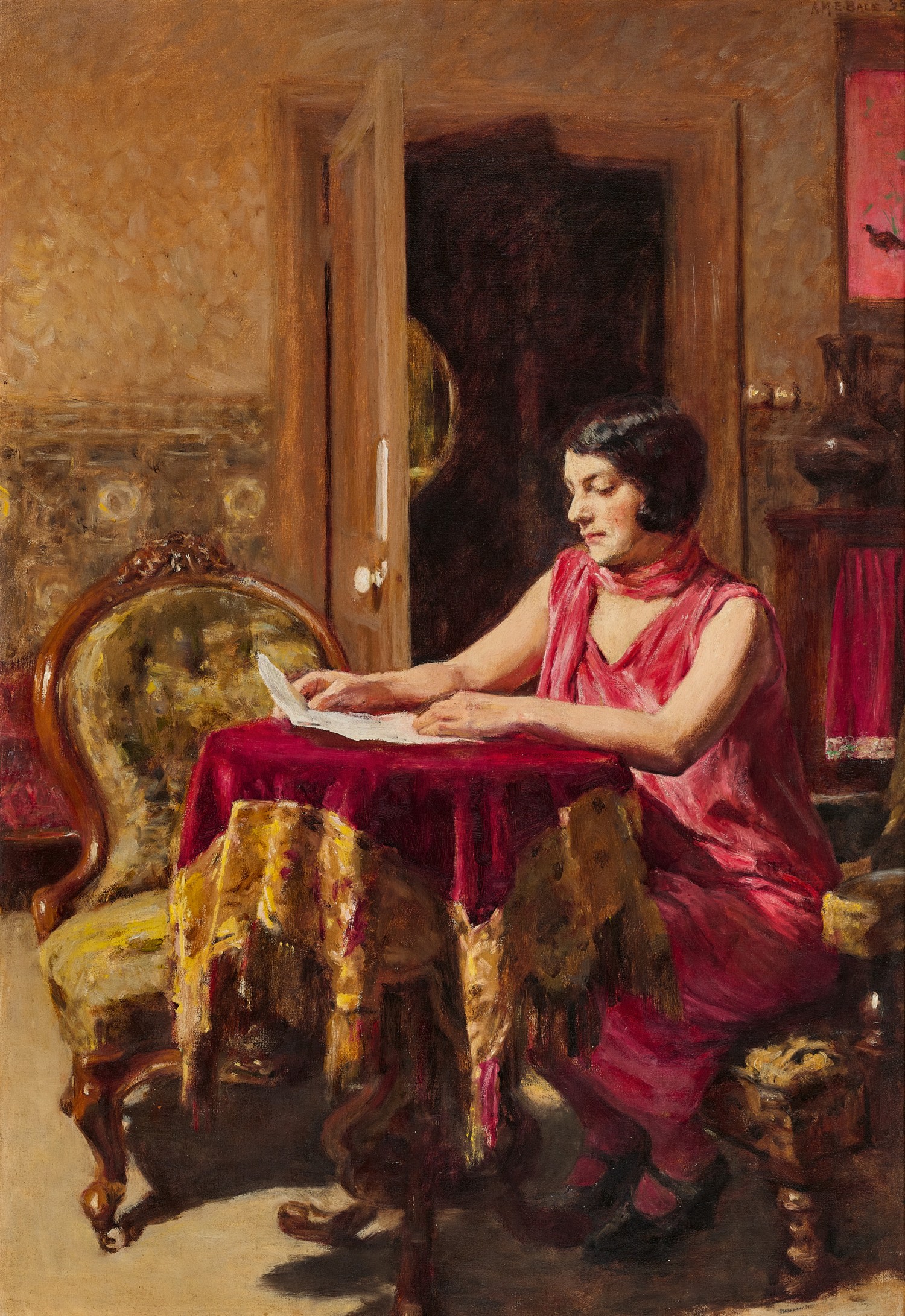
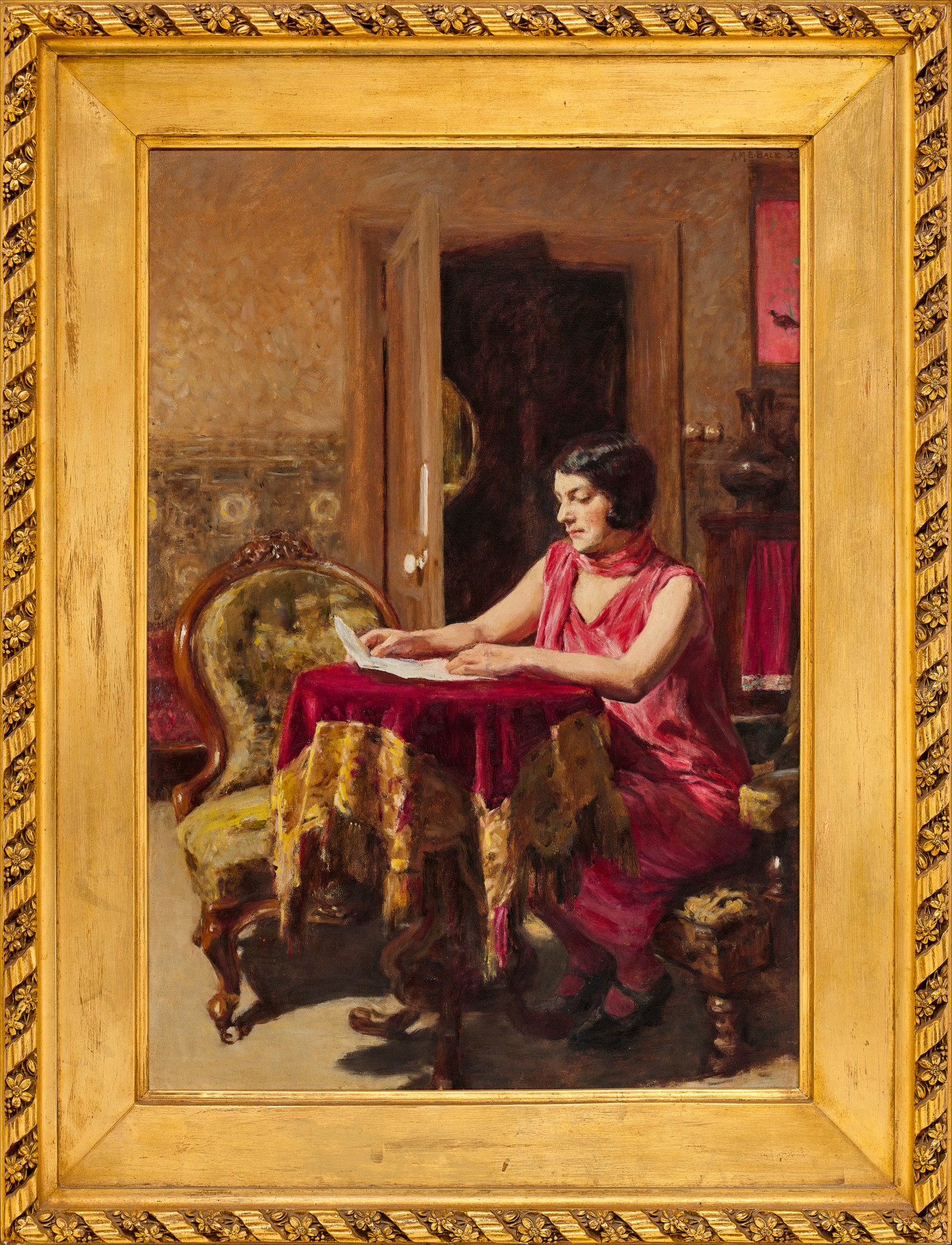
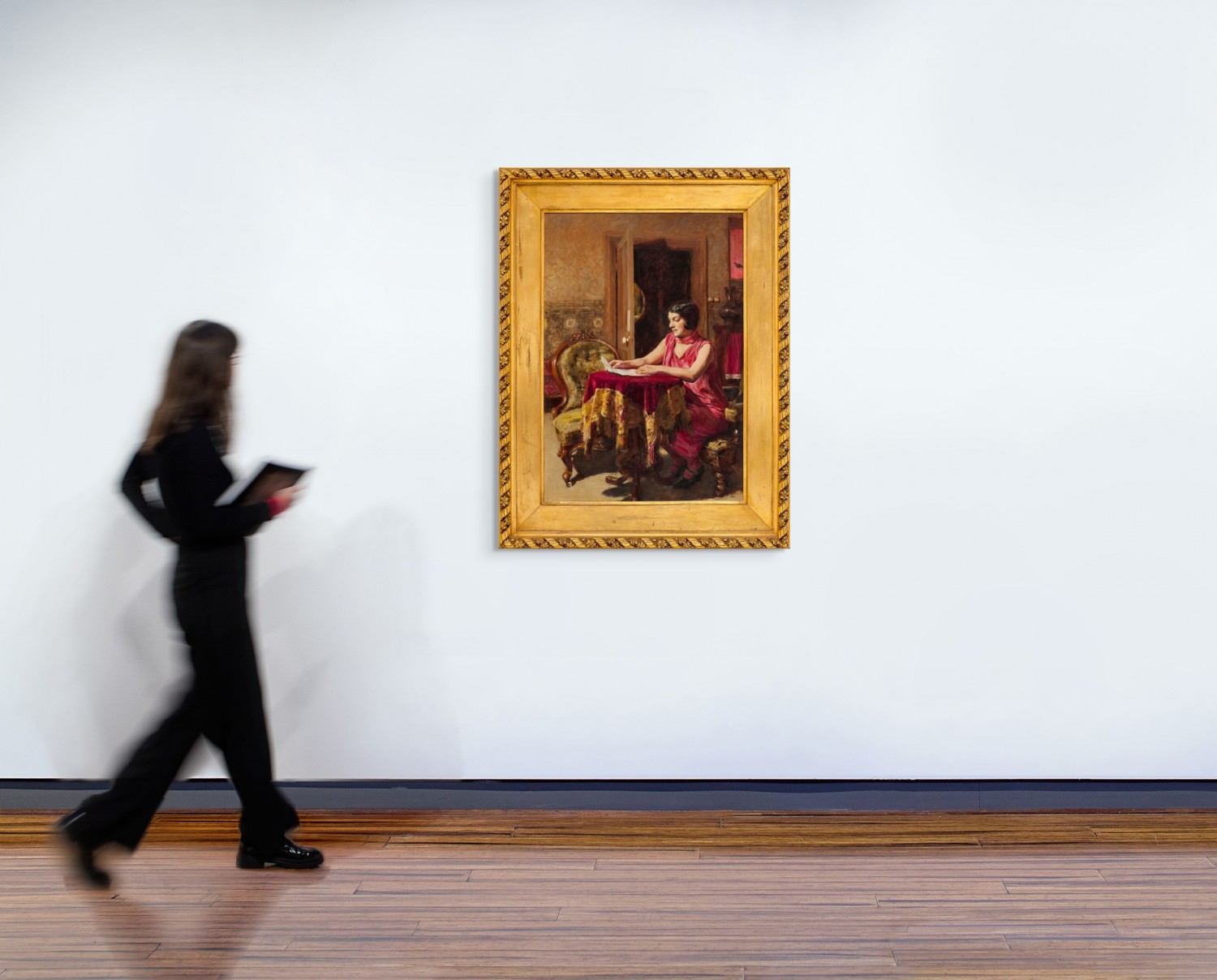
Mollie (Miss Mollie Agnew), 1925
Alice Bale
oil on canvas
96.5 x 66.0 cm
signed and dated upper right: A.M.E Bale 25
bears inscription verso: MOLLIE A.M.E Bale
bears inscription verso: 6
Estate of the artist
Leonard Joel, Melbourne, 25 May 1973, lot 414
Diana Gribble, Melbourne
Thence by descent
Private collection, Melbourne
7th Annual Exhibition, Twenty Melbourne Painters Society, Athenaeum Hall, Melbourne, 15 – 26 September 1925, cat. 8 (as 'Mollie')
Archibald Prize Finalist 1925, Art Gallery of New South Wales, Sydney, 16 January – 15 February 1926, cat. 54
Exhibition of Paintings, Athenaeum Art Gallery, Melbourne, 2 – 13 December 1930, cat. 44
A M E Bale & Victor E Cobb, Athenaeum Art Gallery, Melbourne, September 1933, cat. 5
Centenary Art Exhibition, Commonwealth Bank Building, Melbourne, 8 October – December 1934 (label attached verso)
A Century of Australian Woman Artists, Deutscher Fine Art, Melbourne, 4 June – 3 July 1993, cat. 58 (as 'Mollie')
‘Art Notes: The Society of Twenty Painters’, The Age, Melbourne, 15 September 1925, p. 9
Streeton, A., ‘Art Exhibitions: Fine Work at Athenaeum’, The Argus, Melbourne, 2 December 1930, p. 9
'Art Notes', The Age, Melbourne, 2 December 1930, p. 10
Bell, G., 'Ten Artists Hold Display', The Sun, Melbourne, 2 December 1930, p. 15
Streeton, A., 'Paintings and Etchings: Miss Bale and Victor Cobb', The Argus, Melbourne, 26 September 1933, p. 8
Centenary Gift Book, published for The Women's Centenary Council, Melbourne, 1934, p. 49
Deutscher, C., A Century of Australian Women Artists, Deutscher Fine Art, Melbourne, 1993, p. 36 (illus., as 'Mollie')
Perry, P., & Perry, J., Max Meldrum & Associates Their Art, Lives and Influences, Castlemaine Art Gallery and Historical Museum, Victoria, 1996, pp. 75 - 77
Perry, P., A.M.E. Bale: Her Art and Life, Castlemaine Art Gallery and Historical Museum, Victoria, 2011, pp. 88, 89 (illus.)
Miss Alice Marian Ellen Bale exhibited remarkable artistic ability from an early age, beginning formal instruction at just seven years old. Her first significant teacher was Miss May Vale (1862 – 1945), who had recently returned from studies in Europe and England, where she trained in London under Sir James Linton. Bale further developed her skills with additional lessons from Hugh Ramsay, before enrolling at the Melbourne National Gallery School where she studied under Fred McCubbin and Bernard Hall.
A pivotal moment in Bale’s artistic development occurred with the return to Australia of Max Meldrum in late 1911, following eleven years of painting and study in France. Bale became a committed supporter of Meldrum between 1916 and 1918 and studied with him for a period of six months during those years.
While Bale is widely recognised as one of Australia’s most accomplished painters of flowers, her portraits reveal a subtlety and psychological sensitivity that are equally significant. The present portrait, Mollie (Miss Mollie Agnew), 1925 was exhibited in the 1925 Archibald Prize at the Art Gallery of New South Wales. Between 1922 and 1942, Bale was represented in the Archibald Prize on thirteen occasions. Her exhibition record also includes nine works selected for the Wynne Prize for landscape and one work accepted for the Sulman Prize for genre painting.
Throughout her career, Bale took gender equality as a given. As she succinctly stated, ‘…there is no gender in art, only good and bad artists.’1 Her confident and assertive nature suited her to leadership roles, and she served with distinction as honorary secretary of the Twenty Melbourne Painters Society for a remarkable thirty-five years.
260004 Alice Bale.jpg
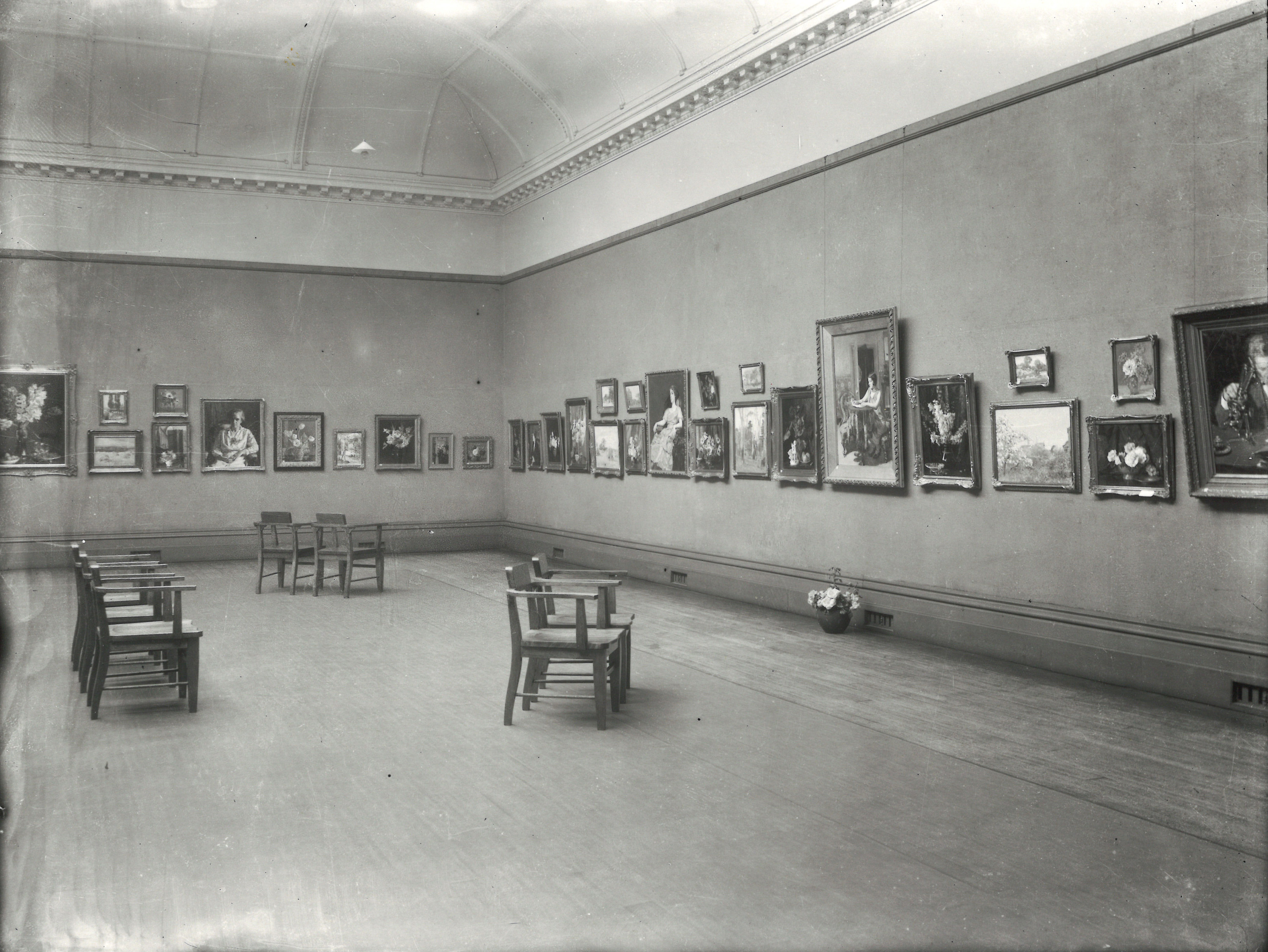
View of Bale’s works from the exhibition with Victor Cobb at the Athenaeum
Art Gallery, 188 Collins Street, Melbourne, September 1933
‘Mollie (Miss Mollie Agnew)’ shown fifth from right
When the present work was first exhibited in the 7th Annual Exhibition of the Twenty Melbourne Painters Society in 1925, The Argus critic noted, ‘From Miss A. M. E. Bale an interesting portrait of rich colour scheme entitled “Mollie” claims attention by its sound and craftsman-like qualities of tone and form.’2 The Age similarly praised her achievement, observing: ‘Miss Bale is showing some admirable work. No. 8 (“Mollie”) is a clean and well-painted study of a girl, and No. 9 is an excellent still life. No. 13 (“Autumn”) is the best landscape effort of this painter we have seen.’3 Further acclaim followed in 1930, when Sir Arthur Streeton, reviewing an exhibition at the Athenaeum Gallery, wrote: ‘Seven exhibits by Miss A. M. E. Bale are dominated by No. 44, “Mollie”, a figure picture well-conceived and thoroughly well painted. It is a thorough success, and it stands upon a much higher plane than the artist’s flower painting.’4
Little is known about the sitter of this portrait, Miss Mollie Agnew. She was the daughter of Mrs Dunbar Ainslie Agnew and Dr James Francis Agnew, principal medical officer of the Commonwealth Repatriation Department and a founding figure of Bethesda Hospital, established in 1906 at 30–32 Erin Street, Richmond, one of Australia’s earliest intermediate hospitals. Mollie Agnew had one sister and two brothers and may have met Bale while the artist was living in Richmond. The Agnew family resided at 10 Erin Street, Richmond, and Mollie attended Erin Street State School.
1. Bale, A.M.E., ‘No Sex in Art’, The Argus, Melbourne, 20 December 1937, p. 10
2. ‘Art Exhibition: Twenty Melbourne Painters Group’, The Argus, Melbourne, 15 September 1925, p. 6
3. ‘Art Notes: The Society of Twenty Painters’, The Age, Melbourne, 15 September 1925, p. 9
4. Streeton, A., ‘Art Exhibitions: Fine Work at Athenaeum’, The Argus, Melbourne, 2 December 1930