
Important works from the Estate of Michael Gleeson-White AO, Sydney (Lots 24 – 37)
Jeffrey Smart
(1921 - 2013)
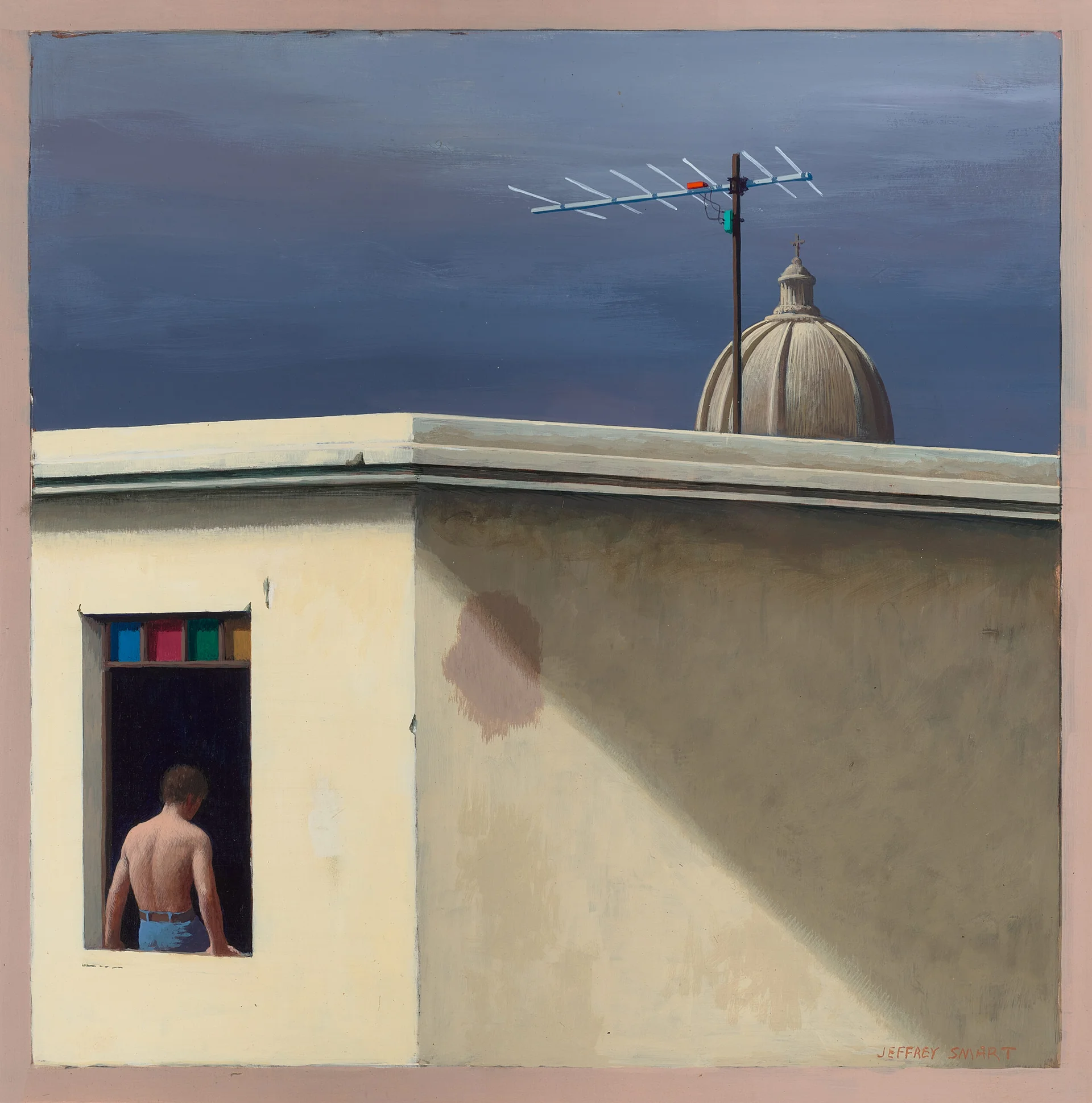
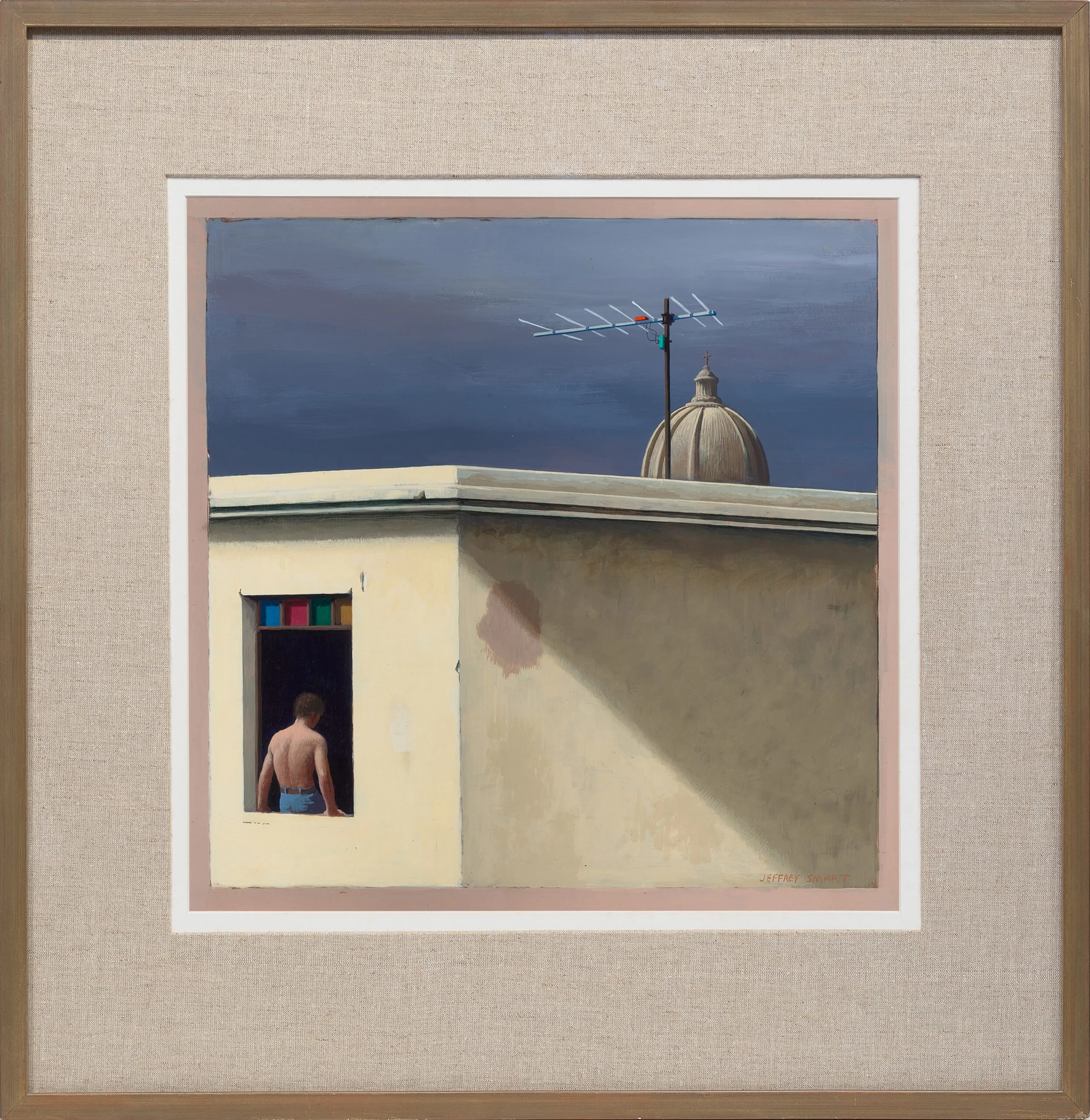
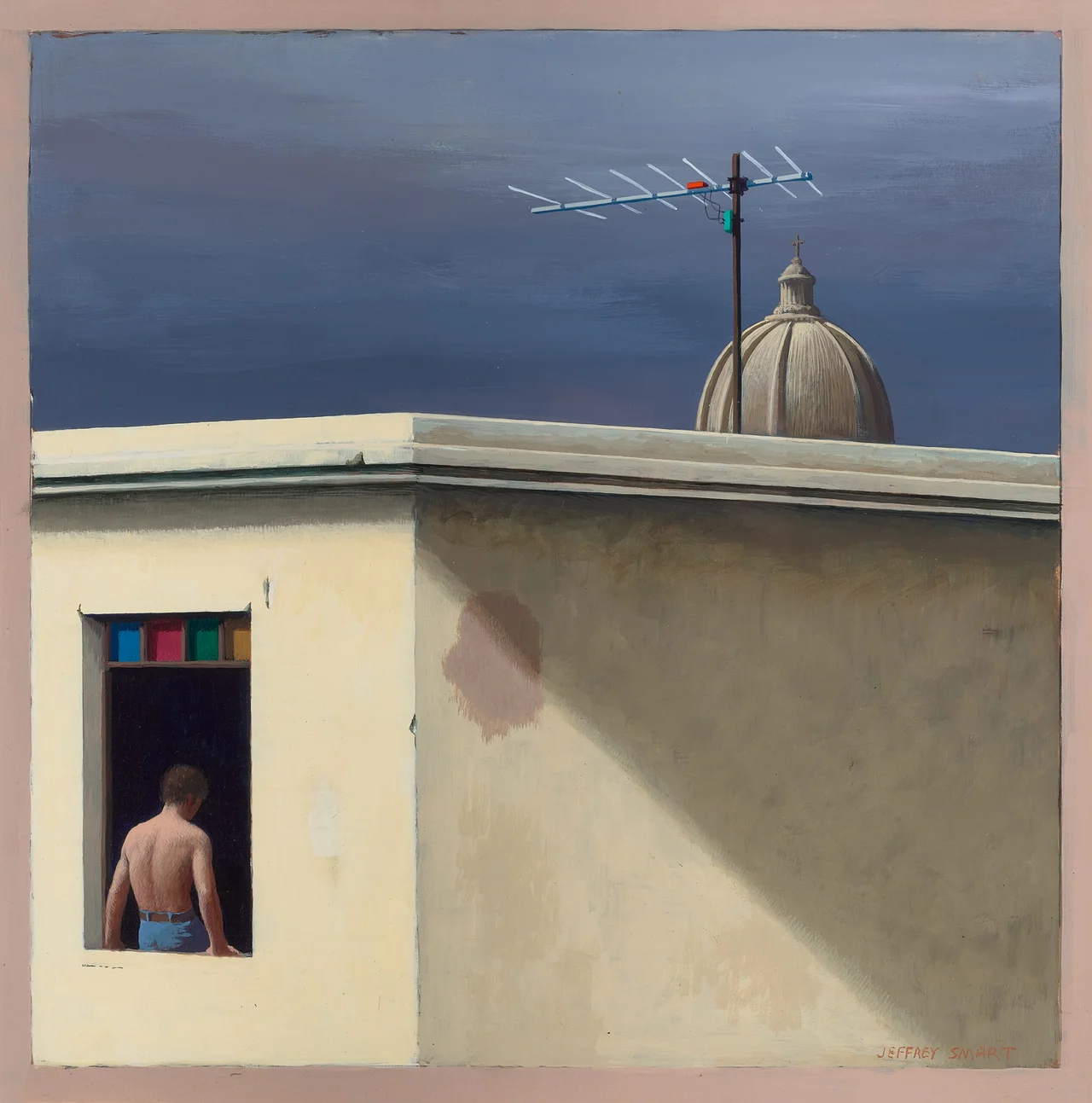
Adrian’s view, 1980
synthetic polymer paint on heavy Fabriano paper
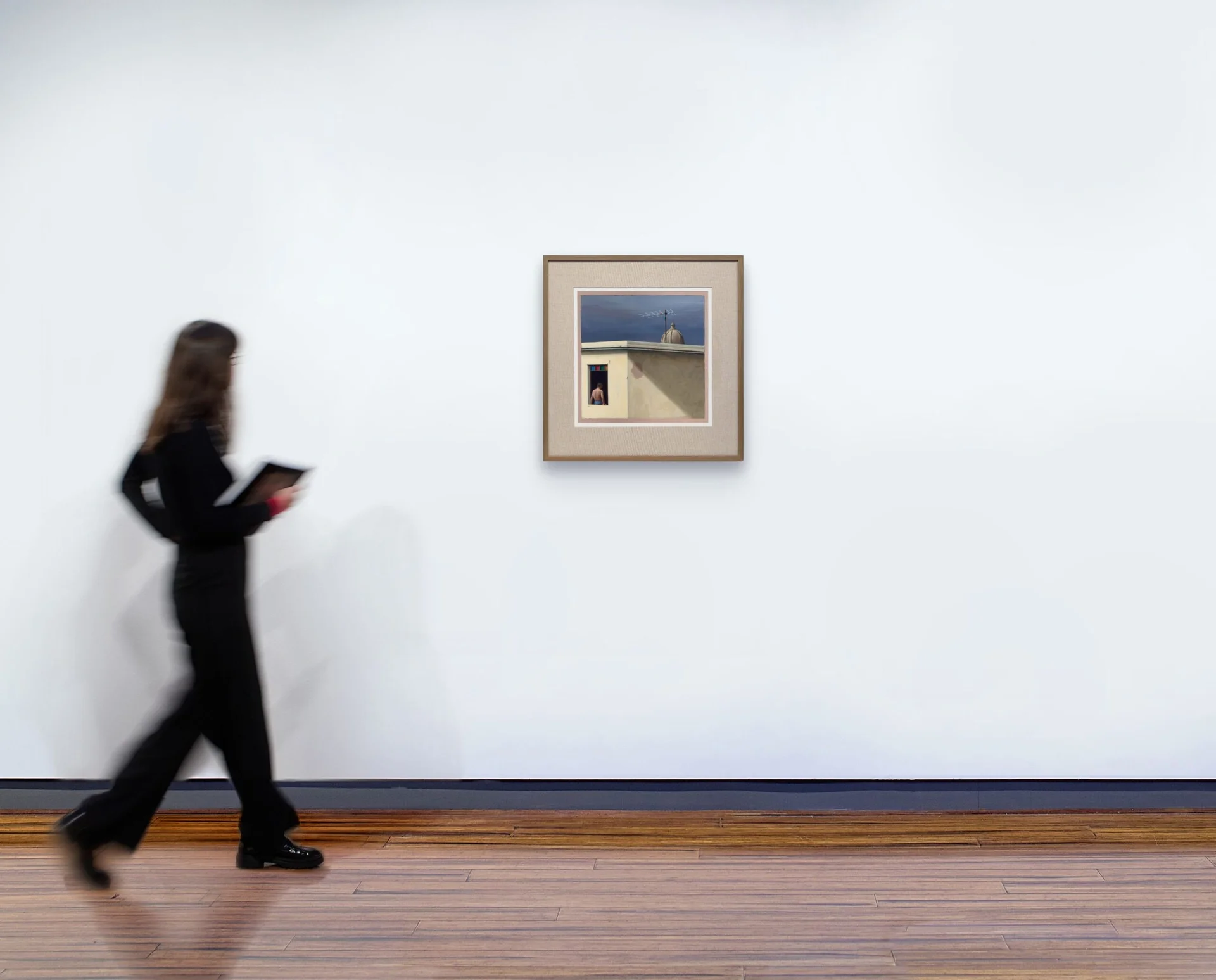
45.5 x 46.0 cm
signed lower right: JEFFREY SMART
Estimate:
$100,000 - $140,000
Sold:
$147,273 (inc. BP)
© courtesy of The Estate of Jeffrey Smart 2026
lot details
Rudy Komon Art Gallery, Sydney
Michael Gleeson-White AO, Sydney, acquired from the above in 1980
Estate of the above, Sydney
Exhibited
Jeffrey Smart, Rudy Komon Art Gallery, Sydney, 8 November – 3 December 1980, cat. 12
Literature
Quartermaine, P., Jeffrey Smart, Gryphon Books, South Yarra, 1983, cat. 755, p. 116
McDonald, J. Jeffrey Smart : Paintings of the ’70’s and ‘80s, Craftsman House, Roseville, 1990, no. 207, p. 159
We are grateful to Stephen Rogers, Archivist for the Estate of Jeffrey Smart, for his assistance with this catalogue entry.
As a devotee of the cinema, Jeffrey Smart would have been familiar with Alfred Hitchcock’s Rear Window (1954), in which James Stewart spends much of the film spying on people in the building next door. This is roughly the theme of Adrian’s view, 1980, which refers to a friend in Rome who found that his apartment window gave him a ringside seat for his neighbours’ sexual activities.
Smart’s version avoids an ‘R’ rating, showing only an anonymous figure displaying his bare back by the window, but the sense of voyeurism remains intact. When someone is not aware that we are looking at them, there must always be a degree of objectification. The figure in the window is a back, a body, not a subject with whom we are exchanging eye contact.
Whether Adrian’s neighbours were exhibitionists or simply careless, this is not Smart’s concern. He uses the view from a window for more general thoughts about visibility and communication. The prominently displayed antenna suggests that the figure in the window might well be watching TV, perfectly oblivious to whatever is going on outside. The dome in the background, which resembles a slightly simplified version of St. Peter’s Basilica, is largely concealed behind a flat, discoloured wall.
As is so often the case with Smart’s paintings, the glorious legacy of the past is pushed aside by the banality of the present. It’s an open question as to whether he prefers it this way, finding an unlikely beauty in shabby walls, concrete bollards, traffic signs, highways and other commonplace features of modern life. The wall in Adrian’s view is beautifully rendered, its stains and patches taking on the nuances of an abstract painting. One thinks of Leonardo da Vinci’s famous advice to painters to pay close attention to the stains on walls, which may stimulate the mind to new discoveries and inventions.
Smart gives the mind some assistance by imposing a geometric precision on his composition. To reduce the painting to the form of a diagram would reveal the classical measure of the Golden Ratio in the disposition of planes and shadows. No matter how prosaic the subject matter, Smart’s pictures are constructed with the finesse of a master craftsman.
If there is also a slight feeling of déjà vu about the work, it’s because we’ve seen that truncated basilica before, in The dome, 1977 (Tarrawarra Museum Collection, Victoria), in which the building is mostly concealed by a field of grass. The patchy wall is another favourite motif, recurring in numerous paintings. Even the combination of wall, open window and telecommunications device is reprised in works such as Rooftops, 1968 – 69 and Spring Landscape, 1970 (National Gallery of Australia), or later, in Via Petrarca, Arezzo, 1984 – 85.
Ultimately, Adrian’s view is a meditation on seeing and being seen. But a view is not just something that meets the eye; it’s also an opinion. Adrian may have his own ideas about why his neighbours seem to care so little about their privacy. Smart suggests, not without irony, that the wall we see from Adrian’s window, or the tip of the dome, may be no less interesting than whatever is going on inside the apartment. Playing the contrarian, he trades the sordid thrills of the voyeur for the high-minded pleasures of the aesthete.
JOHN McDONALD
Writer and editor of the site, ‘Everything the artworld doesn’t want you to know’, at Everythingthe.com