
Vida Lahey
(1882 - 1968)
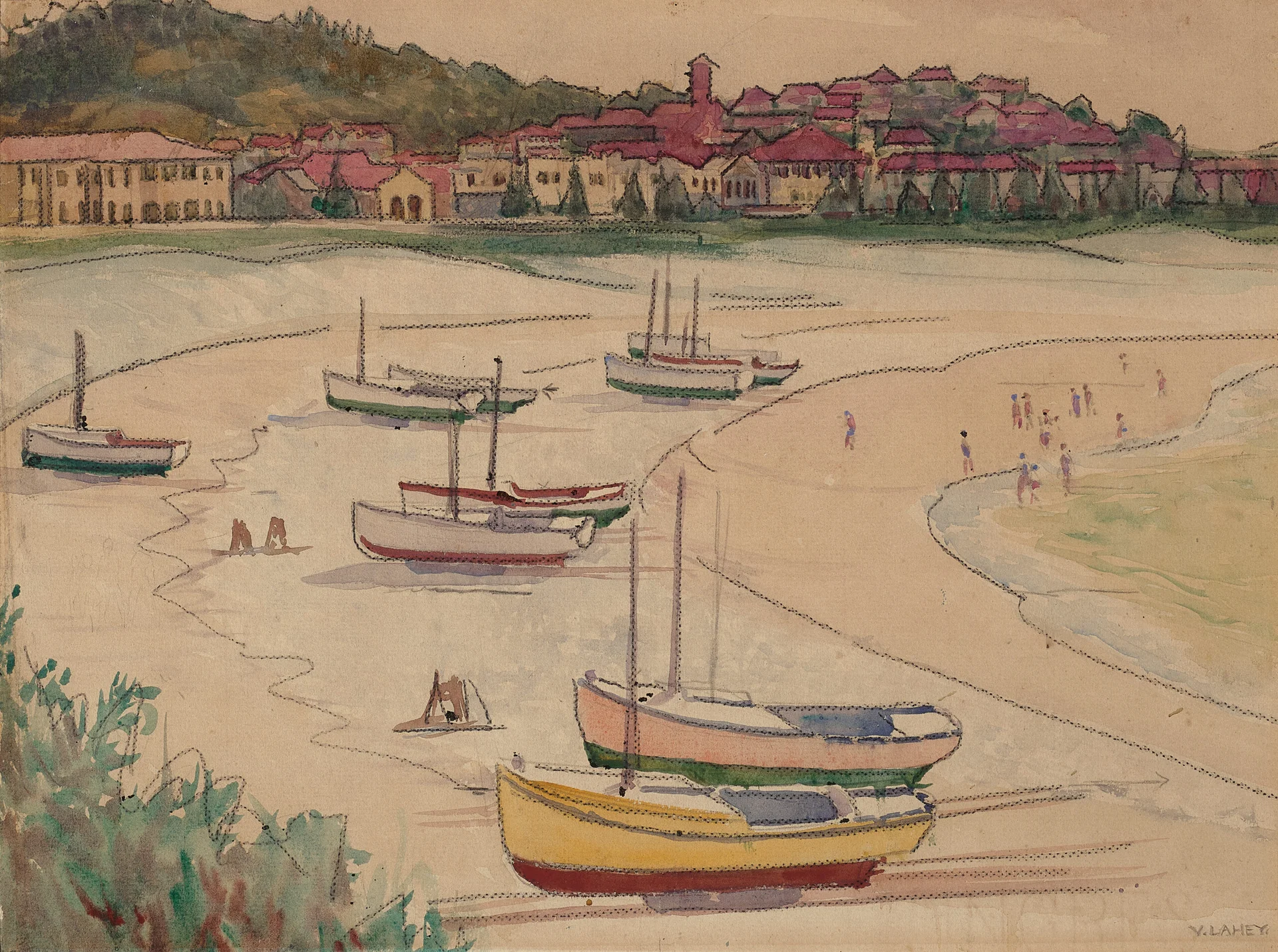
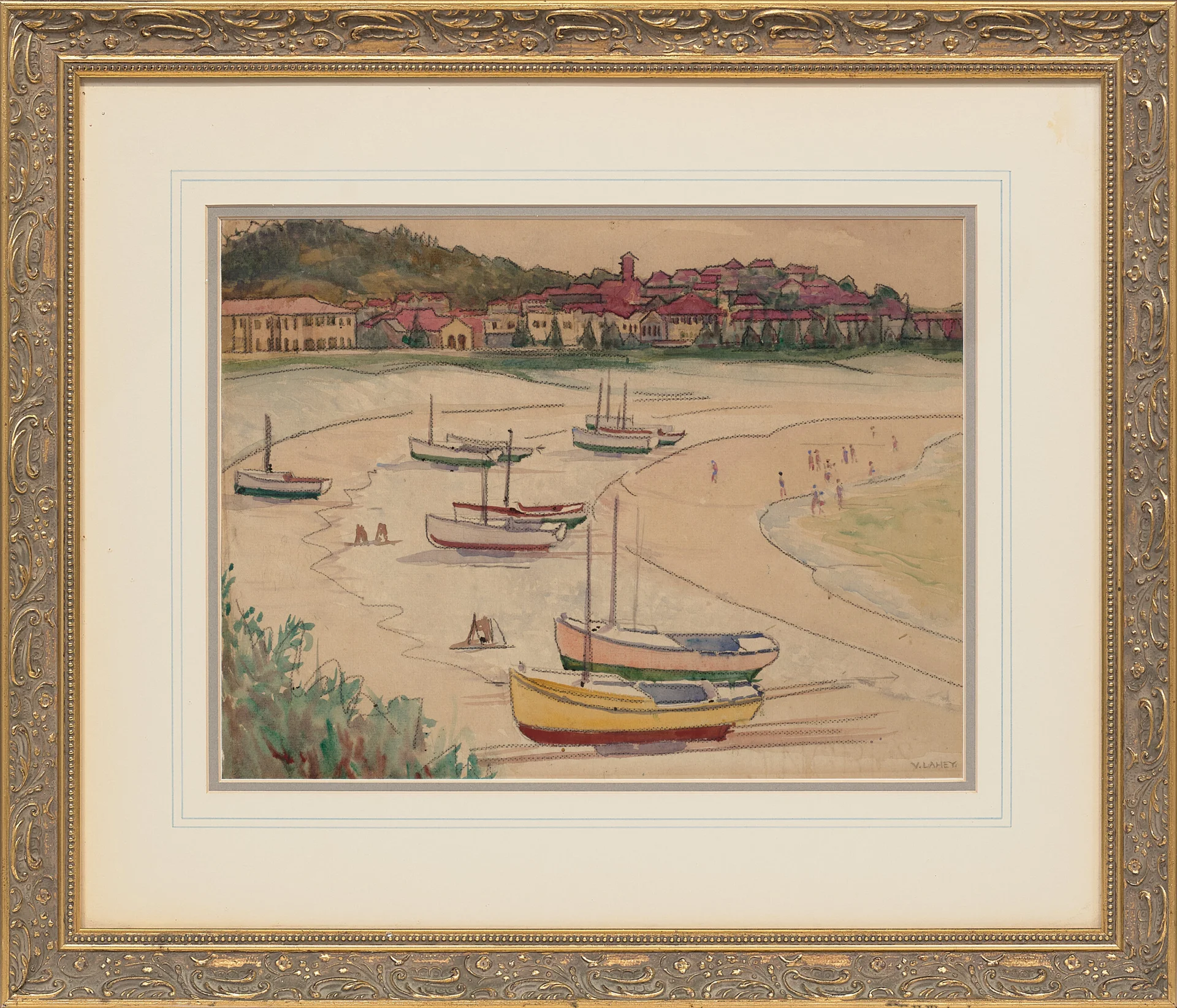
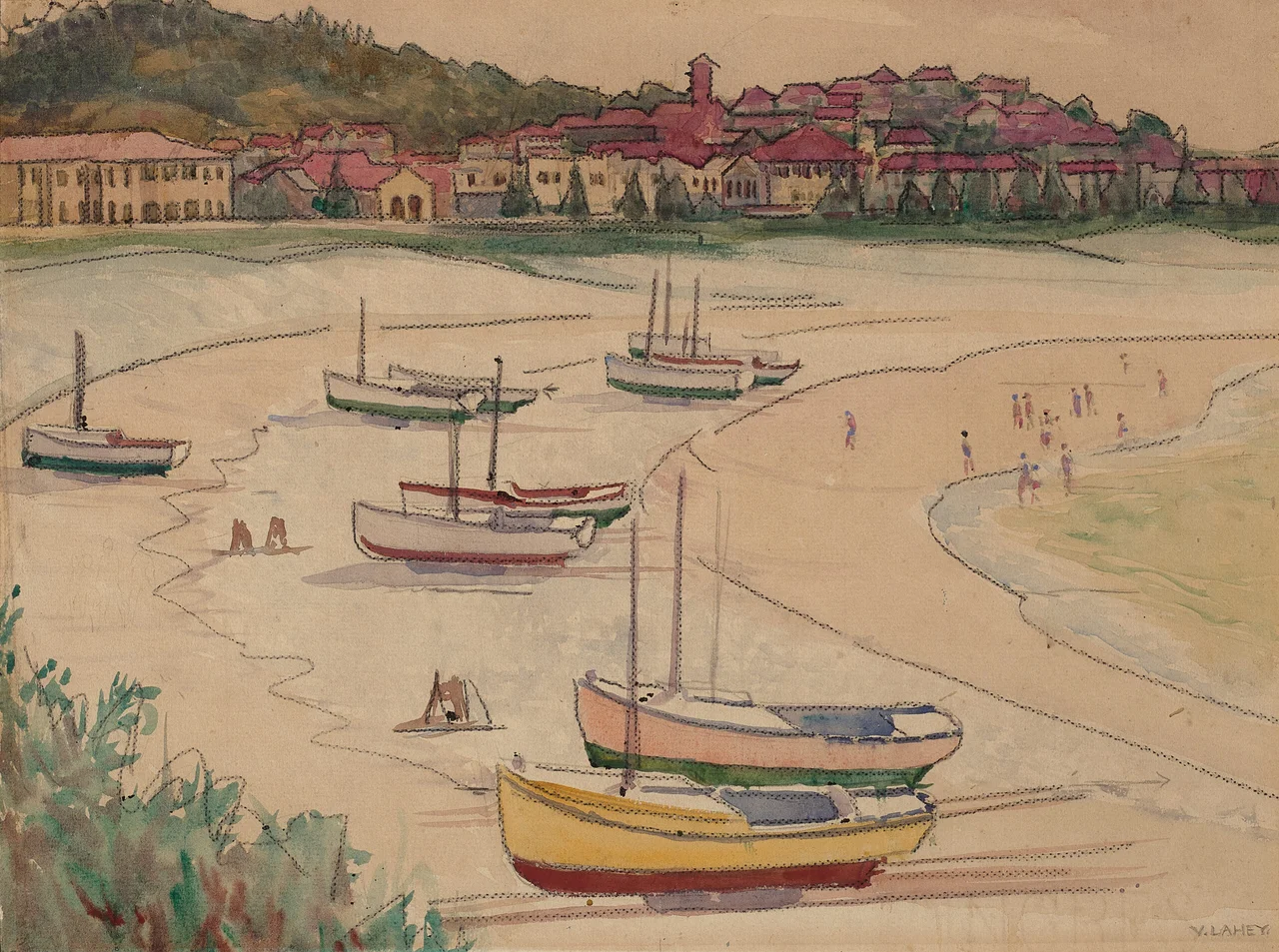
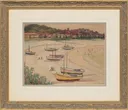
Coolangatta, c.1935
watercolour on paper on card
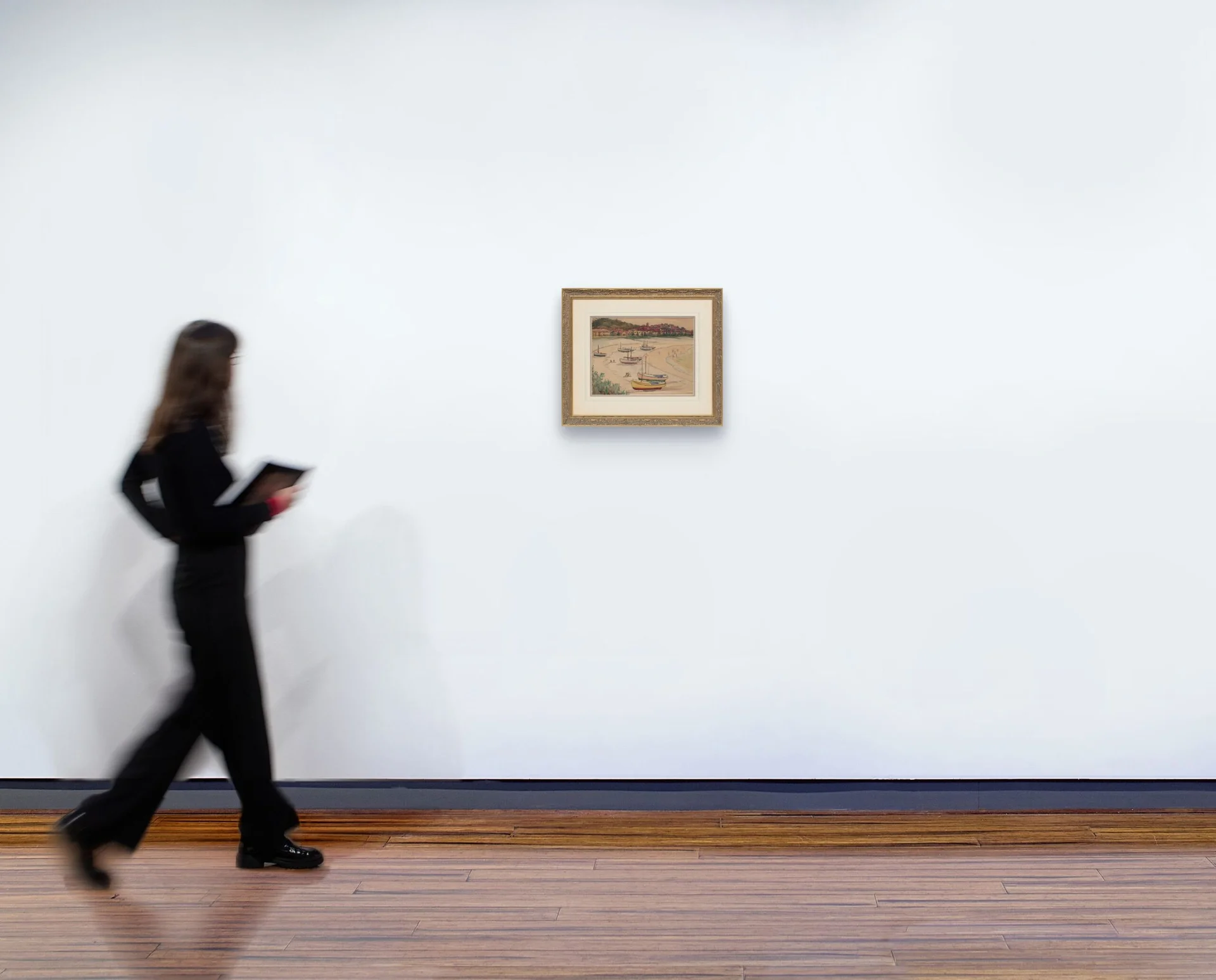
26.0 x 35.0 cm
signed lower right: V. LAHEY
signed and inscribed with title on artist's handwritten label verso: "Coolangatta" / Vida Lahey
inscribed on label verso: Ada + Oswald with love from Vi
Estimate:
$25,000 - $35,000
Sold:
$31,909 (inc. BP)
lot details
signed and inscribed with title on artist's handwritten label verso: "Coolangatta" / Vida Lahey
inscribed on label verso: Ada + Oswald with love from Vi
Oswald and Ada Lahey, a gift from the artist
Thence by descent
Patricia Hannah, Perth, 1987
Thence by descent
Private collection, Perth
Literature
MacAulay, B., Supplement to Songs of Colour. The Art of Vida Lahey, works Located to 1989, Queensland Art Gallery, Brisbane, 1989, p. 10
Vida Lahey’s delightful watercolour Coolangatta, c.1935, captures the southern Queensland beach resort as it appeared before a post-World War II building boom led directly to the construction of numerous high-rise apartments which altered the skyline forever. An airport built there in 1936 increased tourist numbers even further. Lahey was a prolific artist and her various views of Brisbane and the Gold Coast now form important resources for heritage records of the changing landscape. She exhibited at least seven works during her life done at nearby Burleigh Heads, but only three others are recorded of Coolangatta, which is located on the traditional lands of the Yugambeh people: two from 1946 and one from 1952.1 It appears that Lahey was standing at what is now the Rainbow Bay lookout in Pat Fagan Park looking north, or alternatively, positioning herself in the nearby observation tower of Fagan’s Greenmount Guesthouse (since demolished) which he operated from 1904 to 1944.
Coolangatta shows the lazy curve of Greenmount Beach at the southeastern end adjacent to the headland and gives a clear indication as to why the area became Queensland’s first recognised beach resort, with more than 16,000 people visiting by train in 1914 alone. With a scatter of Couta-style fishing boats beached above the tideline on the sand, the middle ground of the watercolour is occupied by the clusters of guesthouses and homes that already marked the beach’s resort status. At centre, the red brick bell tower of St Augustine’s Catholic Church pierces the skyline, a prominent landmark since its erection in 1926. Not surprisingly, this landscape has since been replaced by rows of high-rise apartments running along Marine Parade.
Lahey was particularly active during 1935 having been described the previous year in William Moore’s landmark history of Australian art as being ‘the leading artist in Queensland’2, noting also her pivotal involvement (with Daphne Mayo) in establishing the Queensland Art Gallery’s new building in 1931. Lahey was now running art classes in Brisbane’s Edward Butler’s building, was a judge for the Gordon Rivers Art Prize and exhibited at the Royal Queensland Art Show in September. In November 1935, she held a notable exhibition of oils and watercolours at Grosvenor Galleries in Sydney, with one critic noting admirably that ‘in the handling of colour, Miss Lahey is a virtuoso.’3 The show was mostly comprised of flower studies and indeed, the only other known landscapes from that year are of Brisbane’s Anzac Memorial, City Hall and St John’s Cathedral. Coolangatta was not included at Grosvenor Galleries; she instead gifted the piece to her younger brother Oswald and his wife Ada who had married in 1930.
1. Two of these Coolangatta paintings were included in Exhibition of recent paintings (mainly watercolours) by Vida Lahey, Finney’s Art Gallery, Brisbane, 27 June – 12 July 1946, cats. 1 and 7
2. Moore, W., The story of Australian art: from the earliest known art of the continent to the art of today, vol. 1, Angus & Robertson, Sydney, 1934, p. 112
3. ‘Art exhibitions: Miss Vida Lahey’, Sydney Morning Herald, Sydney, 13 November 1935, p. 9
ANDREW GAYNOR