
Vida Lahey
(1882 - 1968)
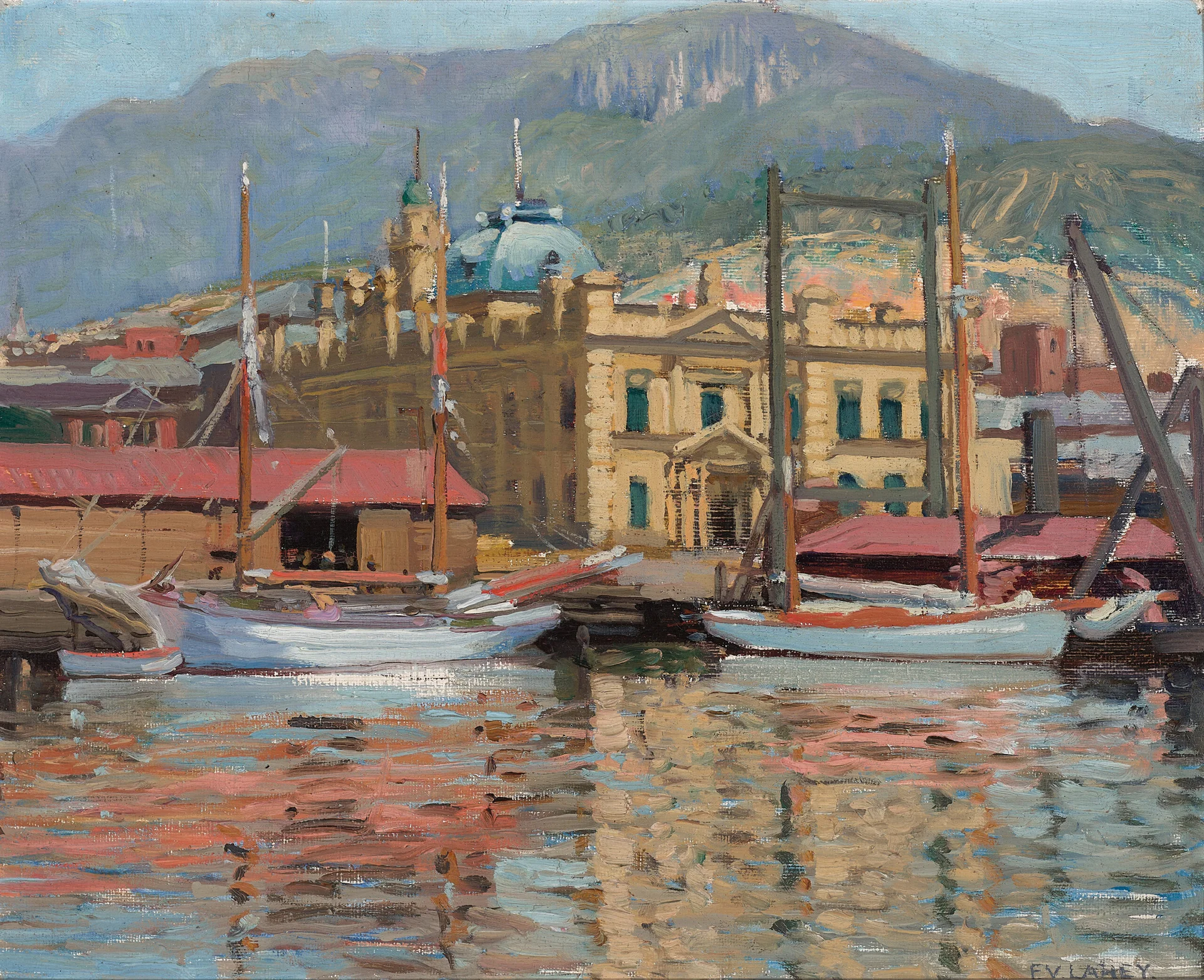
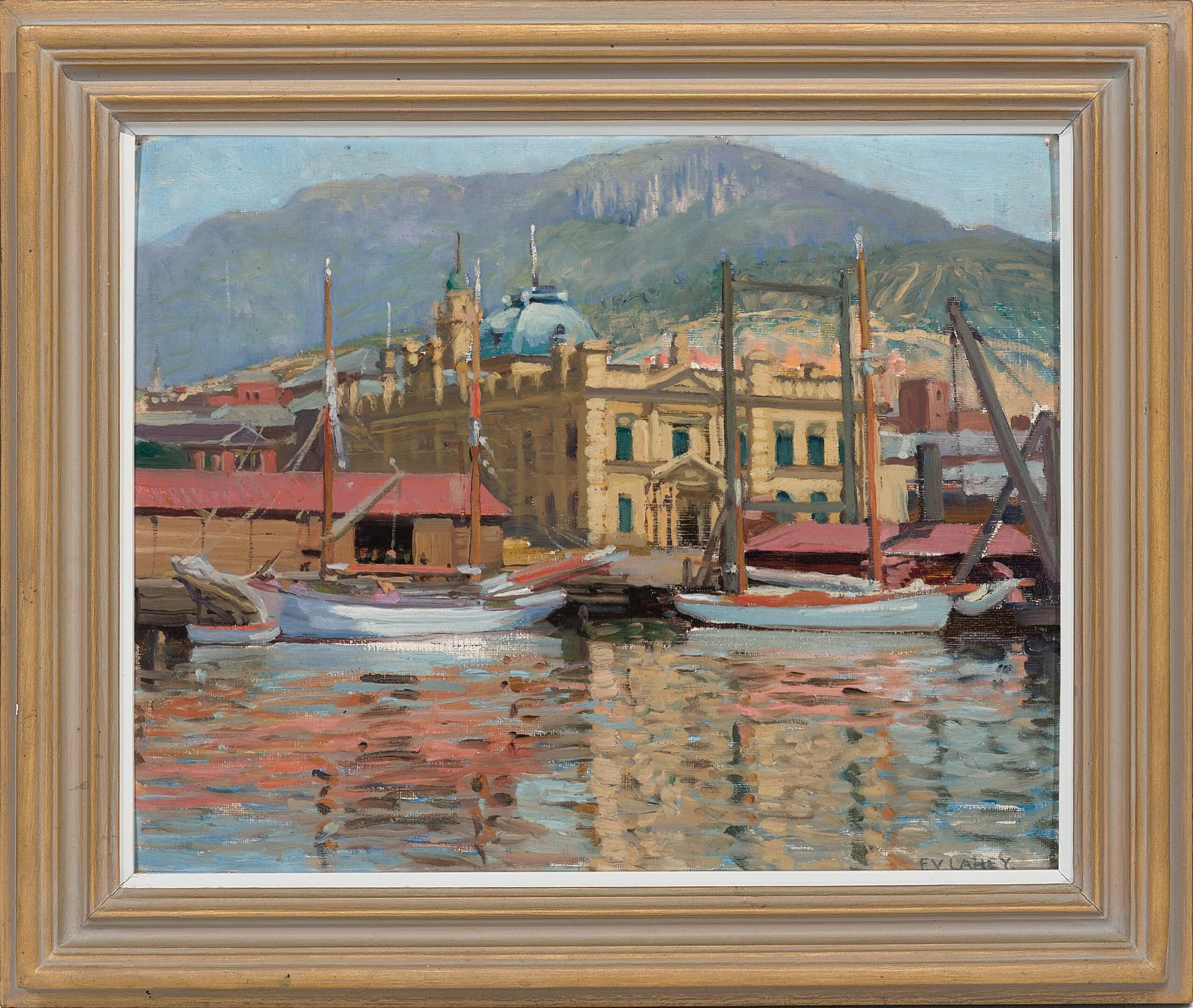
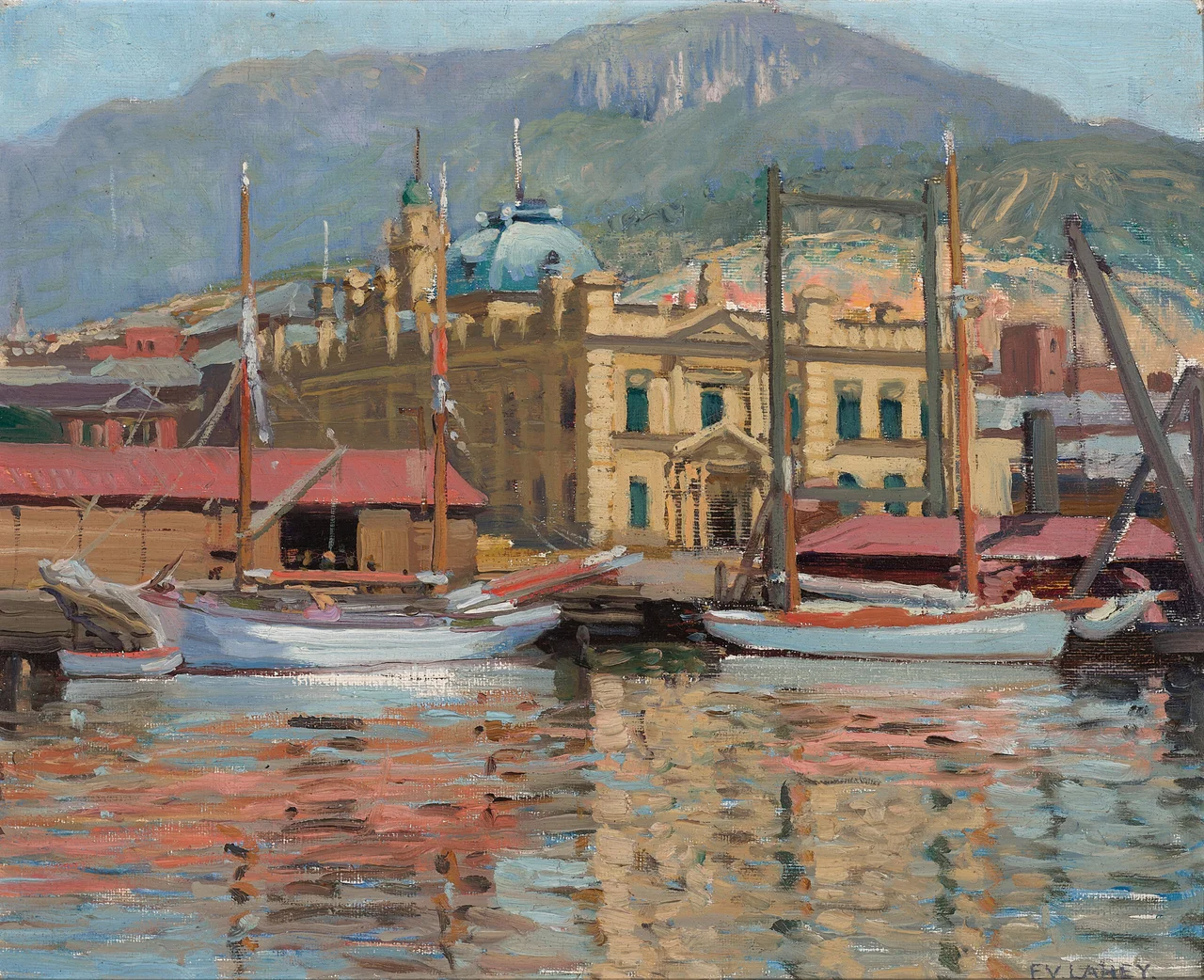
Customs House, Hobart, c.1928
oil on canvas on board
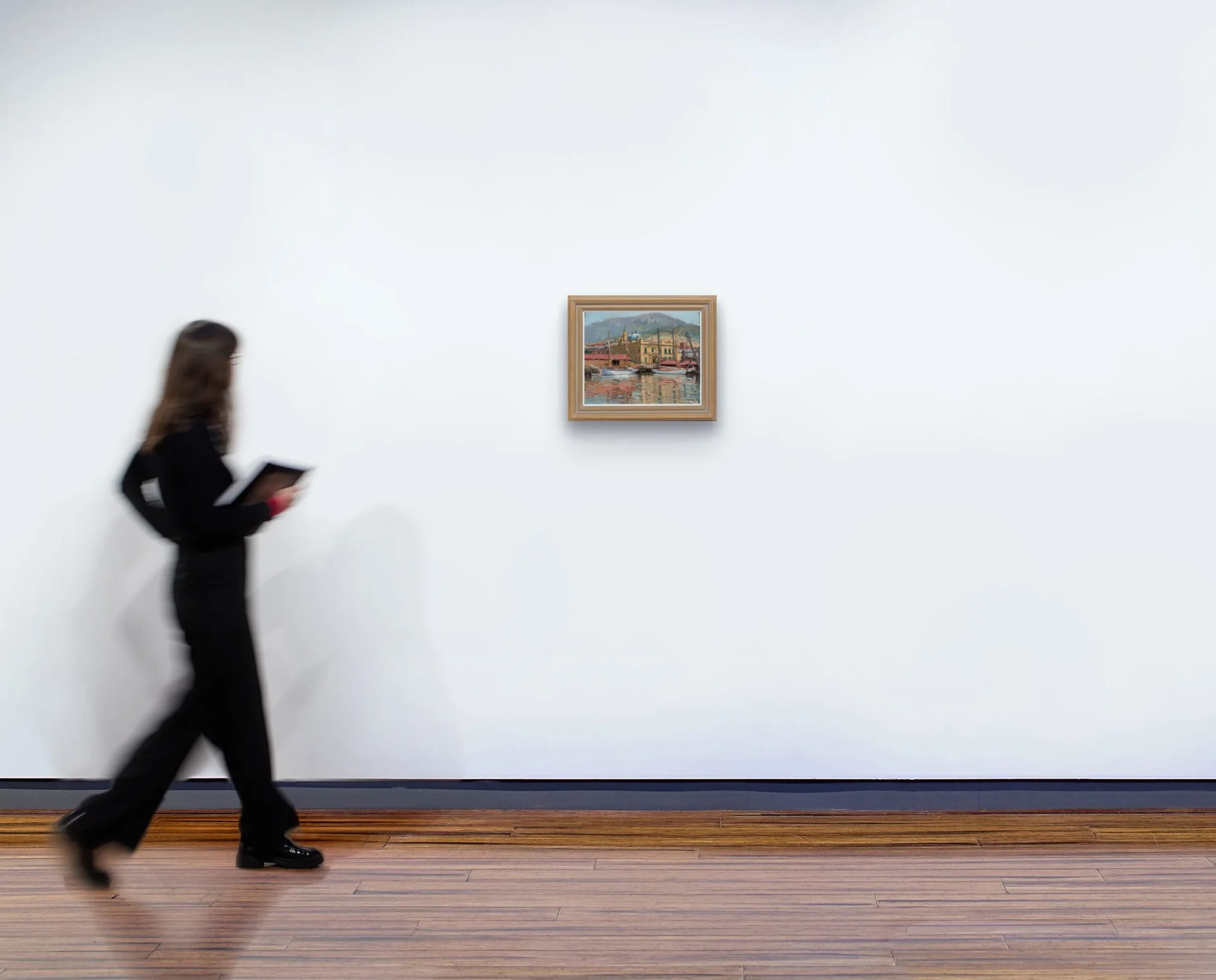
30.5 x 38.0 cm
signed lower right: F. V. LAHEY.
Estimate:
$30,000 - $40,000
Sold:
$36,818 (inc. BP)
lot details
Mildred Lovett, Hobart, probable gift from the artist
Thence by descent
Private collection, Melbourne
Private collection, Victoria, acquired from the above
Related Works
The Customs House, Hobart, 1923, oil on canvas, 30.8 x 37.0 cm, private collection, illus. in MacAulay, B., Songs of Colour: The Art of Vida Lahey, Queensland Art Gallery, Brisbane, 1989, p. 50
Customs House, Hobart, 1929, oil on canvas on plywood, 41.0 x 51.0 cm, private collection, illus. in MacAulay, B., Songs of Colour: The Art of Vida Lahey, Queensland Art Gallery, Brisbane, 1989, p. 50
This hitherto unrecorded painting of Customs House, Hobart, was likely painted by Vida Lahey on her return to Australia after her second journey to Europe in the late 1920s. Its compositional design and gestural brushwork differ from her earlier pieces, a method she first utilised in paintings done in Italy in 1928, particularly Santa Margherita, 24km from Genoa, and Early morning, Santa Margherita. This is supported by the fact that the painting was originally owned by her close friend, the artist Mildred Lovett, whom Lahey revisited when her ship stopped at Hobart on the journey back to her home in Brisbane, allowing her to stay with her colleague for a period. Lovett already owned an earlier painting by Lahey, Customs House, 1923, which has the same dimensions as this work, and the supposition is that Lahey painted this alternate view in her new style to act as a pendant to the existing work.
Vida Lahey was an extremely important artist in the early twentieth century studying first in her late teens with Godfrey Rivers at the Brisbane Technical College before moving to Melbourne where she trained further at the National Gallery School between 1905 and 1909. In 1912, her early masterwork Monday morning, 1912, was purchased by the Queensland Art Gallery, and has remained a firm favourite with audiences ever since. In 1915, she travelled to London as support for her three enlisted brothers and immersed herself in the war effort. When hostilities ceased, she travelled to Paris studying at the acclaimed Académie Colarossi and took classes with Ethel Carrick. On her return to Brisbane, she rapidly became known for her fresh and vividly executed paintings and watercolours, her intention being to ‘bring home everything she learnt in Europe… she gave much to her fellow artists and students in Brisbane. This included administrative work and teaching, as well as proselytising the virtues of art as an educational tool.’1 However, she soon became exhausted as a result of these efforts and the lingering effects of the war, so readily accepted Lovett’s invitation to stay with her for a few weeks in late 1921 – a relocation which eventually stretched to 1923. The two women, who had known each other since 19142, exhibited together in 1923, and Lahey was to return to Tasmania at least twice more between 1923 and 1928, exhibiting with the Art Society of Tasmania both times.
Of the two other views of Customs House that Lahey painted in 1923 and 1929, her approach is more traditional, exploring ‘the effects of light and colour with a substantial stone pile.’3 In the work on offer here, Customs House, Hobart, c.1928, Lahey has moved positions to take in the eastern side of the building, as seen from the farther side of Victoria Dock.4 In the same vein as her Italian paintings, she portrays ‘boats on water with architectural backgrounds… seen against high horizon lines’5, in this case, the imposing Mt Wellington (Kunanyi). Behind the building’s ribbed dome, the prominent General Post Office clock tower may also be seen.
1. Gorman, C. and Gorman, T., Intrépide: Australian women artists in early Twentieth Century France, Monash University Publishing, Melbourne, 2020, p. 95
2. See Holmes, J., Mildred Lovett 1880 – 1955: a survey, University Fine Arts Gallery, Hobart, 1989
3. MacAulay, B., Songs of Colour. The Art of Vida Lahey, Works Located to 1989, Queensland Art Gallery, Brisbane, 1989, p. 49
4. The Tasmanian Museum and Art Gallery took over the building in 1990.
5. MacAulay, op. cit., p. 57
ANDREW GAYNOR