
Important works from the Estate of Michael Gleeson-White AO, Sydney (Lots 24 – 37)
Fred Williams
(1927 - 1982)
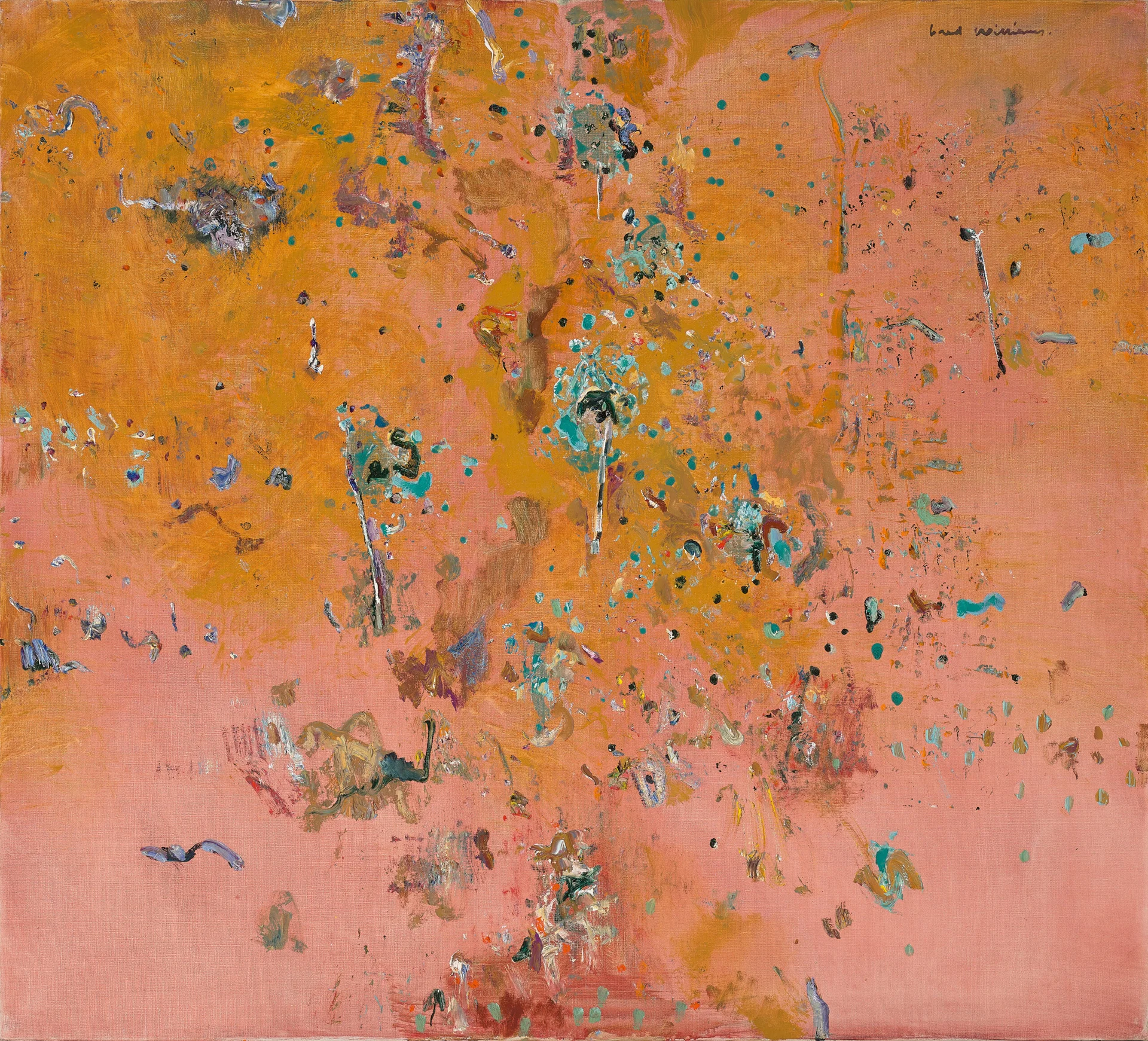
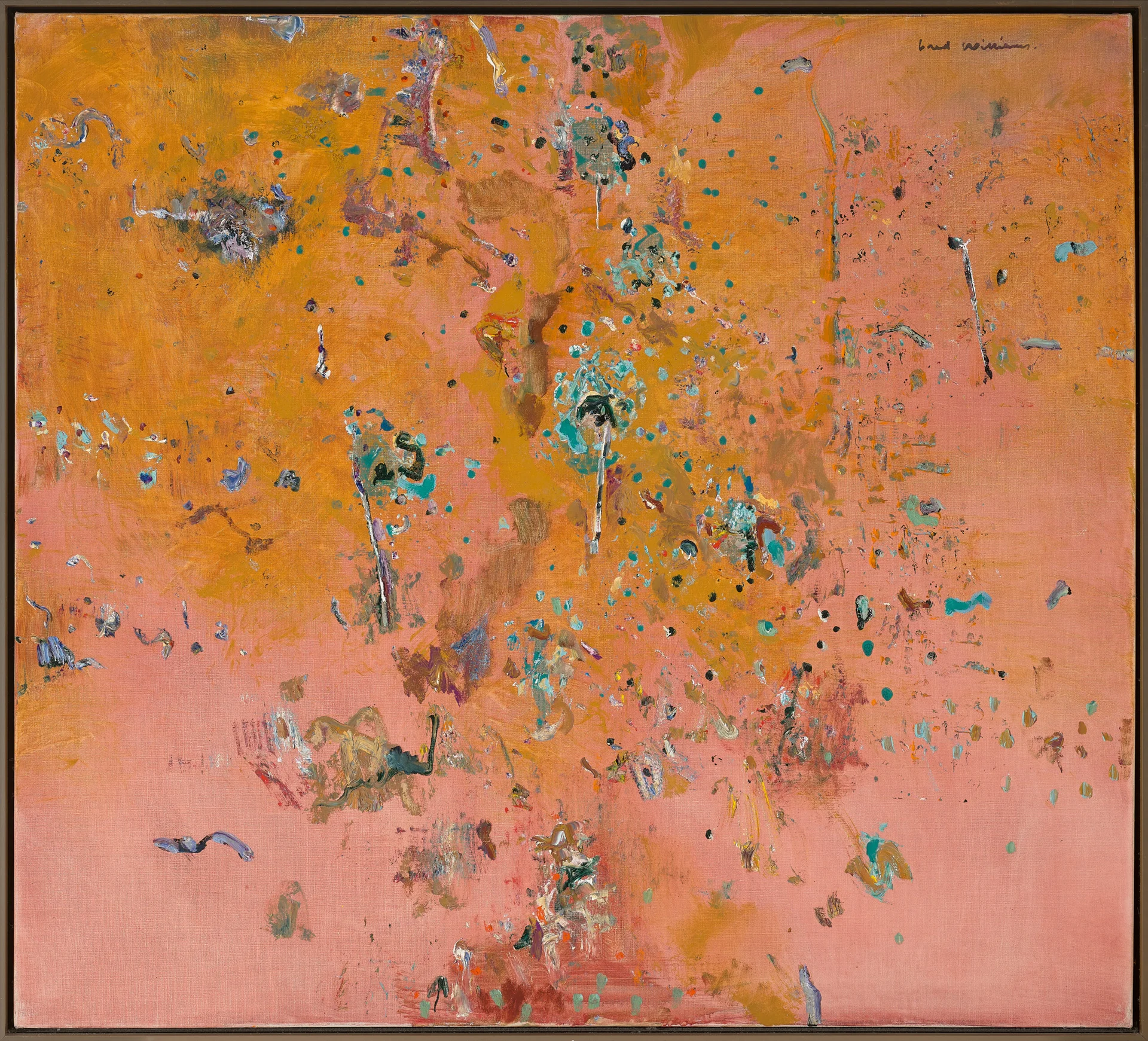
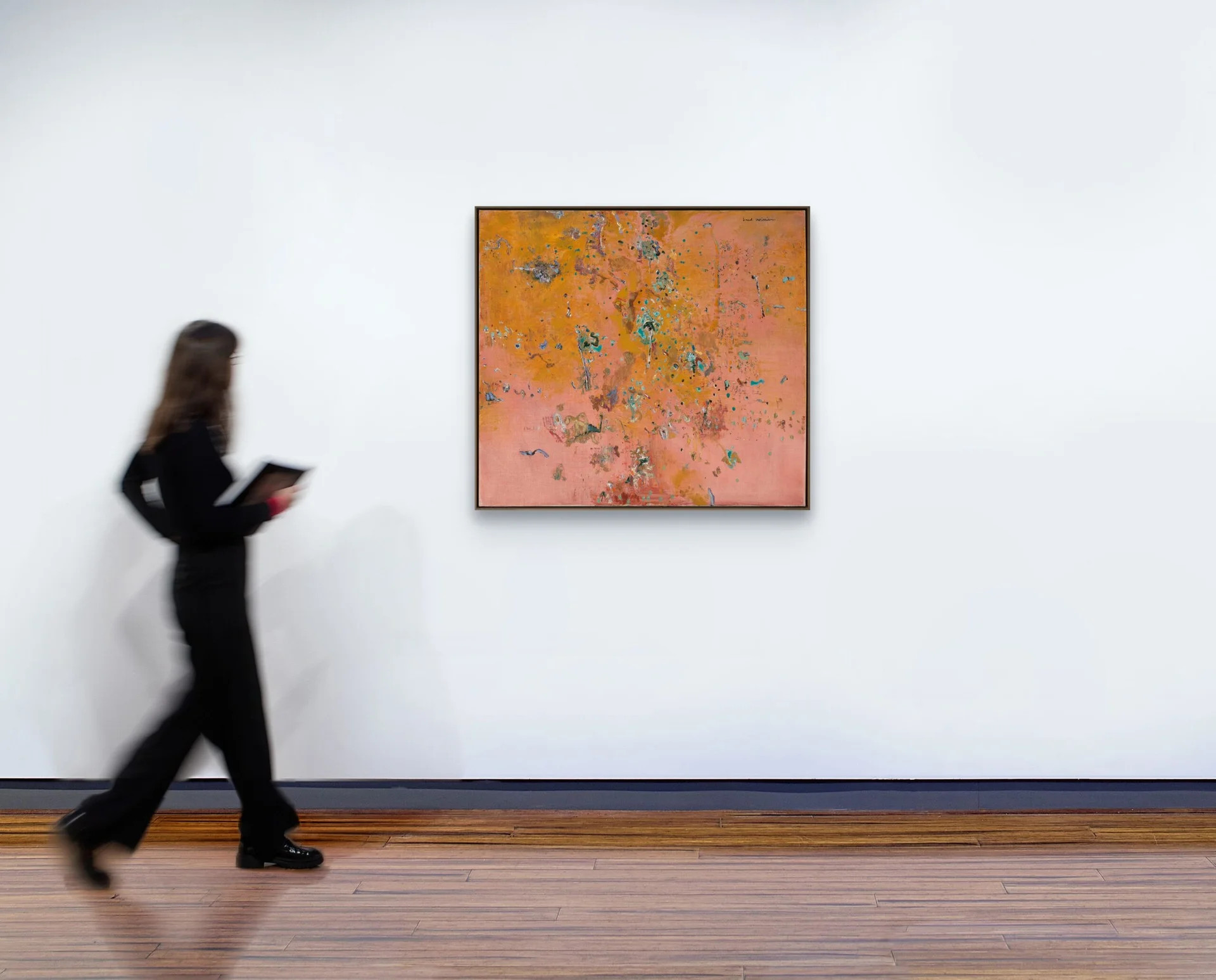
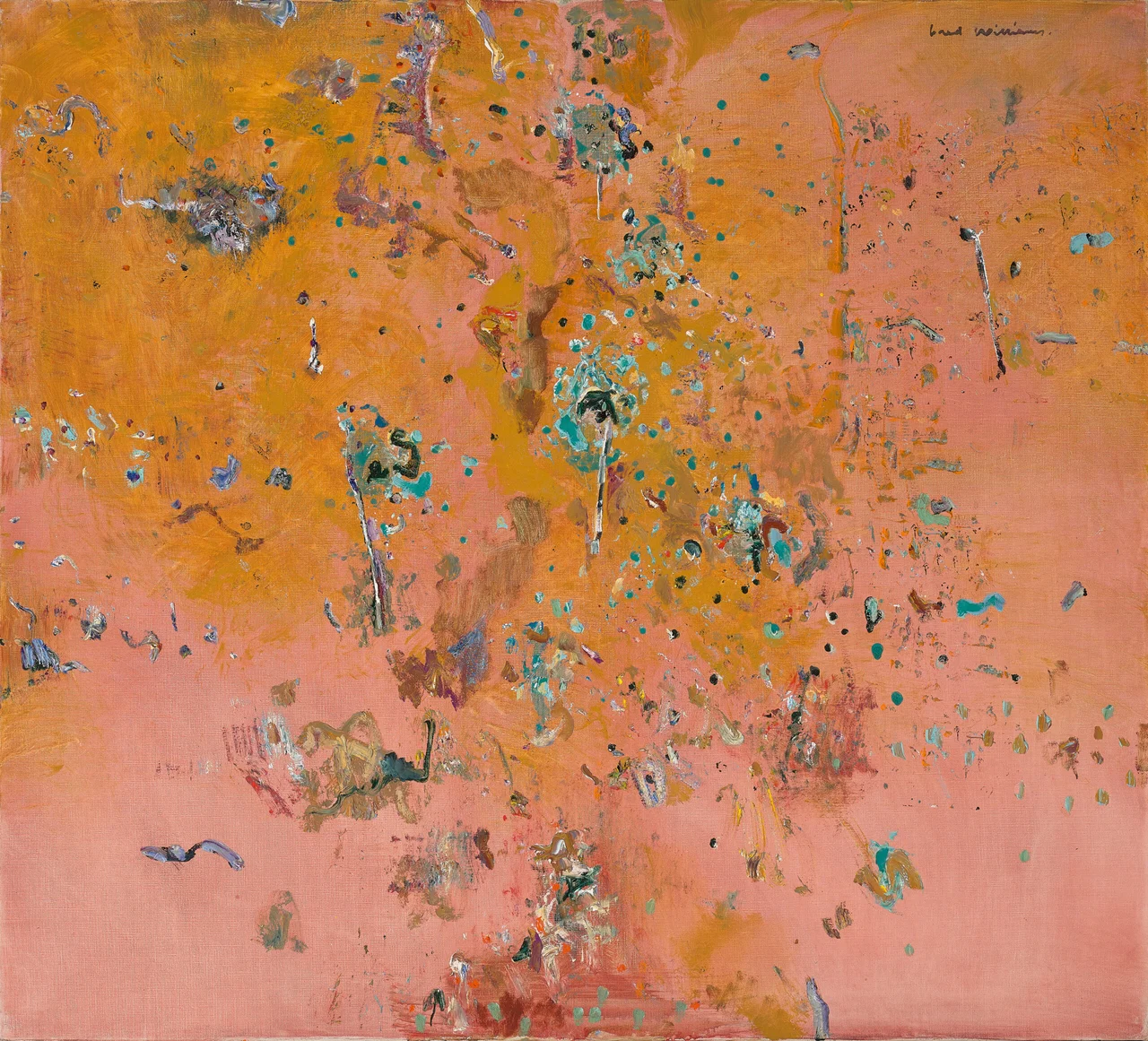
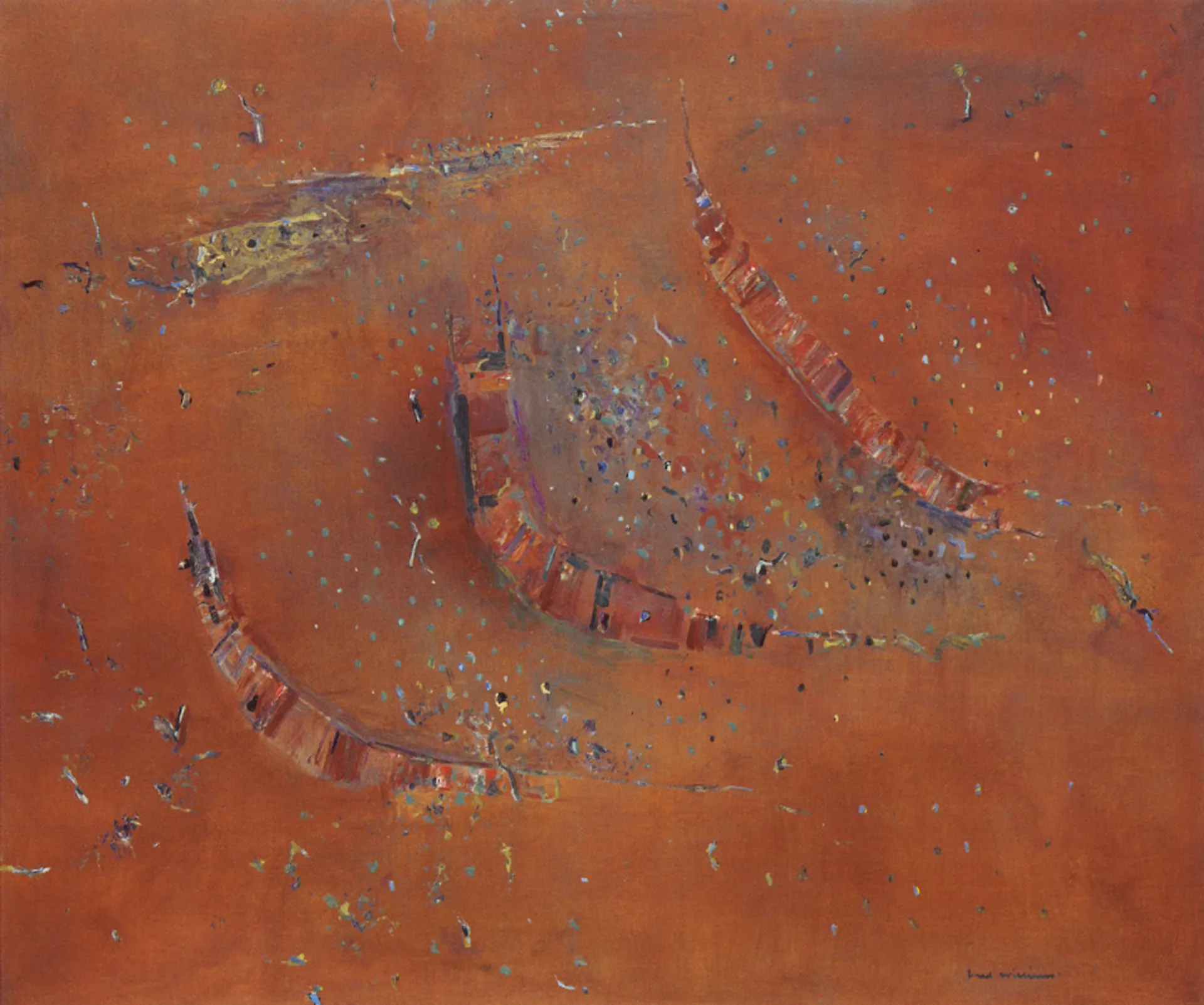
Paraburdoo landscape, 1981
oil on canvas
96.0 x 107.0 cm
signed upper right: Fred Williams.
bears inscription verso: 862
Estimate:
$300,000 - $400,000
Sold:
$331,364 (inc. BP)
© Estate of Fred Williams/Copyright Agency 2026
lot details
bears inscription verso: 862
Estate of the artist
Lyn Williams, Melbourne
Rex Irwin Art Dealer, Sydney (label attached verso)
Michael Gleeson-White AO, Sydney, acquired from the above in May 1994
Estate of the above, Sydney
Exhibited
Rex Irwin Art Dealer at Art Asia, Hong Kong, 18 – 22 November 1993
We are grateful to Lyn Williams for her assistance with this catalogue entry.
On 2 June 1979, Fred and Lyn Williams flew from Perth to Paraburdoo:
‘I am up at 4am. Don’t really sleep at all – and naturally I’m a wreck. We stagger out to the airport only to find that it’s closed by fog – sit there in a state of depression – finally leave at 7.30am. It’s raining at Carnarvon, and we don’t leave the plane. Fly inland and the rain quickly disappears. It staggers us the time it’s taken to get here – we could have flown to Paris or New York in less time…’1
This was the second trip to the Pilbara, a remote region in the far north-west of Australia, that Williams had made that year. The first trip had taken place in May at the invitation of Sir Roderick Carnegie, the artist’s friend who, at the time, was Chairman of Conzinc Rio Tinto of Australia Limited (CRA), now Rio Tinto. Carnegie had been impressed by the recent paintings of Weipa – a coastal mining town in far north Queensland – that he saw in Williams’ studio and recognised that the landscape of the Pilbara, where CRA had extensive mining operations, would introduce him to a dramatic new landscape unlike anything he had ever experienced and provide fresh creative inspiration.
The Carnegie and Williams families travelled together during the school holidays, flying from Melbourne to Derby in the CRA jet, and then continuing on by light plane and road.2 The five day trip, which took them from diamond mines at Ellendale, to Broome, Dampier, Mount Tom Price, Hamersley and the Pilbara, was a revelation for Williams who painted gouaches on the spot and took hundreds of photographs of the landscape. On May 13 he wrote in his diary that it had been ‘A day when my head is full of images – to the point where I cannot think about today or tomorrow…’ and a few days later, before they returned to Melbourne, ‘The countryside is beautiful indeed and I would really like to work from [it]… we may well do this for a week soon?’3
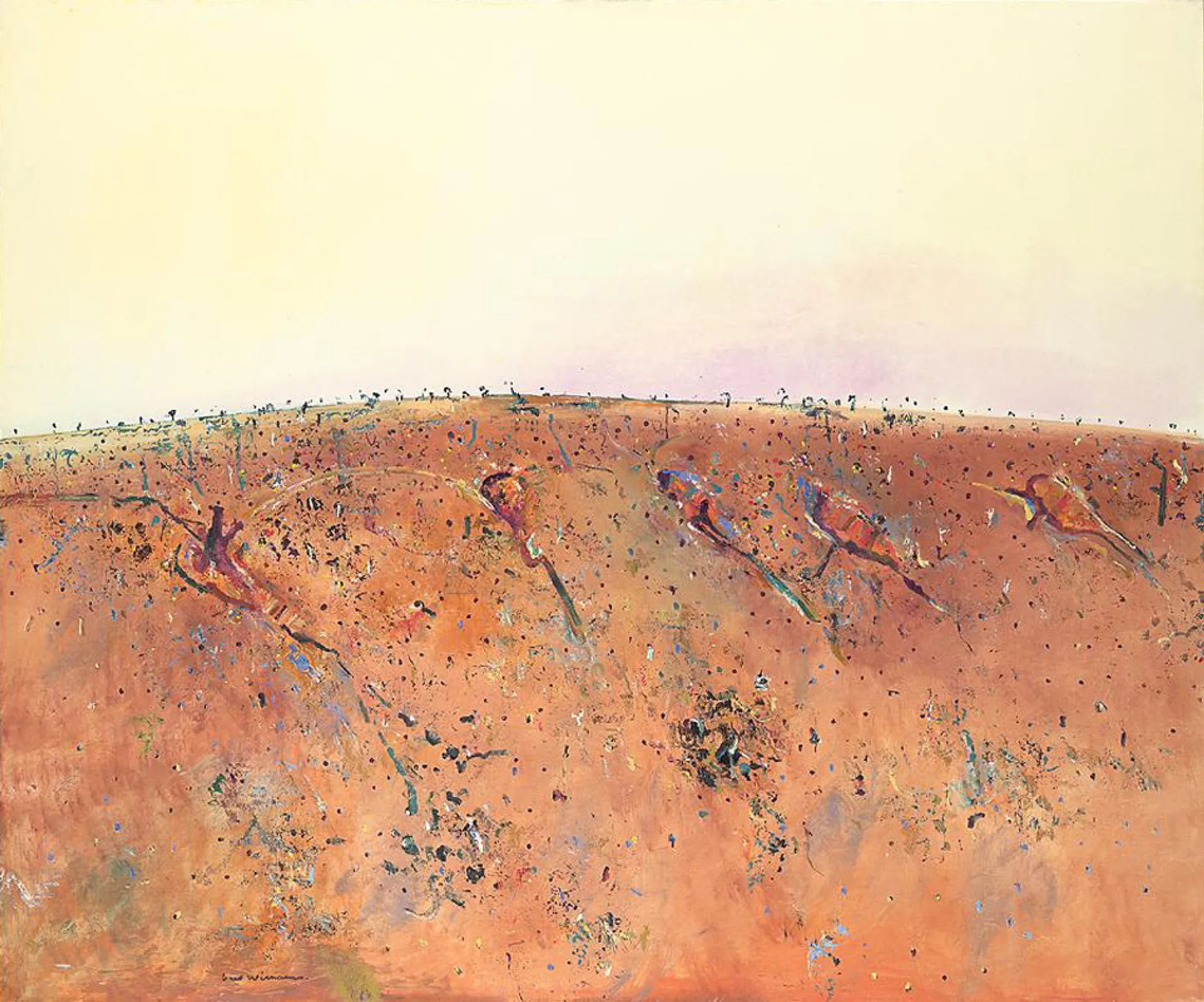
Williams continued to paint more gouaches in the studio immediately after the second Pilbara visit, but it wasn’t until early 1981, almost two years later, that he began work on the related paintings. Once he started to paint however, the images flowed quickly in a process that was ‘sheer pleasure.’4 As James Mollison explained: ‘The pictures were put down rapidly, with the artist frequently using not his brush but scratchy old paint-hardened rags to wipe on land, sky and other elements of the landscape. Details were then drawn in, and the paintings were set aside to dry… Some were never touched after the first day’s work.’5
CRA subsequently purchased thirteen oils and eighteen gouaches – now known as The Pilbara Series – which were donated to the National Gallery of Victoria in 2001. The last major series Williams made before his premature death in 1982, it is a masterful expression of an artist working at the height of his powers, combining expansive views of the landscape with focussed close-up images of wildflowers and insects. Responding to the experience of flying over the area, Williams often adopts an aerial perspective, looking down on the open landscape to reveal its overwhelming scale, but he also depicts views from the ground, where flat country is interrupted by gorges, mountains and the distinctive flat-topped mesas. From rich reds and ochres of the earth to pastel-hues of early evening skies, the series is also characterised by striking colour.
Paraburdoo landscape, 1981 is part of the broader series of paintings that Williams made following his experience of the Pilbara. An earthy red ground covers the canvas from edge to edge, but it is a delicate layer of paint – with brushstrokes visible in the lower right and the weave of the canvas discernible on the left – that suggests both the look and the feel of the dusty red earth of the region. Laid over this is a dazzling array of painterly marks – dots, daubs and lines of colour alongside areas of scumbled texture – that build up an impression of the landscape. Through this very singular abstracted visual language, Williams describes aspects of the area’s geography and the diversity of vegetation, communicating both the physical and emotional experience of being in the landscape. In this painting, both the energy with which it was painted and the pleasure the artist derived from the process are palpable. Indeed, as Williams mused, ‘anyone who could not paint in this particular country is probably in the wrong profession.’6
1. Fred Williams Diary, 2 June 1979, cited in Phipps, J., Fred Williams – The Pilbara Series, National Gallery of Victoria, Melbourne, 2011, p. 41
2. Mollison, J., A Singular Vision: The Art of Fred Williams, Australian National Gallery, Canberra, 1989, p. 230
3. Fred Williams Diary, 13 May 1979, cited in Phipps, op. cit., p. 37
4. Lyn Williams, cited in Mollison, op. cit., p. 232
5. Mollison, ibid, pp. 232 – 233
6. Fred Williams Diary, 7 June 1979, cited in Phipps, op. cit., p. 42
KIRSTY GRANT