
Ian Fairweather
(1891 - 1974)
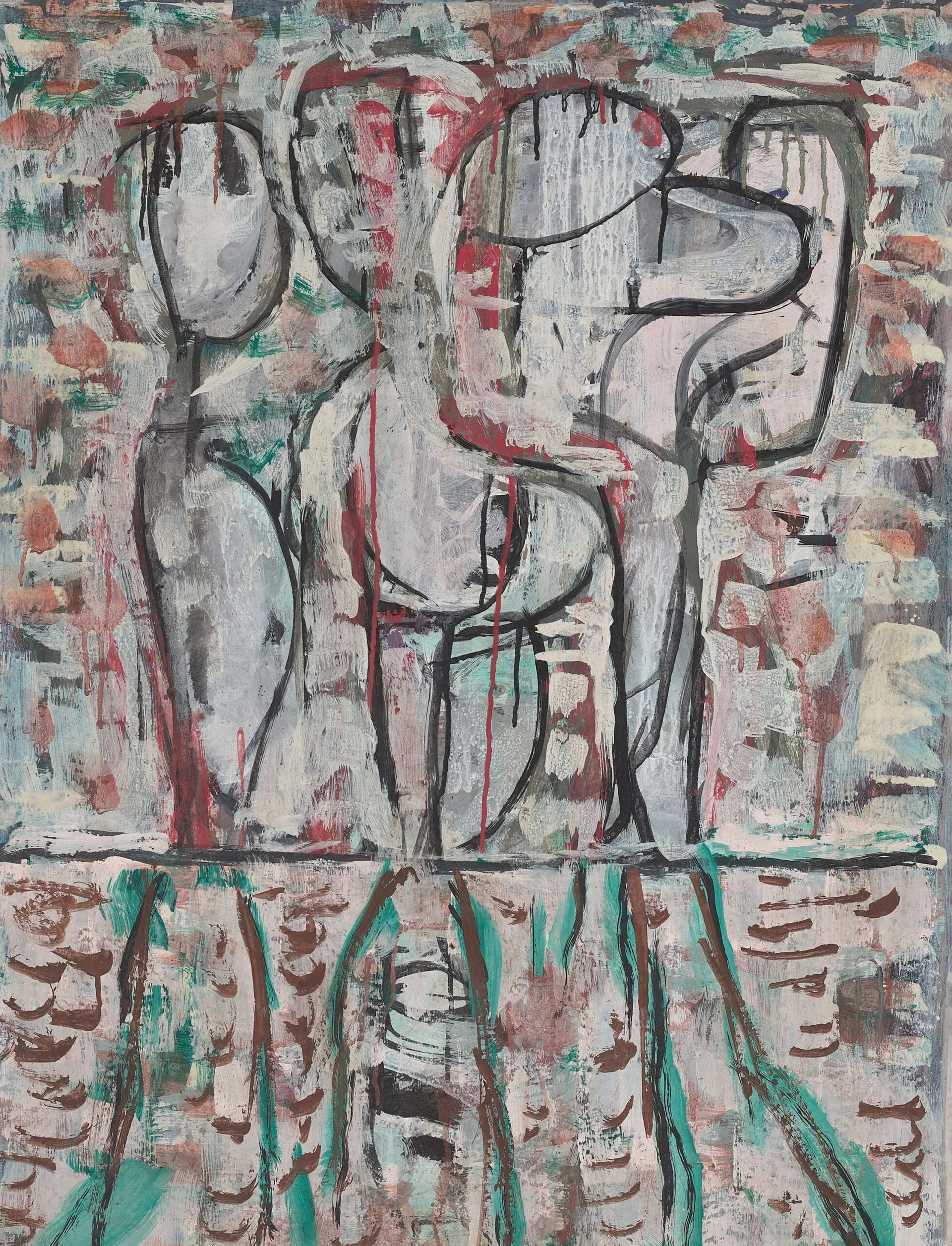
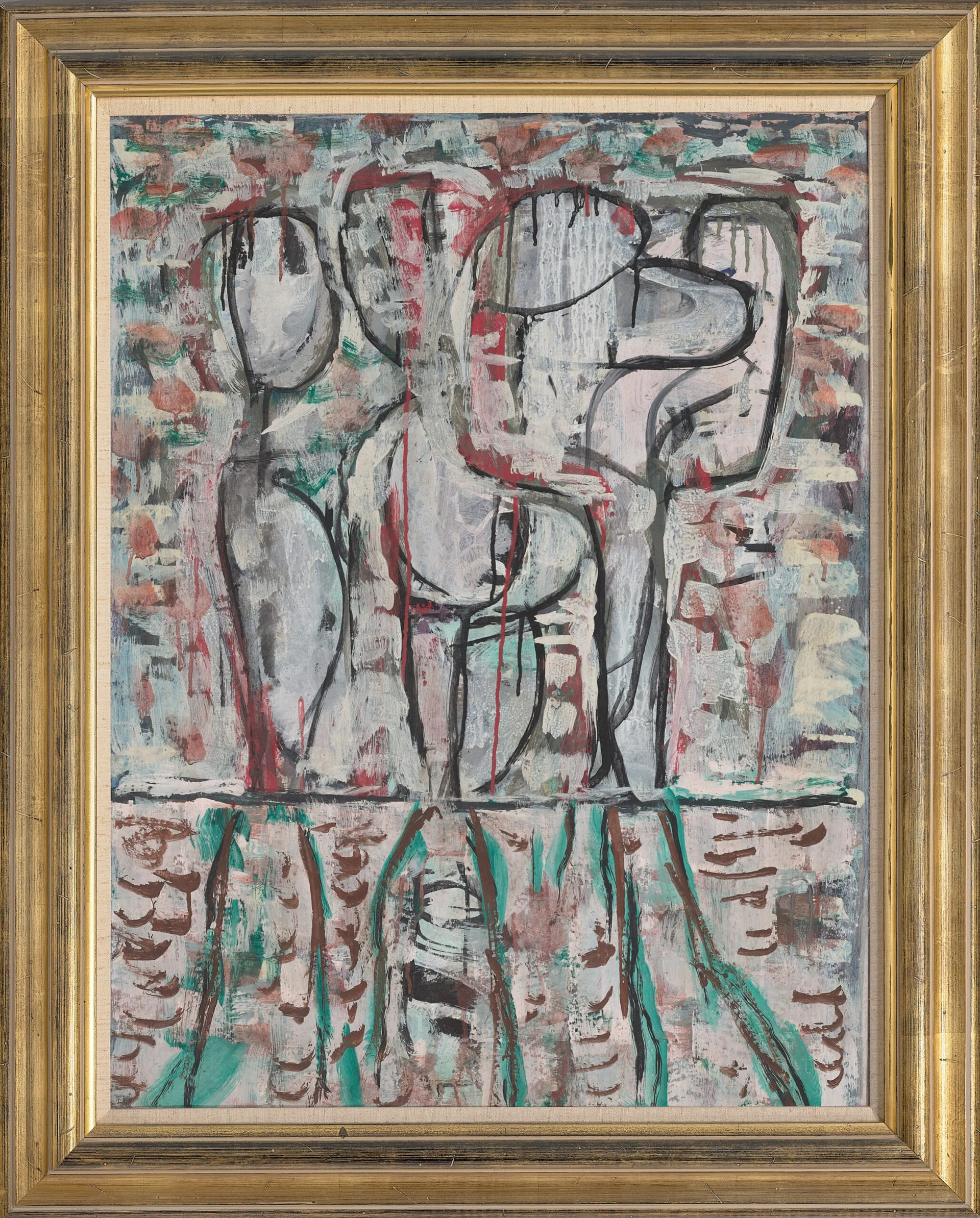
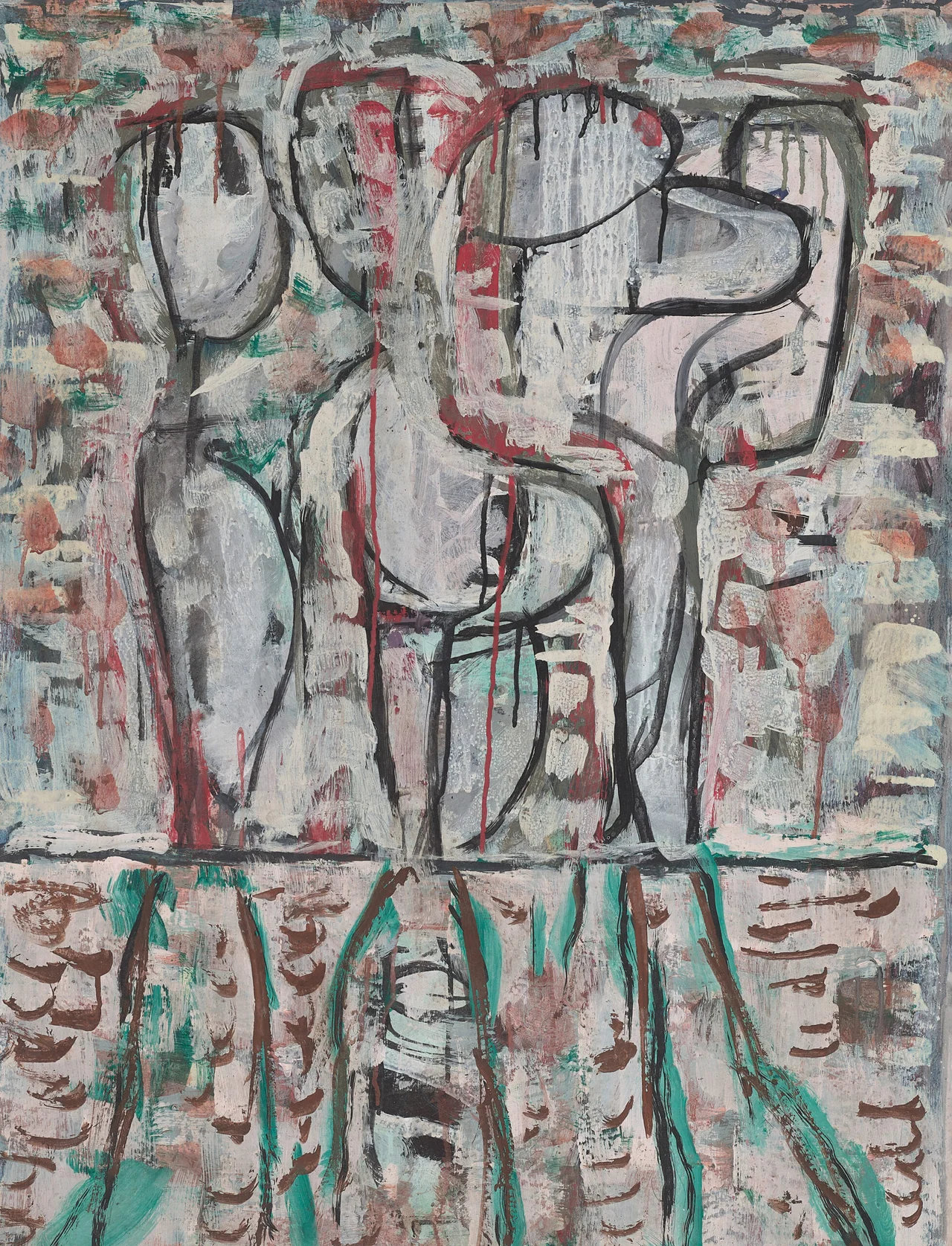
Penelope, 1961
synthetic polymer paint and gouache on cardboard on composition board
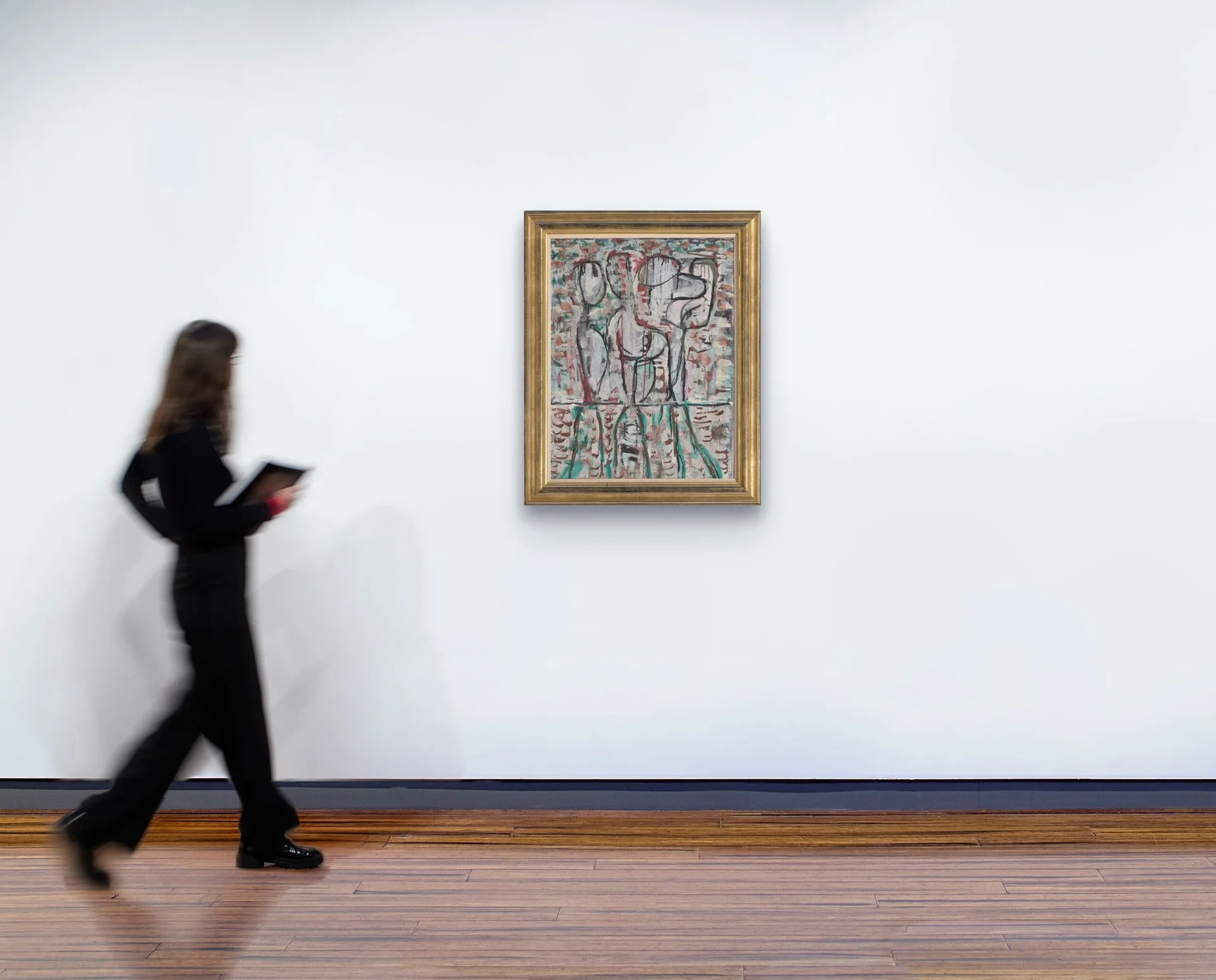
80.5 x 60.5 cm
bears inscription verso: PENELOPE
Estimate:
$220,000 - $280,000
© Ian Fairweather/DACS. Copyright Agency 2026
lot details
Macquarie Galleries, Sydney
Private collection, Melbourne
Menzies, Sydney, 23 June 2011, lot 37
Private collection, Sydney, acquired from the above
Exhibited
Ian Fairweather Paintings, Macquarie Galleries, Sydney, 14 – 23 June 1961, cat. 10
One of Australia’s most elusive and peripatetic artists, Ian Fairweather’s life encompassed periods living in Canada, China, Bali, the Philippines, India, Melbourne, north Queensland and Darwin. In 1953, he moved to Bribie Island, a small and then remote sand island in Moreton Bay, about 70 kms north of Brisbane – remaining there for the rest of his life. Despite working by the light of a hurricane lamp in a series of thatched huts that were largely open to the elements, Fairweather was to create some of the most majestic and highly regarded works of his career during this time, as his mature work became a highly personal, idiosyncratic mix of figuration, abstraction and calligraphic mark making.
Born in Scotland in 1891, and later settling on the isle of Jersey with his family where he began to paint, Fairweather completed officer training in preparation for the Great War and fought in the Battle of Mons, but was captured on his second day of combat, becoming a prisoner of war in various camps over a four-year period. On deciding to become an artist, he initially trained at The Academy in The Hague before returning to London to enrol at the prestigious Slade School of Art. After Fairweather travelled to China in 1929, where he lived in Shanghai, the life that led him to Fairweather being popularly cast as the archetypal artist-outsider began. This famously included him attempting, at the tender age of 60, to sail from Darwin to Portuguese Timor in a makeshift raft constructed from materials he scavenged in Darwin. This near-tragic journey resulted in the artist being washed up 16 days later on Roti (or Rote), a small Indonesian island to the southwest of Timor. After being deported to Singapore and then repatriated to England, he returned to Australia and settled on Bribie: ‘I had never seen anything so lovely’, he wrote.1 As Claire Roberts and John Thompson have remarked, Fairweather ‘repeatedly return[ed] to the idea of Australia as a place where he might find a safe haven and paint undisturbed. The combination of artistic affinity, financial possibility and attractive geography – a remote island nation linked to the British Empire and yet part of the tropical south – kept pulling him back to Australian shores.’2
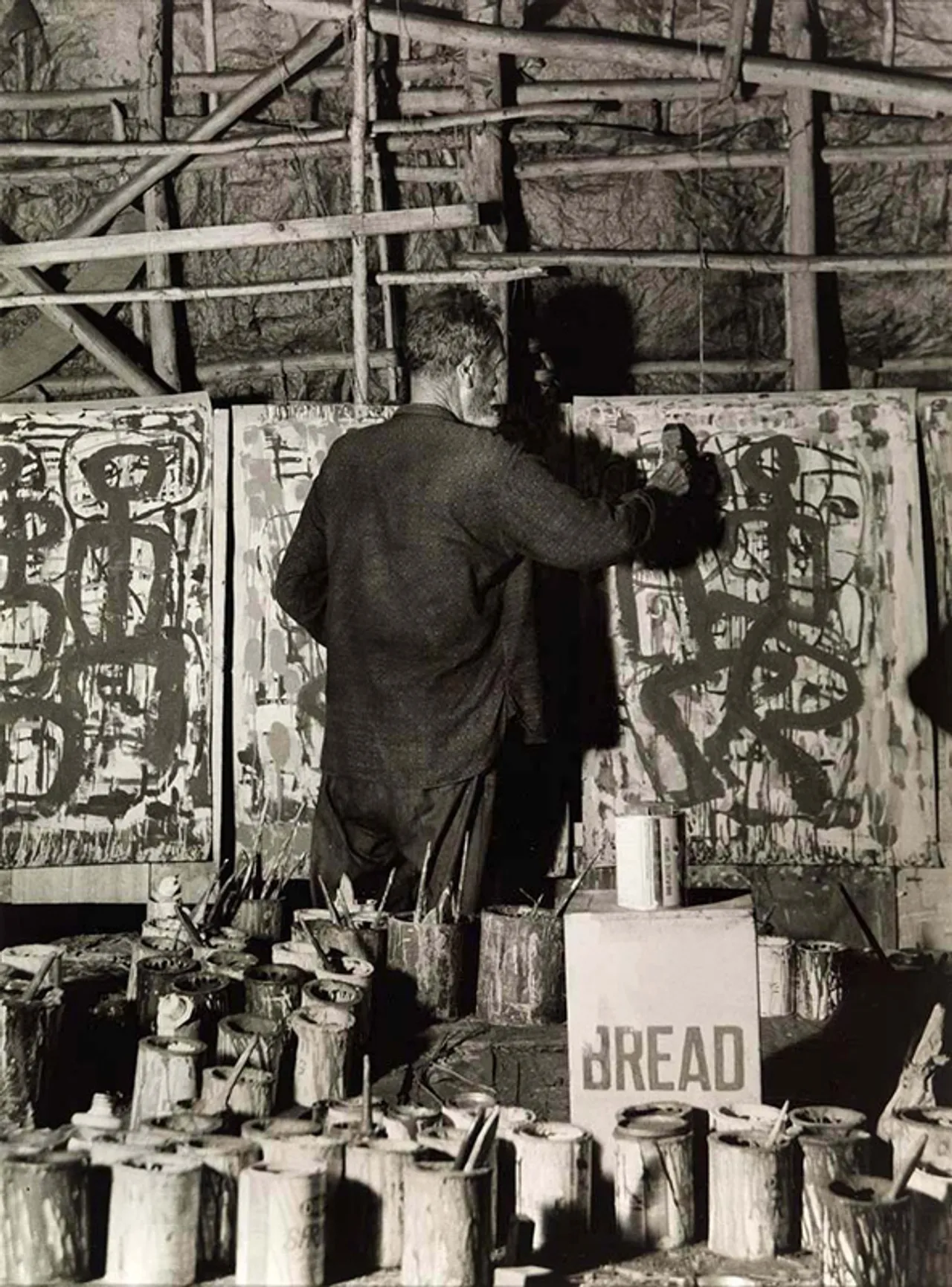
Despite the relative isolation of his island home (Bribie was only accessible by ferry until 1963), Fairweather maintained a strong connection to events in the major centres and was always interested in the critical reception of his work. He was a good correspondent, maintaining contact with family and friends through letters, and a keen reader. This passion was kept active through the books he received by post from the Public Library of Queensland – an ‘eclectic and opportunistic’ selection ranging from crime thrillers and science fiction to religion and philosophy – and his consumption of journals and magazines, which included The Times Literary Supplement, the Atlantic and Time magazine, and the science fiction magazine, Galaxy, to which he subscribed.3 ‘I love books’, he wrote. ‘Even when they are bad – if I have the patience they can take me out of this world.’4
As Claire Roberts and John Thompson note, Fairweather was a product of the education system of the late Victorian and Edwardian Empire, and the richness of the cultural references that appear in his writing and art reveals ‘a sensibility shaped by the Bible and the Book of Common Prayer, Shakespeare and the major English poets, Dickens, the nonsense rhymes of Lewis Carroll, Gilbert and Sullivan, and popular song and literature.’5 As part of this education, the artist would no doubt have been taught, if not read, Homer’s The Odyssey, and the story of its intelligent, shrewd and endlessly patient heroine, Penelope. Indeed, it is hard not to imagine that Fairweather may have felt a personal affinity for the interiority and quiet endurance of this ancient character.
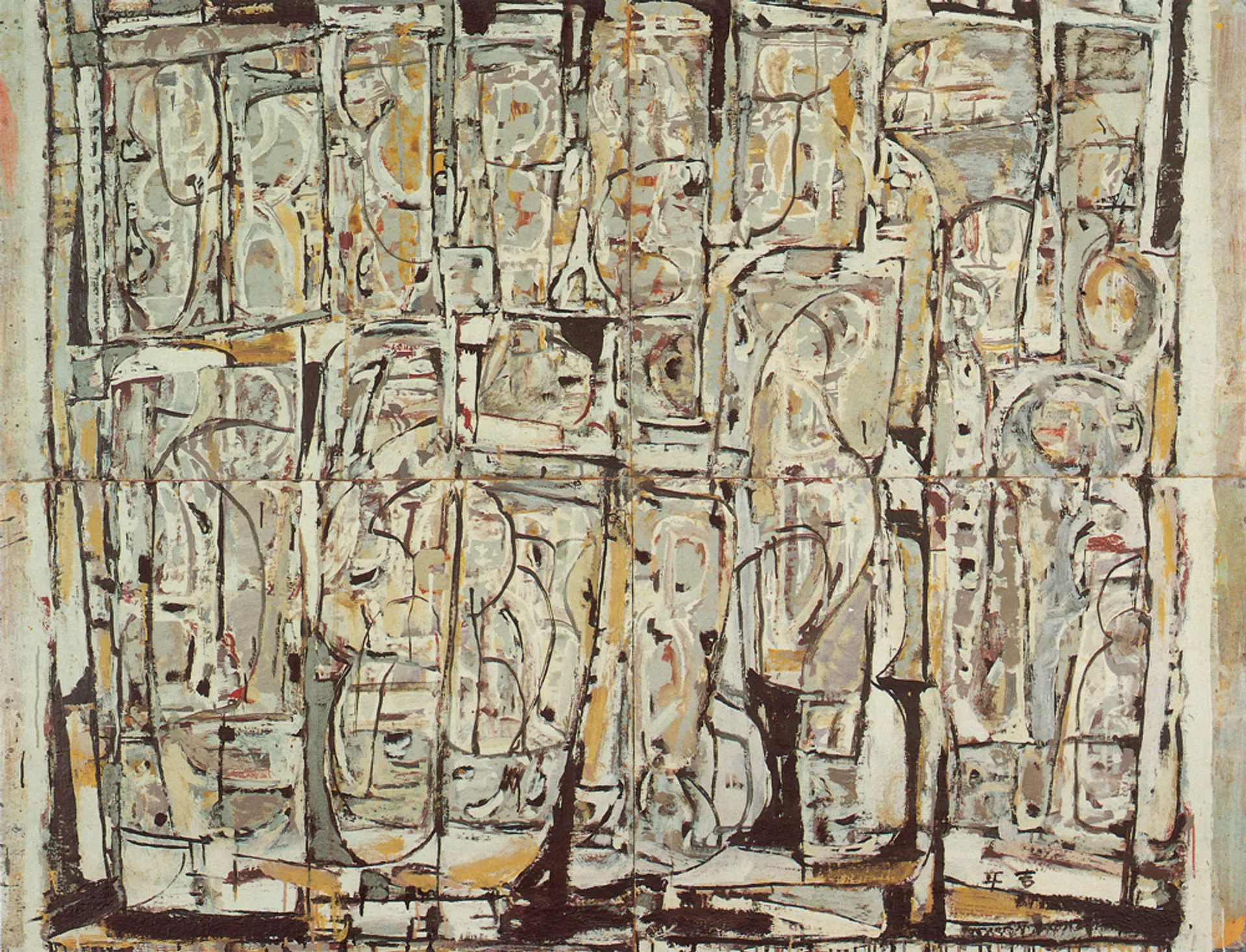
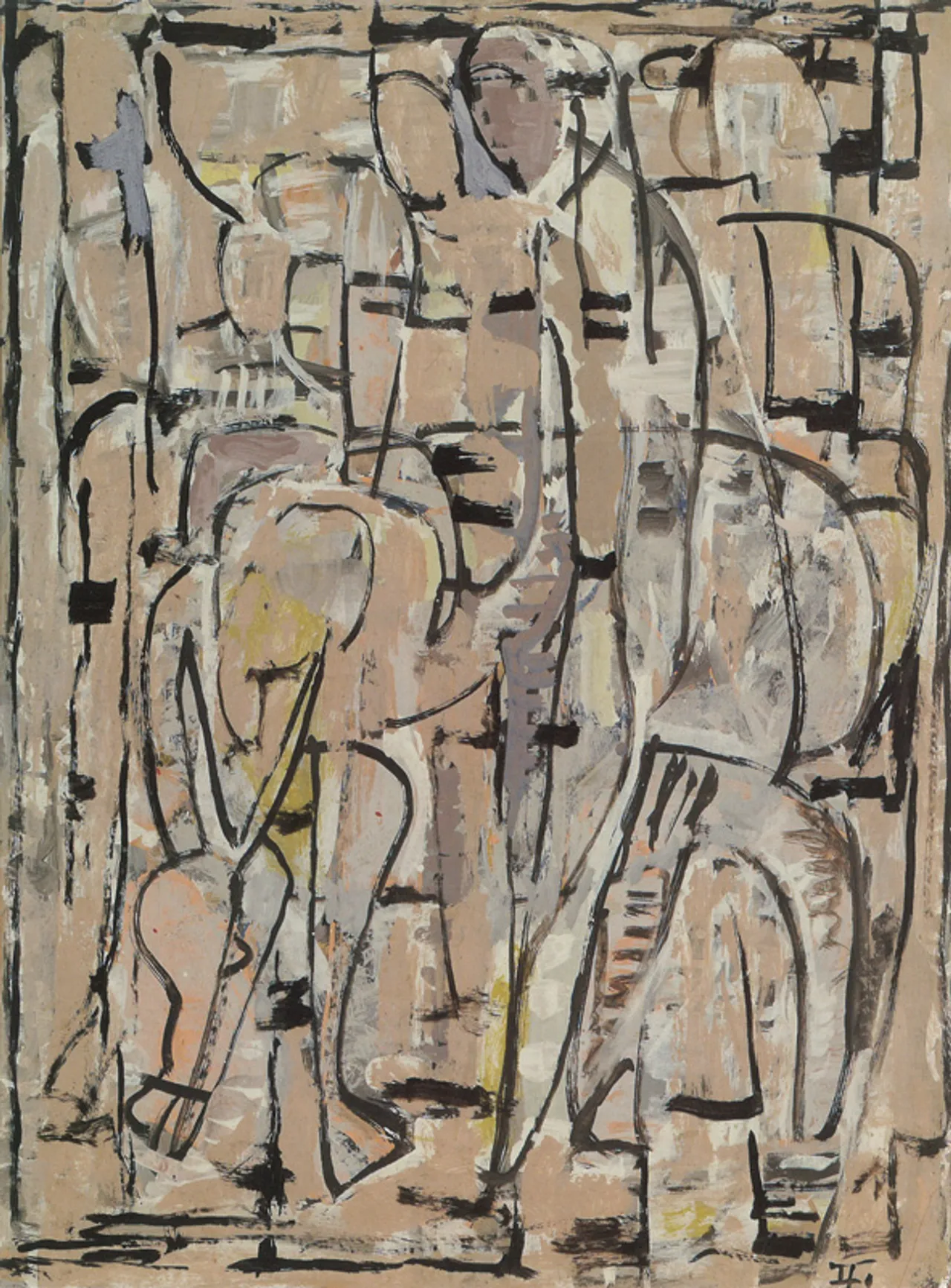
In Fairweather’s painting Penelope, 1961, the blocky Cubist-inspired form of the epic’s protagonist is presented to us in several overlapping poses. Rendered with incredible economy, her body possesses a quiet solidity as she is both veiled by and seen through rich layers of brushstrokes and colour, and the assured flick of the calligraphic lines that animate the work’s surface. The complex interconnected forms, webs of curvilinear lines and division of the composition that we see in Penelope are all hallmarks of Fairweather’s later work. Penelope is classic Fairweather – she won’t reveal her secrets quickly, but will reward with extended viewing, slowly revealing (some of) her mysteries over time. As the artist himself wrote:
‘Painting is not something that must be understood. If the picture is for you, it will produce an almost physical sensation, something of joy, of wonder – a tug at the gut. Don’t go trying to understand it. Don’t expect the painter to stand and deliver his innermost convictions in other than his work.’6
1. Ian Fairweather, cited in Roberts, C. and Thompson, J. (eds.), Ian Fairweather: A Life in Letters, Text Publishing, Melbourne, 2019, p. 91
2. Roberts & Thompson, ibid., pp. vii-viii. See also Goddard, A., Ian Fairweather: Late Works 1953 – 74, Queensland Art Gallery | Gallery of Modern Art, Brisbane, 2012, p. 20
3. Roberts and Thompson, ibid., p. vii
4. Ian Fairweather, cited ibid.
5. Roberts and Thompson, ibid.
6. Ian Fairweather, cited in Abbott-Smith, N., Ian Fairweather: Profile of a Painter, University of Queensland Press, St Lucia, 1978, p. 151, cited in Fisher, T., The Drawings of Ian Fairweather, National Gallery of Australia, Canberra, 1997, p. 17
KELLY GELLATLY