
John Brack
(1920 - 1999)
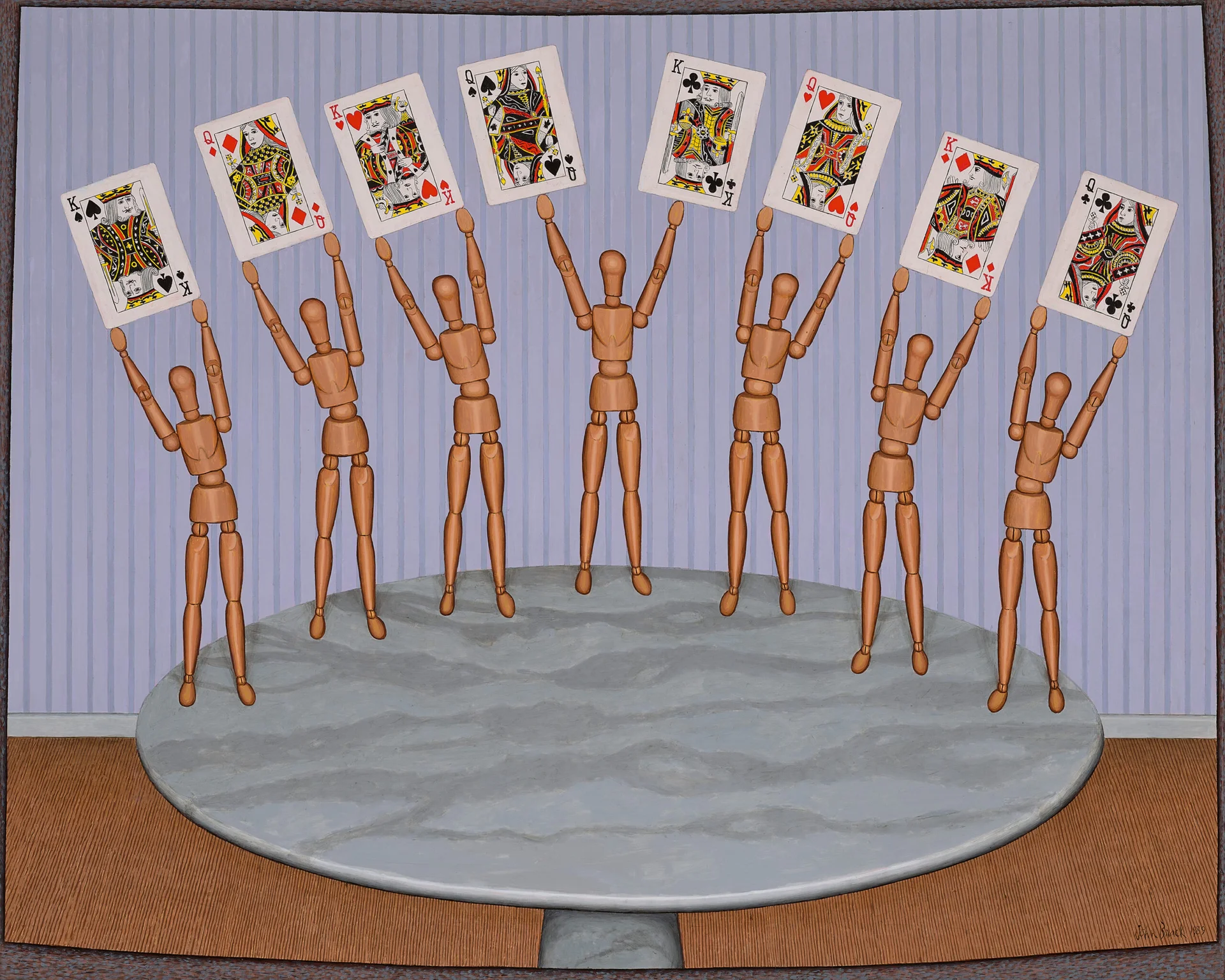
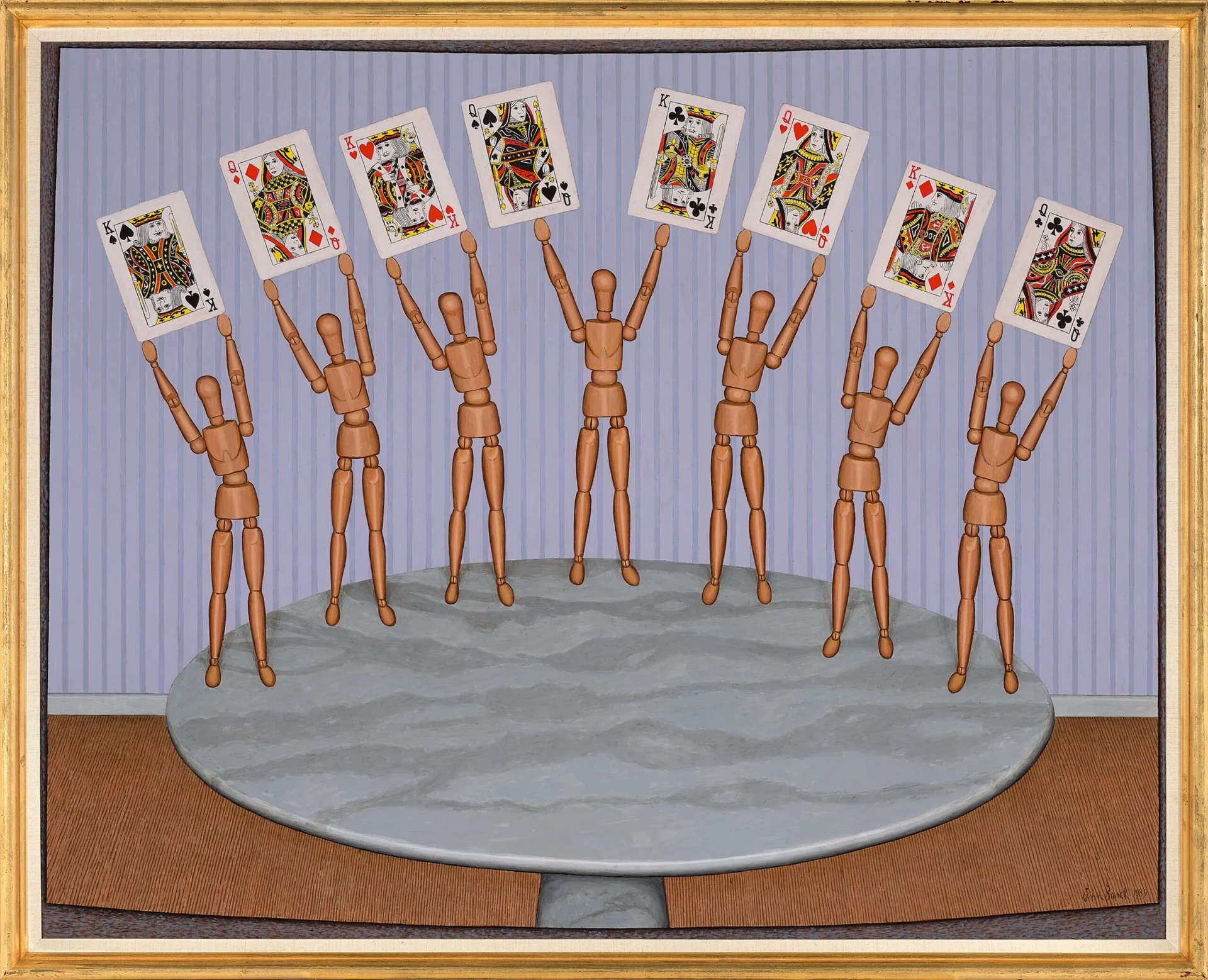
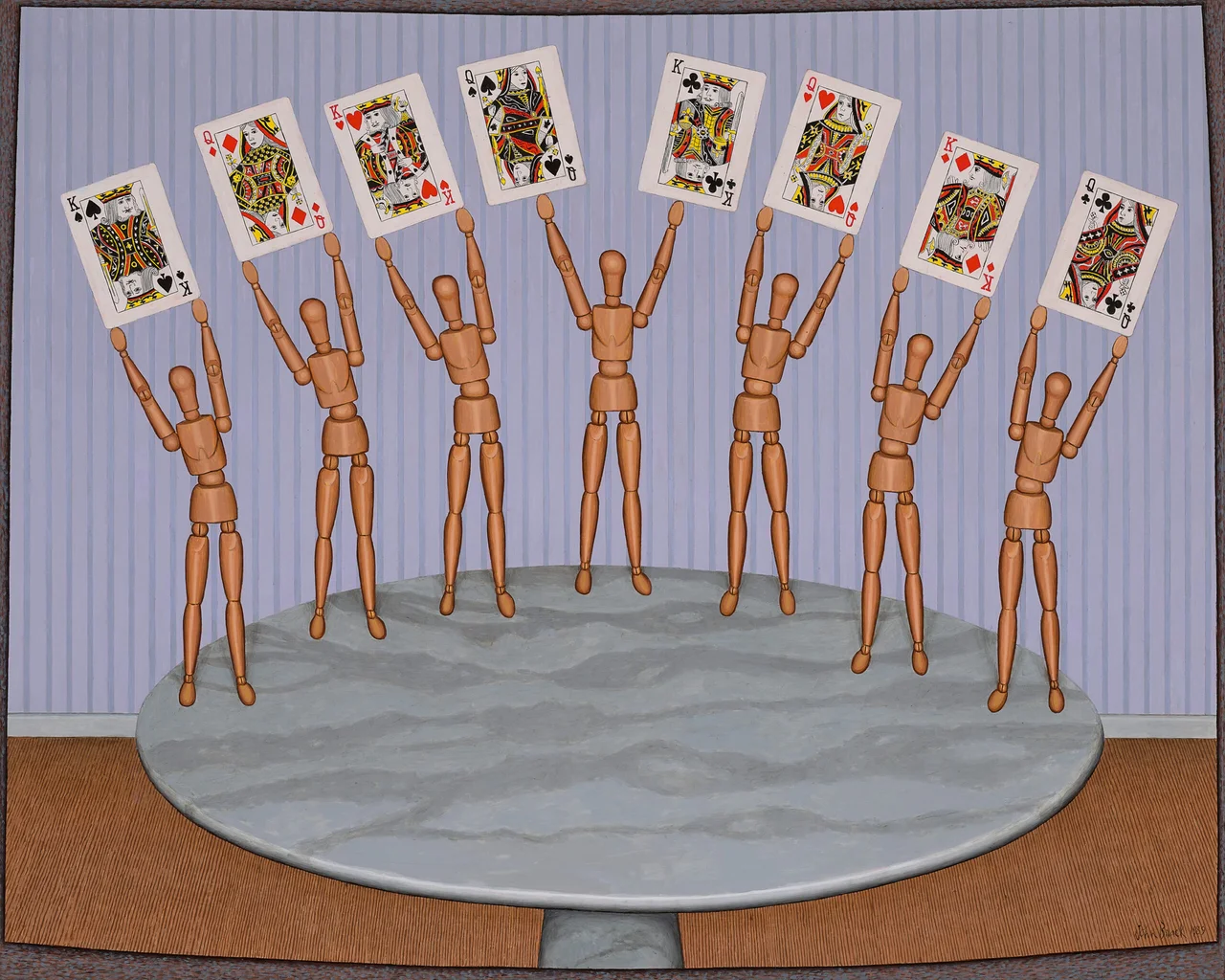
The performance (seven figures), 1989
oil on canvas
121.0 x 152.0 cm
signed and dated lower right: John Brack 1989
inscribed with title on artist’s handwritten label verso: THE PERFORMANCE
Estimate:
$400,000 - $600,000
© courtesy of Helen Brack
lot details
inscribed with title on artist’s handwritten label verso: THE PERFORMANCE
Helen Brack, Melbourne
Deutscher~Menzies, Melbourne, 21 August 2000, lot 12
Private collection, Canberra
Exhibited
John Brack: Recent Works, Tolarno Galleries, Melbourne, 14 October – 11 November 1989, cat. 11
A Question of Balance: John Brack 1974 – 1994, Heide Museum of Modern Art, Melbourne, 1 April – 28 May 2000
Literature
Grishin, S., The Art of John Brack, Oxford University Press, Melbourne, 1990, vol. II, cat. o310, p. 40
Gott, T., A Question of Balance: John Brack 1974 – 1994, Heide Museum of Modern Art, Melbourne, 2000, p. 47
John Brack is unique among his twentieth-century peers as the artist who most succinctly captured the character of modern Australian life. His iconic paintings, including The bar, 1954, Collins St, 5p.m., 1955 (both National Gallery of Victoria), and the ballroom dancing series of the late 1960s, are eternally popular with successive generations of viewers and now, more than fifty years on, are also tinged with nostalgia for our recent past. Inspired by writers including Henry James and Rainer Maria Rilke, Brack looked to his immediate surroundings for inspiration, finding a rich supply of subject matter in the city and the suburbs of mid-century Melbourne. Although his imagery was often interpreted as satirical social commentary, his primary motivation was quite different. As he explained, ‘What I paint most is what interests me most, that is, people; the Human Condition… A large part of the motive… is the desire to understand, and if possible, to illuminate… My material is what lies nearest to hand, the people and the things I know best.’1
John Brack
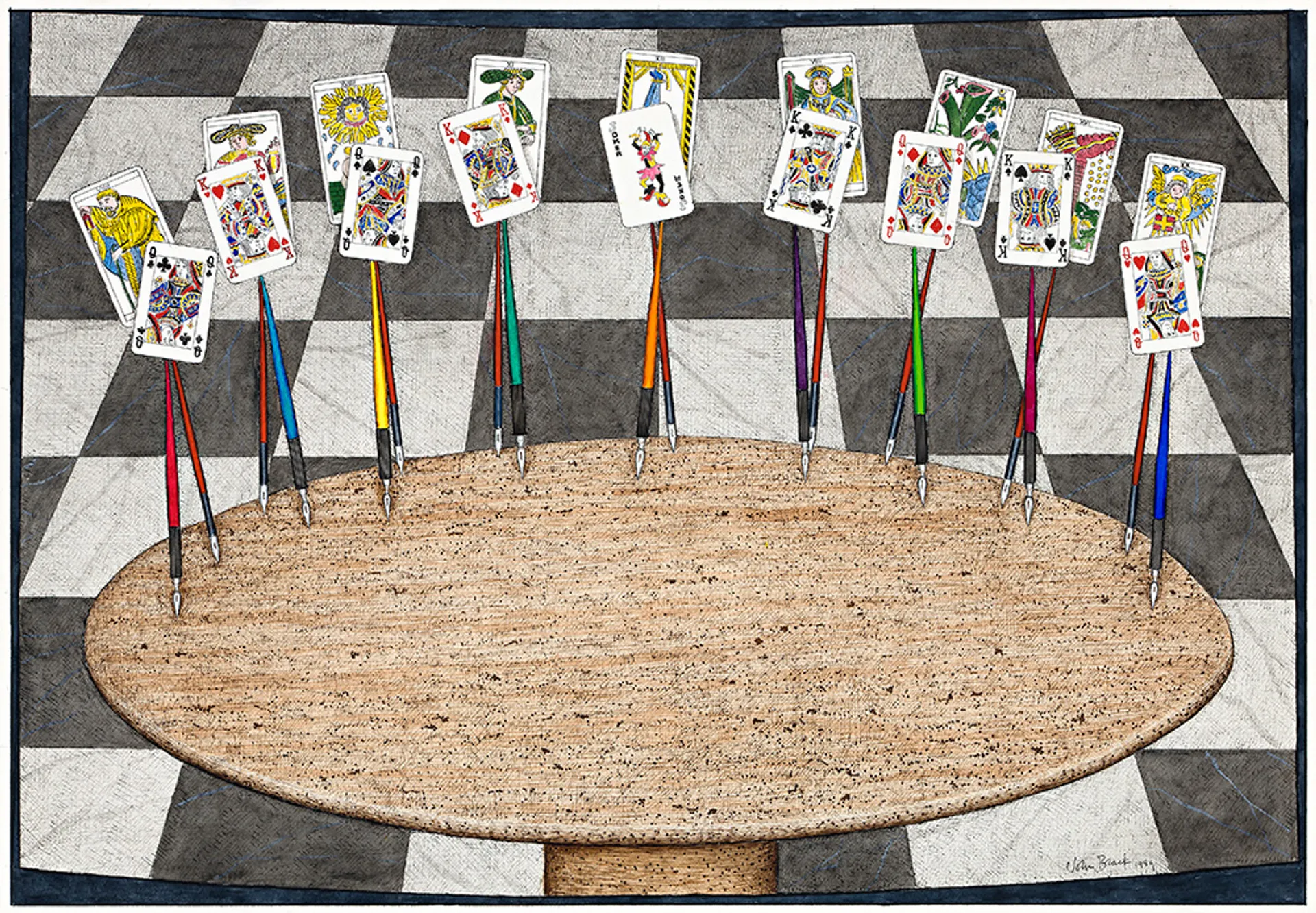
The performance, 1989
watercolour, pen and ink on paper
69.0 x 99.0 cm
Private collection
© Helen Brack
Throughout a career that spanned more than five decades, Brack’s work evolved both stylistically and technically, with distinct changes in subject matter; however, this focus on the human condition remained a consistent theme. In the mid-1970s, the human figure disappeared almost entirely from Brack’s imagery, replaced in ensuing series by various inanimate objects, from museum postcards, umbrellas, pens, pencils and playing cards, to wooden artists’ manikins and Pinocchio dolls. Using these everyday props to construct subtle visual metaphors, Brack’s new approach ‘[permitted] him to express the whole complexity of social interconnections’2 and his perspective on the perennial forces of human nature was transformed from the local to a broader, more universal view. Although this development in Brack’s imagery was utterly consistent in terms of its thematic approach, the visual change was so marked that most viewers and critics were baffled.
There was a notable difference in Brack’s technique too. Produced in his studio, the late paintings were the result of intense preparation and a meticulous technique. He would set up elaborate tableaux, using fishing line and tape to suspend props when necessary, and create a model from which a detailed preparatory drawing was then made. He also used fine brushes and glazes to minimise the appearance of brushstrokes and heighten the sense of pictorial realism in these works. His motivation was to engage viewers so that they could focus on the meaning of the imagery rather than being distracted by expressive painterly bravura.3 However, despite the fact that Brack’s painting had rarely been about the application of paint, many viewers found the resulting works ‘oddly impersonal, even anonymous.’4
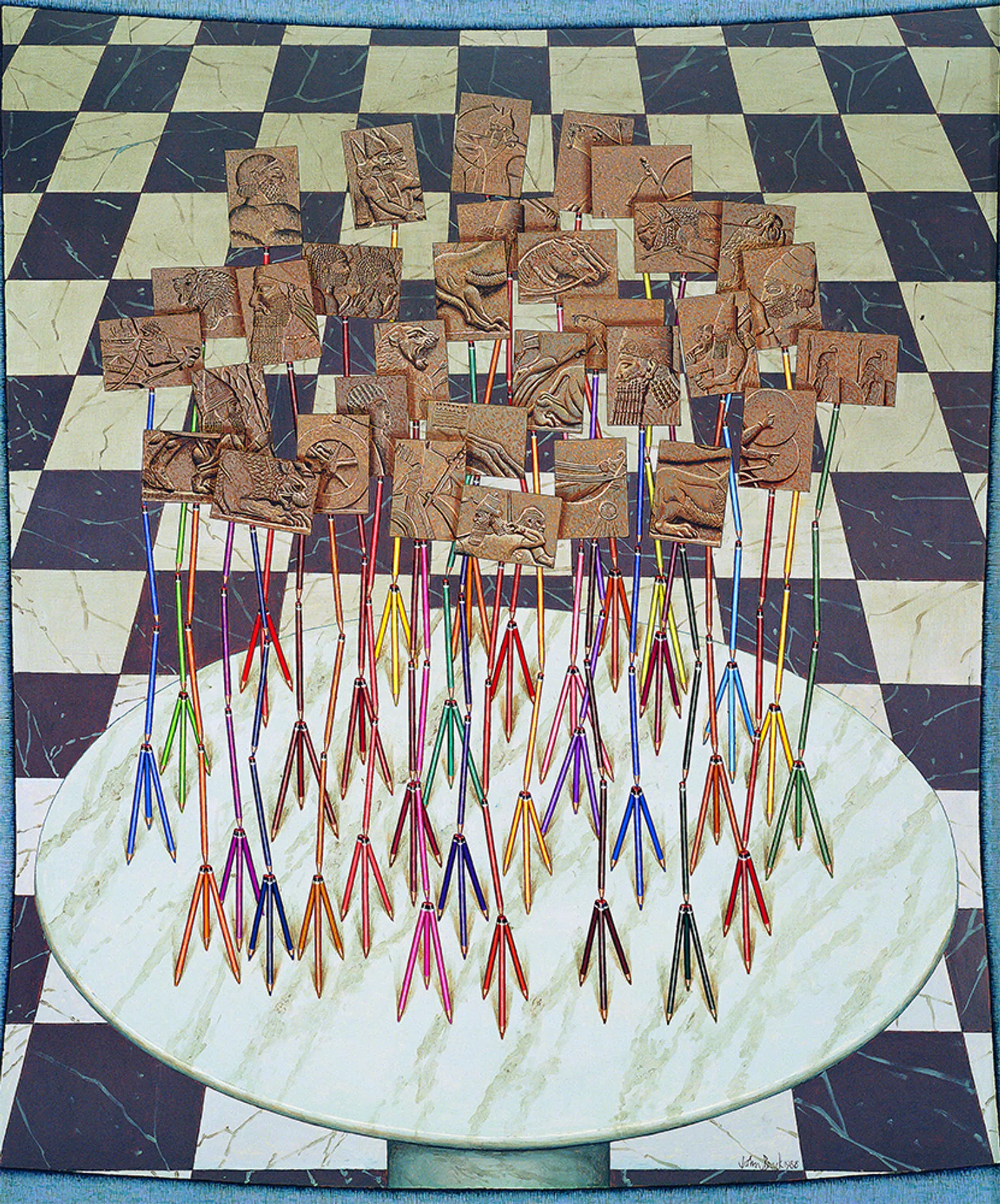
John Brack
The hunt, 1988
oil on canvas
182.0 x 152.3 cm
Geelong Art Gallery, Victoria
© Helen Brack
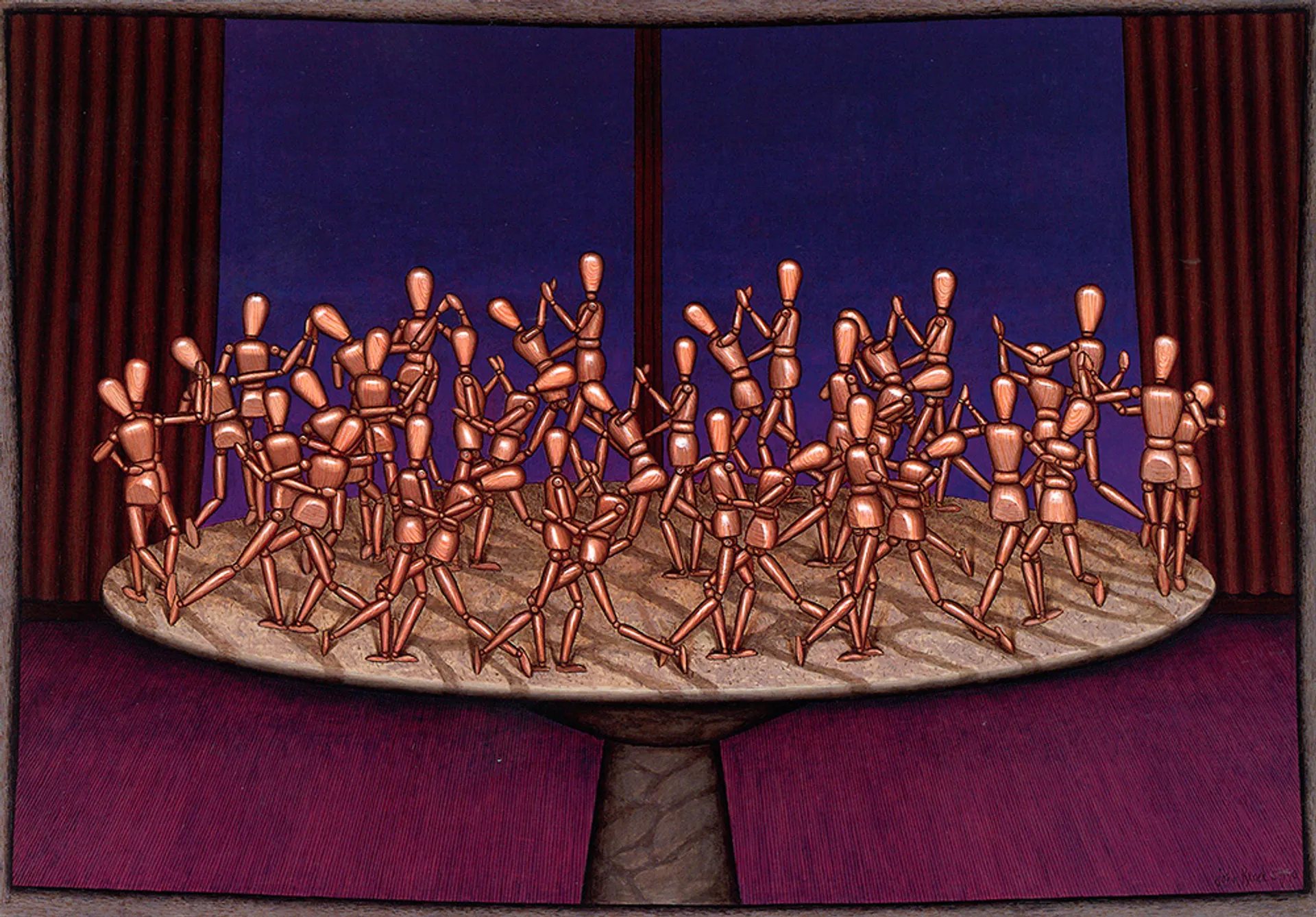
John Brack
Evening Dance, 1989 – 90
oil on canvas
106.0 x 152.0 cm
National Gallery of Australia, Canberra
© Helen Brack
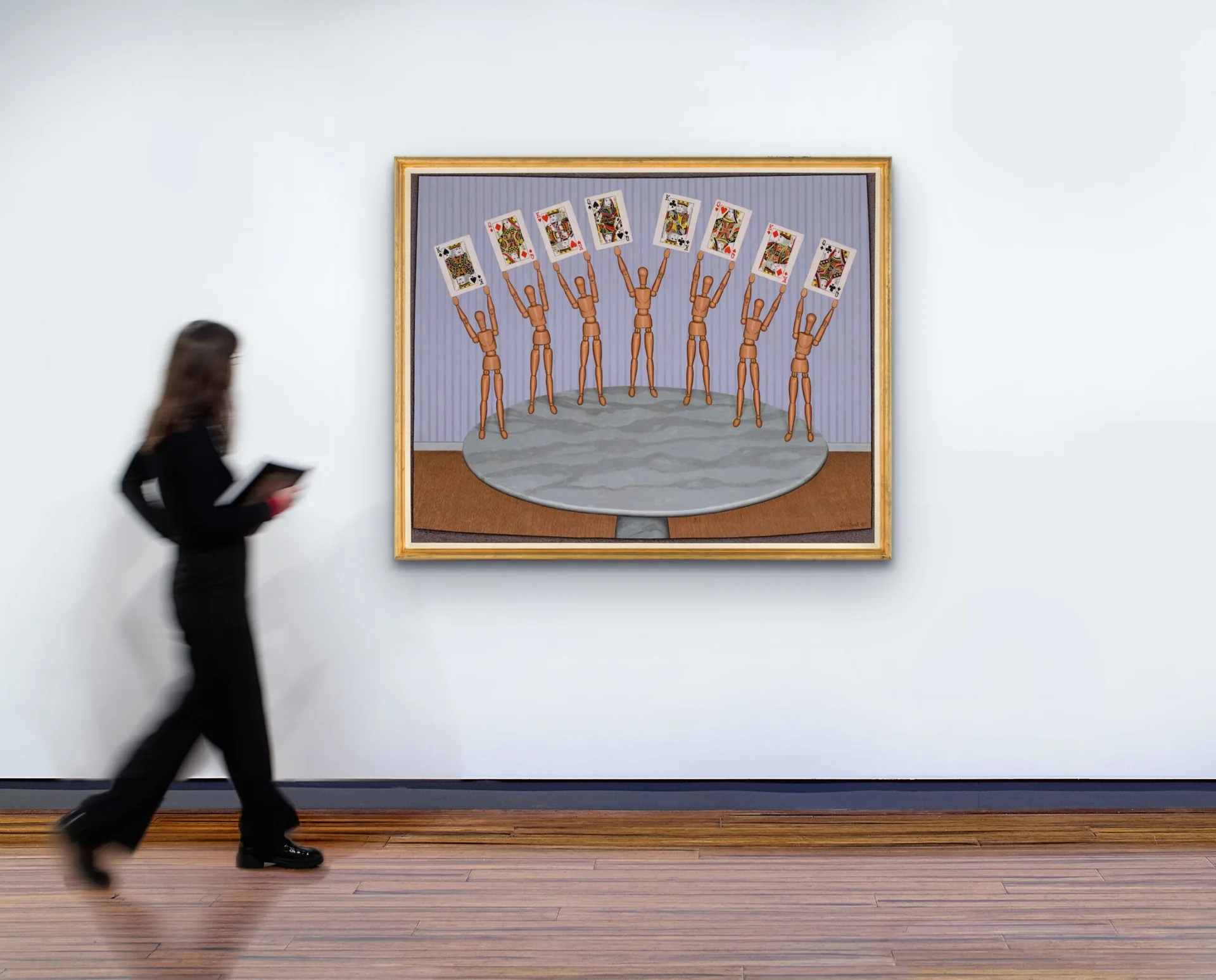
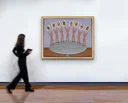
Today, with the benefit of time and the advantage of being able to see Brack’s oeuvre in its entirety, the late paintings stand as remarkable reflections of a singular vision from the hand of a mature artist of considerable skill. The setting of The performance (seven figures), 1989, is decidedly domestic, but as the backdrop to an imaginary scene in which seven articulated wooden manikins, with their arms raised, line up around the edge of a marble table, the carefully painted interior finishes read more like elements of a theatre set. Six of the manikins hold a single playing card aloft, while the seventh and central figure supports two cards, the king of clubs and the queen of spades. The title suggests that we are looking at something choreographed and rehearsed, an impression that is emphasised by the overall symmetry of the composition, but the image also reflects a distinct sense of playfulness and fun. Of course, the enigmatic quality of Brack’s imagery (and his lifelong reluctance to explain it) also poses many questions and allows for the possibility of various interpretations. Alongside the refined technique and careful delineation of pictorial detail, one of the most striking elements of The performance (seven figures) is its impressive scale, which renders the manikins larger than life-size, drawing the viewer in to participate in the complexity and mystery of Brack’s visual world.
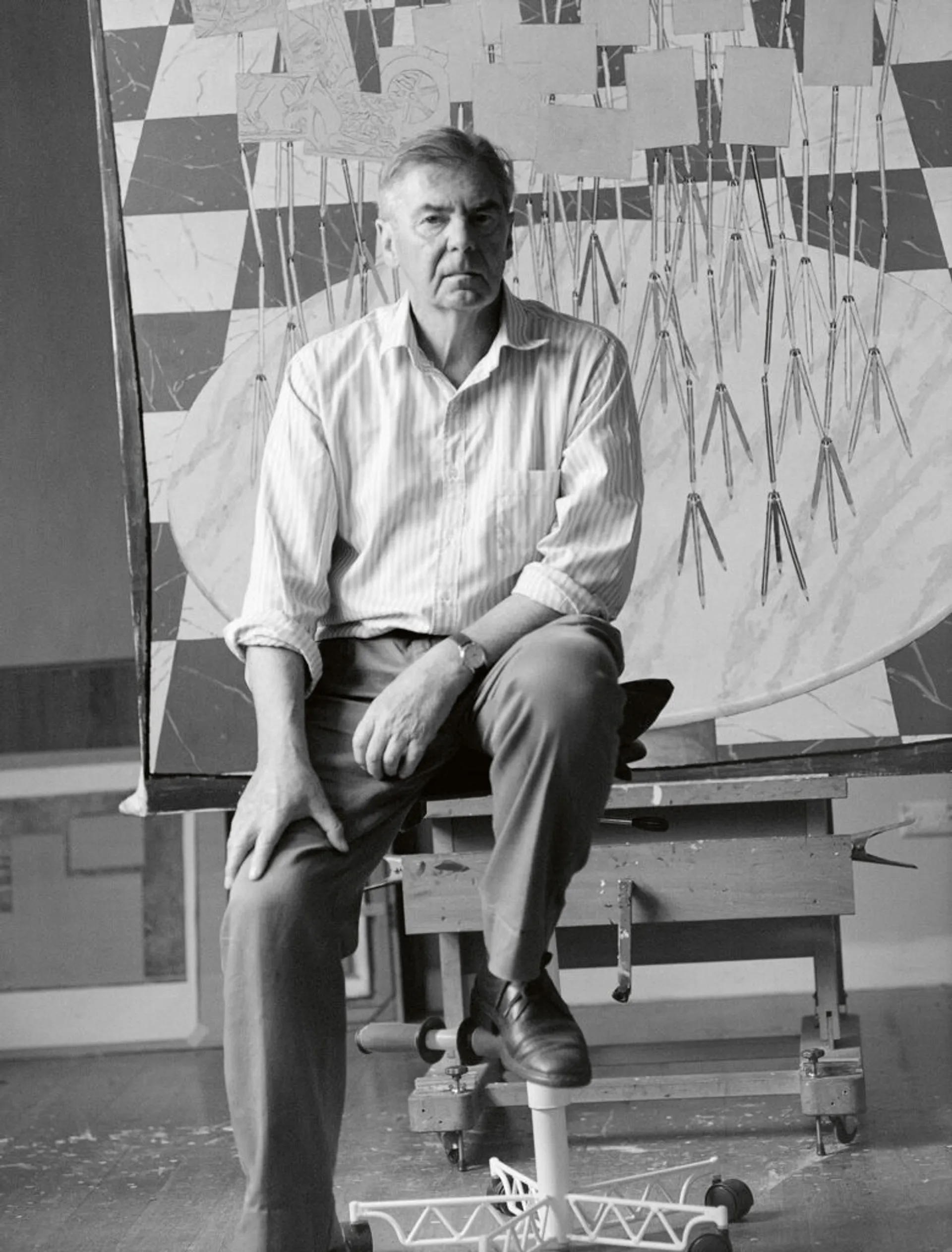
John Brack in his Surry Hills studio, 1988
photographer: Robert Walker
Art Gallery of New South Wales, Sydney
© Estate of Robert Walker
John Brack has long been recognised as a towering figure within twentieth-century Australian art, and while many of his paintings address the reality of life through imagery that is immediately recognisable, the late works achieve this through a sophisticated and highly personal process of symbolic invention. ‘Brack’s imagination is… outlandish in its gestures. Indeed, the metaphors it conceives and clinically fashions can be compared to a metaphysical conceit, for they consistently propose a relationship between the most disparate of phenomena.’5
1. Brack, J., cited in Reed, J., New Painting 1952 – 62, Longman, Melbourne, 1963, p. 19
2. Grishin, S., The Art of John Brack, Oxford University Press, Melbourne, 1990, p. 140
3. ibid., p. 132
4. McGilchrist, M., ‘New riches from Brack’s old mine’, The Age, Melbourne, 26 February 1975
5. Catalano, G., ‘Conceit of an artist’, The Age, Melbourne, 1 November 1989
KIRSTY GRANT