
Margaret Olley
(1923 - 2011)
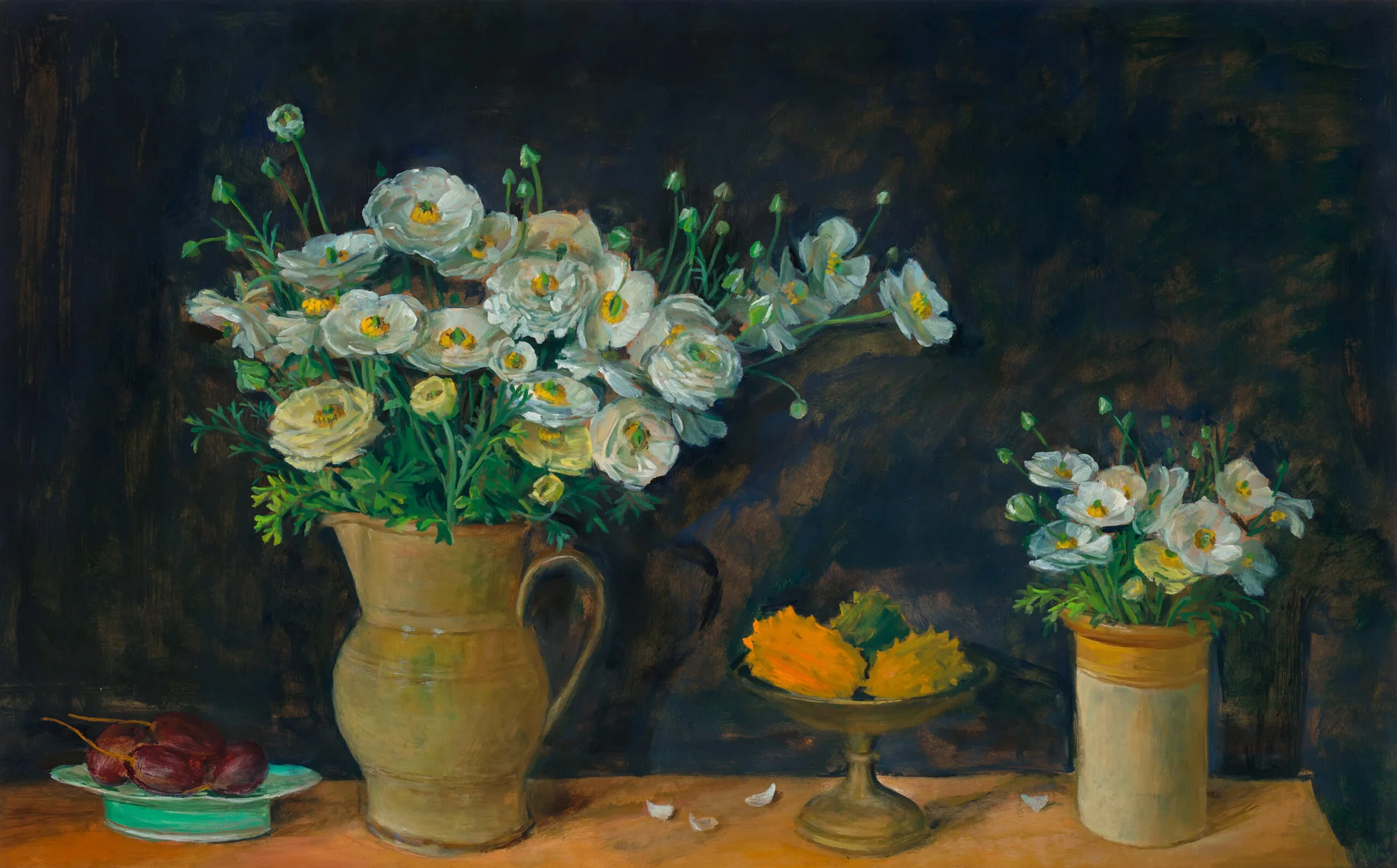
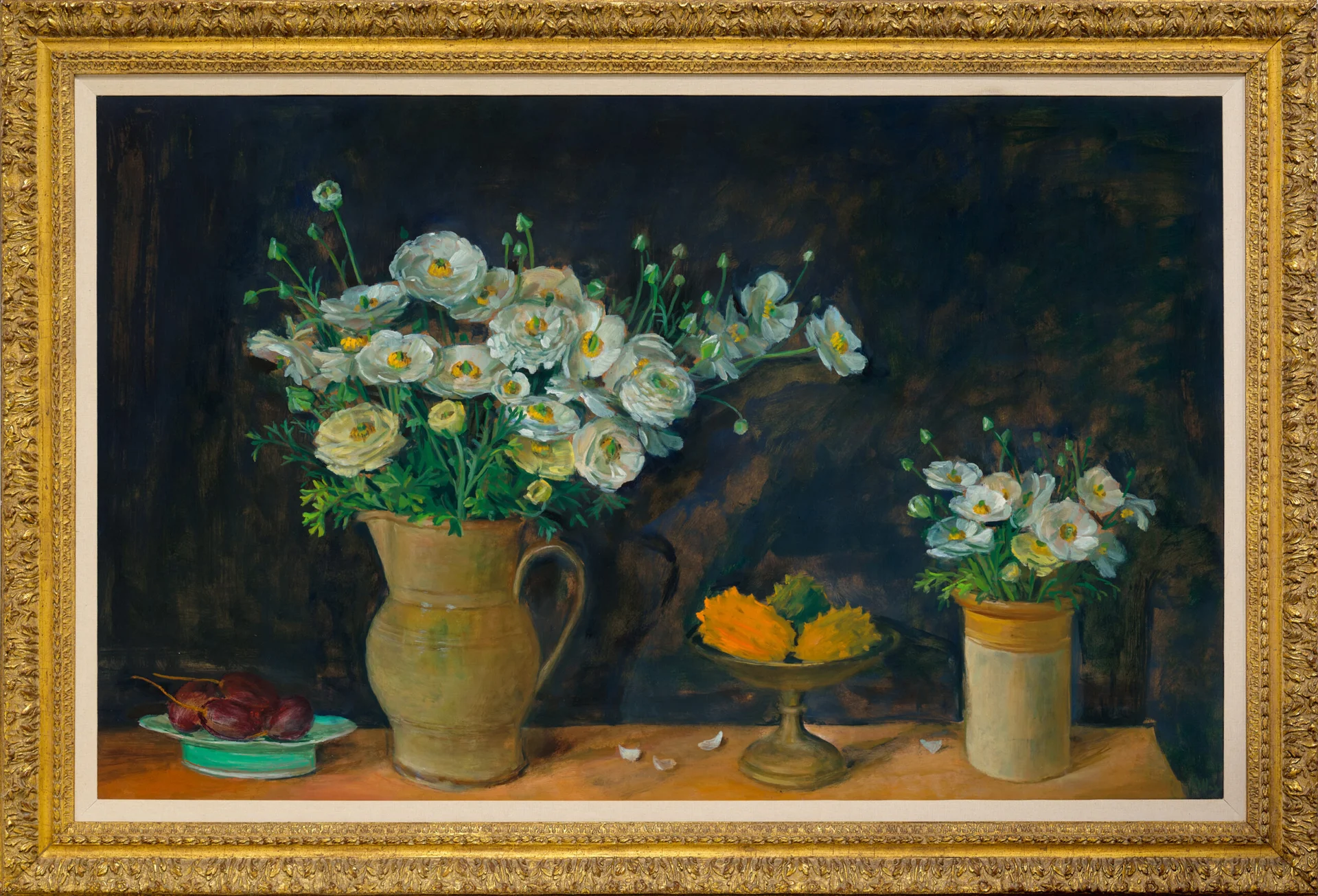
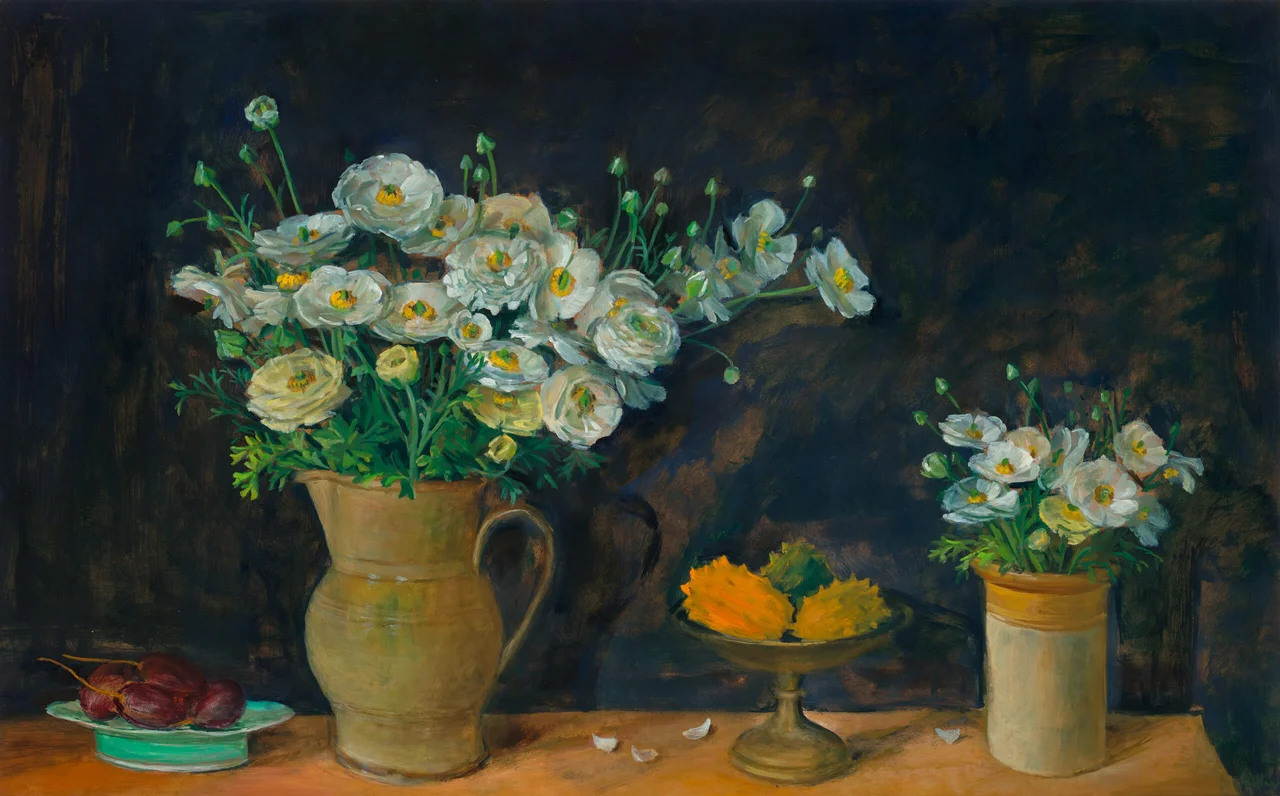
Ranunculus and fruit I, 1973
oil on composition board
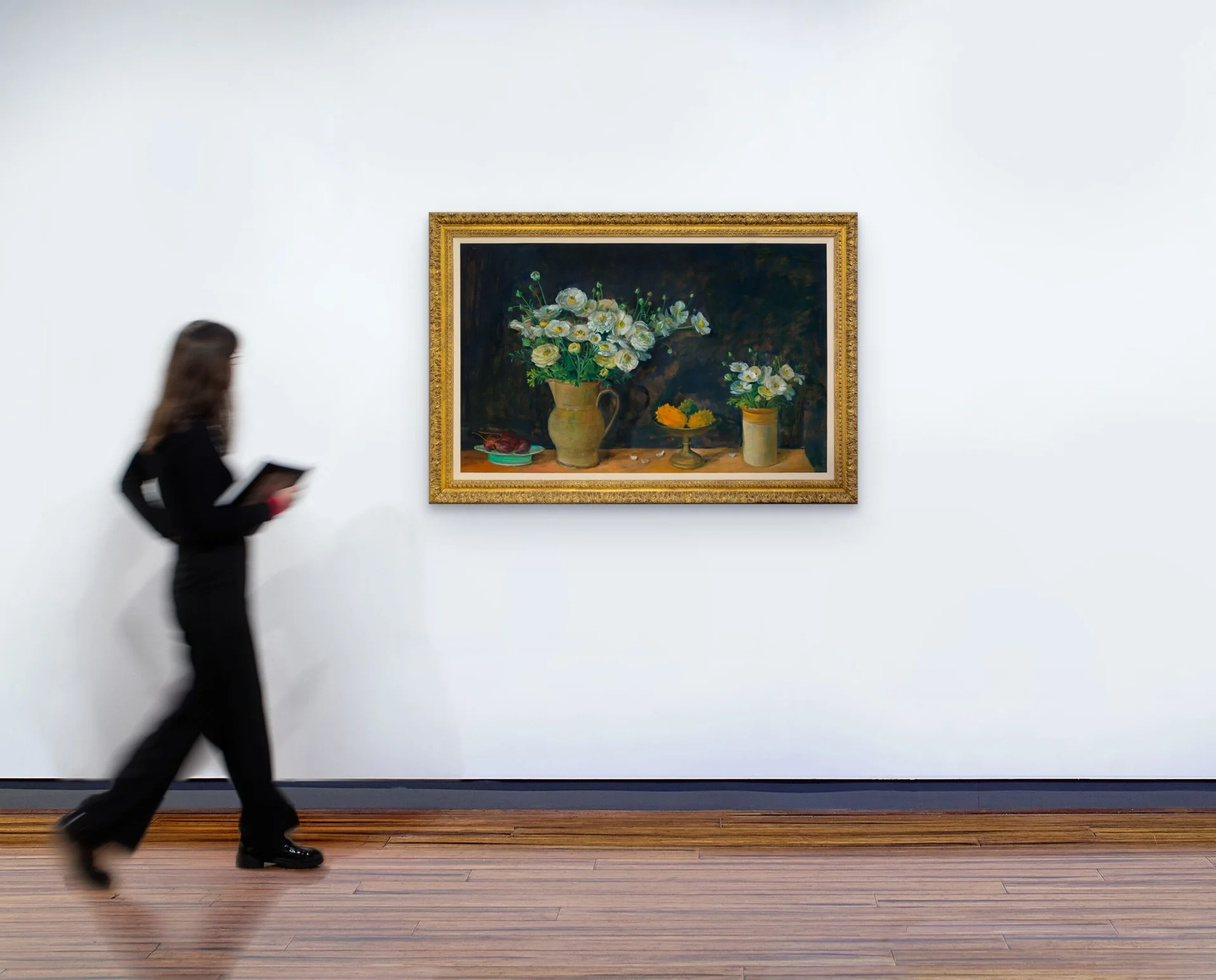
76.0 x 122.0 cm
signed lower right: Olley
bears inscription verso: Ranuculas [sic] and fruits I 1973
bears inscription on gallery label verso: Ranunculus and Fruits I 1973
Estimate:
$50,000 - $70,000
© Margaret Olley Trust and The Olley Project
lot details
bears inscription verso: Ranuculas [sic] and fruits I 1973
bears inscription on gallery label verso: Ranunculus and Fruits I 1973
Eva Breuer Art Dealer, Sydney
Ervin and Judy Katz, Sydney, acquired from the above
Christie’s, Melbourne, 6 May 2003, lot 21
Private collection, Canberra
Exhibited
Margaret Olley, Holdsworth Galleries, Sydney, 2 – 20 October 1973, cat. 23
The Art of Margaret Olley, S.H. Ervin Gallery, National Trust of Australia, Sydney, 3 August – 9 September 1990, and touring, cat. 25
Margaret Olley Retrospective, Art Gallery of New South Wales, Sydney, then touring to: Brisbane City Hall Art Gallery and Museum, Brisbane, Newcastle Region Art Gallery, Newcastle, 25 October 1996 – 8 June 1997, cat. 32 (label attached verso)
Literature
France, C., Margaret Olley, Craftsman House, Sydney, 1990, pl. 19, pp. 48, 99 (illus.)
Pearce, B., Margaret Olley, Craftsman House, Sydney, 1997, pp. 66 (illus.), 67 (illus. detail), back cover (illus.)
The Olley Project https://ehive.com/collections/5439/objects/466254/ranunculus–and–fruit–i (accessed July 2026)
‘…I can think of no other painter of the present time who orchestrates his or her themes with such richness as Margaret Olley. She is a symphonist among flower painters; a painter who calls upon the full resources of the modern palette to express her joy in the beauty of things.’1
A beloved personality of the Australian art world for more than six decades, Margaret Olley exerted an enduring influence not only as a remarkably talented artist, but as a nurturing mentor, inspirational muse and generous philanthropist. Awarded an Order of Australia in 1991 and later a Companion of the Order of Australia in 2006, Olley featured as the subject of two iconic Archibald-Prize winning portraits (by Dobell and Quilty respectively) and was honoured with more than ninety solo exhibitions during her lifetime, culminating in a major retrospective at the Art Gallery of New South Wales in 1997. Today her work is held in every major public collection in Australia, while the myriad contents of her Paddington studio have been immortalised in a permanent installation at the Tweed Regional Gallery in northern New South Wales, not far from where Olley was born. Bequeathing a legacy as bountiful as the subject matter of her paintings, indeed her achievements are difficult to overstate – and reach far beyond the irrepressible sense of joy her art still brings.
A striking example of the still-life scenes for which Olley remains celebrated, Ranunculus and fruits I, 1973 superbly encapsulates the way in which she repeatedly turned to the quotidian for inspiration, excavating her domestic setting to uncover the beauty inherent in everyday life. Such an impression of familiarity is aided by Olley’s selection of items here that are eminently unpretentious – dark purple plums resting on a turquoise blue-rimmed porcelain plate, a brass pedestal bowl holding a small arrangement of vivid horned melon fruit, and two stoneware vessels overflowing with freshly cut white ranunculus, their delicate blossoms set against a deep, atmospheric ground and balanced by the warm ochre tones of the tabletop. Notably, the restrained palette of whites, greens, ochres and oranges is enlivened by the brilliant yellow centres of the blooms that emerge with almost jewel-like luminosity against the dark ground, while the scattered petals upon the tabletop introduce a gentle sense of the transience of everyday life. For, notwithstanding the apparent randomness of her arrangements, underpinning such compositions was always the artist’s meticulous ‘orchestration’ of elements to create a harmonious, carefully balanced image – an aesthetic directly informed by her experience of the theatre in 1948 when she assisted with painting the sets for Sam Hughes’ productions of Shakespeare’s Pericles and Cocteau’s Orphée (designed by Jean Bellette and Sidney Nolan respectively).
Paying homage to the great European masters of her métier such as Vermeer, Bonnard, Matisse and Cézanne, thus Olley carefully choreographs the various components of her exquisite still lifes as though actors upon a stage – with objects both commonplace and beautiful shuffled this way and that until each vessel, blossom and piece of fruit assumes equal poetic significance. Leading the viewer’s eye through an intimate, deeply personal drama that resonates with the artist’s delight in her domestic surrounds, each composition reveals the very essence of her identity; as Barry Pearce elucidates, ‘…to live with a Margaret Olley painting is to experience the transfiguration of a passionate, highly focused personality into art. In her paintings, the space surrounding each bowl of fruit, each vase of flowers, and through which the eye traverses a cacophony of surfaces such as patterned carpets, modulated walls, and cluttered tabletops, resounds with her presence. These are reflections of the things she loves, and which embellished the centre of how she prefers her existence to be.’2
1. Gleeson, J., ‘Introduction’, Margaret Olley, The Johnstone Gallery, Brisbane, 1964, n. p.
2. Pearce, B., ‘Margaret Olley Retrospective’, State of the Arts, Sydney, August – November 1996, p. 5
VERONICA ANGELATOS