
Guy Grey-Smith
(1916 - 1981)
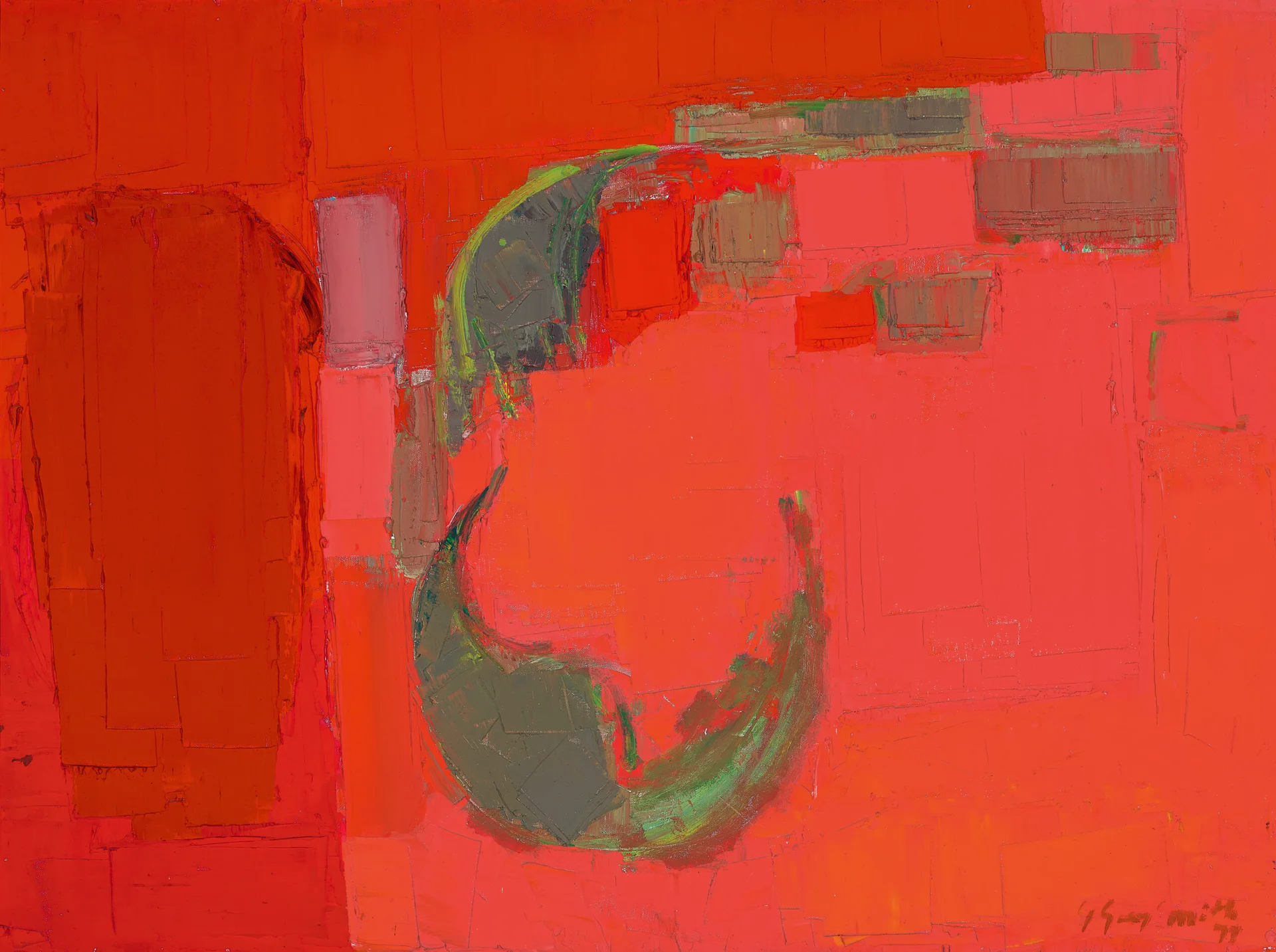
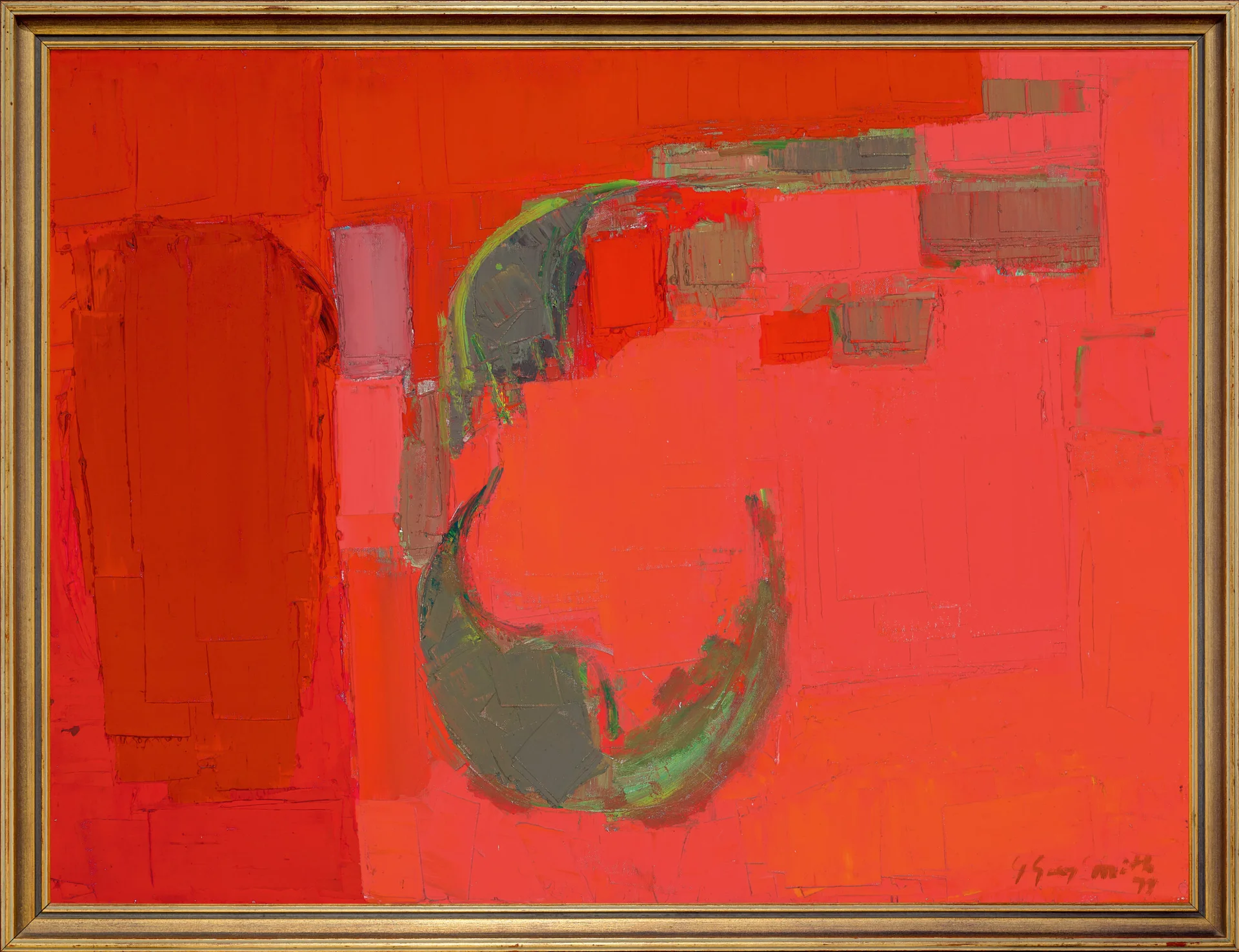
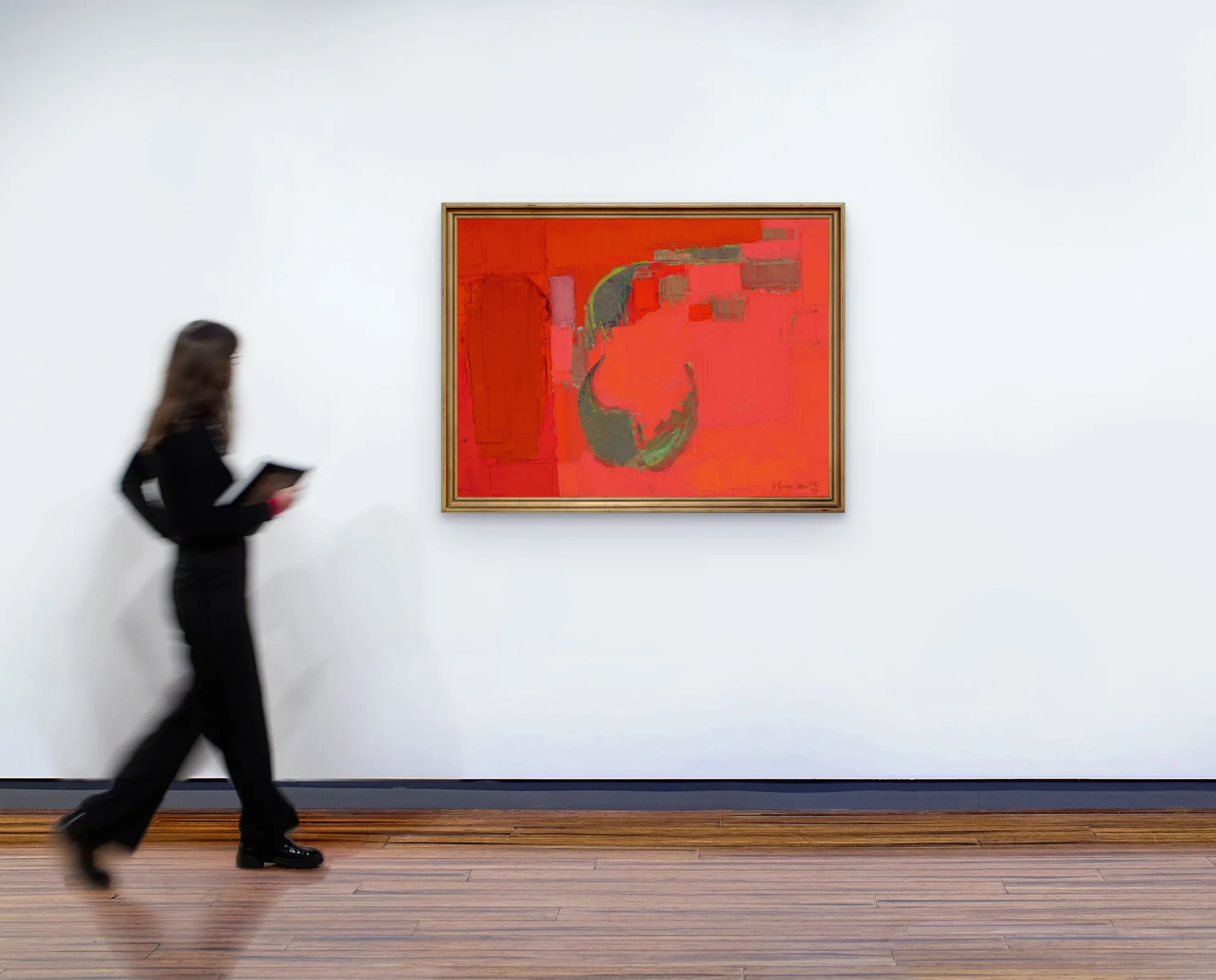
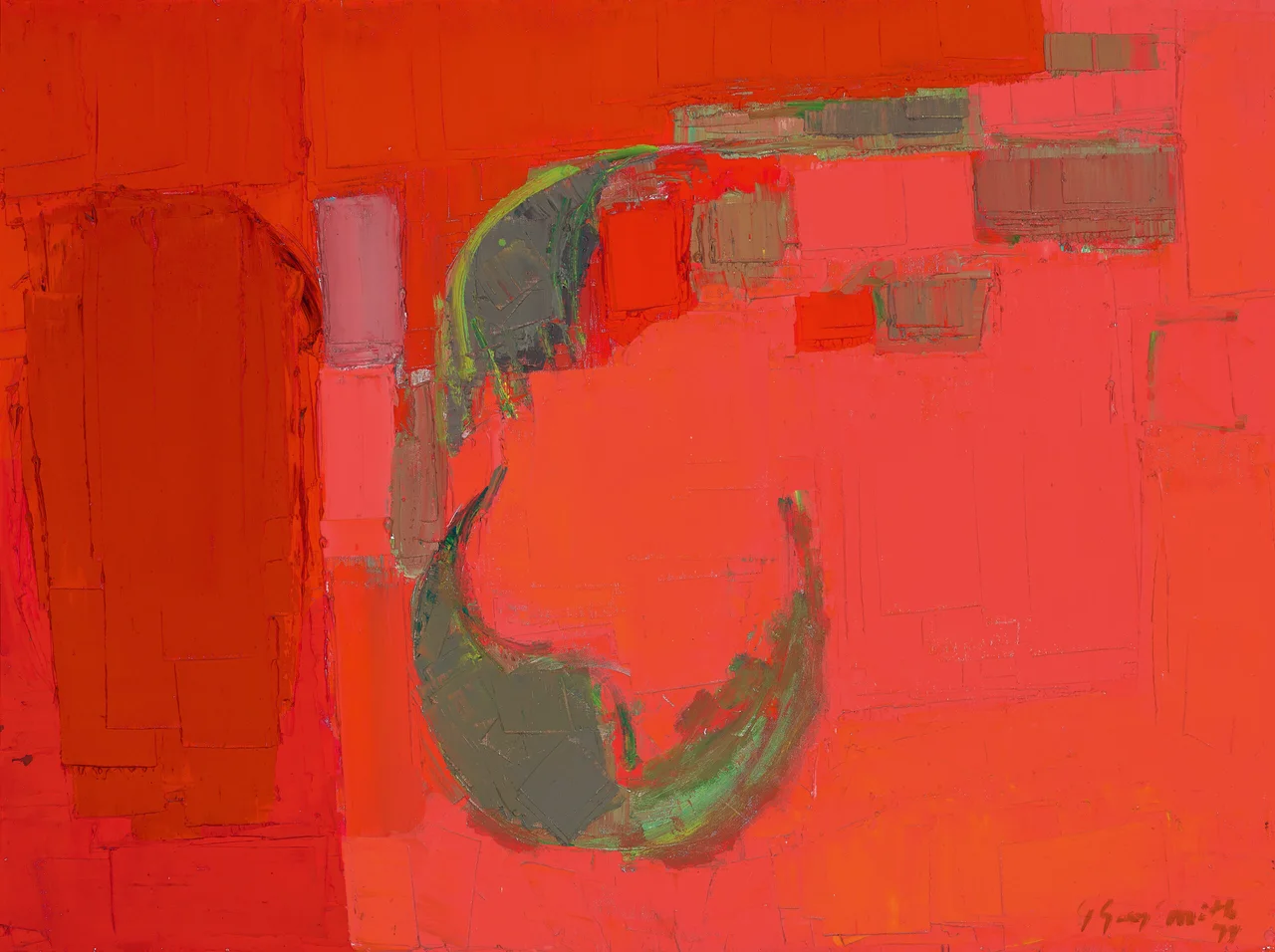
Inland, 1977
oil and beeswax emulsion on gauze on composition board
92.0 x 122.0 cm
signed and dated lower right: G Grey Smith / 77
signed and inscribed with title verso: GUY GREY–SMITH / “INLAND” / 10
bears inscription on gallery label verso: GUY GREY–SMITH / Inland / 1977
Estimate:
$50,000 - $70,000
lot details
signed and inscribed with title verso: GUY GREY–SMITH / “INLAND” / 10
bears inscription on gallery label verso: GUY GREY–SMITH / Inland / 1977
Gallery A, Sydney (label attached verso)
John Andrews, Sydney
Private collection, Canberra, acquired from the above in October 2001
Exhibited
Guy Grey–Smith, Gallery A, Sydney, 16 September – 7 October 1978, cat. 3
Literature
Gaynor, A., Guy Grey–Smith: Life Force, University of Western Australia, Perth, 2012, p. 266
Related Works
Woodlands, Cattle Country, 1977, oil and beeswax emulsion on gauze on composition board, 92.0 x 122.0 cm, private collection, formerly in the collection of Commercial Bank of Australia Ltd.
Morning light, 1978, oil and beeswax emulsion on gauze on composition board, 93.0 x 123.0 cm, Leeuwin Estate, Western Australia
Jasper Bay, 1978, oil and beeswax emulsion on gauze on composition board, 92.0 x 122.0 cm, private collection, formerly in the collection of Ann Lewis AO, Sydney
Guy Grey-Smith was a Royal Air Force pilot during World War Two until he was shot down over German lines in May 1940, suffering terrible injuries in the process. It was during his next four years as a prisoner of war that he began to study art. Many years later as a member of the Australia Council in the 1970s, he undertook numerous plane journeys between the eastern states and his home in the Perth hills, resulting in a renewed appreciation of his homeland when seen from the air. In 1975, as a result of an unexpected inheritance, his wife, artist Helen Grey-Smith, encouraged him to regain his pilot’s licence, which he did, aged 59, with flying colours. He then purchased an ‘ancient 150 Cessna’1 and began exploring the coastal and outback regions of Western Australia with the benefit of a lower height and, therefore, a more intimate gaze. The result was a grand sweep of landscape paintings that fully embraced these sensations. Inland, 1977, was one of these and was exhibited alongside such other notable works as Woodlands, Cattle Country, 1977, and Jasper Bay, 1978, at Ann Lewis’ renowned Gallery A in Sydney in 1978.
The landscape was Grey-Smith’s great muse. From the 1950s, during school holidays he initiated family excursions driving north to the Murchison in the cooler months, then to the forests and beaches of the south-west in summer. As the children grew older, these distances increased to include the Pilbara and Nullarbor. His paintings reveal a great sense of empathy with his subject and he never lost his sense of spiritual connection with the land, underscored by a humanist understanding as a self-described ‘socialist Christian’, as seen in such masterworks as Skull Springs country, 1966 (Art Gallery of Western Australia) and Pilbara country, 1980 (Janet Holmes à Court). In these paintings, he expressed the liberating freedom he felt in such wild and remote regions, but not one of heroic encounter; rather, it was ‘more attuned to the notion of ecce homo, the simple man.’2 Although Inland does not have a specified location, it is known that in 1977 Grey-Smith travelled huge distances between Mt Augustus (Burringurrah), 1,000 kilometres north of Perth, and Wyndham, the northernmost town in the Kimberley. Inland is a painting redolent with Grey-Smith’s favourite hues, predominantly cadmium red and monastral green, bulked up by his homemade – and highly toxic – beeswax emulsion. This was applied using trowels and scrapers, both building up and cutting back his slabs of pigment, to the point that the force of each fragment squeezing into its neighbour often reveals patches of underpaint, much like similar geological formations caused by tectonic forces.
The twelve-month lead-up to the Gallery A exhibition was hectic, with Grey-Smith having a solo show in Adelaide which received positive reviews, and participating in nine group exhibitions, including a survey alongside Fred Williams, Brett Whiteley, Arthur Boyd and Sidney Nolan which toured Indonesia.3 He also won the prestigious Georges Invitation Art Prize in May 1978. The effort was worth it, with one newspaper review extolling his paintings’ ‘monumental interlocking geometric forms, [which] nevertheless seem more lyrically interpreted, more dramatically conceived, and more free [sic.] from formalist restraints than ever before.’4
1. Guy Grey-Smith, cited in McGrath, S., ‘Trees company’, The Australian, 5 October 1978, p. 8
2. Gaynor, A., Guy Grey-Smith: Life Force, University of Western Australia Press, Perth, 2012, p. 138
3. Pemandangan alam dan Khayal (Contemporary Australian Art to Indonesia – Landscape and Image), Bandung, 27 July – 8 August 1978; Yogyakarta, 19 August – 22 August; and Jakarta, 29 August – 10 September.
4. McGrath, op. cit.
ANDREW GAYNOR