




Nawurapu Wungugmurra
(born 1952)
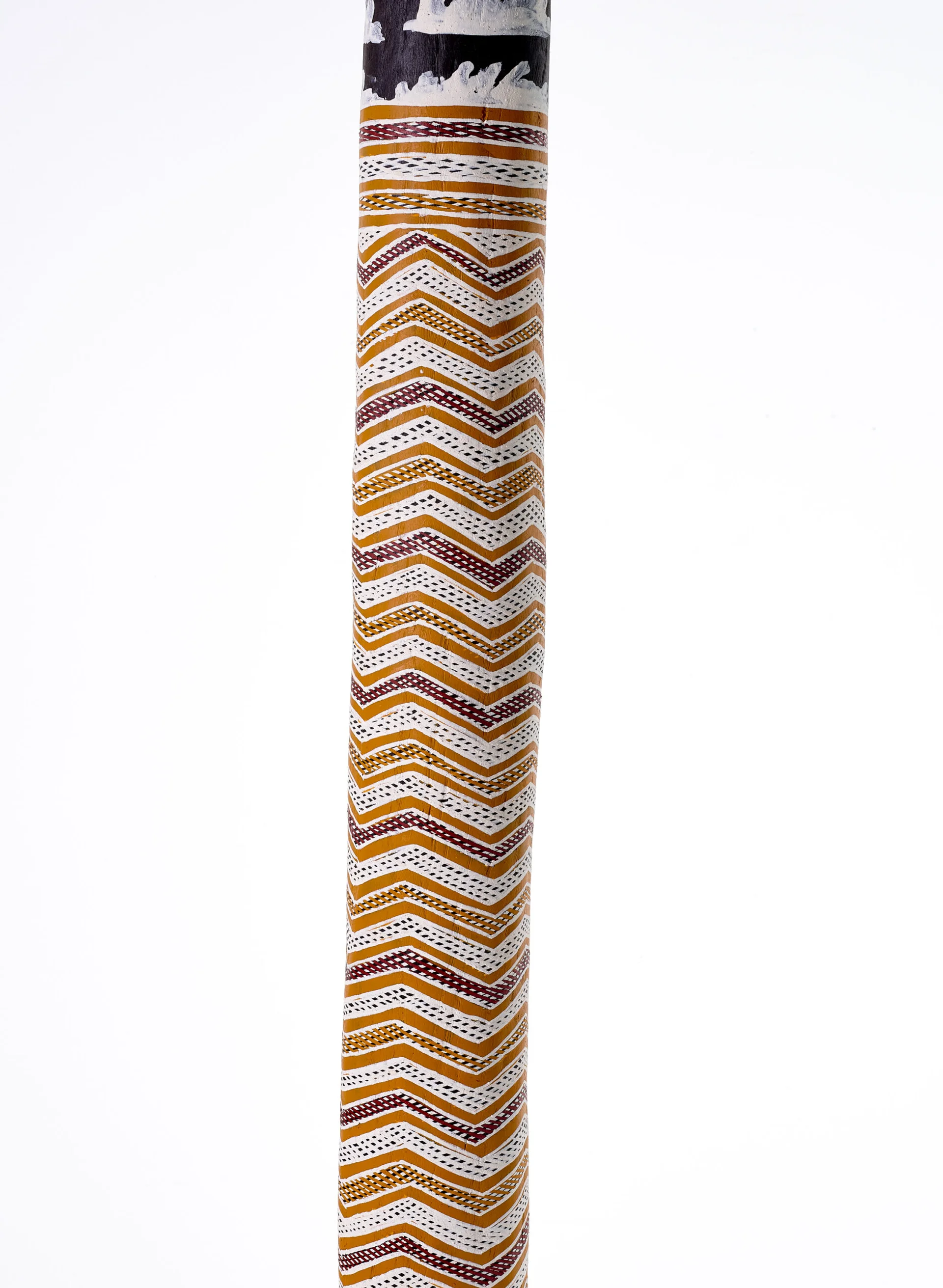
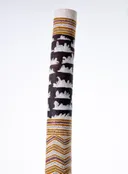
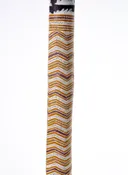
Garraparra (larrikitj), 2008
natural earth pigments on hollowed log
187.0 cm height
Estimate:
$3,000 - $4,000
Sold:
$11,045 (inc. BP)
© Nawurapu Wunuŋmurra
lot details
Buku-Larrŋgay Mulka Centre, Yirrkala, Northern Territory (cat. 2985G)
Suzanne O’Connell Gallery, Brisbane
Private collection, Canberra, acquired from the above in 2009
This work is accompanied by a certificate of authenticity from Buku-Larrŋgay Mulka Centre which states in part:
‘The beautiful rendition of the sea at Garraparra.
Garraparra is a coastal headland and bay area within Blue Mud Bay. It marks the spot of a sacred burial area for the Dhalwanu clan and a site where dispute was formally settled by Makarrata (a trial of ordeal by spear which settled serious grievance and sealed the peace forever).
During the times after the ‘first mornings’ ancestral hunters left the shores of Garraparra in their canoe towards the horizon hunting for turtle. Sacred songs and dance narrate the heroic adventures of these two men as they passed sacred areas, rocks and saw ancestral totems on their way. Their hunting came to grief, with the canoe capsising and the hunters being drowned. The bodies washed back to the shores of Garraparra with the currents and the tides, as the Waŋupini followed with its rain and wind. Their canoe with paddle and totems queen fish Makani and long tom Minyga and turtle Garun are all referred to in the songs and landscape.
Makarrata, the ritual throwing of spears at a miscreant of Yolŋu law took place here. At Garraparra sacred trees held these barbed spears whilst not in use.
Garraparra has been rendered by the wavy design for Yirritja saltwater in Blue Mud Bay called Muŋurru. The Muŋurru is deep water that has many states and connects with the sacred waters coming from the land estates by currents and tidal action. Other clans of Blue Mud Bay that share similar mythology of the Yiŋapuŋapu, i.e. the Madarrpa and Mangalili also paint the deeper saltwater – the Muŋurru as such. This sacred design shows the water at Djalma Bay chopped up by the blustery South Easterlies of the early Dry season.’