

Judy Napangardi Watson
(c.1925 - 2016)
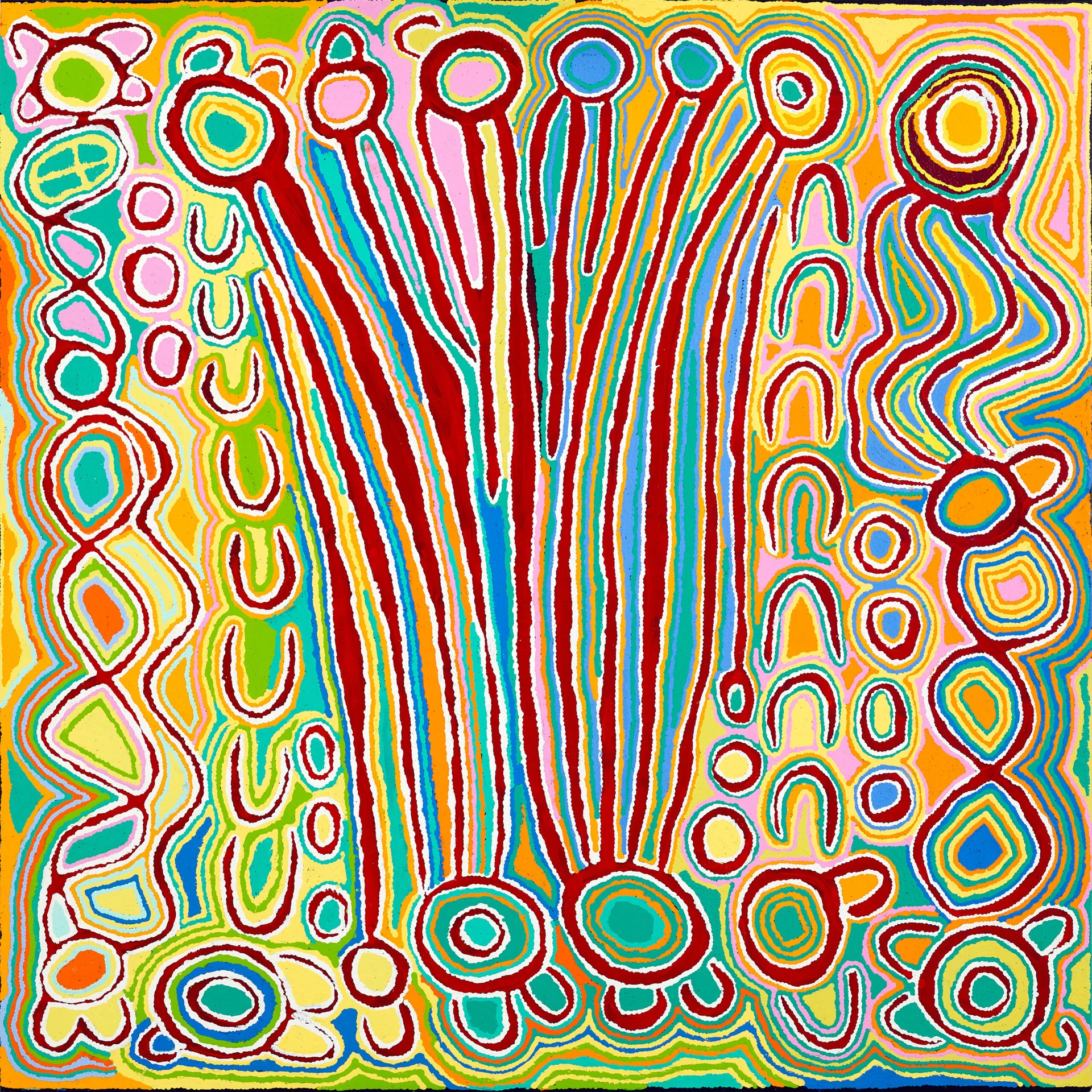
MINA MINA JUKURRPA, 2015
synthetic polymer paint on canvas
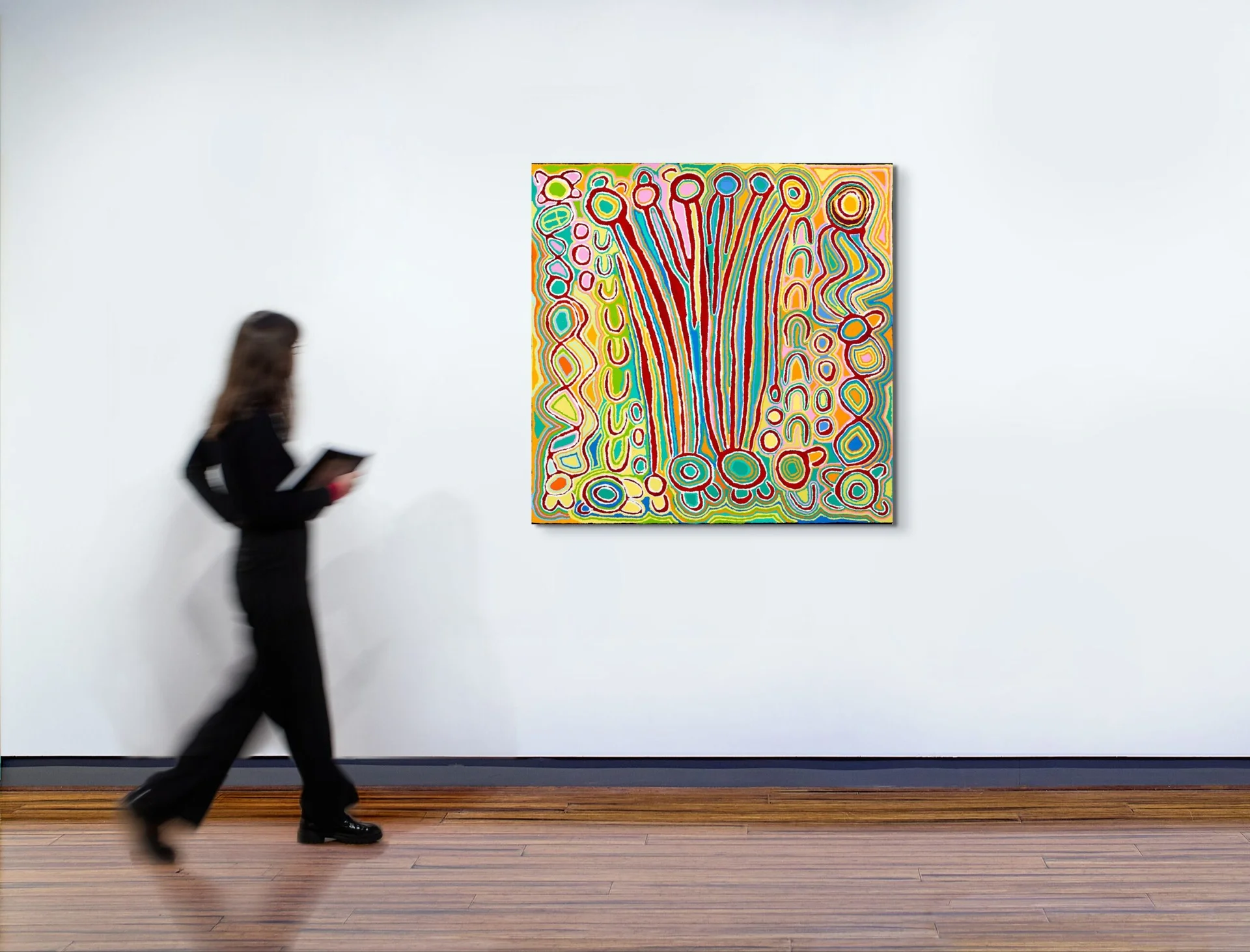
122.0 x 121.0 cm
bears inscription verso: artist’s name, size and Warlukurlangu Artists cat. 2095/15
Estimate:
$5,000 - $7,000
© Judy Napangardi Watson/Copyright Agency 2023
lot details
Warlukurlangu Artists, Yuendumu, Northern Territory
Private collection, Melbourne
This work is accompanied by a certificate of authenticity from Warlukurlangu Artists which states:
‘This ‘Jukurrpa’ (Dreaming) comes from Mina Mina, a very Important women’s Dreaming site far to the west of Yuendumu near Lake Mackay and the WA border. The ‘klrda’ (owners) of this Dreaming are Napangardi/Napanangka women and Japangardl/Japanangka men; the area is sacred to Napangardi and Napanangka women. There are a number of ‘mulju’ (water soakages) and a ‘malurl’ (clay pan) at Mina Mina.
In the Dreamtlme, ancestral women danced at Mina Mina and ‘karlangu’ (digging sticks) rose up out of the ground. The women collected the digging sticks and then travelled on to the east, dancing, digging for bush tucker, collecting ‘ngalyipl’ (snake vine [Tinospora smllaclna]), and creating many places as they went. ‘Ngalylpi’ Is a rope-like creeper that grows up the trunks and limbs of trees, Including ‘kurrkara’ (desert oak [Allocasuarlna decalsneana]). It is used as a ceremonial wrap and as a strap to carry ‘parraja’ (coolamons) and ‘ngaml’ (water carriers). ‘Ngalylpi’ is also used to tie around the forehead to cure headaches, and to bind cuts.
The women stopped at Karntakurlangu, Janyinki, Parapurnta, Kimayi and Munyuparntiparnti, sites spanning from the west to the east of Yuendumu. When they stopped, the women dug for bush foods like ‘jintiparnta [desert] truffle [Elderia arenivaga]. The Dreaming track eventually took them far beyond Warlpiri country. The track passes through Coniston in Anmatyerre country to the east, and then went on to Alcoota and Aieron far to the northeast of Yuendumu and eventually on into Queensland.
In Warlpiri paintings, traditional iconography is used to represent the Jukurrpa and other elements. In many paintings of this Jukurrpa, sinuous lines are used to represent the ‘ngalyipi’ (snake vine), concentric circles are often used to represent the ‘jintiparnta [dessert truffles] that the women have collected, while straight lines can be used to depict the ‘karlangu’ (digging sticks).’