
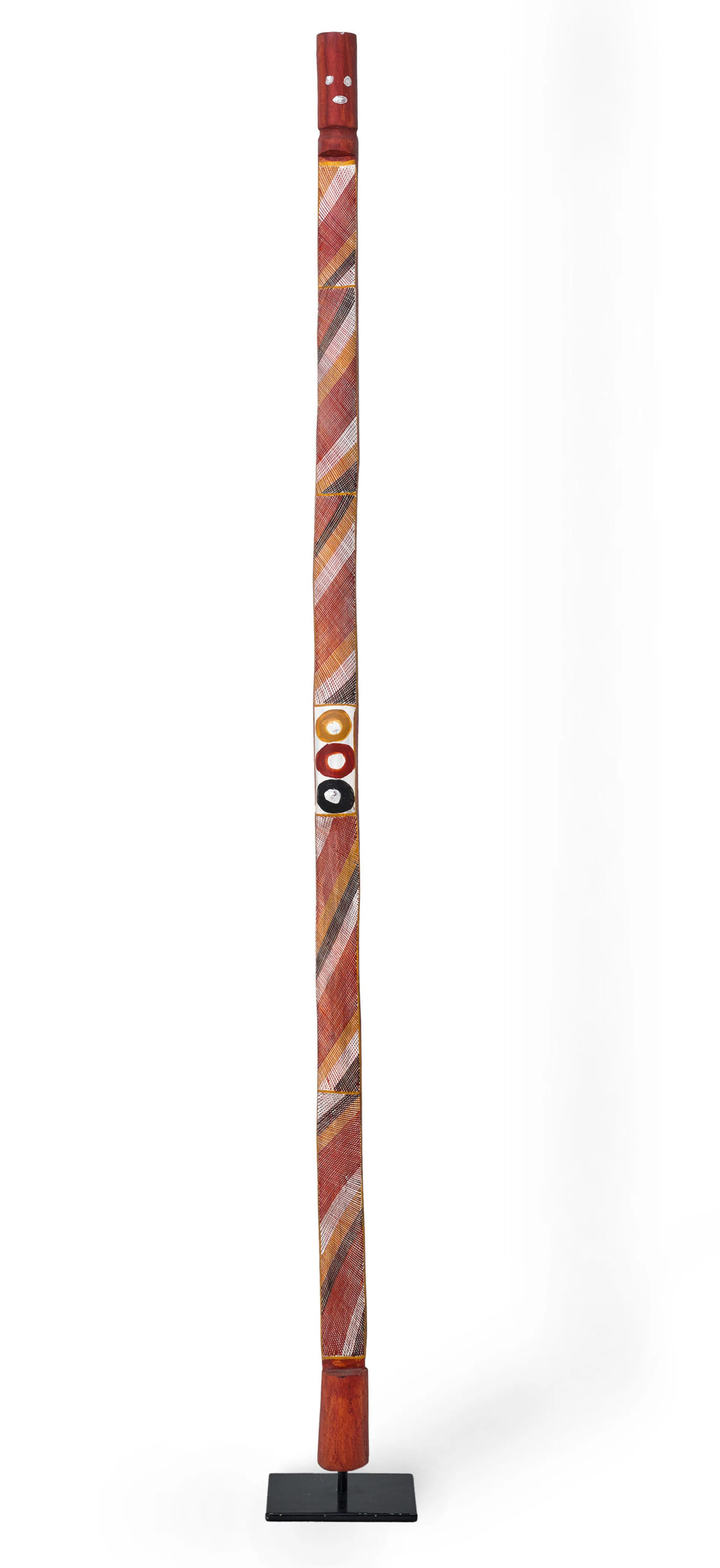
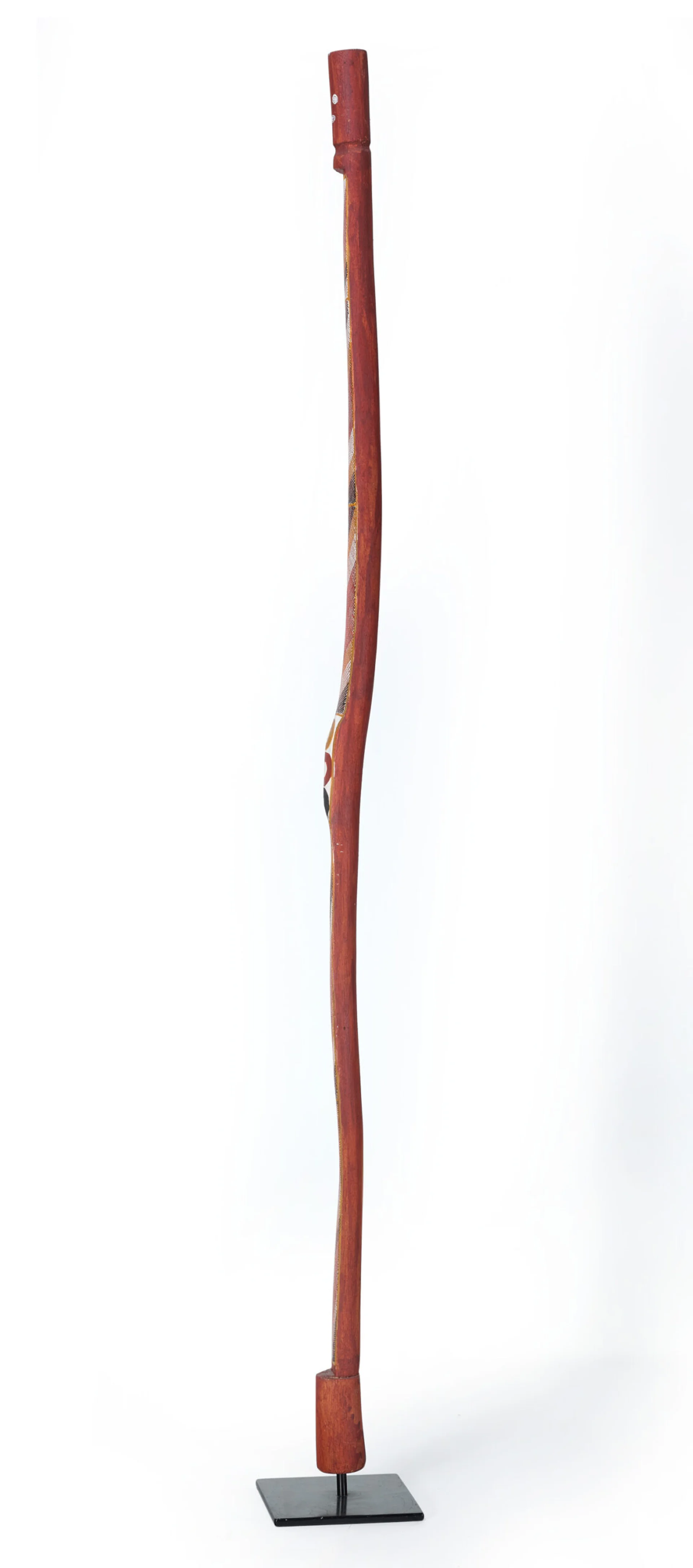
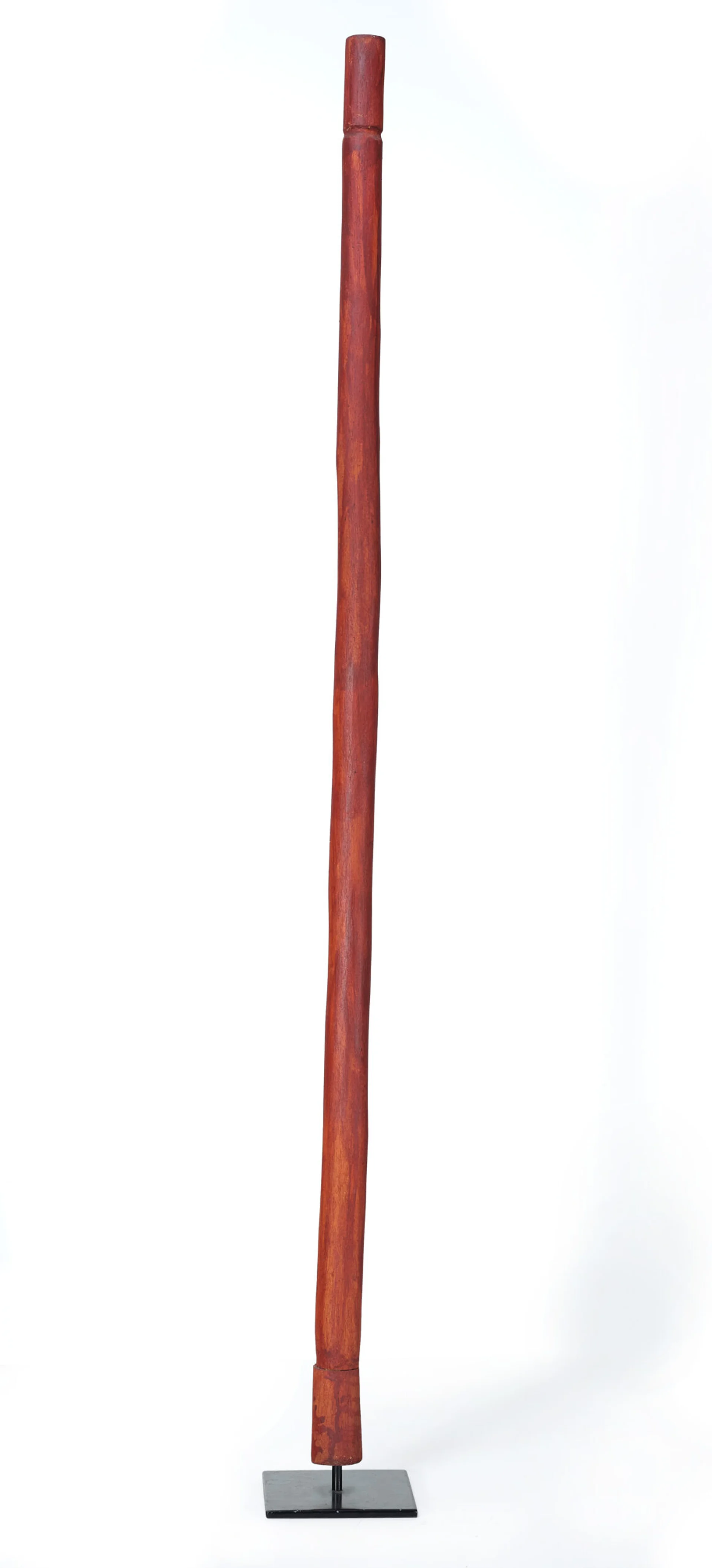
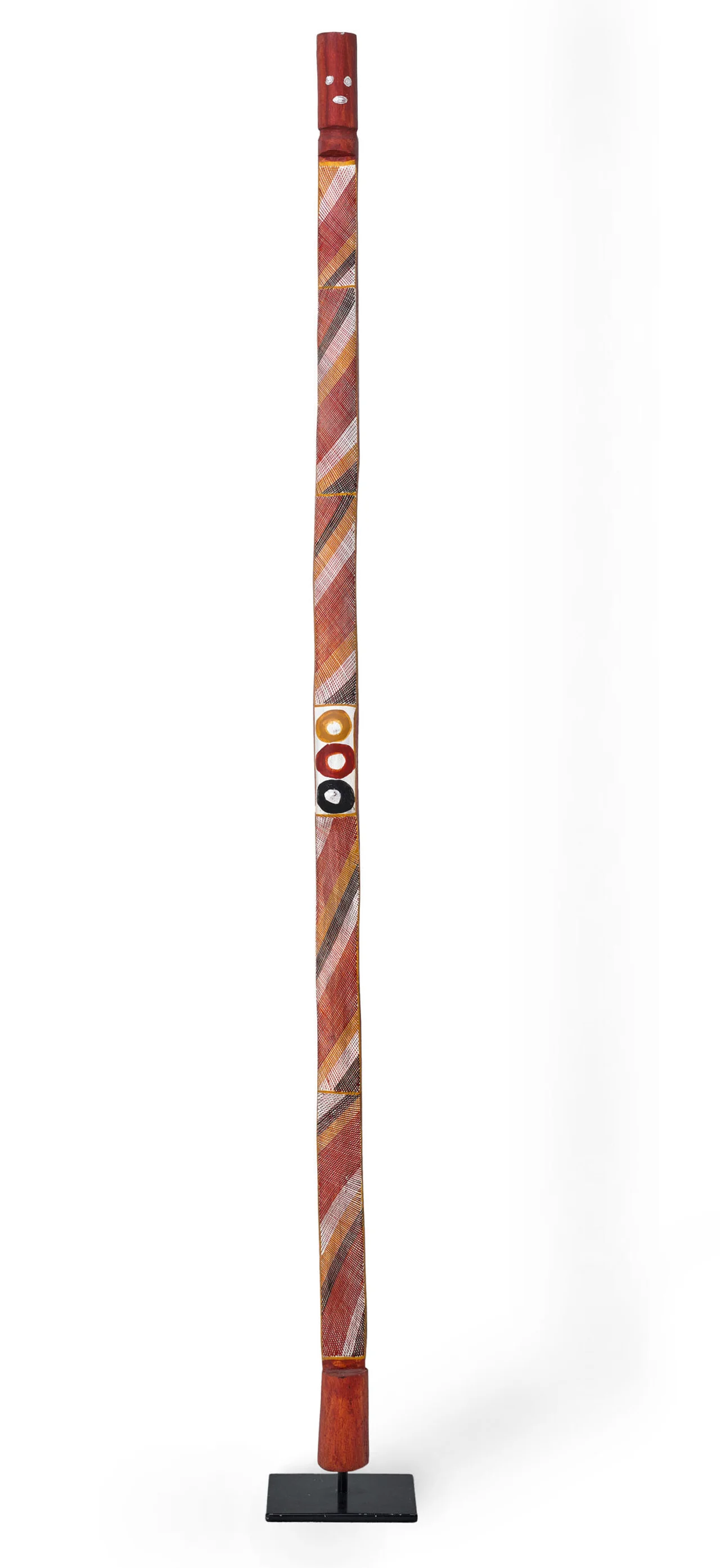
Bulanjdjan Ngalkardbam (Kay Lindjuwanga)
(1956 - 2024)
BULUWANA AT DILEBANG, 2003
natural eath pigments and PVA fixture on carved hardwood (Kurrajong (brachychiton diversifolius))
170.0 cm (height)
Estimate:
$1,500 - $2,500
Sold:
$1,841 (inc. BP)
© Kay Lindjuwanga/Copyright Agency 2023
lot details
Maningrida Arts and Culture, Maningrida, Northern Territory (cat. 4502-03)
Collection of James Smeaton, Melbourne, acquired from the above
This work is accompanied by a certificate of authenticity from Maningrida Arts and Culture which states:
'The Kuninjku people of Arnhem Land tell of a time when their ancestors suffered a terrible drought. People living in the rocky outlier region near the middle Mann River dug wells to get water until these too dried up. Then they obtained water by cutting the trunks of Melaleuca trees called djidjdjerok which store brackish water inside. When these trees were exhausted, people were surviving only on wild honey. Eventually people died of thirst. The bones of these people are said to be those found in the caves of the escarpment country of Western Arnhem Land in the Mann River district.
In the ancestral time of creation was a great drought. During this time Buluwana and her family camped at Ngandarrayo on Kurulk clan land. They were weak from thirst and close to death. The malevolent gigantic form of the Deaf Adder snake confronted the group. Buluwana attempted to run away with the rest of her family but was crushed and turned to stone. Today an arrangement of rocks standing in the ground remains as Buluwana 's present day form. Only her head protrudes as a prismic standing stone, the rest of her body is under the ground. Other human remains lying on rock ledges are said to be the remains of other early ancestors.'