
Albert Namatjira
(1902 - 1959)
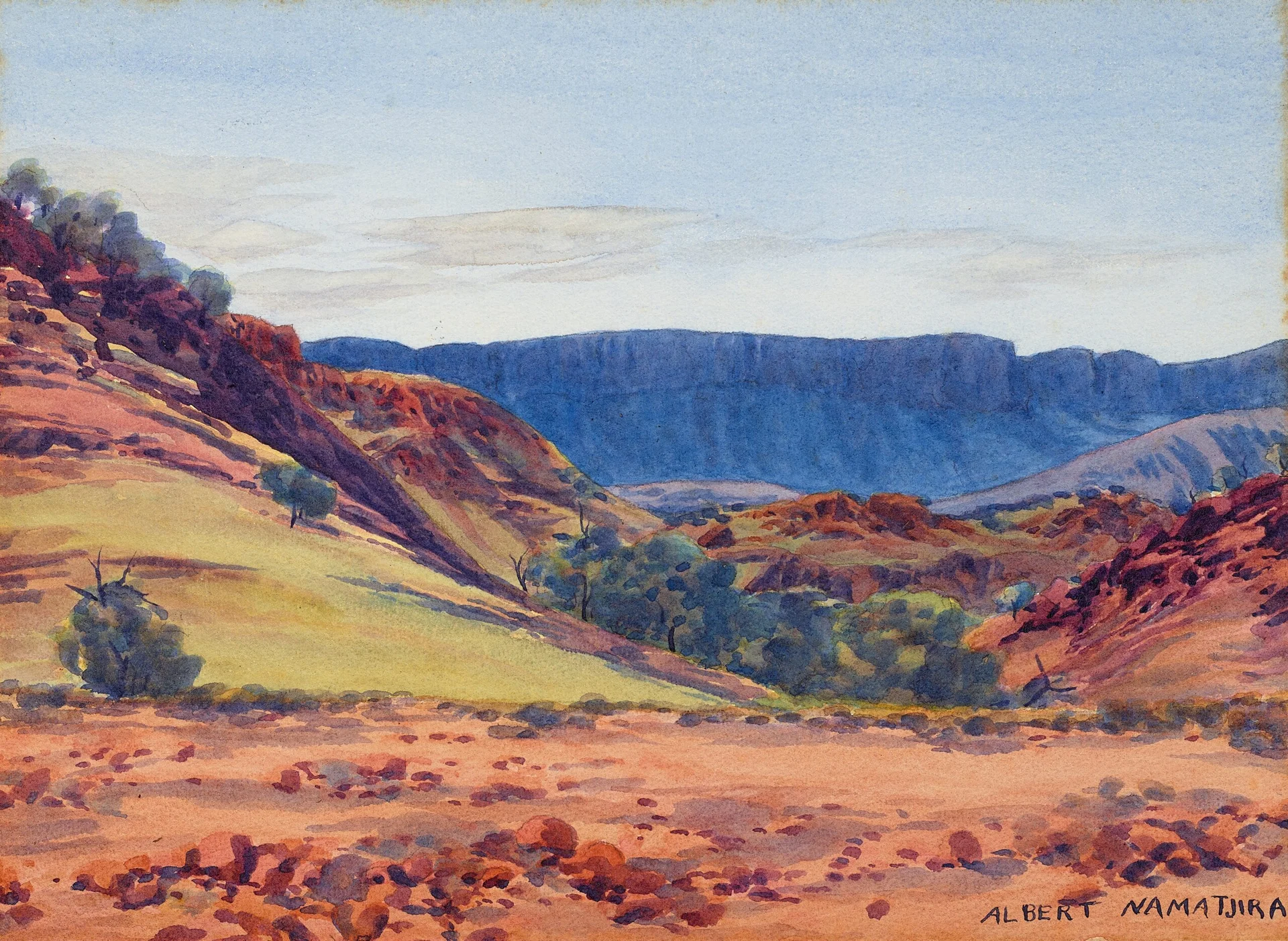
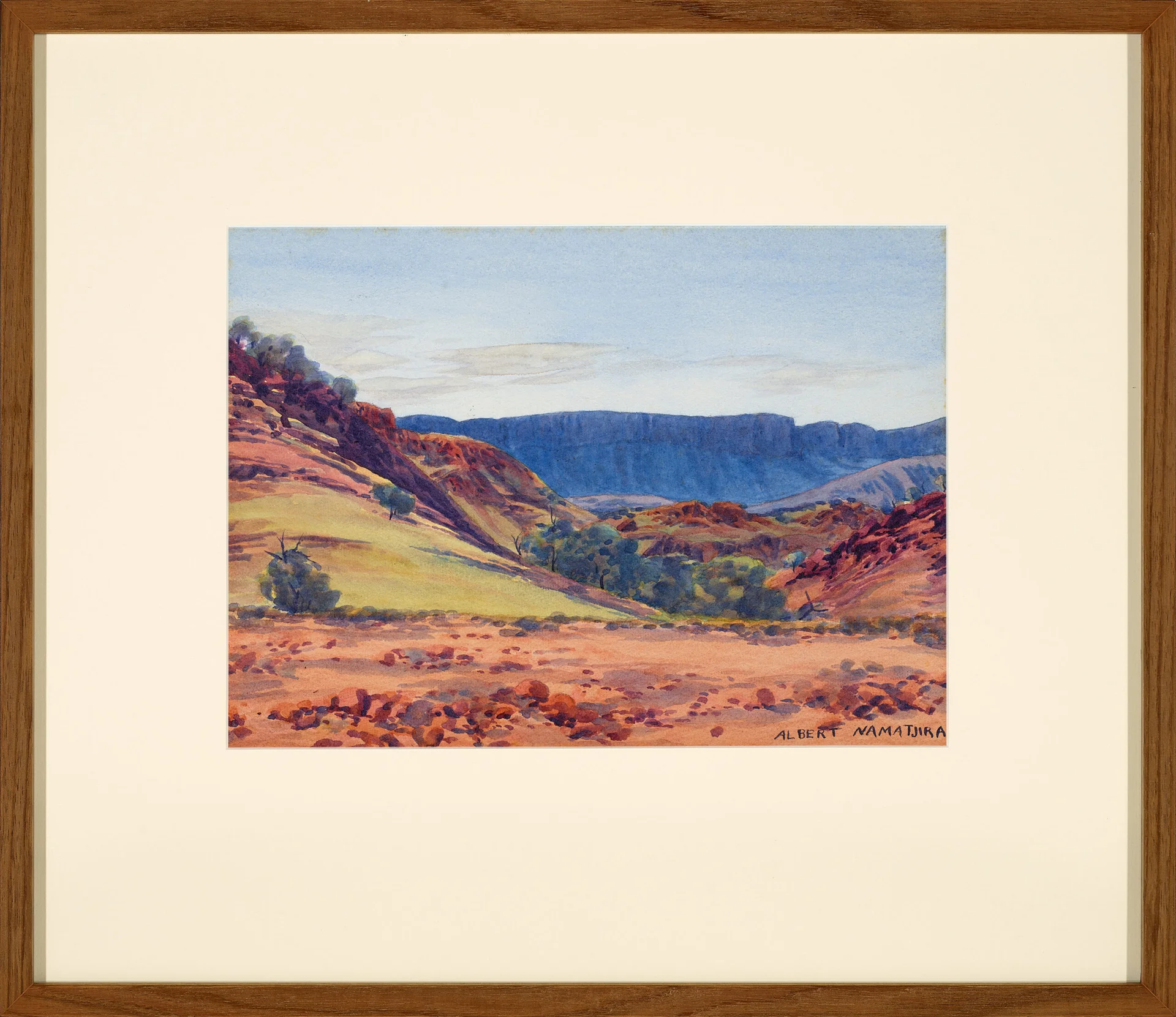
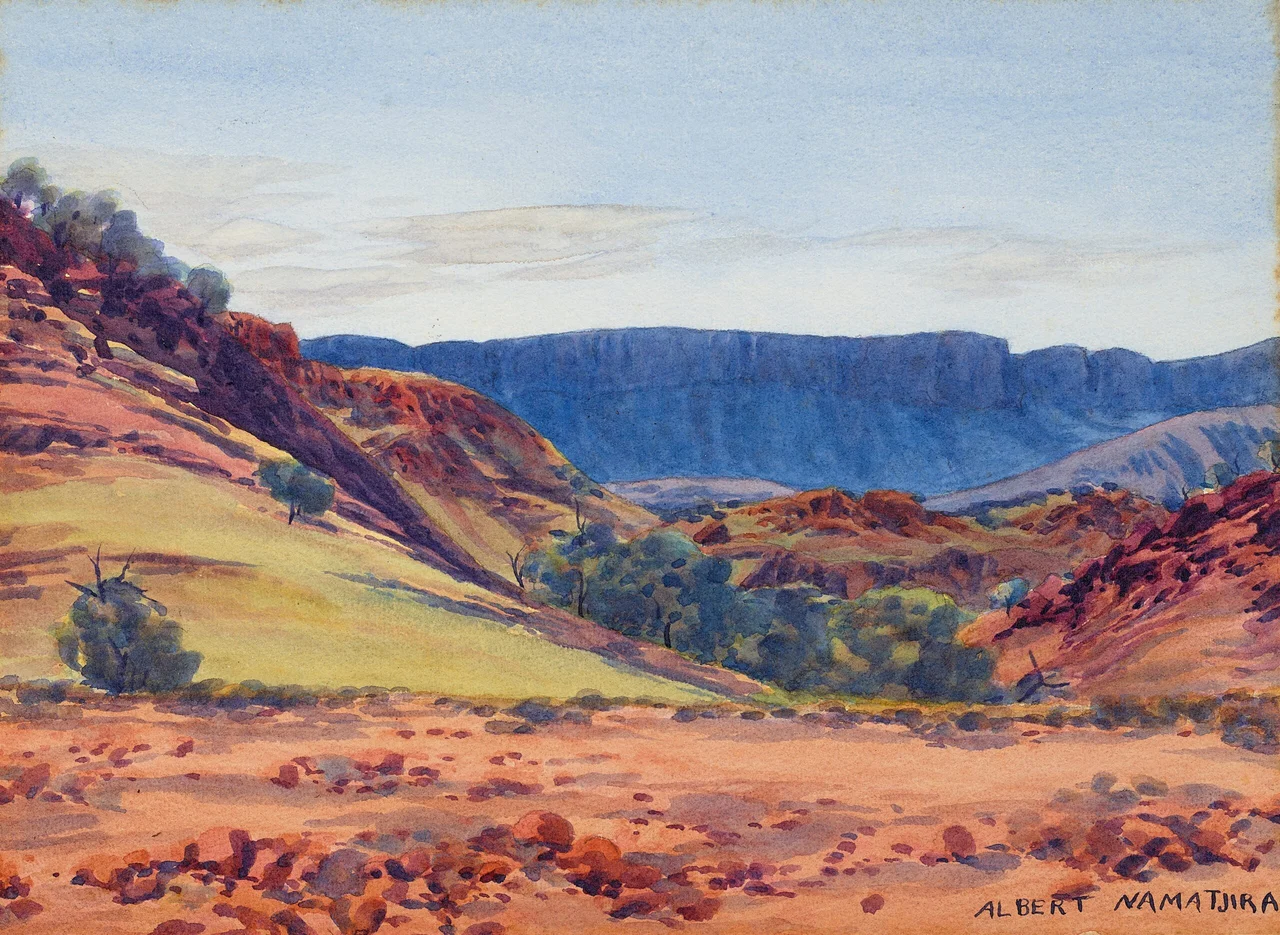
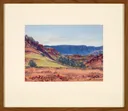
The Ormiston Range: late afternoon, c.1955
watercolour and gouache on paper
26.5 x 36.0 cm (image)
28.5 x 38.0 cm (sheet)
signed lower right: ALBERT NAMATJIRA
bears inscription in lower right margin: 2279 / 1
bears inscription on typed gallery label verso: ALBERT NAMATJIRA / "THE ORMISTON RANGE: LATE AFTERNOON"
Estimate:
$25,000 - $35,000
© Namatjira Legacy Trust/Copyright Agency 2026
lot details
28.5 x 38.0 cm (sheet)
bears inscription in lower right margin: 2279 / 1
bears inscription on typed gallery label verso: ALBERT NAMATJIRA / "THE ORMISTON RANGE: LATE AFTERNOON"
Artlovers Gallery, Sydney (label attached verso)
Private collection, Minnesota, United States of America
From the creation of his earliest watercolours in the 1930s, Albert Namatjira helped lay the foundation for the emergence of the Papunya movement forty years later and the flourishing of First Nations art that would follow. A household name by 1950, Namatjira’s evocative landscapes of inland Australia were fundamental to how Australians viewed their island home.
Painted in the mid-1950s and located on the northern edge of the West MacDonnell Ranges, north-east of Mount Zeil, The Ormiston Range: late afternoon, c.1950 observes the distant ranges that loom behind Kwartetwerne (Ormiston Gorge). Atypical in that the viewpoint is not framed by a gum tree or rocky outcrop located in the foreground, instead presenting a more open horizontal experience of the landscape, the composition is nevertheless carefully controlled by the artist, who directs the viewer to the distant rise of the Ormiston Range – its escarpment saturated with the deep blue shadows of late afternoon – via the placement of intervening slopes in the middle distance that rise on either side of the gorge. Namatjira’s familiarity with his Country is evident in these distant views, ‘where peaks and monoliths provide a rich range of possibilities and responses that arise from constantly re-engaging with the same subject.’1 They also resonate with important personal symbolism for the artist as statements of belonging – as coded expressions embodying the memory and knowledge of traditional ancestral sites, of his totemic places. Landscape artist Lloyd Rees acknowledged this duality when he observed, ‘I find in his [Namatjira’s] work a marvellous sense of distance and of space. His eye can look so far away and seem to know what’s there.’2
‘Namatjira’s dramatic entry into the Australian art world was both inspired and inspiring. He inspired his own and subsequent generations of Aboriginal people and artists across Australia. In skilfully adopting the methods and materials of Western landscape painting he challenged the relegation of Aboriginal art to the realm of archaeology and ethnography.’3 Namatjira became the most prominent Aboriginal Australian of his era and, together with his wife Rubina, was granted significant citizenship rights in 1957, a decade before the landmark 1967 referendum.
1. French, A., Seeing the Centre: The Art of Albert Namatjira 1902 – 1959, National Gallery of Australia, Canberra, 2002, p. 96
2. ibid, p.97
3. Watson, K., ‘Poetic Justice: an overview of Indigenous Art’, in Perkins, H., One Sun, One Moon: Aboriginal Art in Australia, Art Gallery of New South Wales, Sydney, 2007, p. 20
CRISPIN GUTTERIDGE