
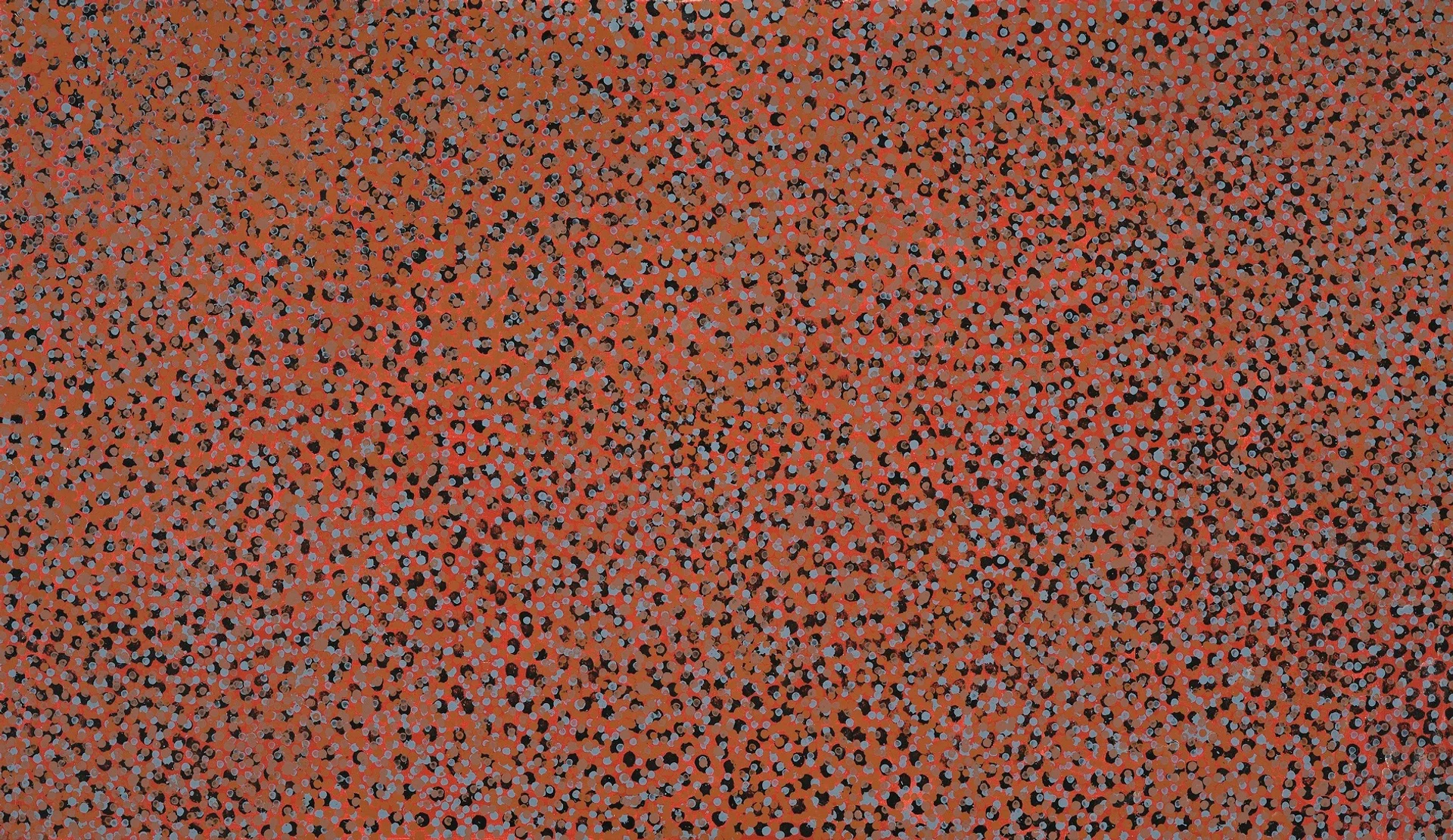


Emily Kam Kngwarreye
(c.1910 - 1996)
MERNE NDORKWA (WILD PLUM), 1991
synthetic polymer paint on linen
bears inscription verso: artist’s name and Delmore Gallery cat. 1Z06
122.0 x 210.5 cm
Estimate:
$40,000 - $60,000
Sold:
$36,600 (inc. BP)
© Emily Kam Kngwarreye/Copyright Agency 2019
lot details
bears inscription verso: artist’s name and Delmore Gallery cat. 1Z06
Delmore Gallery, Alice Springs
Private collection, Northern Territory
Shapiro Auctioneers, Sydney, 8 May 2002, lot 293
Private collection, United States of America
Related Works
Untitled, 1990, synthetic polymer paint on canvas, 211.0 x 121.8 cm, illus. in Neale, M. (ed.), Utopia: The Genius of Emily Kame Kngwarreye, National Museum of Australia Press, 2008, cat. D-15, p. 127
This work represents the country of the mythological emu in the vicinity of the artist’s country called Alalgura. Emily has custodial responsibility for various bush tucker species, all of which are preferred by the emu. The artist’s ceremonial activities, called Awelye, are based on the belief that she is helping to nurture or ‘grow up’ her country’s food sources.
A successful summer rain season links to her belief that her ceremonial power secures the continuance of the desert life cycles. Ceremony also teaches young initiates the example of the male emu bird that takes on a large part of caring for its chicks, guiding them on what seeds, flowers and grasses can be eaten, where they can be found, and how far they can wander from the soakage at Alalgura.
This work was painted in anticipation of summer rains to the north-east of Alice Springs. The growth to follow was to be incredibly thick and lush, thus making conditions ideal for a full crop of Ndorkwa, a wild plum. The colours in this work depict the various stages of ripeness of this fruit. When it is blue/purple, it is ready to eat, and those of different shades of red, are not. The plum does not fruit annually. Instead, it simply responds to rain, which, in this country, is unreliable.