


Barney Wangin
(1939 - 2012)
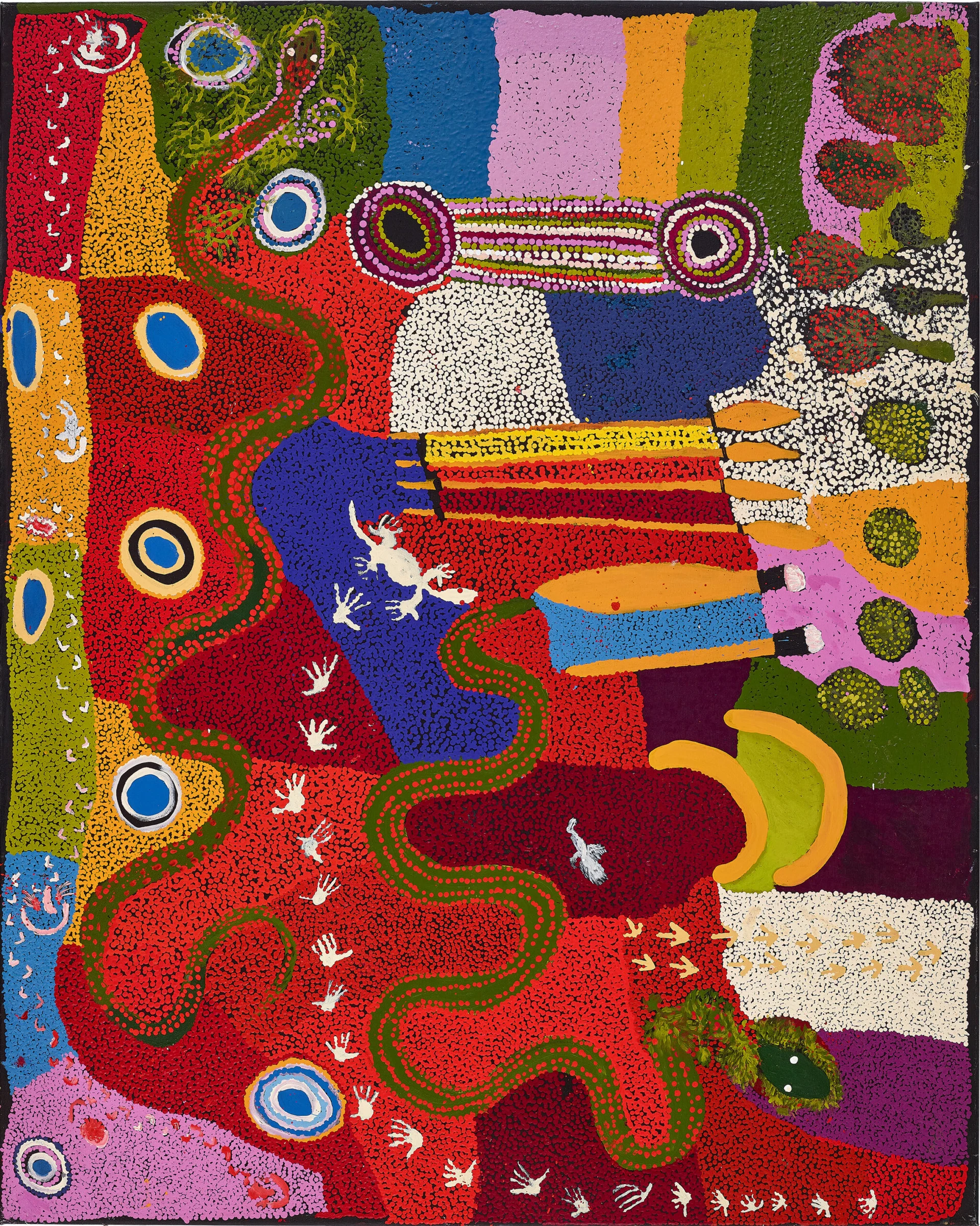
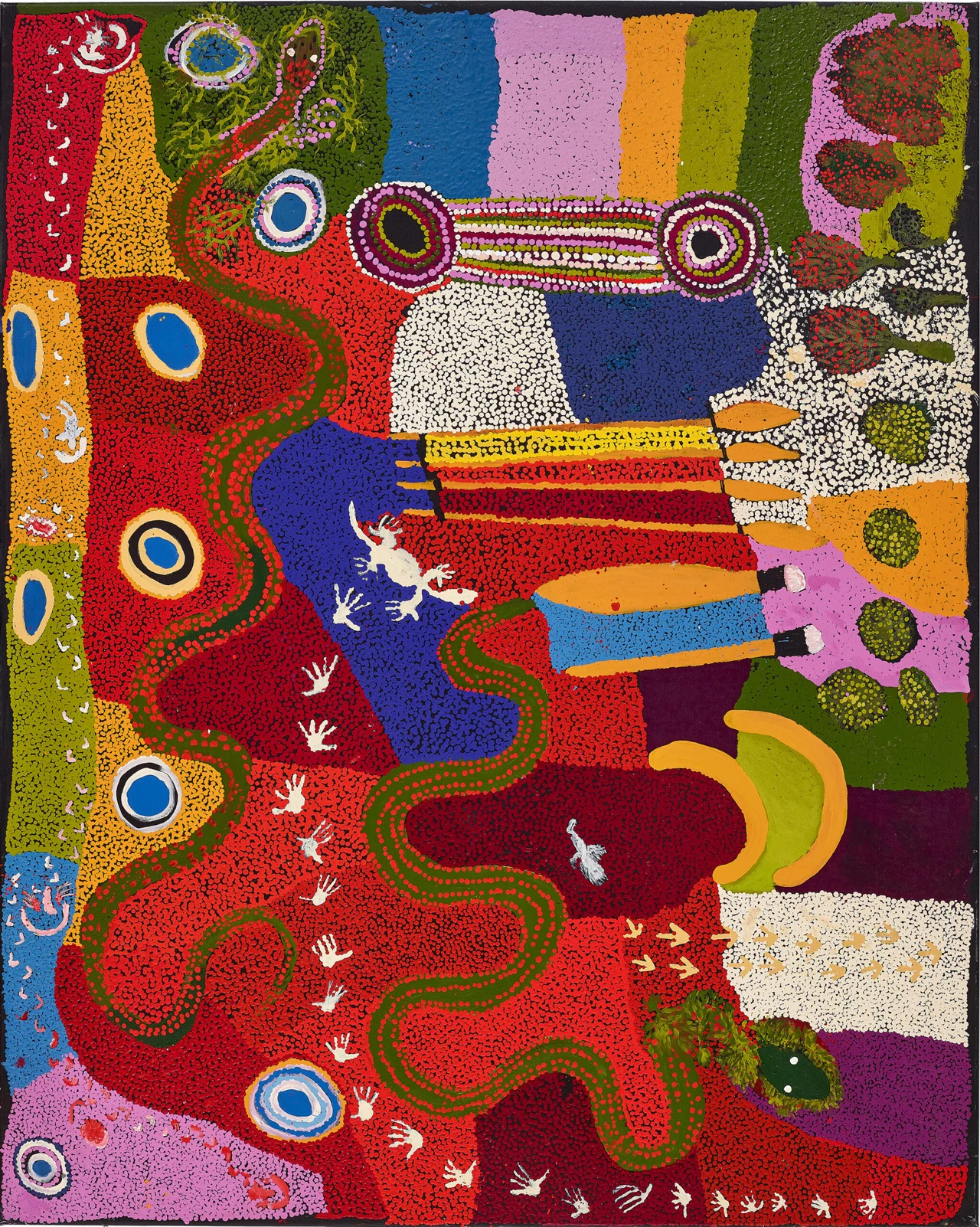
NGINTAKA TJUKURPA (PERENTIE MAN CREATION STORY), 2009
synthetic polymer paint on linen
152.0 x 121.0 cm
bears inscription verso: artist’s name, Tjala Arts cat. 532-09 and Alcaston Gallery cat. AK16146
Estimate:
$2,000 - $3,000
Sold:
$7,364 (inc. BP)
© Barney Wangin/Copyright Agency 2021
lot details
Tjala Arts, Amata, South Australia
Alcaston Gallery, Melbourne
Private collection, Melbourne
Exhibited
Tjala Men and Tjanpi Desert Weavers – Watiku tjukurpa pulka mulapa, munu Minymaku tjanpi; exhibition tjungu kupu (The men’s stories are very strong with the women’s tjanpi; a strong exhibition), Alcaston Gallery, Melbourne, 22 June – 10 July 2010
This work is accompanied by a certificate of authenticity from Tjala Arts, Amata, which states in part:
‘Once, the women of the Mann Ranges had only rough grinding stone, so their grass seed cakes were course and hard to eat. Their men looked everywhere for better stone but without success. One day when Ngintaka, the Perentie Man, was out hunting a long way to the east he heard a woman grinding seed for the evening meal. He realised that the sound could only be made by a stone which was fine and smooth, so he resolved to go that country, steal that stone, and bring it back to his own people. For many days he journeyed toward that sound, getting nearer and nearer until he ended up in the country of the Nginjuri (Black Lizard) people. He lit a fire within sight of the main camp. When the Nginjuri men went out to meet the Ngintaka, he didn’t tell them the true reason for his visit but told them a false story of his journey.
The community shared their food with him, although he was forbidden the main camp for several days. Every evening a woman bought him a meal ofmalu (kangaroo) and grass seed cakes made from the finest flour he had ever tasted. At last, he entered the main camp and saw the grinding stone he had travelled so long for. It was a wonderful flat-grained sandstone, worn smooth by constant rubbing. He could hardly wait to steal it and take it back to his own people.’