



Arthur Boyd
(1920 - 1999)
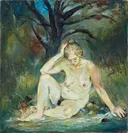
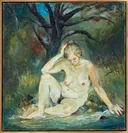
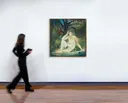
Seated figure by a creek, 1972 – 73
oil on linen
114.0 x 109.0 cm
119.0 x 114.0 cm (frame)
signed lower right: Arthur Boyd
Estimate:
$30,000 - $40,000
© Arthur Boyd/Copyright Agency 2025
lot details
119.0 x 114.0 cm (frame)
Private collection, Melbourne
Menzies, Sydney, 23 September 2014, lot 105
The Estate of Felicity St John Moore, Melbourne
Exhibited
Arthur Boyd: Recent Paintings, Fischer Fine Art, London, May – June 1973, cat. 20 (illus. in exhibition catalogue)
Literature
McGrath, S., The Artist and The River: Arthur Boyd and the Shoalhaven, Bay Books, Sydney, 1982, p. 96 (illus., as ‘Figure under Cedar, Upper Budgong, 1979’)
Hoff, U., The Art of Arthur Boyd, Andre Deutsch, London, 1986, pl. 126 (illus.)
Related Works
Figure by a creek, 1972 – 73, oil on canvas, 112.2 x 108.5 cm, National Gallery of Australia, Canberra
Seated figure by a creek, 1972 – 73 was inspired by the Boyds’ first momentous visit to the Shoalhaven region following their return to Australia in 1971, after more than a decade spent residing in England. During the blazing summer of 1971– 72, the couple stayed at Bundanon, the property of Sydney art dealer Frank McDonald located on the south coast of New South Wales. Depicting the secluded river valley area of Budgong – only a short fifteen-minute drive away – the present work clearly references Boyd’s artistic predecessors such as Rembrandt, Tintoretto and Manet, and is an important example of the naturalistic tendency in his vast oeuvre. Here Boyd features his own wife Yvonne as the seated figure – portrayed with all the dignity of a classical nude, yet at the same time, remarkably direct and uncompromising in her imperfections. The dialogue between the monumental figure of his naked wife and the primordial, untamed beauty of the Shoalhaven landscape clearly captivated Boyd’s eye and his heart. Over the ensuing decades, the Shoalhaven landscape would become a key impetus and endless source of inspiration for Boyd’s art – with his interpretations, both real and allegorical, today considered central to his artistic legacy.