
Russell Drysdale
(1912 - 1981)
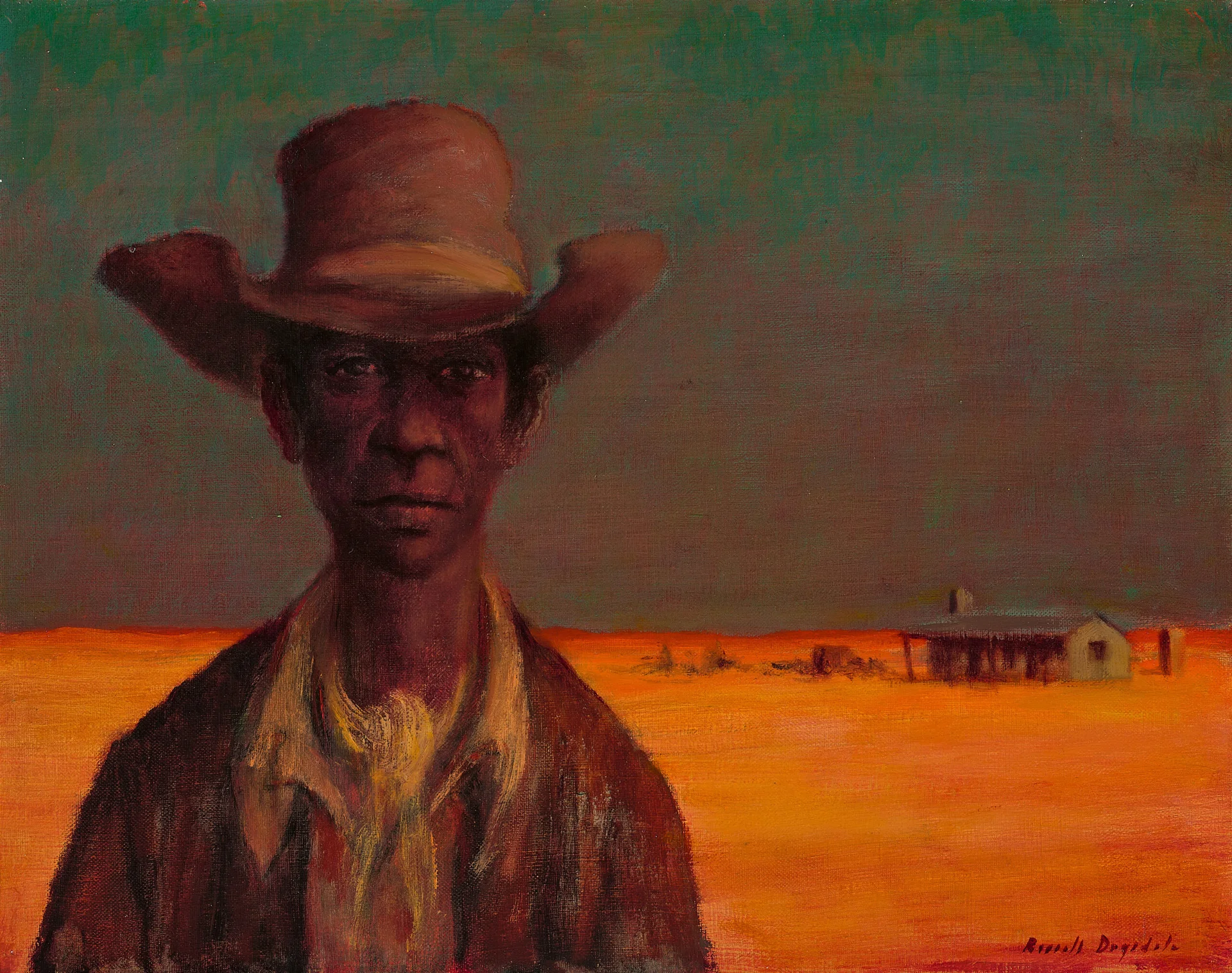
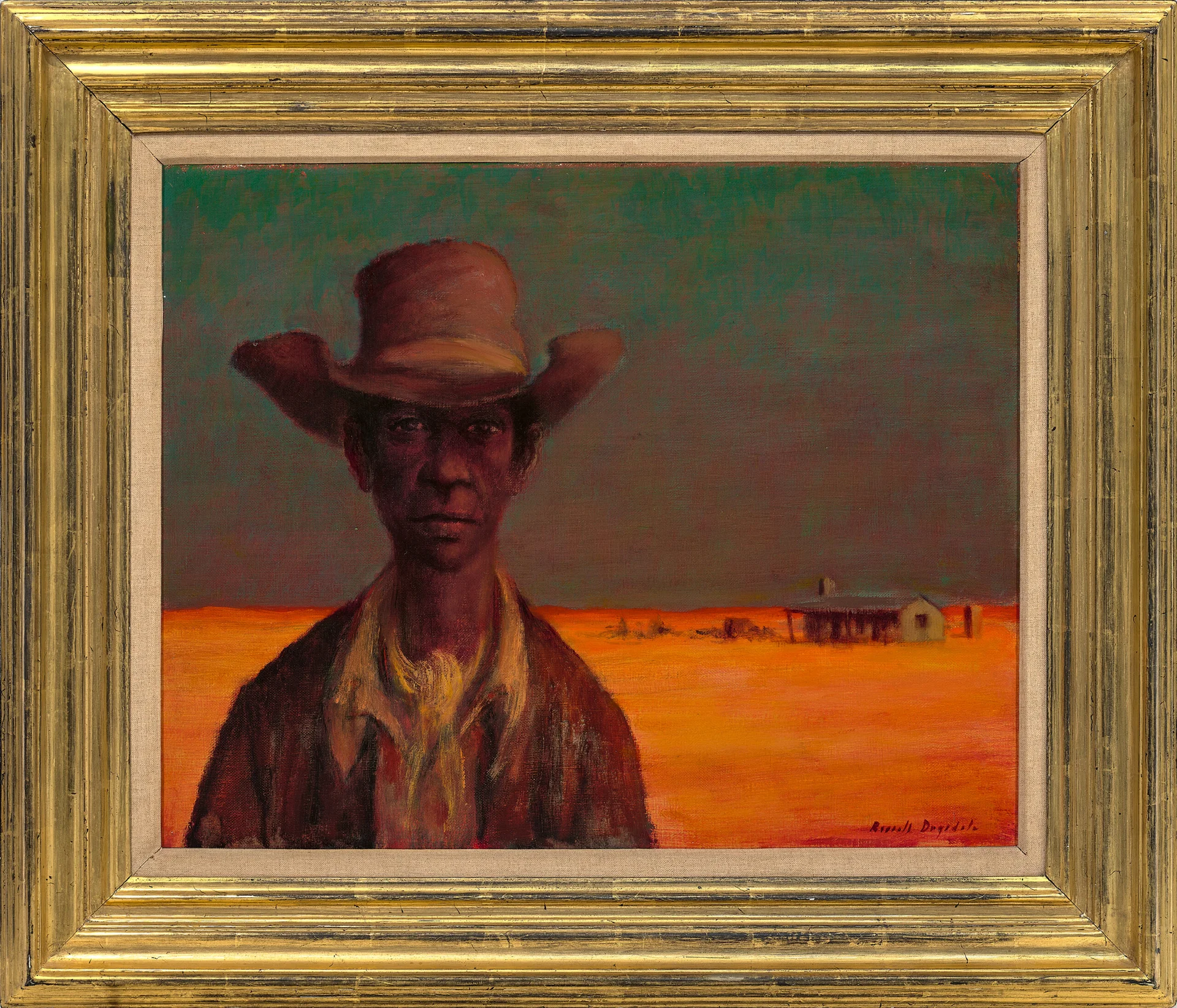
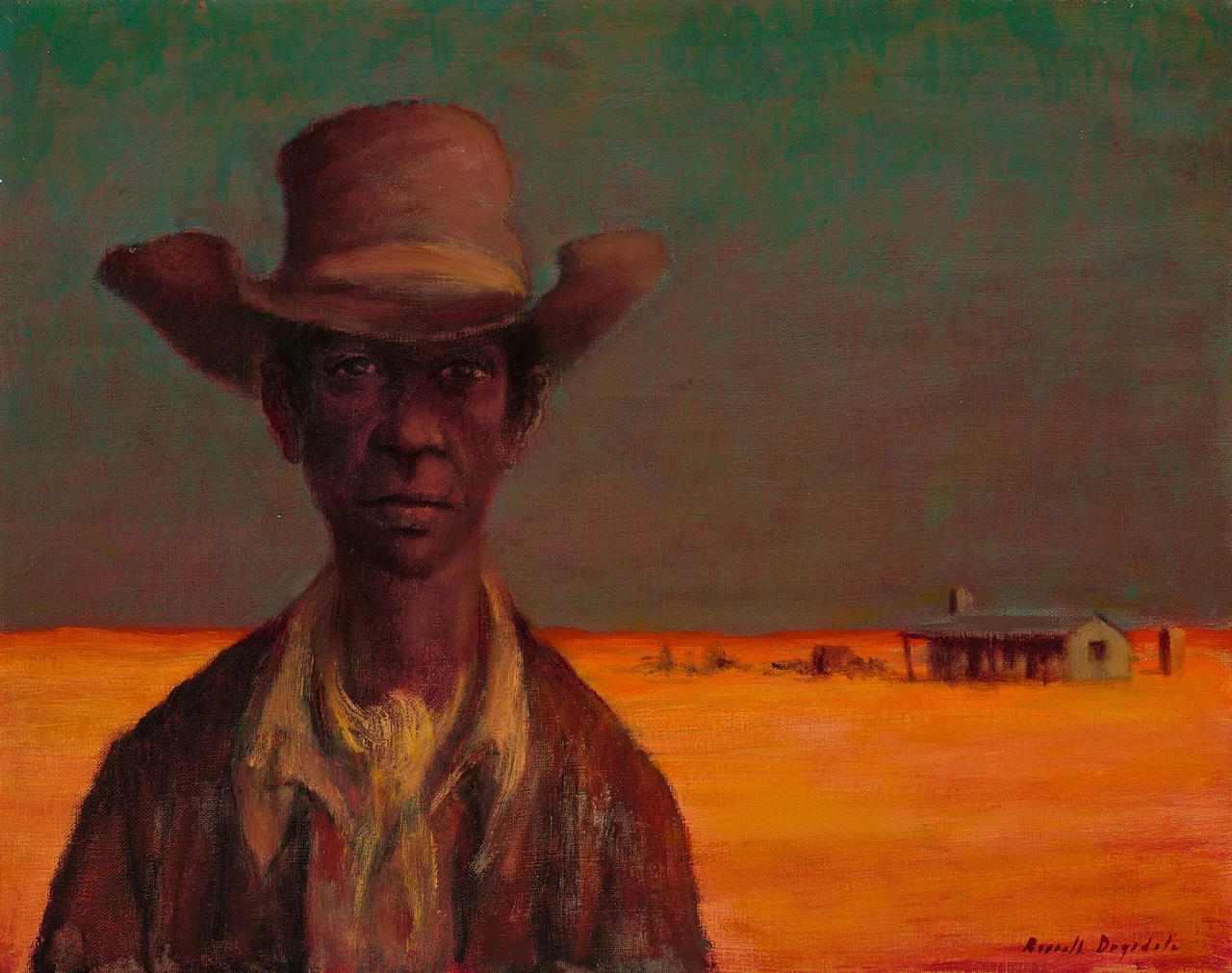
Stockman, 1965
oil on canvas
40.0 x 50.5 cm
signed lower right: Russell Drysdale
bears inscription verso: STOCKMAN - RUSSELL DRYSDALE / THE PROPERTY OF MR. MRS. Geoffrey Collings
bears inscription verso: 1965
bears inscription on gallery label verso: “Stockman” / by Russell Drysdale
Estimate:
$500,000 - $700,000
Sold:
$675,000 (inc. BP)
© Courtesy Russell Drysdale Estate
lot details
bears inscription verso: STOCKMAN - RUSSELL DRYSDALE / THE PROPERTY OF MR. MRS. Geoffrey Collings
bears inscription verso: 1965
bears inscription on gallery label verso: “Stockman” / by Russell Drysdale
The Leicester Galleries, London (label attached verso)
Geoffrey and Dahl Collings, New South Wales, acquired in 1965
Spink Auctions, Sydney, 28 April 1981, lot 111 (as ‘The Stockman’)
Private collection, London
Exhibited
Russell Drysdale, The Leicester Galleries, London, 30 September – 27 October 1965, cat. 20
Literature
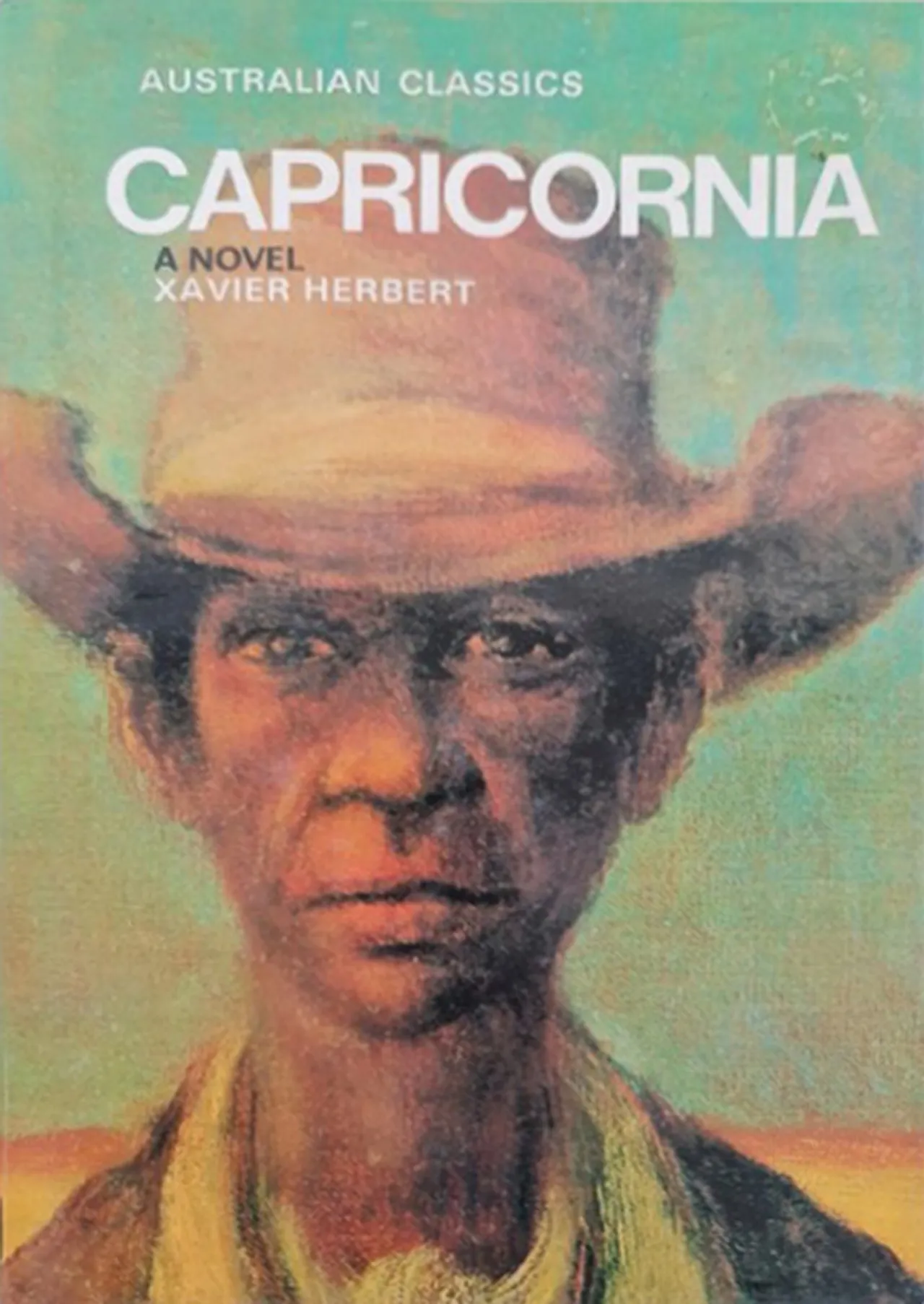
Herbert, X., Capricornia, Angus & Robertson Publishers, Melbourne, 1938, 1971 (illus. [reversed] front cover)
Dutton, G., Russell Drysdale, Thames and Hudson, London, revised edition, 1969, pl. 140, pp. 173 (illus.), 207
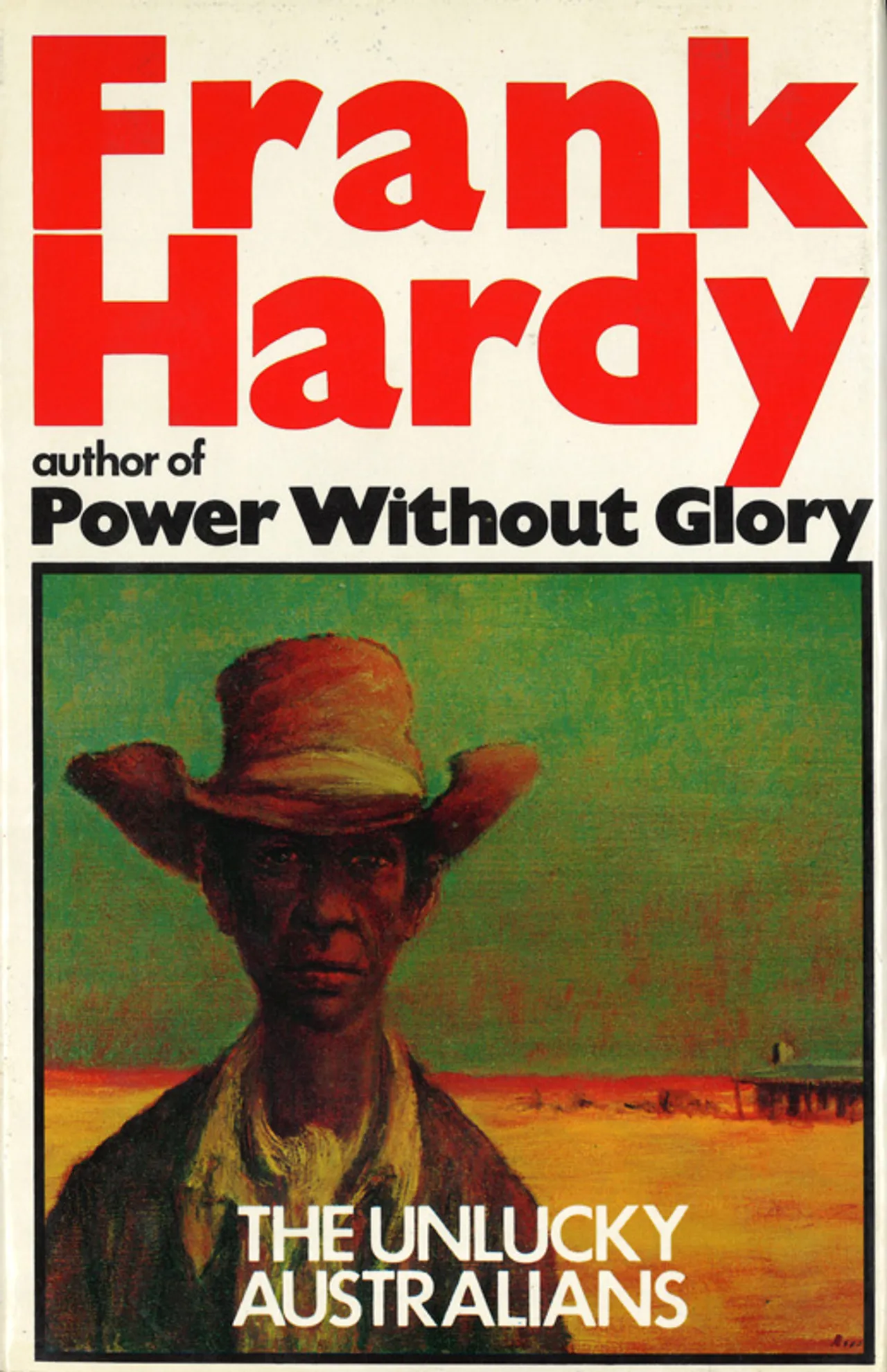
Hardy, F., The Unlucky Australians, Rigby, Adelaide, 1968, 1976 (illus. front cover)
‘Drysdale… was like no one else. His brush left behind on the canvas, marks and textures, harmonies of colour and subtleties of tone orchestrated through the joy of creation. This is evident in his finest works where his mind is in control of the idea and the hand is the perfect executor of the form, achieving the magical skin of oil paint on canvas with depths of emotion and thought that defy verbal description.’1
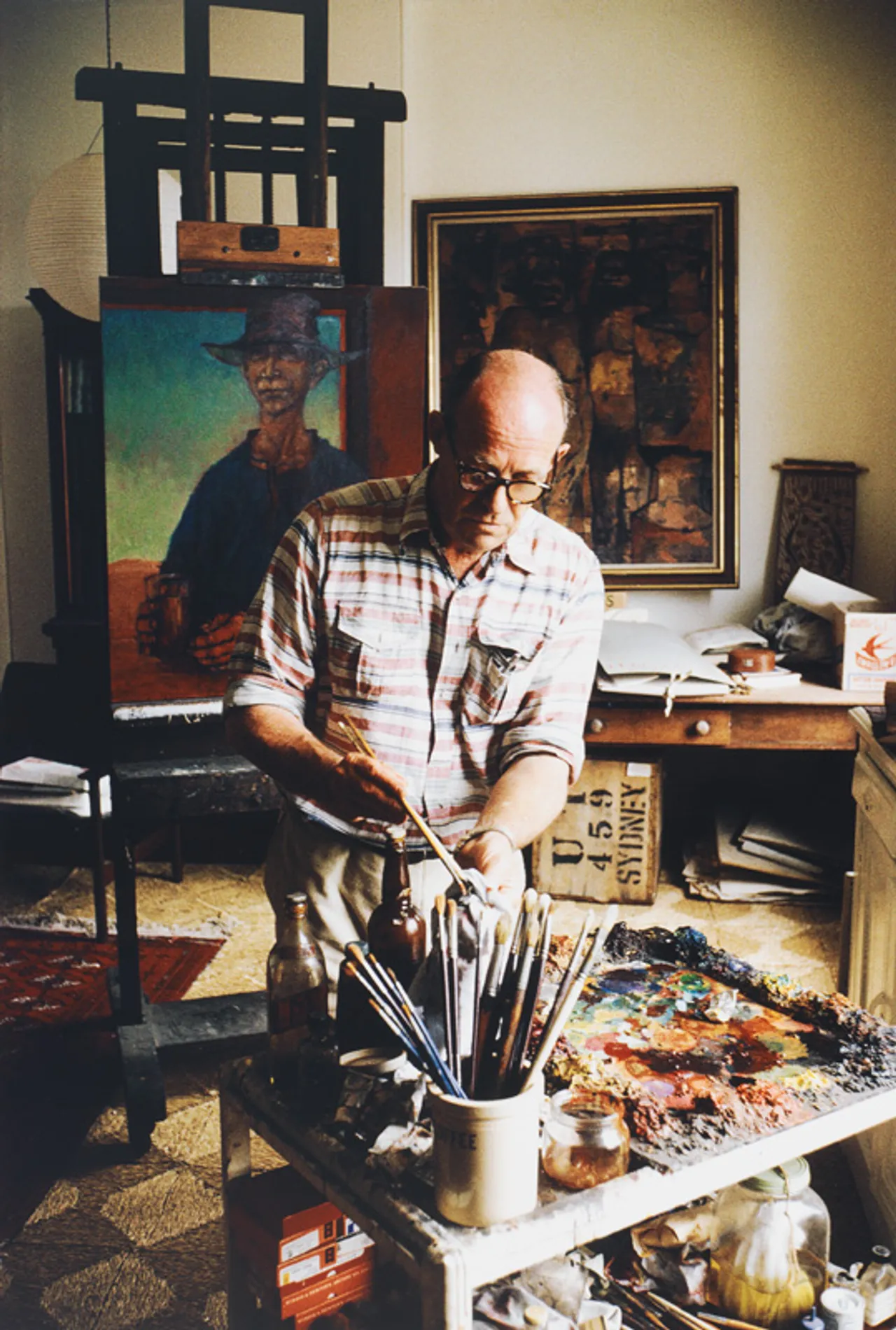
Within the ranks of the great Australian painters of the twentieth century, Russell Drysdale is distinguished by his ability to depict the Australian landscape and the psychologically charged relationship between it and its inhabitants. His colours are sun-bleached and pale, or the rich browns and reds of the earth, and the terrain he depicts is typically vast, flat and dry. Often described in the same tones and with a similar handling of paint, Drysdale’s figures rarely seem out of place, with the harshness of their outback environment and the profound sense of emptiness that pervades these landscapes communicating much about the strength, resilience and spirit of his subjects. As Drysdale explained, ‘[These] are the people that are fascinating. They’ve got this character. They are characters. You can take your society people, however beautiful they might be, but to me they’re ephemeral people. These others aren’t. They just go on. They’re the kind of towers that reach out. The survival thing that means something.’2
Drysdale’s first solo exhibition was held at Riddell Galleries, Melbourne, in 1938 and received an overwhelmingly positive response, with Basil Burdett, the art critic for the Melbourne Herald, writing ‘I have seldom seen a more promising exhibition by a young painter anywhere.’3 During the next decade, Drysdale held several more solo exhibitions and further recognition of his art followed with the awarding of the 1947 Wynne Prize and the 1949 Melrose Prize. His work also began to be collected by important institutions during these years. Monday Morning, 1938 was acquired by the Metropolitan Museum of Art, New York in 1941, and the following year, both the National Gallery of Victoria and the Art Gallery of New South Wales purchased their first paintings by the artist, Moody’s Pub, 1941, and Sunday Evening, 1941, respectively.
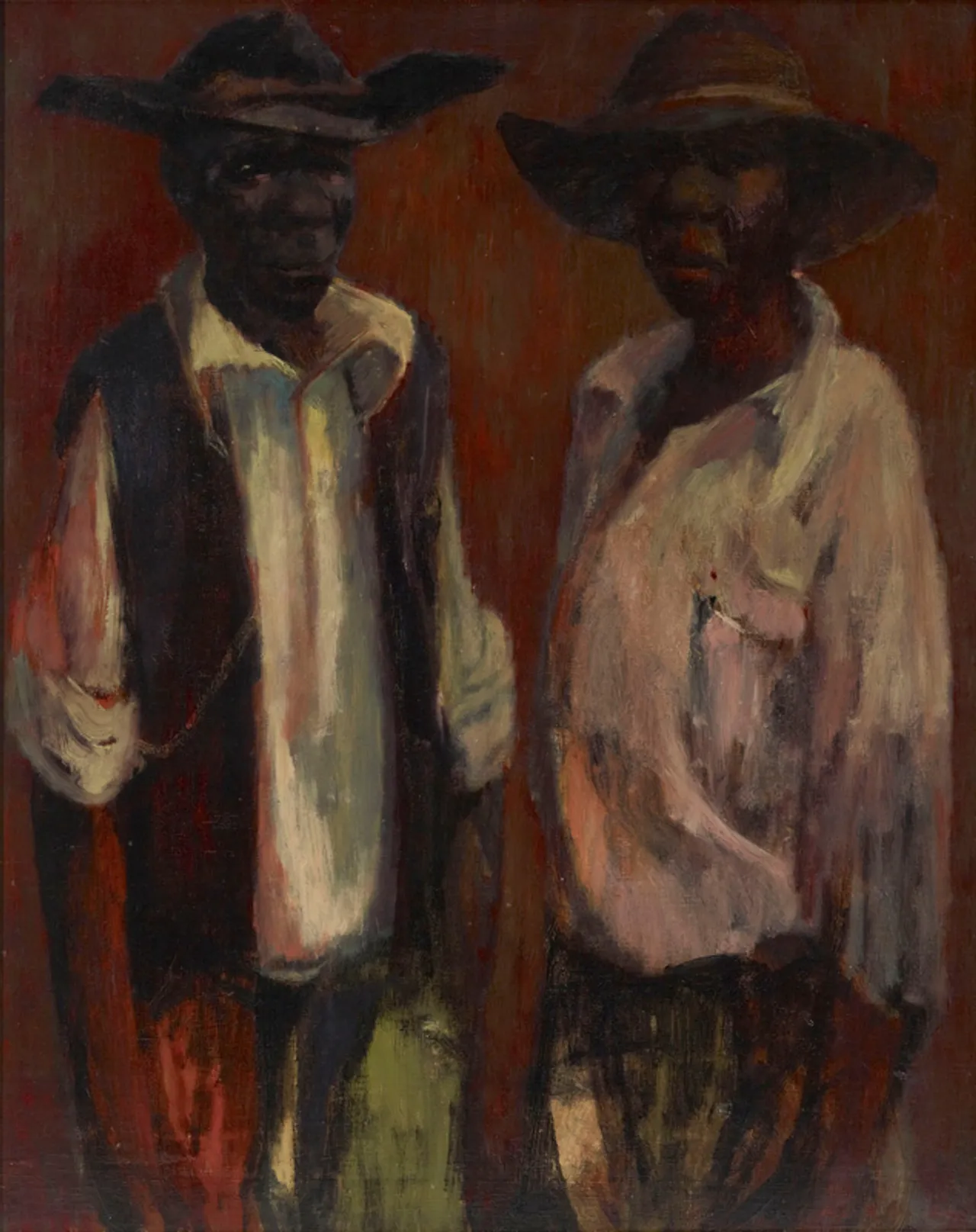
Drysdale was one of a small number of twentieth-century Australian artists who achieved significant international recognition during his lifetime. First introduced to English audiences in a solo exhibition of recent paintings at Leicester Galleries in London in 1950, he showed there on three subsequent occasions and Stockman, 1965, was included in his third London exhibition in 1965. It was an impressive display, including twenty-four paintings, forty-five drawings and five lithographs, and such was the demand for Drysdale’s work, that almost half of the paintings had been sold beforehand and were loaned back for the exhibition.4 The Art Gallery of Western Australia’s painting, The gatekeeper’s wife, 1965, was one of these loaned pictures as was this work, which was lent by Geoffrey and Dahl Collings, designers and filmmakers, who were friends and close neighbours of the Drysdales at Killcare Heights.5 The figure of a young Aboriginal stockman who stands face on, looking directly at the viewer, dominates the canvas. In the distance to the right is a small rural house and outbuilding, the only interruptions in a wide featureless landscape that glows orange and red, shadowed beneath a brooding sky. Drysdale travelled extensively through the Australian outback and found great inspiration there: ‘Most of the paintings… that I have done have been about subjects in the country, and figures and landscape, but that is simply because I spend a great deal of my time there. It is an environment which I love and which I like to go back to, and for me… it is continually exciting, these curious and strange rhythms which one discovers in a vast landscape, the juxtaposition of figures, of objects… This is a very ancient land, and its forms and its general psychology are so intriguing.’6 An intense study of character and place, Stockman has long been recognised as an eloquent representation of Australia, featuring on the cover of the 1971 edition of Xavier Herbert’s novel Capricornia, and Frank Hardy’s 1976 book, The Unlucky Australians.
1. Klepac, L., Russell Drysdale, Murdoch Books, Millers Point, 2009, p. 322
2. Drysdale interviewed by Geoffrey Dutton, cited in Dutton, G., Russell Drysdale, Thames & Hudson, London, 1964, p. 100
3. Burdett, B., ‘Young painter shows brilliant promise’, Herald, Melbourne, 26 April 1938, p. 10, cited in Smith, G., Russell Drysdale 1912 – 81, National Gallery of Victoria, Melbourne, 1997, p. 19
4. See Klepac, op. cit., p. 322
5. In 1961, their company, Collings Productions, had produced a film about Drysdale.
6. Drysdale interviewed by Hazel de Berg, February 1960, cited in Smith, op. cit., p. 25
KIRSTY GRANT