
Lloyd Rees
(1895 - 1988)
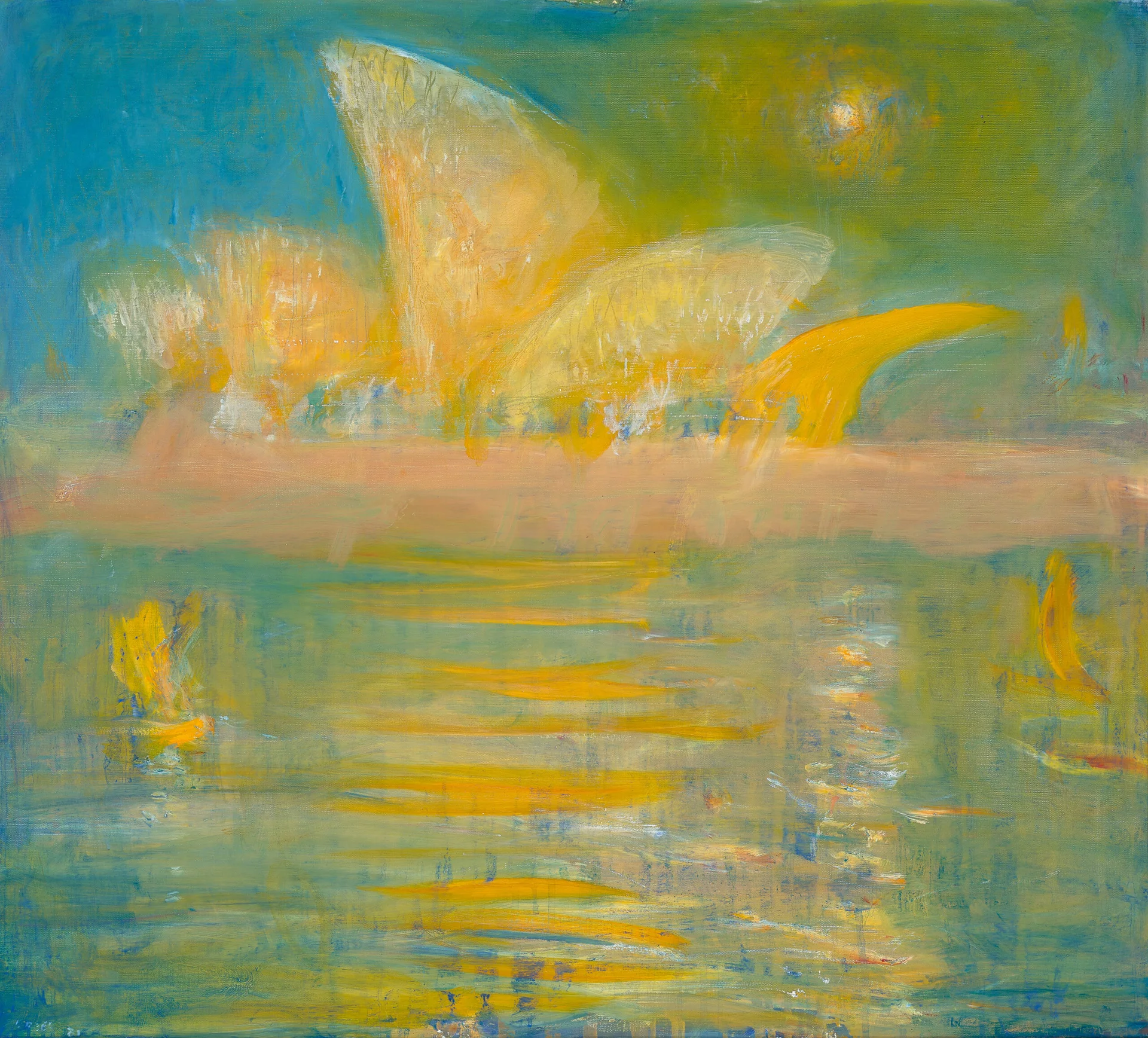
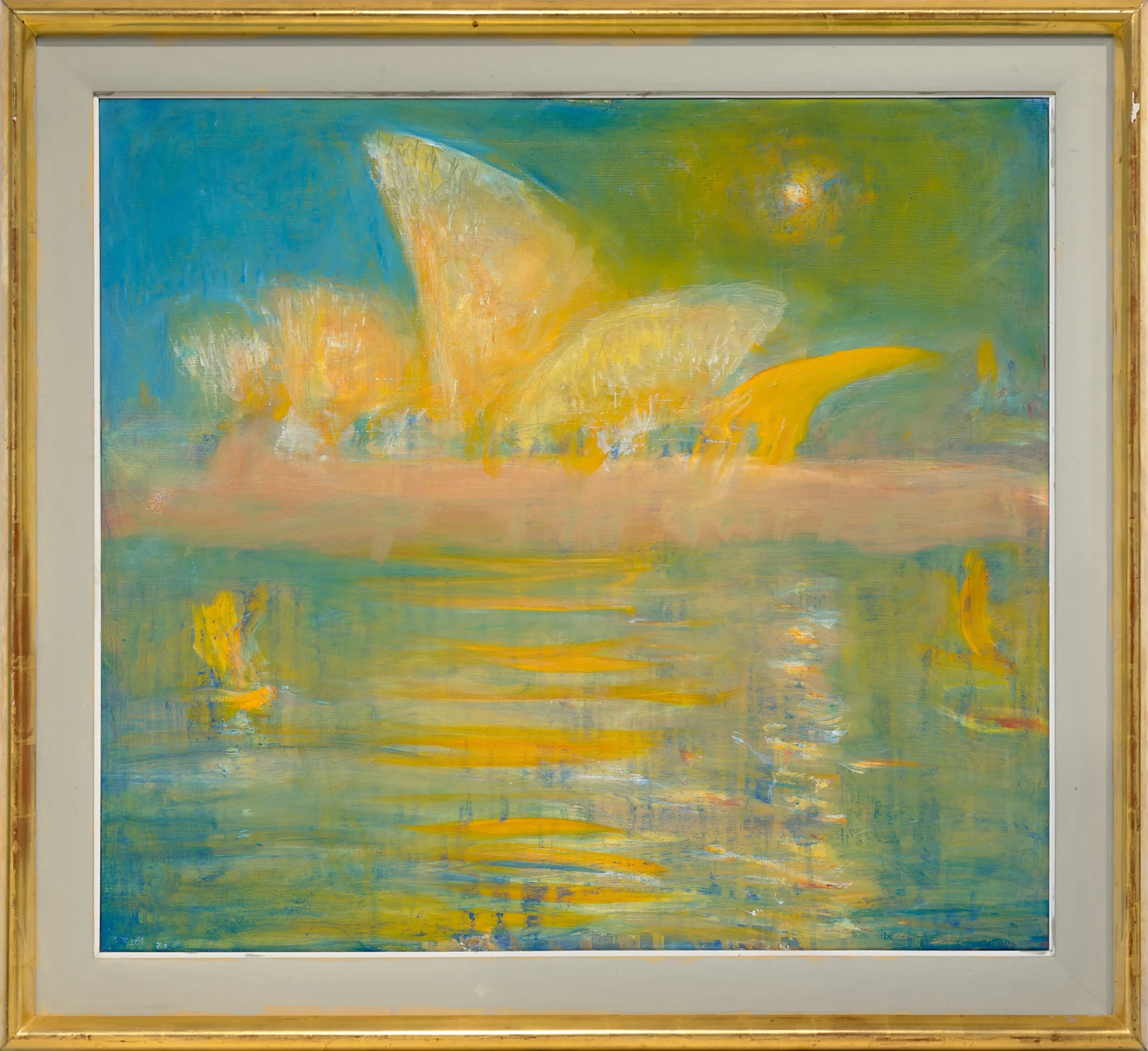
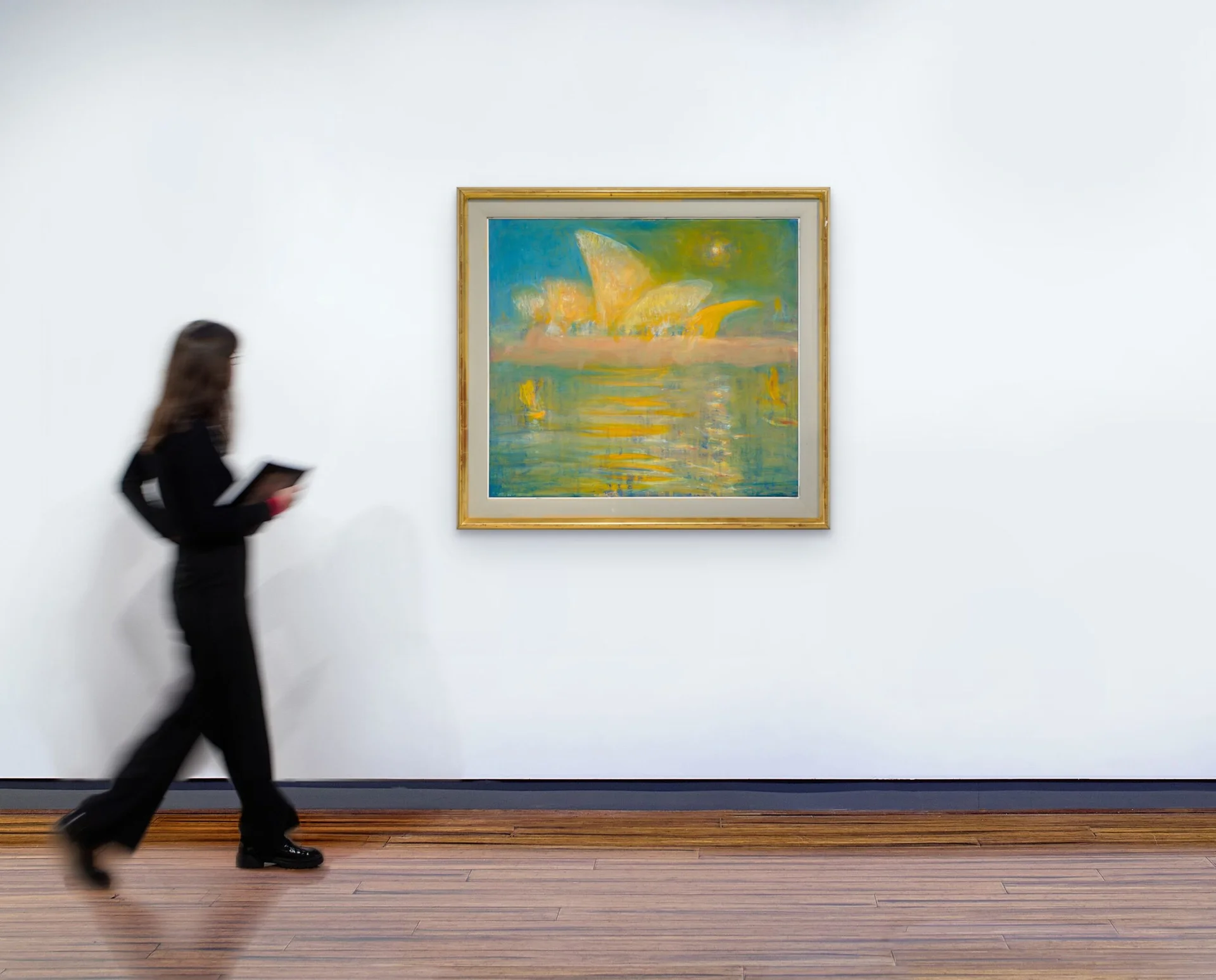
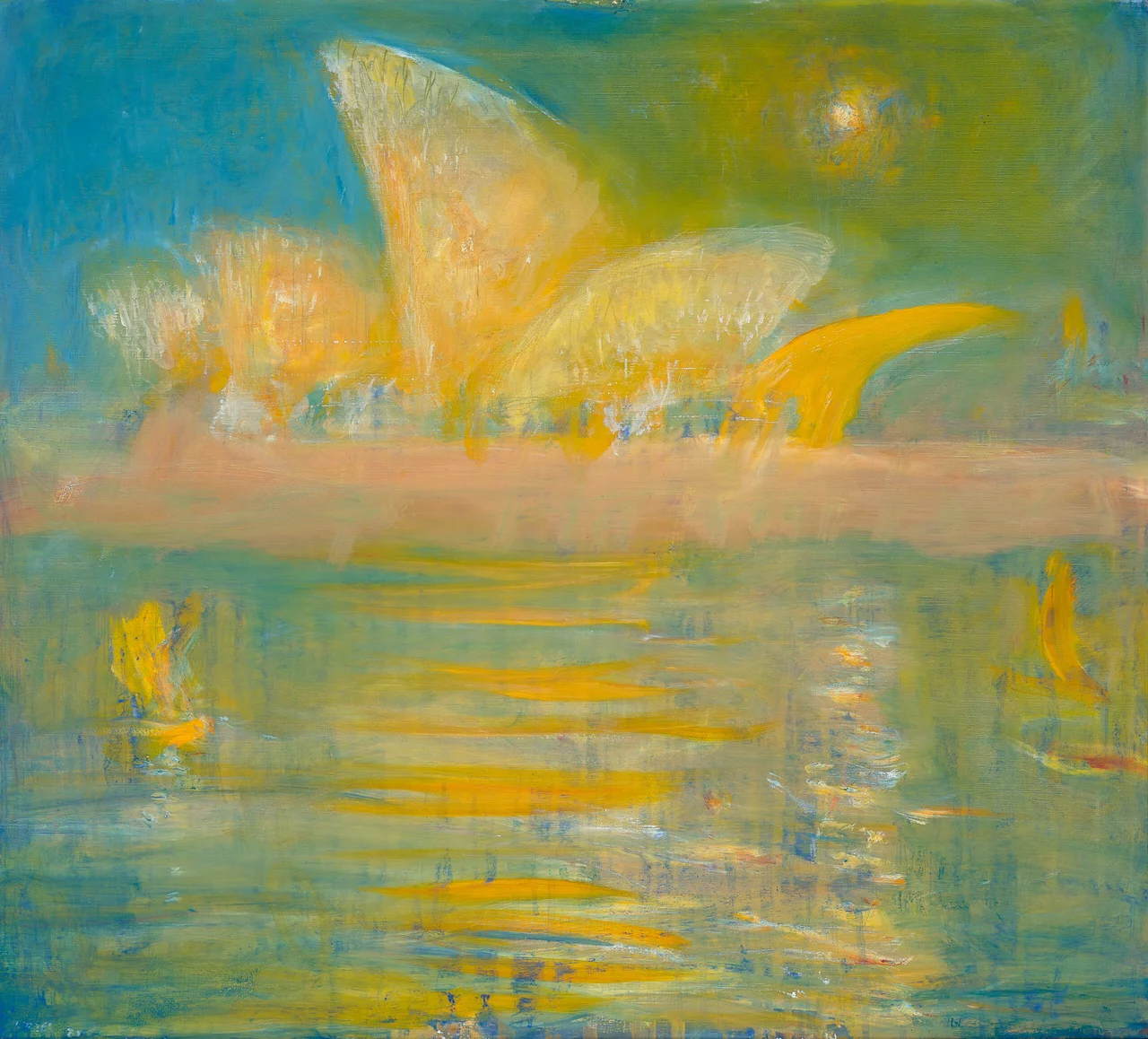
Afterglow – Opera House no. 4, 1980
oil on canvas
91.5 x 102.0 cm
signed and dated lower left: L REES / 80
bears inscription on label verso: AFTERGLOW – OPERA HOUSE NO. 4 / Oil on canvas / Collection: The Artist
bears inscription verso: AFTERGLOW
Estimate:
$80,000 - $120,000
© Alan and Jancis Rees/Copyright Agency 2026
lot details
bears inscription on label verso: AFTERGLOW – OPERA HOUSE NO. 4 / Oil on canvas / Collection: The Artist
bears inscription verso: AFTERGLOW
John Andrews, Sydney
Private collection, Canberra, acquired from the above in October 2001
Related Works
A Broken Dream – Utzon’s Opera House, c.1979, oil on canvas, 84.0 x 145.0 cm, illus. in Chanin, E., Lloyd Rees – A Tribute to Sydney, The Macquarie Galleries, Sydney, 1979, p. 61
The Opera House at night, 1981, oil on canvas, 90.0 x 100.0 cm, illus. in Free, R., Lloyd Rees: the last twenty years, Craftsman House, Sydney, 1983, p. 144, pl. 43
Lloyd Rees had three great loves: the majestic Sydney Harbour, which he first sighted aboard a ship in 1917; the great cathedrals of Europe, his appreciation of which was informed by his earlier art studies in Brisbane; and ‘light, light, light’1, that pure, symbolically charged essence that floods through so many paintings from his extended career. In the Sydney Opera House, he found all three and returned to the motif several times in the early 1980s to capture architect Jørn Utzon’s masterpiece at different stages of the day. In Afterglow – Opera House no.4, 1980, the building’s sails capture the dazzle of the setting sun with an already risen moon hovering above. The work is a key example from Rees’ late career in which the more academic attitudes of his earlier styles were surpassed by abstracted, luminous interpretations ‘reminding us of the late styles of other great artists who reach their full creative powers. There is a simplification to the point of universal form; there is mastery of technique to the point where it no longer matters. There is a direct communication from the centre of the artist’s being.’2
Like most Sydneysiders, Rees had been held spellbound by the Opera House during the years of its torturous construction, beset by false scandal and political interference to the point that Utzon resigned in disgust in 1966, never to return. Opened to great fanfare in 1973, it immediately became one of the world’s most identifiable buildings, firmly stamped onto Australia’s cultural identity. For Rees, part of his regular routine was travelling by ferry from his home in Northwood to the bustling terminals at Circular Quay, so he witnessed these many stages at close hand. For much of the 1970s, he maintained a huge workload painting, exhibiting, teaching and travelling but by 1979, it all caught up, with the artist hospitalised with an ulcer and subsequently suffering a complete nervous breakdown lasting some weeks. One morning during his recuperation, he saw the Opera House anew from the ferry when the position of the sun caused a striking interplay between light, water and the building. This led to a new understanding for Rees – that an artist could never paint the reality of the sun, only an allusion to it. As a result, he would thereafter say that ‘I don’t paint nature, I paint symbols of nature.’3 Afterglow – Opera House no. 4 is thus as symbolic as it is ‘real’. Previously directed by a deep understanding of the Venetian artists of the Renaissance, the British ‘master of light’, J. M. W. Turner now became his guide as the otherwise solid sails of the Opera House melt within the glare of the setting sun. Constructed using brush, palette knife, impasto and glaze, Afterglow – Opera House no. 4 also demonstrates Rees’ ambidexterity ‘[painting] with the left and the right hand at the same time, hoping in doing so to give a sense of balance to the work.’4 The positive reception to the Opera House paintings was further strengthened in March 1980 when Rees was awarded The John McCaughey Memorial Prize by the National Gallery of Victoria, an achievement followed by a third retrospective of his work the following year.
1. Lloyd Rees, cited in Hawley, J., ‘Lloyd Rees: the final interview, the final works’, The Age (Good Weekend), Melbourne, 15 October 1988, p. 40
2. Free, R., Lloyd Rees: the last twenty years, Craftsman House, Sydney, 1983, p. 13
3. Lloyd Rees, cited in Hawley, op. cit., p. 44
4. Lloyd Rees, cited in Newman, J., ‘Someone old, something new at Realites’, The Age, Melbourne, 9 March 1982, p. 22
ANDREW GAYNOR