Fred Williams
(1927 - 1982)
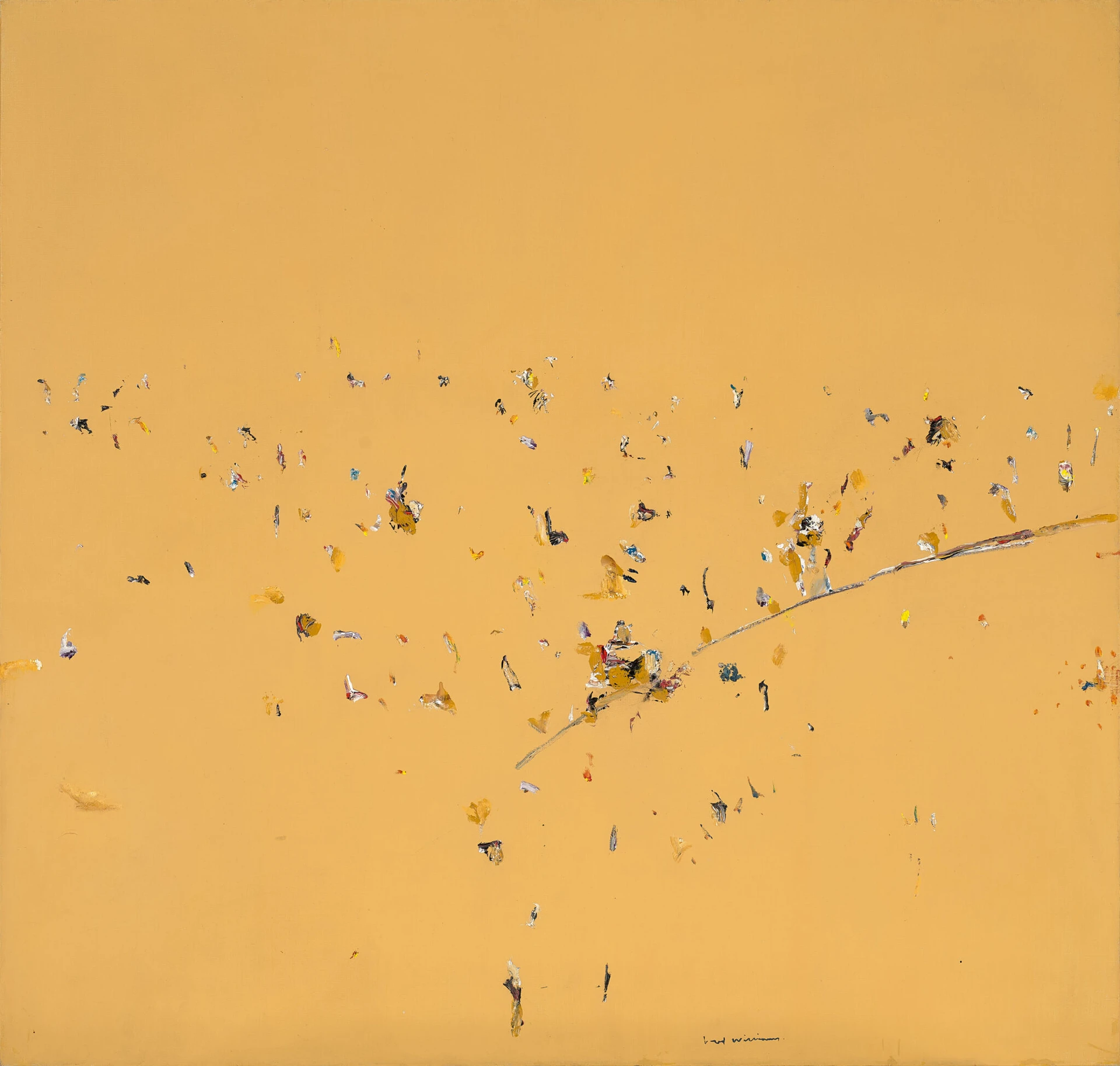
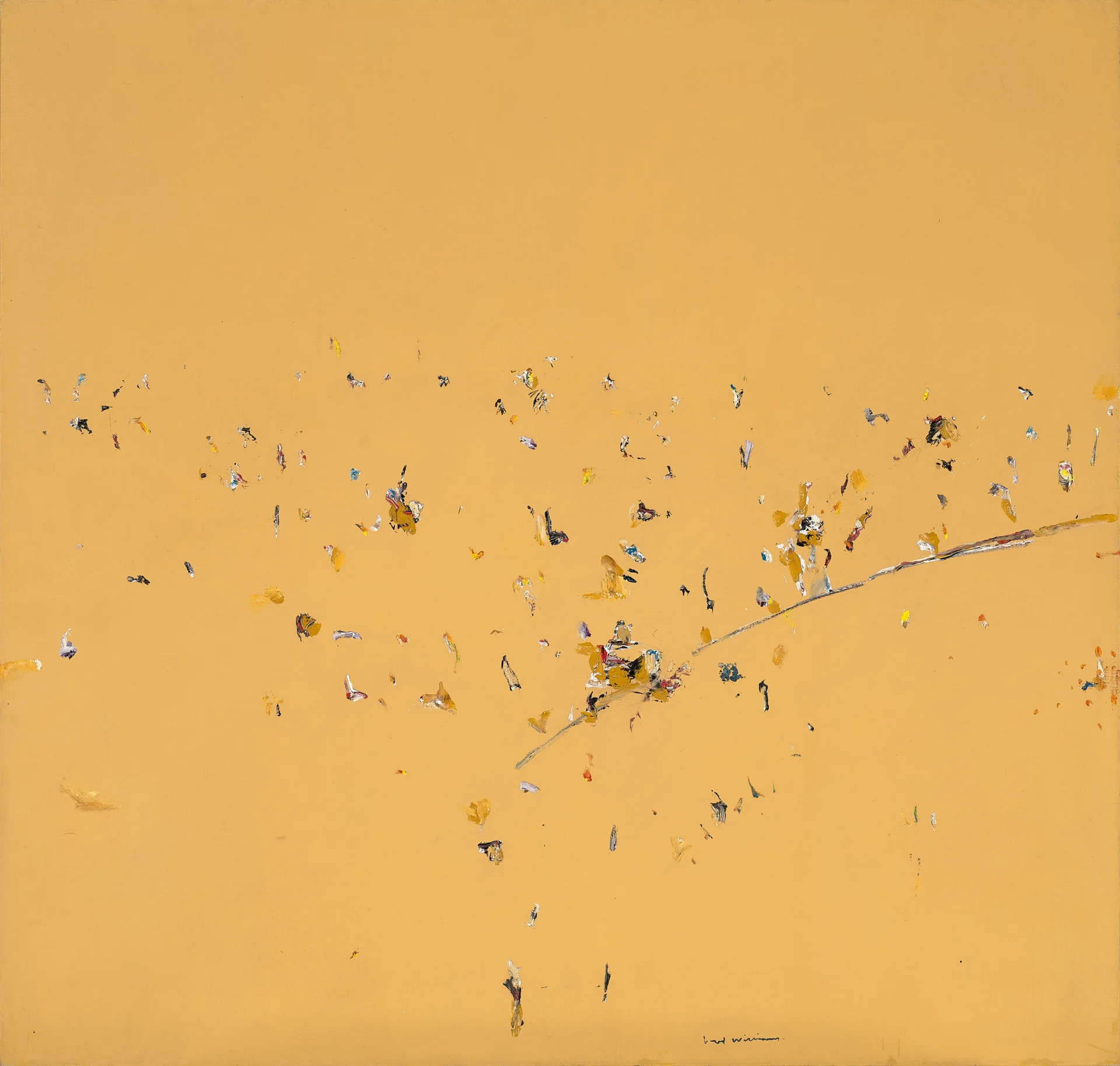
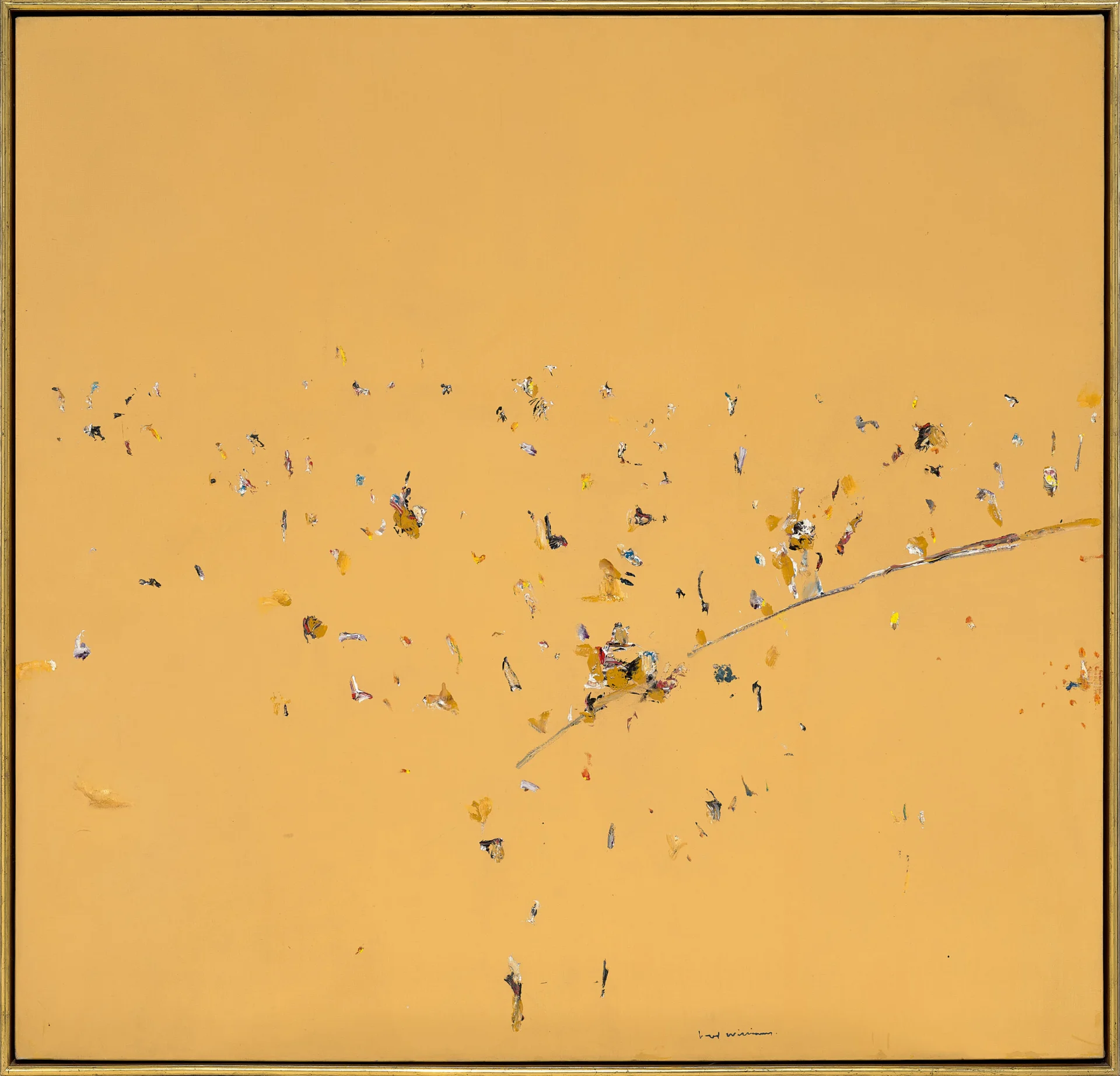
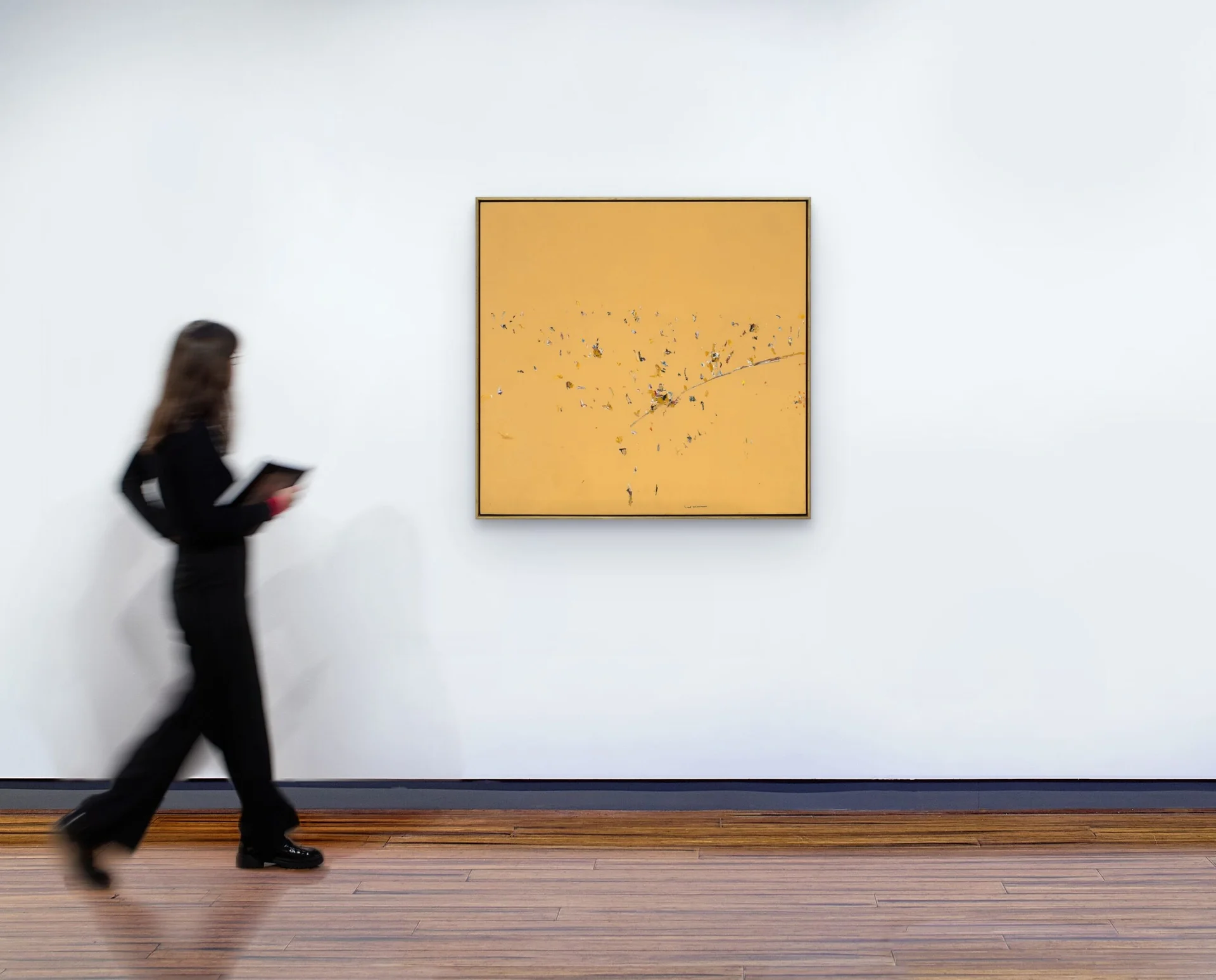
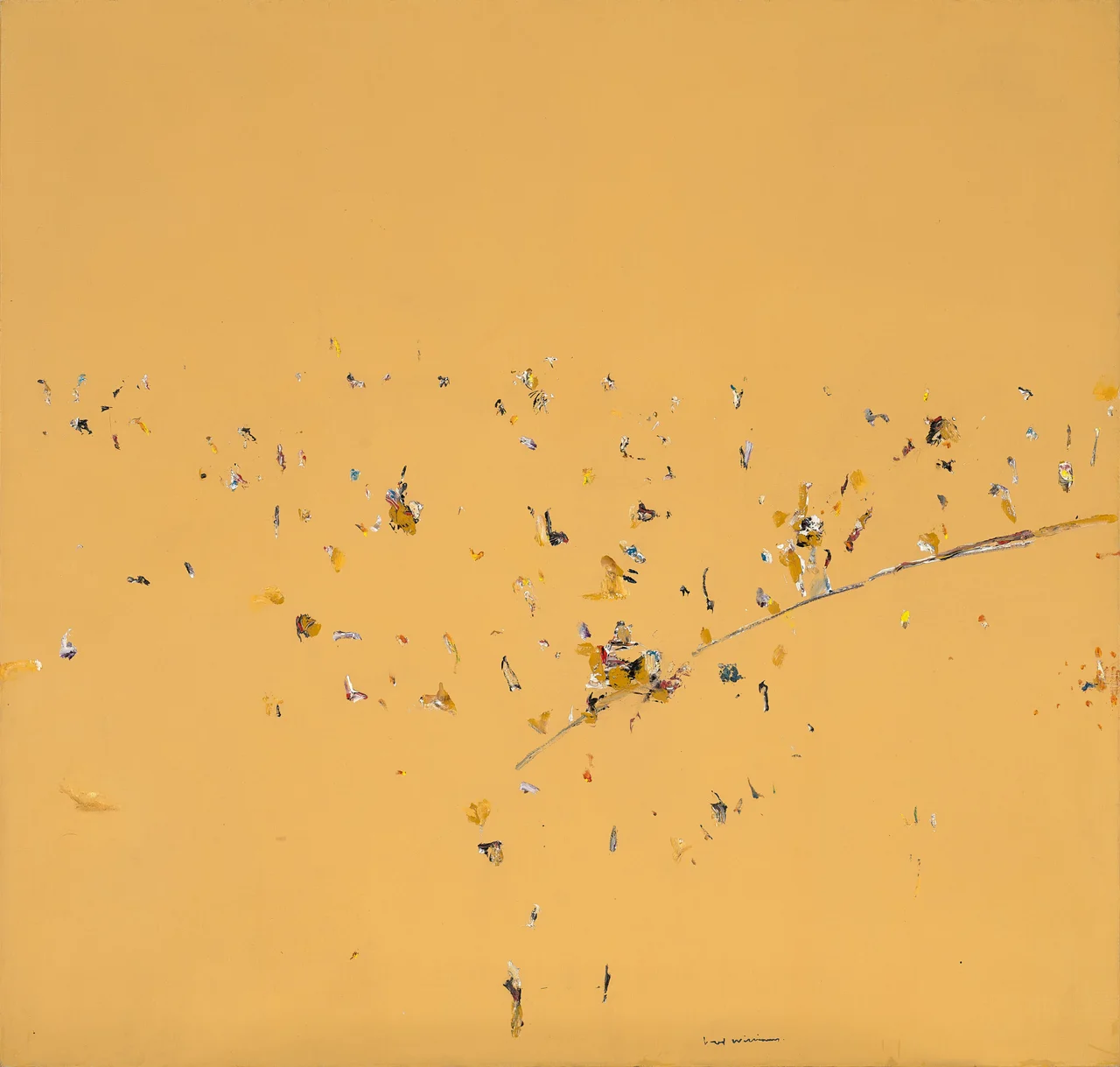
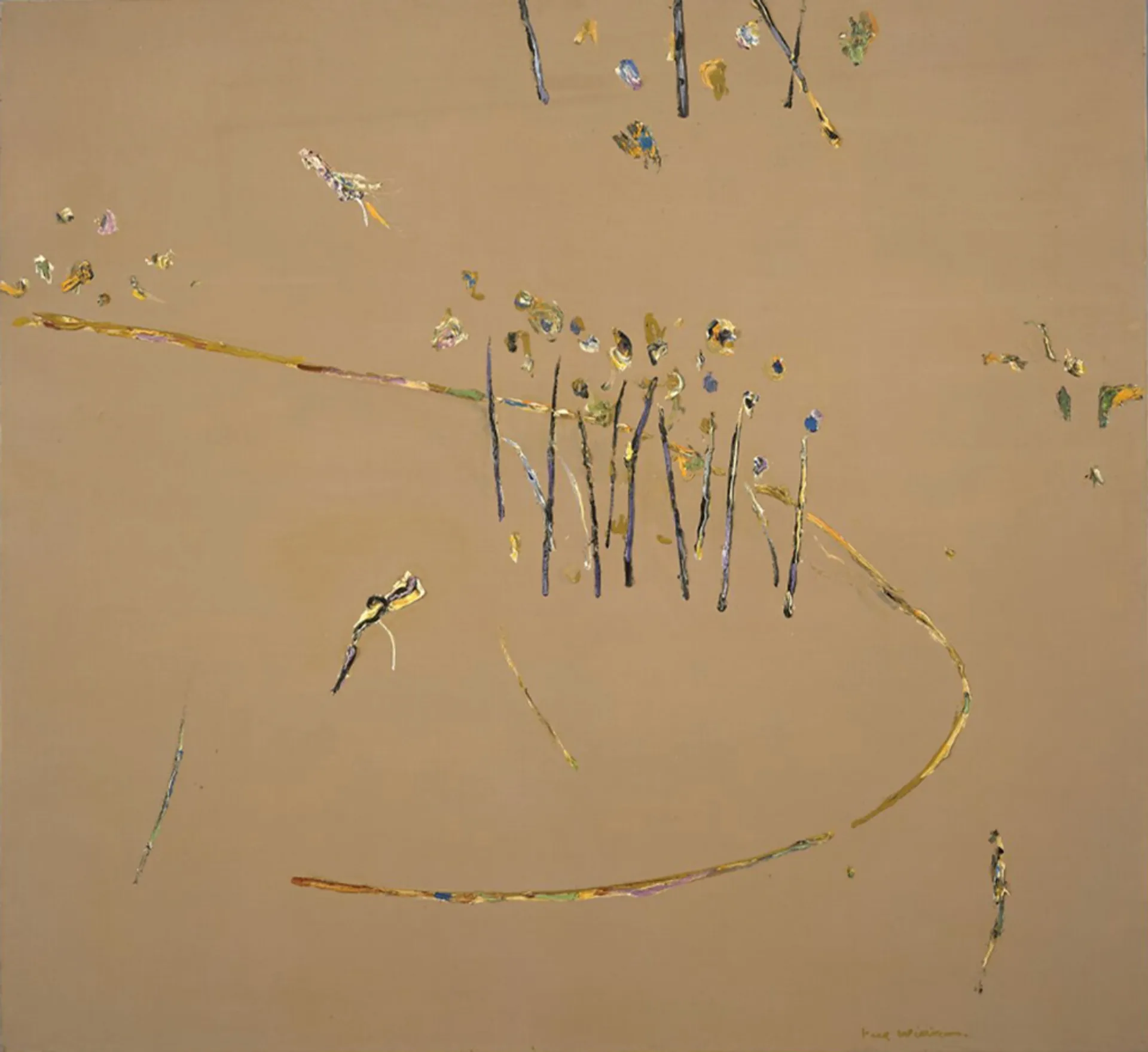
Landscape with hillock (2), 1969
oil on canvas
101.5 x 106.5 cm
signed lower centre: Fred Williams
Estimate:
$400,000 - $600,000
© Estate of Fred Williams/Copyright Agency 2026
lot details
Fisher Fine Art, London
Lord Peter Palumbo, London, acquired from the above in 1980
Christie’s, Melbourne, 27 April 1998, lot 123 (as ‘Landscape with Hillock (2)’)
Private collection, Melbourne
Feneley Fine Art Consultants, Sydney
Private collection, Canberra, acquired from the above in September 2002
Exhibited
Fred Williams 1969 – 1979 (Oeuvres), Australian Embassy, Paris, 10 April – 2 May 1980, cat. 28
Fred Williams: Landscapes – 1969 – 79, Fisher Fine Art, London, 16 May – 13 June 1980, cat. 28
We are grateful to Lyn Williams for her assistance with this catalogue entry.
One of the most important Australian artists of the twentieth century, Fred Williams transformed the practice of landscape painting in this country. Returning home in the mid-1950s after five years in London, he was struck by the featurelessness of the landscape and identified the creative potential of the subject, particularly for an artist like him, who ‘basically… sees things in terms of paint.’As he explained, ‘It’s perfectly true, it is monotonous… There is no focal point, and obviously it was too good a thing for me to pass up… the fact [that] if there’s… no focal point in the landscape [then] it had to [be built] into the paint.’1 Cognisant of the history of Australian art and eager to establish his own place within it, Williams also recognised the landscape as part of a longstanding and respected artistic tradition which was ready for a new interpretation.
Fred Williams
Cottlesbridge Landscape, 1970
oil on canvas
122.2 x 132.4 cm
The Metropolitan Museum of Art, New York
© Estate of Fred Williams
By the end of the 1960s, he was widely acknowledged as one of the leading artists of his generation. His work had been acquired for major public collections and he had been awarded numerous prestigious art prizes, including the 1964 Transfield Prize, the 1966 Georges Invitation Art Prize and, in 1967, the Art Gallery of New South Wales’ Wynne Prize for landscape painting (which he won for a second time a decade later). In 1970, the first museum exhibition of Williams’ art took place. Titled Heroic Landscape, the exhibition at the National Gallery of Victoria paired his paintings with those of Arthur Streeton, one of Australia’s most revered and celebrated landscape painters, firmly cementing Williams’ place within the canon of Australian art.
During the late 1960s, Williams produced the most strikingly minimal paintings of his career. His deep engagement with the landscape and close observation of its diversity – from the saplings of Sherbrooke Forest, to the country around Upwey regenerating after bushfires, and the rocky granite hills of the You Yangs – had prompted Williams to consider the continuity that existed beneath the ‘skin’ of the land, despite the visible variations. Following a visit to the outback in 1967, he wrote in his diary, ‘The trip has been fascinating – it rather convinces me that there is something very similar running through the Aust[ralian] Landscape (any landscape) so much so that I may drop the regional titles from all paintings.’2 The spare composition of paintings like Landscape ’69 triptych, 1969 – 70 (National Gallery of Australia) and the even more pared back Australian Landscape I, 1969 – 70 (private collection), incorporating broad open fields of virtually unmodulated colour, sometimes divided into vertical panels, and delicately painted marks suggesting various forms in the landscape, characterise this new approach. The influence of Minimalism and late 1960s abstraction, styles of art that focused on the conceptual and aesthetic rather than recognisable subject matter, is clearly evident in the paintings of these years. Deborah Hart identifies the irony of this, however, noting that ‘the very idea of Minimalism eschewed the subject of landscape, traditional landscape painting in particular, while the idea of a minimal terrain contradicted that of the heroic, nationalistic landscape.’3
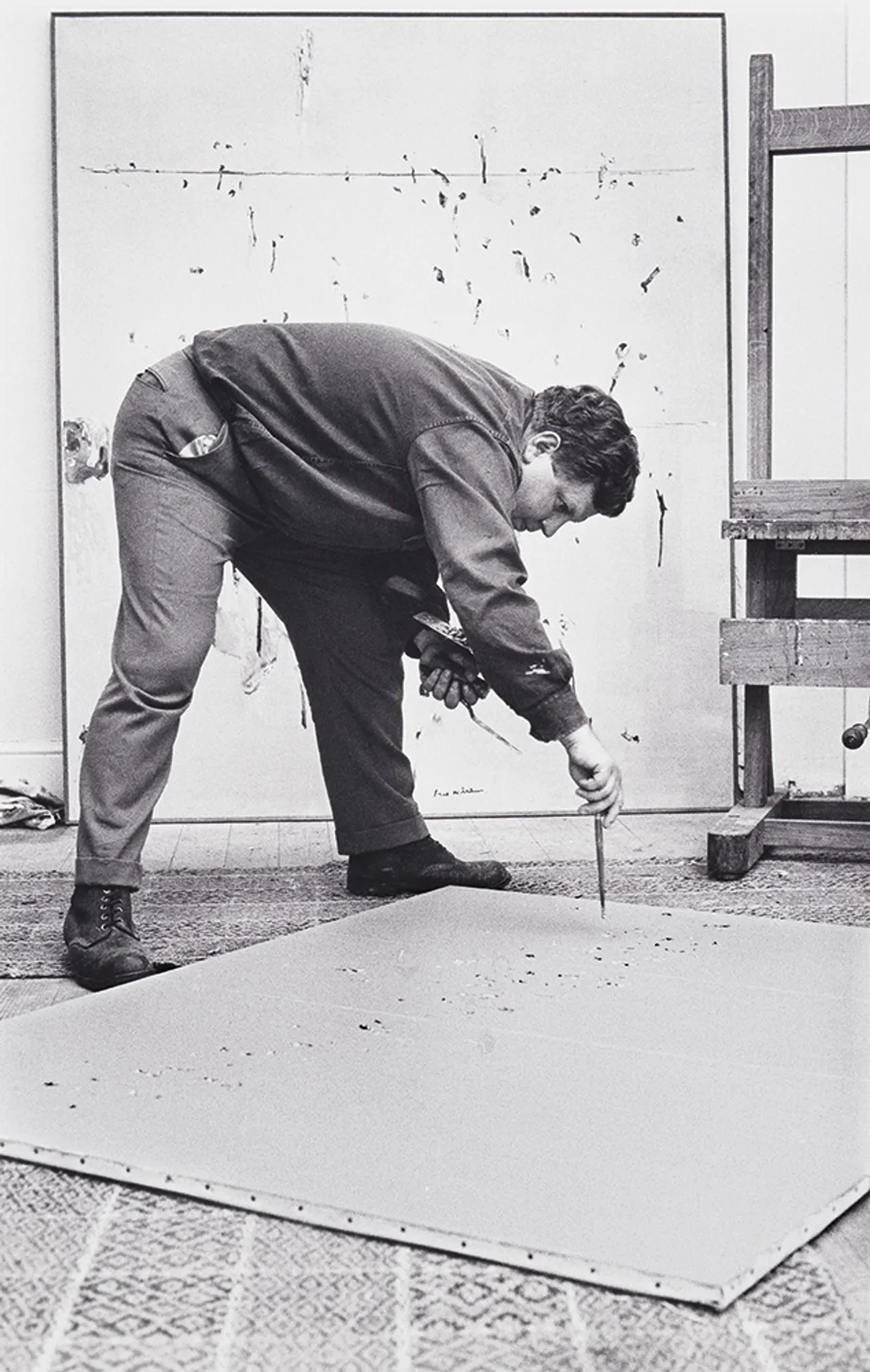
Fred Williams, 1969
photographer: David Moore
National Portrait Gallery of Australia, Canberra
© Lisa, Michael, Matthew and Joshua Moore
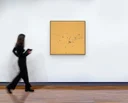
Landscape with hillock (2), 1969 embodies the power of these minimalist images, combining a sandy ochre ground with Williams’ distinctive hieroglyph-like mark-making. Like much of his work, the visual simplicity discerned from a distant view of the painting is replaced on closer inspection by an apprehension of a marked pictorial complexity. Finely variegated brushstrokes introduce rich colour, reflecting Williams’ mastery of his palette, as well as his capacity for painterly expression in lively daubs of oil paint which dance across the canvas, describing vegetation and the geographical structure of the landscape. The picture appears to depict an expansive view, but the inclusion of a painted line which defines the top of the hillock on the right draws the perspective in, creating the illusion of three-dimensional space and situating the viewer inside the landscape. Williams’ depiction of Australia was reduced to its most abstract form in these paintings, but despite this extreme simplification, they remain immediately recognisable and now, more than fifty-five years on, are ingrained in our collective consciousness as familiar representations of the landscape of Australia. ‘Few have ever moved landscape painting so far from its traditional moorings and yet remained so constant to the idea of landscape… The reductions of the landscape to those tiny flecks of paint had surprising effects: the more minimal the means, the more poetic and delicate the effect.’4
1. Fred Williams interviewed by James Gleeson, 3 October 1978, cited in Mollison, J., Fred Williams: A Singular Vision, Australian National Gallery & Oxford University Press, Canberra, 1989, p. 35
2. Fred Williams, Diary entry, 9 November 1967, cited in Hart, D., Fred Williams: Infinite Horizons, National Gallery of Australia, Canberra, 2011, p. 101
3. Hart, ibid., p. 101
4. McCaughey, P., Fred Williams 1927 – 1982, Murdoch Books, Sydney, 1996, p. 218
KIRSTY GRANT