
Fred Williams
(1927 - 1982)
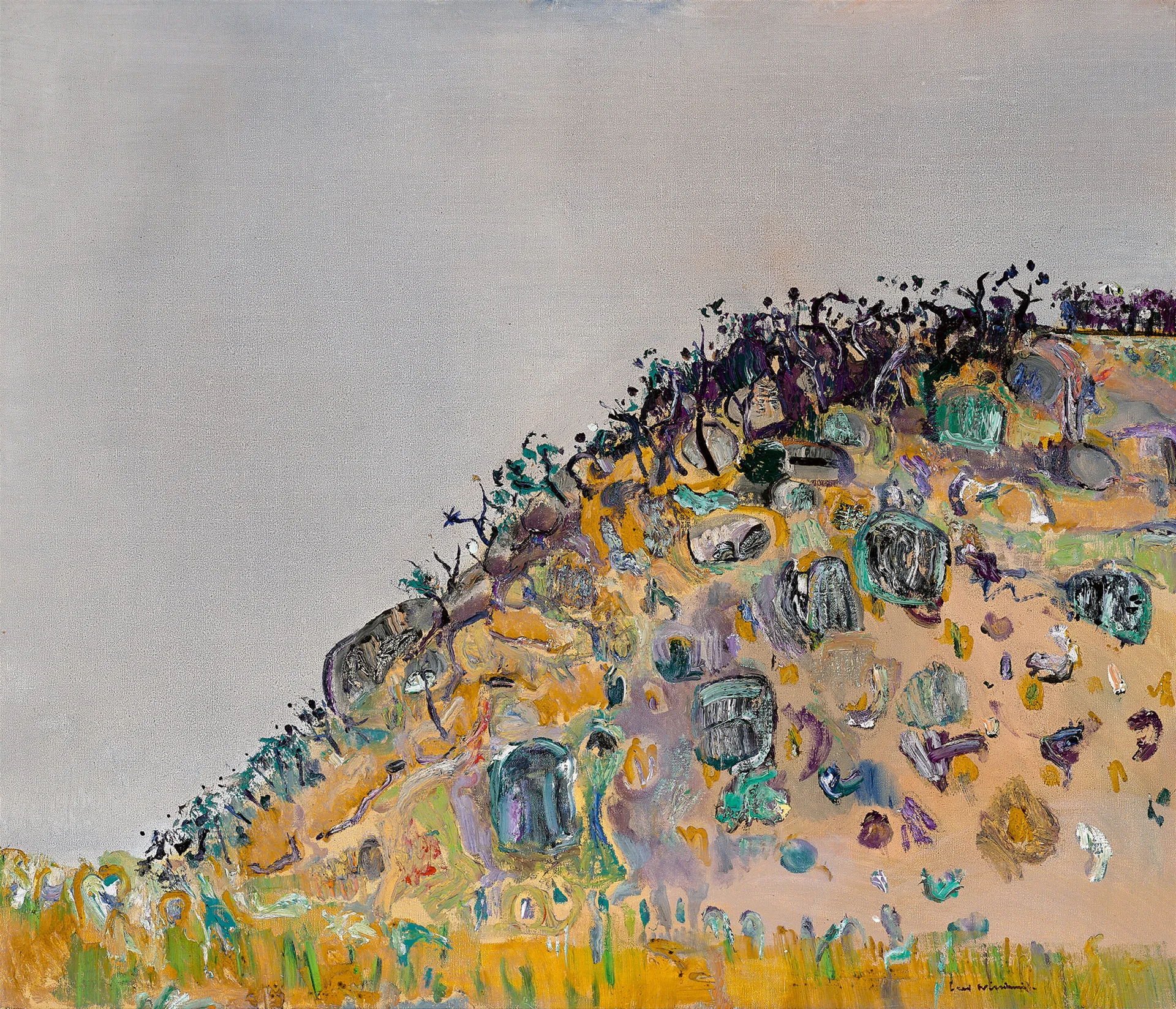
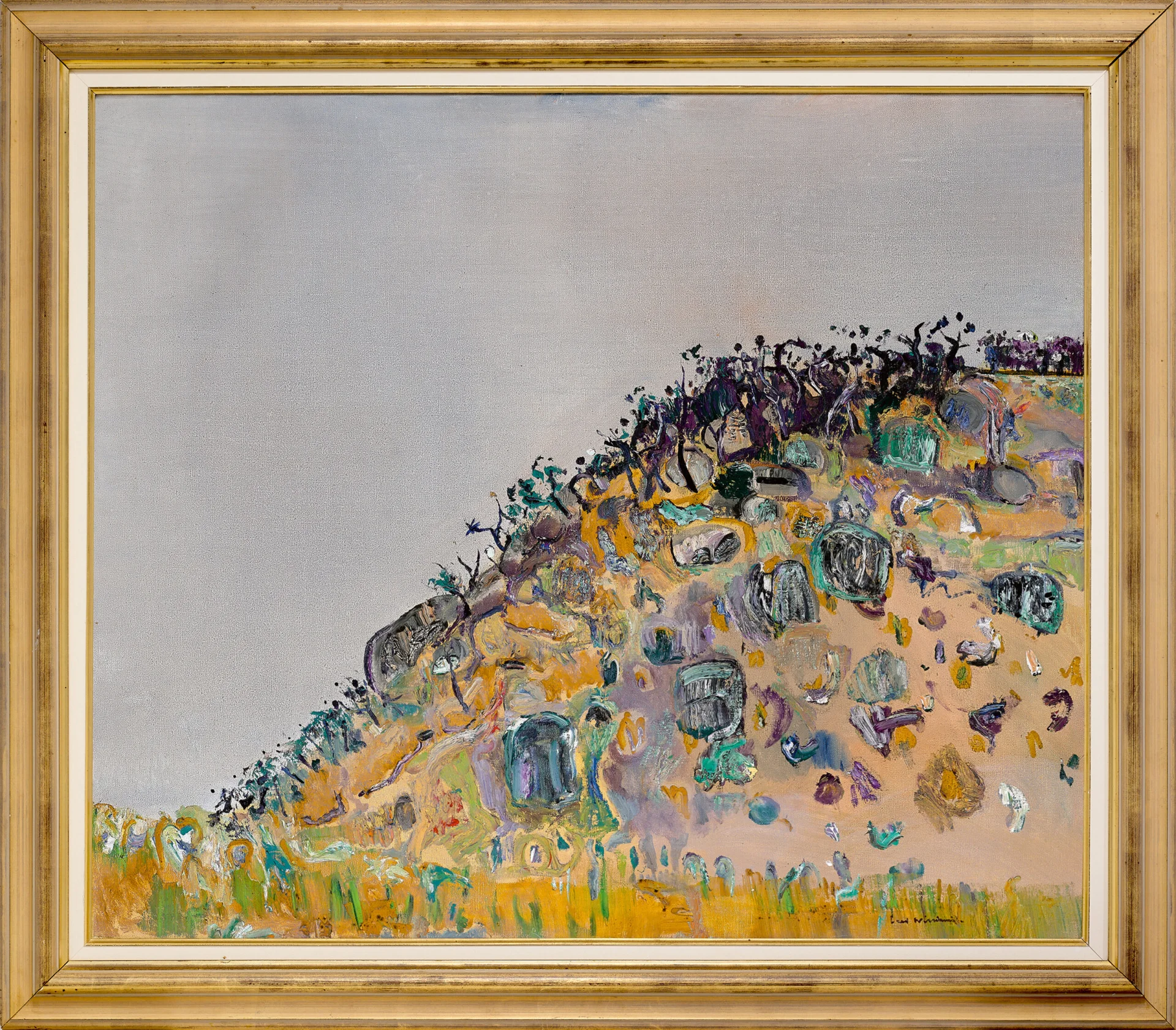
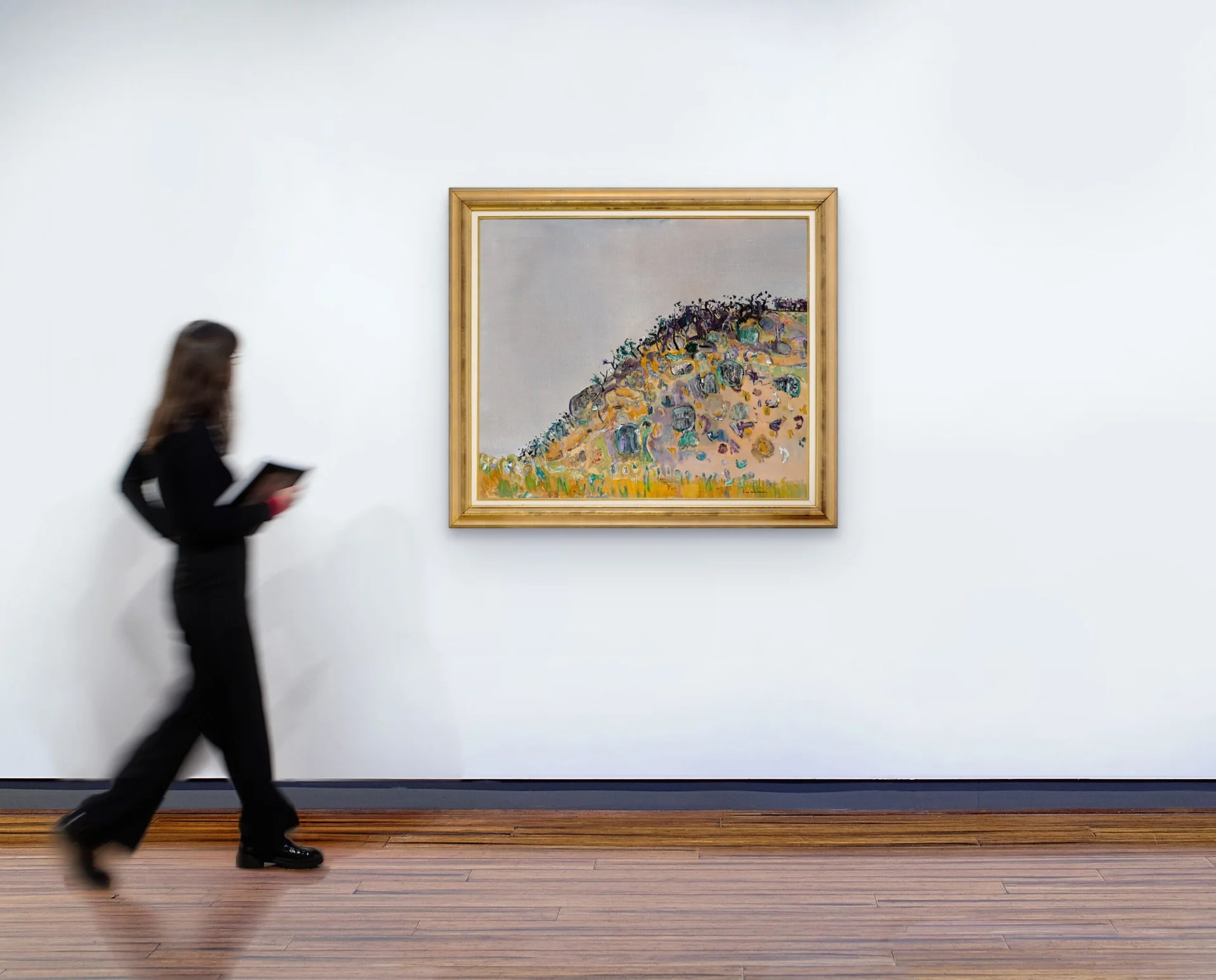
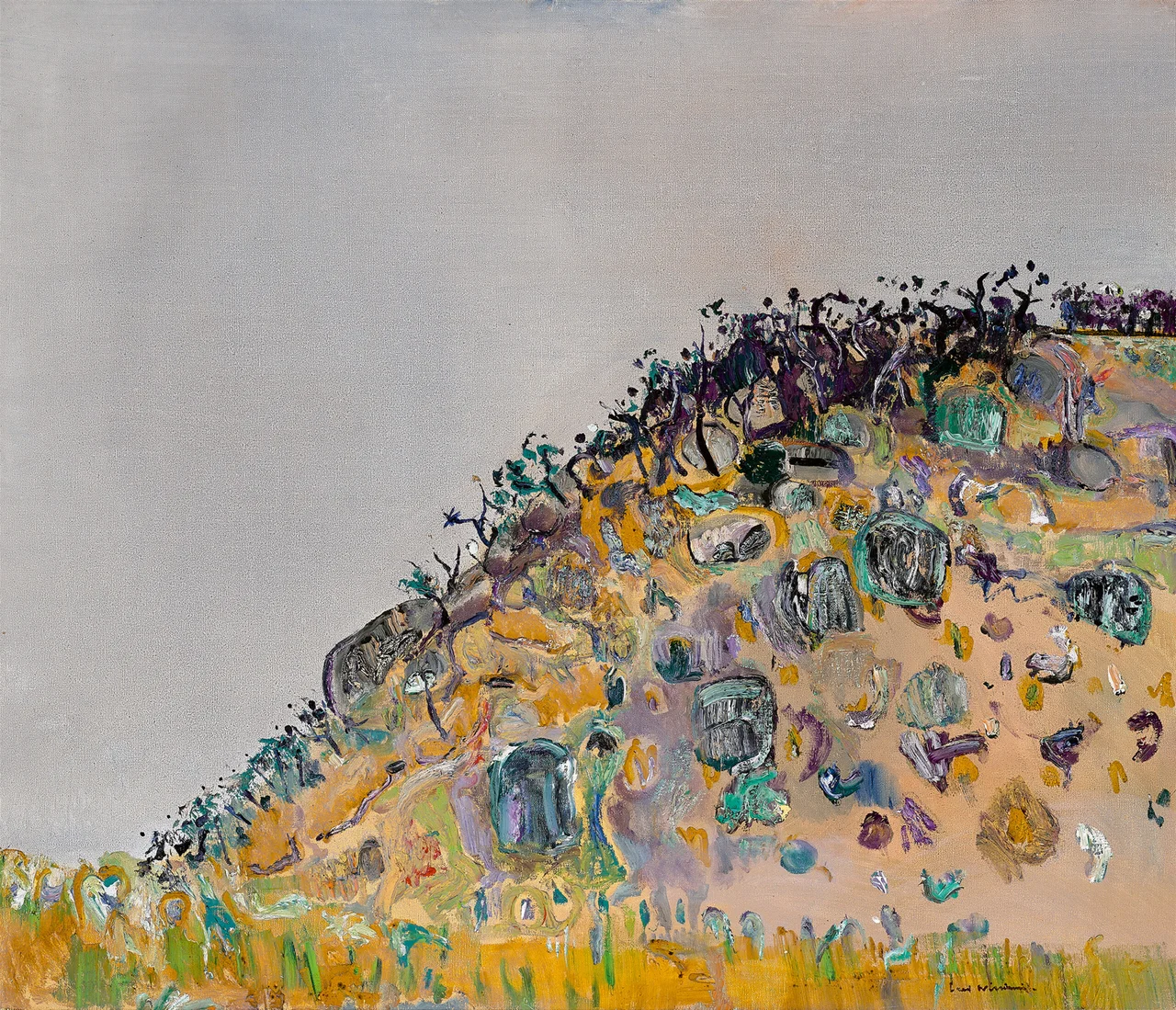
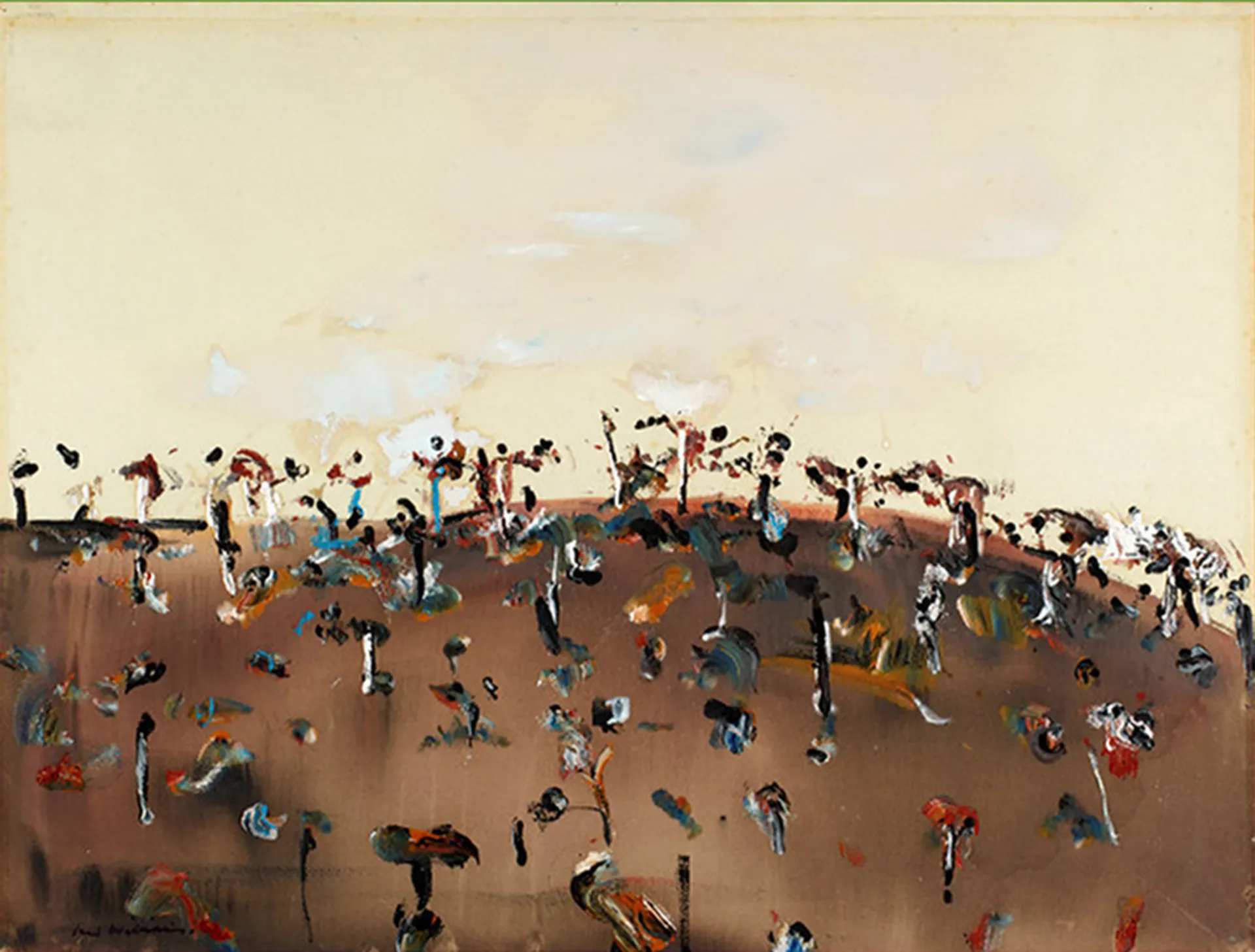
Hillside, You Yangs, 1974
oil on canvas
91.5 x 107.0 cm
signed lower right: Fred Williams.
Estimate:
$350,000 - $450,000
© Estate of Fred Williams/Copyright Agency 2026
lot details
Joseph Brown Gallery, Melbourne
ICI collection, Melbourne, acquired from the above
Joseph Brown Gallery, Melbourne
Private collection, Melbourne, acquired from the above 1984
John Andrews, Sydney
Private collection, Canberra, acquired from the above in October 2001
Exhibited
Spring Exhibition 1977: Recent Acquisitions, Joseph Brown Gallery, Melbourne, 19 October – 3 November 1977, cat. 101 (illus. in exhibition catalogue, dated 1973, n.p.)
We are grateful to Lyn Williams for her assistance with this catalogue entry.
Fred Williams first saw the You Yangs in early 1957, from the deck of the ship on which he was returning home after five years in London, as it sailed up Port Phillip Bay towards Melbourne. This vision coincided with a recognition of the creative potential of the landscape as a subject for his work and the possibility of making a meaningful contribution to a theme with a respected tradition in the history of Australian art. It was not until the winter of 1962 that he visited the You Yangs with his friend, James Mollison, the first of a series of Sunday drawing excursions that continued until the end of the following year. Working on paper in gouache, watercolour and various drawing media, Williams recorded distant views – often seen from the high granite dome of Big Rock – and close-ups which focussed on details of the vegetation and rocky landscape. As Patrick McCaughey described, ‘Painting from the You Yangs, he looked out across an extensive landscape, flat and featureless… The You Yangs as a motif, however, presented him with quite a dramatic landscape; rocky outcrops and the clean-cut profiles of stubbly bush against the sky… a profusion of picturesque motifs.’1
Signalling a new direction for Williams, the major studio paintings that followed received a mixed response at the time. Writing about the You Yangs picture entered into the 1963 Georges Prize, however, Daniel Thomas claimed that ‘such simple, familiar landscapes, apparently so ordinary, have been invested with magic by Williams.’ Foreshadowing the influence they would have on the way Australians understand and imagine the landscape of the country, he continued, ‘Henceforth we will see them through his eyes.’2 Today, works such as You Yangs landscape II, 1963 (National Gallery of Australia) and You Yangs landscape, 1965 (National Gallery of Victoria) are recognised as breakthrough paintings within Williams’ oeuvre and iconic images of twentieth-century Australian painting.
Fred Williams
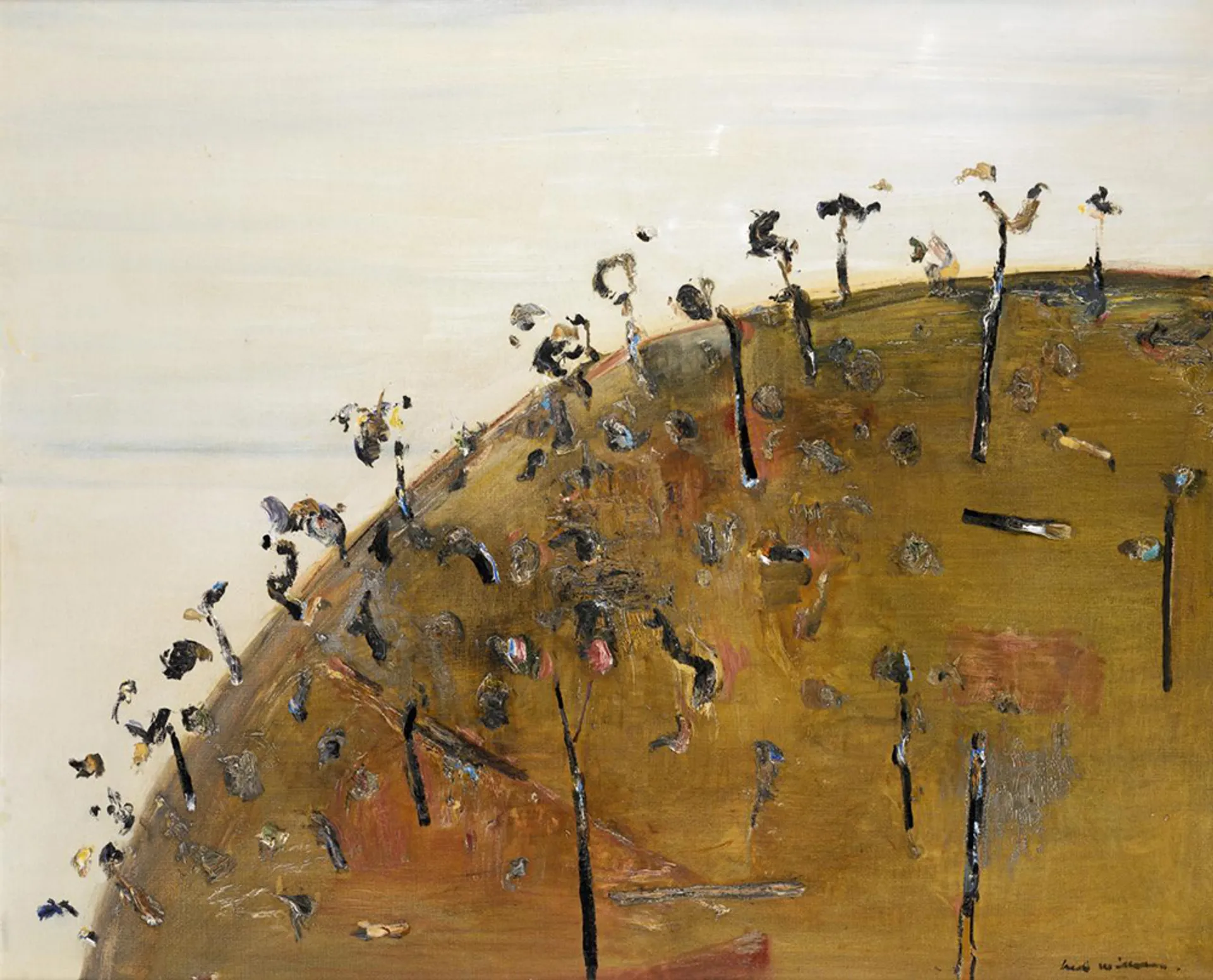
Dark hillside, 1967, dated 1964
oil and tempera on canvas
108.0 x 132.8 cm
National Gallery of Victoria, Melbourne
© Estate of Fred Williams
Fred Williams
Hillside, 1966
gouache on paper
55.2 x 74.8 cm
Art Gallery of New South Wales, Sydney
© Estate of Fred Williams
The You Yangs continued to be a source of inspiration for Williams, featuring in a series of intaglio prints made during the mid-1960s and later paintings which emerged from subsequent visits to the area. The artist, Fraser Fair, was Williams’ driver and companion on regular outdoor painting excursions between 1974 and 1980, recalling, ‘The ideal place to paint was within an hour from home, with a good subject within two hundred metres of the carpark. Some excursions were made to places where Fred had been successful before, or where others had painted. If the spot was good, Fred would concentrate all day on his work. He worked hard, swiftly, with energy and flow… the meeting with the landscape was his purpose for being alive.’3 From the late 1960s, Williams also changed his way of working outdoors and rather than using the easily portable medium of gouache on paper – with these works forming the basis for paintings made in the studio – he began to make outdoor oil sketches. Working on canvases measuring about one metre square, ‘he would pack a fistful of brushes, as well as oil and turpentine and three boxes of each colour he felt he might need during the day.’4 Fraser Fair explained, ‘He wanted to bring back semi-complete pictures. A good day was three paintings, occasionally four; two was common enough… Next day he looked forward to his favourite occupation: uninterrupted fiddling with the paintings, working into them while they were wet.’5
Painted in 1974, Hillside, You Yangs combines Williams’ continued interest in this landscape with an expanded colour palette. Diary entries throughout the early 1970s reflect this growing interest – ‘I want all the qualities in the present work – but I want them to be read as colour’ (23 January 1972); ‘I have a fierce desire to paint colour… I decide to completely? alter my palette.’ (4 April 1972)6 – and here, shades of purple and green, together with touches of red paint add to the expressive depiction of the rocky treed hillside. By this time, it was an area that Williams knew well and which he had painted many times, but his engagement with the landscape and way of looking at it through an experienced painter’s eye meant that there were still new elements to discover and depict. The brilliance of the colour and dynamism of the brushstrokes, particularly the complex tracery of marks that describes trees and their foliage along the edge of the hill against the brooding grey sky, clearly reflect the work of an artist who was very much at home with his subject and his craft.
1. McCaughey, P., Fred Williams 1927 – 1982, Murdoch Books, Sydney, 1996, p. 153
2. Thomas, D., ‘The week in art’, Sunday Telegraph, Sydney, 12 May 1963, p. 94, cited in Smith, J., Fred Williams in the You Yangs, Geelong Gallery, Geelong, 2017, p. 17
3. Fraser Fair, cited in Mollison, J., A Singular Vision: The Art of Fred Williams, Australian National Gallery & Oxford University Press, Canberra, 1989, pp. 173 – 174
4. Mollison, ibid., p. 173
5. Fraser Fair, cited in Mollison, ibid., p. 174
6. Fred Williams, cited in Mollison, ibid., pp. 157 – 158
KIRSTY GRANT