
Jeffrey Smart
(1921 - 2013)
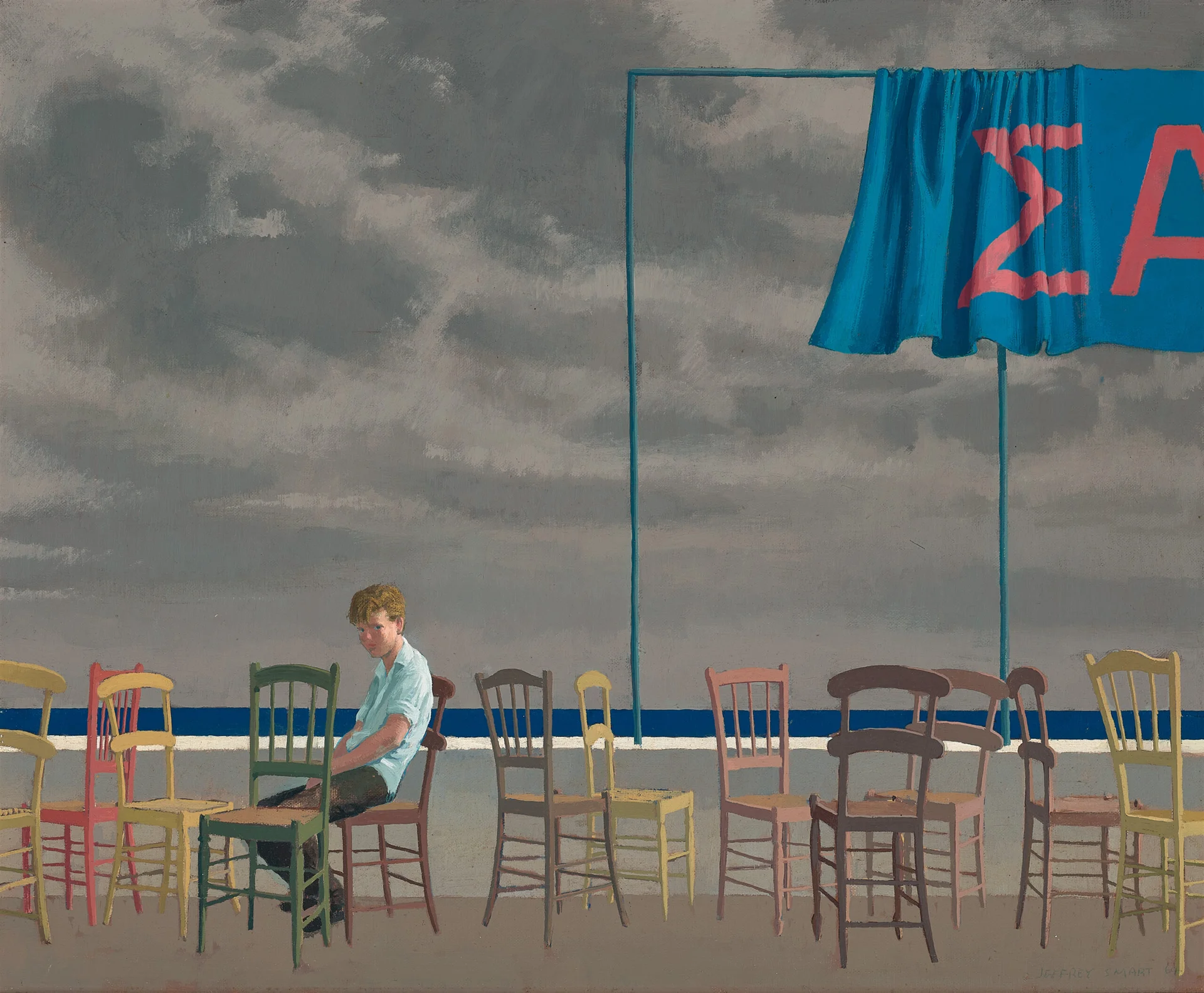
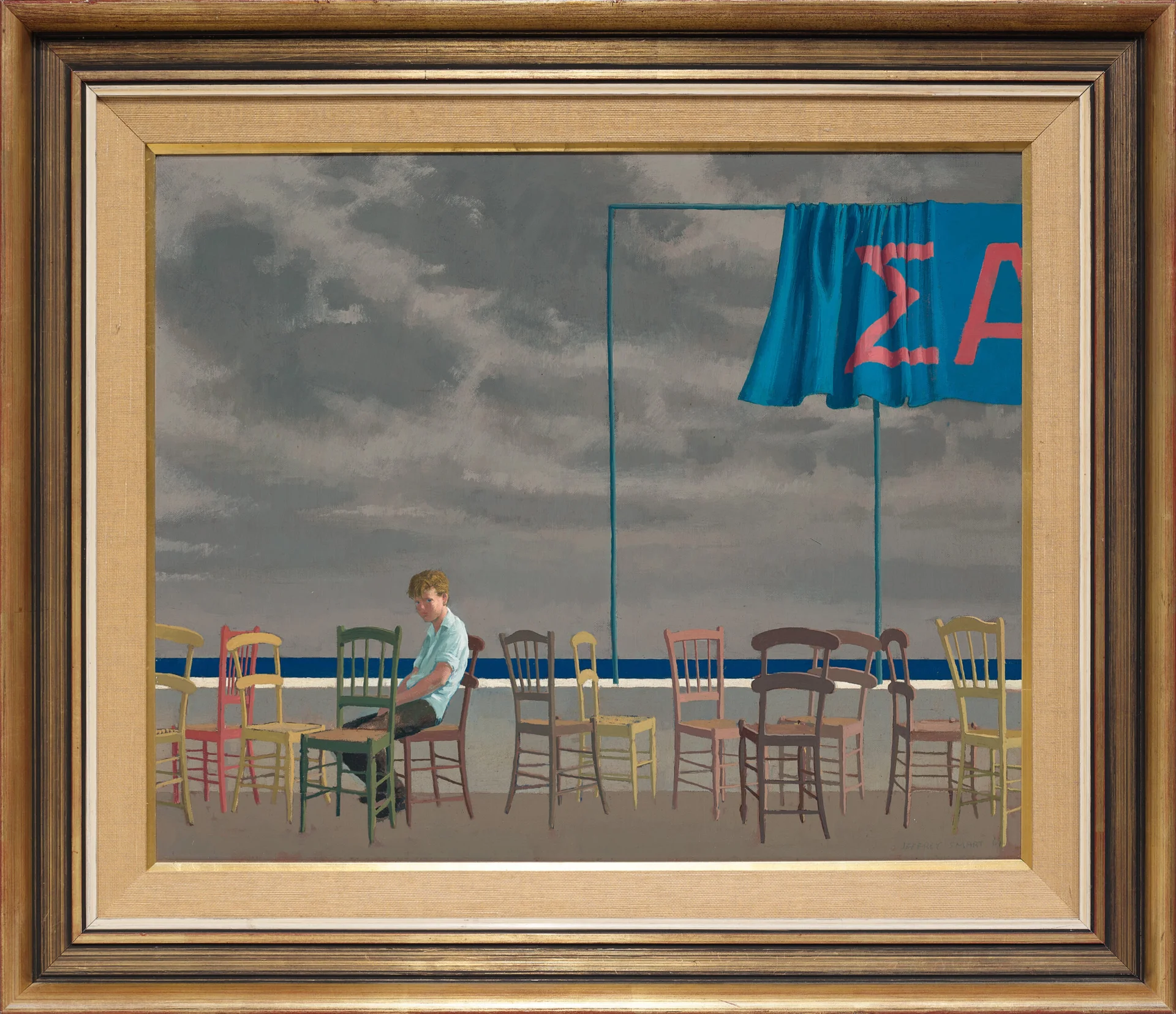
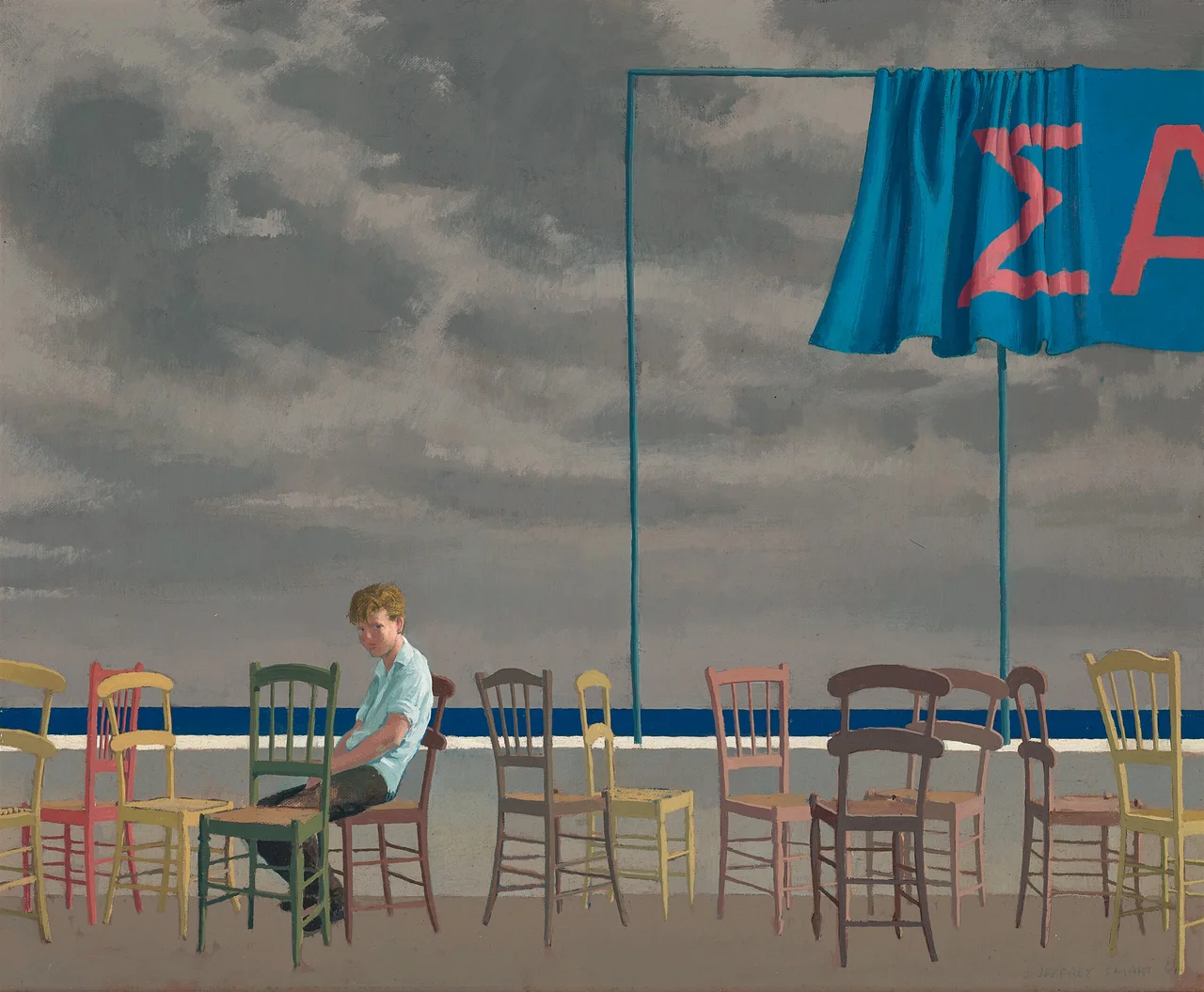
Piraeus I, 1964
oil on canvas on board
49.5 x 60.5 cm
signed and dated lower right: JEFFREY SMART 64
bears inscription verso: PIRAEUS I
Estimate:
$250,000 - $350,000
© courtesy of The Estate of Jeffrey Smart 2026
lot details
bears inscription verso: PIRAEUS I
Galleria 88, Rome
Private collection, Italy
Sotheby’s, Sydney, 31 July 1985, lot 57
Private collection, Melbourne
Deutscher and Hackett, Melbourne, 9 May 2007, lot 30
Private collection, Canberra
Exhibited
Jeffrey Smart, Galleria 88, Rome, 8 – 23 April 1965, cat. 7
Exhibition of Paintings: Jeffrey Smart, Macquarie Galleries, Sydney, 29 September – 11 October 1965, cat. 11 (as ‘Piraeus’)
Literature
Quartermaine, P., Jeffrey Smart, Gryphon Books, Melbourne, 1983, cat. 423, pp. 29 (illus.), 108
Related Works
Study for ‘Piraeus I’, 1964, gouache on paper, no size recorded, private collection
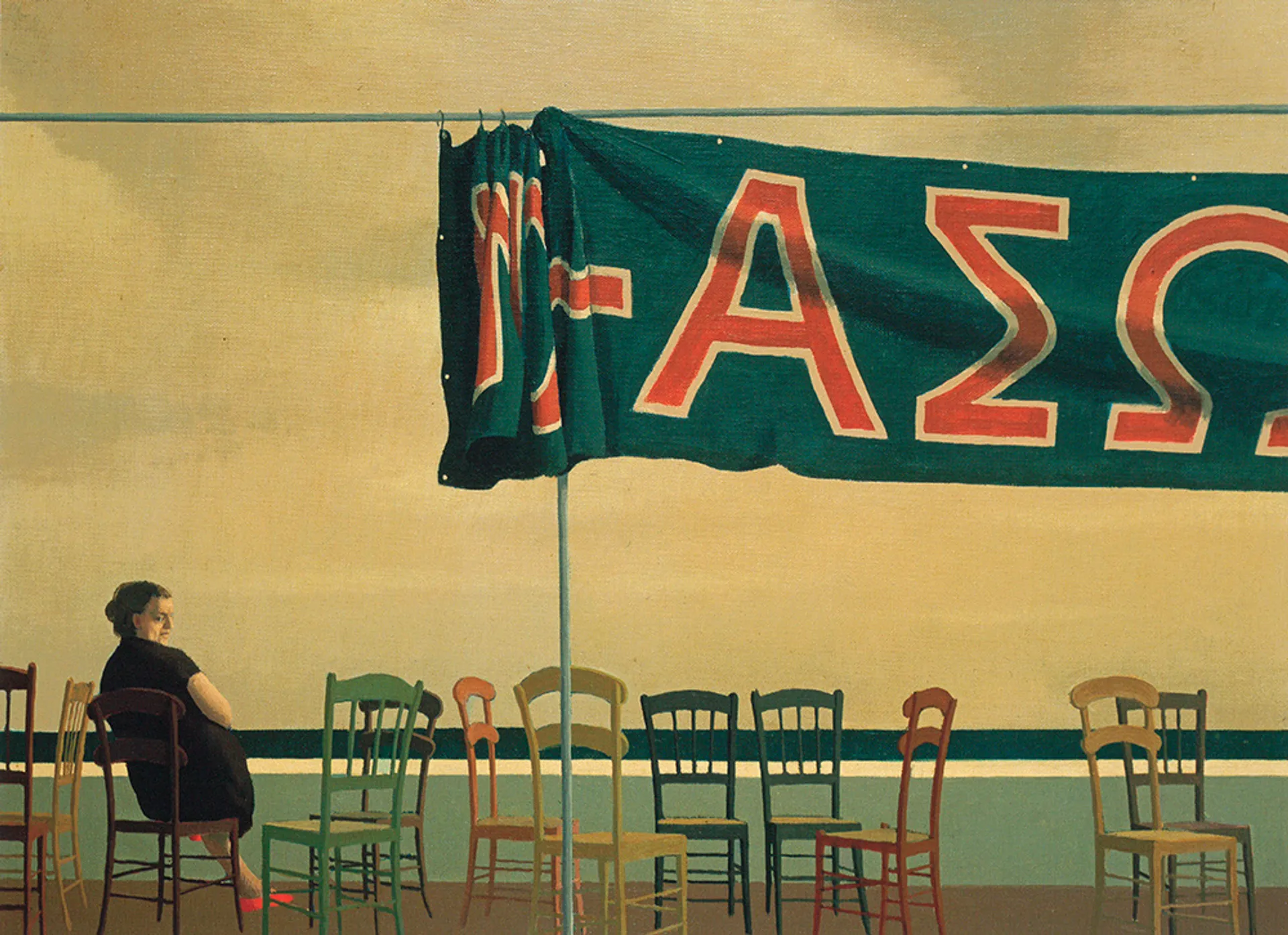
Piraeus II, 1964, oil on canvas, 50.0 x 61.0 cm, private collection
We are grateful to Stephen Rogers, Archivist for the Estate of Jeffrey Smart, for his assistance with this catalogue entry.
Piraeus, the ancient port of Athens, was a place of renown in classical history. In the age of Thucydides, it housed the fleet that made the Athenians the supreme naval power of the Mediterranean, but by 1964, it was chiefly notable as the departure point for thousands of Greek émigrés taking the long voyage to Australia.
Jeffrey Smart travelled in the opposite direction that year, making his first visit to Greece at the age of 42. He had got off the boat in London in February, met up with fellow painter Justin O’Brien, and headed to Paris, where they bought a Simca touring car. The duo set off on an odyssey through Europe, ending in Greece, where O’Brien had been a prisoner-of-war. They would spend the summer on the island of Skyros, a stay Smart describes in his rip-roaring memoir, Not Quite Straight (1996).
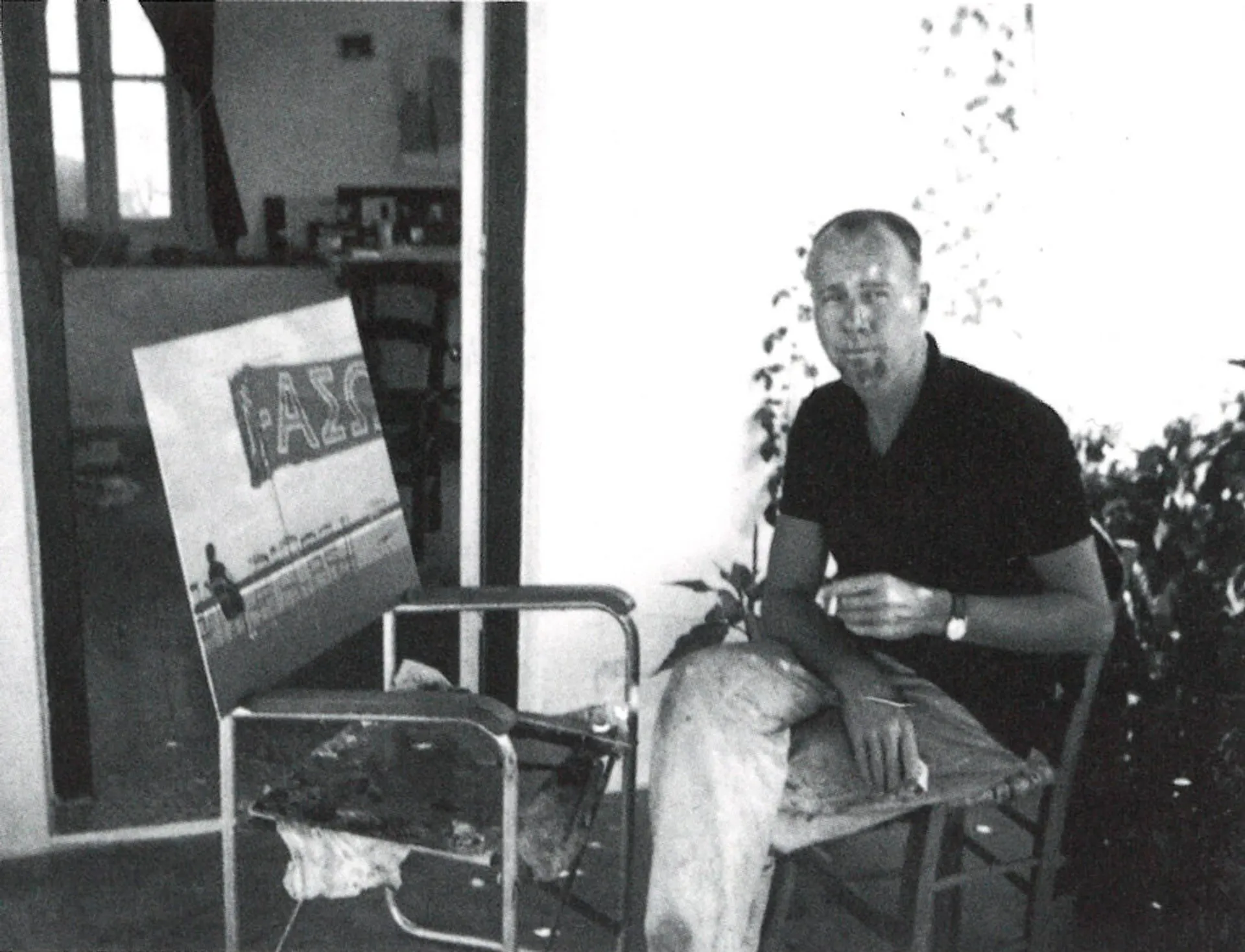
The artist at work on ‘Piraeus II’ in Skyros, Greece, 1964
photographer unknown
The sojourn in Skyros, which ended in August, proved immensely important for Smart. It provided an opportunity to work without interruption and confirmed him in his decision to settle in Europe. He writes: ‘This was the first chance I had had to work full time for twelve years – since I painted Wallaroo in Adelaide. It was amazing how much one could produce. I could see an exhibition forming, but I didn’t think about it too much, it was so good to be able to work so hard.’1
The months of hard labour would culminate in a successful show at Galleria Ottantotto in Rome, in April 1965, which came along at the right time for Smart’s depleted finances. Piraeus I, 1964 was included in that exhibition and purchased by a private collector. It would not arrive in Australia until it was sold at Sotheby’s, Sydney, in 1985.
The painting is relatively relaxed by Smart’s later standards, perhaps reflecting his pleasure in being able to work full-time. Geometry still plays a prominent role in the composition, but the most important part of the work must be the row of wooden chairs that runs across the foreground. One can feel the artist’s absorption in painting the many aspects of these chairs: their different colours, angles and positions. They are arranged in such a way that one can easily imagine groups of people sitting on them, engaged in conversation.
There is, however, no busy crowd in this painting, only a lone boy, slumped on a chair, beneath a grey, cloudy sky. The boats have all departed, the tourists have gone back to their hotels. It looks as if it might rain. It’s a melancholy image – that special brand of melancholy one finds in a resort town out of season, or a bustling port when all activity has ceased.
Jeffrey Smart
Piraeus II, 1964
oil on canvas
50.0 x 61.0 cm
Private collection
© The Estate of Jeffrey Smart
Jeffrey Smart
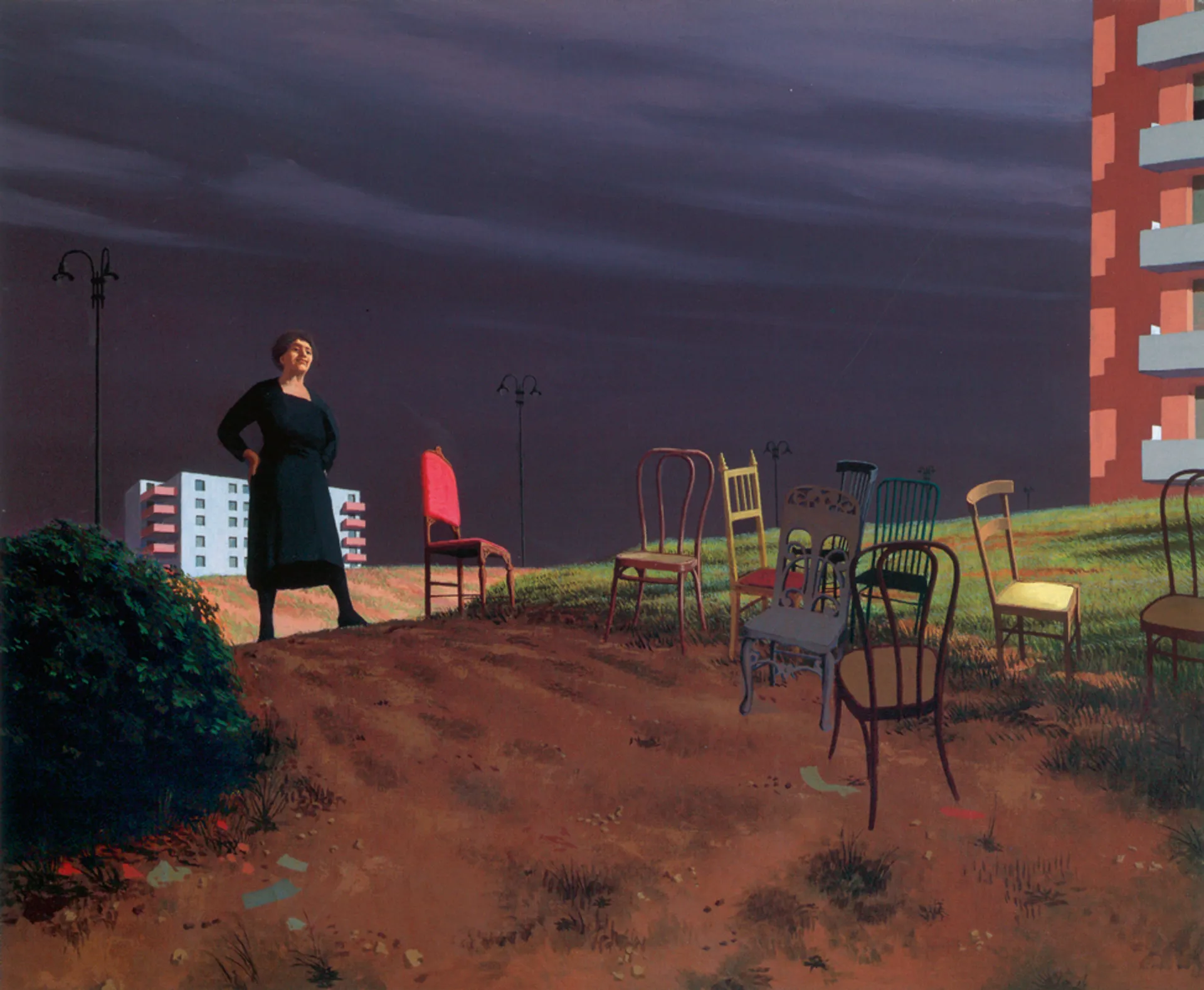
Flea market, Rome, 1966
oil on canvas
65.0 x 81.0 cm
Private collection
© The Estate of Jeffrey Smart
One thinks of the cities in Giorgio de Chirico’s paintings – empty, apart from a small figure or two and perhaps the shadow of a mysterious statue. De Chirico’s melancholy always makes us feel as if something has been lost, whether it be a sense of community, a closeness to nature or a connection to a classical past. There are traces of this break with history in Piraeus I, because this scene is a very long way from what the port must have looked like in the Athenian Golden Age, in the 5th century BCE.
Where de Chirico’s metaphysical style of painting displays a powerful theatricality, Smart prefers an understated realism. The figure in this painting is not isolated in the cosmos or alienated from history; he is simply alone. The blue curtain upon which the first two letters of ‘Greece’ are spelled out in pink suggests we might be looking at the residue of some welcoming ceremony, while the thin blue rack upon which the curtain is draped creates a frame for a conspicuously empty seascape. The bottom part of the painting is as flat as any hard-edged abstraction, featuring two shades of grey, a strip of white and a band of dark blue.
Everything in the picture conspires to undermine the cheerfulness of the blue and pink banner. One might imagine that Smart is making an oblique comment on the dullness of the port and the view, but this doesn’t square with the account he gives of Athens in his memoir. He recalls how ‘the night life in the Plaka, the old town, was astonishing. There were bands playing and people dancing; restaurants were vivacious. We saw patrons getting up and singing from their tables. There were few tourists, and we were fortunate to see all this before it became false and commercialised.’2
Perhaps the melancholy in Piraeus I should not be equated with loneliness or sadness, but with that bittersweet feeling that although it’s been a great party, there comes a time when we must leave. From the bustle of the capital, Smart and O’Brien set sail for the provincial solitude of Skyros, gazing their last at an almost-empty field of chairs that conjured up memories of those noisy, hedonistic Athenians who sang, danced and talked up a storm every night in the Plaka.
1. Jeffrey Smart, Not Quite Straight: A Memoir, William Heinemann Australia, Melbourne, 1996, p. 368
2. ibid., p. 364
JOHN McDONALD
John McDonald writes art, film & politics for his site, ‘Everything the artworld doesn’t want you to know’, Everythingthe.com