

Jeffrey Smart
(1921 - 2013)
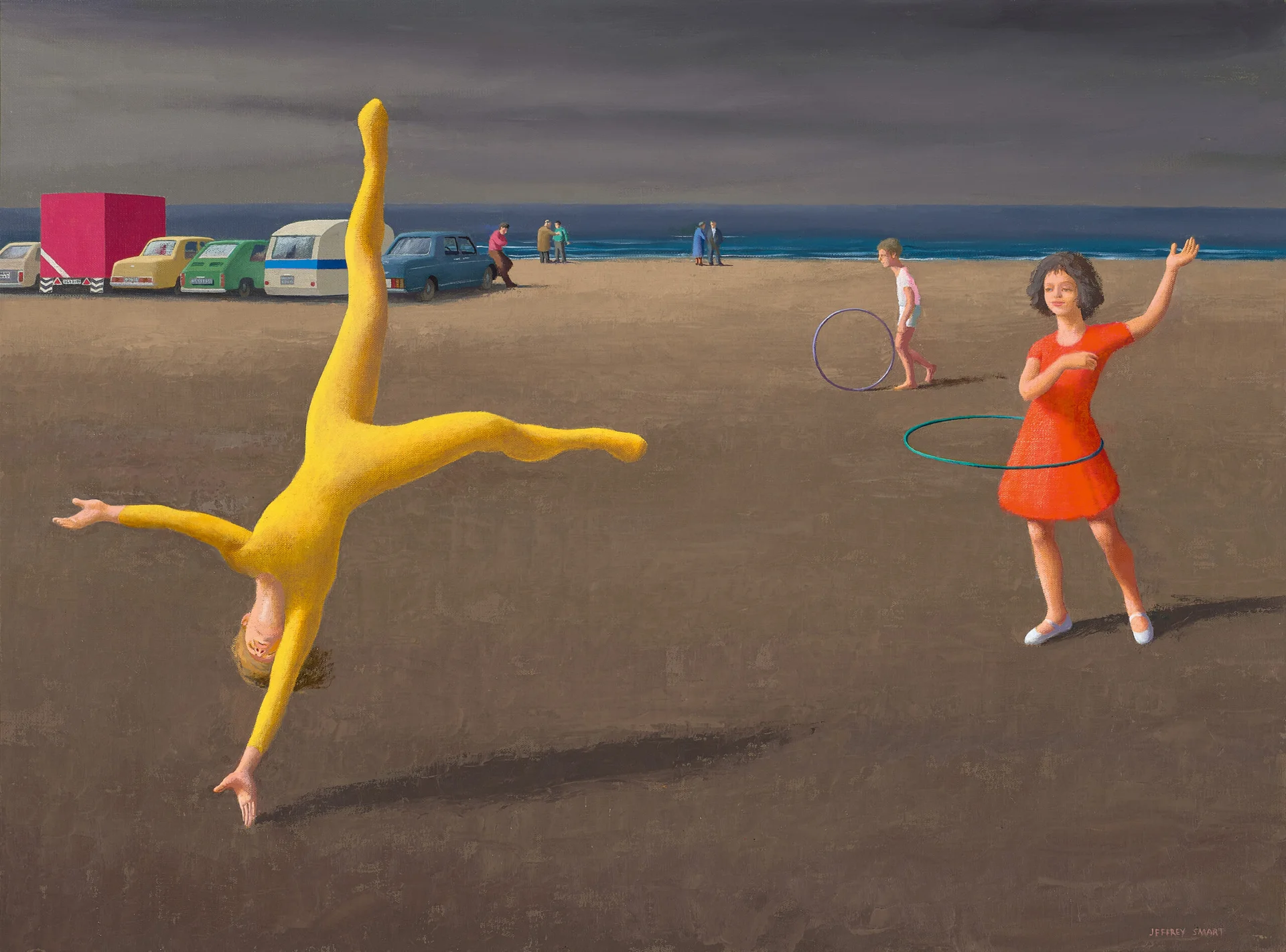
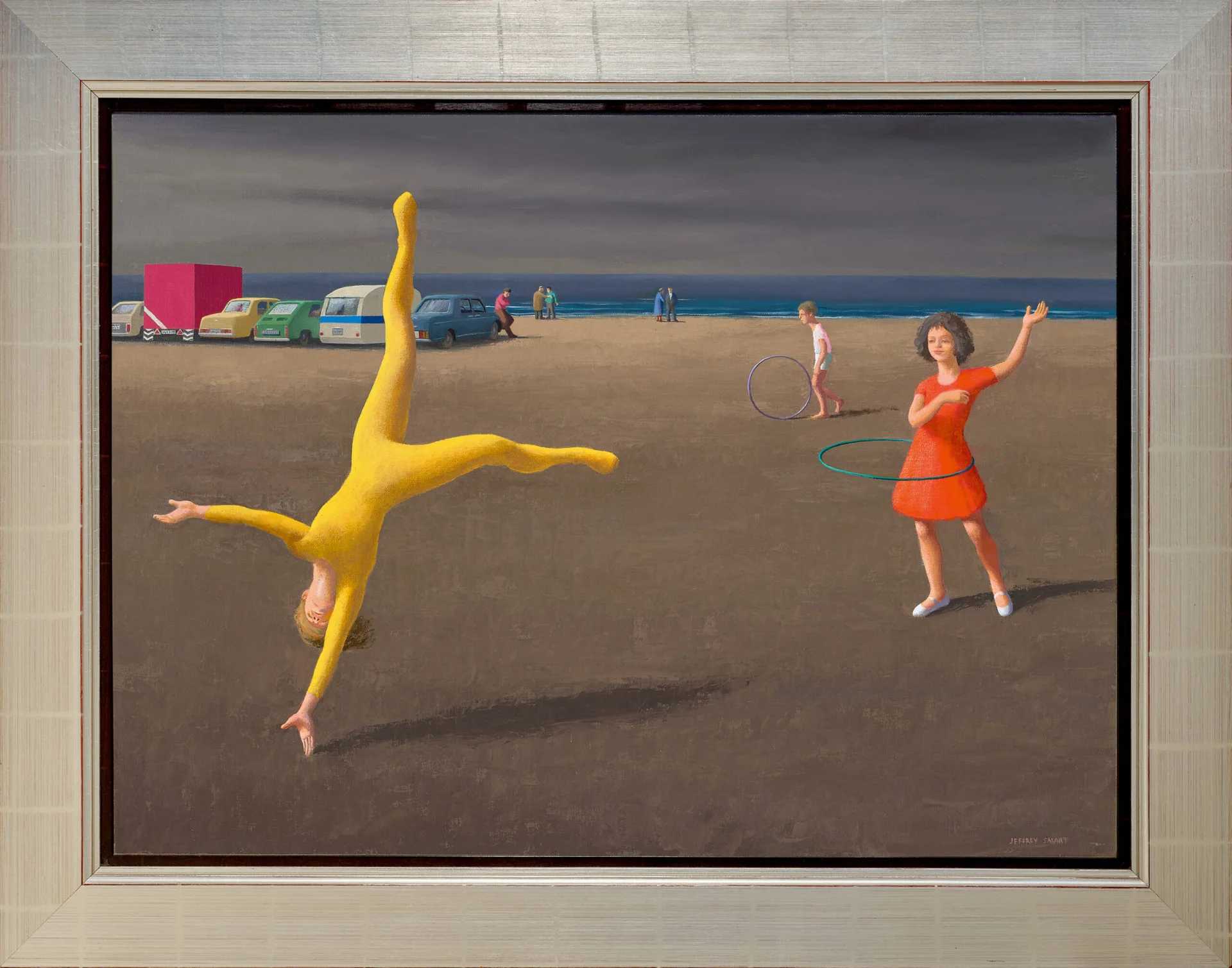
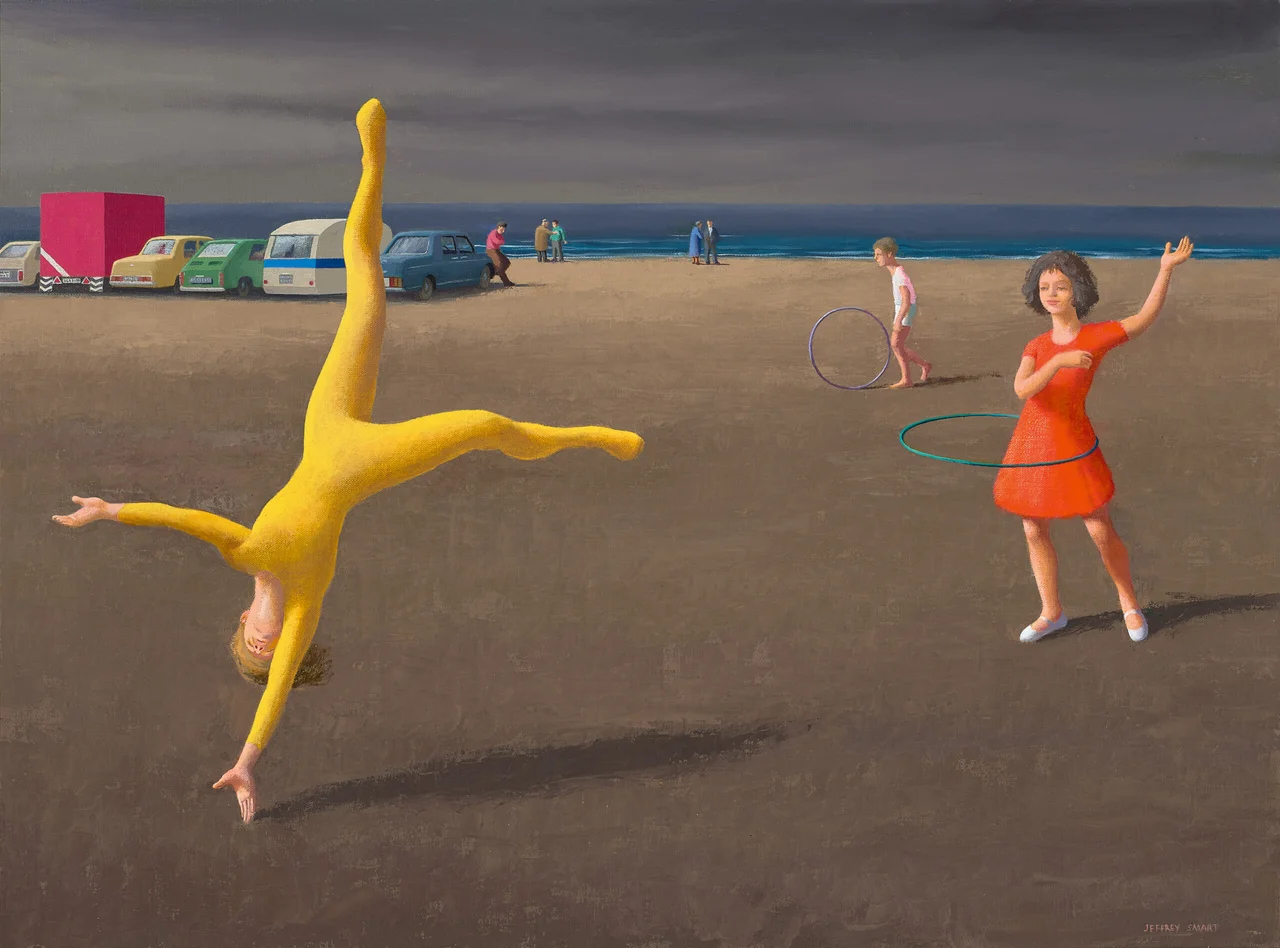
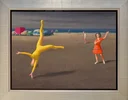
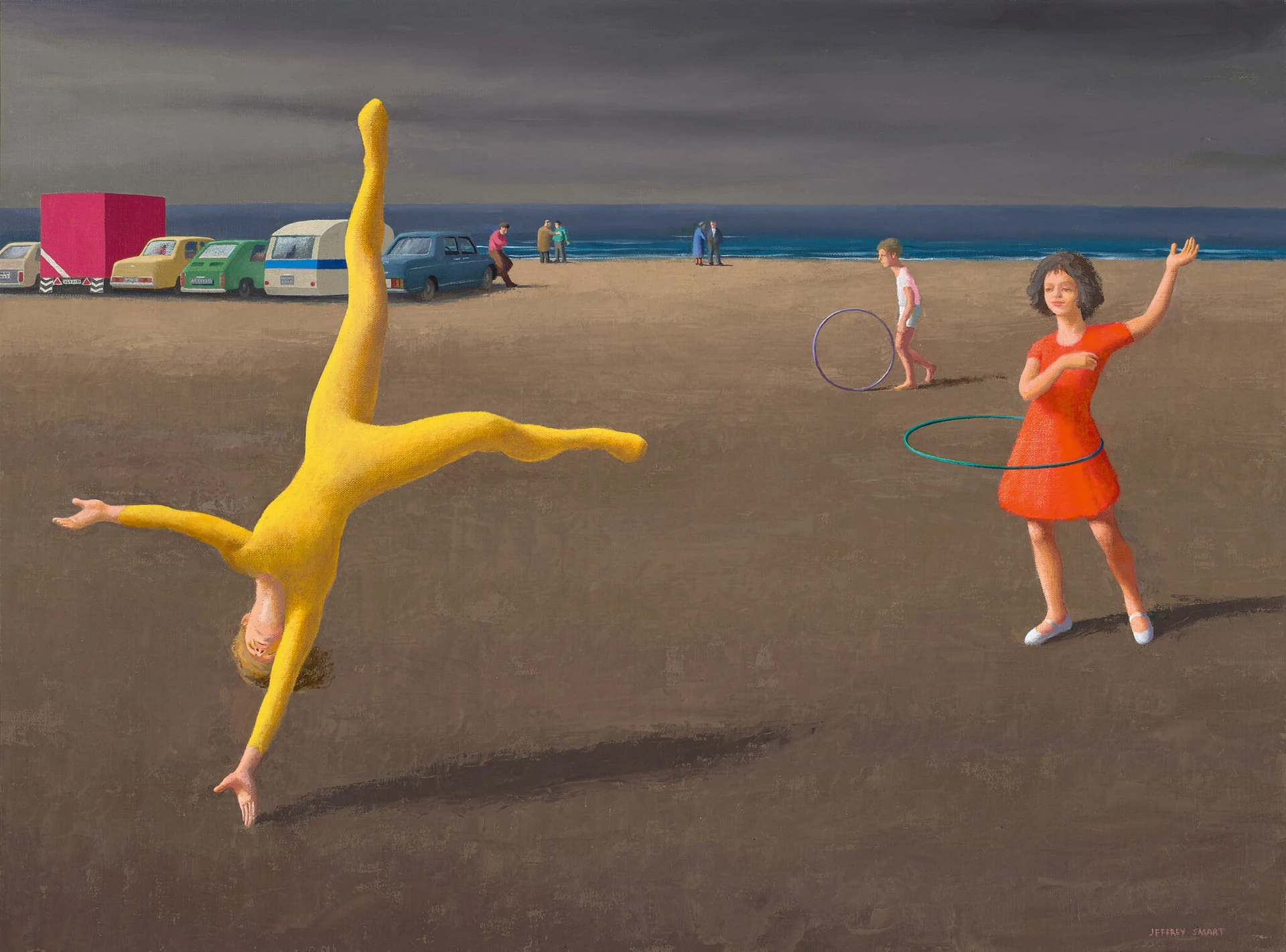
Waiting for the hovercraft, Boulogne, 1986 – 87
oil on canvas
68.0 x 91.5 cm
signed lower right: JEFFREY SMART
bears inscription verso: Waiting for the Hovercraft, Boulogne
Estimate:
$500,000 - $700,000
© courtesy of The Estate of Jeffrey Smart 2026
lot details
bears inscription verso: Waiting for the Hovercraft, Boulogne
Australian Galleries, Melbourne
Private collection, Melbourne
Sotheby’s, Melbourne, 7 May 2001, lot 29
Private collection, Sydney
Deutscher and Hackett, Melbourne, 9 May 2007, lot 23
Private collection, Canberra
Exhibited
Jeffrey Smart, Rex Irwin Art Dealer, Sydney, 3 – 21 November 1987, cat. 15 (illus. in exhibition catalogue)
Jeffrey Smart, Australian Galleries, Melbourne, 1 – 29 May 1989, cat. 29
Literature
Amadio N., ‘Smart intellect shines through’, Sunday Telegraph, Sydney, 8 November 1987, p. 142
Lynn, E., ‘Jeffrey Smart: relishing life’s ironies’, The Weekend Australian, 14 – 15 November 1987, p. 12
McDonald, J., Jeffrey Smart: Paintings of the ’70s and ’80s, Craftsman House, Sydney 1990, cat. 319, p. 161
earce, B., Jeffrey Smart, The Beagle Press, Sydney, 2005, p. 199 (illus.)
Related Works
First study for Waiting for the Hovercraft, Boulogne, 1986 – 87, oil on paper on canvas, 32.5 x 45.0 cm, private collection
Second Study for Waiting for the Hovercraft, Boulogne, 1986 – 87, oil on canvas, 35.0 x 47.0 cm, private collection
Drawing for Waiting for the hovercraft, Boulogne, 1986 – 87, charcoal, ink on paper, 38.0 x 29.0 cm, private collection
We are grateful to Stephen Rogers, Archivist for the Estate of Jeffrey Smart, for his assistance with this catalogue entry.
There have been many great masters who showed no aptitude for painting the human figure. Think of Nicolas Poussin, Claude Lorrain or J.M.W. Turner – each of them recognised as an all-time great, none of them capable of painting a naturalistic figure. Although there may be an abundance of figures in Poussin’s paintings, they were frequently taken from classical statues and bas-reliefs rather than life. Idealised in their forms and gestures, these figures can seem incredibly stiff to the modern eye. For Poussin, composition was paramount, and the human form subordinate to that endeavour. With Claude or Turner, it was the landscape that mattered, with figures being used primarily for scale.
As a painter in the classical tradition, Jeffrey Smart was an admirer of Poussin. When asked about the figures in his pictures he would usually say they were merely devices for establishing scale. Smart made such pronouncements with a straight face, but those who knew him recognised the familiar traces of irony and dry wit. As the title of his autobiography suggested, there was much about Smart that was ‘not quite straight’, including the way he discussed his paintings in public.
Jeffrey Smart
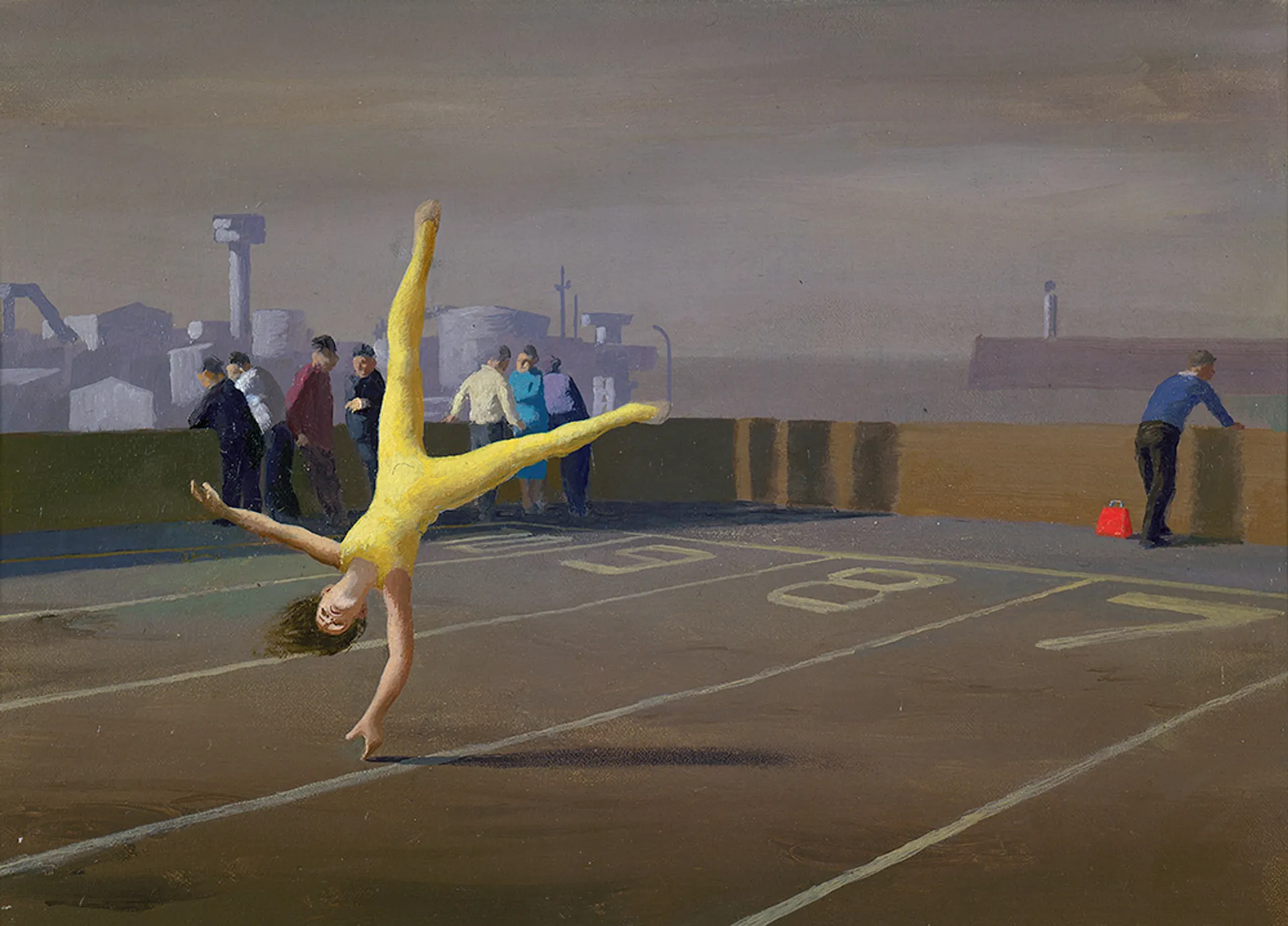
First Study for Waiting for the Hovercraft, Boulogne, 1986 – 87
oil on paper on canvas
33.0 x 45.0 cm
Private collection
© The Estate of Jeffrey Smart
Waiting for the hovercraft, Boulogne, 1986 – 87 is unusual for the artist in that it features three figures as the ostensible subject of the work. It is even more unusual that these figures should be depicted in motion: an androgynous child in a yellow leotard attempting a strenuous backflip, a girl in a red dress whirling a hula hoop around her waist, and a boy in shorts pushing another hoop. For the most part, the figures in Smart’s paintings stand still, as if posing for the camera. By his usual standards, this scene is action-packed.
Smart’s version of classicism has a decidedly modern aspect in that he has no interest in painting great men, stories from Antiquity or the Bible, or important moments in history. He depicts ordinary men, women and children in scenes drawn from contemporary life. Nobody in Poussin’s paintings ever waited on a hovercraft, or even a trireme. Smart’s subject is the apparent lack of a subject. These people are not engaged in any event of momentous significance; they are simply passing the time, waiting for the gizmo that will whisk them across the English Channel. But what is Smart actually saying about our eventless, modern lives compared to those of the past? Should we see our routines as dull and empty, or comfortable and reassuring?
It’s an ambiguity he was never willing to resolve, believing it was the viewer’s prerogative to decide how a painting should be interpreted. When Smart assured us that he saw beauty in the urban landscapes he painted, with their expanses of asphalt and concrete and gaudy advertising signs, there were many who preferred to view these scenes as images of existential despair. This may seem like a plausible reading, but anyone who knew Smart could only laugh at the idea of him as a connoisseur of modern alienation.
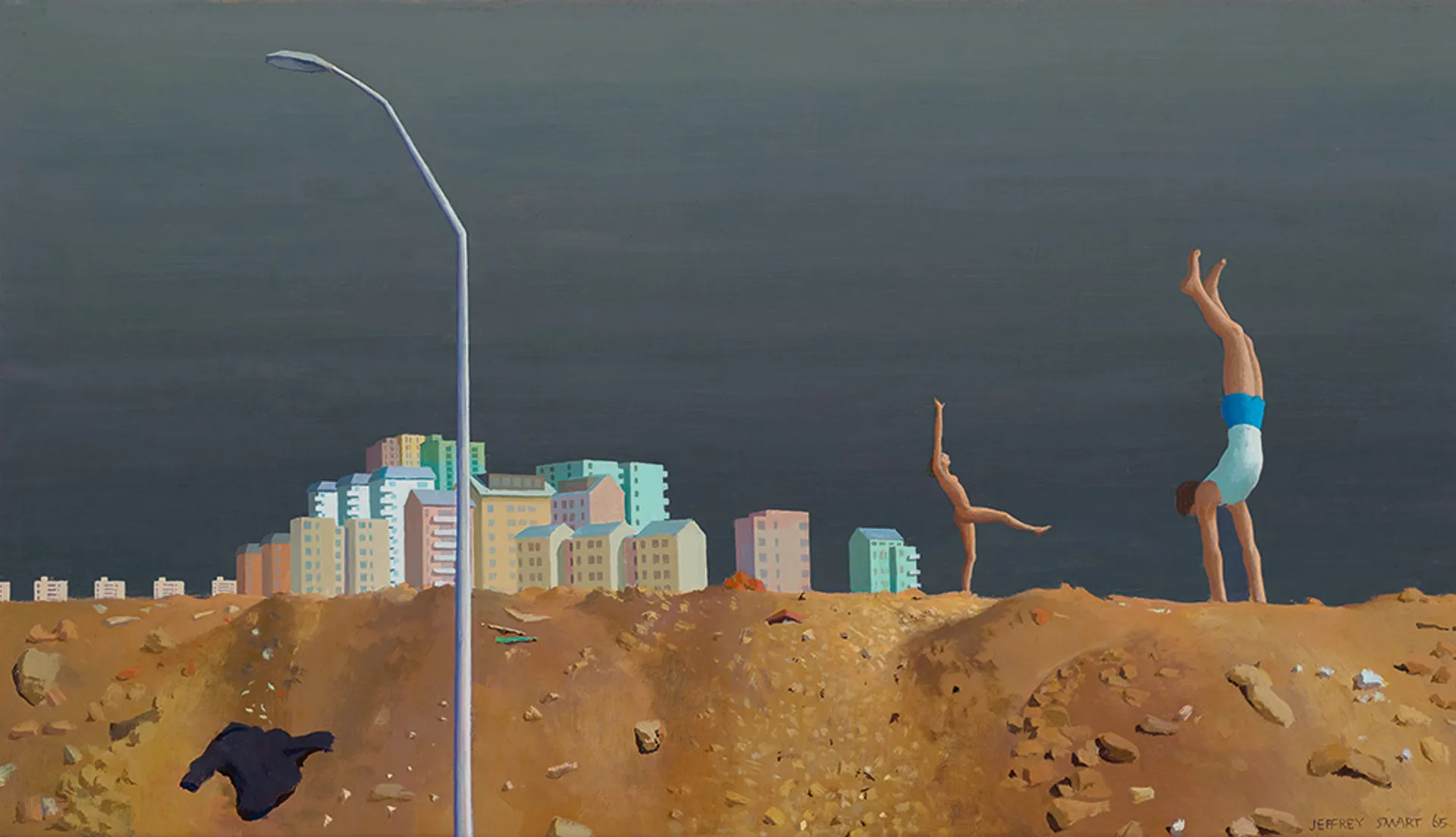
Jeffrey Smart
Children Playing, 1965
oil on canvas
40.5 x 70.5 cm
Private collection, formerly in the CBUS collection
© The Estate of Jeffrey Smart
Sold Deutscher and Hackett, 27 July 2022, lot 47, for $375,000 (inc. BP + GST)
Where do the children play? Well, wherever they like, even in a barren coastal carpark in Boulogne. The kids in this painting are no less absorbed in their own activities than the young man in Chardin’s Boy with a Spinning-Top, c.1735 – 36, who plays with a toy when he should be doing his lessons.
The gymnast is the key to Waiting for the hovercraft, Boulogne, bringing a burst of energy to a flat dun-coloured plane beneath a glowering sky. As is so often the case with Smart’s work, the bulk of the painting serves as a neutral backdrop that accentuates this dazzling eruption of colour.
We know Smart’s model for the gymnast in yellow was Cosima Spender1, the daughter of his friends and neighbours in Tuscany, Maro Gorky and Matthew Spender. Maro is the daughter of the Abstract Expressionist Arshile Gorky, while Matthew, who died in May this year, was the son of the poet, Stephen Spender. Maro is an acclaimed artist in her own right, while Matthew was both author and sculptor. Cosima, who was 14 years old when Smart made his drawings, is now a filmmaker.
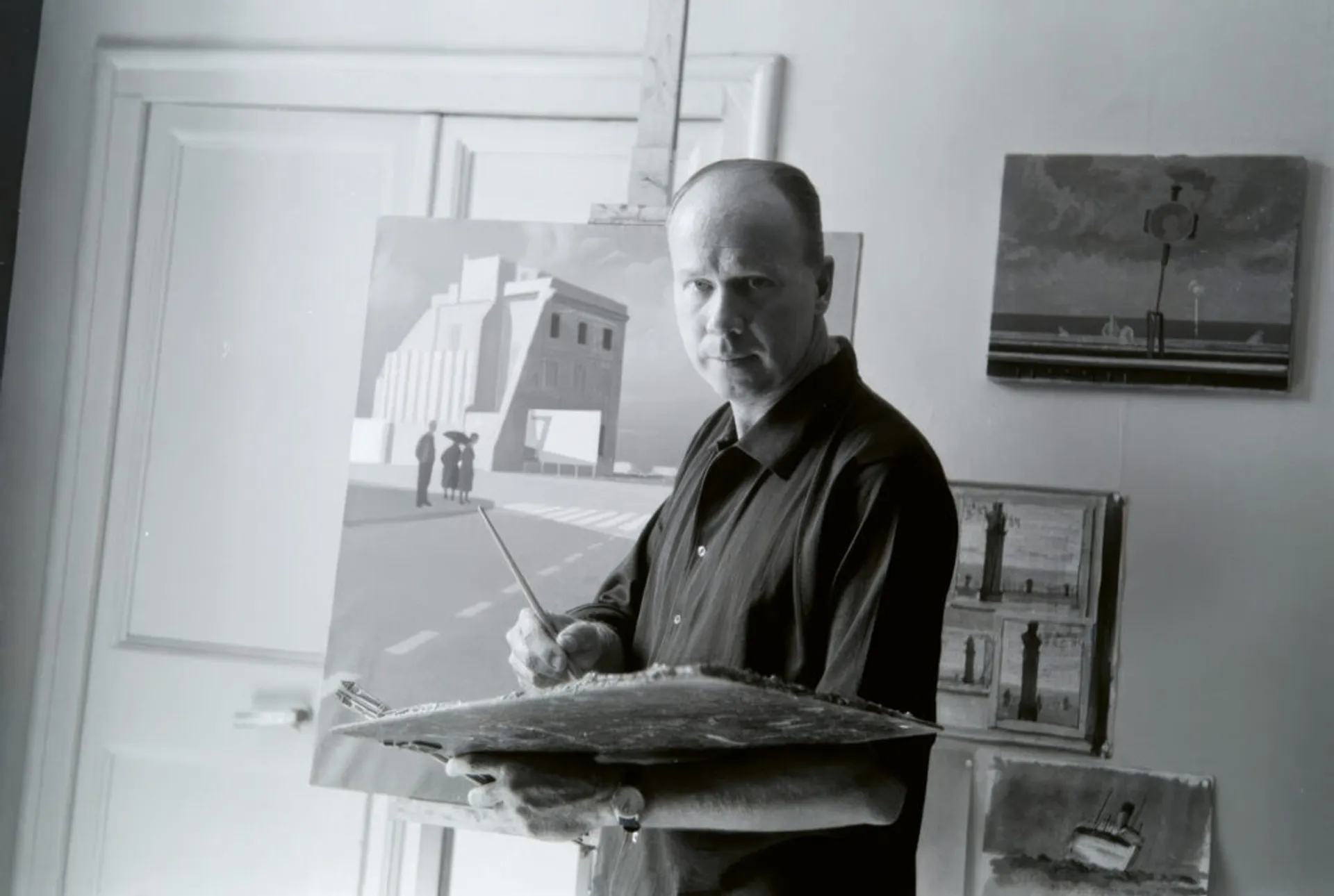
Jeffrey Smart in his studio, Rome, 1967
photographer: Robert Walker
National Art Archive
© Estate of Robert Walker/Copyright Agency, 2026
Smart didn’t attempt to capture his model in full flight, asking Cosima to lie on the ground and strike a frozen pose. In an oil study for this painting, the gymnast’s movements are much more violent, with the figure spread-eagled in space, in the throes of a cartwheel. The action takes place on an asphalt platform from which a group of anonymous people look out over the ocean. On the right-hand side, we see a group of buildings that identify the location as a working port.
In the final version of this theme, Smart has relocated the gymnast to a flat grey field suggestive of a beach and added the two other children with their hoops. All signs of maritime industry have disappeared, to be replaced by a neat line of vehicles. The people in the background have been reduced in number and moved much further away. One of the notable features of the oil study was the way the bystanders on the platform seemed completely indifferent to the gymnast’s feats. In the final version of the picture, they are almost too far away to see what’s going on, even if they turned to look, as one of them appears to be doing.
In rethinking the composition, Smart has trimmed extraneous details, making the scene a little bleaker and slightly more puzzling. In the study it seems as if the hovercraft will be arriving at any minute, but in the final version, it might never arrive. The children are completely absorbed with their games; the adults are huddled in conversation, their backs turned to the sea. We realise we are looking at one of Smart’s typical non-places, a featureless space in which there is nothing to do but wait – or make your own fun.
1. Baum, C., ‘Smart the urban aesthete’, The Herald, Melbourne, 24 April 1989, p. 19. With thanks to Smart’s archivist, Stephen Rogers, for this reference.
JOHN McDONALD
John McDonald writes art, film & politics for his site, ‘Everything the artworld doesn’t want you to know’, Everythingthe.com