
Tim Storrier
(born 1949)
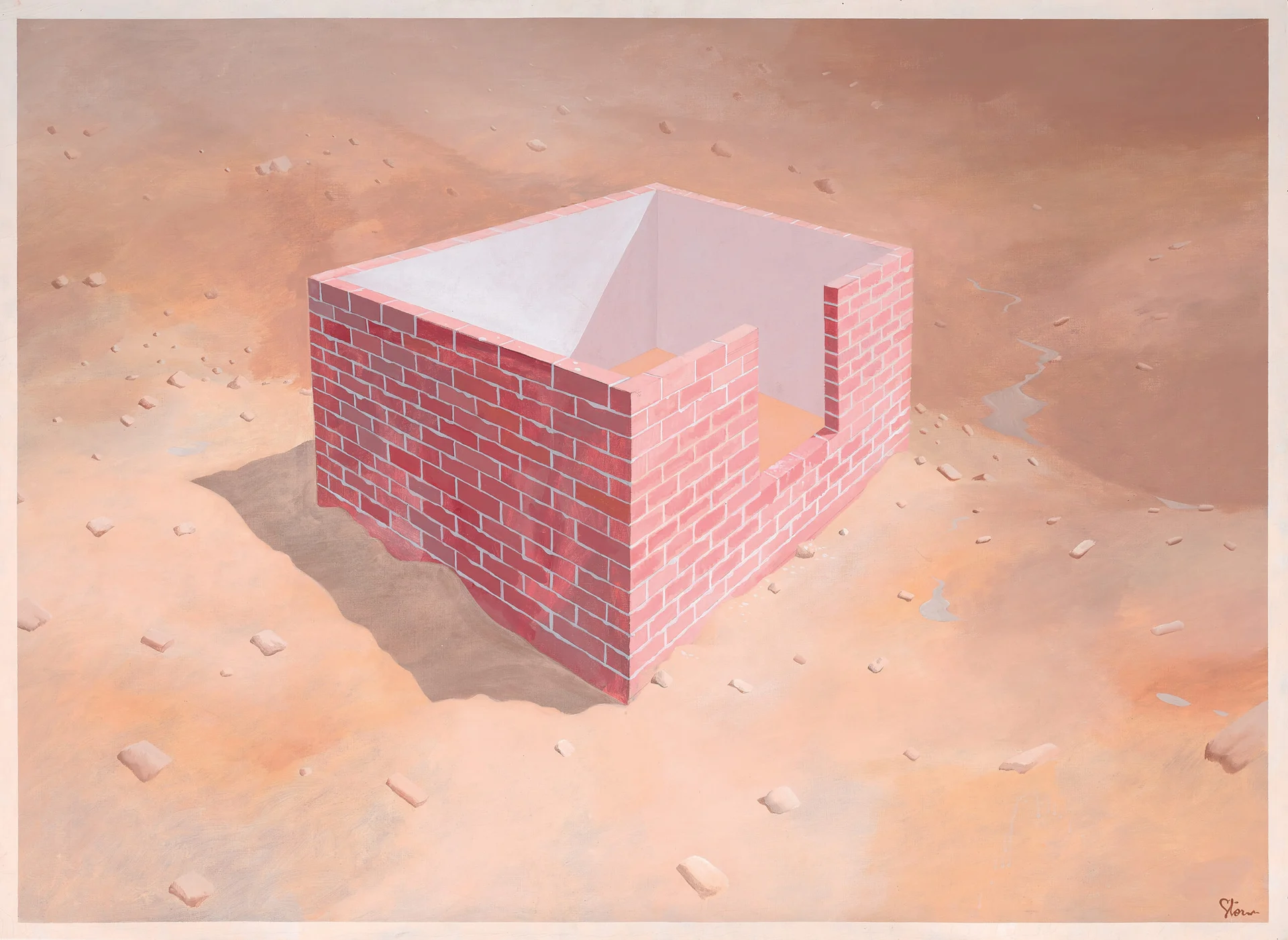
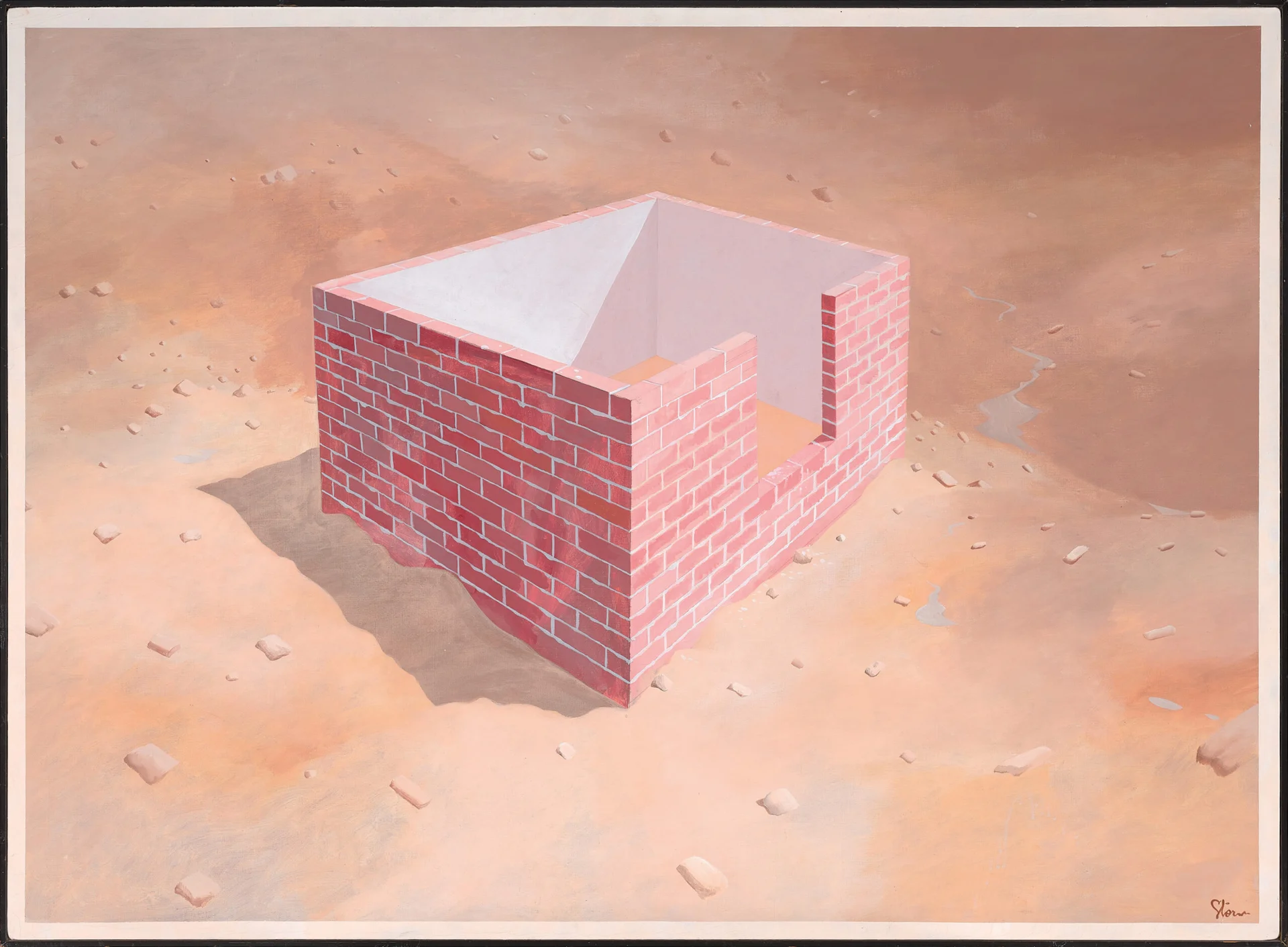
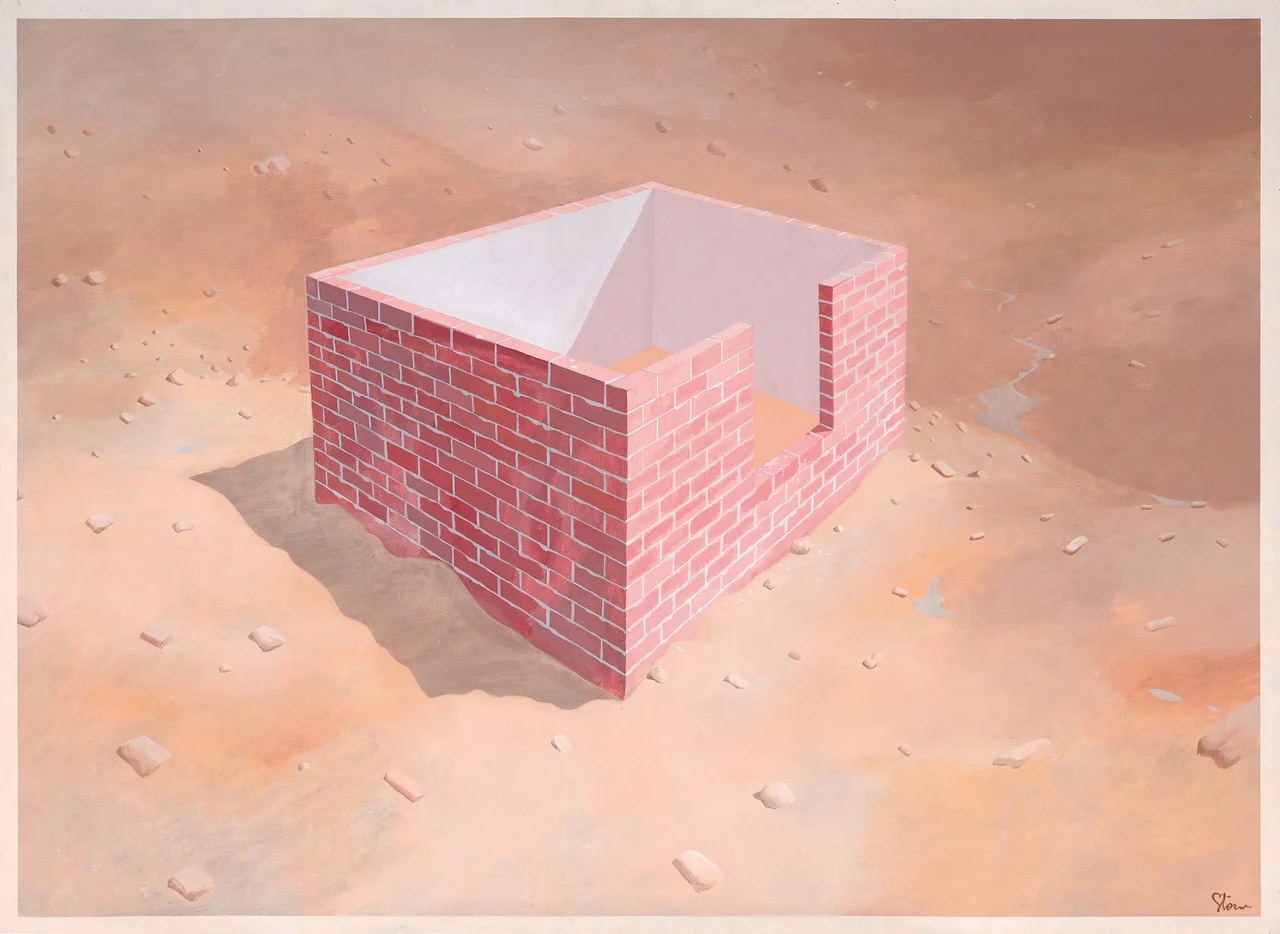
House of bricks, 1972
synthetic polymer paint on canvas
111.5 x 152.5 cm
signed lower right: Storrier
bears inscription verso: STORRIER “HOUSE OF BRICKS” 1972
bears inscription on gallery label verso: Tim Storrier “House of Bricks” 1972
Estimate:
$12,000 - $18,000
© Tim Storrier
lot details
bears inscription verso: STORRIER “HOUSE OF BRICKS” 1972
bears inscription on gallery label verso: Tim Storrier “House of Bricks” 1972
Hogarth Galleries, Sydney (label attached verso)
Solander Gallery, Canberra
Private collection, Canberra, acquired from the above in April 2002
Exhibited
Tim Storrier, Holdsworth Galleries, Sydney, December 1972
Encompassing the subtlety of nature’s fugitive diurnal moods, its mysterious, silently unfolding rituals and vast droning presence, Tim Storrier’s iconic outback paintings evoke a poignant sense of place that is inextricably Australian; as Edmund Capon, former director of the Art Gallery of New South Wales, elucidates, ‘… they could not, I believe have come from any country other than Australia.’1 His evocations are indelible echoes of this brooding landmass – long-contemplated narratives inspired by Storrier’s own highly personal experience of the landscape, and enhanced by the alluringly beautiful texture and finish of his art.
Painted in 1972, when Storrier was still at the outset of his remarkable career, House of bricks offers an intriguing early manifestation of concerns that would become central to his oeuvre. Against an expansive, seemingly uninhabited terrain, a solitary brick structure stands meticulously delineated yet enigmatic in purpose, its geometric regularity starkly juxtaposed against the amorphous landscape surrounding it. Devoid of human presence, the composition encapsulates the emotive, melancholic mood that would become a hallmark of Storrier’s achievements, announcing his enduring preoccupation with themes of isolation and abandonment.
Significantly, House of bricks belongs to the same formative period as Retreat, 1972, Defence of Indado, 1973 and Death of a Warrior in Spring, 1975 –works which similarly transform the remnants of human presence into mysterious protagonists, anticipating the vacated campsites, burning ropes and other enigmatic motifs through which Storrier would subsequently explore humanity’s fragile relationship with the immense Australian landscape.
1. Edmund Capon, cited in Lumby, C., Tim Storrier: The Art of the Outsider, Craftsman House, Sydney, 2000, p. 8
VERONICA ANGELATOS