Sidney Nolan
(1917 - 1992)
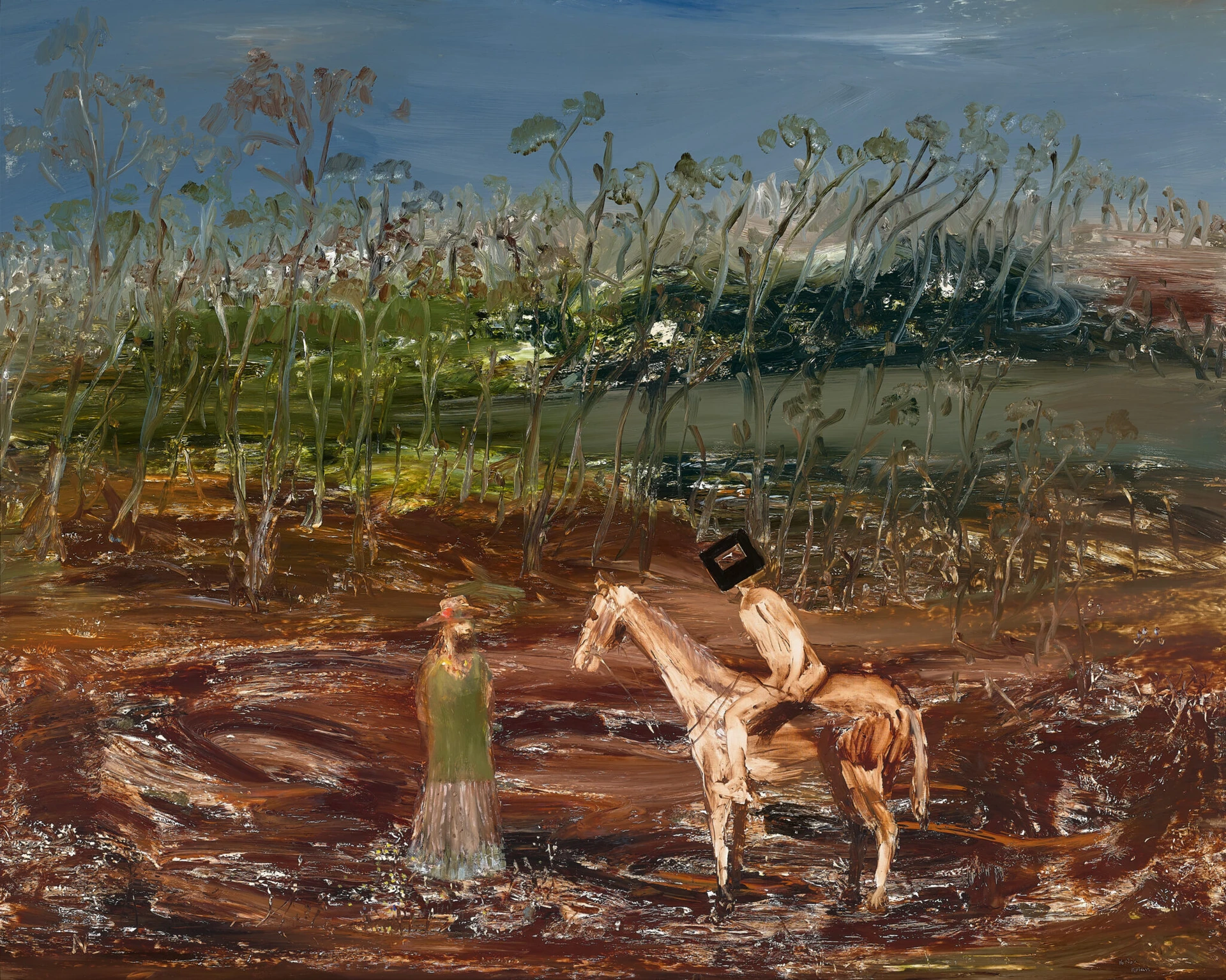
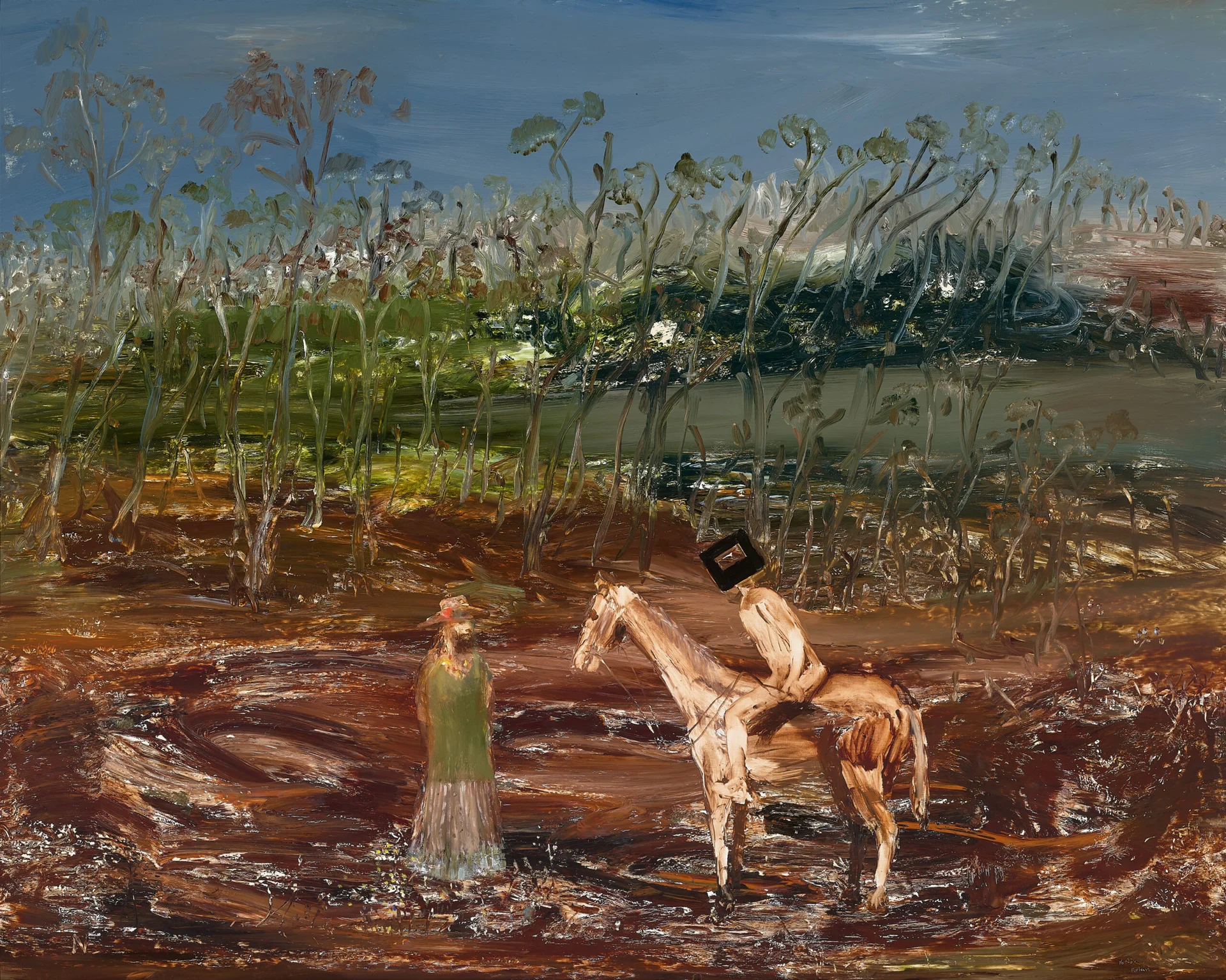
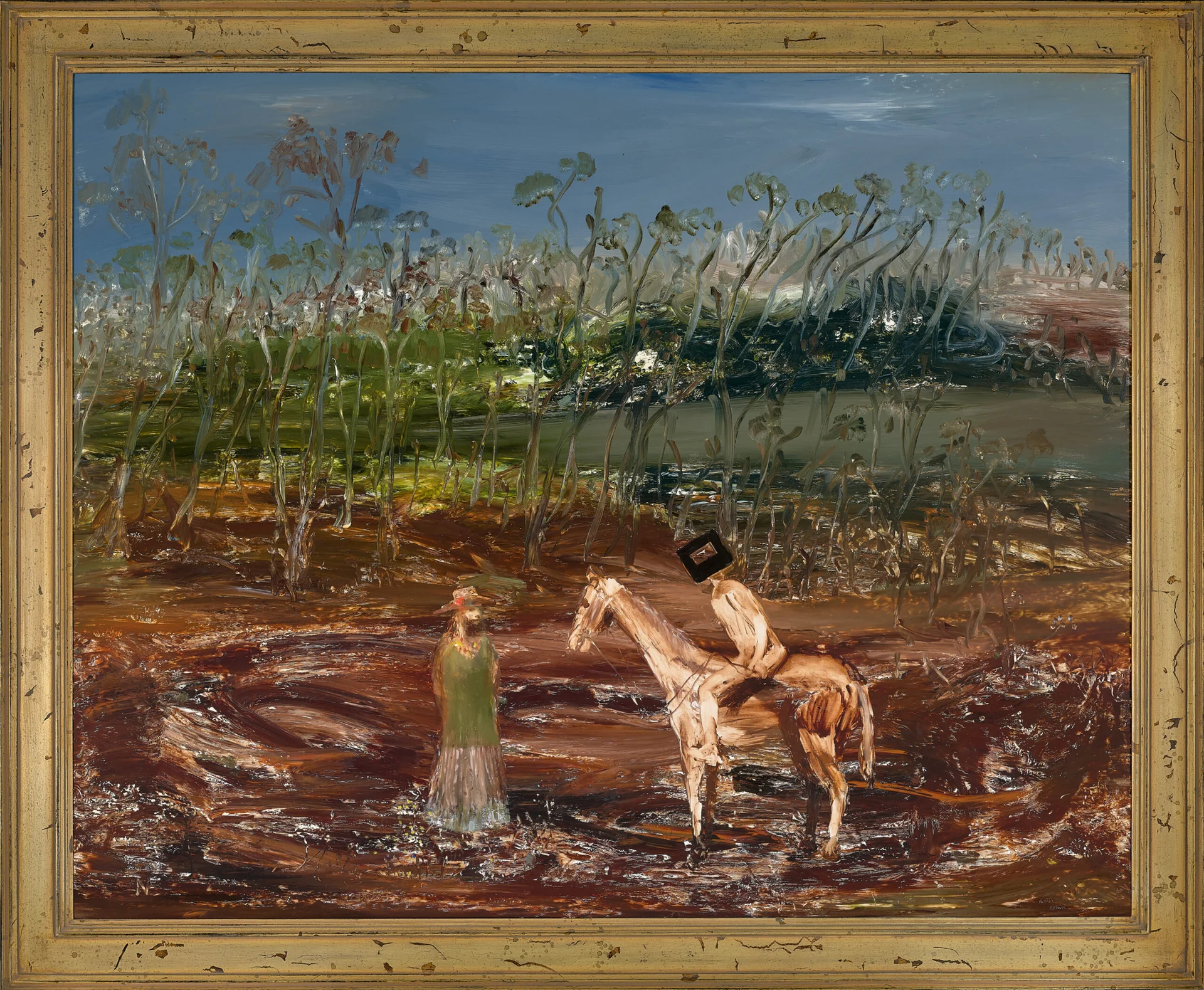
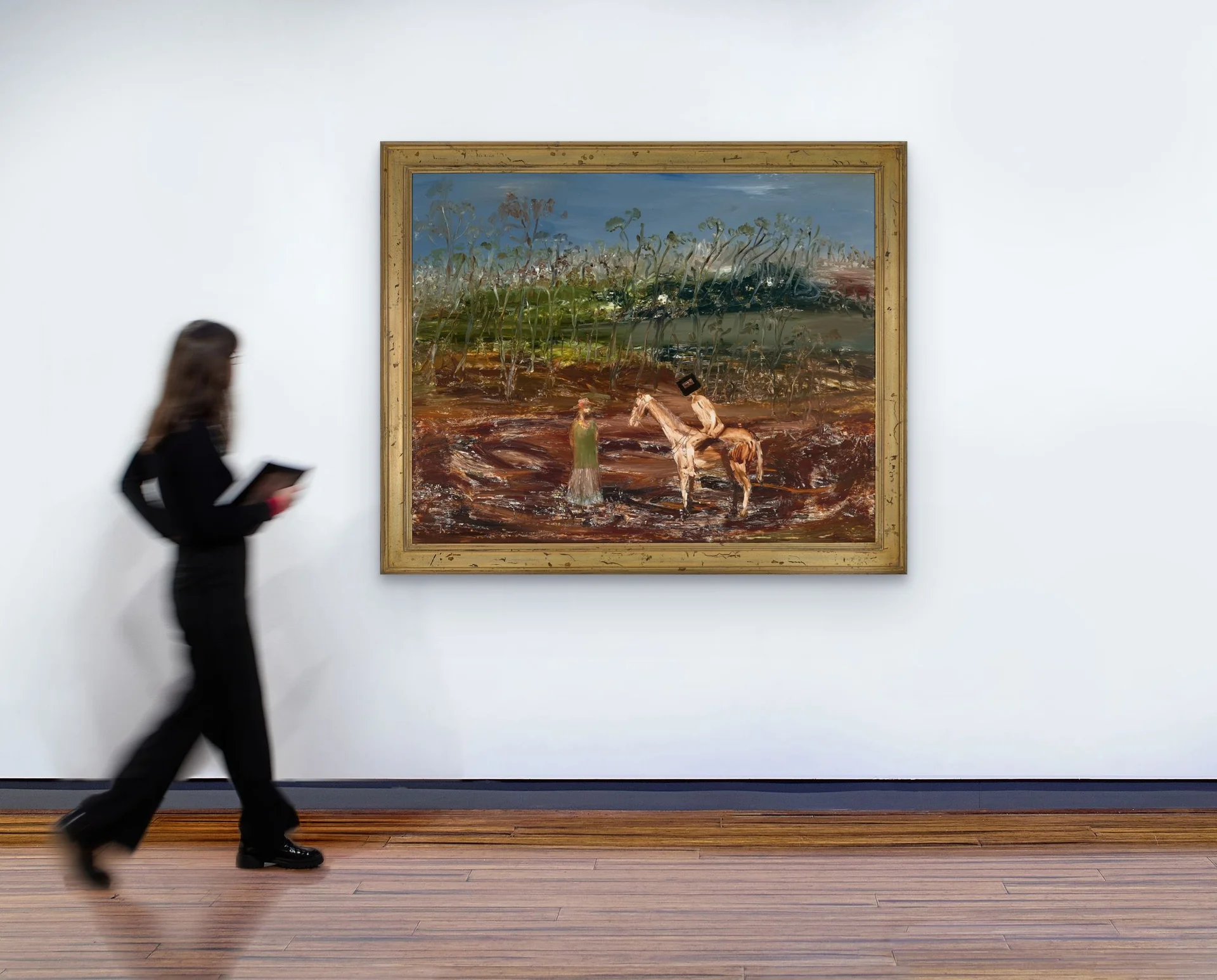
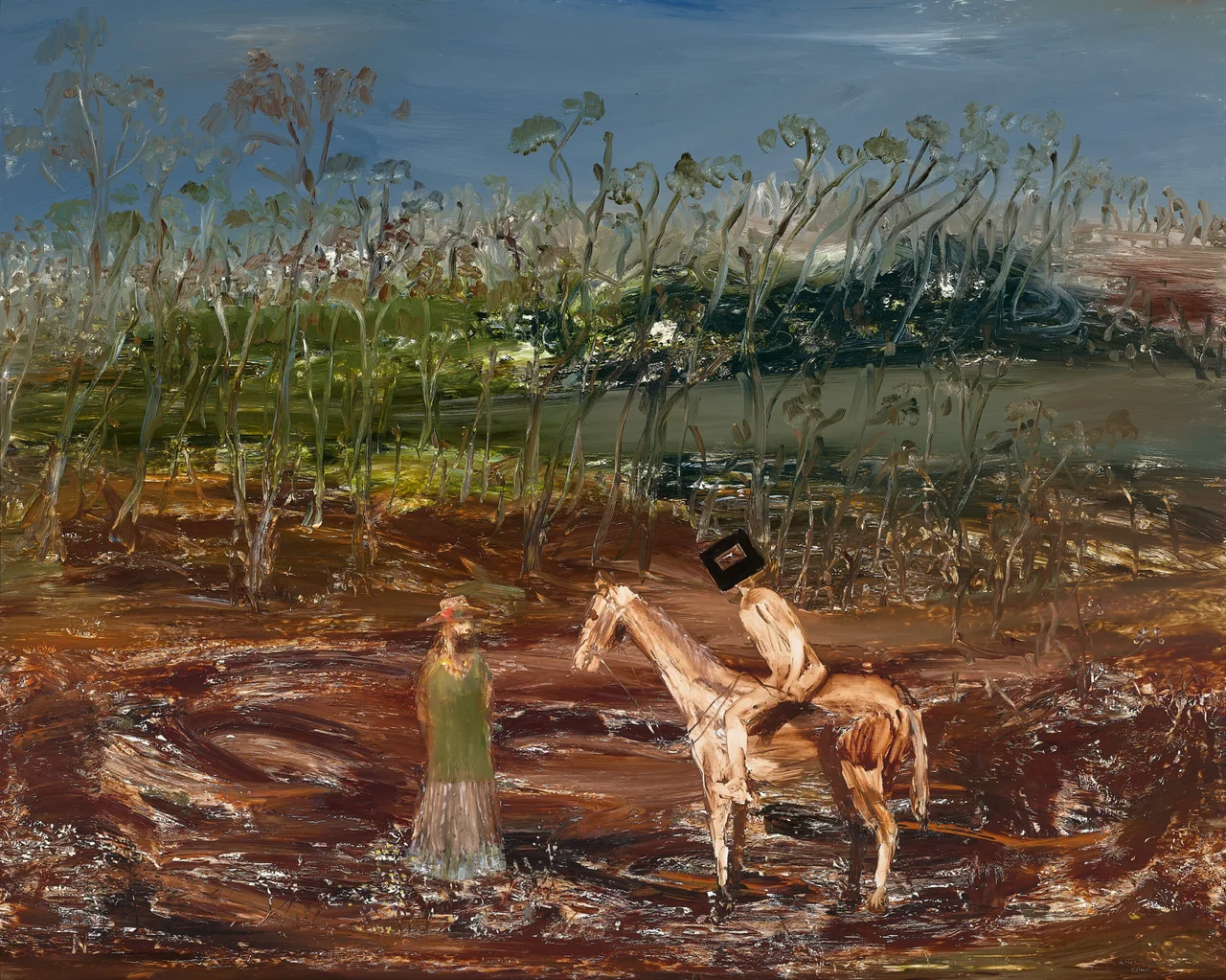
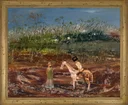
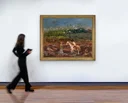
The disguise, 1964
Ripolin enamel on composition board
122.0 x 152.0 cm
signed with initial lower left: N
signed and dated lower right: 16 Nov / Nolan
bears inscription verso: Nolan / 1964
bears inscription on gallery labels verso: 1964 / The Disguise
Estimate:
$700,000 - $900,000
© The Sidney Nolan Trust. All rights reserved, DACS/Copyright Agency 2026
lot details
signed and dated lower right: 16 Nov / Nolan
bears inscription verso: Nolan / 1964
bears inscription on gallery labels verso: 1964 / The Disguise
David Jones Gallery, Sydney (inscribed verso)
Harold E. Mertz, New York, USA
Archer M. Huntington Art Gallery, University of Texas, Austin, a gift from the above (label attached verso)
The Harold E. Mertz Collection of Australian Art, Christie’s, Melbourne, 28 June 2000, lot 69
Private collection
Christie’s, Melbourne, 2 May 2002, lot 55 (as ‘Disguise’)
Private collection, Canberra
Exhibited
Nolan, David Jones Gallery, Sydney, 5 – 22 May 1965, cat. 4 (illus. in exhibition catalogue, front cover, as ‘Disguise’)
The Mertz Collection of Contemporary Australian Painting, National Gallery of South Australia, Adelaide, 10 March – 11 April 1966, cat. 62 (label attached verso)
The Australian Painters 1964 – 66: Contemporary Australian Painting from the Mertz Collection, The Corcoran Gallery of Art, Washington, 10 March – 16 April 1967, cat. 19
Legends and Landscape in Australian Art: A Selection of Paintings from the Harold E Mertz Collection at the Archer M Huntington Art Gallery, The University of Texas at Austin, Sarah Campbell Blaffer Gallery, University of Houston, Texas, 9 November – 19 December 1986 (illus. in exhibition catalogue, p. 21)
Literature
Luck, R. K., The Australian Painters 1964 – 66: Contemporary Australian Painting from the Mertz Collection, The Griffin Press, Adelaide, 1967, pl. 19, pp. 28, 41 (illus., as ‘Disguise’)
The saga of Ned Kelly and his gang looms large in the Australian psyche. The enduring image of him clad in home-made armour is one of this country’s most identifiable icons and has been used in multiple ways, including advertisements for Australia Post and as a symbol of massed celebration during the Sydney Olympics in 2000. The narrative of the Kelly Gang has all the necessary emotions: bravado, humour, pathos, murder, cowardice and rebellion. Sidney Nolan was entranced by the story from an early age as his grandfather claimed to have been part of the police pursuit of the elusive gang in the late 1870s. Nolan’s great love of poetry also inspired his interest, particularly in the eloquent text of Kelly’s famous ‘Jerilderie letter’ of February 1879 which he dictated to his second-in-command, the worldly Joe Byrne. The letter is a self-justifying plea for understanding, nonetheless filled with colourful epithets such as his description of the Victorian police as being a ‘parcel of big, ugly, fat-necked, wombat headed, big bellied, magpie legged, narrow hipped, splaw-footed sons of Irish Bailiffs or English landlords.’1 When Nolan commenced his first sequence of Kelly paintings in 1946, he used the letter and the transcripts of Kelly’s trial as part of his research and inspiration. He returned to the story at different stages during his subsequent career, each iteration enriched with new understanding and technical nuance. The disguise, 1964, comes from the third series which is marked by Nolan’s infusion of aspects of his own autobiography within the various scenes.
Sidney Nolan
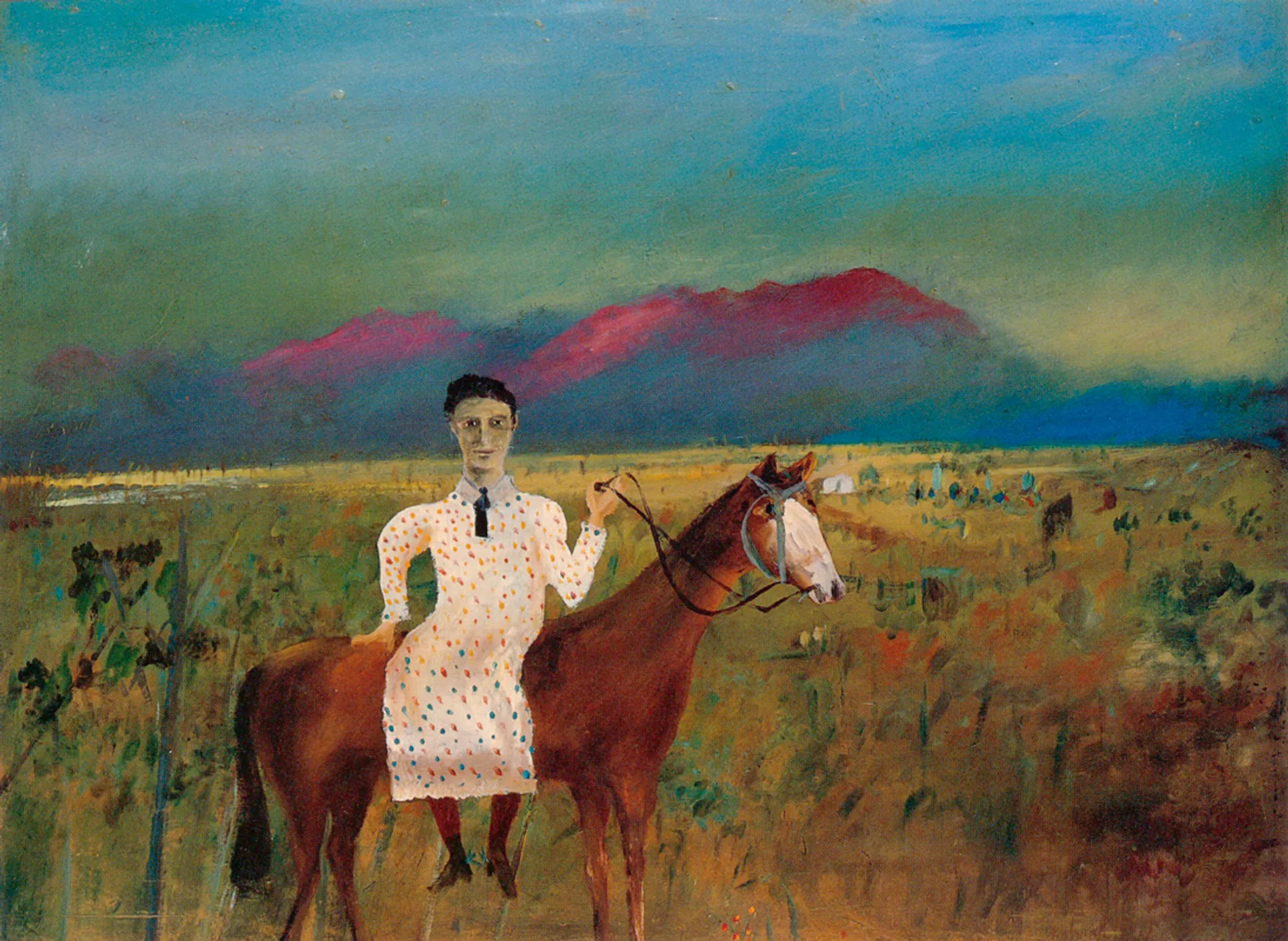
Steve Hart dressed as a girl, 1947
enamel on composition board
90.6 x 121.1 cm
National Gallery of Australia, Canberra
© The Sidney Nolan Trust. All rights reserved, DACS/Copyright Agency 2026
Sidney Nolan
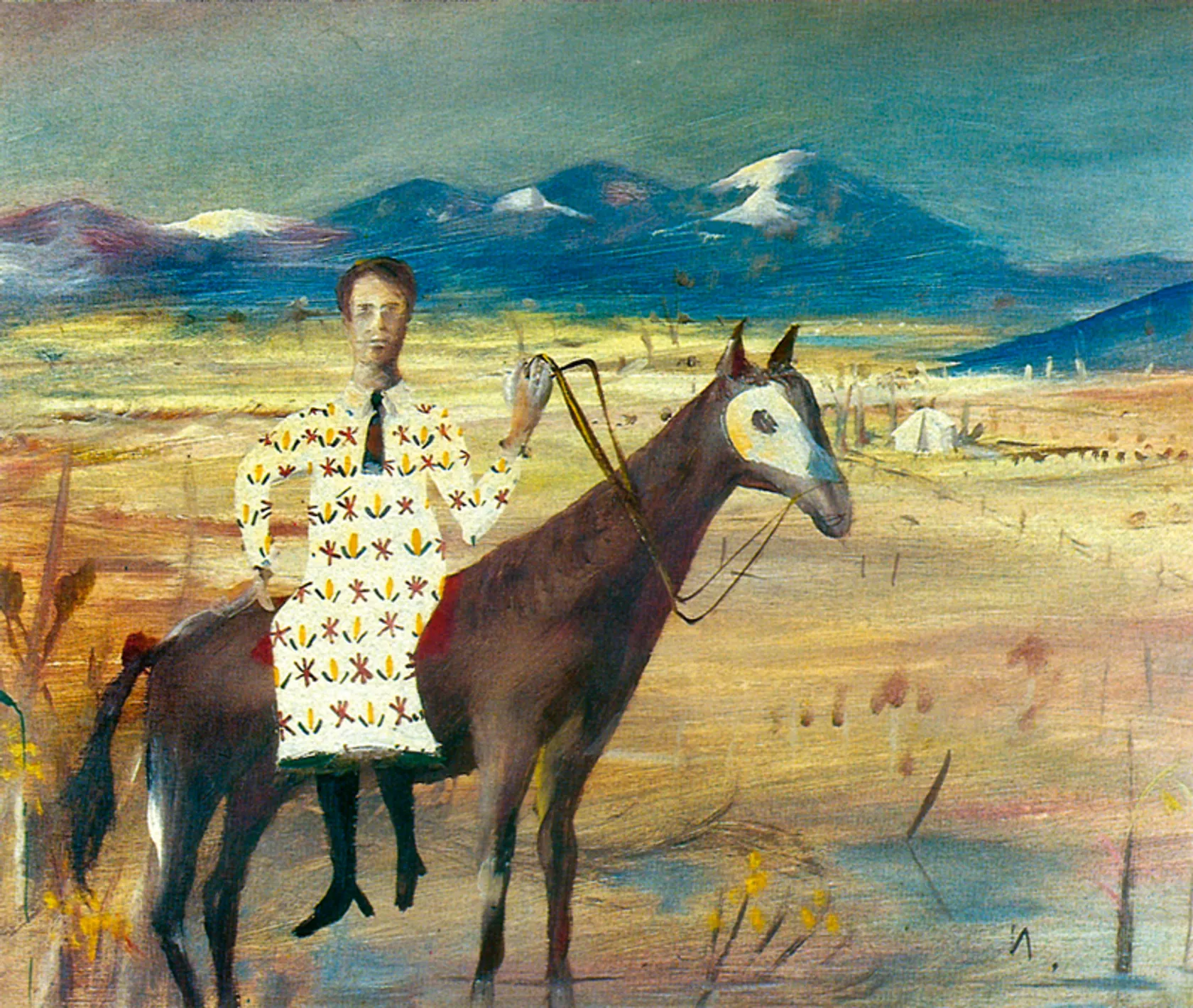
The disguise, 1955
Ripolin enamel and oil on hardboard
64.0 x 77.4 cm
Art Gallery of Western Australia, Perth
© The Sidney Nolan Trust. All rights reserved, DACS/Copyright Agency 2026
The first Kelly series was famously painted between 1946 and 1947 at Heide, the outer-Melbourne farmhouse owned by John and Sunday Reed at which they established an antipodean salon with a determined modernist outlook. This is a boisterous sequence of images painted with a combination of ‘Kelly’s own words, and Rousseau, and sunlight.’2 The second group, painted between 1954 and 1956, is far more tempered in tone as Nolan had now visited Europe and seen first-hand the devastation wrought by World War Two; indeed, Kelly often appears as a ‘man of such sorrows’ particularly in paintings such as Hungary (Museum of New and Old Art, Hobart) and Kelly: Spring (Arts Council Collection, Southbank Centre, London), both from 1956. Nolan had also viewed drought-stricken western Queensland in August 1952, resulting in washed-out, parched colour for much of the second series, with horses and other animals resembling sun-dried carcasses, while Kelly is often shown to be wearied by the constant pursuit.
The individual paintings of the third series are larger in size than those of the previous sequences, and are informed by a further decade of the artist’s experiences. Following encouragement from Kenneth Clark, former Director of London’s National Gallery, Nolan and his wife Cynthia had relocated to England in 1953 and by the end of the decade he was one of the country’s most celebrated artists.3 An inveterate traveller, Nolan had visited six continents by the time he died, and 1964 alone exemplifies the extraordinary extent of his wanderings. He began the year with a journey to Antarctica in January with the writer Alan Moorhead, spending eight days on the ice after which they ‘returned to Christchurch… quickly travelled to Auckland… Nandi [sic], Fiji and Papeete (Tahiti).’4 Nolan was back in Sydney by 11 February where he then joined Hal Missingham and Russell Drysdale for the drive to the Adelaide Festival of Arts which featured a major Nolan exhibition, after which he was back in London by 3 April. From then, he began an epic cycle of painting that dominated the next nine months. Beginning with four Antarctica paintings that month, Nolan then undertook a sequence of images inspired by the society ladies of Adelaide until early June. From there, he allowed other ideas to infiltrate and a single painting of Kelly appeared on 3 August followed by a return to Nolan’s other great passion Burke and Wills, then by another cycle of Antarctic works. From 5 – 7 September, he took a quick trip to Rotterdam, Amsterdam and Zurich before returning to London and continuing with Antarctica until mid-September when the doomed explorers reappeared. On 20 October Kelly also returned, leading to the third series of the Gang’s travails which continued until 26 December, with The disguise created midway on 16 November.
Sidney Nolan
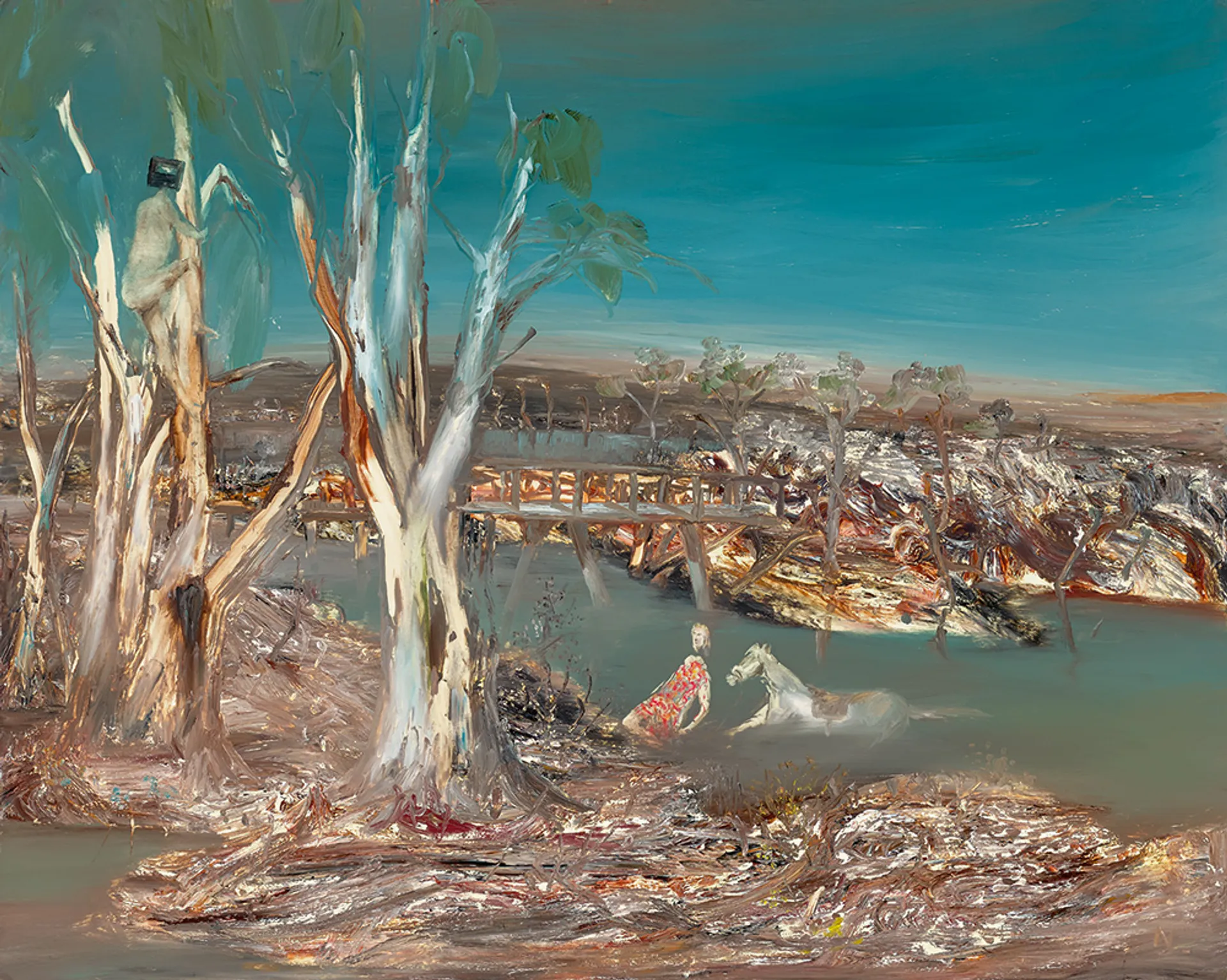
Crossing the river, 1964
oil on composition board
122.0 x 152.5 cm
Private collection, Sydney, formerly in the CBUS collection
© The Sidney Nolan Trust. All rights reserved, DACS/Copyright Agency 2026
Sold Deutscher and Hackett, 27 July 2022, lot 31, for $1,100,000 (inc. BP + GST)
The physicality of the painted surface in The disguise has its roots in Nolan’s experiments with synthetic gels and squeegees from the late 1950s, allowing him to have an increasingly tactile interrelationship with his paint which had previously been applied far more smoothly. It now took on an expressionist vigour, the brushstrokes becoming as much a part of the language as the image; and Alan Moorhead noted that Nolan also ‘employed… fingers, scraping back where necessary.’5 In The disguise, Kelly ‘is naked, and nakedness is timeless. He is no longer a bushranger but a man on a journey.’6 His horse bears a cadaverous ‘drought’ skull and Kelly’s own head is covered by Nolan’s classic black square helmet, a symbol recognised by historians as a modernist trope akin to Kazimir Malevich’s Black square, 1915. The ground around the characters’ feet comprises streaked black paint, burnt sienna and muddied white with passages of viridian green demarcating the scrubby vegetation on either side of the river. It is a desolate, unremarkable landscape animated solely by the strange dialogue in the foreground where the man Kelly is addressing wears a full beard and a fetching green slip over a dress, hands behind his back, looking somewhat askance towards the outlaw who appears quite unconcerned that he has happened upon a man in a dress in the 1870s wandering alone by a muddy river.
The combination of motifs echoes two earlier paintings from the first series: The Questioning, featuring a bearded, naked man bathing in a dam being questioned by troopers; and Steve Hart dressed as a girl, both 1947 (National Gallery of Australia). The latter is a direct reference to the much-repeated, but never confirmed, tale of Hart and other gang members wearing female attire on occasion to deceive and elude their pursuers. The suggestion first appears in J. J. Kenneally’s The inner history of the Kelly Gang (1929) which the author claimed was based on extensive interviews with family, police and witnesses.7 It is however riddled with inaccuracies and a number of the author’s assertions have subsequently been debunked. That said, the tale lives on as a romantic trope, appearing more recently in Peter Carey’s Booker Prize-winning The true story of the Kelly Gang (2000) in which he invents a shadowy group of Irish patriots called the ‘Sons of Sieve’ who don blackface and dresses ‘to scare the bejesus out of the squatters.’8 Nolan happily believed the story, painting a reprise of Hart in a dress, also titled The disguise, in 1955 (Art Gallery of Western Australia), and the bearded variant of the temporary cross-dresser first appeared in the third series two weeks earlier than the current lot, in Crossing the river, 1964 (formerly Cbus Collection of Art, see Deutscher and Hackett, 27 July 2022, Melbourne, lot 31).
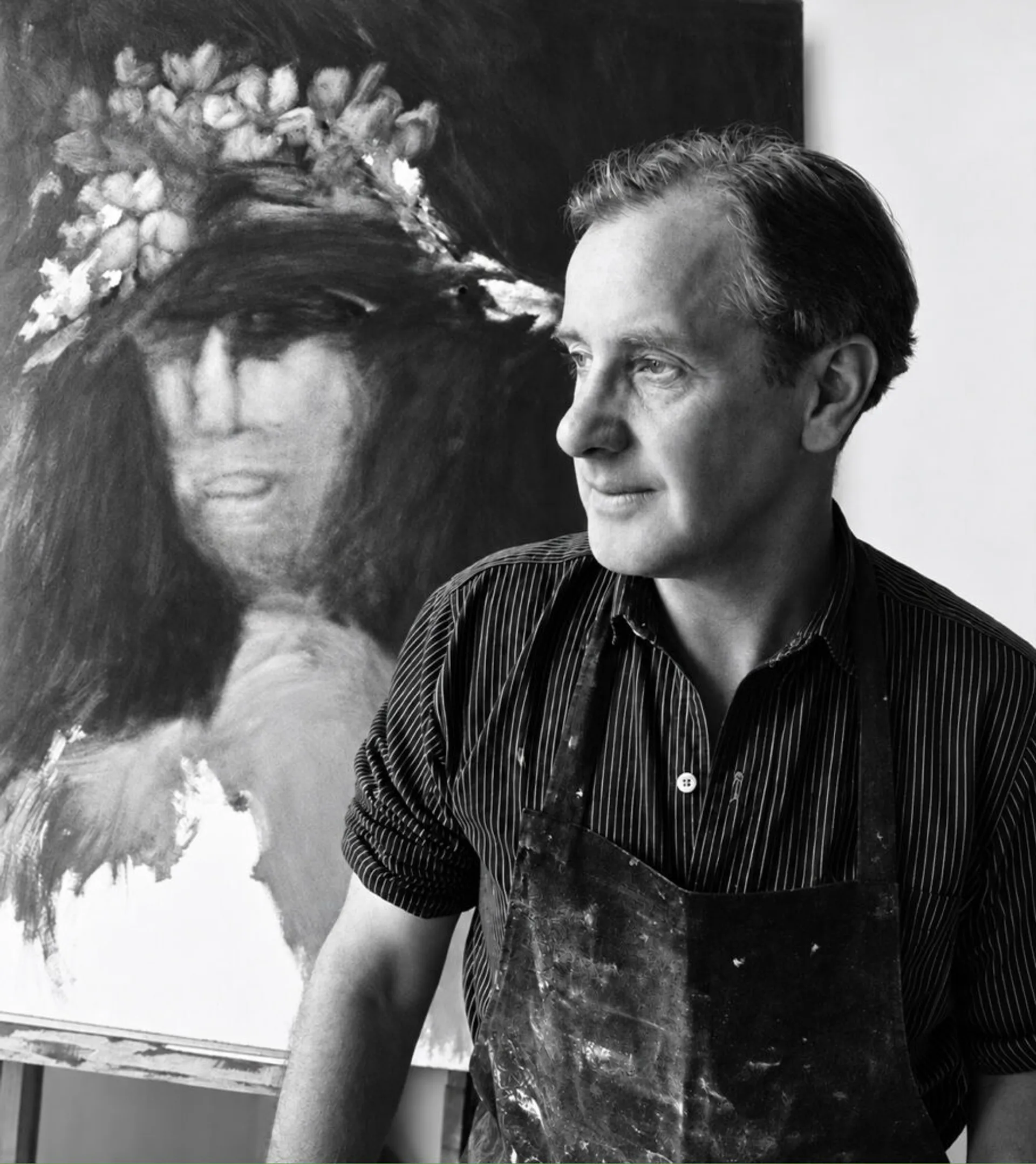
Sidney Nolan, 1964
photographer: Axel Poignant
National Portrait Gallery, Canberra
© Estate of Axel Poignant
The provenance of The disguise, 1964, is also of interest, having first been purchased by the American businessman Harold Mertz who had developed a keen interest in Australian art. With the assistance of Adelaide gallerist Kym Bonython, Mertz amassed an extraordinary collection of more than 150 significant paintings between 1965 and 1966 by artists as diverse as Boyd, Whiteley, de Maistre, Grey-Smith, Brack and Drysdale. Shown on two occasions in the US, the collection then languished for fifteen years in a basement at the University of Texas before being repatriated to Australia in June 2000 and dispersed through auction in Melbourne. State galleries, corporations and noted private collectors all acquired works, and many artist records were set. Mertz also purchased Nolan’s Burke and Wills, painted in August 1964 (three months before The disguise)9, and Nolan’s painterly inventiveness and bower-bird eye are clearly on show when comparing these two, even over this short period of time.
1. Ned Kelly, 1879, cited in McDermott (ed.), The Jerilderie letter, Text, Melbourne, 2001, p. 63
2. Sidney Nolan, cited in Clark, K. (et al.), Sidney Nolan, Thames & Hudson, London, 1961, p. 30
3. The Nolans first visited London together in late 1950, returning in August 1951.
4. James, R., Antarctic journey, Mornington Peninsula Regional Gallery, Victoria, 2006, p. 10
5. Moorehead, A., ‘Introduction’, Sidney Nolan: recent works, Marlborough Fine Art, London, May 1965, p. 6
6. Melville, R., ‘The poetry of painting’ in Sidney Nolan: recent works, ibid., p. 2
7. See: Kenneally, J. J., The inner history of the Kelly Gang, Kelly Gang Publishing, Melbourne, (1929) 8th ed., 1969, pp. 28, 30. Noted Kelly scholar Ian Jones also makes no reference to cross-dressing in his authoritative biography Ned Kelly: a short life (Lothian Books, Melbourne, 1995), and the belief is dismissed in Corfield, J., The Ned Kelly encyclopaedia, Thomas C. Lothian, Melbourne, 2003, p. 221. The staff at the Victorian Police Museum in Melbourne also concur that no hard evidence exists (visited by the author, 26 August 2026)
8. Carey, P., True story of the Kelly Gang, University of Queensland Press, 2000, p. 311
9. Mertz also purchased Nolan’s Death of Constable Scanlon, 1954, and Head, 1964, one of the portraits of Adelaide society women.
ANDREW GAYNOR