Brett Whiteley
(1939 - 1992)
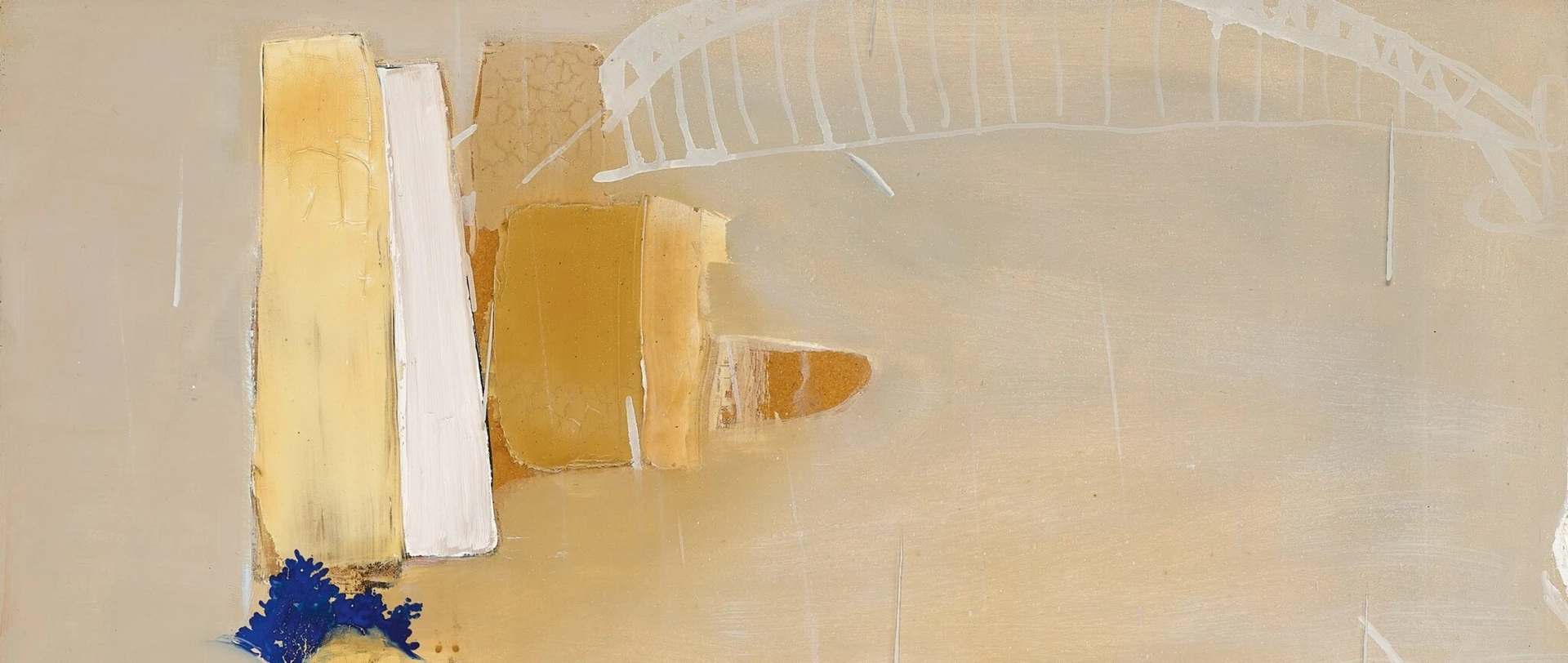
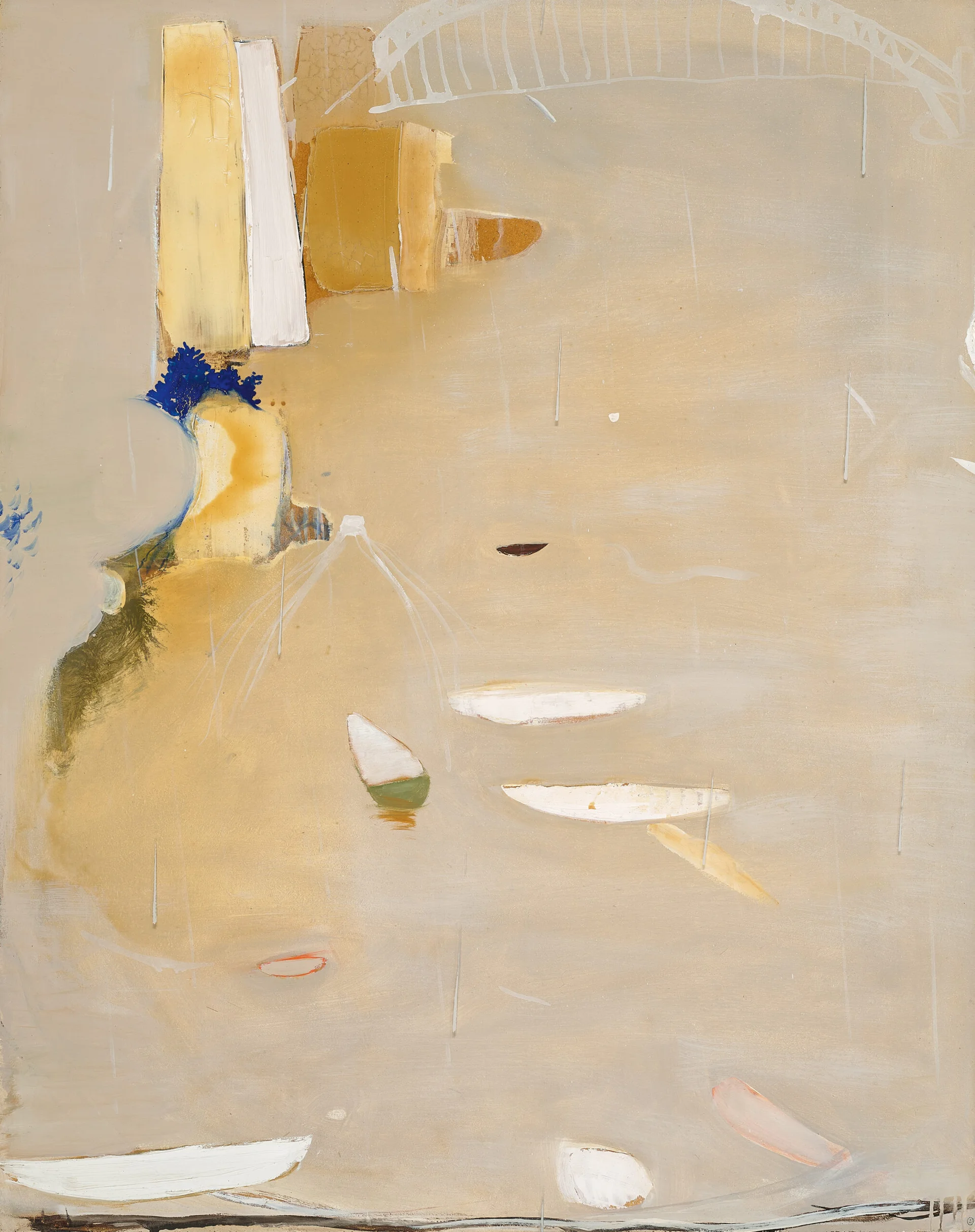
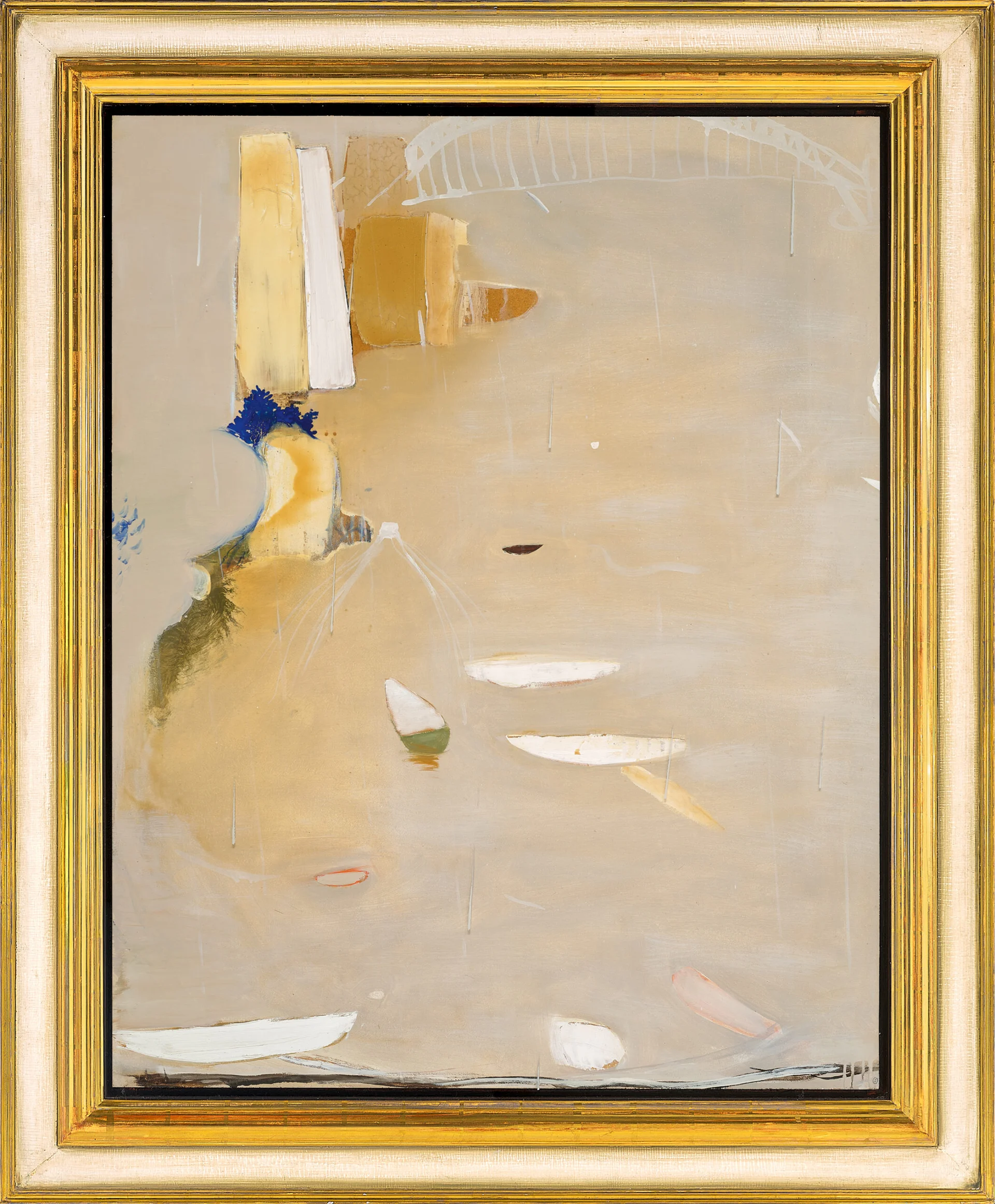
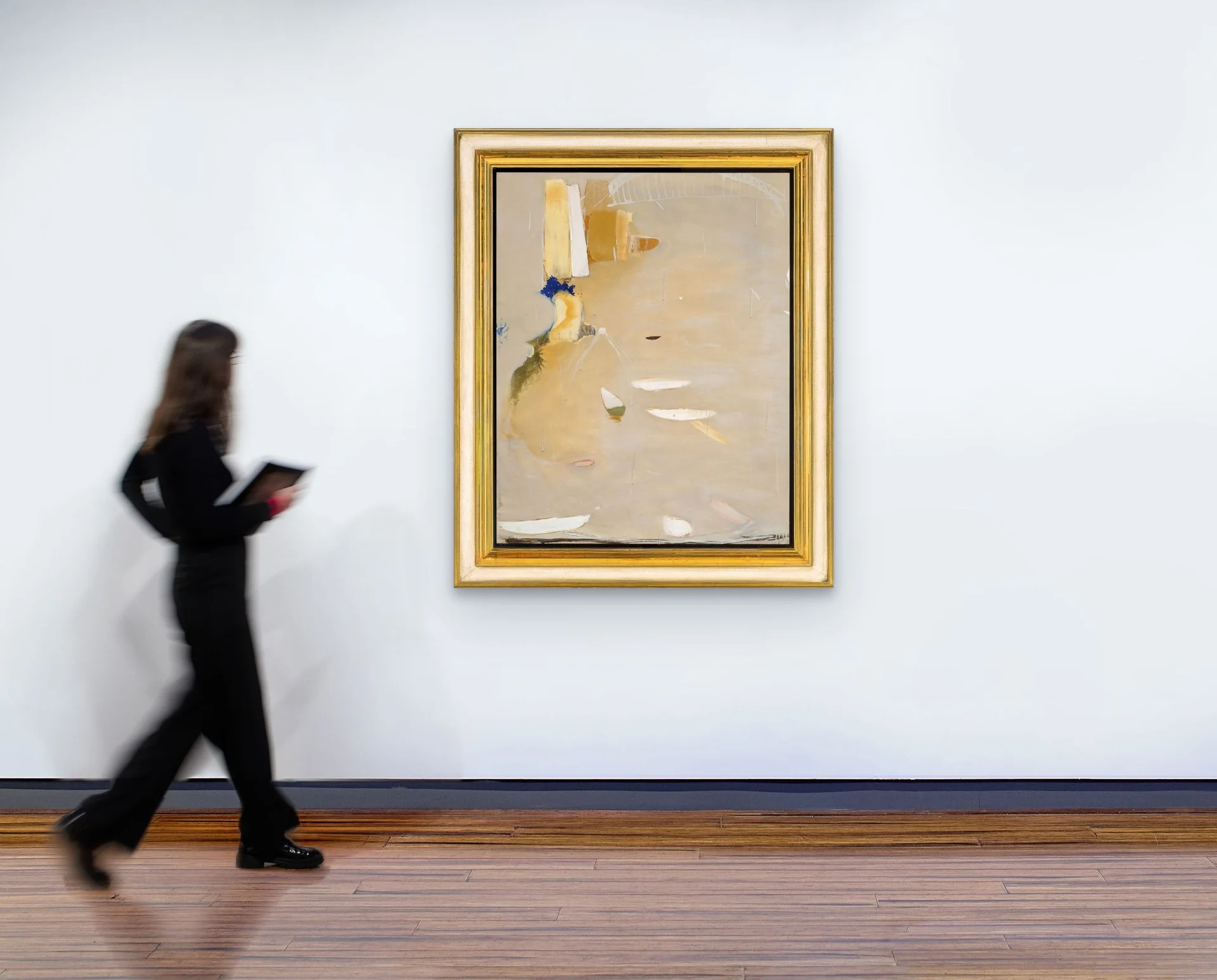
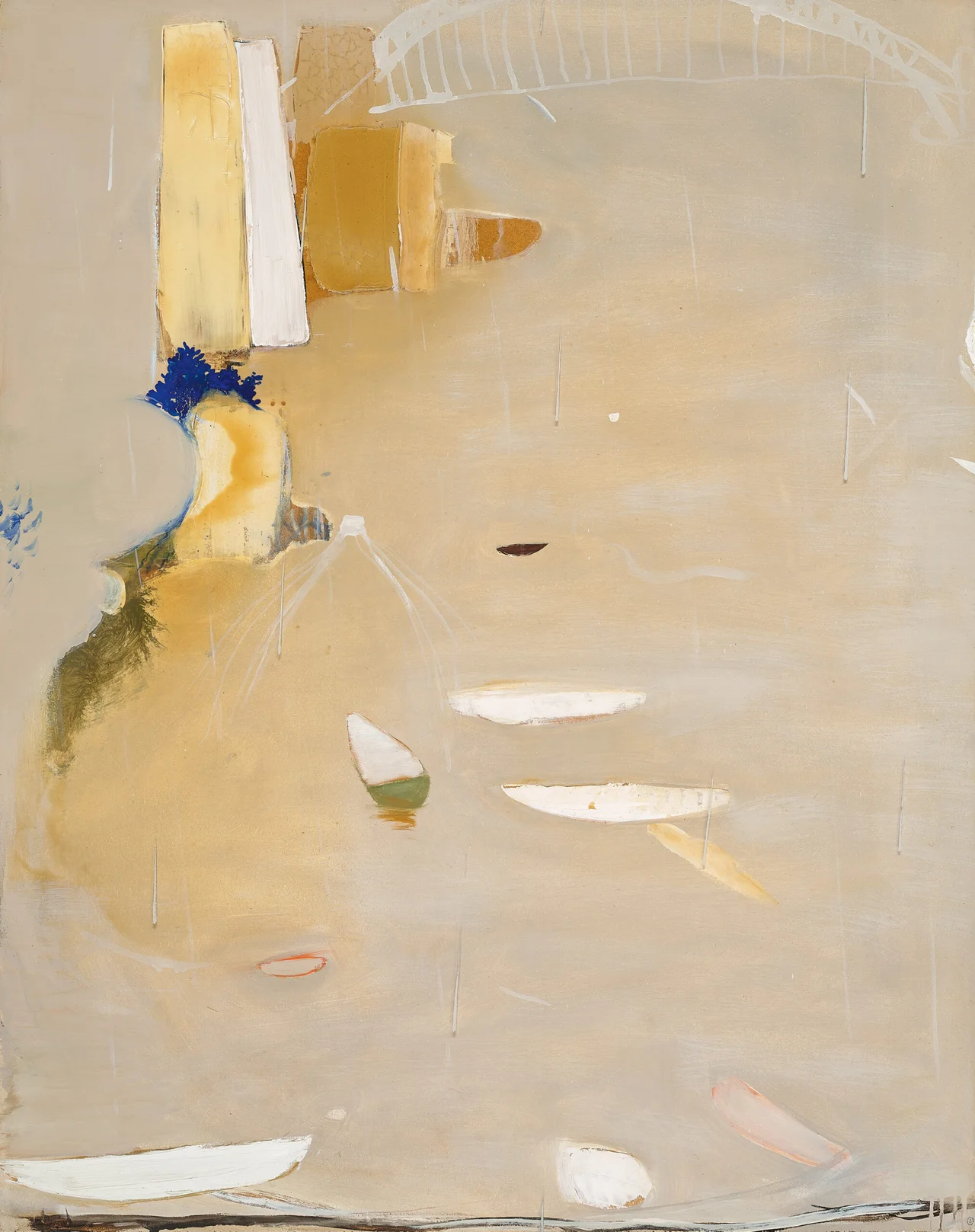
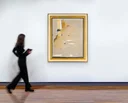
Lavender Bay in the rain, 1974
oil on board, oil on Perspex
121.0 x 96.0 cm
stamped lower right with artist’s monogram
signed, dated and inscribed with title verso: ‘LAVENDER BAY IN THE RAIN’ 1974 / brett whiteley
bears inscription on typed label verso: BRETT WHITELEY / Lavender Bay in the Rain 1974
Estimate:
$900,000 - $1,200,000
© Wendy Whiteley/Copyright Agency, 2026
lot details
signed, dated and inscribed with title verso: ‘LAVENDER BAY IN THE RAIN’ 1974 / brett whiteley
bears inscription on typed label verso: BRETT WHITELEY / Lavender Bay in the Rain 1974
Australian Galleries, Melbourne
Private collection, Adelaide
Philip Bacon Galleries, Brisbane, acquired from the above
Private collection, Sydney, acquired from the above c.1977
Savill Galleries, Sydney, c.1992
Private collection, Sydney, acquired from the above
Martin Browne Fine Art, Sydney, by 1995
Private collection, Sydney
Deutscher~Menzies, Melbourne, 28 August 2002, lot 37
Private collection, Canberra
Exhibited
Brett Whiteley: Lavender Bay Series, Australian Galleries, Melbourne, 19 November – 3 December 1974, cat. 18 (illus. front cover of exhibition catalogue)
20th Century Australian and New Zealand Painting, Martin Browne Fine Art, Sydney, March – April 1995, cat. 26 (illus. in exhibition catalogue)
Brett Whiteley: Art & Life, Art Gallery of New South Wales, Sydney, 16 September – 19 November 1995, then touring to: Darwin, Perth, Adelaide, Melbourne and Hobart, until 17 November 1996, cat. 85 (label attached verso)
Literature
Borlase, N., ‘Unexpected Whiteley’, The Bulletin, Sydney, 23 November 1974, p. 57
McGrath, S., Brett Whiteley, Bay Books, Sydney, 1979, pp. 173 (illus.), 174
McGrath, S., & Walker, R., Sydney Harbour Paintings from 1974, Jacaranda Press, Brisbane, 1979, pp. 101, 103 (illus.)
Pearce, B., Brett Whiteley: Art and Life, Art Gallery of New South Wales, Sydney, 1995, pl. 89 (illus.), p. 231
Wilson, A., Brett Whiteley: Art, Life and the Other Thing, Text Publishing, Melbourne, 2016, p. 235
Sutherland, K., Brett Whiteley: Catalogue Raisonné, Schwartz Publishing, Melbourne, 2020, cat. 146.74, vol. 3, p. 242 (illus.), vol. 7, pp. 312 – 313
Related Works
Grey Harbour, 1978, oil and charcoal on canvas, 86.5 x 85.5 cm, private collection, illus. in Sutherland, K., Brett Whiteley: Catalogue Raisonné, Schwartz Publishing, Melbourne, 2020, vol. 3, p. 553
Small Harbour (Grey Day), 1978, oil on plywood, 122.0 x 81.0 cm, Kerry Stokes collection, Perth, illus. in Sutherland, K., Brett Whiteley: Catalogue Raisonné, Schwartz Publishing, Melbourne, 2020, vol. 3, p. 555
‘Sometimes, I have to paint pictures that have an effortless naturalness, not artificial or synthetic, not manufactured – pictures that have no affectation through mental tricks, but graceful and according to Nature.’1
Until the purchase in 1985 of the warehouse space in Sydney’s Surry Hills now known as the Brett Whiteley Studio, Whiteley largely worked from home, and across the decades, the setting of his domestic life in various locations – from Australia, Italy, London and New York to Fiji, and finally, Australia once again – served as his most constant and important workspace. The artist drew inspiration and solace from the worlds that he and his wife Wendy created around them, and from the time of his breakthrough series of Bathroom paintings of 1963 – 64, which depicted Wendy bathing in a variety of compressed, almost vertiginous compositions, to the now well-known photographs of the artist working in the couple’s penthouse apartment in New York’s Chelsea Hotel in 1967 – 69, Whiteley’s home provided both readymade subject matter and constant access to Wendy, his muse. But it was the couple’s move to Lavender Bay in 1969 after their return to Australia from Fiji that truly cemented the notion of home as both a form of art and the place in which it is made. Falling in love with Lavender Bay and the glorious views afforded by the ramshackle Federation-style house in which they found themselves meant that, perhaps for the first time, Whiteley truly felt at home. As Wendy Whiteley has recalled, ‘I was, he was, we were just addicted to that Sydney Harbour thing. It’s just beautiful.’2
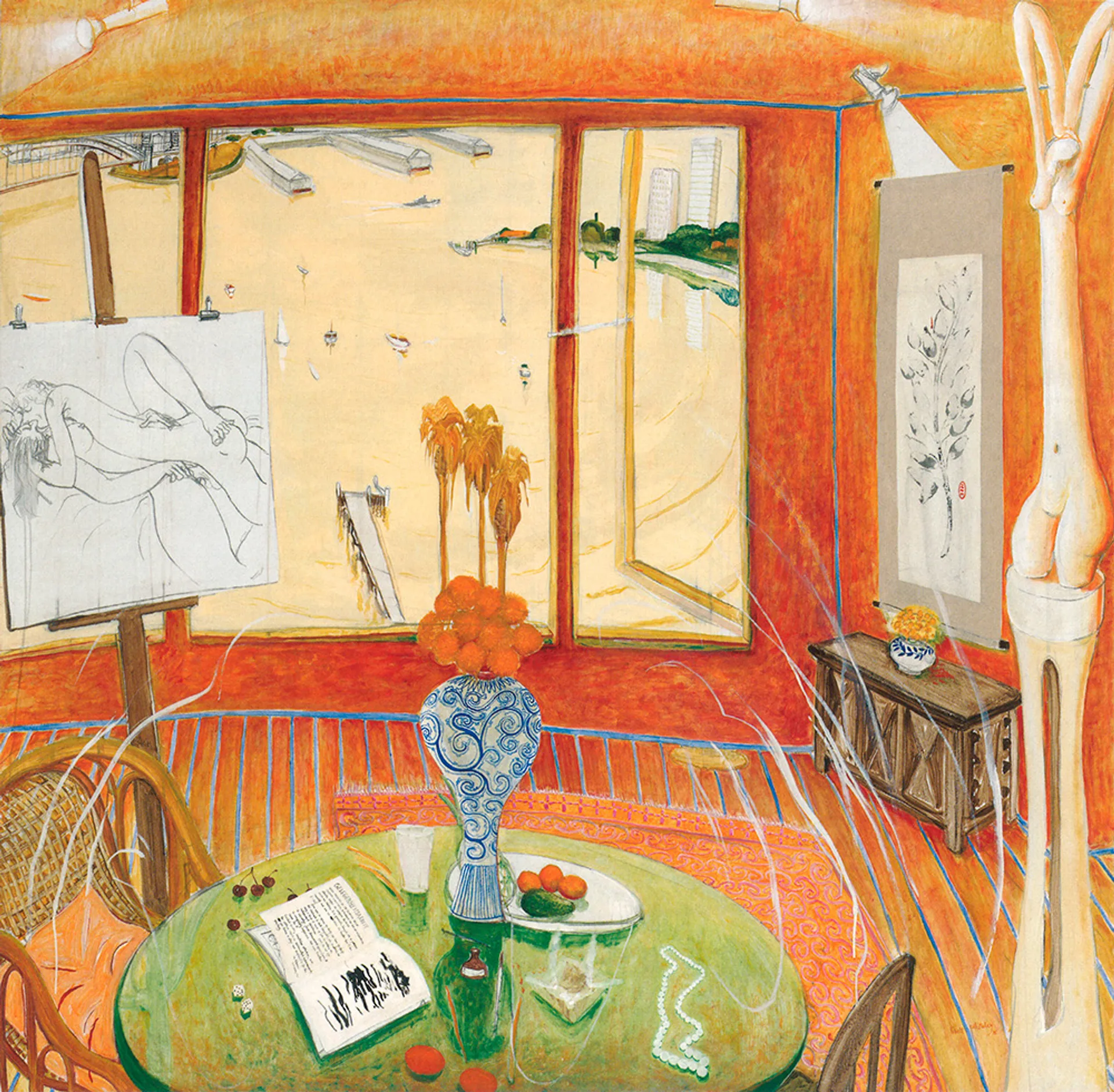
Brett Whiteley
Interior with time past, 1976
oil, charcoal and ink on canvas
198.0 x 200.0 cm
National Gallery of Australia, Canberra
© Wendy Whiteley/Copyright Agency 2026
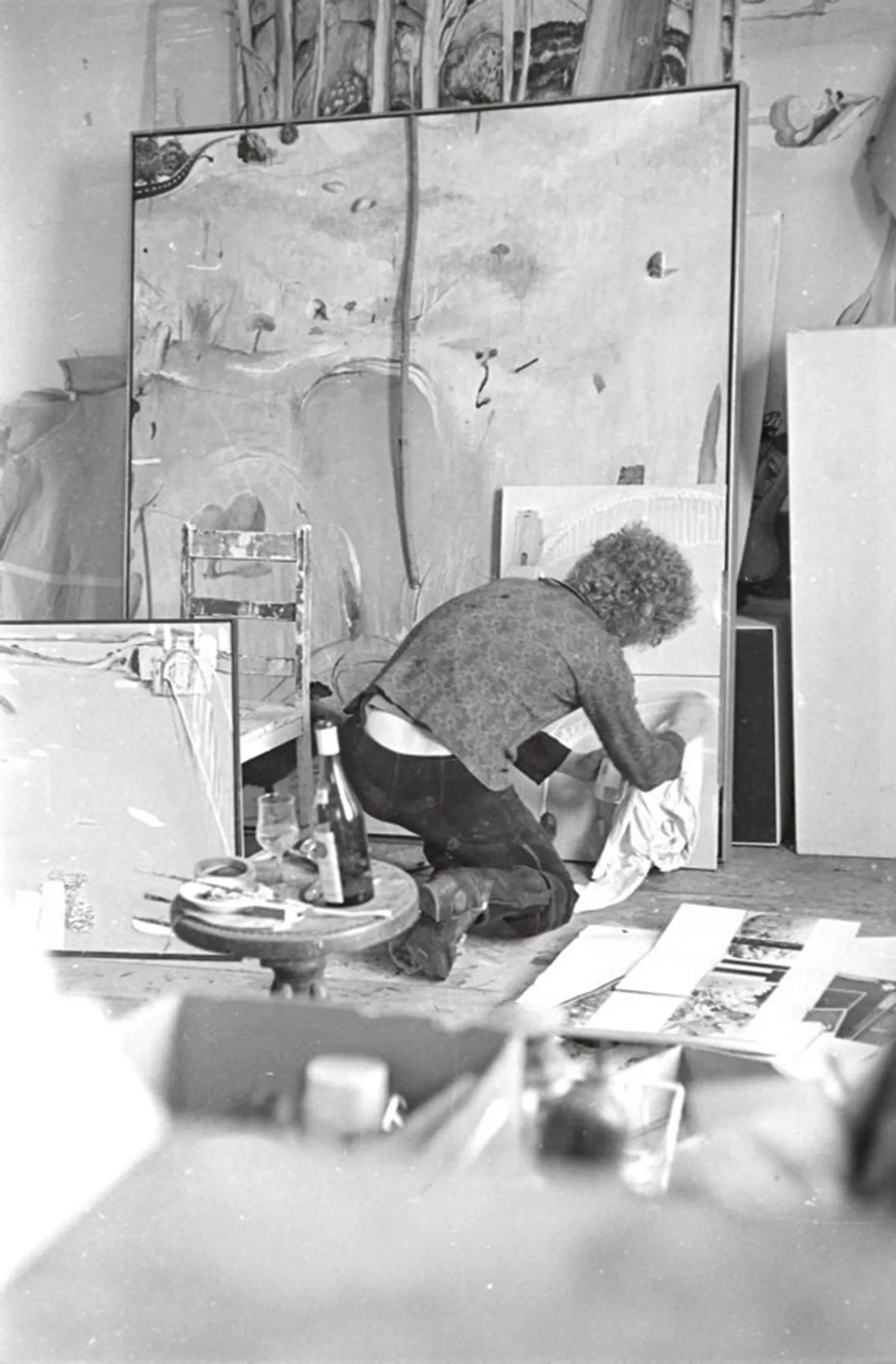
Brett Whiteley in his studio, October 1976
photographer: Robert Walker
National Art Archive
© Estate of Robert Walker/Copyright Agency, 2026
The Whiteleys found the house in Lavender Bay through their friend, architect and artist Rollin Schlicht, who had been in London at the same time as them and was living with his family on the house’s lower floor. Wendy Whiteley has described the apartment as ‘really dark, really gloomy, all cut up into small rooms with floral wallpaper. But it had the bay out there, the trees and potentially glorious light’, and the rent was only $20.3 The Whiteleys purchased the entire property in 1974, working to return the building to a single dwelling that capitalised on its stunning outlook and to create a studio space. The arches and various window niches on the second floor (now instantly recognisable from various Lavender Bay interior paintings) were designed by Whiteley to capture intimate views, while the windows in the bedroom, under the roof of a newly installed tower, opened to a panorama of Sydney Harbour.4 ‘[B]ack then, nobody wanted to live near the Harbour because it was a working industrial site,’ explains Wendy Whiteley. ‘They used to empty everything into it, and it stank! Not long after [the Whiteleys bought the house], (artist) Peter Kingston moved next door. Soon, the (Tim and Janet) Storriers came, and we became a tight little enclave. Lavender Bay was run down, a dead end, but to us it seemed magical.’5 Between 1971 and 1975, Whiteley worked in the sitting room of the house, undertaking larger paintings at a studio at the Old Gas Works in Waverton, which he shared for a short time with fellow artist Tim Storrier. However, after completion of the renovations, he was able to work solely from Lavender Bay, endlessly inspired by the Bay, the house’s beautiful, whitewashed interiors, and the various artworks and personal objects that he and Wendy surrounded themselves with.
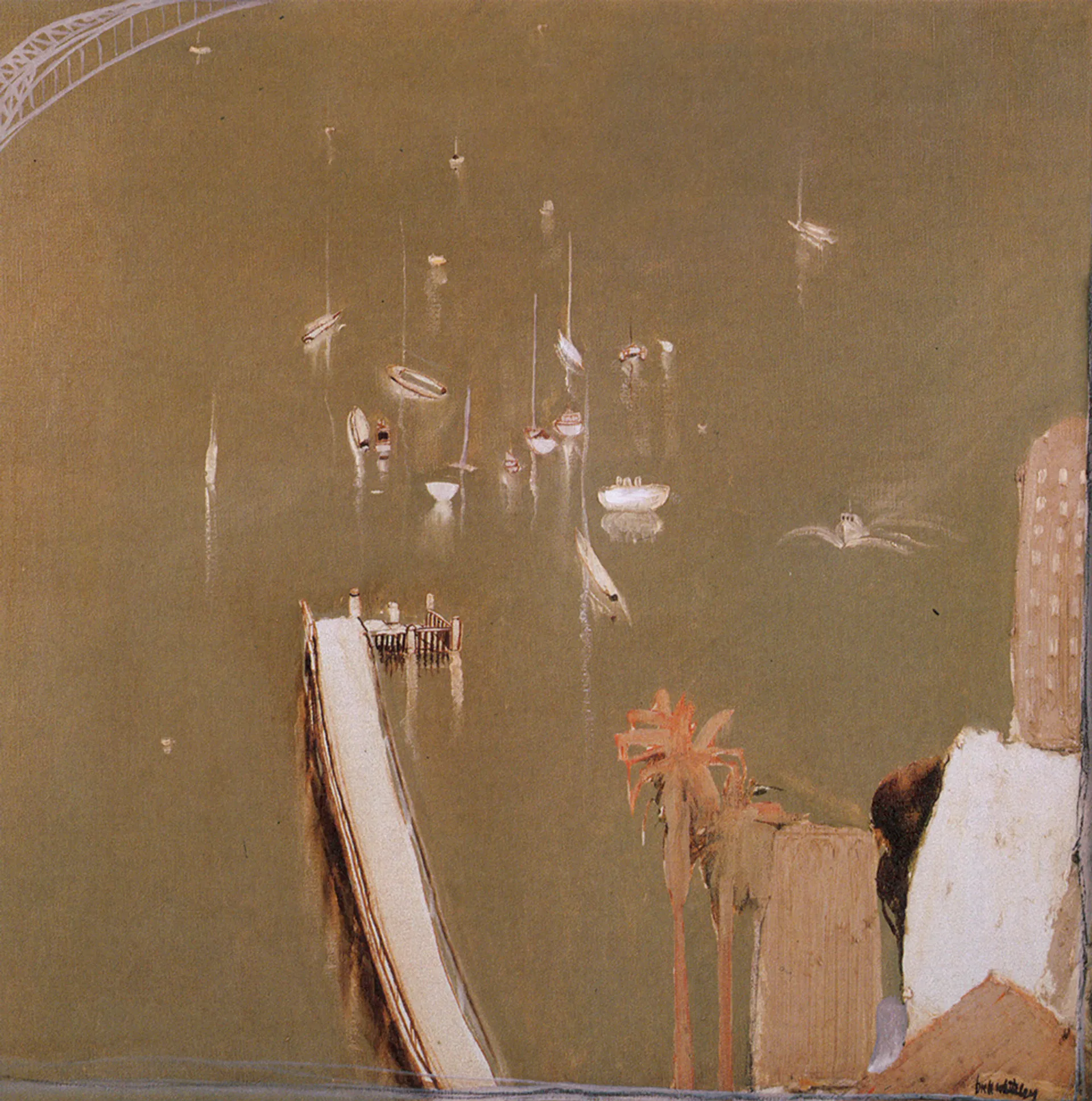
Brett Whiteley
Grey Harbour, 1978
oil and charcoal on canvas
86.5 x 85.5 cm
Private collection
© Wendy Whiteley/Copyright Agency 2026
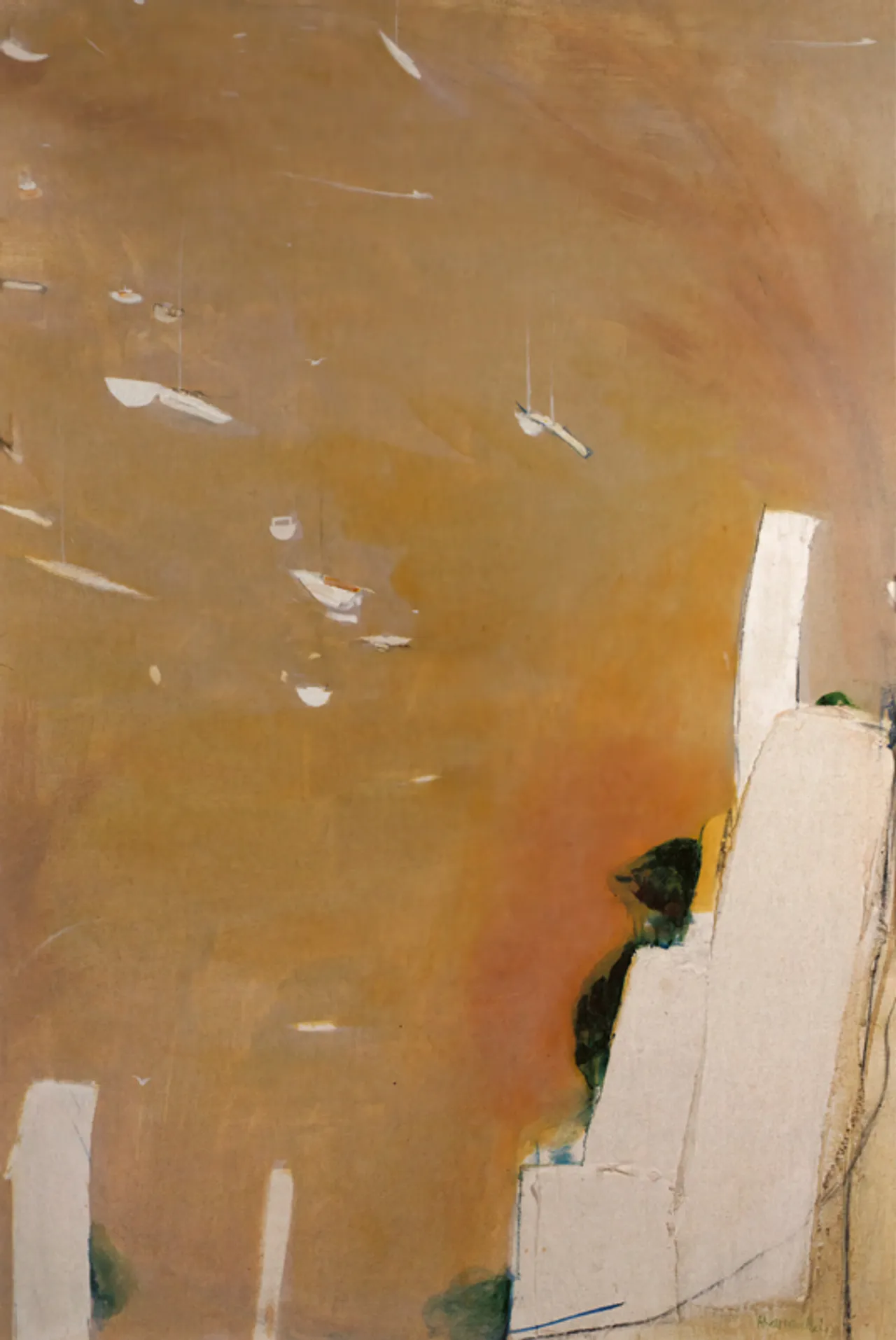
Brett Whiteley
Small Harbour (Grey Day), 1978
oil on plywood
122.0 x 81.0 cm
Kerry Stokes collection, Perth
© Wendy Whiteley/Copyright Agency 2026
The ability to work and create at home meant that life and art became increasingly entwined for Whiteley, and his penchant for working at all hours – often fuelled by alcohol and drugs – segued into the wild parties that the couple became famous for. As artist and fellow Lavender Bay resident Gary Shead has quipped, ‘Those parties at the Whiteleys, I went to quite a few of those… well, if you can remember it, it means you weren’t there.’6 In 1974, the Whiteleys also began using heroin, beginning more than a decade of addiction for Wendy and leading to a never-ending struggle for Brett that would ultimately end his life. Not surprisingly, the pair turned increasingly inward, with Lavender Bay becoming both refuge and subject matter during this time.
Lavender Bay in the rain, 1974 was included in Whiteley’s first public showing of his Lavender Bay works at Australian Galleries, Melbourne, signalling a conscious break from the muscular power of earlier multi-panelled paintings such as The American Dream, 1968 – 69 and Alchemy, 1972 – 73. No longer consumed by the need to transform the ills of society through his painting (Whiteley had conceived of The American Dream for example, as a ‘powerful Guernica-type work of art’7) the artist was content to let the beauty of Sydney Harbour do the talking. As Nancy Borlase perceptively observed in her review of the exhibition for The Bulletin:
‘In his home overlooking the bay, with its ‘glimpses of optical ecstasy,’ he is content ‘to paint reality at the highest moment of affection’ and to forget a world ‘so blatantly unhappy.’ Working close to his family – Wendy, one child (a daughter), three dogs, one cat and six white doves, a treasured crate of birds’ eggs purchased from a small boy (they are blown, so can’t go bad) – he appears a chastened Whiteley, less intent on challenging the world, humbled by a vision of nature larger than himself. The bay, its trees, birds, its over-grown look, even its dilapidated foreshores (rusted orange railway tracks and carriages), the fragile jetty is a salve for all wounds.’8
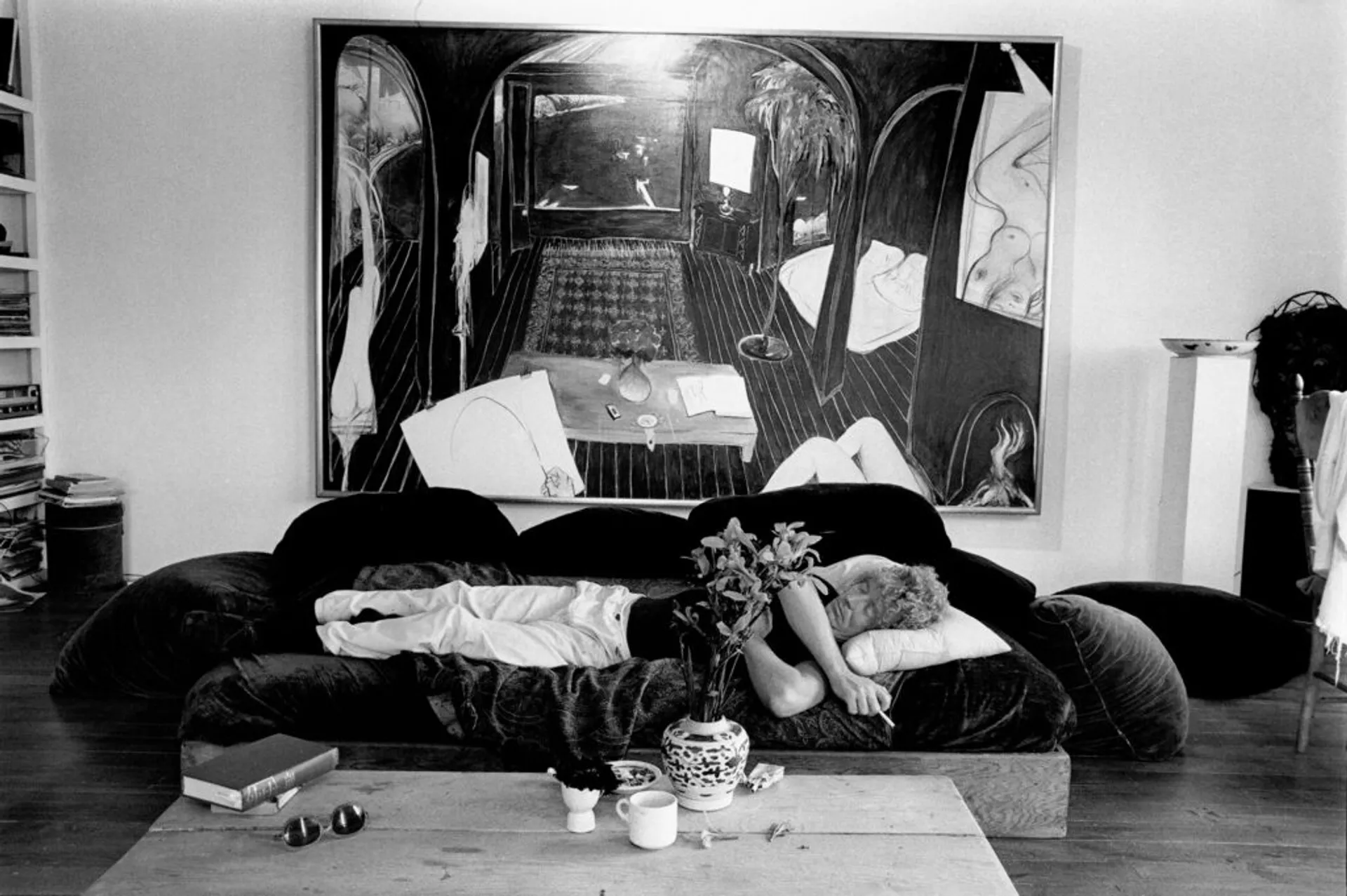
Brett Whiteley at Lavender Bay, 1976
photographer: Greg Weight
National Portrait Gallery, Canberra
© Gregory Weight/Copyright Agency, 2026
Unlike the high-keyed tone of many of Whiteley’s Lavender Bay paintings, particularly those in which he uses his favourite colour – Winsor & Newton’s Deep Ultramarine blue, which had, he said, ‘an obsessive, ecstasy-like effect upon my nervous system’9 – Lavender Bay in the rain sets a quieter, more reflective tone. Able to masterfully capture the changing moods of nature, Whiteley balances abstraction, realism and expressionism in beautiful tension, realising the familiar landmarks of his much-loved bay in the barest whispers of paint. The Sydney Harbour Bridge appears spindly and ghost-like at the top of the composition, just as the barely perceptible outline of the water’s edge is rendered in blocks of earthy colour, punctuated by the bright and unexpected presence of an ultramarine blue tree. Always the calligraphic master, Whiteley tends to draw rather than paint with his medium, outlining the forms of the bobbing boats on the water and capturing the swift movement of vessels in this working harbour with loose, fluid lines. Wendy Whiteley has described the Lavender Bay paintings as ‘confessions’, and within this context, the artist’s decision to heighten the sense of the physical experience of the rain by dropping rivulets of white paint onto the exterior of the painting’s Perspex is interesting, potentially revealing the emotional state Whiteley found himself in while making the work. As Wendy has said:
‘He tells you in code what’s happening. So there’s an element of trouble in them, but it’s not so ‘in your face’ that people have to think about it every time they look at them. People who know the paintings, it changes the way they see the subject itself.’10
1. Brett Whiteley, cited in McGrath, S., Brett Whiteley, Bay Books, Sydney, 1979, p. 216
2. ‘Wendy Whiteley on the life and work of Brett Whiteley’, Art Gallery of New South Wales, Sydney, at: https://www.artgallery.nsw.gov.au/art/watch-listen-read/watch/402/ (accessed 1 September 2026)
3. Kooyman, V., ‘In Conversation with Wendy Whiteley’, Bohemian Harbour: Artists of Lavender Bay, Museum of Sydney, 1 September – 25 November 2018, Museums of History NSW, at: https://mhnsw.au/stories/general/conversation-wendy-whiteley/ and Kooyman, V., ‘$20’, Bohemian Harbour: Artists of Lavender Bay, Museums of History NSW, at: https://mhnsw.au/stories/general/about-bohemian-harbour-artists-lavender-bay/ (accessed 1 September 2026)
4. Sutherland, K., Brett Whiteley: Catalogue Raisonné: 1955 – 1992, Schwartz City, Melbourne, 2020, vol. 7, p. 29
5. Kale, N. ‘Art’s Lavender Bay mob: Friendships, rivalries, drugs, infidelity and cheap rent’, The Age, Melbourne, 24 August 2018, at: https://www.theage.com.au/entertainment/art-and-design/arts-lavender-bay-mob-friendships-rivalries-drugs-infidelity-and-cheap-rent-20180821-h14930.html (accessed 1 September 2026)
6. Gary Shead, cited in Kooyman, op. cit.
7. Brett Whiteley, cited in Featherstone, D. (dir.), Difficult Pleasure: A Film about Brett Whiteley, Film Finance Corporation Australia Limited, 1989
8. Borlase, N., ‘An Unexpected Whiteley’, The Bulletin, 23 November 1974, p. 57
9. Brett Whiteley, cited in ‘Painting the Infliction of Life’, interview by Rudi Krausmann, Aspect: Art and Literature, Summer 1975/76, p. 6, cited in Gralton, B., ‘Brett Whiteley’ in Portrait of a Collection: TarraWarra Museum of Art, TarraWarra Museum of Art, Healesville, 2024, p. 404
10. Wendy Whiteley, cited in Kooyman, op. cit.
KELLY GELLATLY