
Brett Whiteley
(1939 - 1992)
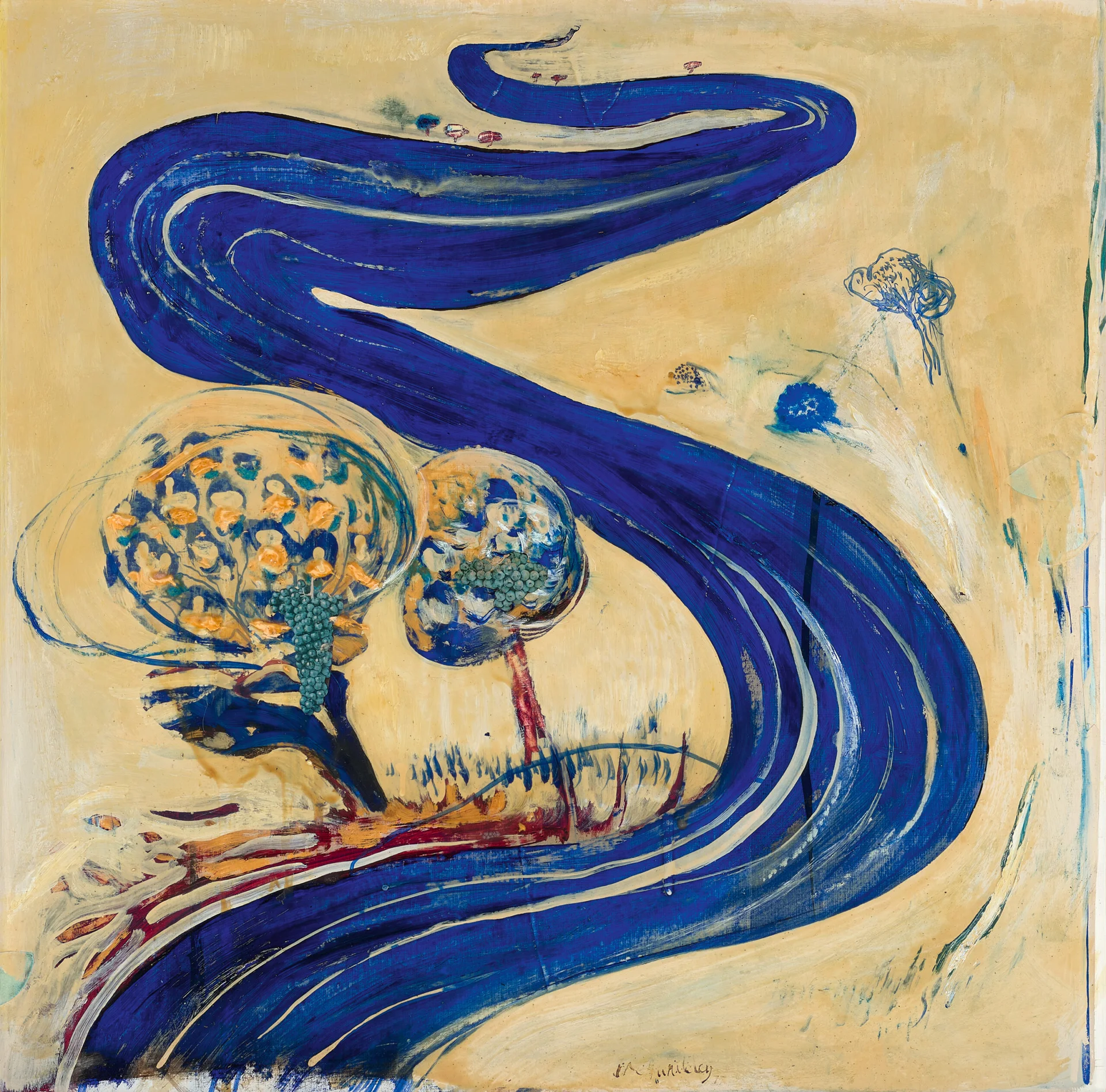
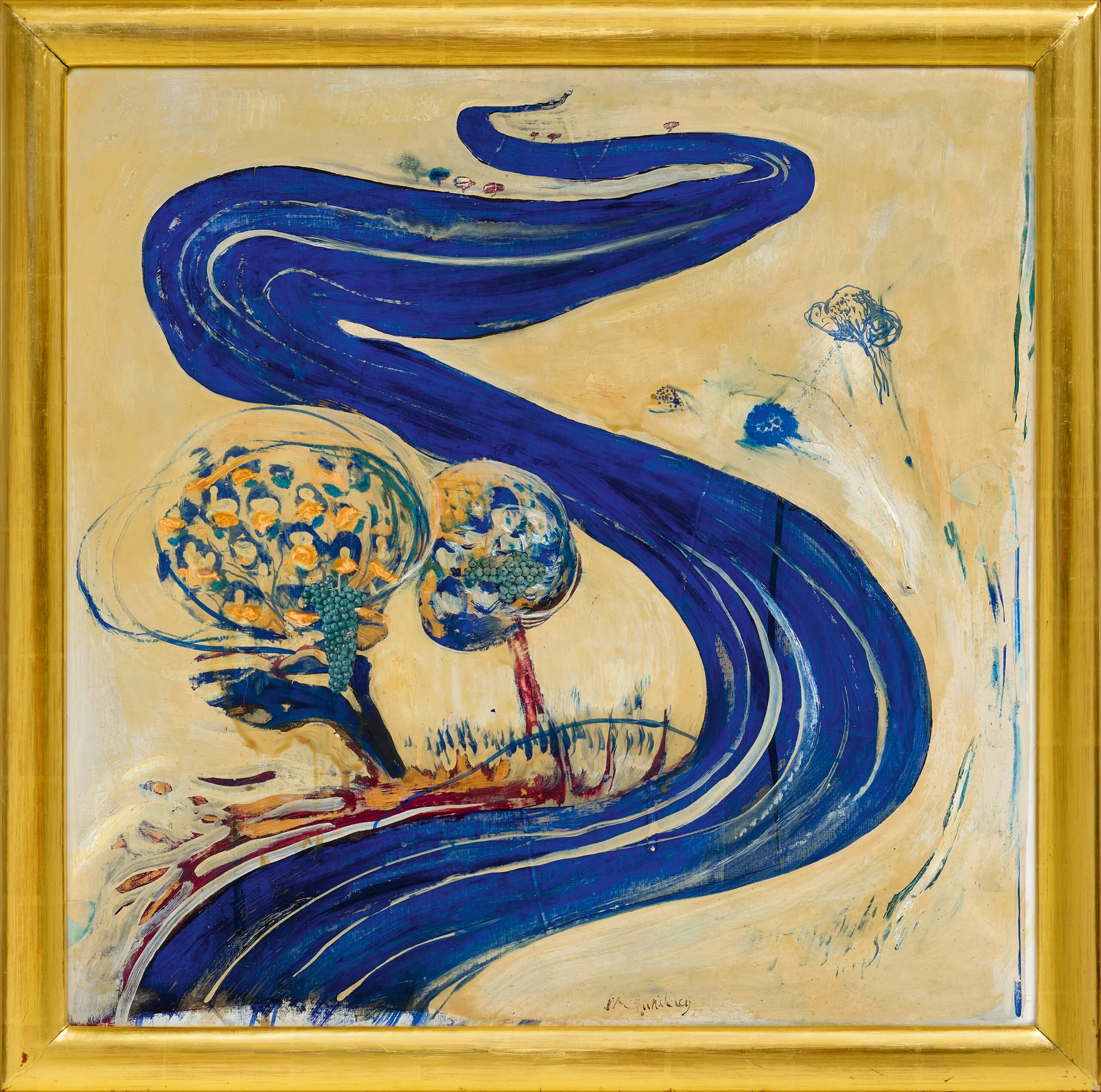
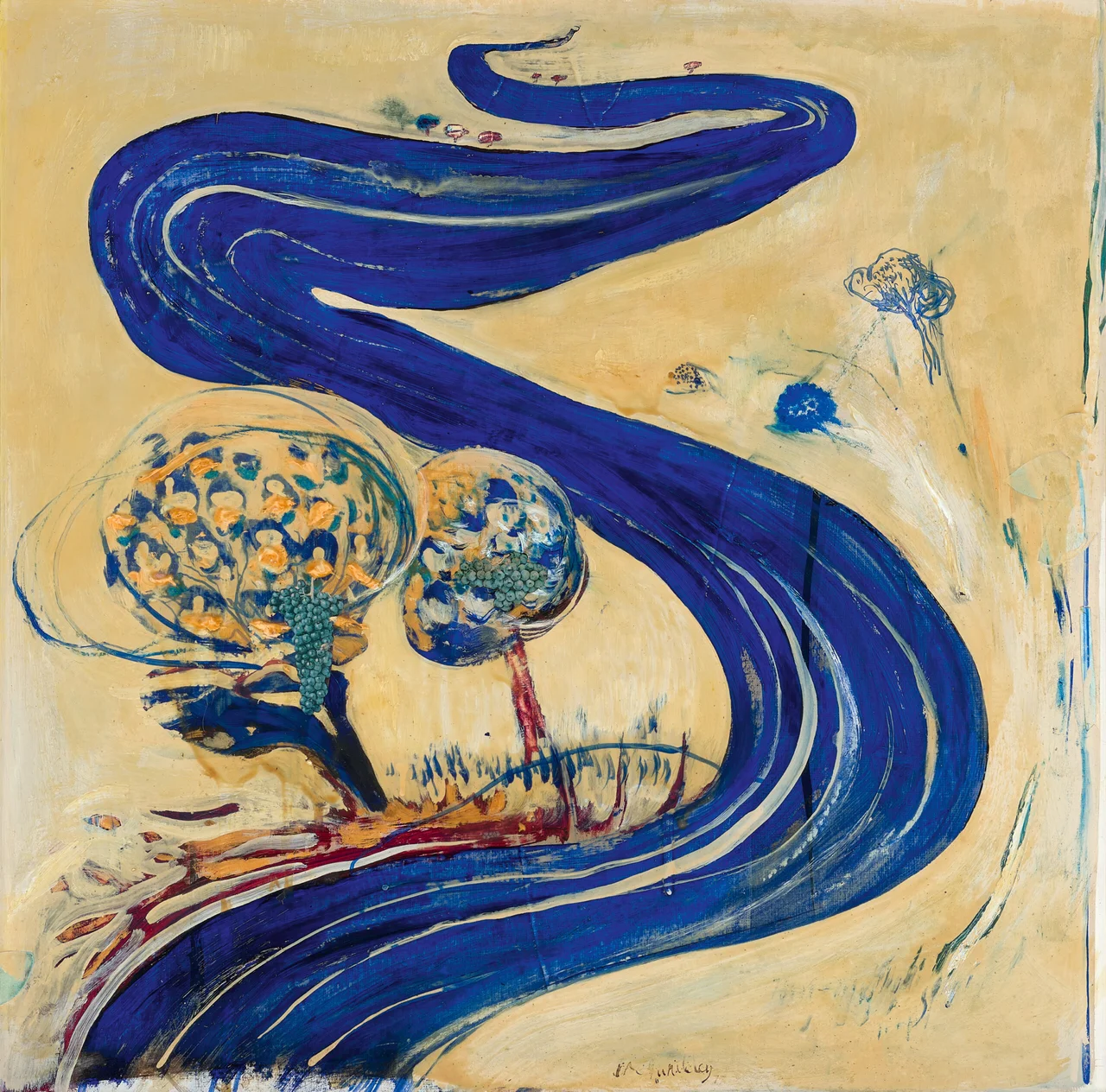
Blue river, 1977
oil, wax and collage on canvas on composition board
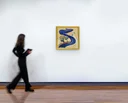
61.0 x 61.0 cm
signed and dated lower centre: brett whiteley / 77
Estimate:
$350,000 - $450,000
© Wendy Whiteley/Copyright Agency, 2026
lot details
Robin Gibson Gallery, Sydney
Private collection, Sydney
Feneley Fine Art Consultants, Sydney
Private collection, Canberra, acquired from the above in August 2004
Exhibited
Brett Whiteley: Art & Life, Art Gallery of New South Wales, Sydney, 16 September – 19 November 1995, then touring to: Darwin, Perth, Adelaide, Melbourne and Hobart, until 17 November 1996, cat. 111
Literature
McGrath, S., Brett Whiteley, Bay Books, Sydney, 1979, p. 209 (illus.)
Walker, R., Painters in the Australian landscape, Hale & Iremonger, Sydney, 1988, p. 144 (illus.)
Pearce, B., Brett Whiteley: Art & Life, Art Gallery of New South Wales, Sydney, 1995, pl. 152 (illus.), p. 235
Sutherland, K., Brett Whiteley: Catalogue Raisonné, Schwartz Publishing, Melbourne, 2020, cat. 147.77, vol. 7, p. 413
‘Of all the subjects Whiteley painted in his career, landscape gave him the greatest sense of release…’1
After a tumultuous decade abroad, in 1969 Brett Whiteley returned to Australia and, in the tradition of many expatriate artists before him, embarked upon an artistic pilgrimage to rediscover his homeland. Captivated afresh by the beauty, vastness and variety of the Australian landscape, he thus explored the shifting chromatic illusions and ‘optical ecstasy’ of Sydney’s Lavender Bay in sumptuous tableaux redolent of Matisse, before subsequently revisiting the country of his boyhood in the central west of New South Wales – returning ‘to the rounded, monumental, full-breasted hills and open spaces that surround Bathurst.’2 Today universally acclaimed among the most relaxed and quietly assured paintings of Whiteley’s career, the resultant landscapes exude a distinct lightness and easy spontaneity – an intimacy derived from the artist’s deep identification with this region’s geography over the span of three decades. Painted in 1977 when Whiteley was at the very height of his fame, Blue river represents a particularly lyrical example – elegantly encapsulating his luminous colour, sensual calligraphic line and characteristic verve in poignant homage to the landscape where his journey as a painter first began.
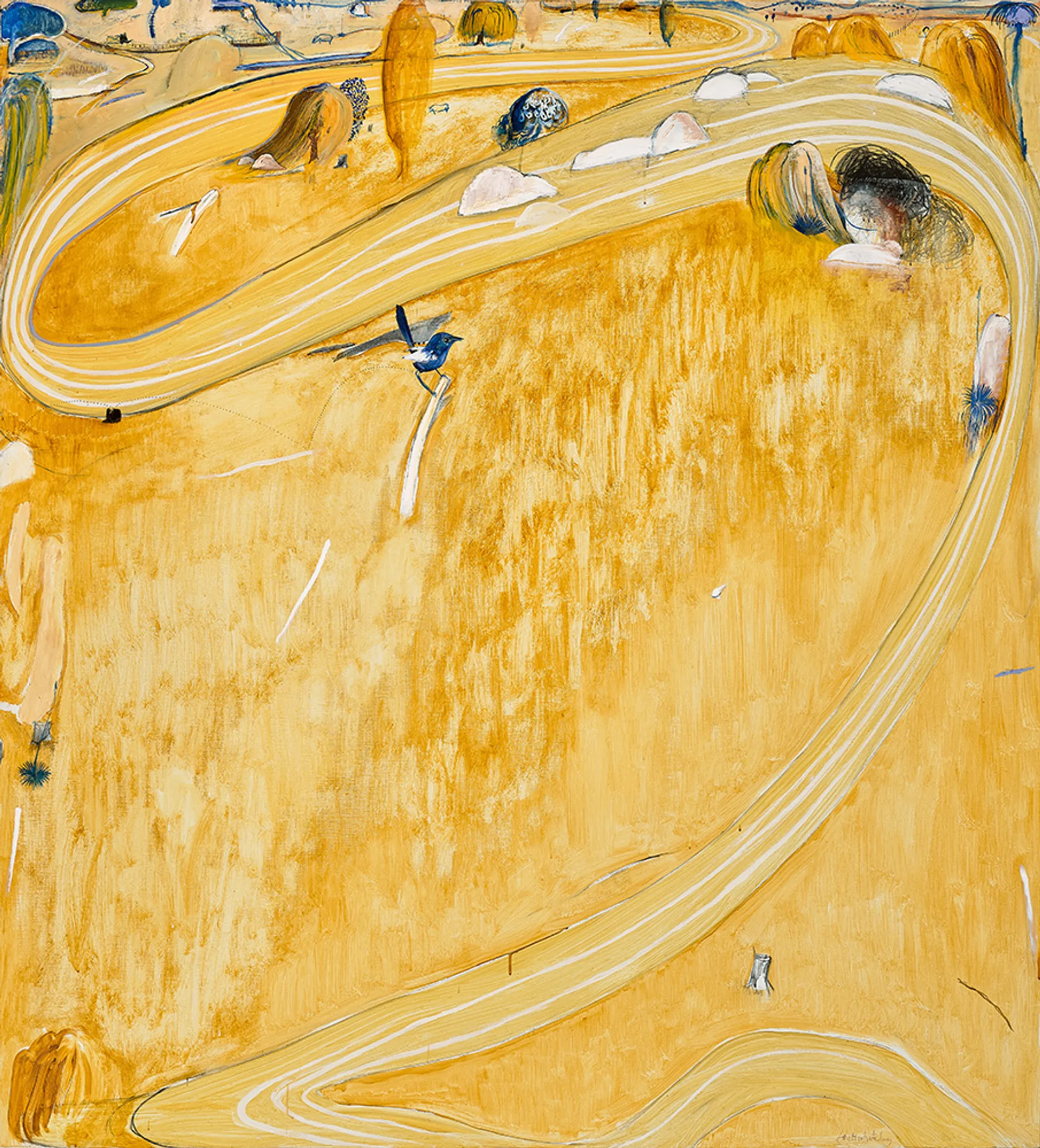
Brett Whiteley
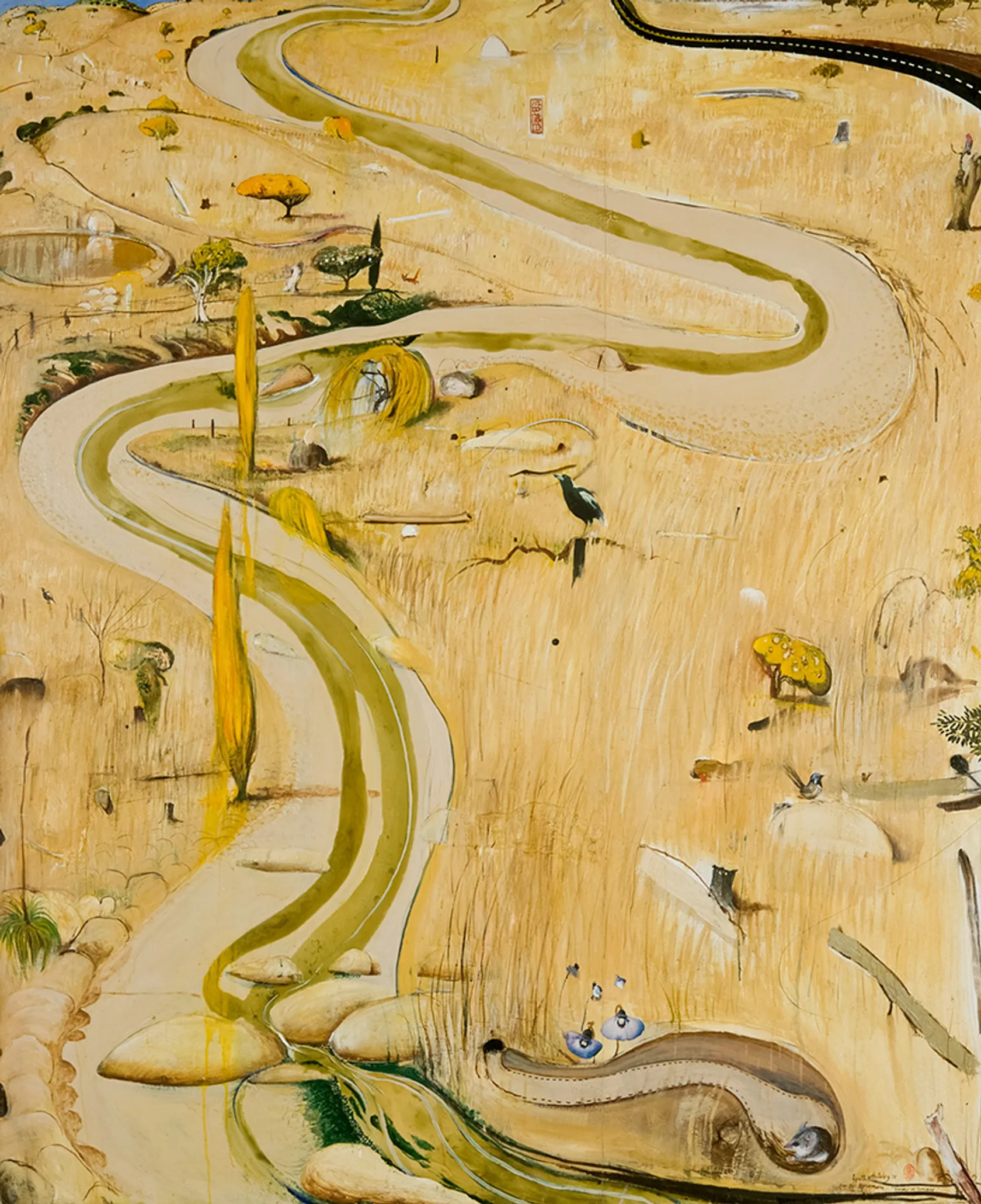
Summer at Carcoar, 1977
oil and mixed media on pineboard
244.0 x 198.7 cm
Newcastle Art Gallery, New South Wales
© Wendy Whiteley/Copyright Agency, 2026
Brett Whiteley (1939 – 1992)
The wren, 1978
oil on canvas
168.0 x 153.0 cm
Private collection
© Wendy Whiteley/Copyright Agency, 2026
Sold Deutscher and Hackett, 24 April 2024, lot 6, for $3,750,000 (inc. BP + GST)
Significantly, Whiteley’s love affair with the landscape of the central west was first ignited during his formative years at The Scots School, Bathurst where, despite his frustration at the regimentation of boarding life, the experience proved crucially important to his development as a painter, nurturing his understanding of the landscape and its seasons. Encouraged by perceptive teachers, he painted views from the classroom window and, on Sundays, ventured en plein air with fellow student Vernon Treweeke into the surrounding Bathurst countryside. After leaving school, Whiteley continued to make sketching expeditions across the Blue Mountains, with Around Bathurst, 1959 ultimately winning him the Italian Government Travelling Art Scholarship in 1960. If these seminal experiences nurtured his profound and enduring attachment to the region – ‘a sense of feeling close to the earth’3 – Whiteley’s response was also inevitably conditioned by his boundless admiration for that great visual rhapsodist of the landscape, Lloyd Rees. First encountering his work at Macquarie Galleries in 1954, the young artist was captivated by Rees’ poetic contemplation of soft curves and arabesques, and particularly his ability to combine naturalism with invention. Beyond the sensual, abstracted forms of Rees’ landscapes, Whiteley was also struck by his mentor’s predilection for leaving visible pentimenti; as he later recalled, ‘I had never seen anything like that before… it set me on a path of discovery that I am still on today – namely that change of pace in a painting is where the poetry begins.’4
Still reeling from his experience of living the turbulent, not-quite ‘American dream’, it is thus of little surprise that Whiteley should seek out the landscape of his childhood for solace and inspiration upon his return home in 1969. As Barry Pearce observed, ‘…if in many of his other themes Whiteley confronted the difficult questions of his psyche, landscape provided a means of escape, an unencumbered absorption into a painless, floating world.’5 Oscillating between periods of dependence on narcotics and restorative sojourns in the countryside, during the years that ensued Whiteley produced some of the most beautiful, highly acclaimed landscapes of his career – aptly earning him the epithet ‘chronologist of the golden paddocks, sensual hills and willow-strewn rivers of the central west.’6 Such achievements culminated most famously in his highly successful solo exhibition, ‘Rivers’, held at Robin Gibson Gallery, Sydney in March 1977, together with the two Wynne Prize-winning paintings, River at Marulan (…Reading Einstein’s Geography), 1976 (private collection) and Summer at Carcoar, 1977 (Newcastle Art Gallery) – works that poetically captured the region in its myriad moods and seasons with elegiac majesty.
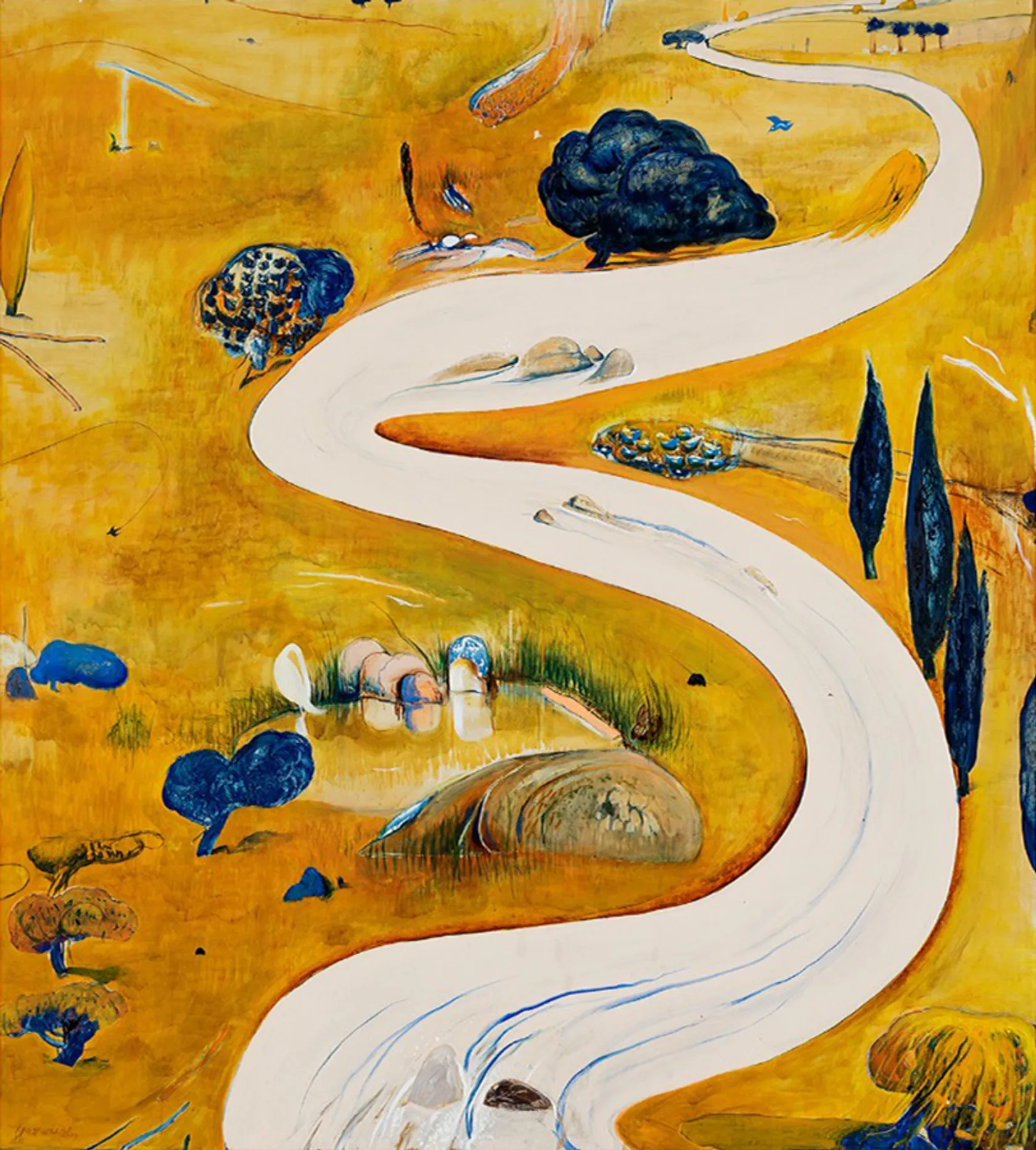
Brett Whiteley
Yellow, 1975
oil on canvas
208.0 x 190.0 cm
Private collection
© Wendy Whiteley/Copyright Agency, 2026
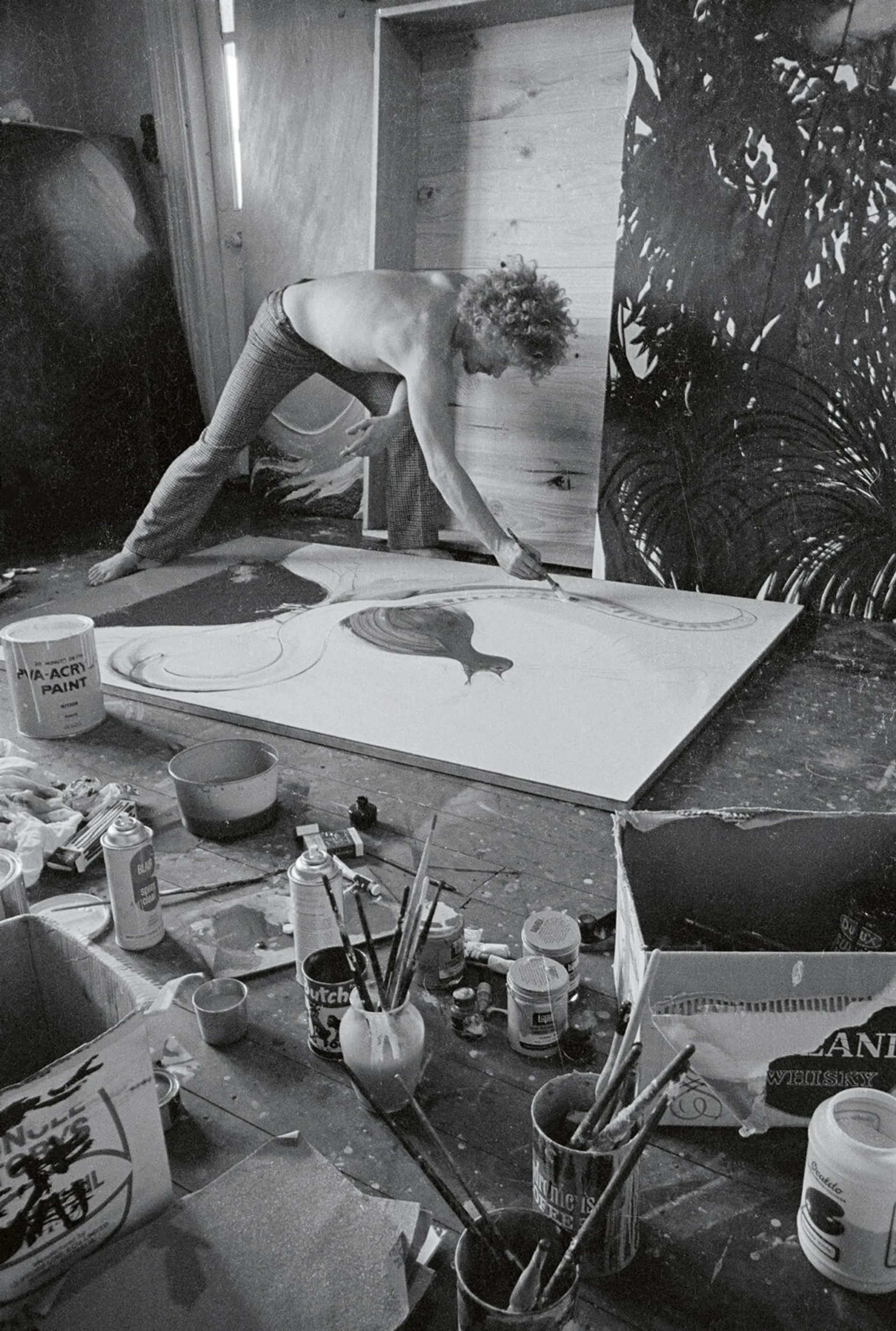
Brett Whiteley in his studio, 1970
photographer: Robert Walker
© Robert Walker/Copyright Agency, 2026
Art Gallery of New South Wales, Sydney
Intimate in scale yet expansive in its evocation of the landscape, Blue river offers a superb example of Whiteley’s deeply personal response to this familiar terrain, exuding the sensuality, ease and poetry that distinguish his most iconic works from this period. Dominating the composition, the S-shaped river of saturated cobalt blue winds through the sun-bleached countryside in an elegant serpentine rhythm, flattened against the picture plane as both recognisable waterway and sweeping arabesque – its vivid colour heightened by the surrounding expanse of pale, desiccated ochres and creams. Characteristically, Whiteley introduces collaged elements and incidents of exquisite detail in the clustered trees, sparse vegetation and scattered marks, while visible pentimenti and traces of revision animate the painted surface, imparting a palpable sense of movement and vitality. An Arcadian refuge of tranquil release and contemplation that seems almost beyond time in its stillness, indeed Blue river betrays a harmony unmistakably redolent of the Chinese art that Whiteley so admired, with the ‘repetition of motifs symbolising states of mind… the arabesques of rivers echoing the flightpaths of birds, which in turn mirrored the artist’s relaxed journey through his own domain.’7 In stark contrast to the artist’s more gruelling, visually demanding canvases of previous years, there is no artifice here – no anthropomorphic forms or flamboyant burlesques, no hint of menace. Rather, the work is quite simply Whiteley’s eloquent tribute to the landscape of his boyhood – a romantic celebration of Nature in all her sensuality and rugged beauty that embodies his desire for an ‘effortless naturalness’ – ‘pictures that have no affectation through mental tricks but are graceful and according to nature.’8
1. Pearce, B., Brett Whiteley: Art and Life, Art Gallery of New South Wales, Sydney, 1995, p. 196
2. McGrath, S., Brett Whiteley, Bay Books, Victoria, 1979, p. 206
3. Brett Whiteley, cited in McGrath, ibid., p. 18
4. Brett Whiteley, cited in Klepac, L., Lloyd Rees – Brett Whiteley: On the Road to Berry, Heide Museum of Modern Art, Melbourne, 1993, p. 7
5. Pearce, op. cit.
6. Hopkirk, F., Brett Whiteley 1958 – 1989: The Central West, Orange Regional Gallery, Orange, 1990
7. Pearce, B., Brett Whiteley: 9 Shades of Whiteley (Education Kit), Art Gallery of New South Wales, Sydney, 2007, p. 25
8. Brett Whiteley, cited in McGrath, op. cit., p. 216
VERONICA ANGELATOS