
Cressida Campbell
(born 1960)
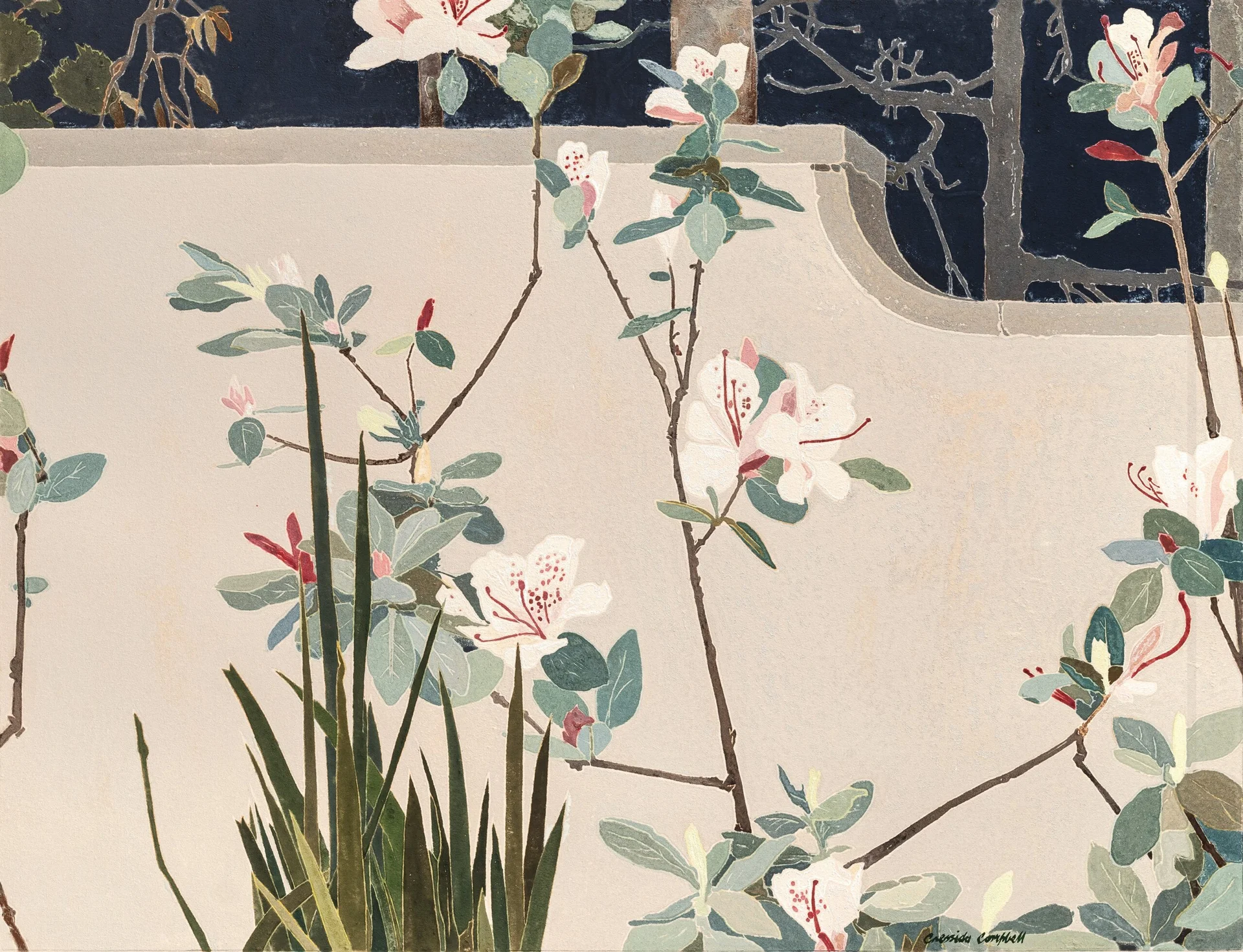
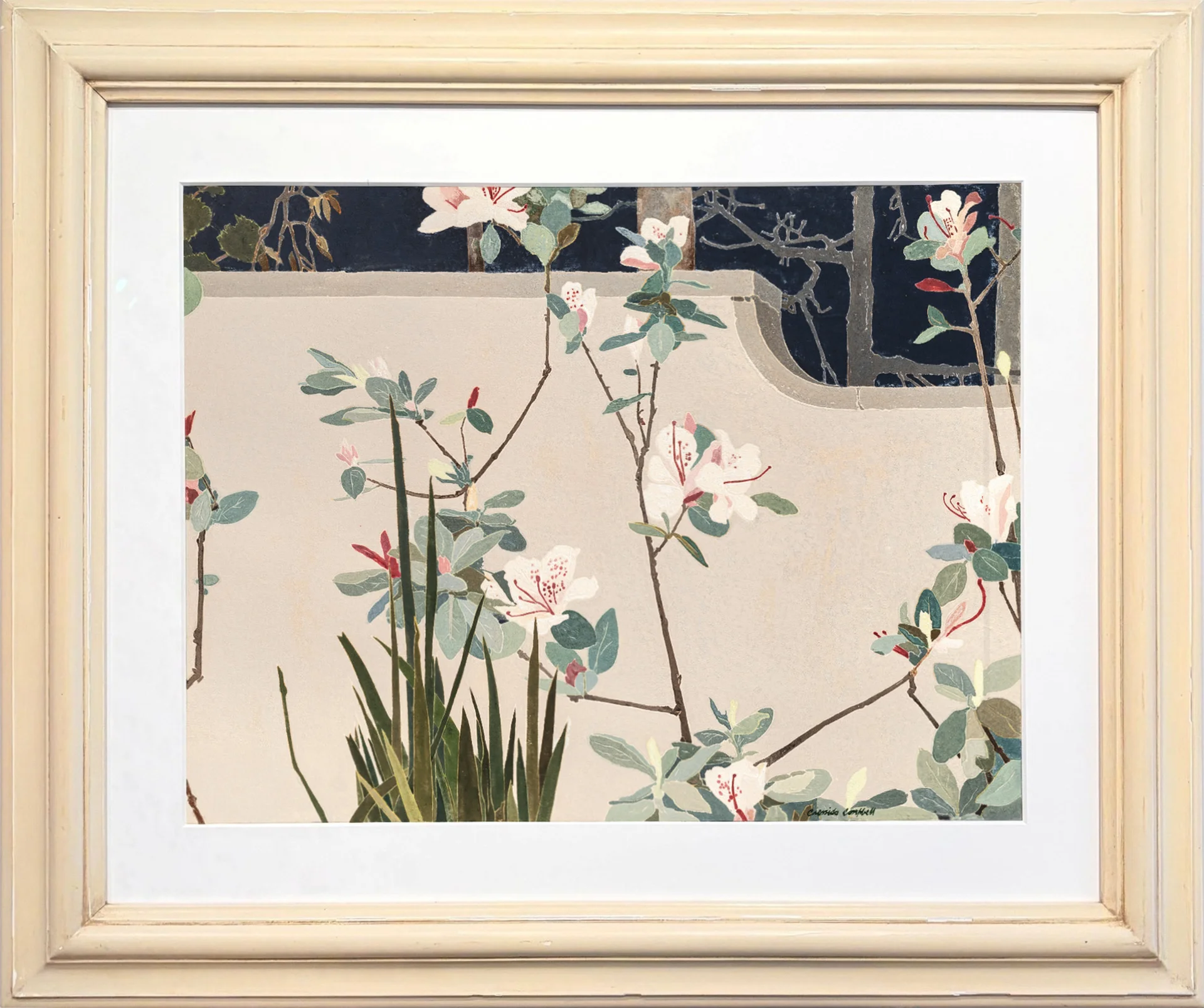
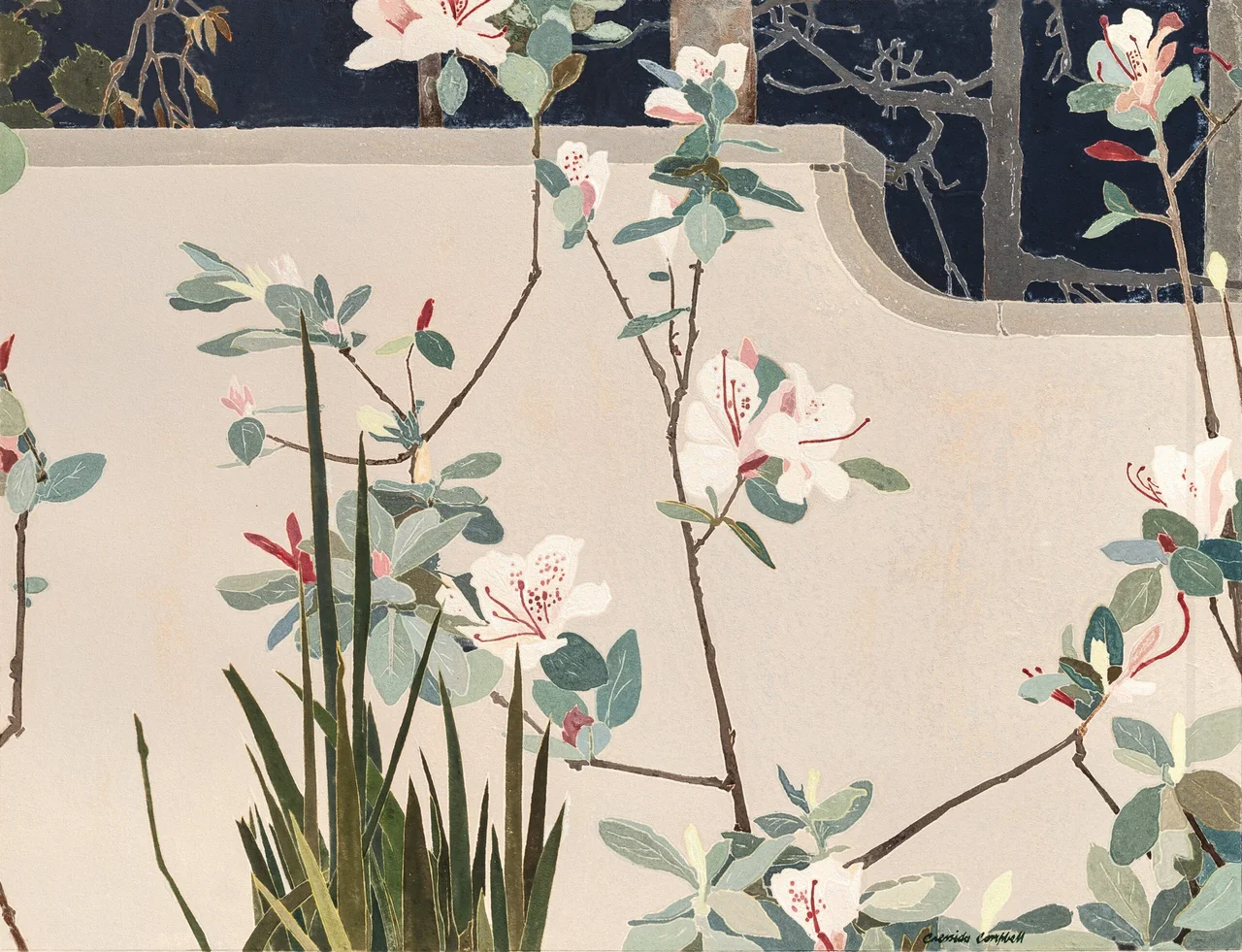
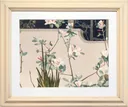
Azaleas, Royal Botanic Gardens, Sydney, 1992
hand-painted unique woodblock print
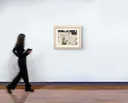
45.5 x 59.5 cm (image)
signed lower right: Cressida Campbell
signed below image lower right: Cressida Campbell
Estimate:
$40,000 - $60,000
© Cressida Campbell/Copyright Agency 2026
lot details
signed below image lower right: Cressida Campbell
Rex Irwin Art Dealer, Sydney (label attached verso)
Private collection, Sydney, acquired from the above in 1992
Exhibited
Cressida Campbell, Rex Irwin Art Dealer, Sydney, 3 – 28 November 1992, cat. 16
Literature
Crayford, P., The Woodblock Painting of Cressida Campbell, Public Pictures Pty Ltd, Sydney, 2008, cat. P9216, p. 344
Through years of fastidious and unwavering commitment to her distinctive painted and incised woodblocks and their mirrored chalky prints, Cressida Campbell has earned widespread public and critical recognition as one of Australia’s most celebrated artists. The nocturnal view in Azaleas, Royal Botanic Gardens, Sydney, 1992, evinces Campbell’s gift for carefully constructed images, her masterful handling of design, texture and tone. When painting landmarks of historical and architectural significance, Campbell consistently turns away from clichéd frontal views, instead presenting asymmetric and oblique glimpses, ‘not the sort found on postcards.’1 Azaleas, Royal Botanic Gardens, for all of its convincing and authentic naturalism, is the product of a process of careful artistic choices and transformations, the result being a striking and illicit view of delicate blooms after dark.
In 1992, Cressida Campbell created two woodblock paintings with subjects drawn explicitly from Sydney’s famous Royal Botanic Gardens: Palm Grove, Royal Botanic Gardens, Sydney (Newcastle Art Gallery) and Azaleas, Royal Botanic Gardens, Sydney. Both were exhibited in the artist’s solo exhibition at Rex Irwin Art Dealer in November of that year. While Palm grove presented a dense and riotous view of tropical luxuriance, with patterns of spiky fronds from palms and cycads fanning out from various points in the image, Azaleas, presents a vastly different botanical composition, one of quiet, elegant simplicity, informed by the artist’s keen understanding of Japanese asymmetric arrangement and negative space.
In 1855, the azaleas of the Royal Botanic Gardens were planted in a sheltered section along the convict-era sandstone Macquarie Wall, tucked away deep in the park, far from the sweeping iconic panorama of Farm Cove, the Harbour Bridge and the Opera House. For the longest time, they have been a key feature of the garden’s annual ‘Spring Walk’. Campbell’s drawing of the delicate, almost translucent, white blooms, starkly presented against a flat wall (the hewn sandstone blocks now smoothed into a uniform pane of pure colour), is minutely observed and realistically rendered, conveying clearly the physical essence of this specific botanical specimen, named in the title of the artwork.
While no doubt sketched in situ, Campbell has transposed the scene to nighttime, once the park gates have been closed to the public, her velvety darkness beyond the wall accentuating a pale tenderness in the azalea petals. The flattened picture plane draws the viewer into direct, detailed, and close contact with the subject, which has been slightly skewed and tightly cropped – creating an interrupted view that conveys the ‘pure, uncontrived feeling that only nature gives us.’2 In a magazine article in 2015, Campbell extolled the spare design of a Japanese scroll by Nozaki Shin’ichi, Flowers, Birds and Small Animals of the Four Seasons, 1850 – 1900 (Art Gallery of New South Wales) for its effect of drawing the eye to wander along ‘as if you are walking a quiet garden.’3 Azaleas, Royal Botanic Gardens, with its soft printed texture and meandering composition, achieves this same authentic effect of a stolen glimpse.
1. McDonald, J., ‘Cressida Campbell’, Destination Sydney, The Beagle Press and Manly Art Gallery & Museum, Mosman Art Gallery and S.H. Ervin Gallery, 2015, p. 108
2. Cressida Campbell, cited in Saxby, J., ‘Cressida Campbell. The art that made me’, LOOK, Art Gallery of New South Wales, Sydney, June 2015, pp. 12 – 13
3. ibid.
LUCIE REEVES-SMITH