
Ian Fairweather
(1891 - 1974)
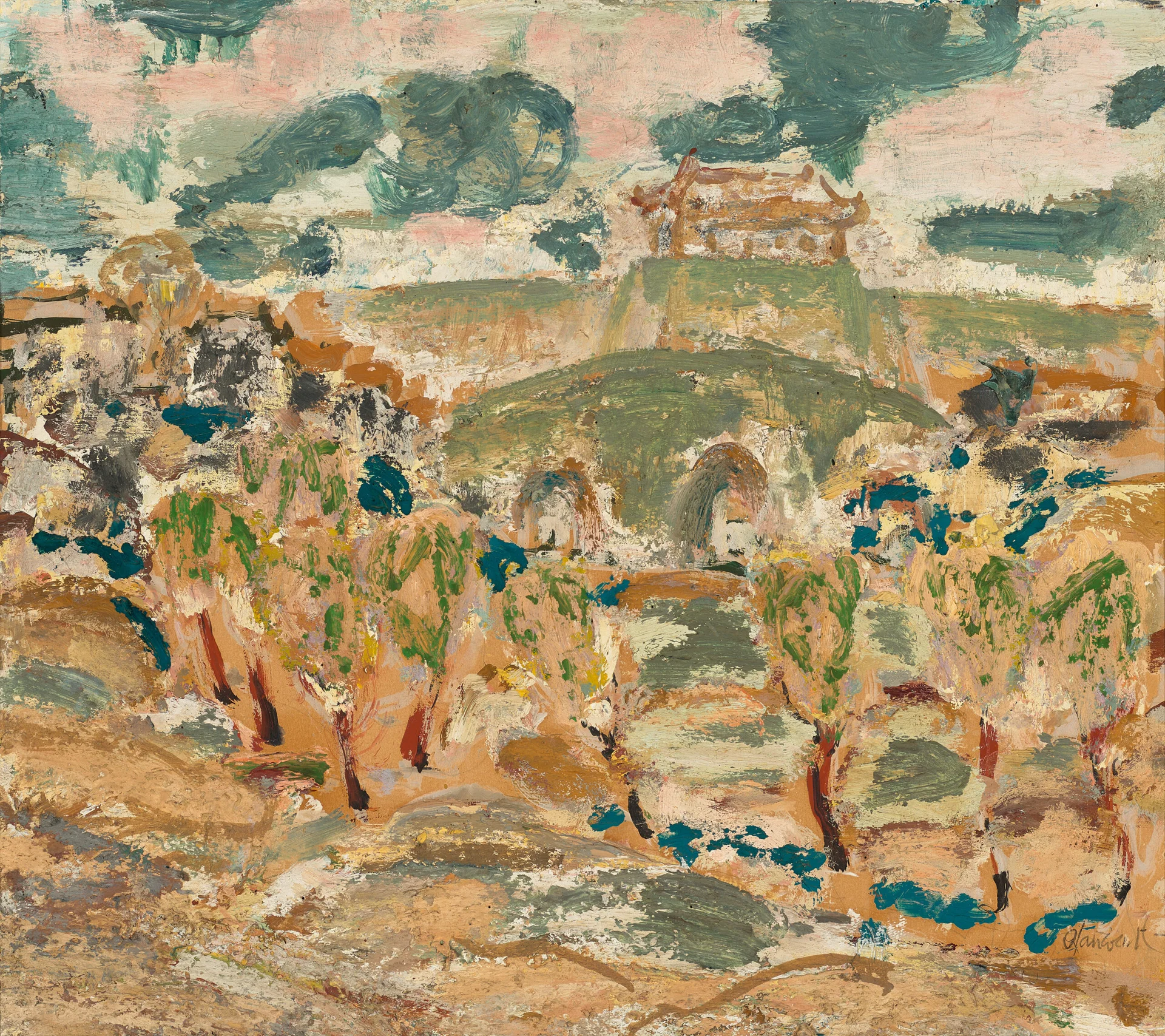
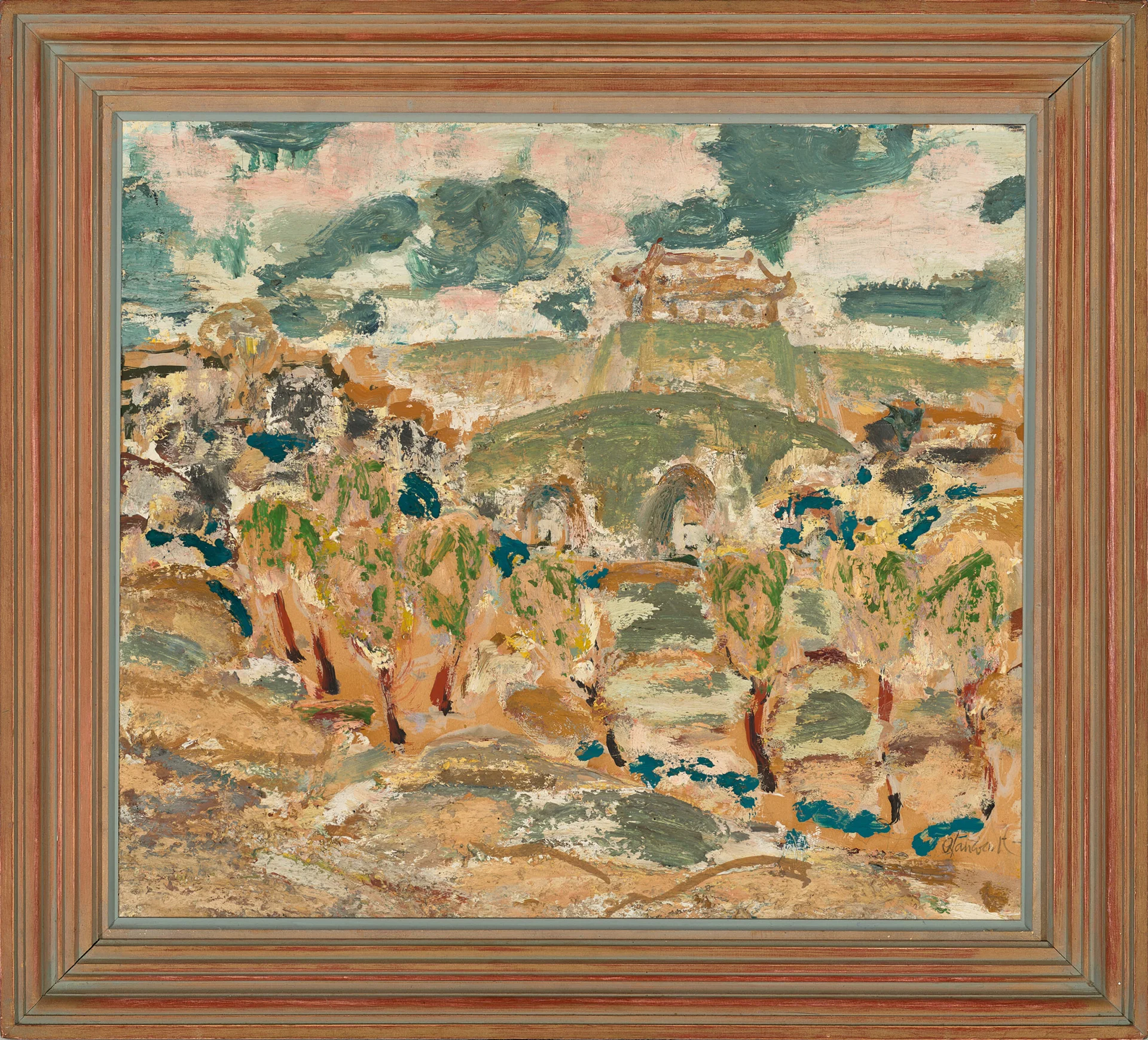
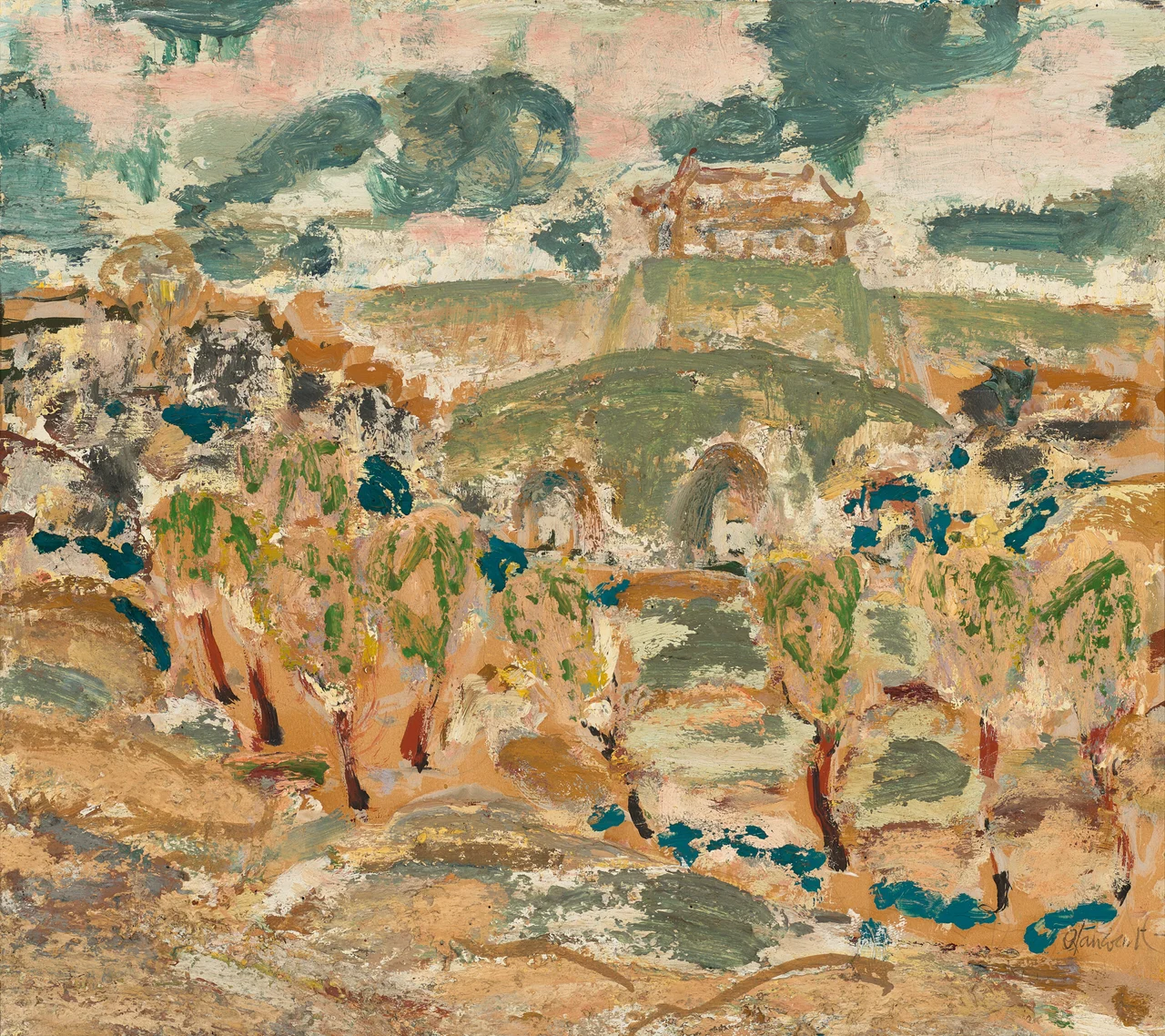
Pa Ta Ch’u, 1938
oil and gouache on cardboard
50.0 x 56.5 cm
signed lower right: I Fairweather
Estimate:
$200,000 - $300,000
© Ian Fairweather/DACS. Copyright Agency 2026
lot details
Collection of Lina Bryans, Melbourne
Thence by descent
Private collection, Melbourne
Exhibited
Fairweather: A Retrospective Exhibition, Queensland Art Gallery, Brisbane, 3 June – 4 July 1965, then touring to: Art Gallery of New South Wales, Sydney, 21 July – 22 August 1965; National Gallery of Victoria, Melbourne, 9 September – 10 October 1965; National Gallery of South Australia, Adelaide, 26 October – 21 November 1965; Art Gallery of Western Australia, Perth, 9 December 1965 – 16 January 1966; and Tasmanian Museum and Art Gallery, Hobart, 10 February – 13 March 1966, cat. 67 (label attached verso)
Ian Fairweather: Paintings & Drawings 1927 – 1970, Niagara Galleries, Melbourne, 3 – 24 October 1985, cat. 8 (illus. in exhibition catalogue, p. 10)
Ian Fairweather Centenary Commemoration Exhibition, National Gallery of Victoria, Melbourne, 26 September – 6 November 1991 (label attached verso)
Literature
Bail, M., Ian Fairweather, Bay Books, Sydney, 1981, cat. 50, fig. 21, pp. 63, 64 (illus.), 234
Bail, M., Fairweather, Murdoch Books, Sydney, 2009, cat. 41, pl. 34, pp. 56 (illus.), 247
Roberts, C. & Thompson, J. (eds.), Ian Fairweather A Life in Letters, Text, Melbourne, 2019, p. 81
In 1934 when Ian Fairweather first visited Melbourne, he described it as a place of colossal monotony where the pubs were almost always closed and the Salvation Army prowled the streets.1 It was in the middle of the Great Depression, but in a stroke of luck Fairweather met William (Jock) Frater and a small circle of modernist painters from the Bell-Shore school. They were immediately impressed with his portfolio of works and welcomed him warmly. They fed him, found him a studio and introduced him to Cynthia Reed who showed occasional art exhibitions at a small furniture and interior design shop, ‘Cynthia Reed’s Modern Furnishings’, at 367 Collins Street.2 Fifteen of approximately twenty works sold from a rather haphazard show later that month in which the works – mostly oils on paper and cardboard and all unframed – spilled from a table onto the floor.3 Among the successful buyers were collector John Reed, curator Daryl Lindsay, printmaker Helen Ogilvie, sculptor Clive Stephen, and architect Percy Meldrum.4
Another was a collector, Lina Bryans, who came from an affluent Melbourne family, the Hallensteins. Bryans was young, sophisticated and unconventional with her own unrealised artistic ambitions. Today her best-known work is the sassy portrait of Jean Campbell, The Babe is Wise, 1940 (National Gallery of Victoria) and she is also widely represented in the National Gallery of Australia, and many state and regional collections.5 Although the pair did not meet at this stage, Bryans was soon to play a vital role in Fairweather’s life.
Perennially restless, Fairweather left Melbourne abruptly as winter set in and arrived once again in Peking in early 1935. He was lonely and penniless and soon regretted his decision. He wrote occasionally to Jock Frater in Melbourne and continually walked the city and the surrounding hills, committing the landscape to memory. Work produced at this time was mostly sent for sale through Jim Ede in London.
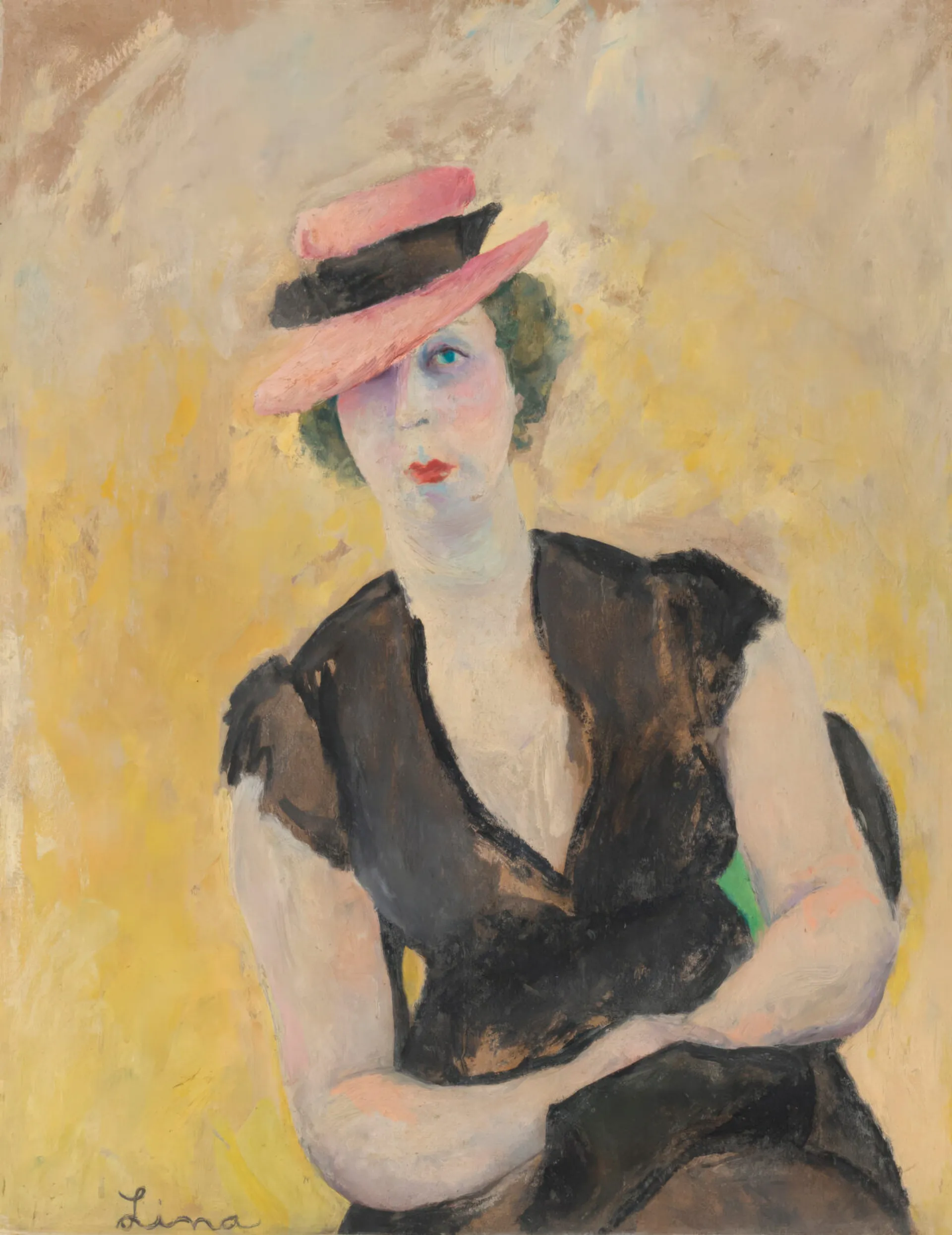
Lina Bryans
The Babe is Wise (Jean Campbell), 1940
oil on cardboard
94.2 x 73.3 cm
National Gallery of Victoria, Melbourne
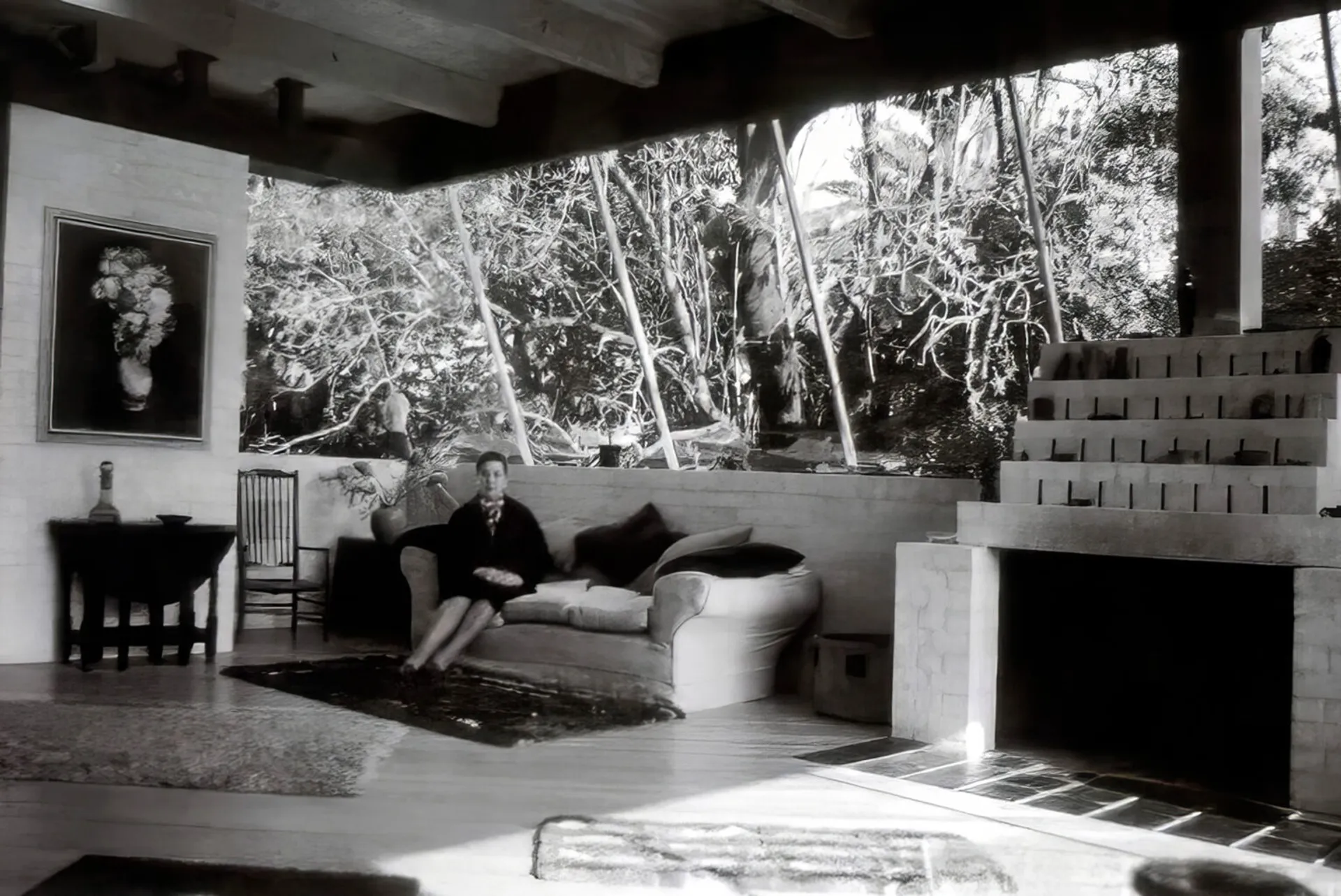
Lina Bryans at 39 Erin Street Richmond, 1968
photographer: Alex Jelinek
After a year in Peking, Fairweather moved on to the Philippines where he continued to paint. In June and July 1938, he sent two bundles of paintings back to Jock Frater in Melbourne wrapped around bamboo poles.6 Bryans – who by this time was in a relationship with Frater and beginning to produce her own work – bought five of the ten paintings by Fairweather, including the present striking oil, Pa Ta Ch’u, 1938.7
Pa Ta Ch’u (now known as Badachu) is eighteen miles from Beijing at the foot of the Western Hills. It is a complex of temples and nunneries spread over a site filled with ‘stunted pines and oaks and maples’ and was favoured by Europeans to escape ‘the heat and smells of Peking.’8 Fairweather possibly walked or rode a horse along the dirt road used by camel merchants, though in his day there was a railway which stopped at a small village (also called Pa Ta C’hu) two miles away.The perspective of the painting is from the bottom of a steep hill with a temple high up on the crest of a mountain.9 Below it is an arch – either that of a bridge or an entrance to a temple – with groves of trees on either side. Oil and gouache have been broadly applied, and the palette is dominated by greys and blues, with scattered touches of vermilion.
By the time Fairweather eventually met Lina Bryans in October 1945, she was living at ‘The Pink Hotel’ at Darebin Creek where she had established an artist’s retreat. She provided him with both security and freedom, a studio and materials, food and friendship. It was a rare time of peace in his turbulent life. He remained there for two years and produced approximately 160 paintings and one sculpture.10
1. Ian Fairweather, letter to Jim Ede, undated, (March ? ) 1934, in Roberts, C. and Thompson, J. (eds.), Ian Fairweather A Life in Letters, Text, Melbourne, 2019, p. 16
2. Reed was a sophisticated and well-travelled heiress, sister to John Reed of Heide fame and later the second wife of Sidney Nolan. She had many creative strings to her bow. see Grant, J., The Life and Work of Cynthia Reed Nolan, PhD Thesis, University of Sydney, 2002, p. 28
3. The exhibition was held in March 1934; see Bail, M., Ian Fairweather, Bay Books, Sydney, 1981, p. 27
4. Bail, ibid., p. 223, footnote 10
5. See Forwood, G., Lina Bryans: Rare Modern, 1909 – 2000, The Miegunyah Press, Melbourne, 2003
6. Bail, op. cit., pp. 61 – 62. Ede had retired to Morocco and was no longer of help.
7. Another was Boats at Soochow Creek, 1938, sold at Deutscher and Hackett, Melbourne, 24 April 2013, lot 10
8. Varé, D., Laughing Diplomat, John Murray, London, 1948, p. 120. Varé was an Italian diplomat who served in China in 1930s.
9. It was described by Fairweather as a ‘pagoda’ not a temple, the former being exclusively for the worship of Buddha: see Ian Fairweather, letter to William Frater, 24 June 1938, in Roberts & Thompson, op. cit., p. 81
10. Bail, op. cit., p. 74
DR CANDICE BRUCE