
Fred Williams
(1927 - 1982)
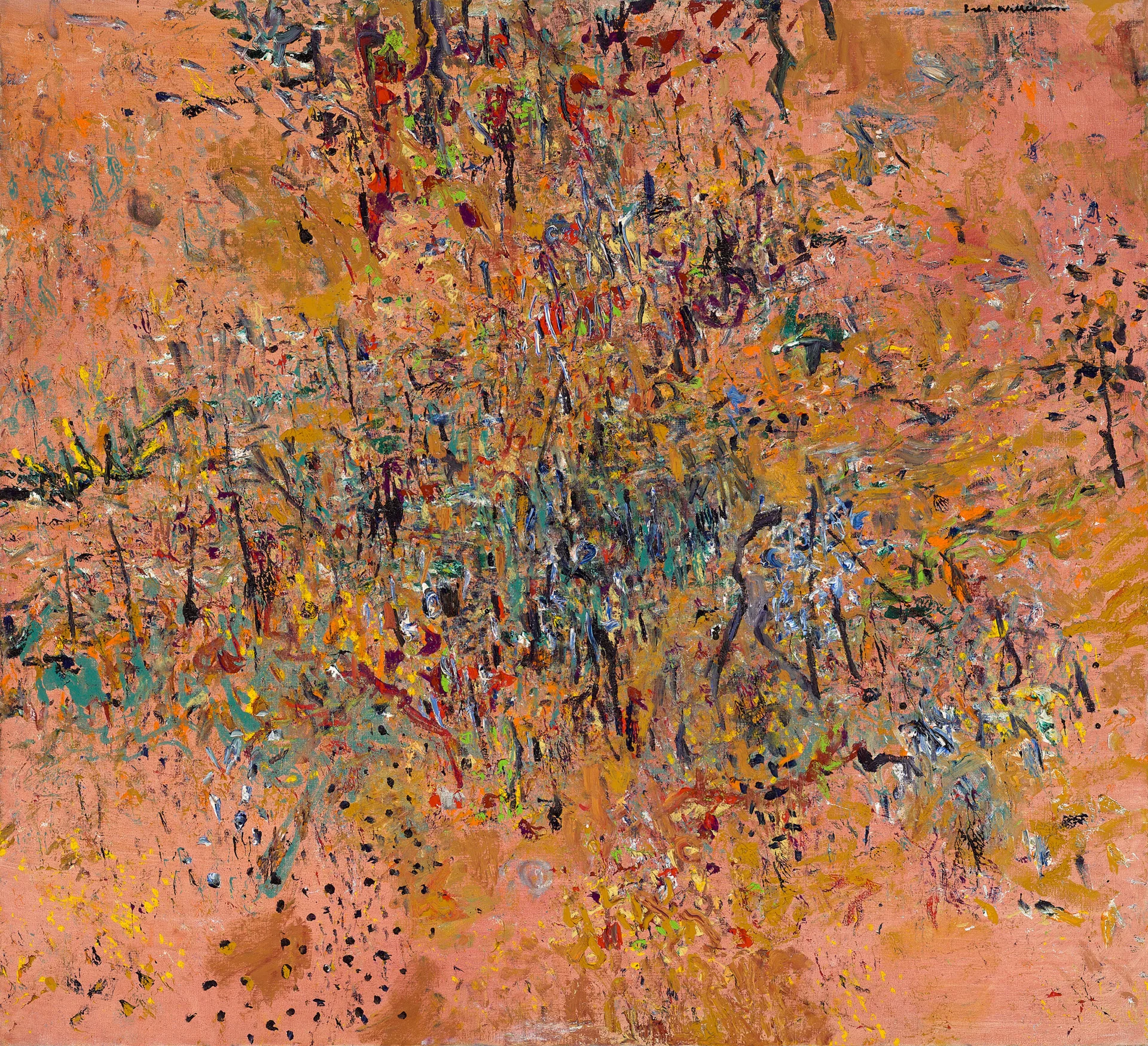
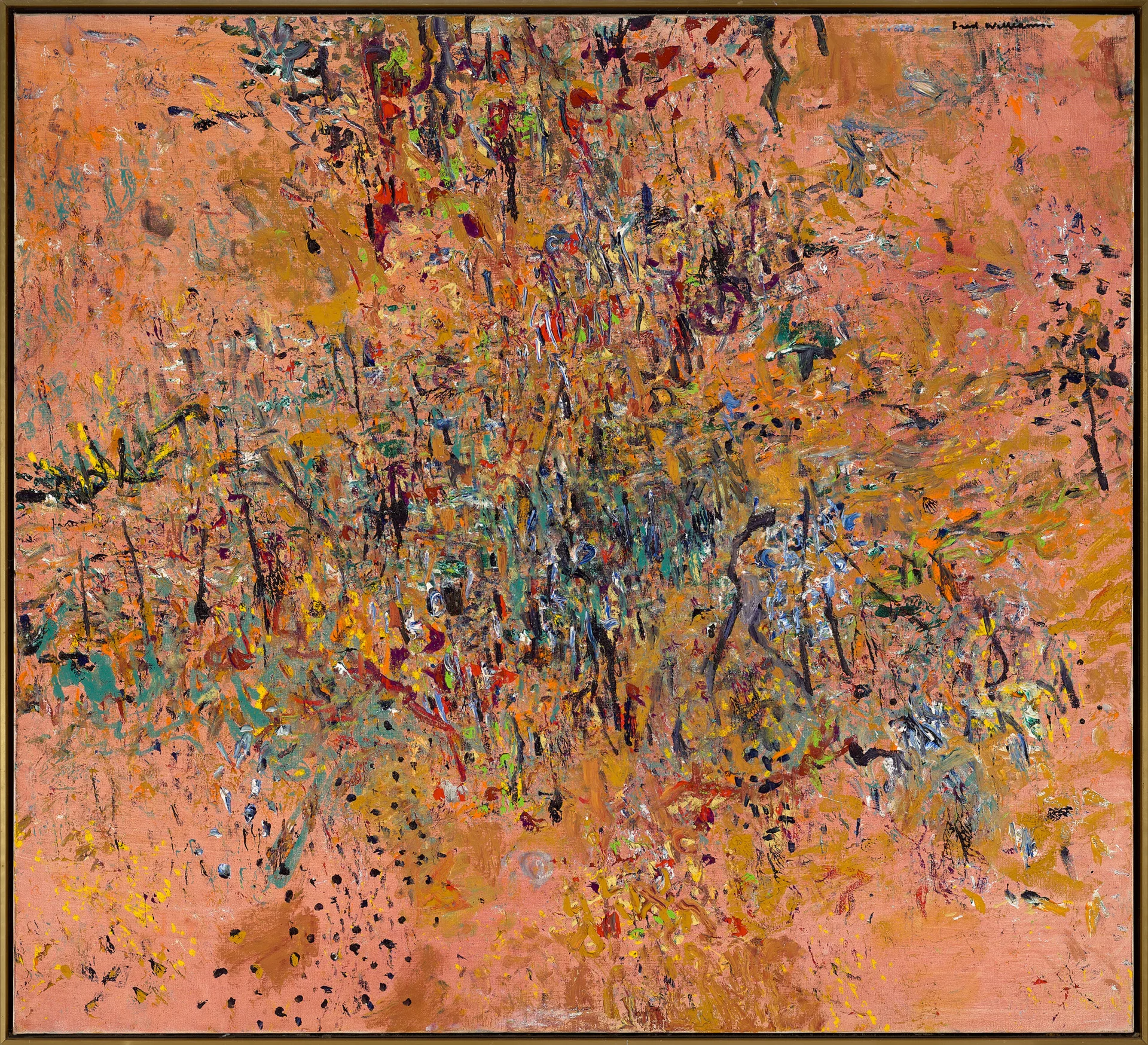
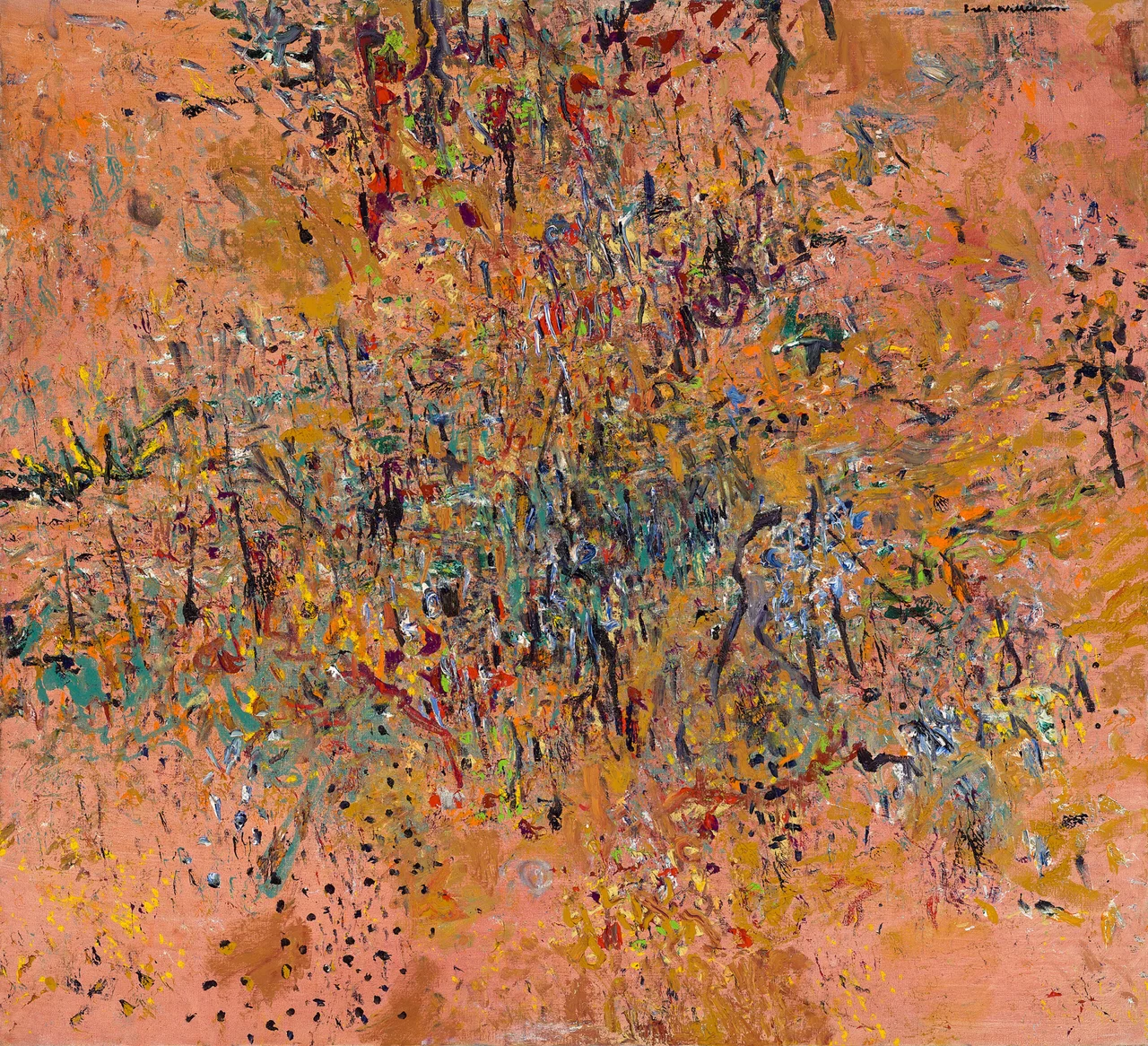
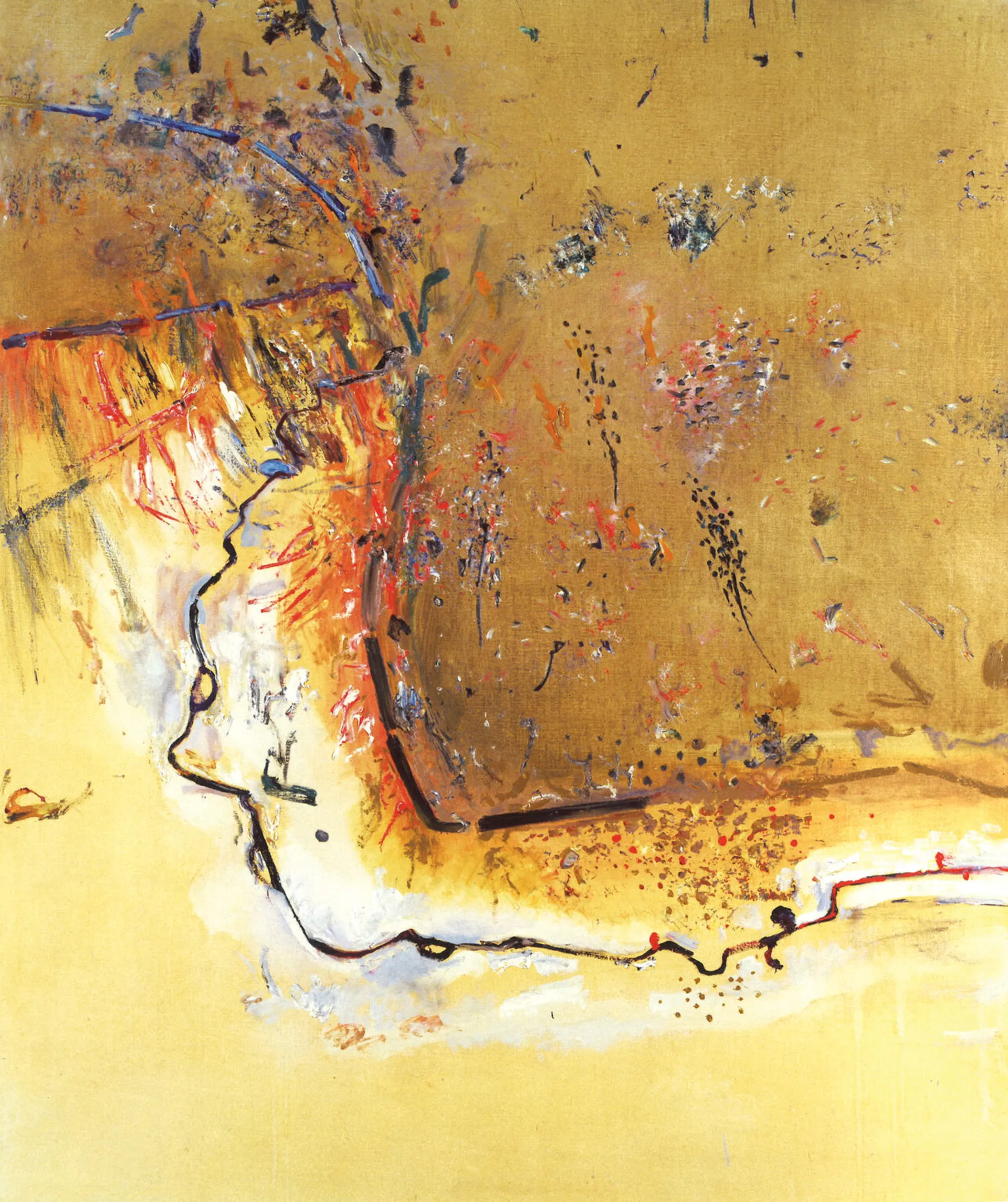
Werribee Gorge, 1976
oil on canvas
96.0 x 106.0 cm
signed upper right: Fred Williams
Estimate:
$300,000 - $400,000
© Estate of Fred Williams/Copyright Agency 2026
lot details
Joseph Brown Gallery, Melbourne
Philip Bacon Galleries, Brisbane
Private collection, Brisbane
Christie’s, Melbourne, 3 May 2004, lot 90
Private collection, Sydney
Exhibited
Joseph Brown Gallery, Melbourne, 1 – 14 September 1982, cat. 106 (illus. in exhibition catalogue)
We are grateful to Lyn Williams for her assistance with this catalogue entry.
An invitation in 1975 to mount a solo exhibition of gouaches at the Museum of Modern Art in New York marked the beginning of an intensely productive period in Fred Williams’ career. He was the first Australian artist to be honoured in this way and the exhibition, which opened in March 1977, acknowledged the significance of his art and its unique vision of the landscape within a national context – both to audiences who were familiar with the country his paintings described, and beyond. Introducing the exhibition, the Director of MoMA’s Department of Drawings, William S. Lieberman, wrote: ‘Fred Williams knows Australia. He is not an artist who would disdain a gum tree. He is not a foreigner seeking to impose a natural paradise on some strange, exotic land. He is, however, a romantic artist and his approach to landscape is narrative. His images may at first seem abstract, but they in fact describe actual times and places… Fred Williams’s colours are those of the continent itself… Fred Williams’ vision is authentic.’1
Fred Williams
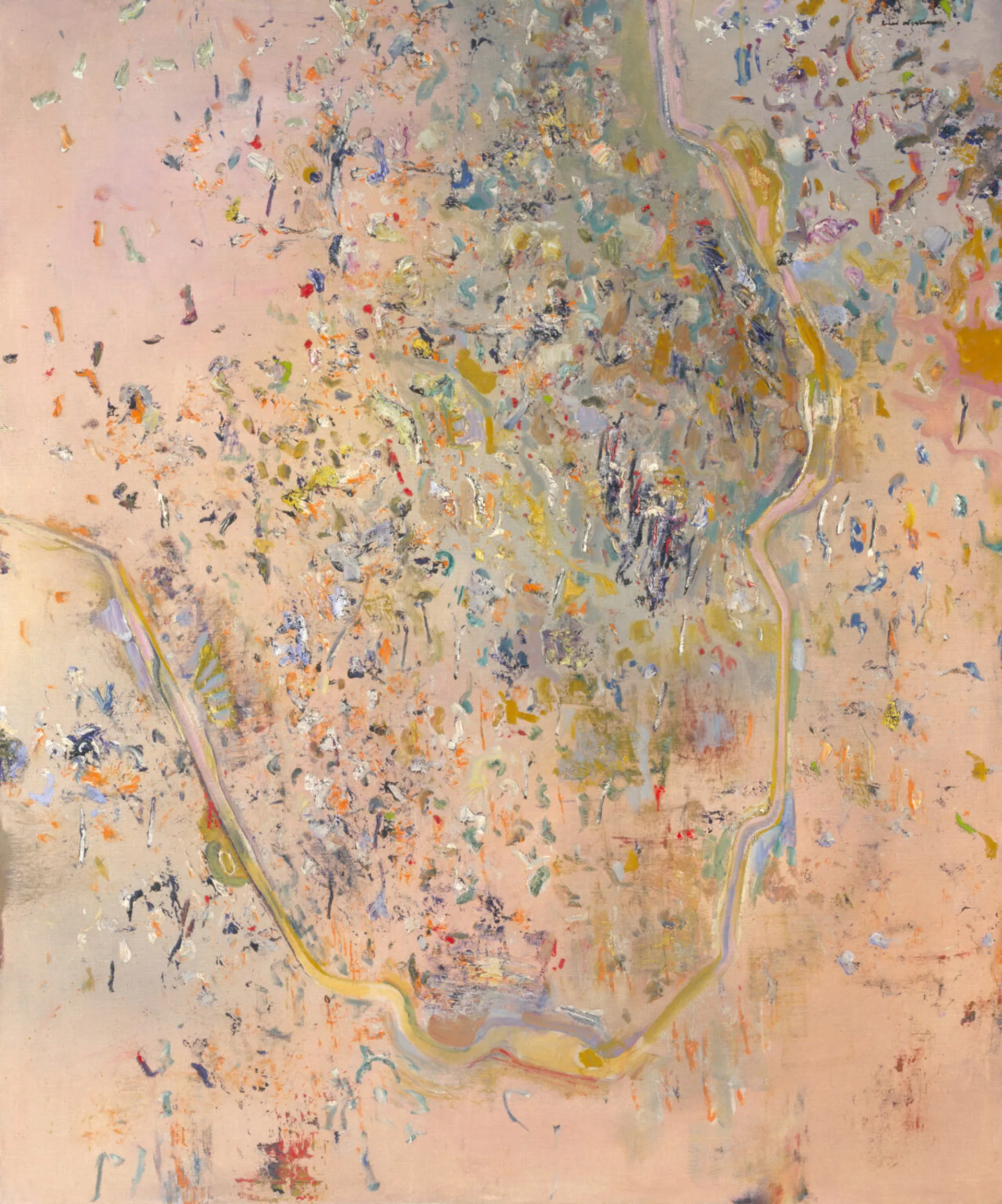
The River, Werribee Gorge, 1977
oil on canvas
182.4 x 152.0 cm
Art Gallery of New South Wales, Sydney
© Estate of Fred Williams / Copyright Agency 2026
Fred Williams
Dry Creek Bed, Werribee Gorge I, 1977
oil on canvas
182.3 x 152.2 cm
Tate, London
© Estate of Fred Williams / Copyright Agency, 2026
Williams’ celebrated series of gorge paintings began in late 1975 following two sketching excursions to Werribee, a short distance southwest of Melbourne. The drama and varied features of the landscape obviously appealed to the artist, who returned early the following year, making a further eight visits to the area in just over two months, painting oil sketches as well as taking photographs, which he used as aides-mémoire. He worked in a different location each time – from Picnic Point, which offered a broad view over the cliffs to the dry creek bed and surrounding bush below, to Kelly’s Creek, where the perspective was closer and more intimate, noting in his diary, ‘These last three or four months have been the driest in fifty three years? so it has been a great opportunity to be doing the “Gorge” – visually it could not be seen under better conditions.’2 Williams also wrote, ‘It is quite fascinating to think of the You Yangs looking like a saw-tooth – & just a few miles away the “Gorge” doing the same thing in reverse.’3 This recognition of the connection between the geography of Werribee Gorge and the You Yangs – the subject of an important series of paintings produced the previous decade – provides an insight into the depth of Williams’ understanding and careful observation of the landscapes in which he worked.
In making these paintings, Williams solidified the practice of beginning studio paintings soon after a sketching trip, while the visual and physical memory of the experience was still strong, and there was now little difference between what he termed the ‘outside’ paintings and the ‘inside’ works. Recording his excitement about this new aspect of the creative process, he wrote, ‘this is something of a milestone for me – to paint the sketch on the spot and then paint the picture!’4 One of the consequences of this way of working is an immediacy in the application of paint which echoes marks made directly in front of the motif, as the hand directs the brush to record an impression of what the eye is seeing, capturing both the appearance and the feeling of the landscape. From all-over compositions like The river, Werribee Gorge, 1977 (Art Gallery of New South Wales) in which the river, seen from above, meanders through a densely treed area, to more sparse images like Dry creek bed, Werribee Gorge I, 1977 (Tate Gallery, London), it is the diversity of brushstrokes and a certain lightness of touch that prevails.
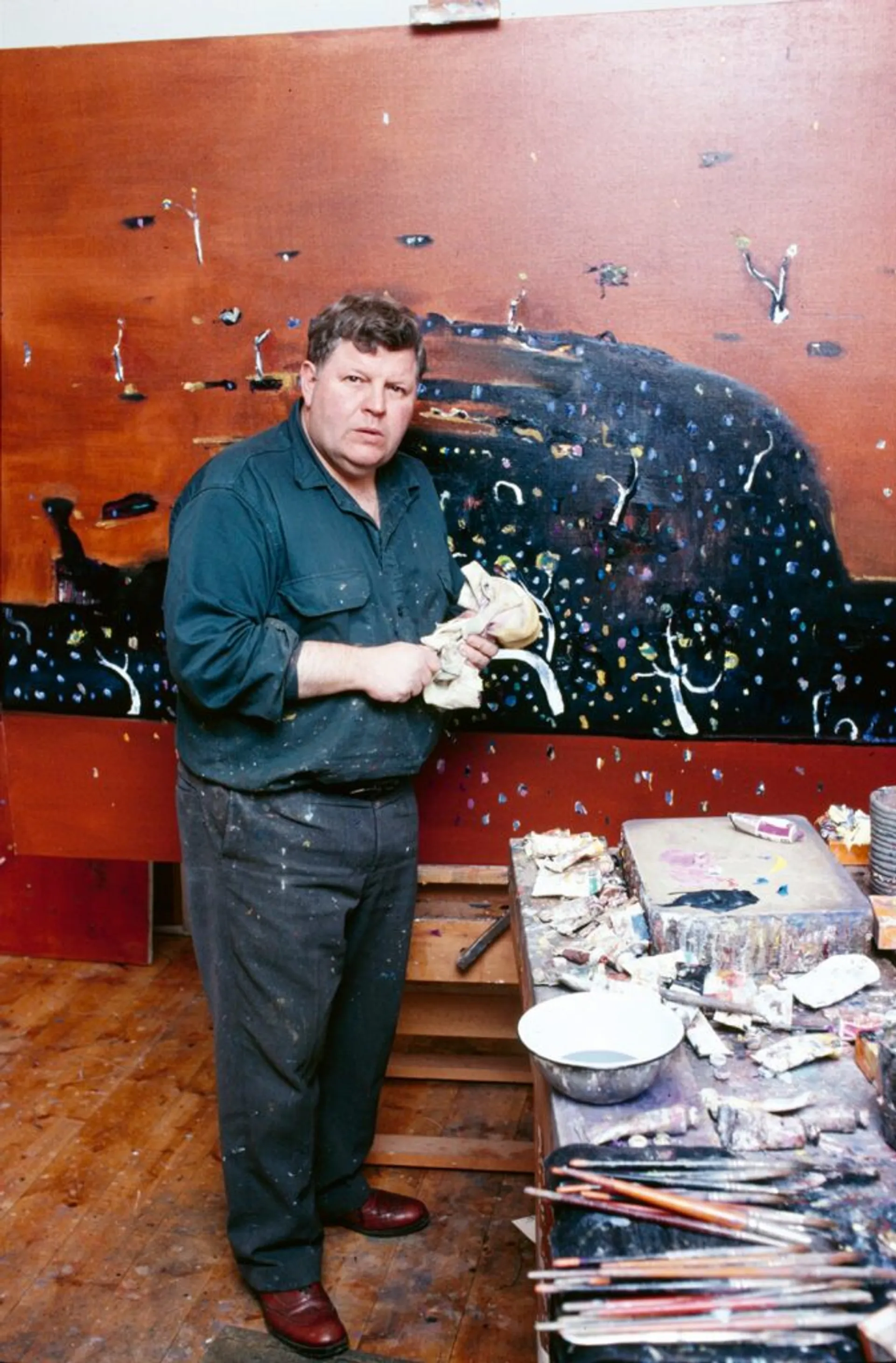
Fred Williams, 1981
photographer: Rennie Ellis
State Library of Victoria, Melbourne
The remarkable range of Williams’ mark-making is on full display in Werribee Gorge, 1976, in which he uses dots, daubs, dashes and squiggles of paint – brushstrokes as hieroglyphs – to describe both the structure and textural diversity of the landscape and its vegetation. Some of these forms are applied in thick layers of oil paint that catch and reflect light, while others are thin and sketchy, revealing the all-over red ochre ground beneath. The palette is similarly diverse and demonstrates Williams’ great skill as a colourist. Black and shades of grey, blue and green predominate, but closer looking reveals vivid highlights – red, orange, white and yellow, perhaps wattle in spring – that energise the view and evoke the experience of being in the Australian landscape, where flashes of bright colour are often glimpsed through the trees and in the distance. In the hands of a lesser artist, such painterly complexity could easily descend into pictorial confusion, but Williams seamlessly combines these elements in a composition that hovers between abstraction and representation, describing the topography of the area and the patterns of growth within it.
The Werribee Gorge paintings reveal the hand and imagination of a mature artist who is confident in his abilities and yet not content to rest on the successes of the past. Exploring new territory, both physically and artistically, Williams skilfully describes a specific location while at the time presenting a symbolic representation of the landscape which is imbued with a profound depth and emotional resonance. As Patrick McCaughey explained, ‘Each image forms a metaphor to focus the landscape and give it a new expressive power and purpose. Together, the series forms a new consciousness in Williams’s art… [reflecting] how much Williams wanted to combine inner compulsion and structural design and let them flow and be seen to flow from each other.’5
1. Lieberman, W. S., Fred Williams – Landscapes of a Continent, Museum of Modern Art, New York, 1977, n. p.
2. Fred Williams Diary, 21 April 1976, cited in Mollison, J., A Singular Vision: The Art of Fred Williams, Australian National Gallery & Oxford University Press, Canberra, 1989, p. 205
3. Fred Williams Diary, 30 March 1976, cited ibid.
4. Fred Williams Diary, 30 April 1976, cited in Hart, D., Fred Williams: Infinite Horizons, National Gallery of Australia, Canberra, 2011, p. 1487
5. McCaughey, op. cit., p. 284
KIRSTY GRANT