
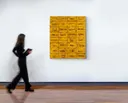
Rosalie Gascoigne
(1917 - 1999)
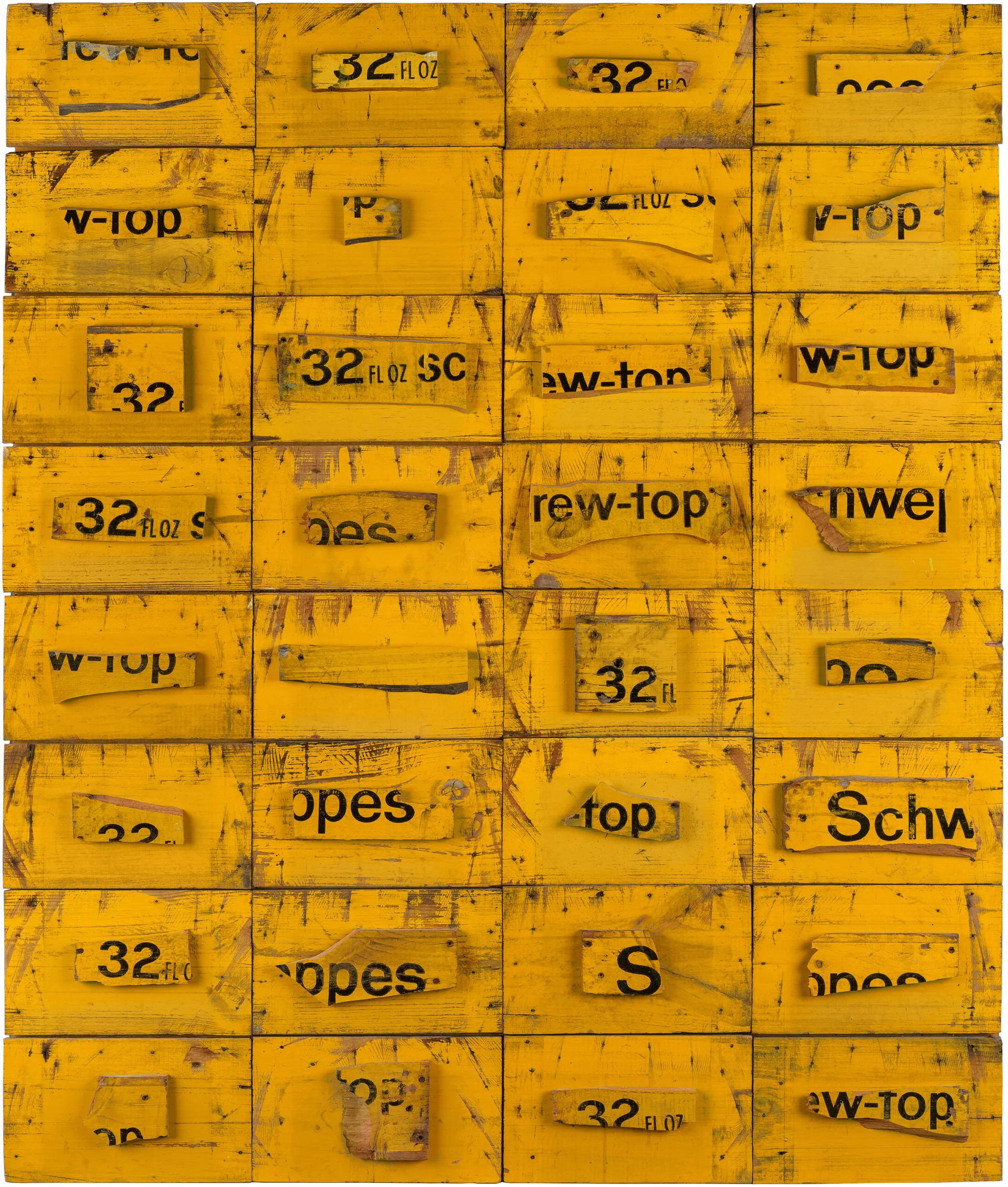
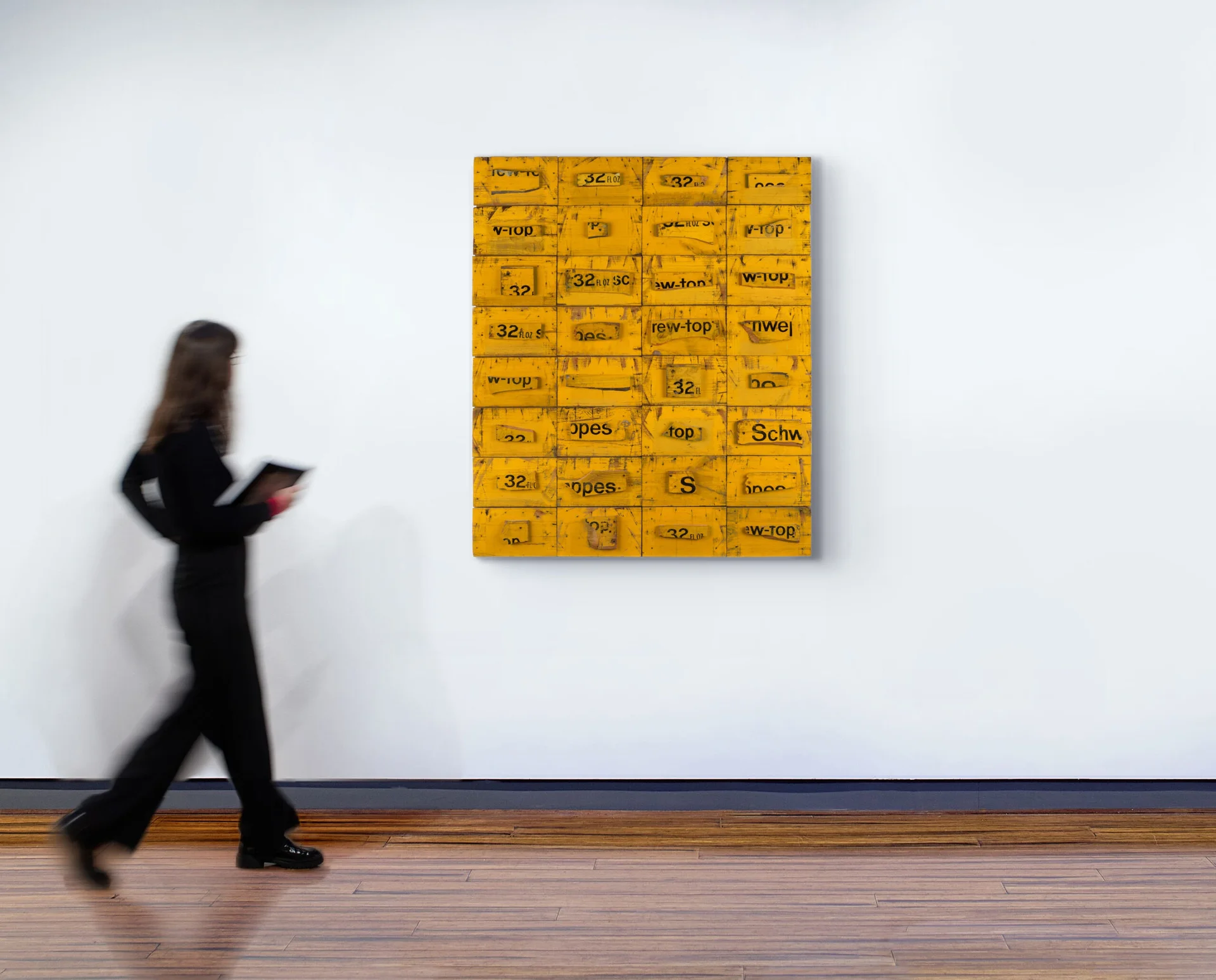
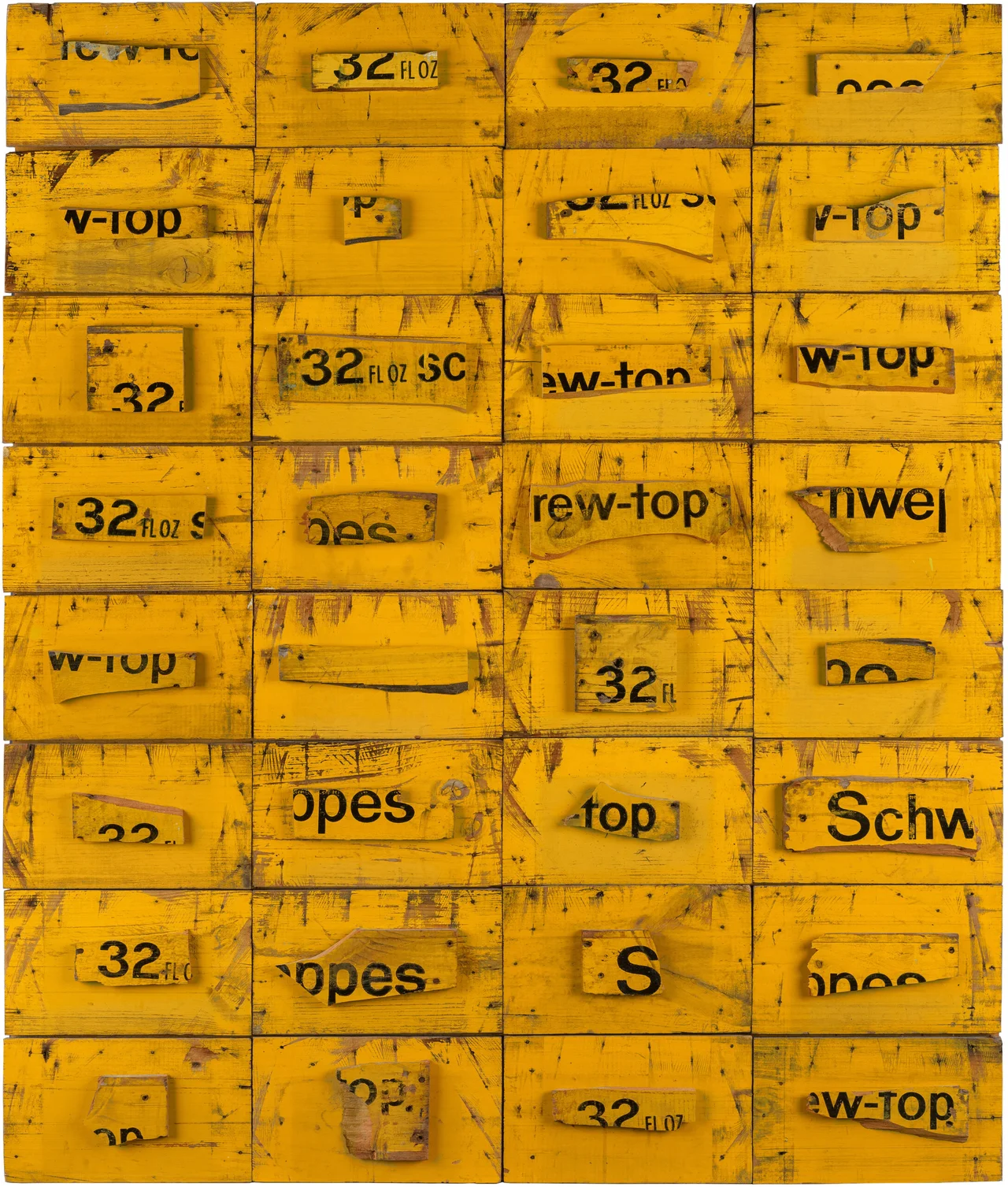
Thirty two, 1987
weathered, sawn and split soft drink crates on plywood
131.0 x 111.0 cm
signed, dated and inscribed with title verso: THIRTY TWO 1987/ Rosalie Gascoigne
Estimate:
$250,000 - $350,000
© Rosalie Gascoigne/Copyright Agency 2026
lot details
Pinacotheca, Melbourne
Private collection, Melbourne, acquired from the above in 1988
Amanda Love, Sydney
Private collection, Sydney, acquired from the above in 1997
Exhibited
Third Australian Sculpture Triennial, National Gallery of Victoria, Melbourne, 16 September – 22 October 1987
Gallery Artists, Pinacotheca, Melbourne, 29 June – 13 August 1988, cat. 10
Literature
MacDonald, V., Rosalie Gascoigne, Regaro, Sydney, 1998, p. 107
Spectrum, Sydney Morning Herald, Sydney, 11 – 12 June 2005, p. 32 (illus.)
Gascoigne, M., Rosalie Gascoigne: A Catalogue Raisonné, Australian National University Press, Canberra, 2019, cat. 310, pp. 228 (illus.), 368, 418
Today regarded as among the most significant Australian artists of the twentieth century, Rosalie Gascoigne remarkably did not hold her first exhibition until 1974, aged 57. Despite her relatively late arrival on ‘the scene’, Gascoigne’s artistic evolution into a skilful assemblage artist had not occurred in a vacuum, having been privately nourished by American art magazines, visits to travelling international art exhibitions, and her friendship with influential figures such as James Mollison, the inaugural director of the National Gallery of Australia.1 In a short span of time, by the mid-1980s, Rosalie Gascoigne’s stature as an established artist was such that, following her first survey exhibition at the National Gallery of Victoria, she had represented Australia at the 1982 Venice Biennale, alongside Peter Booth. Thereafter, she was a frequent presence in important local group exhibitions, such as the Biennale of Sydney and Australian Sculpture Triennial, the third edition of which, in 1987, included one of Gascoigne’s early black-and-gold wooden assemblages – Thirty two, 1987.
With a simple arrangement of thirty-two uniformly sized, blazing yellow wooden sections, each topped with a sliver of ‘torn’ wood bearing fragmented text, Thirty two is among Rosalie Gascoigne’s most rigorously modern and elegantly restrained abstract compositions. Arranged into a smart and regular vertical grid, Thirty two was constructed entirely from the painted wooden slats of packing crates for Schweppes soft drinks, a material that Gascoigne first came across in a depot in Queanbeyan in 1978, and which quickly became the artist’s preferred material, eventually accounting for about a fifth of her total body of work.2
Rosalie Gascoigne
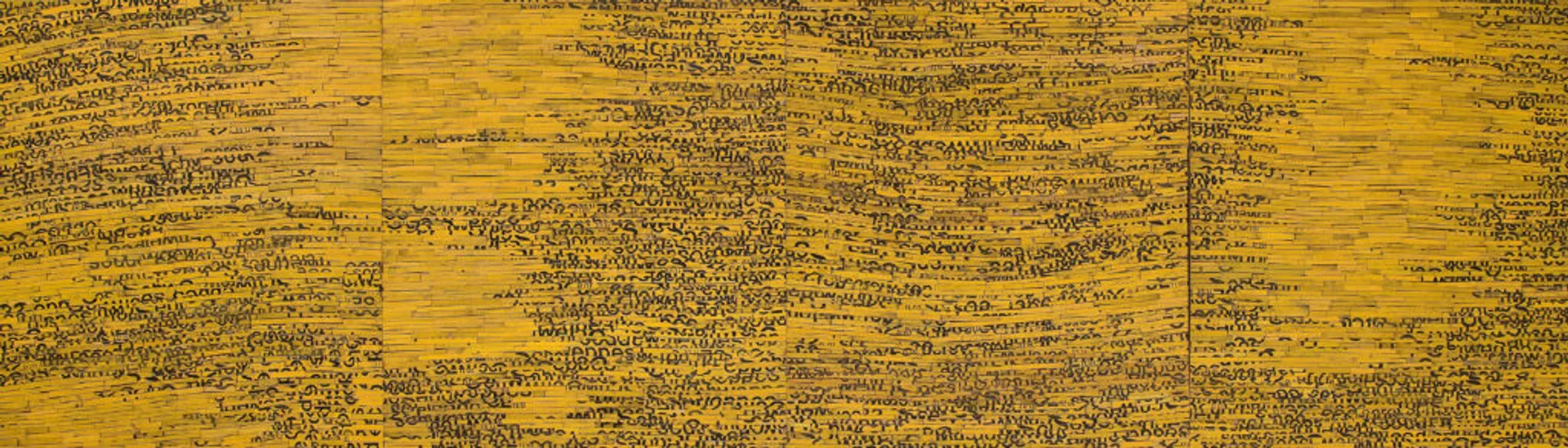
Monaro, 1989
sawn and split soft-drink crates on plywood
131.0 x 457.0 cm (overall)
The State Art Collection, The Art Gallery of Western Australia, Perth
© Rosalie Gascoigne Estate / Copyright Agency 2026
In 1988, the art historian Mary Eagle recorded the order of creation of Rosalie Gascoigne’s already iconic yellow wood sculptures, noting that the works Prescribed Text, Orchard, and Daffodils, 1986, were all made from Schweppes boards left over from her massive four-metre-long landscape Plenty. Like Orchard, Thirty two is composed of a base patchwork of intact side panels, over which Gascoigne has peppered various, irregularly shaped wood fragments scavenged from the front panels of the crates. These had been stencilled with the following functional arrangements of black words and letters: Schweppes / 32 FL OZ / screw top. The numbers 32, denoting the liquid volume of each bottle, proliferate throughout the panel and correspond perfectly to the number of separate segments in Gascoigne’s neat eight-by-four grid. The words, however, if legible at all, are truncated in ways that generate curious sequences and shapes, such as w-top and ppes or hwep. Skilled in the lateral-thinking word games of Scrabble and cryptic crosswords, Gascoigne employed text in her artworks primarily for its formal qualities. Almost totally divorced from meaning, in her hands, letters instead became purely symbolic shapes, arranged in patterns that provided animation and contrasting tone to her pale backgrounds.
Many of Rosalie Gascoigne’s sculptural works are composed of small, identical units, which are then multiplied and combined into larger arrangements and installations. Using this basic sculptural vocabulary, composed of the unit as a ‘constant’ of her practice and the grid as ‘an organising principle’ in her works, Gascoigne became a consummate modernist artist. In contrast to the cool and aseptic rationality of the stacks and box-like forms of American minimalists like Donald Judd, Gascoigne employed found objects, with their weathered appearance integral to her finished works. In a catalogue foreword in 1992, she wrote the following statement. Although intended to be about artists in general, it reads more clearly as an explanation of Gascoigne’s own frugal, poetic, and observational practice: ‘they [artists] like colours and shape and texture and things, and I think, chance. They pursue the allusive and elusive. They see art underfoot in the city street and in the bush and on the beaches, in the lavish waste of exciting material strewn by nature and society. They delight in wayward inventiveness and lyric derailments.’3
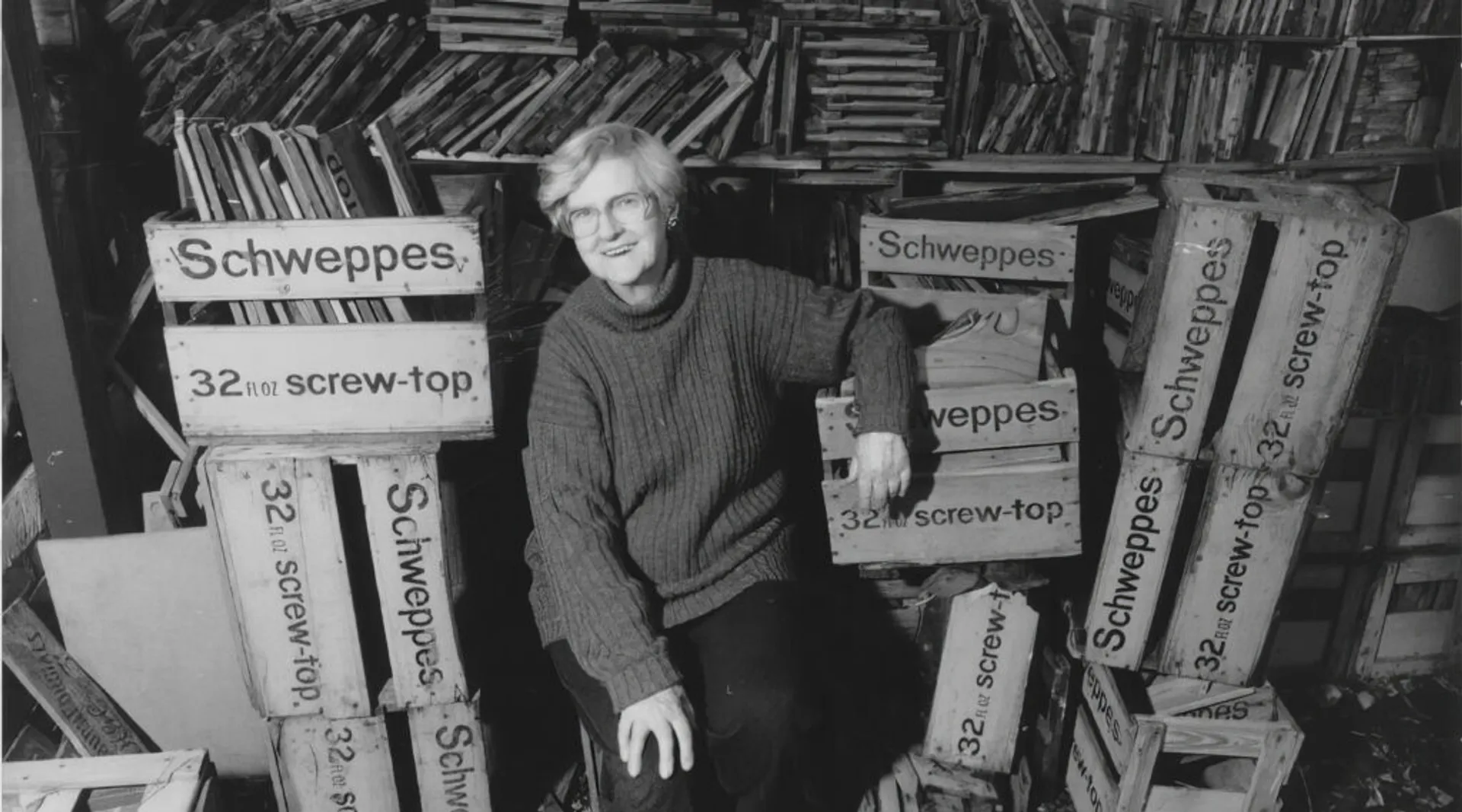
Rosalie Gascoigne, with her collection of Schweppes boxes, 1994
photographer: Richard Briggs
The dazzling effect of black-and-yellow on weathered road signs and packing crates caught Gascoigne’s eye early in her artistic journey, and although the recycled wood was initially brought home ‘for the grandchildren to play with’, it would become a prized leitmotif within her oeuvre.4 Amongst Gascoigne’s three works displayed at the National Gallery of Victoria during the Third Australian Sculpture Triennial, Thirty two was the only yellow one. Under the heading Sculpture in Wood, the artist joined peers such as Bruce Armstrong, Clifford Last and Robert Klippel in demonstrating a contemporary resurgence of interest in working directly with organic, natural, and low-tech materials. Thirty two’s purely abstract and regular grid serves to highlight the rich colour and weathered subtleties of the wood itself. As Terry Smith noted in his review in The Times on Sunday, the wooden sculptures of the exhibition exemplified the guiding maxim of modern sculpture that had rung true for two generations – ‘truth to materials’ – with Thirty two, producing a self-contained abstract work both essential and sublime.5
1. Gascoigne, M., Rosalie Gascoigne: A Catalogue Raisonné, Australian National University Press, Canberra, 2019, pp. 50 – 51
2. ibid., p. 120
3. Rosalie Gascoigne, ‘Assembled art’, 1992 Gold Coast City Conrad Jupiter’s Art Prize, Gold Coast City Art Gallery, Queensland, Aug 1992, cited in Gascoigne, ibid., p. 55
4. ibid, p. 123
5. Smith, T., ‘Sculpture Blossoms in Triennial Showing’, Times on Sunday, Melbourne, 20 September 1987
LUCIE REEVES-SMITH