
Howard Arkley
(1951 - 1999)
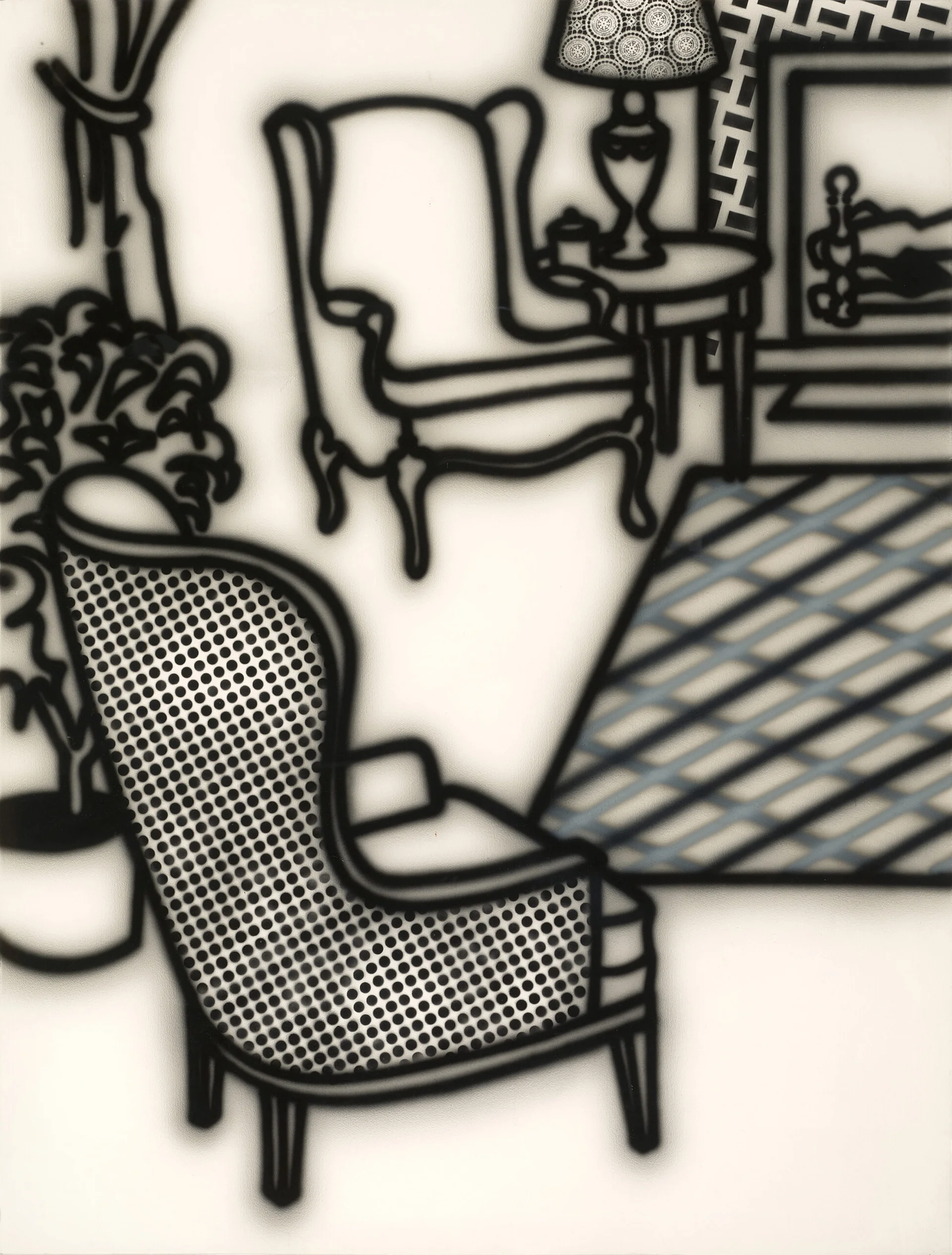
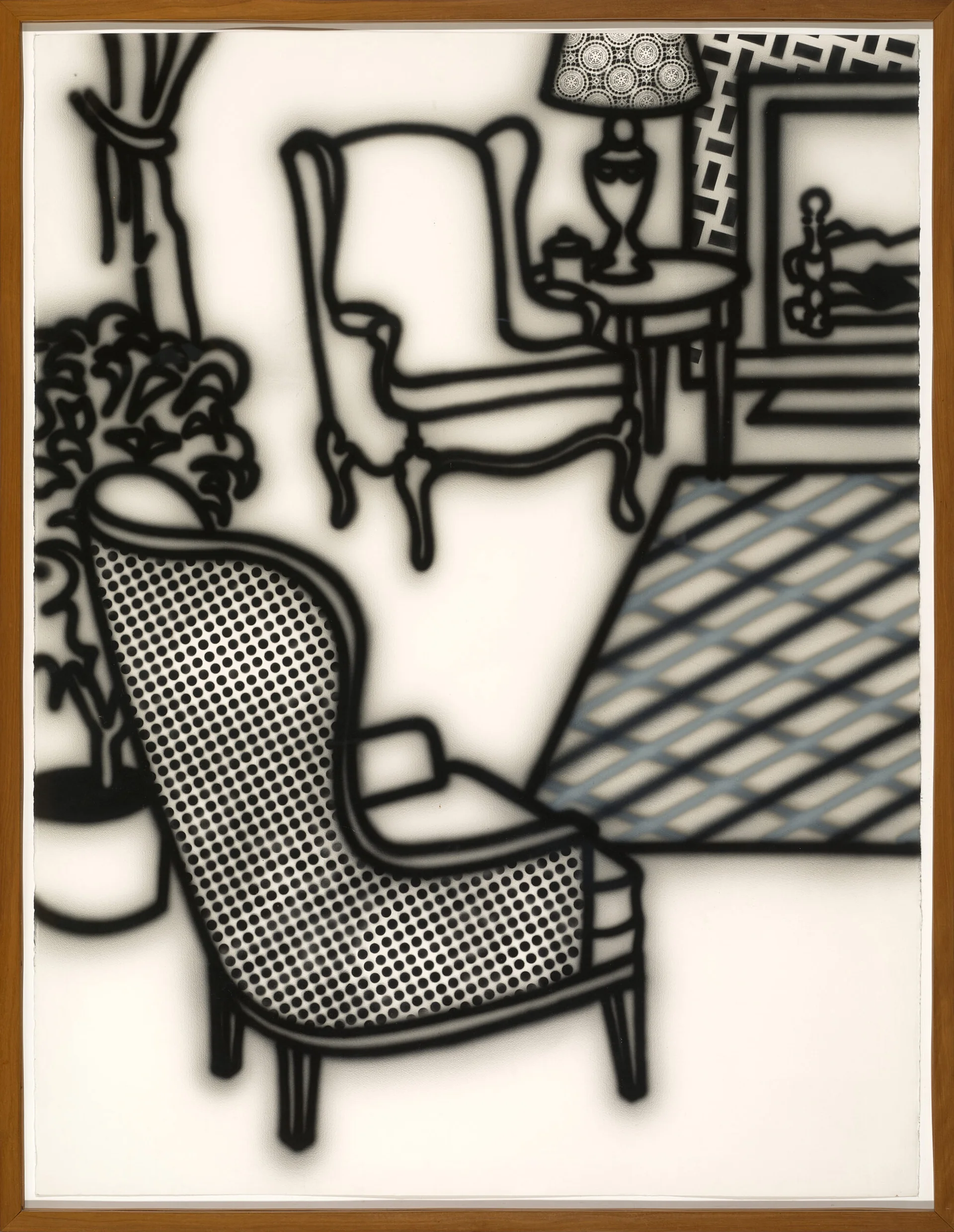
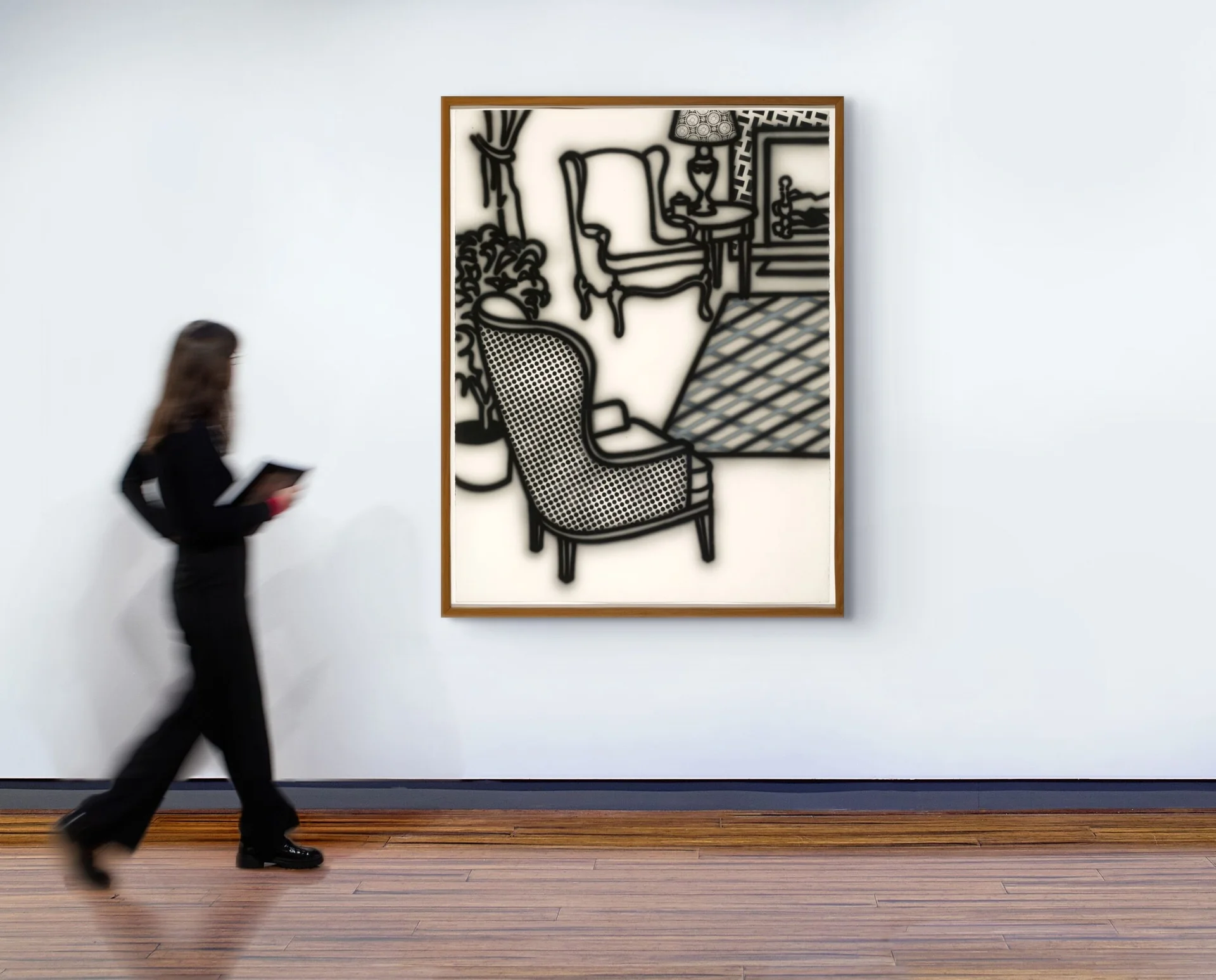
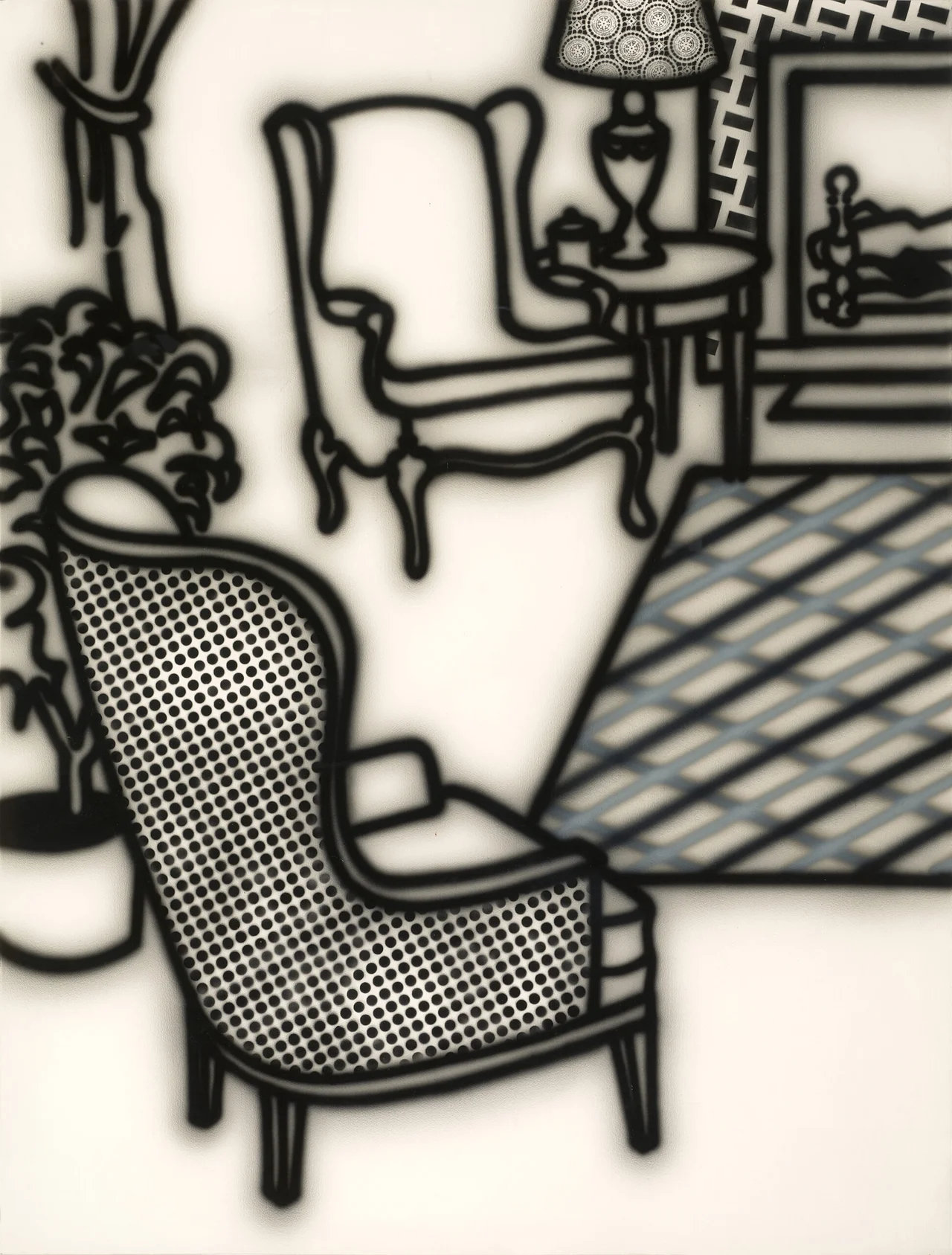
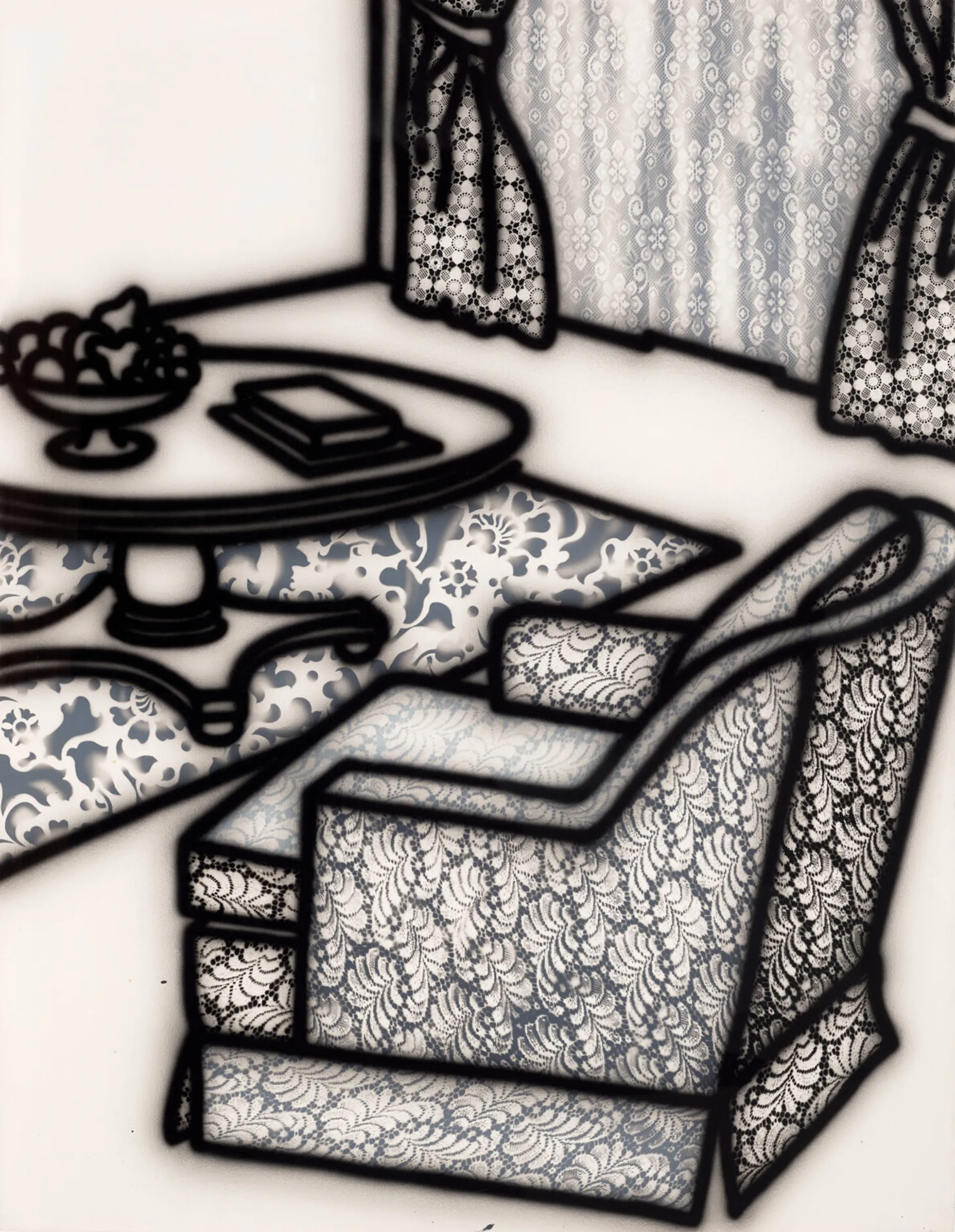
Supa room study, 1995
synthetic polymer paint on paper
160.0 x 121.0 cm
Estimate:
$150,000 - $200,000
© The Estate of Howard Arkley. Licensed by Kalli Rolfe Contemporary Art
lot details
Tolarno Galleries, Melbourne
Tom Quirk, Melbourne, acquired from the above in 1995
Private collection, Melbourne
Exhibited
Howard Arkley: White + Black: 20 Years Work on Paper and Canvas 1975 – 1995, Tolarno Galleries, Melbourne,1 – 30 September 1995, cat. 33 (label attached verso)
Literature
Crawford, A. and Edgar, R., Spray: The Work of Howard Arkley, Craftsman House, Sydney, 1997, p. 123 (illus.)
Howard Arkley Online Catalogue Raisonné: [https://www.arkleyworks.com/blog/2009/11/28/supa-room-study-1995-wp/] (accessed November 2026)
Related Works
Interior Tableau, 1992, synthetic polymer paint on canvas, 173.0 x 135.0 cm, Private collection, Melbourne
In 1994 Howard Arkley was on top of his game, confidently expanding his rich exploration of the suburbs through his iconic paintings of house facades and increasingly, their interiors – providing an imaginary and voyeuristic insight into the furnishing and decoration of the ‘typical’ Australian home.1 In that year, Arkley held an important exhibition of monochromatic works at Bellas Gallery in Brisbane, and this creative framework was to continue to absorb him, appearing across an expansive body of work made between 1994 and 1995, during a time in which the artist was increasingly renowned for his exuberant, highly colourful images of suburbia, and for his new explorations of the freeway. However, the discipline involved in this restriction of his palette was not new for Arkley and instead enabled a circling back to the early abstractions that had launched his career. Created between 1974 and 1977, Arkley’s ‘White Paintings’ drew on a vast array of sources, ranging from modernist art theory, philosophy and science and eastern spiritualism to the influence of a variety of artists, including Malevich, Robert Morris, and the artist’s Australian contemporary, Robert Hunter.
An exercise in masterful restraint for an artist increasingly celebrated for his freewheeling use of colour, Supa room study, 1995 draws immediate attention to Arkley’s consummate skill with the airbrush and the finesse of his application of stencilled pattern. As Arkley fully appreciated, the airbrush leaves nowhere to hide – its application must be confident and decisive, and the artist fully exploits his mastery in this piece by creating bold sweeping linework that sits in stark contrast to the delicate stencilled motifs that add both texture and depth to the room’s armchair, curtains and floor. The airbrush allowed Arkley to fulfil his desire to make paintings that looked like art reproductions rather than actual paintings – ‘nice and flat and shiny’ – and to work in a way that suited him:
‘I first saw an airbrush in 1969, the first year I was at art school, and I thought it was a pretty interesting kind of medium – that you could make marks without actually touching the canvas. And, I must say, right from the beginning, I was never very much of a physical painter. I was never ever going to be a de Kooning or a John Olsen. I was never going to love paint and wallow around in it. I always had the idea that I wanted to make the image without actually having to get my hands dirty.’2
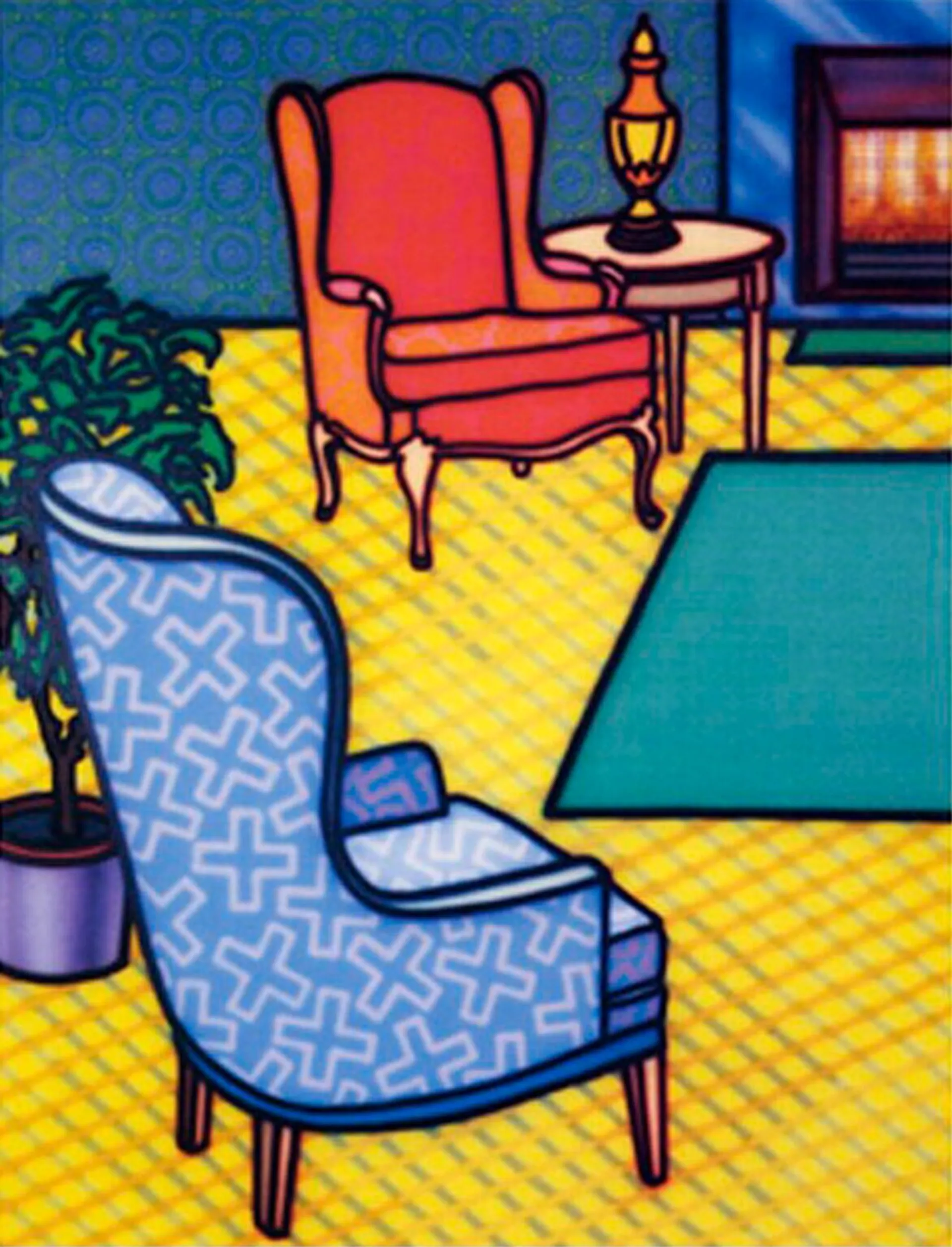
Howard Arkley
Interior Tableau, 1992
synthetic polymer paint on canvas
173.0 x 135.0 cm
Private collection, Melbourne
© The Estate of Howard Arkley. Licensed by Kalli Rolfe Contemporary Art
Howard Arkley
Floral interior, 1996
synthetic polymer paint on paper
156.0 x 120.5 cm
Private collection
© The Estate of Howard Arkley. Licensed by Kalli Rolfe Contemporary Art
Sold Deutscher and Hackett, 7 May 2025, lot 25, for $239,318 (inc. BP)
While the observational quality and ‘remove’ of Supa room study make it difficult to categorise the work as either celebration or critique of the suburbs and the hopes, dreams and aspirations that they hold within them, Arkley nevertheless saw his work in this realm as a legitimate, real and relatable expression of contemporary Australian life. As he reflected:
‘Australian art has been dominated by the rural landscape, and I think there is something false and overrated – it’s romanticised or, at the very least, lopsided. Most of the population live in an urban environment. This environment affects us – the kinds of people that Australians are, and the way we behave. It affects our formative years, so it is a very important element.’3
1. Many of Arkley’s works from this period were based upon international design and architecture sources, particularly Frances Joslin Gold’s 1976 US publication The Instant Decorator. Gregory, J., ‘Gold’s Instant Decorator’, Arkley Works, see: https://www.arkleyworks.com/blog/2009/12/21/golds-instant-decorator/ (accessed 5 November 2026)
2. Wyzenbeek, T., Howard’s Way, 1999, ABC-TV Arts, 24 mins
3. Arkley, H. unpublished interview with the authors, cited in Crawford, A. & Edgar, R., Spray: The Work of Howard Arkley, Craftsman House, Sydney, 1997, p. 88
KELLY GELLATLY