

George Baldessin
(1939 - 1978)
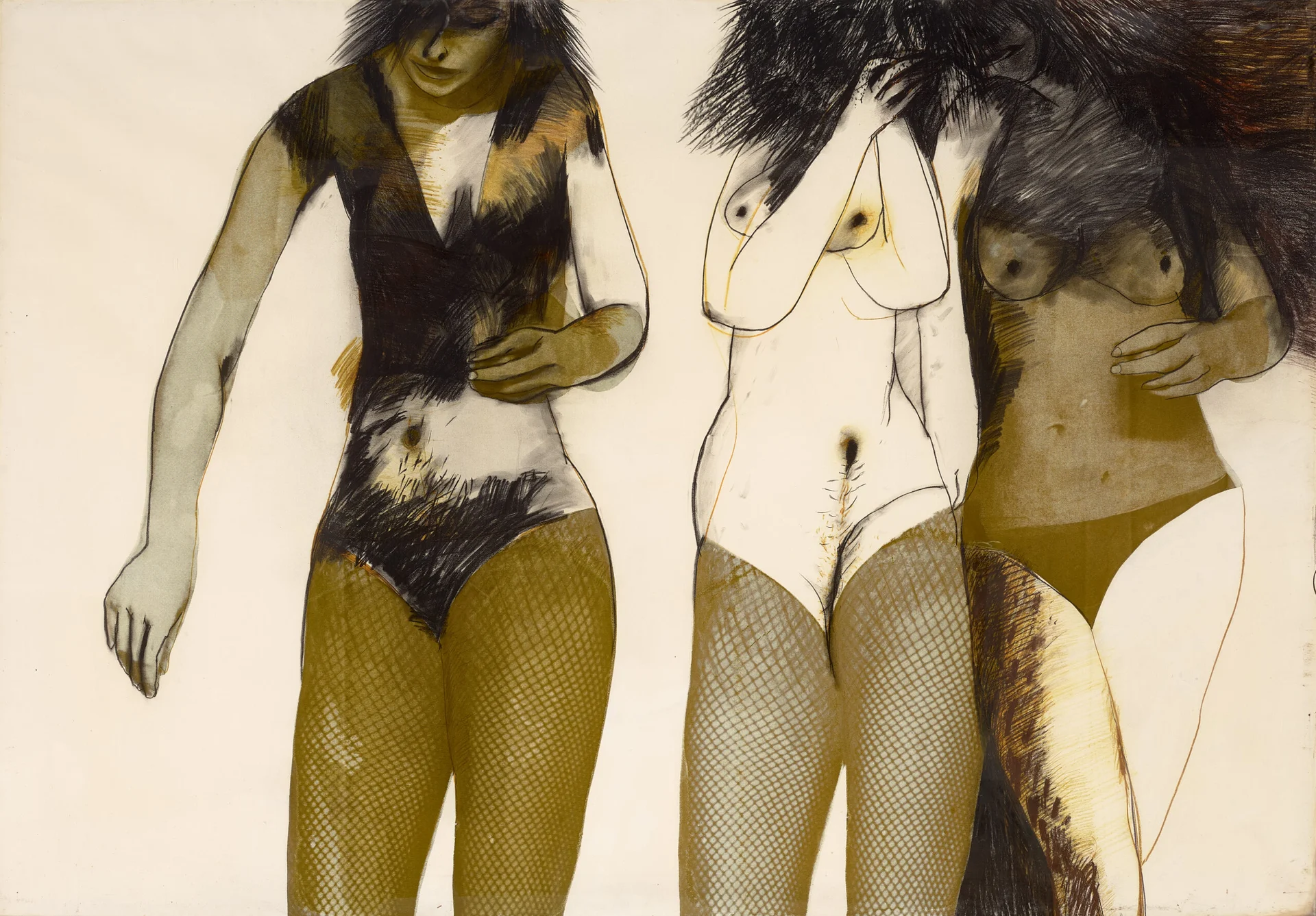
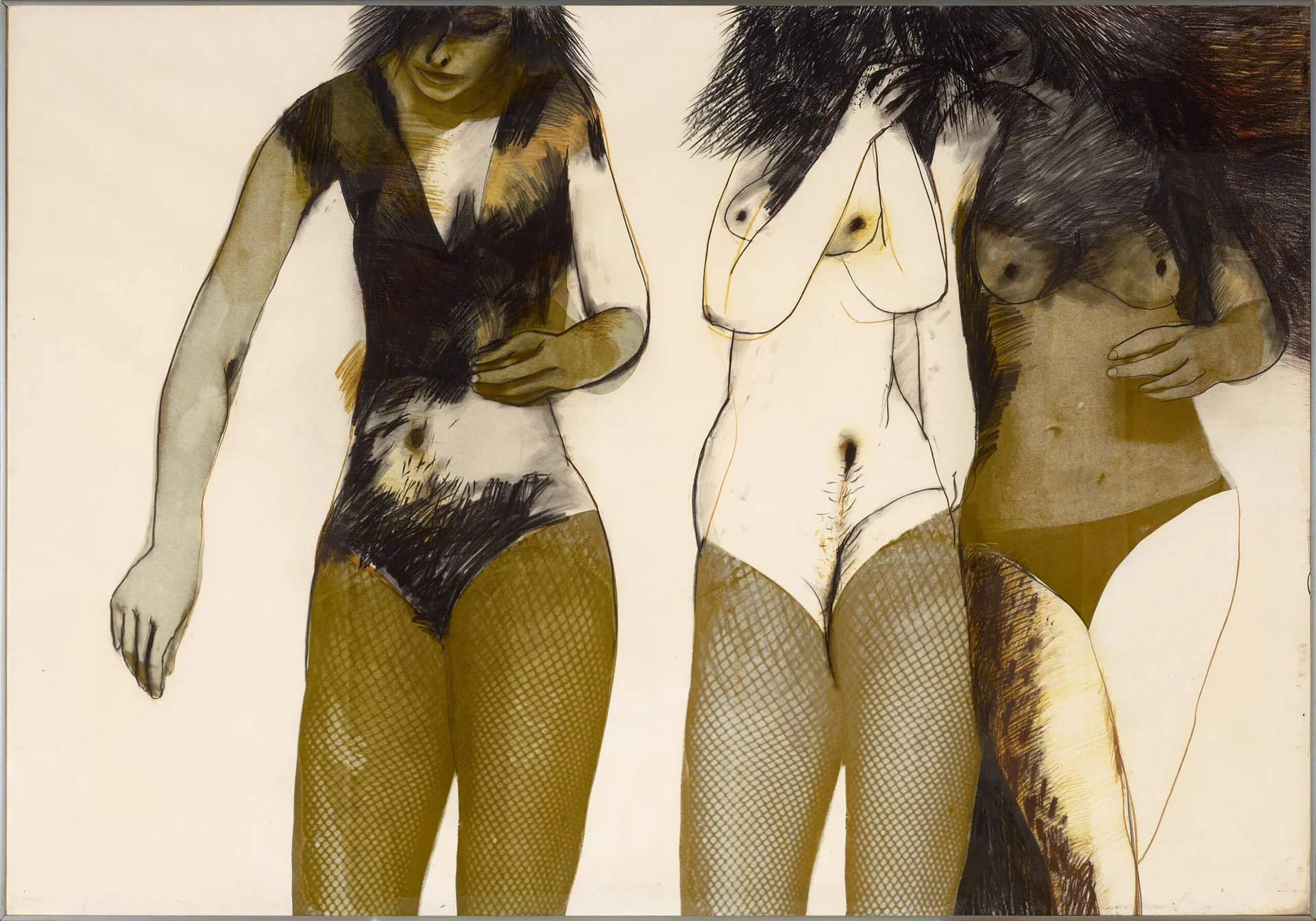
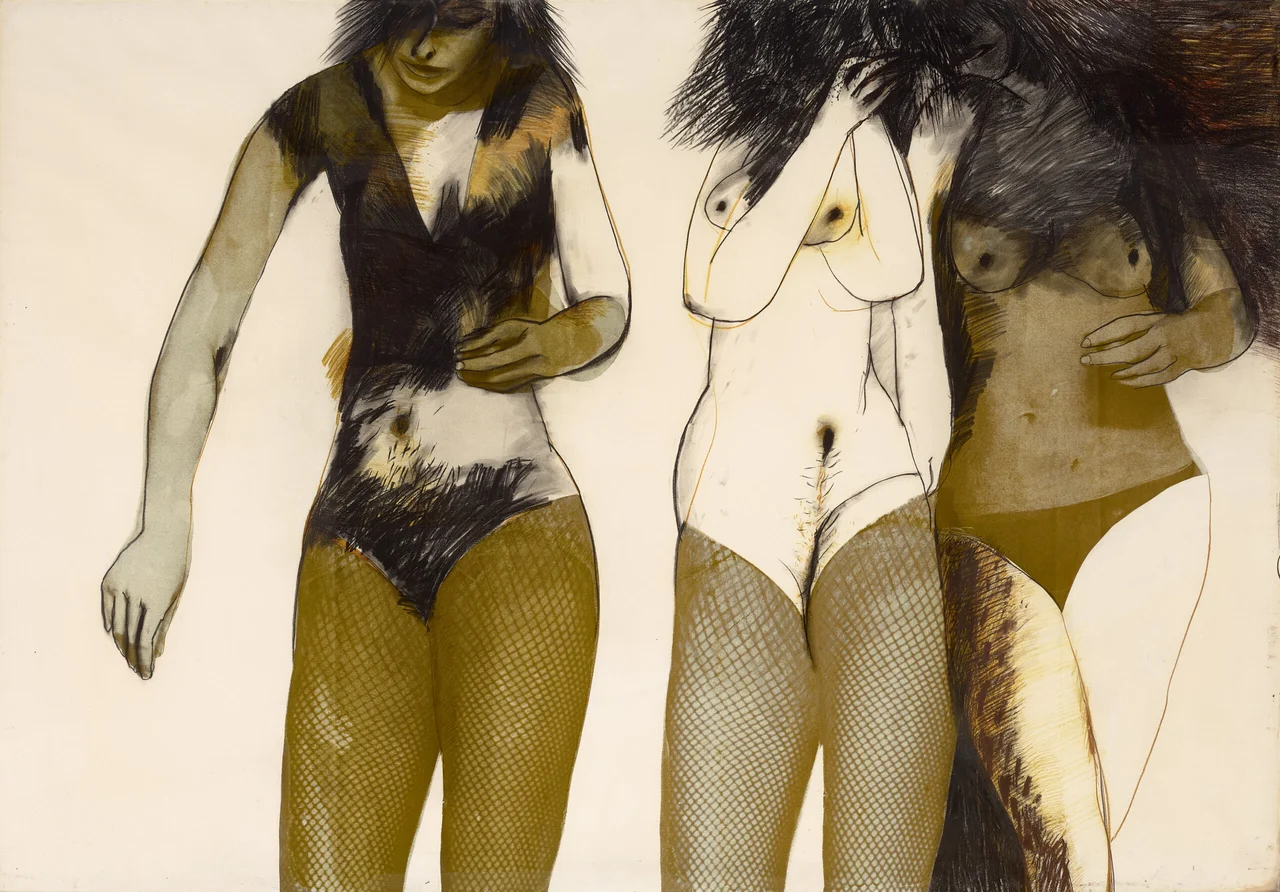
MM of Rue St Denis III, 1976
charcoal on lithography screenprint on paper
138.0 x 200.0 cm
signed with embossed initials lower right: GB
bears inscription verso: 43
Estimate:
$40,000 - $60,000
© George Baldessin/Copyright Agency 2026
lot details
bears inscription verso: 43
Australian Galleries, Melbourne
Private collection, Melbourne, acquired from the above in August 1999
‘[Mary Magdalene] lived the complete life, was a complete person in every way – perhaps touching the extremes of existence in both directions.’1
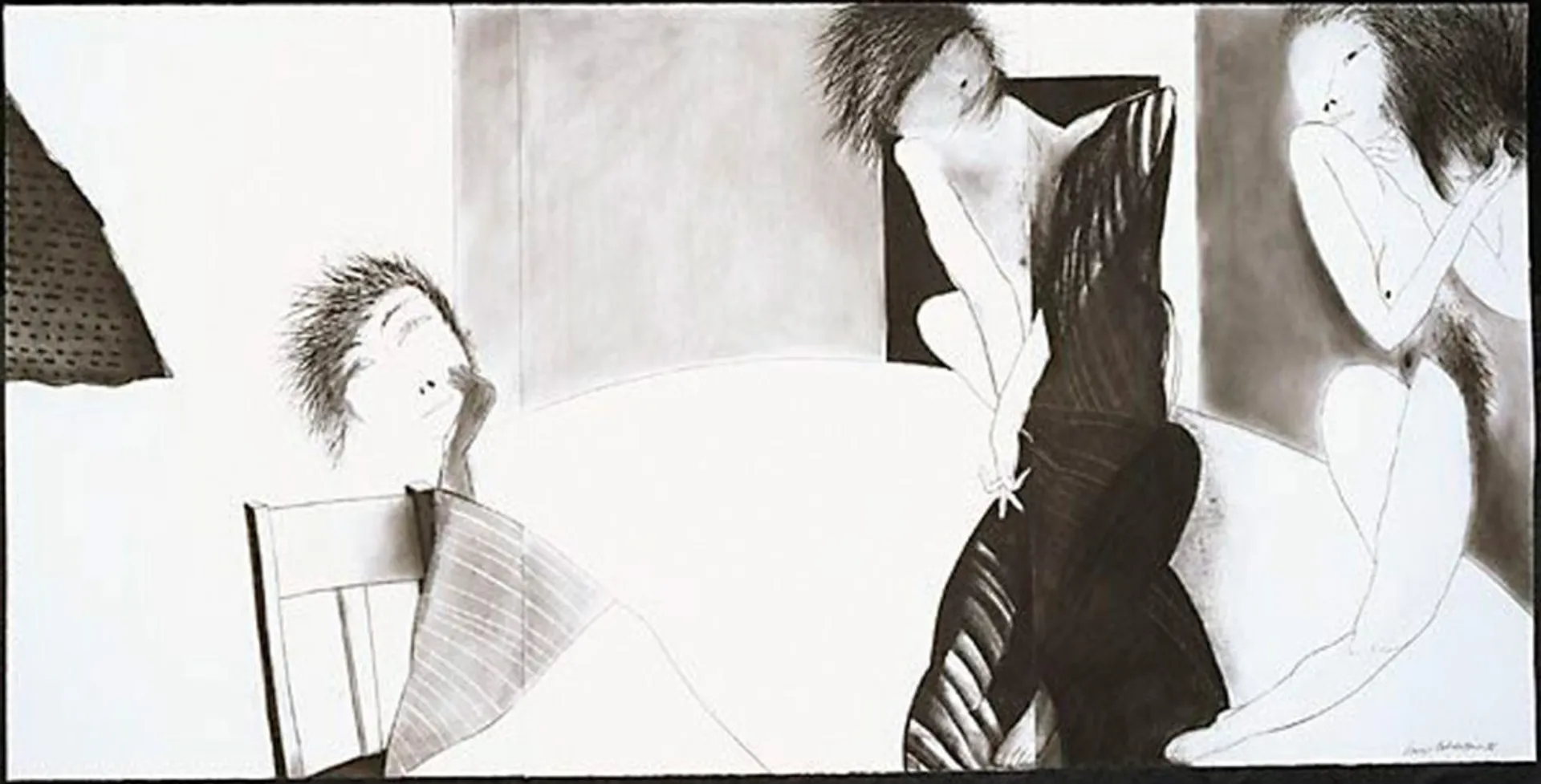
While the young and remarkably talented artist George Baldessin was primarily known for his printmaking and sculpture, the medium of drawing was ‘his first love’, informing his practice throughout a brief career.2 Shortly before his premature death at the age of 39 in 1978, Baldessin lived in Paris with his wife Tess and young son George. There, he attended the famous Lacourière-Frelaut etching workshop in Montmartre and otherwise lived the life of a flâneur around Paris with fellow artist Imants Tillers, with whom he collaborated on a series of etchings, According to des Esseintes, 1976. It was in this city rich in art history, at the height of his career, that Baldessin experienced a short and fertile span of inspiration, resulting in a ‘distinctive and singular suite of work’ on the figurative theme of Mary Magdalene.3 Like many of Baldessin’s works, this suite of drawings is semi-autobiographical and intimately connected to the artist’s relationship with ‘place.’4 The large, bold, and experimental drawings of this suite operate together as a narrative sequence, describing a contemporary reimagining of Mary’s metamorphosis from a fallen femme fatale to a pious penitent. One of the final series of Baldessin’s career, the ‘MM of Rue St Denis’ drawings contain some of his most powerful works.
George Baldessin
M M of Rue St Denis, 1976
charcoal, conte, sanguine
120.0 x 80.0 cm each sheet
Art Gallery of New South Wales, Sydney
© Estate of George Baldessin/Copyright Agency
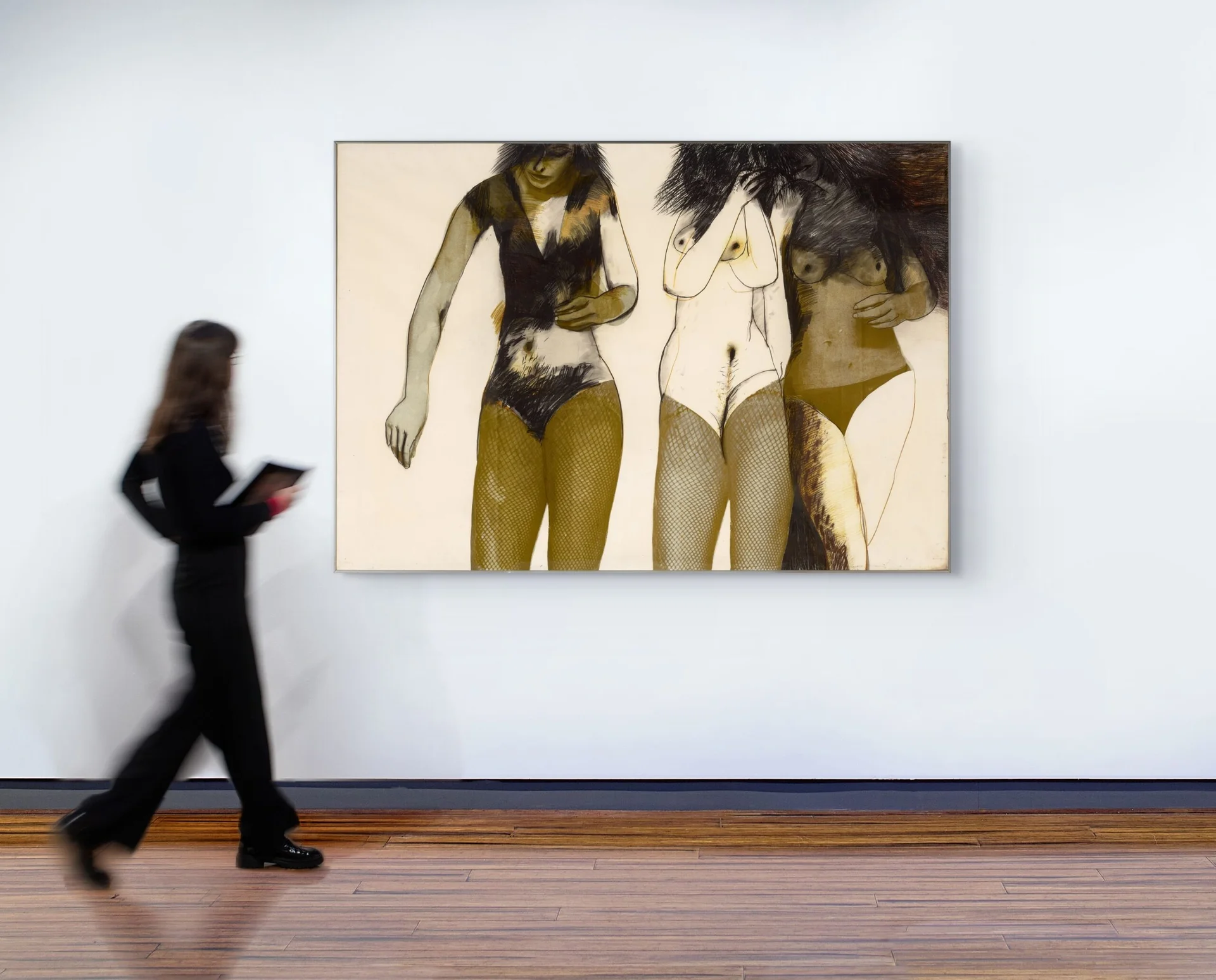
In this, one of the largest works of the series, a trio of towering, scantily clad women, struts and strides towards the viewer, their faces concealed by shadows and dark pelts of fur encroaching from the corners. Their svelte bodies, dressed in underwear and fishnet stockings, span almost the entirety of the pictorial surface. What surrounds them is blank space. Their geographical setting on an infamous Parisian street is not pictured but obliquely referenced in the title of the drawing. Like Picasso’s Les Demoiselles d’Avignon, although they face the viewer, these working women are fragmented and objectified. In his desire to convey vulnerability and psychological intensity, Baldessin had often followed the advice of his teachers, Italian modernists Marino Marini and his assistant Alik Cavaliere – to renounce ‘the claim to conventional beauty and wholeness, choosing instead to search for artistic truth through the fragmentation and distortion of the image.’5
Not yet displaying the tender humanism of the subsequent images in the series, here the artist plays with the erotic power of the female figure under the male gaze. The arresting presence of Baldessin’s contemporary personage of Mary Magdalene appears in this drawing in triplicate, in various states of undress. The strong graphic quality of the artist’s composition, clearly and legibly drawn in charcoal and conté in various tones of silvery black, indicates that his stylised figures were to be viewed from a distance.
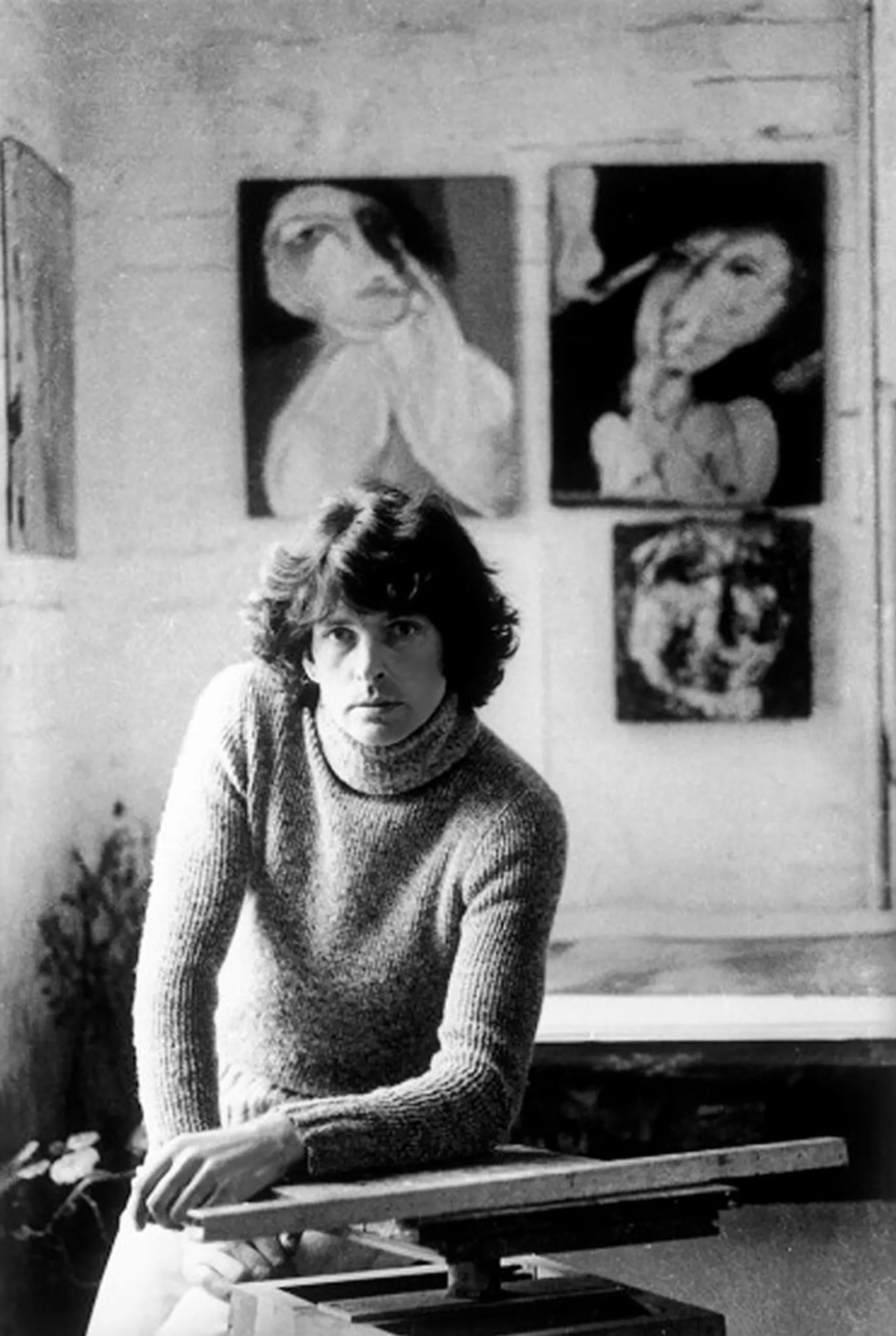
George Baldessin in his Winfield Building studio, Melbourne 1975
photographer unknown
Australian Galleries, Melbourne
Baldessin’s rich narrative of ‘allure, seduction, consummation, penitence, and mortification’ was endlessly stimulating for the artist in the final years of his life.6 In addition to exhibiting a suite of twenty-two charcoal and conté drawings under the title of MM of Rue St Denis in his solo exhibition at Rudy Komon Gallery in August 1977, Baldessin also reprised the female figure in a silver laminate tondo etching, Silver MM, in 1978, and in a statuesque, headless sculpture, over two metres tall, Mary Magdalene, which was moulded in fibreglass and resin prior to the artist’s death and only cast in bronze posthumously in 1983. Art historian Harriet Edquist also noted that the theme was intended to be the subject of an artist’s book of woodcut engravings, although this project was halted in its earliest preparatory stages.7
1. George Baldessin, cited in Edquist, H., George Baldessin. Paradox and Persuasion, Australian Galleries, Melbourne, 2009, p. 221
2. Lindsay, R., George Baldessin, sculpture and etchings: a memorial exhibition, National Gallery of Victoria, Melbourne, 1983, p. 112
3. Cross, E., ‘George Baldessin. 1939 – 1978’ in George Baldessin, Australian Galleries, Melbourne, 1997, p. 17
4. Perin, V., ‘George Baldessin’s first view of the city: The formative influence of the Italian sculptor Alik Cavaliere on George Baldessin’, emaj online journal of art, vol. 8, April 2015, p. 1
5. Holloway, M. J., ‘Venus in Sackcloth: eroticism and ritual in the work of George Baldessin’, in Lindsay, ibid., p. 36
6. Edquist, H., George Baldessin. An Exhibition of Drawings, Heide Museum of Modern Art, Melbourne, 1991, p. 11
7. Edquiest, H., Paradox and Persuasion, op. cit., p. 223
LUCIE REEVES-SMITH