
George Baldessin
(1939 - 1978)
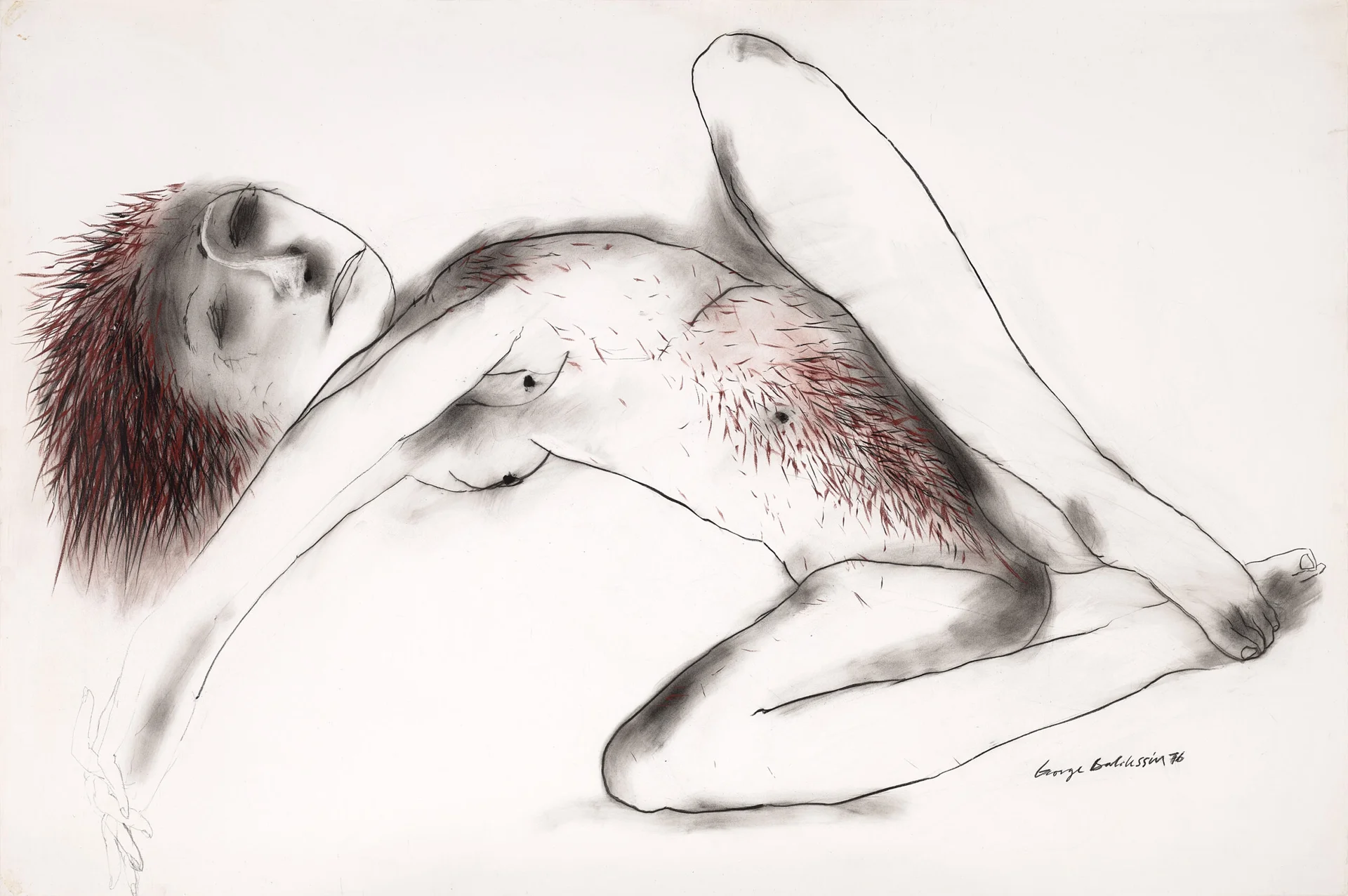
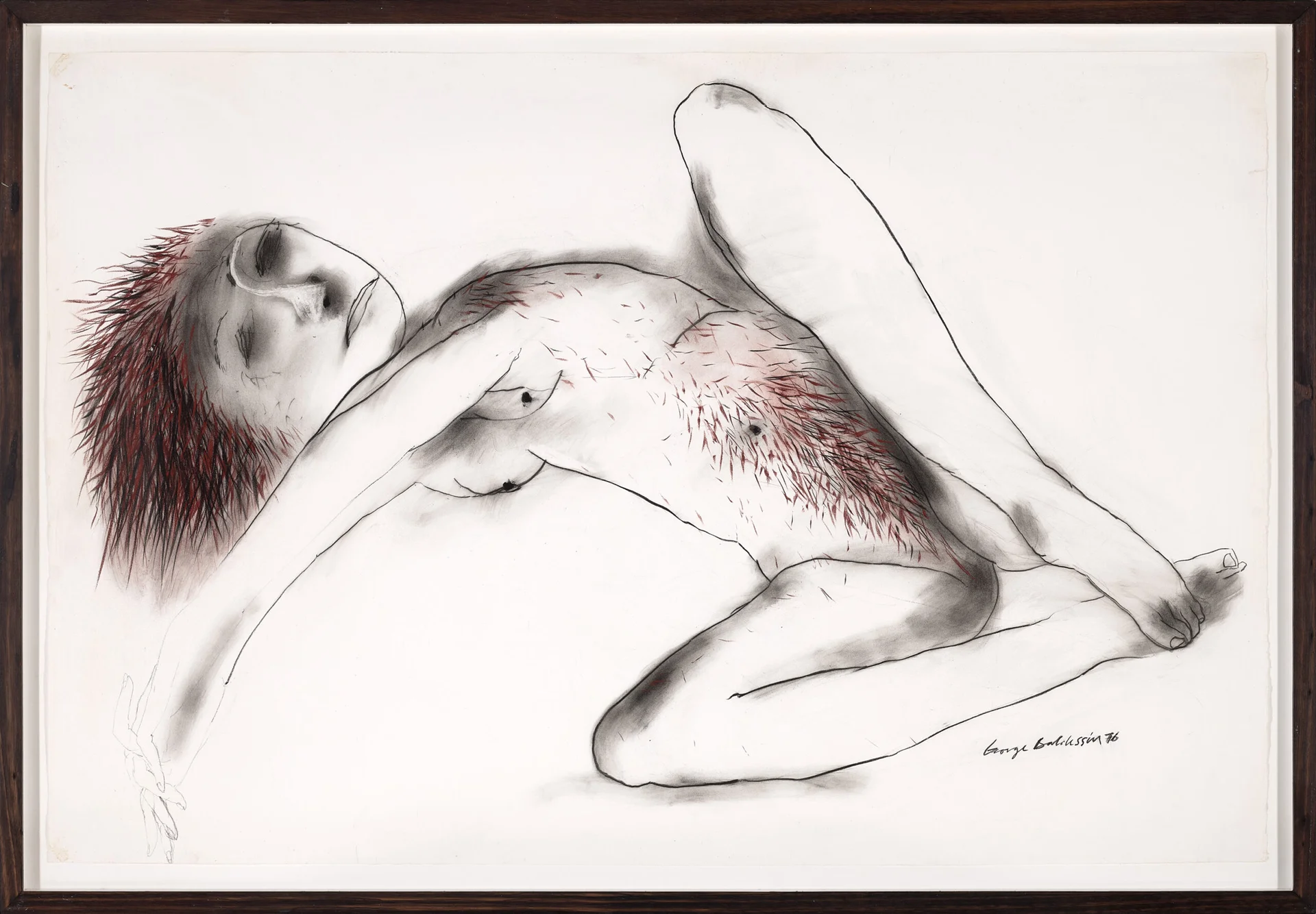
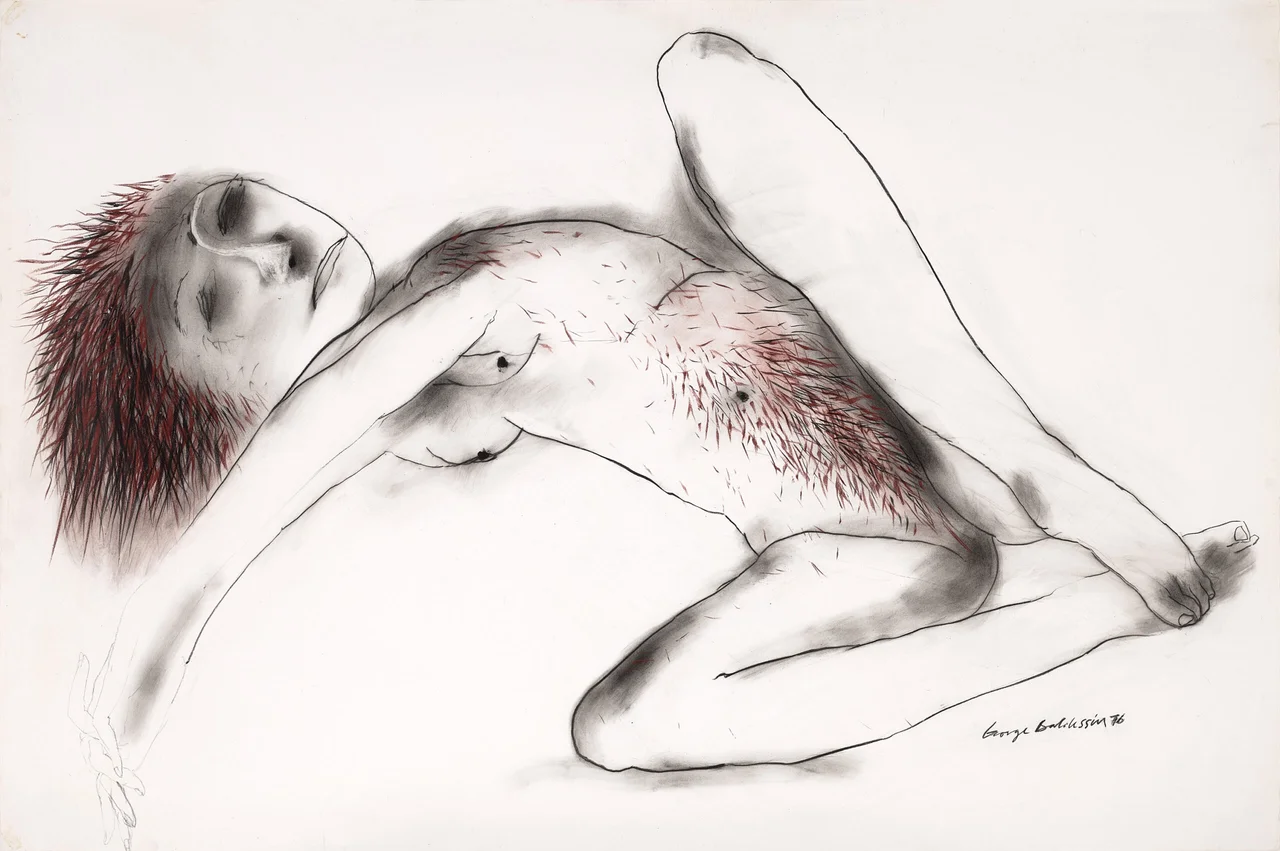
Untitled, 1976
charcoal and conté on paper
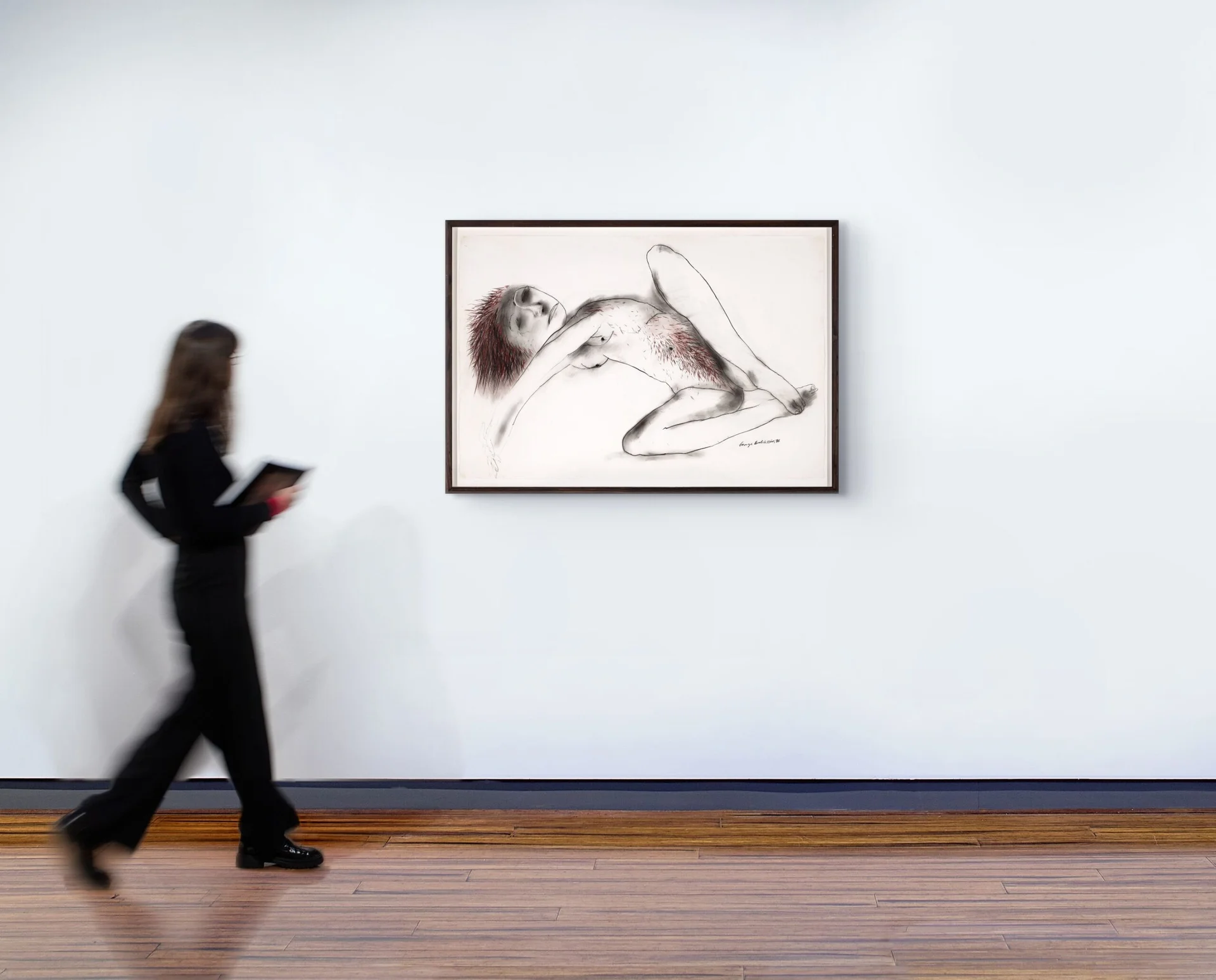
80.0 x 120.0 cm
signed and dated lower right: George Baldessin 76
Estimate:
$30,000 - $40,000
© George Baldessin/Copyright Agency 2026
lot details
Estate of the artist
Australian Galleries, Melbourne (label attached verso)
Private collection, Melbourne, acquired from the above in July 2001
Exhibited
George Baldessin, Drawings, Sculpture, Etchings, Australian Galleries, Melbourne, 2001, cat. 13
Despite being cruelly cut short, George Baldessin’s oeuvre was remarkably mature and coherent. Early in his career, in 1965, he had used the initials MM in the titles of some etchings to relate one of his anonymous personages to the figure of the French mime artist Marcel Marceau (such as in the etching and aquatint MM & The Cage, 1965, collection Art Gallery of New South Wales). To the curator Daniel Thomas, Baldessin explained this reference as an indication of his interest in ‘the human figure as a vehicle for expression… of human weakness through the vulnerable figure, without extracting its dignity.’1 It was this same drive to illustrate moral and emotive content in a human figure that provided the foundation for Baldessin’s MM of Rue St Denis series ten years later, based on the prostitutes of Paris’ famous street, with these same initials now standing for the Christian saint, Mary Magdalene.
Isolated on plain backgrounds, and drawn in strong and angular charcoal contours, these spare figurative compositions are more thematically complex than they might first appear. Baldessin was well-read and absorbed influences from many disparate sources. The MM series combined the artist’s understanding of the Christian lore of divine penitence with his own encounters with French sex workers on the street in Paris, during a brief residence in the city in 1976 – 77. Baldessin’s incorporation of the more obscure medieval iconography of Mary Magdalene derived from an encounter with Italian primitive paintings while on holiday in Tuscany, visiting the Boyd family, and was further informed by his later interaction with the English historian Felicity Dracapoli. The artist recalled: ‘Whenever Mary Magdalene appeared in one of the smaller panels [of Italian Primitive paintings], she invariably had long reddish hair flowing from the top of her head over her body. In some instances she was wearing fur, the hide of an animal and, in at least two distinct and obvious cases, she was growing hair out of her body… In Paris, I used to walk down the Rue Saint-Denis, the prostitute’s street, and as autumn was coming on I noticed that the girls, the Madeleines of Rue Saint-Denis started wearing a kind of rusty red-coloured fur coats… the Madeleine of my drawings became the personage which wasn’t the Rue Saint-Denis prostitutes, and wasn’t the Mary Magdalene, but was both.’2
Reflective of the sculptural sensibility that permeates through the various media of Baldessin’s body of work, the lone, naked figure of Mary is presented here hovering on the page in a curiously contorted and immodest pose. Like Arthur Boyd’s exiled Nebuchadnezzar, she is reduced to her most essential, animal-like form. While in Paris, Baldessin had also seen a large exhibition of Symbolist art at the Grand Palais, absorbing their quintessential motif of a monstrous and chimeric femme fatale. In the final phase of her metamorphosis, Baldessin’s formerly attractive woman is now hirsute and raw. With his characteristic aversion to the decorative, the artist’s expressive dark smudges of charcoal and spiky thickets of fur across her body reprise ancient symbols of her transgression, sin, and shame – to which she passively submits, entreating the viewer to compassion.
1. Letter from Baldessin to Daniel Thomas, dated 28 June 1965, AGNSW Archives, cited in Cross, E., ‘George Baldessin. 1939 – 1978’ in George Baldessin, Australian Galleries, Melbourne, 1997, p. 11
2. George Baldessin, cited in ‘This Curious Joint-Enterprise’, 5 A.M. (Arts Melbourne) 2, 1 August 1977, p. 57
LUCIE REEVES-SMITH