
Arthur Streeton
(1867 - 1943)
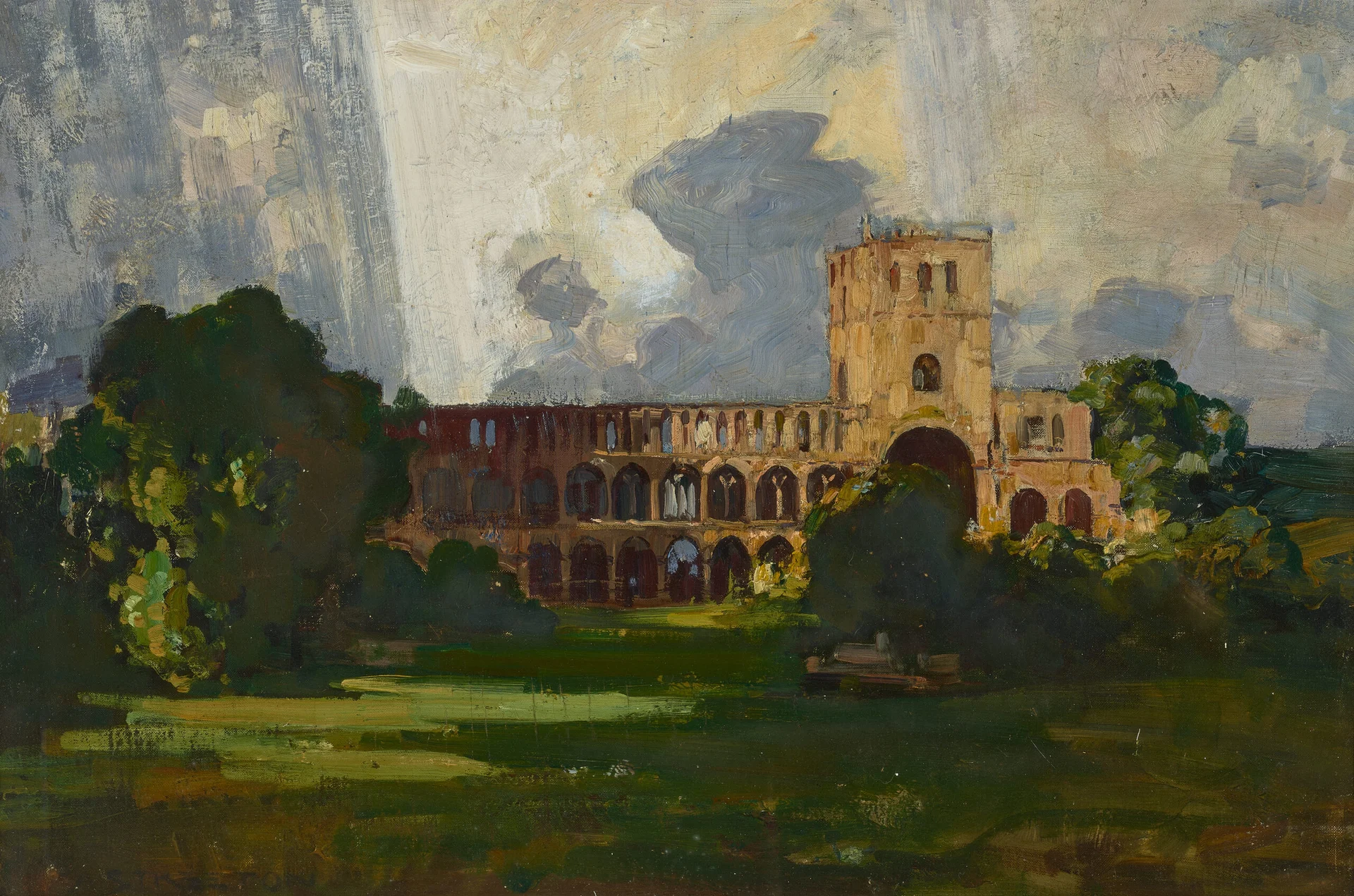
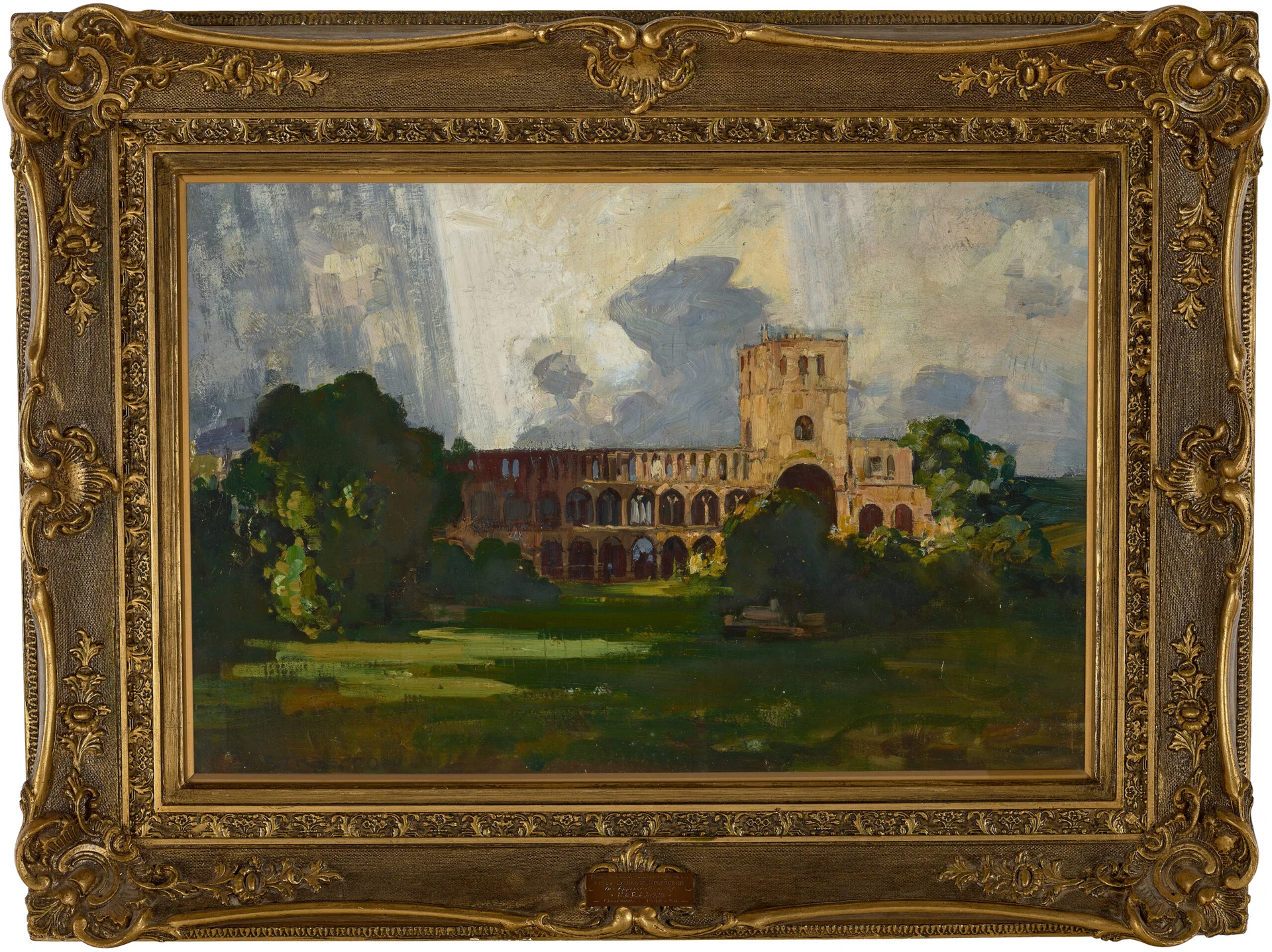
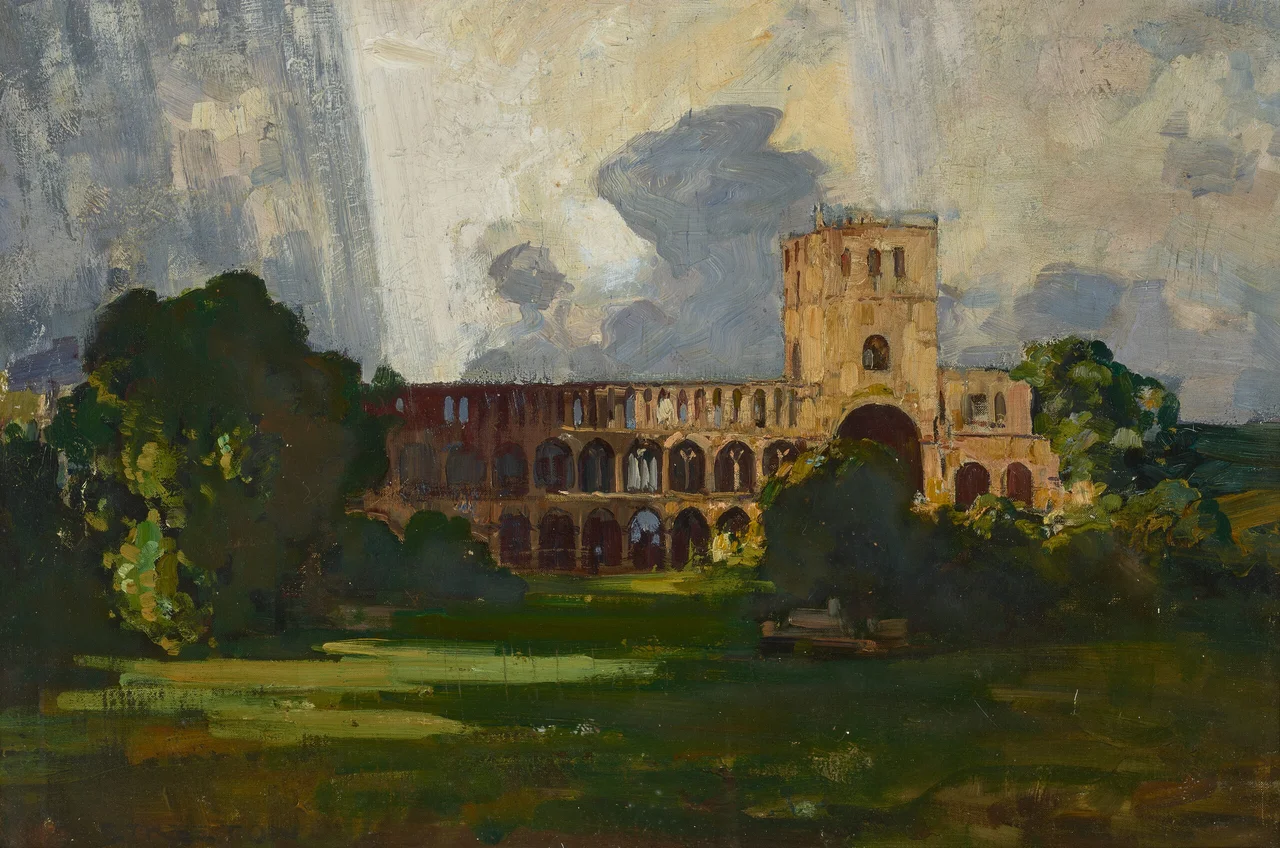
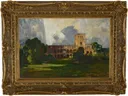
Kelso Abbey, 1909
oil on canvas
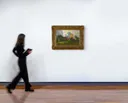
51.0 x 77.0 cm
signed lower left: A Streeton
signed, dated and inscribed on gallery label verso: Arthur Streeton / Kelso Abbey / North England / Painted in 1909
bears inscription on plaque: Presented by members of the Stock Exchange, Melbourne, in appreciation of Mr. R. A. Rowe, Chairman, 1942 - 54
Estimate:
$45,000 - $65,000
lot details
signed, dated and inscribed on gallery label verso: Arthur Streeton / Kelso Abbey / North England / Painted in 1909
bears inscription on plaque: Presented by members of the Stock Exchange, Melbourne, in appreciation of Mr. R. A. Rowe, Chairman, 1942 - 54
Sedon Galleries, Melbourne (label attached verso)
Sir Richard A. Rowe, Melbourne, presented by members of the Stock Exchange, Melbourne
Private collection, Melbourne
Mossgreen Auctions, Melbourne, 28 October 2014, lot 57 (as ‘Kelso Abbey, North England’)
Private collection, Melbourne
Exhibited
Arthur Streeton, Alpine Club, London, 26 March – 9 April 1909, cat. 15
Mr. Streeton’s Pictures, Victorian Artists’ Society Gallery, Melbourne, opened 5 June 1914, cat. 12 or 15
Related Works
Kelso Abbey, oil on canvas, 63.0 x 76.0 cm, private collection
Arch at Kelso Abbey, 1902, pencil on cream paper, 24.0 x 35.0 cm (sheet), Art Gallery of South Australia, Adelaide
It had taken some years but by 1909, when Kelso Abbey was painted, Arthur Streeton was ‘at last reaping the official recognition that he had so long desired.’1 He had been based in England since 1897, apart from a brief return to Australia in 1907 for significant (and well-paying) solo exhibitions in Sydney and Melbourne. A key reason for doing so was that he had fallen in love with the ‘brilliant, educated, successful, socially experienced and well-connected Canadian-born violinist Esther Leonora (Norah) Clench.’2 Until then, he had been impoverished and felt unworthy of Clench, but now financially secure, the two married in 1908 and moved into her home at 10 Hill Road, St John’s Wood. His wife was determined to introduce her new husband to her friends and family whilst also seeking opportunities for commissions. During their honeymoon in Venice, Streeton created a suite of paintings of buildings and vistas which built on his own celebration of light, central to his earlier acclaim in Australia. He was entranced by Venice’s canals, gondolas, bridges, palaces, mansions and cathedrals3; and these masterworks led colleague Lionel Lindsay to write that in this city, the artist ‘threw off his devotion to conscious art and became absorbed again in truth of presentation.’4
In Kelso Abbey, Streeton continued an artistic thread that had taken him to a number of ruined castles and abbeys, beginning in 1900 when he painted Chepstow Castle and Tintern Abbey in Wales. In 1908, following his honeymoon, he journeyed to Northumberland, painting Dunstanburgh Castle and Bamburgh (‘Bamboro’) Castle along the way. In May 1909, after a short trip to Gloucester, he wrote to Walter Withers announcing that ‘I’m off with (Tom) Roberts on a cycling trip through Dorset to look for subjects for the summer,’5 where he painted Corfe Castle (National Gallery of Victoria). Following this, Streeton travelled to the Scottish Borders, painting Dryburgh Abbey and Kelso Abbey, a now-ruined site founded in the twelfth century that was once one of Scotland’s largest and wealthiest religious houses before its closure in the mid-seventeenth century and subsequent decline. In an adjoining painting of the same title, Streeton includes temporary scaffolding set up to repair the surviving West Tower, but in the lot offered here, he positions himself on the southern side of the same edifice. It is a middle-distance view, with two rows of arches marching to the left, trees and an unkempt lawn in the foreground, all beneath a turbulent, blustery sky. Streeton approached Kelso Abbey much as he had the celebrated Corfe Castle, 1909 (Collection: National Gallery of Victoria) where his fascination had been the ‘huge stretching lines of masonry (which) crumble in picturesque decay.’6 He did a further painting of nearby Kelso Bridge, a multi-vaulted span over the River Tweed.
Streeton was exceptionally busy that year and, amongst other achievements, exhibited Australia Felix, 1907 (Art Gallery of South Australia) at the Paris Old Salon, earning a Third Class Medal. It was singled out by the French critic Edouard Saradin who wrote in the Journal des Débats that Streeton was ‘a landscape painter full of vigour and suppleness with a strong, dark palette.’7 Kelso Abbey shares these attributes. Although the painting is not listed in The Arthur Streeton Catalogue, its identification is secure, having been exhibited twice, in 1909 and 1914, alongside companion works from the same painting excursion.
1. Wray, C., Arthur Streeton: painter of light, Jacaranda, Brisbane, 1993, p. 118
2. Wehner, V., Arthur Streeton of Longacres: a life in the landscape, Mono Unlimited, Melbourne, 2008, p. 6
3. Kern, A., Arthur Streeton. The man and his art, Heidelberg Publishing, Melbourne, 1981, p. 33
4. Lindsay, L., ‘Arthur Streeton’, Art in Australia, vol. 3, no. 40, 15 October 1931, p. 11
5. Arthur Streeton. Letter to Walter Withers, 25 May 1909, reproduced in Galbally, A., and Gray, A. (eds.), Letters from Smike: the letters of Arthur Streeton 1890 – 1943, Oxford University Press, Melbourne, 1989, p. 116
6. The Argus, 17 June 1911, cited in Wray, op. cit., p. 116
7. Saradin, E., Journal des Débats, 1 May 1909, cited in Galbally, A., Arthur Streeton, Lansdowne Press, Melbourne, 1969, p. 59
ANDREW GAYNOR