

Lindsay Bernard Hall
(1859 - 1935)
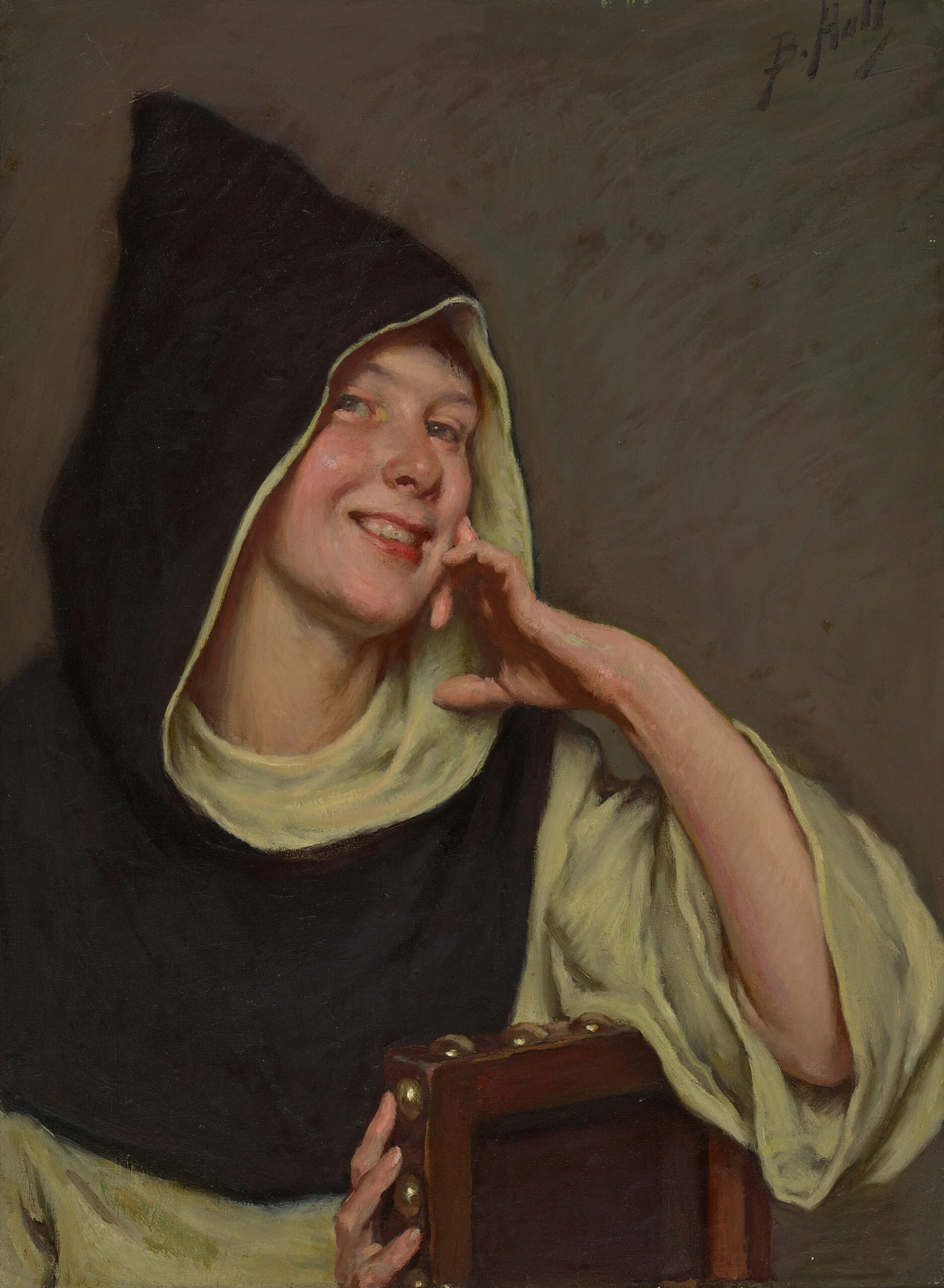
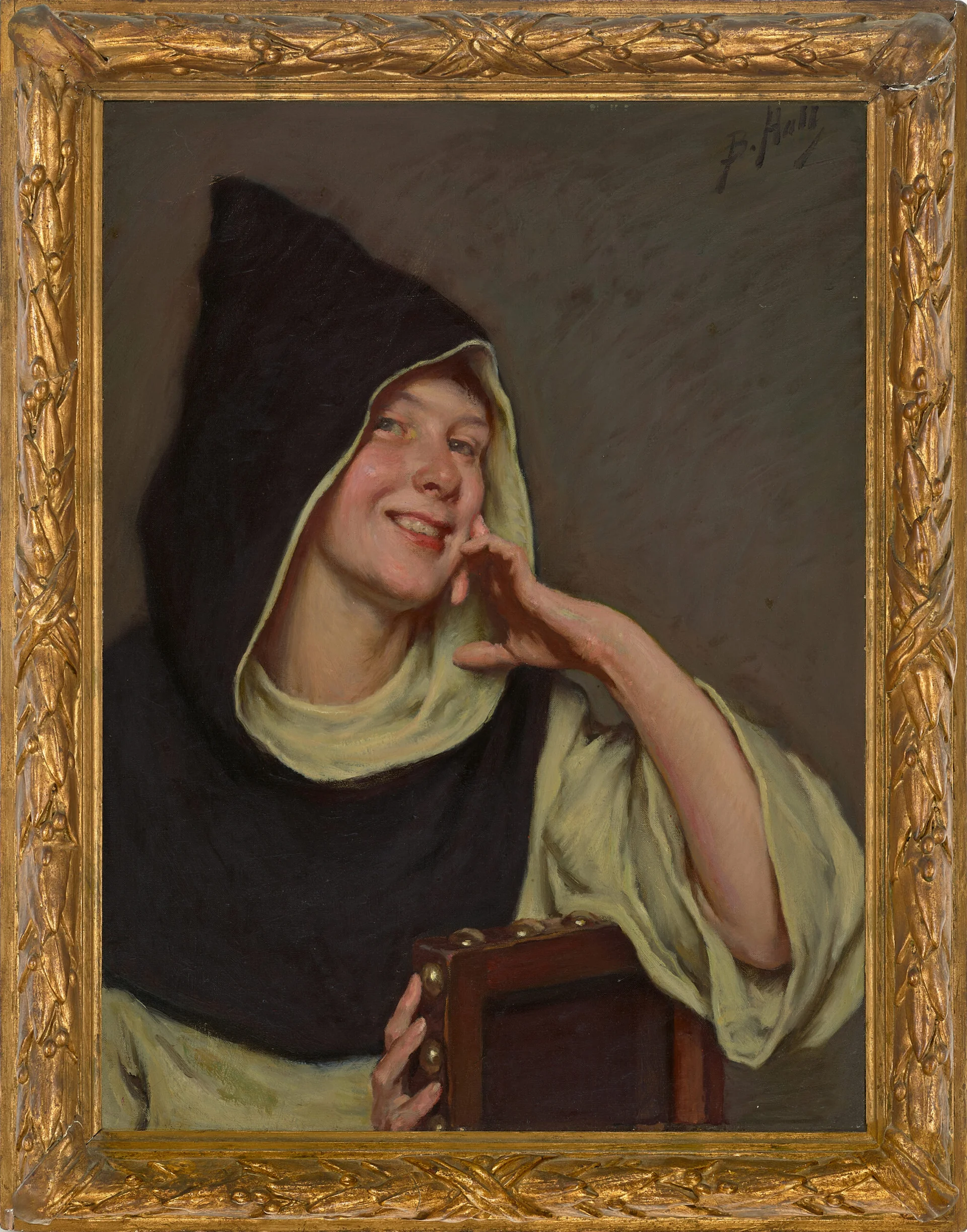
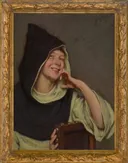
The devil a monk was she, 1926
oil on canvas
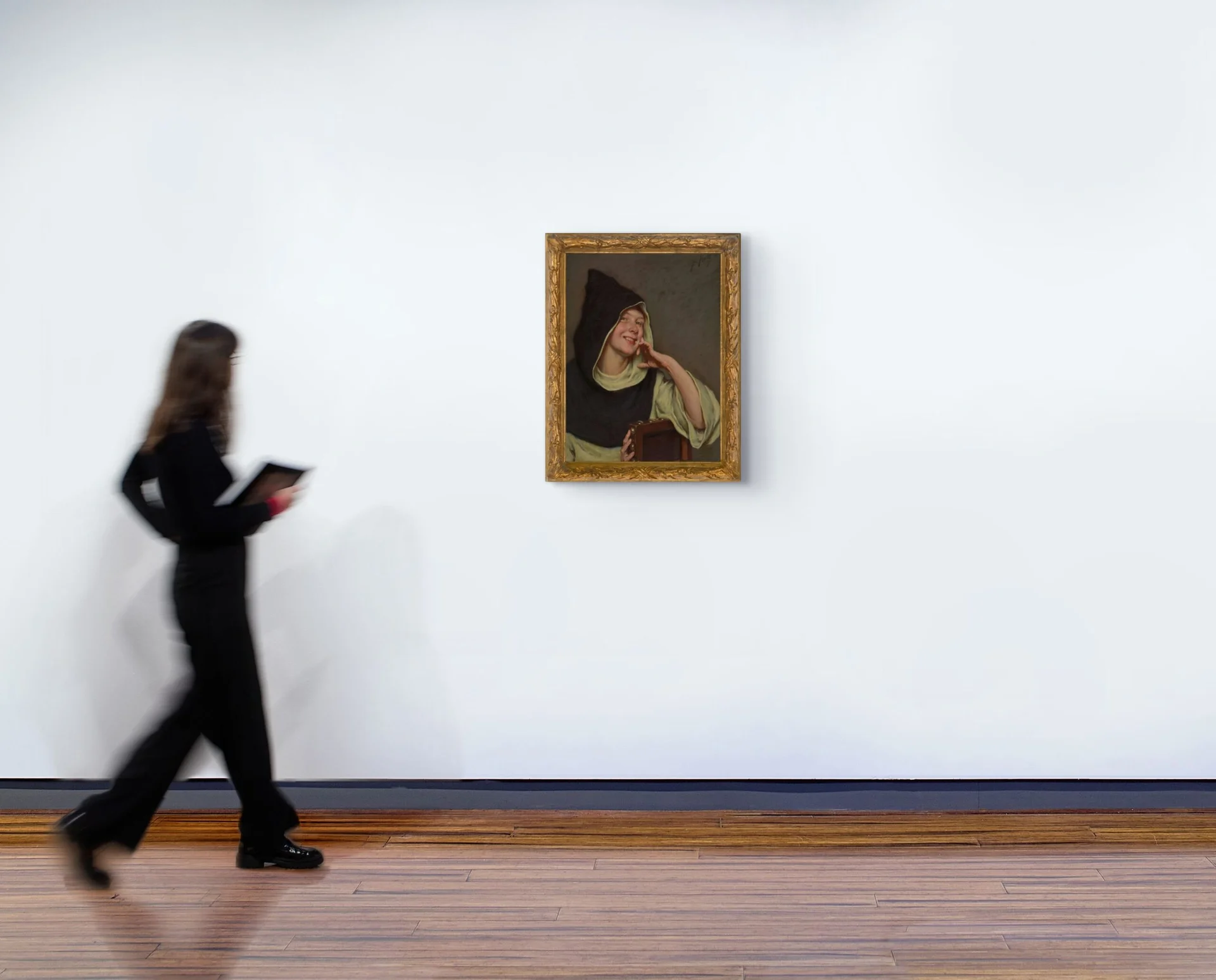
67.5 x 51.0 cm
signed upper right: B. Hall
signed and inscribed with title on handwritten label verso: “The Devil a Monk was She” / by / L. Bernard Hall
original John Thallon frame, Melbourne (label attached verso)
Estimate:
$15,000 - $20,000
lot details
signed and inscribed with title on handwritten label verso: “The Devil a Monk was She” / by / L. Bernard Hall
original John Thallon frame, Melbourne (label attached verso)
The artist’s family, Melbourne
Thence by descent
Private collection, Melbourne
Exhibited
Exhibition of paintings by L. Bernard Hall, Atheneum Hall, Melbourne, 25 October – 15 November 1927, cat.16
Exhibition of paintings by L. Bernard Hall, Atheneum Hall, Melbourne, 6 – 16 August 1930, cat. 10
Exhibition of paintings by the late Bernard Hall, Atheneum Galleries, Melbourne, 27 May – 8 June 1935, cat. 12
Exhibition of paintings and antiques. The works and collection of the late Bernard Hall, Esq., Illawarra, Toorak, Melbourne, 2 – 13 June 1936, cat. 24
Exhibition of paintings and antiques from the works and collection of the late Bernard Hall, Esq., Atheneum Gallery, Melbourne, 6 – 18 March 1939, cat. 9
Catalogue of paintings and drawings by Bernard Hall, Velasquez Gallery, Melbourne, 19 – 30 June 1945, cat. 17
Literature
‘The Devil a Monk Was She’, The Argus, Melbourne, 18 October 1927, p. 15 (illus.)
‘Art Notes: A Varied Exhibition’, The Age, Melbourne, 18 October 1927, p. 7
Streeton, A., ‘Mr Bernard Hall. Exhibition at Atheneum’, The Argus, Melbourne, 6 August 1930, p. 9
‘The Art of L. Bernard Hall’, The Age, Melbourne, 6 August 1930, p. 13
Lindsay, L., ‘Bernard Hall’s Art shows honesty and thoroughness’, The Herald, Melbourne, 27 May 1935, p. 8
Lilley, N., ‘Reticence of artist shown in exhibition’, The Star, Melbourne, 27 May 1935
‘Art Notes: Paintings by the late L. Bernard Hall’, The Age, Melbourne, 28 May 1935
‘Bernard Hall’s Art’, The Herald, Melbourne, 28 May 1935, p. 5 (illus.)
Herbert, H., ‘Late Mr Bernard Hall’s Fine Collection’, The Argus, Melbourne, 2 June 1936, p. 8
Rankin, G., L., Bernard Hall: the man the art world forgot, Newsouth, Sydney, 2013, pl. 9 (illus.), p. 278
Bernard Hall’s playful image The devil a monk was she, 1926, was painted in the artist’s luminous studio, one of the most distinctive in Melbourne, located on an upper level of the State Library of Victoria, with its high ceilings and large arched windows. Here he worked with a great number of subjects, including society men and women, romanticised nudes and gathered guests. In the case of this character study, the likely model was Hall’s daughter Alison, then aged twelve. The title is a gendered inversion of a quotation from the French prose author François Rabelais, from his book Gargantua and Pantagruel (1534), which reads in full: ‘The devil was sick, the devil a monk would be; The devil was well, the devil a monk was he’, lampooning people who make pious promises when in trouble or sick, only to abandon them on returning to health. It is unlikely that Hall thought this of his daughter, and the inversion allows her to appear mischievous rather than suggesting anything darker.
Hall was one of the most respected artists of the time. A regular exhibitor at the Royal Academy, Royal British Artists, and the New English Art Club, he served for forty-three years from 1892 as the influential Director of the National Gallery of Victoria and Art Master at the Gallery School. In 1926, his student Constance Parker (later Stokes) described him as giving ‘the most wonderful lessons imaginable.’1 In The devil a monk was she, the model is theatrically illuminated by Hall, no doubt delighted as she sat in the studio surrounded by ‘the hundred-and-one objects d’art collected by the artist. The bronzes, the antique chairs, the cosy settees in a half-light, the hanging draperies, give it a delicious sense of Eastern languor and it is hard to tear oneself away.’2 Gallery visitors were also entertained when the painting was exhibited, and it was singled out for favourable mention by a number of critics.
1. Rankin, G., L., Bernard Hall: the man the art world forgot, Newsouth, Sydney, 2013, p. 203
2. ‘Art notes: round the studios’, The Age, Melbourne, 26 June 1925, p. 12
ANDREW GAYNOR